SinoTechIntel Academic Portal
🏛️ Indexed Academic JournalImpact Factor: 2.7 (Q2 - Springer)

Engineering Information Technology and Electronic Engineering

2.7 (Q2 - Springer)

Total Research Papers: 153
Access: 100% Free Open Access
Browse by Publication Year & VolumeReset All Filters ✕

Published Research PapersFiltered: Year 2025 • Vol. 32

Showing 153 of 153 peer-reviewed papers with full Graphical Abstracts.

Original ResearchVol. 32, Issue 12 • pp. 711-723DOI: 10.1631/FITEE_2400797Dec 25, 2025

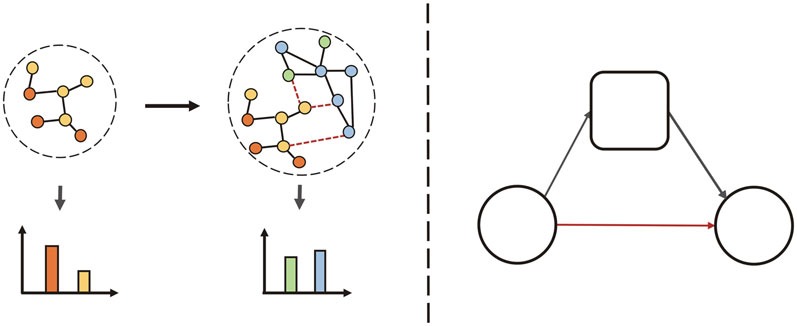
Federated model with contrastive learning and adaptive control variates for human activity recognition

Authors: Ignatius IWAN, Bernardo Nugroho YAHYA, Seok-Lyong LEE

Recent attention to privacy issues demands a communication-safe method for training human activity recognition (HAR) models on client activity data. Federated learning (FL) has become a compelling technique to facilitate model training between the server and clients while preserving data privacy. However, classical FL methods often assume independent and identically distributed (IID) data among clients. This assumption does not hold true in practical scenarios. Human activity in real-world scena

Federated model with contrastive learning and adaptive control variates for human activity recognition
Graphical Abstract
Original ResearchVol. 32, Issue 12 • pp. 319-331DOI: 10.1631/FITEE_2400799Dec 22, 2025

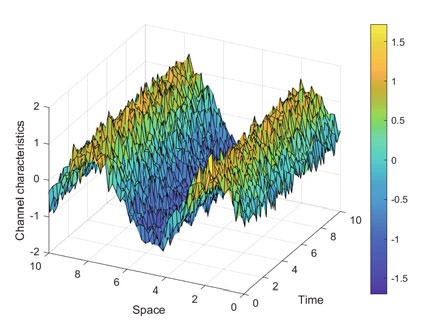
Reconfigurable intelligent surface-aided secret key generation using an autoencoder and K-means quantization

Authors: Zhenling Li, Panpan Xu, Qiangqiang Gao, Chunguo Li, Weijie Tan

In quasi-static wireless channel scenarios, the generation of physical layer keys faces the challenge of invariant spatial and temporal channel characteristics, resulting in a high key disagreement rate (KDR) and low key generation rate (KGR). To address these issues, we propose a novel reconfigurable intelligent surface (RIS)-aided secret key generation approach using an autoencoder and K-means quantization algorithm. The proposed method uses channel state information (CSI) for channel estimati

Reconfigurable intelligent surface-aided secret key generation using an autoencoder and K-means quantization
Graphical Abstract
Original ResearchVol. 32, Issue 12 • pp. 555-567DOI: 10.1631/FITEE_2500164Dec 21, 2025

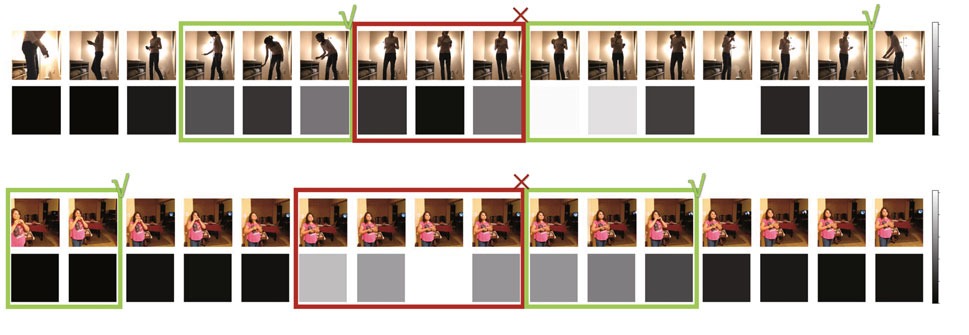
Temporal fidelity enhancement for video action recognition

Authors: Shaowu XU, Xibin JIA, Qianmei SUN, Jing CHANG

Temporal attention mechanisms are essential for video action recognition, enabling models to focus on semantically informative moments. However, these models frequently exhibit temporal infidelity—misaligned attention weights caused by limited training diversity and the absence of fine-grained temporal supervision. While video-level labels provide coarse-grained action guidance, the lack of detailed constraints allows attention noise to persist, especially in complex scenarios with distracting s

Temporal fidelity enhancement for video action recognition
Graphical Abstract
Original ResearchVol. 32, Issue 12 • pp. 491-503DOI: 10.1631/ENG_ITEE_2025_0111Dec 20, 2025

CdualTAL: multi-domain tool wear prediction using a dual-channel Transformer and cross-attention network

Authors: Na Li, Zhendong Liu, Xiao Wang, Jiamin Jiang, Yanjie Wei

Accurate tool wear prediction is crucial for manufacturing efficiency, yet effectively using multi-domain sensor features is difficult due to redundant noise. There is a critical need to strategically leverage highly predictive strong features and potentially informative weak features. To address this issue, we propose CdualTAL, an improved Transformer-based encoder–attention–decoder algorithm. Its name represents the model’s key components: a correlation-adaptive feature selection algorithm mod

CdualTAL: multi-domain tool wear prediction using a dual-channel Transformer and cross-attention network
Graphical Abstract
Original ResearchVol. 32, Issue 12 • pp. 727-739DOI: 10.1631/FITEE_2500608Dec 19, 2025

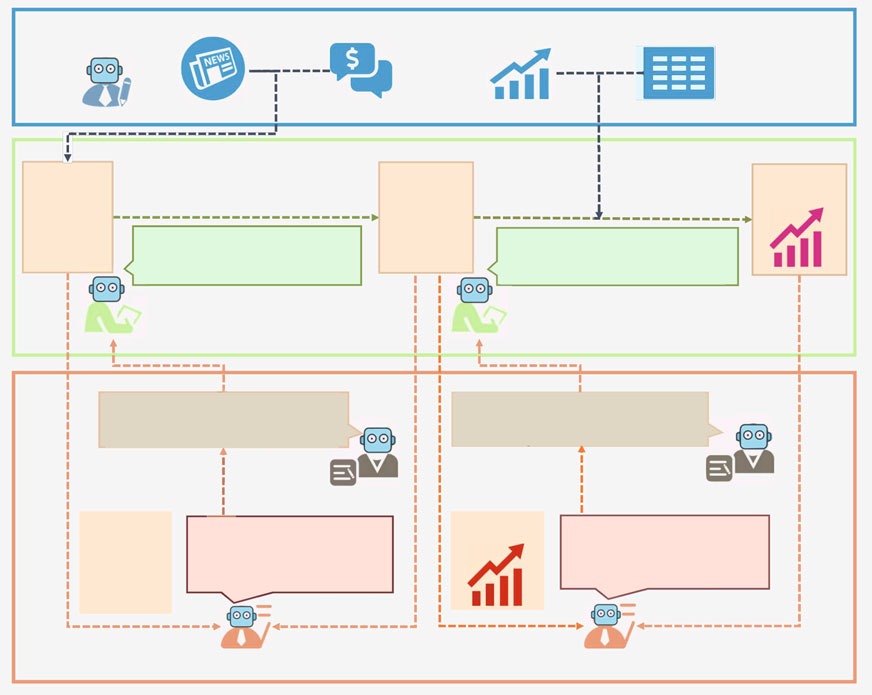
MENTOR: a multi-agent framework for event and narrative trend prediction with optimized reasoning

Authors: Liyuan Chen, Gaoguo Jia, Dongsheng Gu, Jiangpeng Yan, Yuhang Jiang, Xiu Li, Xiaojun Zeng

Narrative economics suggests that financial markets are strongly influenced by evolving narratives, creating opportunities for forecasting emerging events and their economic impacts. However, existing large language model (LLM)-based approaches are inadequate in terms of systematic task decomposition and alignment with financial applications. We propose MENTOR, a multi-agent framework for event and narrative trend prediction that integrates teacher–student iterative reasoning with progressive su

MENTOR: a multi-agent framework for event and narrative trend prediction with optimized reasoning
Graphical Abstract
Original ResearchVol. 32, Issue 12 • pp. 899-911DOI: 10.1631/FITEE_2300571Dec 17, 2025

Transfer learning with a spatiotemporal graph convolution network for city flow prediction

Authors: Binkun Liu, Yu Kang, Yang Cao, Yunbo Zhao, Zhenyi Xu

Recently, deep learning based city flow prediction has been extensively used in the establishment of smart cities. These methods are data-hungry, making them unscalable to areas lacking data. Although transfer learning can use data-rich source domains to assist target domain cities in city flow prediction, the performance of existing methods cannot meet the needs of actual use, because the long-distance road network connectivity is ignored. To solve this problem, we propose a transfer learning m

Transfer learning with a spatiotemporal graph convolution network for city flow prediction
Graphical Abstract
Original ResearchVol. 32, Issue 12 • pp. 335-347DOI: 10.1631/FITEE_2401063Dec 16, 2025

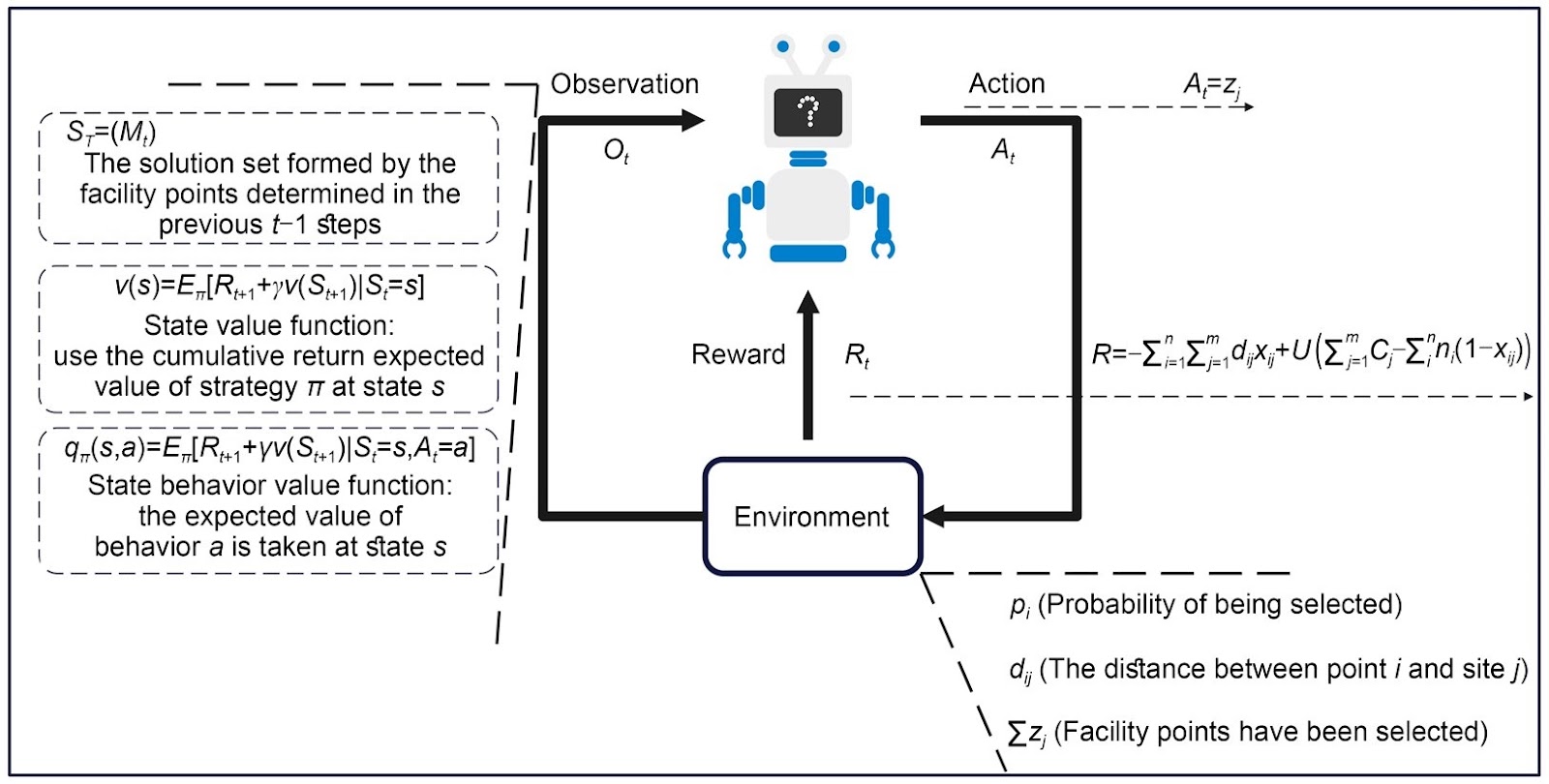
DRL-EnVar: an adaptive hybrid ensemble–variational data assimilation method based on deep reinforcement learning

Authors: Lilan HUANG, Hongze LENG, Junqiang SONG, Dongzi WANG, Wuxin WANG, Ruisheng HU, Hang CAO

Accurate estimation of the background error covariance matrix denoted as B remains a critical challenge in numerical weather prediction (NWP), directly influencing data assimilation (DA) performance and forecast accuracy. Although hybrid ensemble–variational (EnVar) methods combine static and flow-dependent matrices to improve assimilation, their effectiveness is constrained by empirically fixed weights. To address this limitation, we propose DRL-EnVar, an adaptive hybrid EnVar DA method enhance

DRL-EnVar: an adaptive hybrid ensemble–variational data assimilation method based on deep reinforcement learning
Graphical Abstract
Original ResearchVol. 32, Issue 12 • pp. 115-127DOI: 10.1631/FITEE_2400366Dec 11, 2025

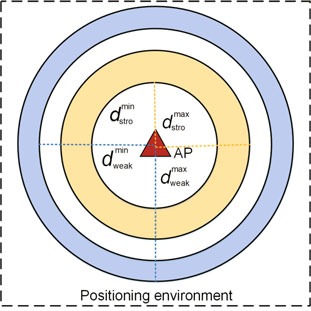
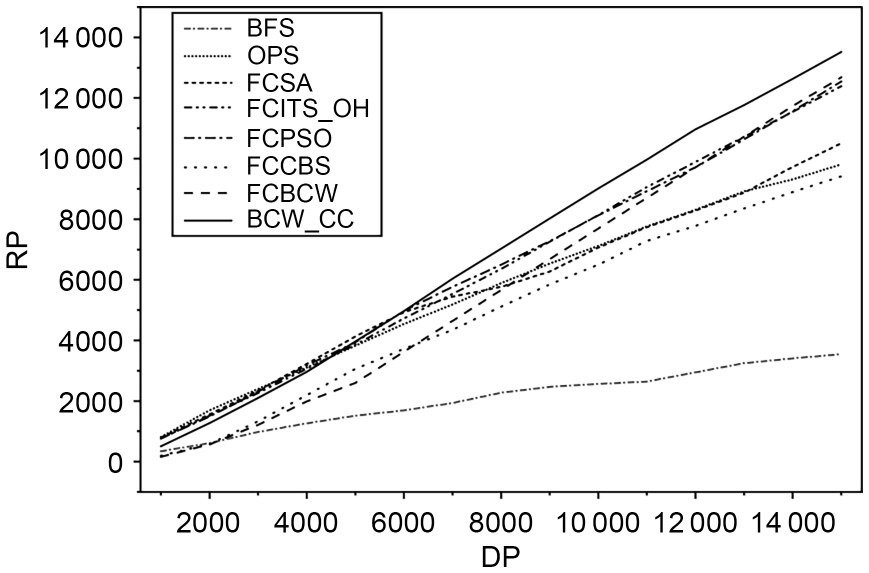
A dynamic K-nearest neighbor method based on strong access point credibility for indoor positioning

Authors: Yuting Yang, Tao Zhang, Wu Huang

High-precision indoor positioning offers valuable information support for various services such as patient monitoring, equipment scheduling management, and laboratory safety. A traditional indoor positioning technology, fingerprint indoor positioning, often employs the K-nearest neighbor (KNN) algorithm to identify the closest K reference points (RPs) via the received signal strength (RSS) for location prediction. However, RSS is susceptible to environmental interference, leading to the selectio

A dynamic K-nearest neighbor method based on strong access point credibility for indoor positioning
Graphical Abstract
Original ResearchVol. 32, Issue 12 • pp. 523-535DOI: 10.1631/FITEE_2400709Dec 8, 2025

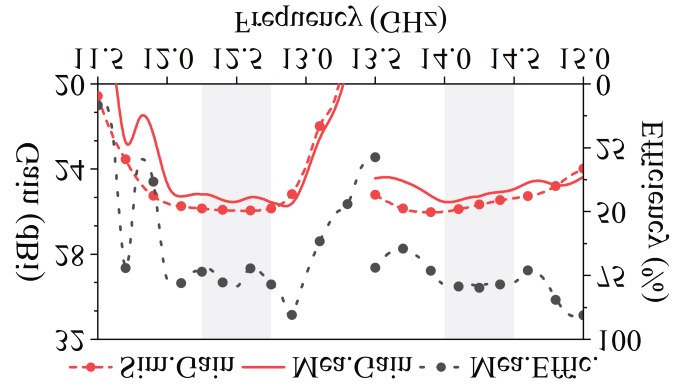
Three-dimensional-printed low-sidelobe dual-band dual-polarized antenna array for Ku-band satellite communications

Authors: Yuqi Xia, Xiuping Li, Genqiang Kou, Wenyu Zhao, Jie Zhang, Muhammad Ishfaq, Zihang Qi

A 3D-printed dual-band dual-polarization gap waveguide (GWG) slot antenna array is presented for Ku-band satellite communications (SATCOMs) in this paper. Two stacked GWGs excite the quasi-TE420 and quasi-TE240 modes in the cavity separately through orthogonal slots. An unequal power divider with a large power division ratio is proposed based on a ridge gap waveguide (RGW). Two power tapering distribution networks are realized for dual polarizations, and the sidelobe level (SLL) is suppressed. T

Three-dimensional-printed low-sidelobe dual-band dual-polarized antenna array for Ku-band satellite communications
Graphical Abstract
Original ResearchVol. 32, Issue 12 • pp. 695-707DOI: 10.1631/ENG_ITEE_2025_0104Dec 6, 2025

RetryTrigger: intelligent inference duplication for enhancing LLM resilience to hardware transient faults

Authors: Jiajia JIAO, Yixu YU

Large language models (LLMs) have exhibited outstanding performance across a wide range of natural language processing (NLP) tasks. However, the rising prevalence of hardware transient faults has made silent data corruptions (SDCs) in LLMs increasingly problematic, severely degrading output quality and user experience. State-of-the-art protection schemes primarily rely on hardware-assisted algorithm-based fault tolerance (ABFT) or boundary-setting-driven online fault tolerance (FT2) for selectiv

RetryTrigger: intelligent inference duplication for enhancing LLM resilience to hardware transient faults
Graphical Abstract
Original ResearchVol. 32, Issue 12 • pp. 131-143DOI: 10.1631/FITEE_2500412Dec 5, 2025

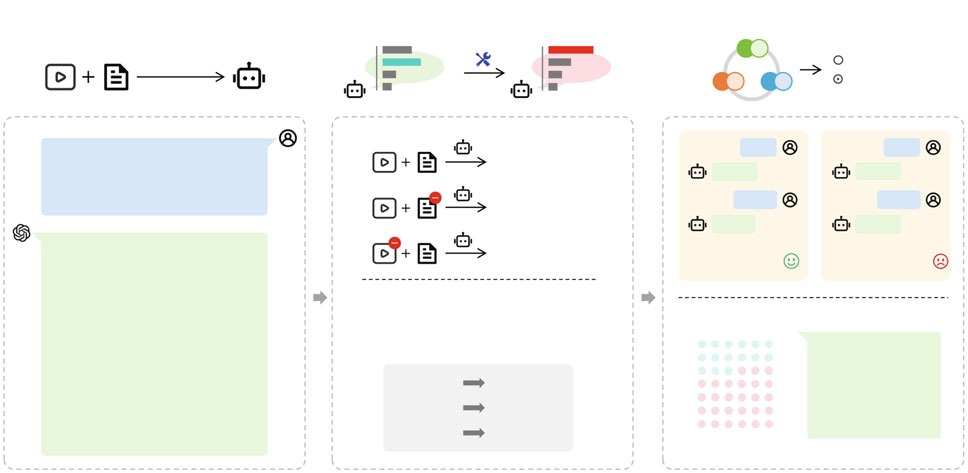
TimeJudge: empowering video-LLMs as zero-shot judges for temporal consistency in video captions

Authors: Yangliu HU, Zikai SONG, Junqing YU, Yiping Phoebe CHEN, Wei YANG

Video large language models (video-LLMs) have demonstrated impressive capabilities in multimodal understanding, but their potential as zero-shot evaluators for temporal consistency in video captions remains underexplored. Existing methods notably underperform in detecting critical temporal errors, such as missing, hallucinated, or misordered actions. To address this gap, we introduce two key contributions. (1) TimeJudge: a novel zero-shot framework that recasts temporal error detection as answer

TimeJudge: empowering video-LLMs as zero-shot judges for temporal consistency in video captions
Graphical Abstract
Original ResearchVol. 32, Issue 12 • pp. 303-315DOI: 10.1631/FITEE_2300767Dec 3, 2025

An optimal algorithm for preemptive scheduling on non-simultaneously available uniform machines

Authors: Hao Zhou, Liping Cao, Qi Wei, Zhenyu Shu, Yiwei Jiang

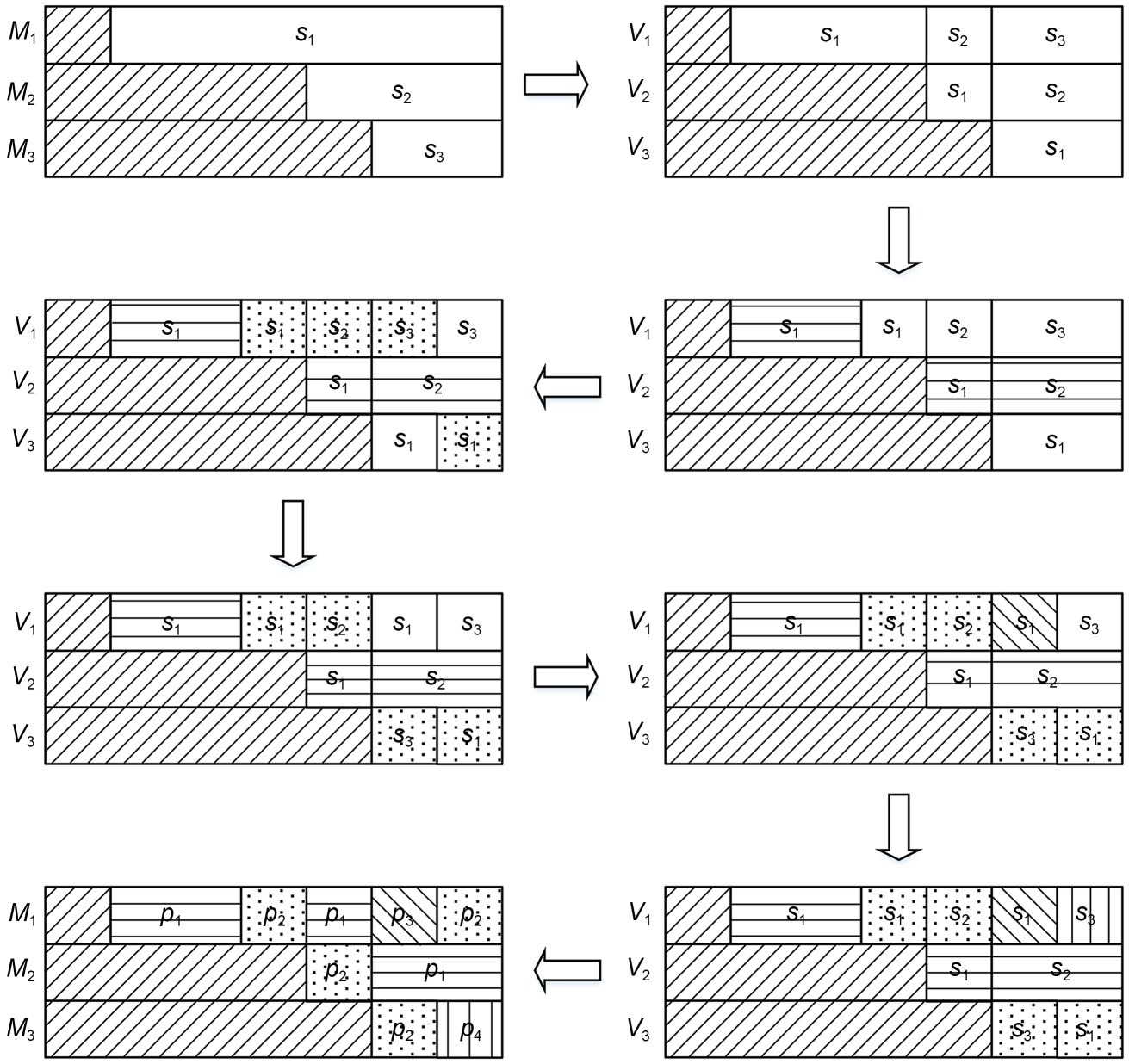
We study preemptive scheduling on m uniform machines with non-simultaneous available times to minimize the makespan. Each machine has a different speed and a different available time. We first provide a lower bound on the optimal makespan of the problem by converting the real machines to virtual machines that guarantee a machine with an earlier available time having a greater speed at any time. Then, we provide an algorithm with time complexity of O(nm+m^2) to find an optimal schedule with, at m

An optimal algorithm for preemptive scheduling on non-simultaneously available uniform machines
Graphical Abstract
Original ResearchVol. 32, Issue 11 • pp. 286-298DOI: 10.1631/FITEE_2300532Nov 25, 2025

Reinforcement learning based privacy-preserving consensus tracking control of nonstrict-feedback discrete-time multi-agent systems

Authors: Yang Yang, Fanming Huang, Dong Yue

This paper investigates a privacy-preserving consensus tracking problem for a class of nonstrict-feedback discrete-time multi-agent systems (MASs). An improved Liu cryptosystem is developed to alleviate the errors between encryption and decryption on the plaintext, which ensures satisfactory recovery of the plaintext information. A reinforcement learning (RL) technique is then employed to compensate for unknown dynamics and errors between true signals and decrypted ones. Based on the backsteppin

Reinforcement learning based privacy-preserving consensus tracking control of nonstrict-feedback discrete-time multi-agent systems
Graphical Abstract
Original ResearchVol. 32, Issue 11 • pp. 694-706DOI: 10.1631/FITEE_2400091Nov 22, 2025

CUSMART: effective parallelization of string matching algorithms using GPGPU accelerators

Authors: Adnan OZSOY, Mengu NAZLI, Onur CANKUR, Cagri SAHIN

This study presents a parallel version of the string matching algorithms research tool (SMART) library, implemented on NVIDIA’s compute unified device architecture (CUDA) platform, and uses general-purpose computing on graphics processing unit (GPGPU) programming concepts to enhance performance and gain insight into the parallel versions of these algorithms. We have developed the CUDA-enhanced SMART (CUSMART) library, which incorporates parallelized iterations of 64 string matching algorithms, l

CUSMART: effective parallelization of string matching algorithms using GPGPU accelerators
Graphical Abstract
Original ResearchVol. 32, Issue 11 • pp. 302-314DOI: 10.1631/FITEE_2400458Nov 19, 2025

Building accurate translation-tailored large language models with language-aware instruction tuning

Authors: Changtong ZAN, Liang DING, Li SHEN, Yibing ZHAN, Xinghao YANG, Weifeng LIU

Large language models (LLMs) exhibit remarkable capabilities in various natural language processing tasks, such as machine translation. However, the large number of LLM parameters incurs significant costs during inference. Previous studies have attempted to train translation-tailored LLMs with moderately sized models by fine-tuning them on the translation data. Nevertheless, when performing translations in zero-shot directions that are absent from the fine-tuning data, the problem of ignoring in

Building accurate translation-tailored large language models with language-aware instruction tuning
Graphical Abstract
Original ResearchVol. 32, Issue 11 • pp. 474-486DOI: 10.1631/ENG_ITEE_2025_0152Nov 17, 2025

GC bypass: decoupling GC from the flash translation layer to eliminate GC-induced long-tail latency inside SSD

Authors: Shiqiang NIE, Jie NIU, Yingzhao SHAO, Xiaobo LI, Mingming ZHANG, Weiguo WU

NAND flash-based solid-state drives (SSDs) have been adopted by many data centers due to their high performance and low power consumption. However, the physical characteristics of the underlying flash memory necessitate garbage collection (GC) operations. Valid page migration during GC contributes significantly to latency overhead while competing for flash channel bandwidth and controller resources with user I/O requests through shared physical paths, leading to path conflicts and elevated long-

GC bypass: decoupling GC from the flash translation layer to eliminate GC-induced long-tail latency inside SSD
Graphical Abstract
Original ResearchVol. 32, Issue 11 • pp. 710-722DOI: 10.1631/FITEE_2500386Nov 16, 2025

A survey on large language model-based alpha mining

Authors: Junjie ZHANG, Shuoling LIU, Tongzhe ZHANG, Yuchen SHI

Alpha mining, which refers to the systematic discovery of data-driven signals predictive of future cross-sectional returns, is a central task in quantitative research. Recent progress in large language models (LLMs) has sparked interest in LLM-based alpha mining frameworks, which offer a promising middle ground between human-guided and fully automated alpha mining approaches and deliver both speed and semantic depth. This study presents a structured review of emerging LLM-based alpha mining syst

A survey on large language model-based alpha mining
Graphical Abstract
Original ResearchVol. 32, Issue 11 • pp. 882-894DOI: 10.1631/FITEE_2400360Nov 14, 2025

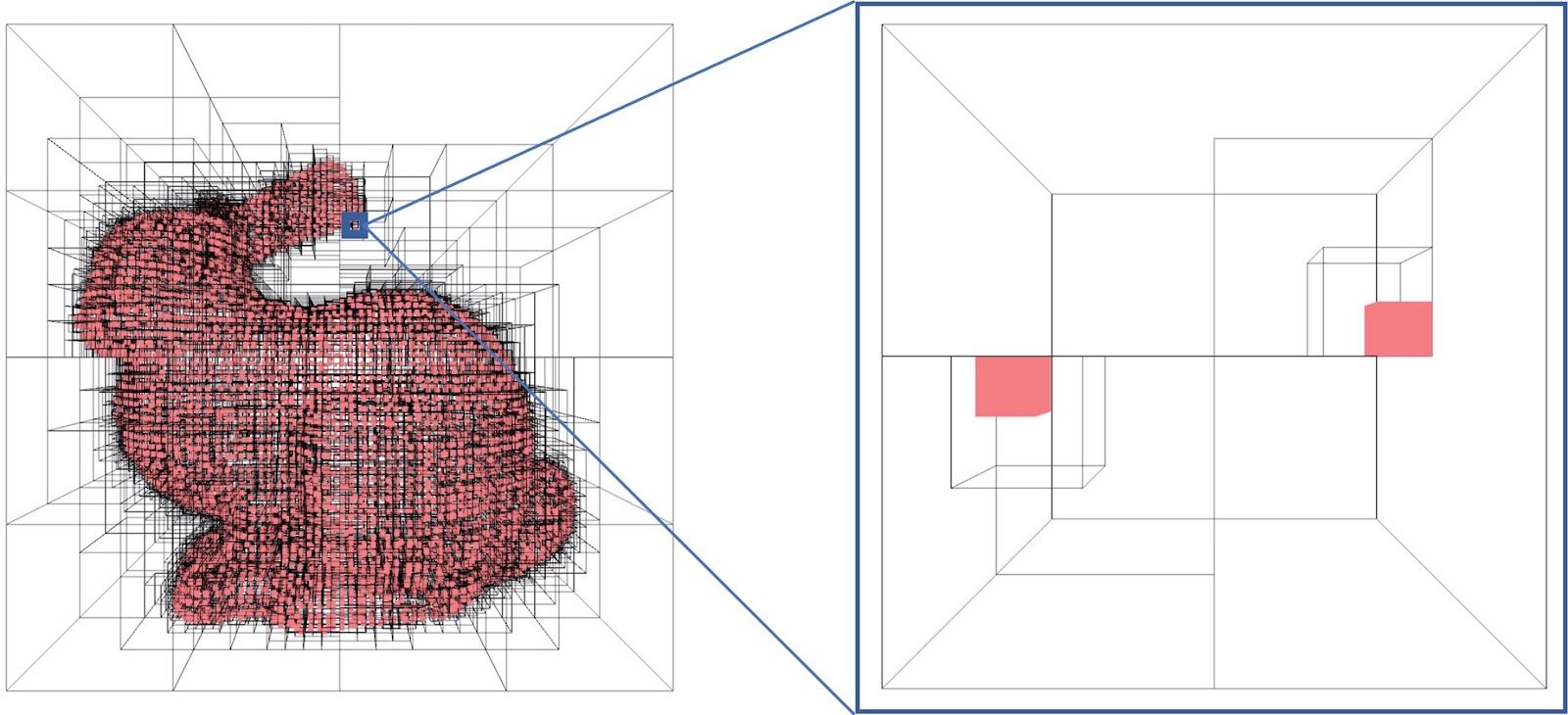
Algorithm for 3D point cloud steganalysis based on composite operator feature enhancement

Authors: Shuai Ren, Hao Gong, Suya Zheng

Three-dimensional (3D) point cloud information hiding algorithms are mainly concentrated in the spatial domain. Existing spatial domain steganalysis algorithms are subject to more disturbing factors during the analysis and detection process, and can only be applied to 3D mesh objects, so there is a lack of steganalysis algorithms for 3D point cloud objects. To change the fact that steganalysis is limited to 3D mesh and eliminate the redundant features in the 3D mesh steganalysis feature set, we

Algorithm for 3D point cloud steganalysis based on composite operator feature enhancement
Graphical Abstract
Original ResearchVol. 32, Issue 11 • pp. 318-330DOI: 10.1631/FITEE_2400939Nov 13, 2025

A focused crawling strategy based on comprehensive priority evaluation of hyperlinks and improved Bayesian classifier

Authors: Jingfa Liu, Yongchuang Wu, Zhaoxia Liu

Avoidance of topic drift and enabling crossing tunnels are two main difficulties in focused crawling. To overcome the problem of topic drift, we design a comprehensive priority evaluation (CPE) method based on the web text, anchor text, and context of hyperlinks, which improves the topic-relevance evaluation of unvisited hyperlinks. Subsequently, we propose an improved Bayesian classifier with weights (BCW), which adds label weights to the feature words of the Bayesian classifier to enhance the

A focused crawling strategy based on comprehensive priority evaluation of hyperlinks and improved Bayesian classifier
Graphical Abstract
Original ResearchVol. 32, Issue 11 • pp. 490-502DOI: 10.1631/FITEE_2300742Nov 11, 2025

A parasitic coupling network concept for mutual coupling utilization in wideband multielement antenna arrays

Authors: Xiaojun ZOU, Guangming WANG, Yawei WANG, Wei SONG, Hang ZHU, Ming TAN, Xuguang XU, Guoqin KANG, Binfeng ZONG

A novel approach to widening the active reflection coefficient (ARC) bandwidth of an antenna array, employing a parasitic coupling network (PCN), is investigated in this article. Different from traditional tightly coupled arrays adopting space structures for enhancing the coupling in balanced-excitation antennas, a PCN derived from rigorous formulas is employed in the feeding lines of unbalanced-excitation ones. Based on network analysis, the mutual coupling utilization condition for an (M×N)-el

A parasitic coupling network concept for mutual coupling utilization in wideband multielement antenna arrays
Graphical Abstract
Original ResearchVol. 32, Issue 11 • pp. 898-910DOI: 10.1631/FITEE_2500053Nov 8, 2025

Active cybersecurity: vision, model, and key technologies

Authors: Xiaosong Zhang, Yukun Zhu, Xiong Li, Yongzhao Zhang, Weina Niu, Fenghua Xu, Junpeng He, Ran Yan, Shiping Huang

Noncooperative computer systems and network confrontation present a core challenge in cyberspace security. Traditional cybersecurity technologies predominantly rely on passive response mechanisms, which exhibit significant limitations when addressing real-world complex and unknown threats. This paper introduces the concept of “active cybersecurity,” aiming to enhance network security not only through technical measures but also by leveraging strategy-level defenses. The core assumption of this c

Active cybersecurity: vision, model, and key technologies
Graphical Abstract
Original ResearchVol. 32, Issue 11 • pp. 270-282DOI: 10.1631/ENG_ITEE_2026_0030Nov 6, 2025

Low-altitude UAV swarm ISAC: new opportunities and challenges

Authors: Hongqi MIN, Dingbang YANG, Chenhao QI, Yong ZENG

With the rapid development of the low-altitude economy, low-altitude unmanned aerial vehicle (UAV) swarms are emerging as important components of sixth-generation (6G) mobile communication networks, facilitating “full coverage” and “Internet of Intelligence.” Integrated sensing and communication (ISAC) deeply integrates sensing functionality into wireless communication networks by sharing wireless infrastructures and resources such as base stations, antennas, radio frequency chains, and signal w

Low-altitude UAV swarm ISAC: new opportunities and challenges
Graphical Abstract
Original ResearchVol. 32, Issue 11 • pp. 506-518DOI: 10.1631/FITEE_2400371Nov 5, 2025

Efficient privacy-preserving scheme for secure neural network inference

Authors: Liquan CHEN, Zixuan YANG, Peng ZHANG, Yang MA

The increasing adoption of smart devices and cloud services, coupled with limitations in local computing and storage resources, prompts numerous users to transmit private data to cloud servers for processing. However, the transmission of sensitive data in plaintext form raises concerns regarding users' privacy and security. To address these concerns, this study proposes an efficient privacy-preserving secure neural network inference scheme based on homomorphic encryption and secure multi-party c

Efficient privacy-preserving scheme for secure neural network inference
Graphical Abstract
Original ResearchVol. 32, Issue 11 • pp. 678-690DOI: 10.1631/ENG_ITEE_2025_0008Nov 3, 2025

WSC optimizer: an optimization tool for wafer-scale chip architecture exploration

Authors: Wenbo ZHANG, Bo DING, Shuai WEI, Qinrang LIU, Hong YU, Ke SONG, Wei GUO, Bo MEI, Rui ZHENG

In recent years, mature advanced packaging technologies have increasingly enabled the integration of multiple small dies into larger chips, while retaining chip-scale density and high-bandwidth interconnects. To address the inefficiencies of manual design and the challenges of heterogeneous optimization in wafer-scale chip (WSC) development, we systematically explore key factors in WSC architecture design. We integrate chip layout, operator mapping, and hardware–software co-design, and formulate

WSC optimizer: an optimization tool for wafer-scale chip architecture exploration
Graphical Abstract
Original ResearchVol. 32, Issue 11 • pp. 114-126DOI: 10.1631/FITEE_2400941Nov 2, 2025

Vina-FPGA2: a high-level parallelized hardware-accelerated molecular docking tool based on the inter-module pipeline

Authors: Ming LING, Shidi TANG, Ruiqi CHEN, Xin LI, Yanxiang ZHU

AutoDock Vina (Vina) is a widely adopted molecular docking tool, often regarded as a standard or used as a baseline in numerous studies. However, its computational process is highly time-consuming. The pioneering field-programmable gate array (FPGA)-based accelerator of Vina, known as Vina-FPGA, offers a high energy-efficiency approach to speed up the docking process. However, the computation modules in the Vina-FPGA design are not efficiently used. This is due to Vina exhibiting irregular behaviors i

Vina-FPGA2: a high-level parallelized hardware-accelerated molecular docking tool based on the inter-module pipeline
Graphical Abstract
Original ResearchVol. 32, Issue 10 • pp. 661-673DOI: 10.1631/ENG_ITEE_2025_0138Oct 25, 2025

Reversible data hiding in encrypted domain based on NTRU and Chinese remainder theorem

Authors: Xinyue Zhang, Kunyi Lai, Xin Tang

Reversible data hiding in the encrypted domain (RDH-ED) based on homomorphic encryption provides a promising approach for privacy-preserving data sharing, yet existing methods based on the N th-degree truncated polynomial ring unit (NTRU) face a fundamental conflict between embedding capacity and reversibility, often requiring preprocessing of plaintext, which in turn compromises randomness of the ciphertext obtained. To address these issues, a novel RDH-ED scheme integrating the Chinese remaind

Reversible data hiding in encrypted domain based on NTRU and Chinese remainder theorem
Graphical Abstract
Original ResearchVol. 32, Issue 10 • pp. 897-909DOI: 10.1631/FITEE_2500419Oct 24, 2025

HADF: a hash-adaptive dual fusion implicit network for super-resolution of turbulent flows

Authors: Yunfei LIU, Xinhai CHEN, Gen ZHANG, Qingyang ZHANG, Qinglin WANG, Jie LIU

Turbulence, a complex multi-scale phenomenon inherent in fluid flow systems, presents critical challenges and opportunities for understanding physical mechanisms across scientific and engineering domains. Although high-resolution (HR) turbulence data remain indispensable for advancing both theoretical insights and engineering solutions, their acquisition is severely limited by prohibitively high computational costs. While deep learning architectures show transformative potential in reconstructin

HADF: a hash-adaptive dual fusion implicit network for super-resolution of turbulent flows
Graphical Abstract
Original ResearchVol. 32, Issue 10 • pp. 269-281DOI: 10.1631/FITEE_2300796Oct 22, 2025

An error-based observer improved by the repetitive control strategy for electro-optical tracking systems

Authors: Mai TANG, Wenqiang XIA, Jiuqiang DENG, Yao MAO

Electro-optical tracking systems have been widely used in the cutting-edge domains of free space environment detection and communication owing to their exceptional performance. However, external disturbances often significantly impact the working accuracy of these systems. As their scope of application continues to broaden, increasingly complex operating conditions introduce more intricate environments and disturbances. This paper introduces a composite control structure of an enhanced error-bas

An error-based observer improved by the repetitive control strategy for electro-optical tracking systems
Graphical Abstract
Original ResearchVol. 32, Issue 10 • pp. 677-689DOI: 10.1631/FITEE_2400556Oct 19, 2025

A subspace-based few-shot intrusion detection system for the Internet of Things

Authors: Zhihui LI, Congyuan XU, Kun DENG, Chunyuan LIU

Deep learning-based intrusion detection systems rely on numerous training samples to achieve satisfactory detection rates. However, in the real-world Internet of Things (IoT) environments, the diversity of IoT devices and the subsequent fragmentation of attack types result in a limited number of training samples, which urgently requires researchers to develop few-shot intrusion detection systems. In this study, we propose a subspace-based approach for few-shot IoT intrusion detection systems to

A subspace-based few-shot intrusion detection system for the Internet of Things
Graphical Abstract
Original ResearchVol. 32, Issue 10 • pp. 285-297DOI: 10.1631/FITEE_2400960Oct 16, 2025

End-to-end object detection using a query-selection encoder with hierarchical feature-aware attention

Authors: Zuyi WANG, Zhimeng ZHENG, Jun MENG, Li XU

End-to-end object detection methods have attracted extensive interest recently since they alleviate the need for complicated human-designed components and simplify the detection pipeline. However, these methods suffer from slower training convergence and inferior detection performance compared to conventional detectors, as their feature fusion and selection processes are constrained by insufficient positive supervision. To address this issue, we introduce a novel query-selection encoder (QSE) de

End-to-end object detection using a query-selection encoder with hierarchical feature-aware attention
Graphical Abstract
Original ResearchVol. 32, Issue 10 • pp. 457-469DOI: 10.1631/ENG_ITEE_2025_0034Oct 14, 2025

FastCheck: fast checkpointing and recovery for DNN training via parallel transmission and compression

Authors: Yun TENG, Dawei SUN, Shipeng HU, Zhiyue LI, Guangyan ZHANG, Haidong TIAN, Rui CHANG

Training large-scale deep neural networks (DNNs) is prone to software and hardware failures, with critical failures often requiring full-machine reboots that substantially prolong training. Existing checkpoint–recovery solutions either cannot tolerate such critical failures or suffer from slow checkpointing and recovery due to constrained input/output bandwidth. In this paper, we propose FastCheck, a checkpoint–recovery framework that accelerates checkpointing and recovery through parallel trans

FastCheck: fast checkpointing and recovery for DNN training via parallel transmission and compression
Graphical Abstract
Original ResearchVol. 32, Issue 10 • pp. 693-705DOI: 10.1631/FITEE_2500282Oct 13, 2025

Knowledge distillation for financial large language models: a systematic review of strategies, applications, and evaluation

Authors: Jiaqi SHI, Xulong ZHANG, Xiaoyang QU, Junfei XIE, Jianzong WANG

Financial large language models (FinLLMs) offer immense potential for financial applications. While excessive deployment expenditures and considerable inference latency constitute major obstacles, as a prominent compression methodology, knowledge distillation (KD) offers an effective solution to these difficulties. A comprehensive survey is conducted in this work on how KD interacts with FinLLMs, covering three core aspects: strategy, application, and evaluation. At the strategy level, this revi

Knowledge distillation for financial large language models: a systematic review of strategies, applications, and evaluation
Graphical Abstract
Original ResearchVol. 32, Issue 10 • pp. 865-877DOI: 10.1631/FITEE_2400279Oct 11, 2025

Fairness-guided federated training for generalization and personalization in cross-silo federated learning

Authors: Ruipeng ZHANG, Ziqing FAN, Jiangchao YAO, Ya ZHANG, Yanfeng WANG

Abstract: Cross-silo federated learning (FL), which benefits from relatively abundant data and rich computing power, is drawing increasing focus due to the significant transformations that foundation models (FMs) are instigating in the artificial intelligence field. The intensified data heterogeneity issue of this area, unlike that in cross-device FL, is caused mainly by substantial data volumes and distribution shifts across clients, which requires algorithms to comprehensively consider the per

Fairness-guided federated training for generalization and personalization in cross-silo federated learning
Graphical Abstract
Original ResearchVol. 32, Issue 10 • pp. 301-313DOI: 10.1631/FITEE_2500100Oct 10, 2025

Mind the Gap: towards generalizable autonomous penetration testing via domain randomization and meta-reinforcement learning

Authors: Shicheng Zhou, Jingju Liu, Yuliang Lu, Jiahai Yang, Yue Zhang, Jie Chen

With the increasing number of vulnerabilities exposed on the Internet, autonomous penetration testing (pentesting) has emerged as a promising research area. Reinforcement learning (RL) is a natural fit for studying this topic. However, two key challenges limit the applicability of RL-based autonomous pentesting in real-world scenarios: the training environment dilemma—training agents in simulated environments is sample-efficient while ensuring that their realism remains challenging; poor general

Mind the Gap: towards generalizable autonomous penetration testing via domain randomization and meta-reinforcement learning
Graphical Abstract
Original ResearchVol. 32, Issue 10 • pp. 881-893DOI: 10.1631/FITEE_2400904Oct 5, 2025

Image generation evaluation: a comprehensive survey of human and automatic evaluations

Authors: Qi LIU, Shuanglin YANG, Zejian LI, Lefan HOU, Chenye MENG, Ying ZHANG, Lingyun SUN

Image generation models have made remarkable progress, and image evaluation is crucial for explaining and driving the development of these models. Previous studies have extensively explored human and automatic evaluations of image generation. Herein, these studies are comprehensively surveyed, specifically for two main parts: evaluation protocols and evaluation methods. First, 10 image generation tasks are summarized with focus on their differences in evaluation aspects. Based on this, a novel p

Image generation evaluation: a comprehensive survey of human and automatic evaluations
Graphical Abstract
Original ResearchVol. 32, Issue 10 • pp. 489-501DOI: 10.1631/FITEE_2400486Oct 2, 2025

A digital simulation platform with human-interactive immersive design for navigation, motion, and teleoperated manipulation of work-class remotely operated vehicle

Authors: Fanghao Huang, Xiao Yang, Xuanlin Chen, Deqing Mei, Zheng Chen

Digital simulation of the full operation of a remotely operated vehicle (ROV) is an economically feasible way for algorithm pretesting and operator training prior to the actual underwater tasks, due to the huge difficulties encountered during the underwater test, high equipment cost, and the time-consuming nature of the process. In this paper, a human-interactive digital simulation platform is established for the navigation, motion, and teleoperated manipulation of work-class ROVs, and provides

A digital simulation platform with human-interactive immersive design for navigation, motion, and teleoperated manipulation of work-class remotely operated vehicle
Graphical Abstract
Original ResearchVol. 32, Issue 9 • pp. 472-484DOI: 10.1631/FITEE_2400467Sep 24, 2025

Deep anomaly detection of temporal heterogeneous data in AIOps: a survey

Authors: Jiayi GUI, Zhongnan MA, Hao ZHOU, Yan SU, Miaoru ZHANG, Ke YU, Xiaofei WU

The advancement of the fifth generation (5G) mobile communication and Internet of Things (IoT) has facilitated the development of intelligent applications, but has also rendered these networks increasingly complex and vulnerable to various targeted attacks. Numerous anomaly detection (AD) models, particularly those using deep learning technologies, have been proposed to monitor and identify network anomalous events. However, the implementation of these models poses challenges for network operato

Deep anomaly detection of temporal heterogeneous data in AIOps: a survey
Graphical Abstract
Original ResearchVol. 32, Issue 9 • pp. 644-656DOI: 10.1631/ENG_ITEE_2025_0140Sep 22, 2025

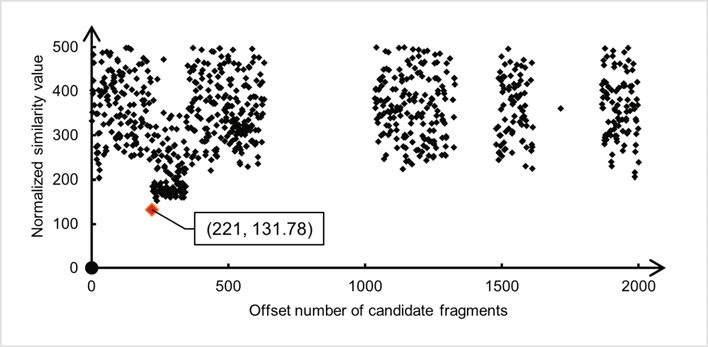
Image fragment carving based on DCT semantics and an adjustment factor

Authors: Binglong LI, Shilong YU, Yong ZHAO, Yifeng SUN, Chaowen CHANG, Qingxian WANG

The recovery of evidence from fragmented image files is a prominent research focus in the field of file carving. To address image fragment reassembly, this paper analyzes the Joint Photographic Experts Group (JPEG) image structure and proposes a fragment connection weighting algorithm based on discrete cosine transform (DCT) semantic features, along with a weight adjustment factor that leverages image compression characteristics. By integrating these components, the algorithm effectively determi

Image fragment carving based on DCT semantics and an adjustment factor
Graphical Abstract
Original ResearchVol. 32, Issue 9 • pp. 880-892DOI: 10.1631/FITEE_2500093Sep 21, 2025

Privacy-preserving bipartite consensus with cooperative–competitive interactions via a node decomposition strategy

Authors: Licheng WANG, Yongling CHEN, Shuai LIU

This paper describes our investigation of the privacy protection problem of multi-agent systems under cooperative–competitive networks. A node decomposition strategy is used to protect the privacy of the initial node values, in which a node vi is split into ni nodes. By designing inter-node weights, the initial value of each node is protected from honest-but-curious nodes and eavesdroppers without relying on external algorithms. The purpose is to design a privacy-preserving consensus algorithm s

Privacy-preserving bipartite consensus with cooperative–competitive interactions via a node decomposition strategy
Graphical Abstract
Original ResearchVol. 32, Issue 9 • pp. 252-264DOI: 10.1631/FITEE_2300755Sep 19, 2025

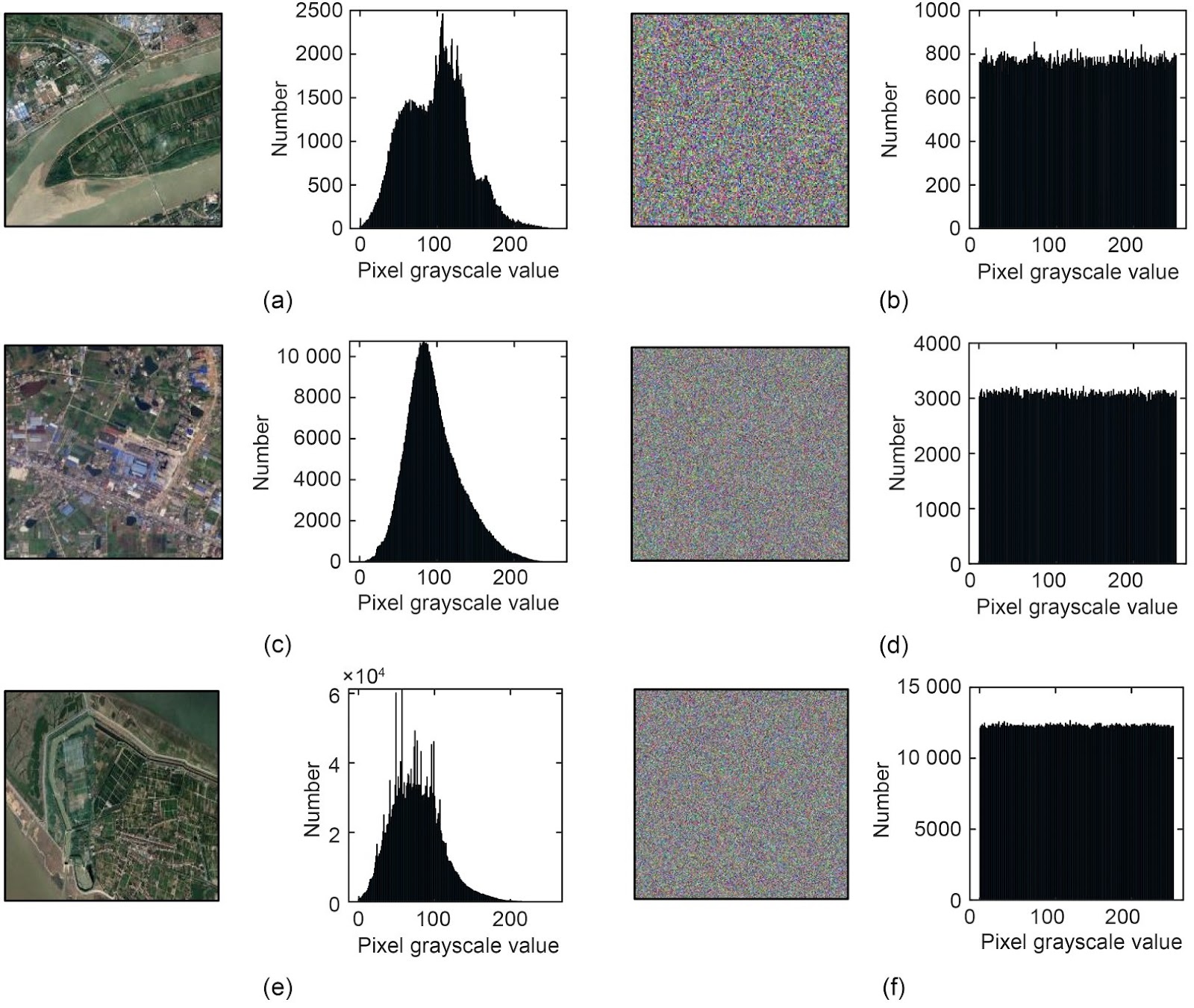
A geographic information encryption system based on Chaos-LSTM and chaos sequence proliferation

Authors: Jia DUAN, Luanyun HU, Qiumei XIAO, Meiting LIU, Wenxin YU

In response to the strong correlation between the chaotic system state and initial state and parameters in traditional chaotic encryption algorithms, which may lead to periodicity in chaotic sequences, the chaos long short-term memory (Chaos-LSTM) model is constructed by combining chaotic systems with LSTM neural networks. The chaos sequence proliferation (CSP) algorithm is constructed to address the problem that the limited computational accuracy of computers can lead to periodicity in long cha

A geographic information encryption system based on Chaos-LSTM and chaos sequence proliferation
Graphical Abstract
Original ResearchVol. 32, Issue 9 • pp. 660-672DOI: 10.1631/FITEE_2400721Sep 16, 2025

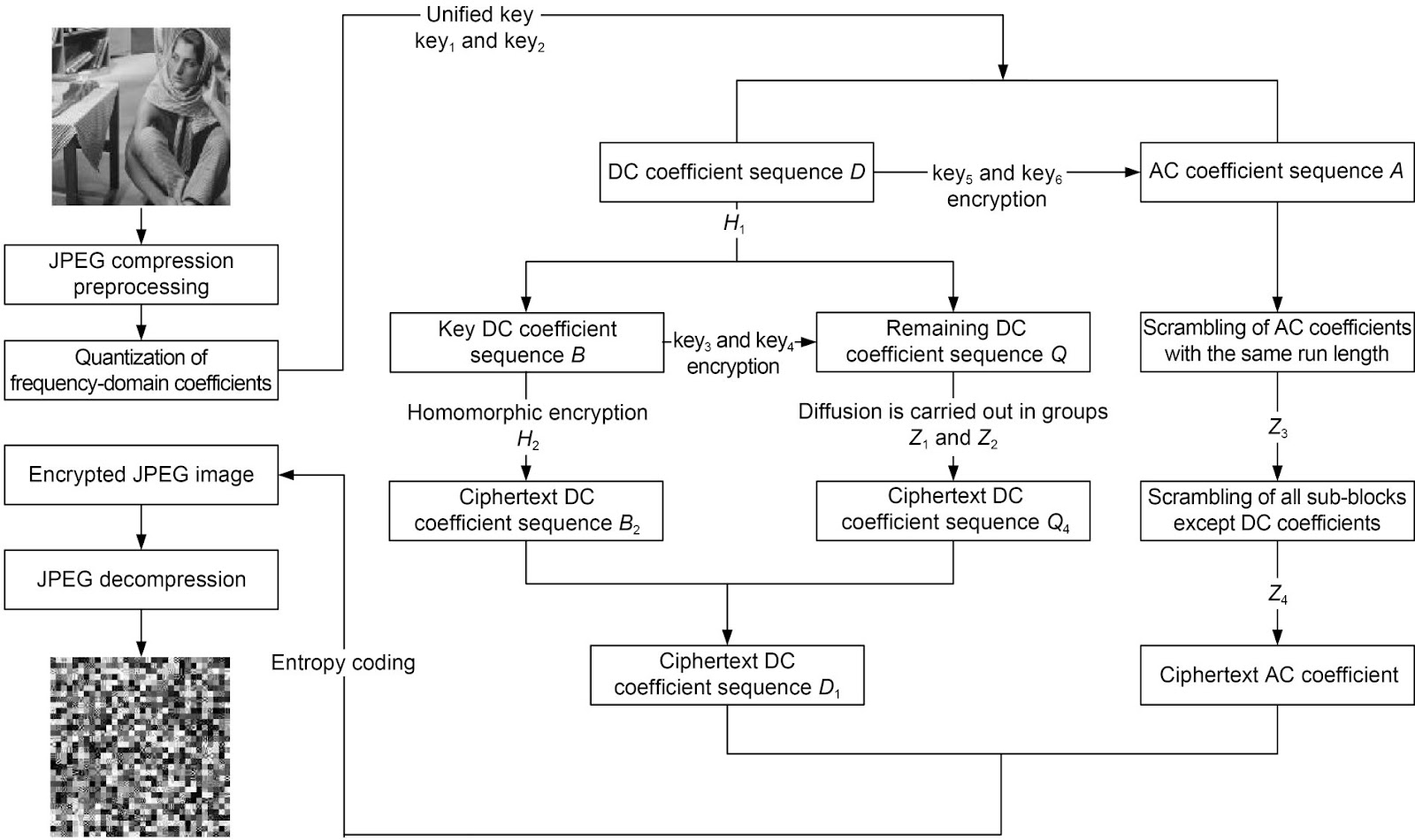
SPJEU: a self-sufficient plaintext-related JPEG image encryption scheme based on a unified key

Authors: Ming LI, Wenwen ZHOU, Mengdie WANG, Yushu ZHANG, Yong XIANG

In recent research on image encryption, many schemes associate the key generation mechanism with the plaintext to resist chosen plaintext attacks. However, when the sender encrypts many images, a large amount of additional data related to the plaintext need to be transmitted, which leads to problems such as high transmission costs, high requirements for key storage space, and complex key management. Therefore, in this paper, we propose a self-sufficient plaintext-related JPEG image encryption sc

SPJEU: a self-sufficient plaintext-related JPEG image encryption scheme based on a unified key
Graphical Abstract
Original ResearchVol. 32, Issue 9 • pp. 268-280DOI: 10.1631/FITEE_2400251Sep 13, 2025

Output difference feedback and system benefit control based dynamic heterogeneous redundancy architecture

Authors: Sisi SHAO, Zhibo HE, Shangdong LIU, Weili ZHANG, Fei WU, Fukang ZENG, Jun ZUO, Longfei ZHOU, Yukun NIU, Yimu JI

Mimic active defense technology effectively disrupts attack routes and reduces the probability of successful attacks by using a dynamic heterogeneous redundancy (DHR) architecture. However, current approaches often overlook the adaptability of the adjudication mechanism in complex and variable network environments, focusing primarily on system security while neglecting performance considerations. To address these limitations, we propose an output difference feedback and system benefit control ba

Output difference feedback and system benefit control based dynamic heterogeneous redundancy architecture
Graphical Abstract
Original ResearchVol. 32, Issue 9 • pp. 440-452DOI: 10.1631/ENG_ITEE_2025_0105Sep 11, 2025

A comprehensive review on humanoid robots: perspectives from academia and industry

Authors: Wenjuan LI, Genyuan YANG, Jiyi WU, Chengjie PAN, Lei SHENG, Qifei ZHANG

Humanoid robotics represents a rapidly evolving research domain that integrates artificial intelligence and robotics. Despite significant advances, existing reviews have predominantly focused on narrow technical aspects and lack comprehensive analysis from academic and industrial perspectives. This paper presents a systematic dual-perspective survey, in which academic literature, commercial products, and industry reports are extensively analyzed. A comprehensive taxonomic framework and systemati

A comprehensive review on humanoid robots: perspectives from academia and industry
Graphical Abstract
Original ResearchVol. 32, Issue 9 • pp. 676-688DOI: 10.1631/FITEE_2401059Sep 10, 2025

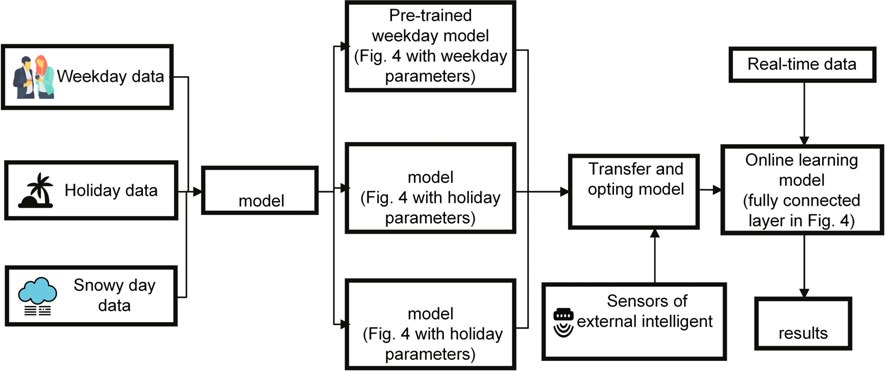
Online transfer learning with an MLP-assisted graph convolutional network for traffic flow prediction: a solution for edge intelligent devices

Authors: Jingru SUN, Chendingying LU, Yichuang SUN, Hongbo JIANG, Zhu XIAO

Traffic flow prediction is crucial for intelligent transportation and aids in route planning and navigation. However, existing studies often focus on prediction accuracy improvement, while neglecting external influences and practical issues like resource constraints and data sparsity on edge devices. We propose an online transfer learning (OTL) framework with a multi-layer perceptron (MLP)-assisted graph convolutional network (GCN), termed OTL-GM, which consists of two parts: transferring source

Online transfer learning with an MLP-assisted graph convolutional network for traffic flow prediction: a solution for edge intelligent devices
Graphical Abstract
Original ResearchVol. 32, Issue 9 • pp. 848-860DOI: 10.1631/FITEE_2300741Sep 8, 2025

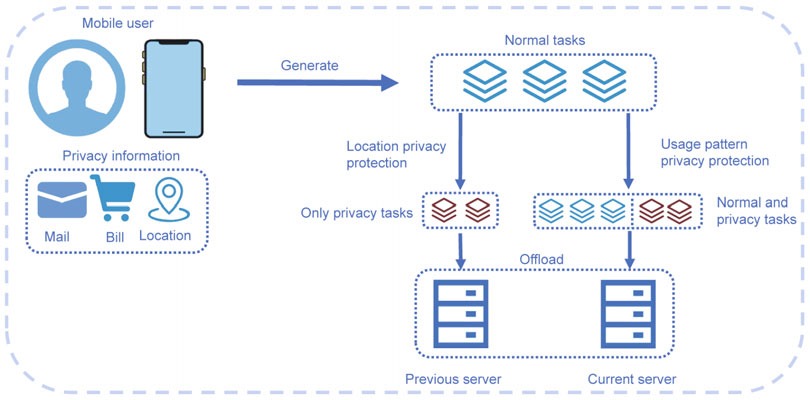
PPDO: a privacy-preservation-aware delay optimization task-offloading algorithm for collaborative edge computing

Authors: Chao Jing, Jianwu Xu

Although collaborative edge computing (CEC) systems are beneficial in enhancing the performance of mobile edge computing (MEC), the issue of user privacy leakage becomes prominent during task offloading. To address this issue, we design a privacy-preservation-aware delay optimization task-offloading algorithm (PPDO) in a CEC system. By considering location and usage pattern privacy protection, we establish a privacy task model to interfere with the edge server and ensure user privacy. To address

PPDO: a privacy-preservation-aware delay optimization task-offloading algorithm for collaborative edge computing
Graphical Abstract
Original ResearchVol. 32, Issue 9 • pp. 284-296DOI: 10.1631/FITEE_2500138Sep 7, 2025

An overview of beam-tracking techniques for mmWave wireless communications

Authors: Ruaa Shallal Abbas ANOOZ, Jafar POURROSTAM, Mohanad Al-IBADI

Millimeter-wave (mmWave) communication is the key to increasing the demand for high data rates and low latency resulting from the rapid evolution of wireless communications, especially in the fifth generation (5G) of wireless communication systems and beyond. The mmWave band suffers from high path loss and obstacle blockage, significantly reducing the transmission range. Note that high-directional beams are required to perform well in the mmWave band. Hence, beam alignment is crucial for high-da

An overview of beam-tracking techniques for mmWave wireless communications
Graphical Abstract
Original ResearchVol. 32, Issue 9 • pp. 456-468DOI: 10.1631/FITEE_2400433Sep 5, 2025

Analog-only beamforming for near-field multiuser MIMO communications

Authors: Ying Wang, Chenhao Qi

For near-field multiuser communications based on hybrid beamforming (HBF) architectures, high-quality effective channel estimation is required to obtain the channel state information (CSI) for the design of the digital beamformer. To simplify the system reconfiguration and eliminate the pilot overhead required by effective channel estimation, we consider an analog-only beamforming (AoBF) architecture in this study. AoBF is designed to maximize the sum rate, it is transformed into a problem maxim

Analog-only beamforming for near-field multiuser MIMO communications
Graphical Abstract
Original ResearchVol. 32, Issue 9 • pp. 864-876DOI: 10.1631/FITEE_2400261Sep 2, 2025

A ground-based dataset and diffusion model for on-orbit low-light image enhancement

Authors: Yiman ZHU, Lu WANG, Jingyi YUAN, Yu GUO

On-orbit service is important for maintaining the sustainability of the space environment. A space-based visible camera is an economical and lightweight sensor for situational awareness during on-orbit service. However, it can be easily affected by the low illumination environment. Recently, deep learning has achieved remarkable success in image enhancement of natural images, but it is seldom applied in space due to the data bottleneck. In this study, we first propose a dataset of BeiDou navigat

A ground-based dataset and diffusion model for on-orbit low-light image enhancement
Graphical Abstract
Original ResearchVol. 32, Issue 8 • pp. 847-859DOI: 10.1631/FITEE_2401002Aug 24, 2025

Long working distance portable smartphone microscopy for metallic mesh defect detection

Authors: Zhengang LU, Hongsheng QIN, Jing LI, Ming SUN, Jiubin TAN

Metallic mesh is a transparent electromagnetic shielding film with a fine metal line structure. However, in production preparation or actual use it can develop defects that affect the optoelectronic performance. The development of in situ non-destructive testing (NDT) devices for metallic mesh requires long working distances, reflective optical path design, and miniaturization. To address the limitations of existing smartphone microscopes, which feature short working distances and inadequate transmi

Long working distance portable smartphone microscopy for metallic mesh defect detection
Graphical Abstract
Original ResearchVol. 32, Issue 8 • pp. 283-295DOI: 10.1631/FITEE_2400459Aug 23, 2025

CRGT-SA: an interlaced and spatiotemporal deep learning model for network intrusion detection

Authors: Jue CHEN, Wanxiao LIU, Xihe QIU, Wenjing LV, Yujie XIONG

To address the challenge of cyberattacks, intrusion detection systems (IDSs) are introduced to recognize intrusions and protect computer networks. Among all these IDSs, conventional machine learning methods rely on shallow learning and have unsatisfactory performance. Unlike machine learning methods, deep learning methods are the mainstream methods because of their capability to handle mass data without prior knowledge of specific domain expertise. Concerning deep learning, long short-term memor

CRGT-SA: an interlaced and spatiotemporal deep learning model for network intrusion detection
Graphical Abstract
Original ResearchVol. 32, Issue 8 • pp. 455-467DOI: 10.1631/FITEE_2400612Aug 21, 2025

A review of automatic schematic generation techniques and their application to printed circuit boards

Authors: Jie Yang, Kai Qiao, Jian Chen, Chen Chen, Lixiang Guo, Bin Yan

The printed circuit board (PCB) stands as the cornerstone of electronic equipment, with its schematic holding paramount importance for system performance and reliability. In light of the pervasive use of electronic devices in society, concerns regarding maintenance, safety, backdoors, and other latent issues have garnered significant attention. Automatic schematic generation (ASG), with its distinct capability for generating circuit schematics autonomously, not only plays a pivotal role in elect

A review of automatic schematic generation techniques and their application to printed circuit boards
Graphical Abstract
Original ResearchVol. 32, Issue 8 • pp. 627-639DOI: 10.1631/ENG_ITEE_2026_0044Aug 19, 2025

Three-dimensional affordance segmentation for object point cloud driven by language instructions

Authors: Jiaxuan DU, Hao WU, Qing MA, Guohui TIAN, Zhixian ZHAO, Shuwen LENG

The location where a robot grasps an object is closely related to the task type. For the same object, different user requirements may necessitate different grasping strategies. Visual affordance serves as a reliable source of prior knowledge for manipulation. Existing methods learn affordance from images or videos, but planar affordance lacks the spatial information required for 6-degree-of-freedom (6-DoF) manipulation. Furthermore, current approaches are limited to affordances associated with p

Three-dimensional affordance segmentation for object point cloud driven by language instructions
Graphical Abstract
Original ResearchVol. 32, Issue 8 • pp. 863-875DOI: 10.1631/FITEE_2500304Aug 18, 2025

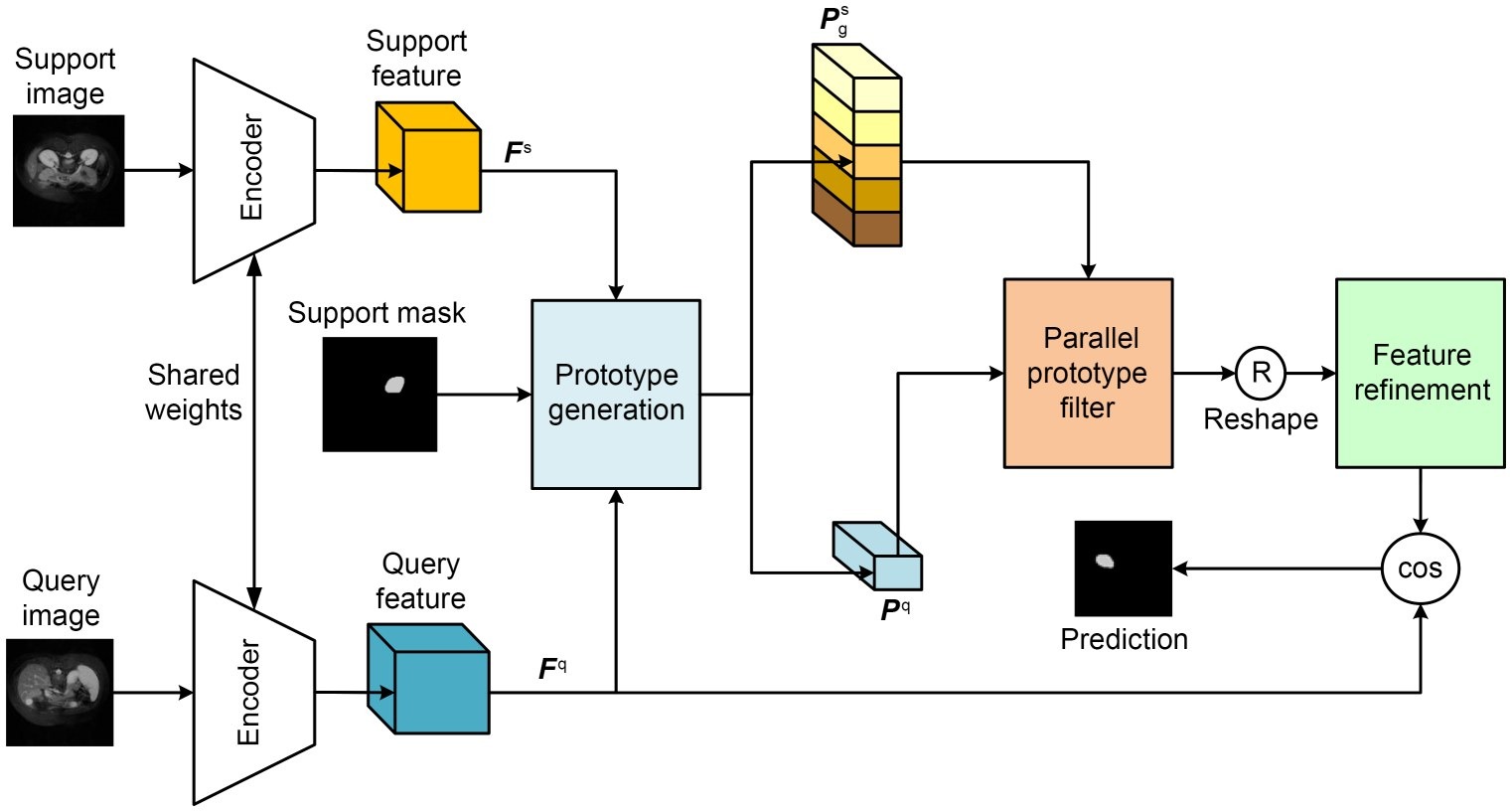
Parallel prototype filter and feature refinement for few-shot medical image segmentation

Authors: Haoxiang ZHU, Houjin CHEN, Yanfeng LI, Jia SUN, Ziwei CHEN, Jiaxin LI

Medical image segmentation is critical for clinical diagnosis, but the scarcity of annotated data limits robust model training, making few-shot learning indispensable. Existing methods often suffer from two issues—performance degradation due to significant inter-class variations in pathological structures, and overreliance on attention mechanisms with high computational complexity (O(n²)), which hinders the efficient modeling of long-range dependencies. In contrast, the state space model (SSM) o

Parallel prototype filter and feature refinement for few-shot medical image segmentation
Graphical Abstract
Original ResearchVol. 32, Issue 8 • pp. 235-247DOI: 10.1631/FITEE_2400513Aug 16, 2025

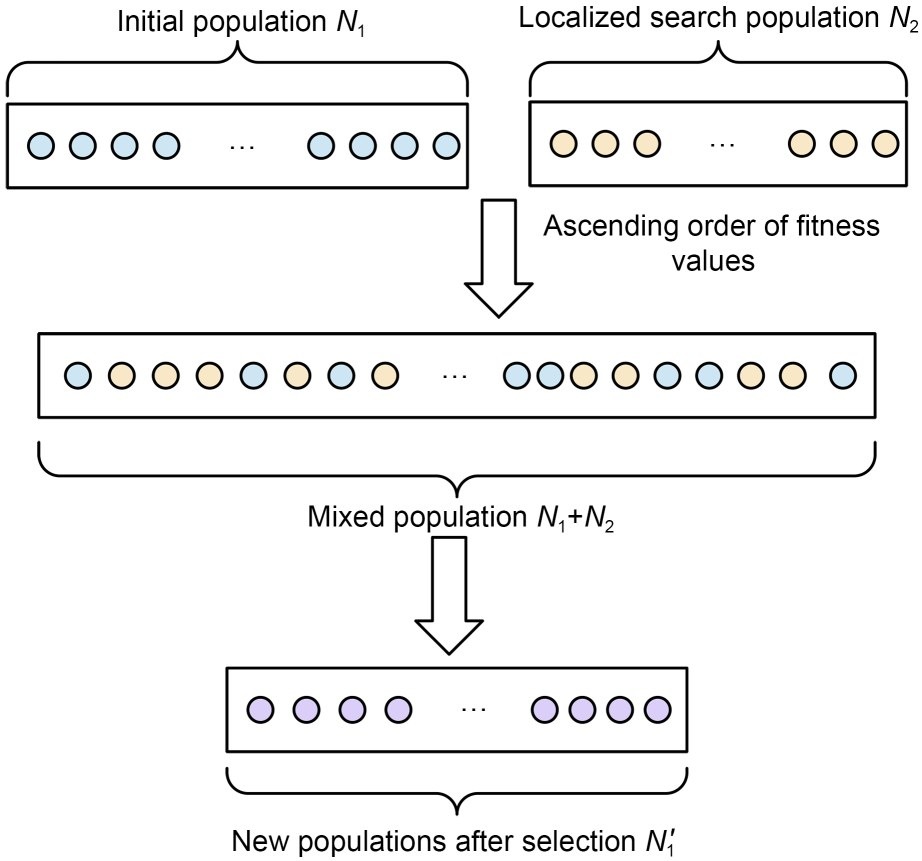
A power optimization approach for mixed polarity Reed–Muller logic circuits based on multi-strategy fusion memetic algorithm

Authors: Mengyu ZHANG, Zhenxue HE, Yijin WANG, Xiaojun ZHAO, Xiaodan ZHANG, Limin XIAO, Xiang WANG

The power optimization of mixed polarity Reed–Muller (MPRM) logic circuits is a classic combinatorial optimization problem. Existing optimization approaches often suffer from slow convergence and a propensity to converge to local optima, limiting their effectiveness in achieving optimal power efficiency. First, we propose a novel multi-strategy fusion memetic algorithm (MFMA). MFMA integrates global exploration via the chimp optimization algorithm with local exploration using the coati optimizat

A power optimization approach for mixed polarity Reed–Muller logic circuits based on multi-strategy fusion memetic algorithm
Graphical Abstract
Original ResearchVol. 32, Issue 8 • pp. 471-483DOI: 10.1631/FITEE_2500402Aug 15, 2025

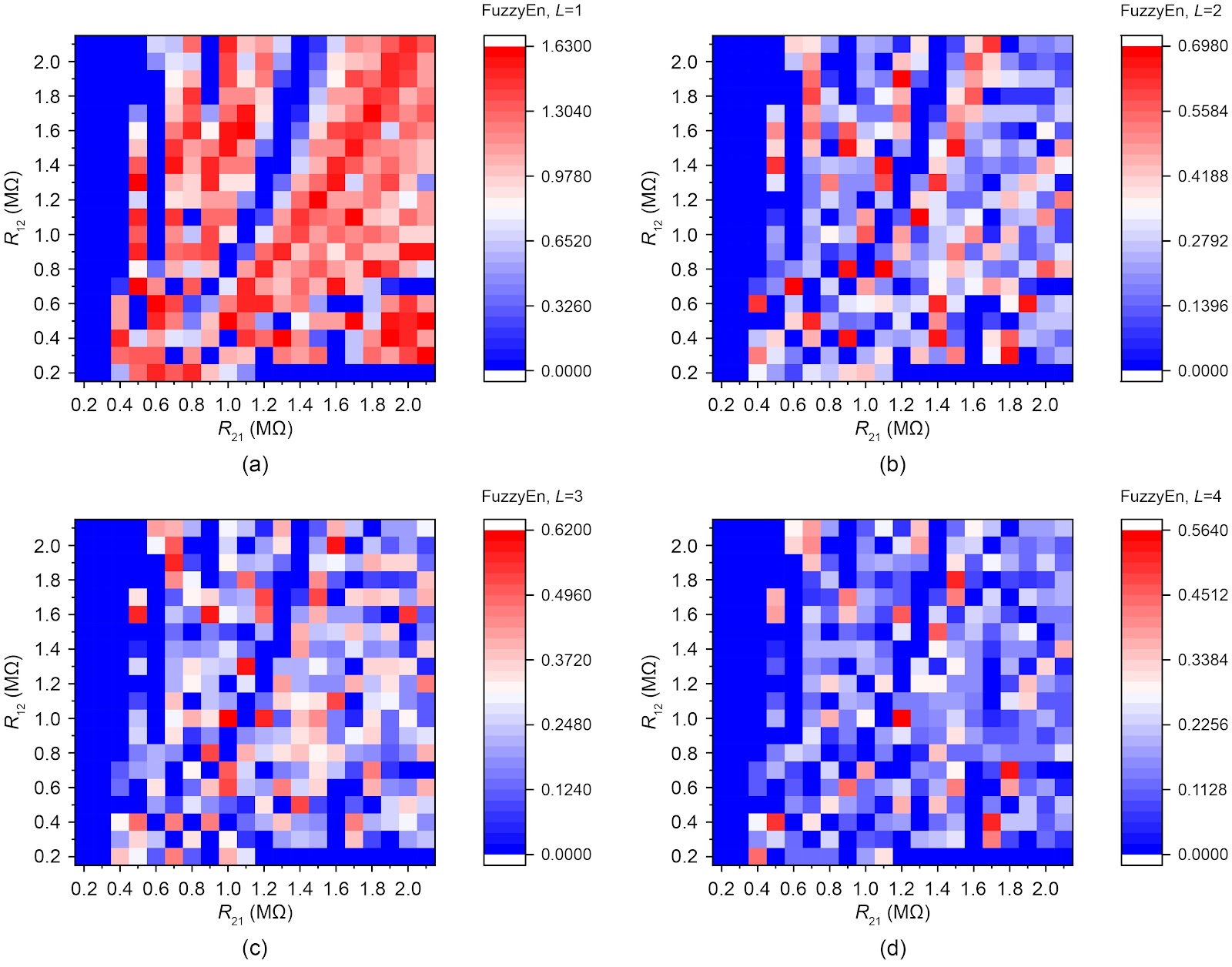
Entropy-statistical approach to phase-locking detection of oscillations

Authors: Petr BORISKOV, Vadim PUTROLAYNEN, Andrei VELICHKO, Kristina PELTONEN

This study proposes a method for analyzing synchronization in oscillator systems, illustrated by modeling the dynamics of a circuit of two resistively coupled pulse oscillators. The dynamic characteristic of synchronization is the fuzzy entropy (FuzzyEn), which is calculated from a time series composed of the ratios of the number of pulse periods (subharmonic ratio, SHR) at phase-locking intervals. Low and high entropy values indicate strong and weak synchronization between the two oscillators,

Entropy-statistical approach to phase-locking detection of oscillations
Graphical Abstract
Original ResearchVol. 32, Issue 8 • pp. 643-655DOI: 10.1631/FITEE_2400080Aug 13, 2025

Frequency-learning adversarial networks based on transfer learning for cross-scenario signal modulation classification

Authors: Qinyan MA, Jing XIAO, Zeqi SHAO, Duona ZHANG, Yufeng WANG, Wenrui DING

Automatic modulation classification (AMC) serves a challenging yet crucial role in wireless communications. Despite deep learning-based approaches being widely used in signal processing, they are challenged by signal distribution variations, especially in various channel conditions. In this paper, we introduce an adversarial transfer framework named frequency-learning adversarial networks (FLANs) based on transfer learning for cross-scenario signal classification. This method uses the stability

Frequency-learning adversarial networks based on transfer learning for cross-scenario signal modulation classification
Graphical Abstract
Original ResearchVol. 32, Issue 8 • pp. 251-263DOI: 10.1631/FITEE_2400471Aug 10, 2025

A unified shared control architecture for underwater vehicle–manipulator systems using task priority

Authors: Zhangpeng TU, Yuanchao ZHU, Xin WU, Canjun YANG

It is challenging for underwater vehicle–manipulator systems (UVMSs) to operate autonomously in unstructured underwater environments. Relying solely on teleoperation for both underwater vehicle (UV) and underwater manipulator (UM) imposes a considerable cognitive and physical load on the operator. In this paper, we propose a unified shared control (USC) architecture for the UVMS, integrating divisible shared control (DSC) and interactive shared control (ISC) to alleviate the operator’s workload.

A unified shared control architecture for underwater vehicle–manipulator systems using task priority
Graphical Abstract
Original ResearchVol. 32, Issue 8 • pp. 423-435DOI: 10.1631/ENG_ITEE_2025_0023Aug 8, 2025

Miniaturized bandpass filter with a wide upper stopband using isomeric resonators in a cavity

Authors: Chengyang Zhang, Ying Xue, Qingyuan Lu, Jianxin Chen

This paper presents a miniaturized bandpass filter (BPF) with a wide upper stopband employing isomeric resonators inside a cavity. The filter consists of two ridge waveguide (WG) resonators coupled through a half-wavelength resonant slot (HWRS) resonator. A tuning post (Tup) embedded in the central region of the ridge significantly reduces the resonant frequency of the fundamental TE101 mode while leaving the first harmonic TE102 mode almost unchanged, thereby enabling both miniaturization and w

Miniaturized bandpass filter with a wide upper stopband using isomeric resonators in a cavity
Graphical Abstract
Original ResearchVol. 32, Issue 8 • pp. 659-671DOI: 10.1631/FITEE_2520000Aug 7, 2025

Theories and applications of financial large models

Authors: Shuoling LIU, Xiaojun ZENG, Xiu LI, Qiang YANG

This editorial introduces the Special Feature on 'Theories and Applications of Financial Large Models' in Frontiers of Information Technology & Electronic Engineering. It highlights the transformative impact of foundation models on financial technology, outlines the scope of the special issue, and summarizes the eight accepted papers across three themes: foundational frameworks, theoretical advances, and application-oriented research. The aim is to bridge theoretical research and practical deplo

Theories and applications of financial large models
Graphical Abstract
Original ResearchVol. 32, Issue 8 • pp. 831-843DOI: 10.1631/FITEE_2400800Aug 5, 2025

TransRAG for parallel transportation: toward reliable and trustworthy transportation systems via retrieval-augmented generation

Authors: Jing Yang, Xingyuan Dai, Yisheng Lv, Levente Kovács, Fei-Yue Wang

Parallel transportation serves as a holistic paradigm for achieving intelligent traffic management and control, focusing on addressing the complexity of human and social factors. Recently, the emergence and development of foundational models (FMs) have ushered in a new era for the realization of parallel transportation. However, the inherent issues of “hallucinations,” outdated knowledge, and the “black-box” nature of FMs render their generated decisions unreliable and untrustworthy. To address

TransRAG for parallel transportation: toward reliable and trustworthy transportation systems via retrieval-augmented generation
Graphical Abstract
Original ResearchVol. 32, Issue 8 • pp. 267-279DOI: 10.1631/FITEE_2500541Aug 4, 2025

Eixão-UAM: LLM-assisted iterative design of a low-altitude urban air mobility corridor in Brasilia

Authors: Li WEIGANG, Juliano Adorno MAIA, Emilia STENZEL, Lucas Ramson SIEFERT

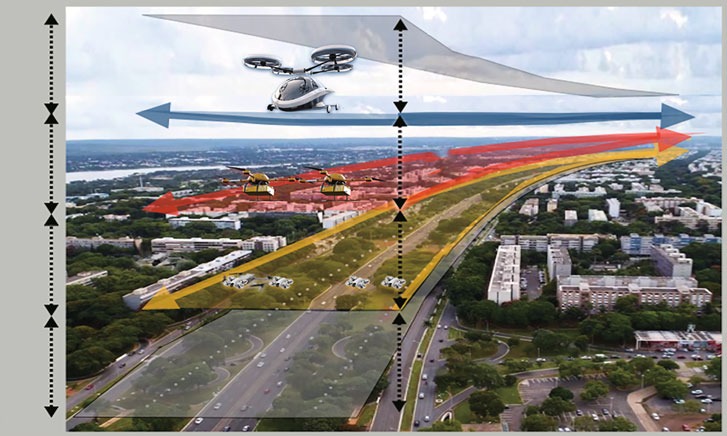
The development of urban air mobility (UAM) systems requires scalable, regulation-aware planning of low-altitude airspace and supporting infrastructure. This study proposes an end-to-end framework for the design, simulation, and iterative optimization of a structured UAM corridor over Brasilia's central road axis (Eixão-UAM), aligned with the Brazilian unmanned aircraft traffic management (BR-UTM) ecosystem. In addition, this study proposes a multilayered aerial configuration stratified by unman

Eixão-UAM: LLM-assisted iterative design of a low-altitude urban air mobility corridor in Brasilia
Graphical Abstract
Original ResearchVol. 32, Issue 8 • pp. 439-451DOI: 10.1631/FITEE_2400465Aug 2, 2025

A UAV-enabled mobile edge computing paradigm for dependent tasks based on a computing power pool

Authors: Xuebin LAI, Yan GUO, Ming HE, Hao YUAN, Wei LI, Xiaonan CUI

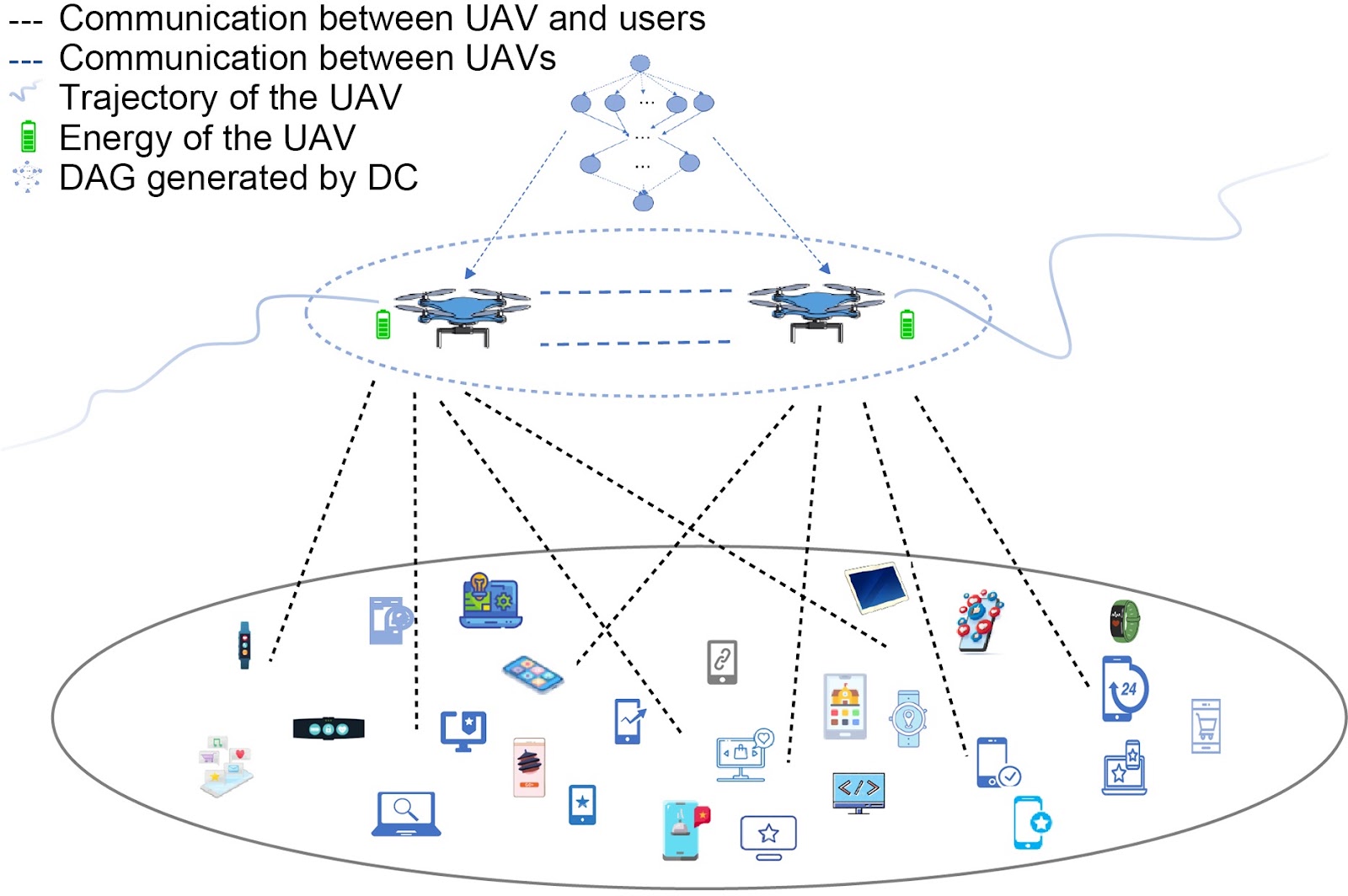
With the evolution of 5th generation (5G) and 6th generation (6G) wireless communication technologies, various Internet of Things (IoT) devices and artificial intelligence applications are proliferating, putting enormous pressure on existing computing power networks. Unmanned aerial vehicle (UAV)-enabled mobile edge computing (U-MEC) shows potential to alleviate this pressure and has been recognized as a new paradigm for responding to data explosion. Nevertheless, the conflict between computing

A UAV-enabled mobile edge computing paradigm for dependent tasks based on a computing power pool
Graphical Abstract
Original ResearchVol. 32, Issue 7 • pp. 422-434DOI: 10.1631/FITEE_2400453Jul 24, 2025

Minimizing transformer inference overhead using controlling element on Shenwei AI accelerator

Authors: Yulong ZHAO, Chunzhi WU, Yizhuo WANG, Lufei ZHANG, Yaguang ZHANG, Wenyuan SHEN, Hao FAN, Hankang FANG, Yi QIN, Xin LIU

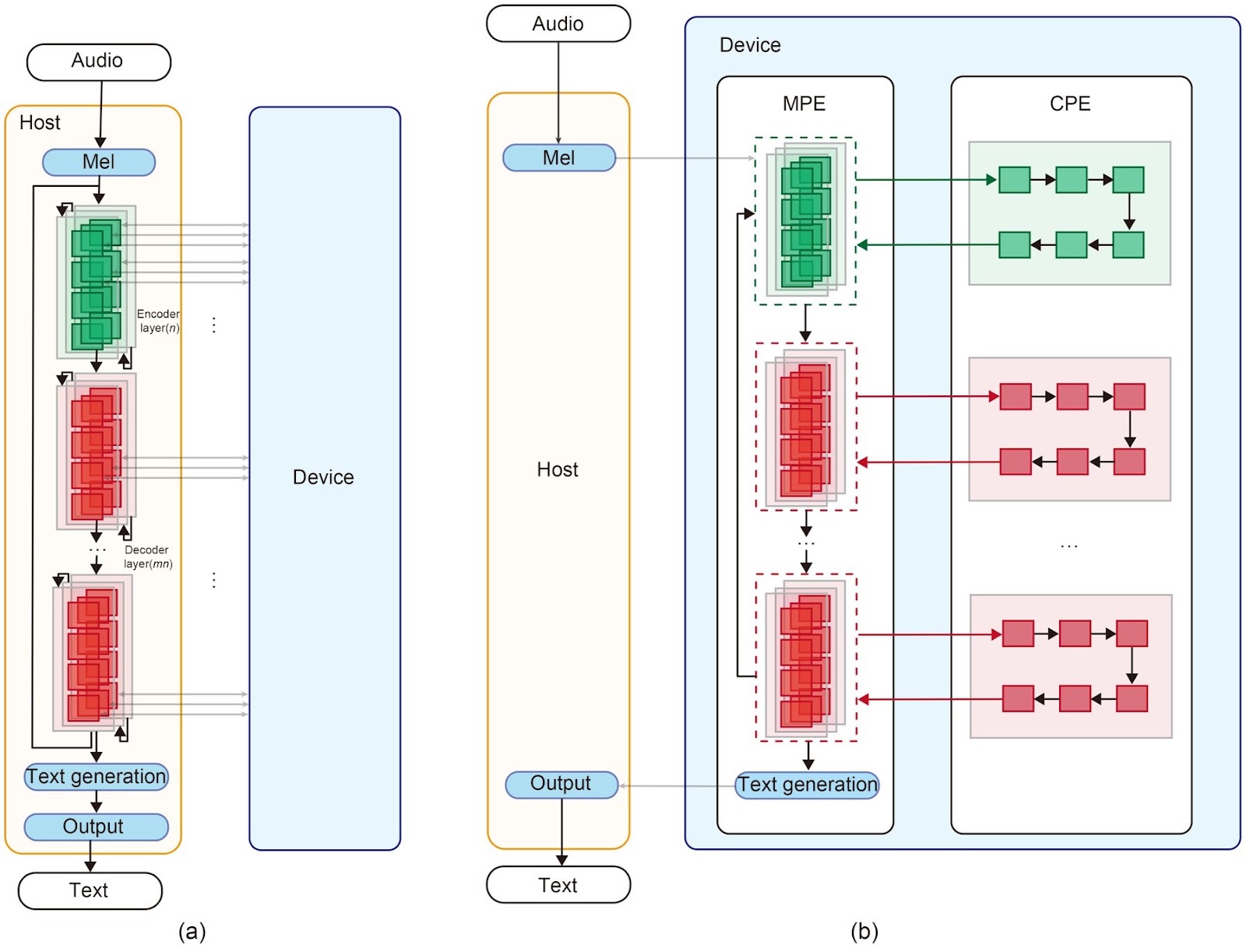
Transformer models have become a cornerstone of various natural language processing (NLP) tasks. However, the substantial computational overhead during the inference remains a significant challenge, limiting their deployment in practical applications. In this study, we address this challenge by minimizing the inference overhead in transformer models using the controlling element on artificial intelligence (AI) accelerators. Our work is anchored by four key contributions. First, we conduct a comp

Minimizing transformer inference overhead using controlling element on Shenwei AI accelerator
Graphical Abstract
Original ResearchVol. 32, Issue 7 • pp. 830-842DOI: 10.1631/FITEE_2400449Jul 21, 2025

An Efficient Multi-Bernoulli Filter for Tracking Multiple Maritime Dim Targets

Authors: Liwei Shi, Yunfei Guo, Wenxiong Cui, Yanbo Xue, Yun Chen

For the problem of tracking maritime dim targets, the sequential Monte–Carlo multi-Bernoulli track-before-detect (SMC-MB-TBD) method is popular. However, this method may face low tracking accuracy and tracking loss due to particle impoverishment and velocity uncertainty. In this study, a novel filter called position scaling and velocity correction multi-Bernoulli (PSVC-MB) is proposed to deal with this problem. First, particle position scaling is used to replace resampling in the SMC-MB-TBD meth

An Efficient Multi-Bernoulli Filter for Tracking Multiple Maritime Dim Targets
Graphical Abstract
Original ResearchVol. 32, Issue 7 • pp. 438-450DOI: 10.1631/FITEE_2400700Jul 18, 2025

Design of omnidirectional Rydberg atomic sensors loaded with electric field enhancement structure using characteristic mode analysis

Authors: Zhenke DING, Yi LIU, Bo WU, Kai YANG, Ruibing RAN, Yi LIN, Yunqi FU

The integration of electric field enhancement structures (EFESs) with Rydberg atomic sensors (RASs) has garnered considerable interest due to their potential to enhance detection sensitivity in quantum measurement systems. Despite this, there is a dearth of research on the directional response of EFES, and the analysis of the three-dimensional (3D) patterns of RAS remains a formidable challenge. RASs are employed in non-destructive measurement techniques, and are responsive to electric fields, p

Design of omnidirectional Rydberg atomic sensors loaded with electric field enhancement structure using characteristic mode analysis
Graphical Abstract
Original ResearchVol. 32, Issue 7 • pp. 610-622DOI: 10.1631/ENG_ITEE_2025_0080Jul 16, 2025

Hierarchical algorithm for large-scale irregular packing problems

Authors: Xiao LIU

To address the challenge of large-scale packing problems, this paper proposes a novel hierarchical algorithm based on the geometrical classification of parts. The algorithm begins by classifying parts into three levels based on their area and fullness and then applies distinct packing strategies to each category. An innovative “shape matching” method is introduced, which, together with the “box stacking” (for rectangular parts) and “gravity packing,” forms a comprehensive hierarchical packing sy

Hierarchical algorithm for large-scale irregular packing problems
Graphical Abstract
Original ResearchVol. 32, Issue 7 • pp. 846-858DOI: 10.1631/FITEE_2400994Jul 15, 2025

An adaptive outlier correction quantization method for vision Transformers

Authors: Zheyang LI, Chaoxiang LAN, Kai ZHANG, Wenming TAN, Ye REN, Jun XIAO

Transformers have demonstrated considerable success across various domains but are constrained by their significant computational and memory requirements. This poses challenges for deployment on resource-constrained devices. Quantization, as an effective model compression method, can significantly reduce the operational time of Transformers on edge devices. Notably, Transformers display more substantial outliers than convolutional neural networks, leading to uneven feature distribution among dif

An adaptive outlier correction quantization method for vision Transformers
Graphical Abstract
Original ResearchVol. 32, Issue 7 • pp. 218-230DOI: 10.1631/FITEE_2400406Jul 13, 2025

Significance extraction based on data augmentation for reinforcement learning

Authors: Yuxi HAN, Dequan LI, Yang YANG

Deep reinforcement learning has shown remarkable capabilities in visual tasks, but it does not have a good generalization ability in the context of interference signals in the input images; this approach is therefore hard to be applied to trained agents in a new environment. To enable agents to distinguish between noise signals and important pixels in images, data augmentation techniques and the establishment of auxiliary networks are proven effective solutions. We introduce a novel algorithm, n

Significance extraction based on data augmentation for reinforcement learning
Graphical Abstract
Original ResearchVol. 32, Issue 7 • pp. 626-638DOI: 10.1631/FITEE_2400448Jul 10, 2025

Federated deep reinforcement learning based computation offloading in a low Earth orbit satellite edge computing system

Authors: Min JIA, Jian WU, Xinyu WANG, Qing GUO

Recent studies have shown that system capacity is very important for cellular networks. In this paper, we consider maximizing the weighted sum-rate of the cellular network downlink and uplink, where each cell consists of a full-duplex (FD) base station (BS) and half-duplex (HD) users. Federated learning (FL) can train models in the absence of centralized data, which can achieve privacy protection of user data. A low Earth orbit (LEO) satellite edge computing system (LSECS) can be formed by placi

Federated deep reinforcement learning based computation offloading in a low Earth orbit satellite edge computing system
Graphical Abstract
Original ResearchVol. 32, Issue 7 • pp. 234-246DOI: 10.1631/FITEE_2400530Jul 7, 2025

FedMcon: an adaptive aggregation method for federated learning via meta controller

Authors: Tao SHEN, Zexi LI, Ziyu ZHAO, Didi ZHU, Zheqi LV, Kun KUANG, Shengyu ZHANG, Chao WU, Fei WU

Federated learning (FL) emerged as a novel machine learning setting that enables collaboratively training deep models on decentralized clients with privacy constraints. In the vanilla federated averaging algorithm (FedAvg), the global model is generated by the weighted linear combination of local models, and the weights are proportional to the local data sizes. This methodology, however, encounters challenges when facing heterogeneous and unknown client data distributions, often leading to discr

FedMcon: an adaptive aggregation method for federated learning via meta controller
Graphical Abstract
Original ResearchVol. 32, Issue 7 • pp. 406-418DOI: 10.1631/ENG_ITEE_2025_0110Jul 5, 2025

Design and optimization of a high-efficiency current-biased reverse load modulated power amplifier with impedance and performance constraints

Authors: Zhongpeng NI, Heng ZHANG, Jing XIA, Wence ZHANG, Wa KONG, Chao YU, Xiaowei ZHU

We propose an optimization method based on evolutionary computation for the design of broadband high-efficiency current-biased reverse load-modulation power amplifiers (CB-RLM PAs). First, given the reverse load-modulation characteristics of CB-RLM PAs, a comprehensive objective function is proposed that combines multi-state impedance trajectory constraints with in-band performance deviations. For the saturation and 6 dB power back-off (PBO) states, approximately optimal impedance regions on the

Design and optimization of a high-efficiency current-biased reverse load modulated power amplifier with impedance and performance constraints
Graphical Abstract
Original ResearchVol. 32, Issue 7 • pp. 642-654DOI: 10.1631/FITEE_2500030Jul 4, 2025

A height estimation method based on a beamspace joint alternating iterative algorithm in MIMO radar

Authors: Derui TANG, Yongbo ZHAO, Shuaijie ZHANG

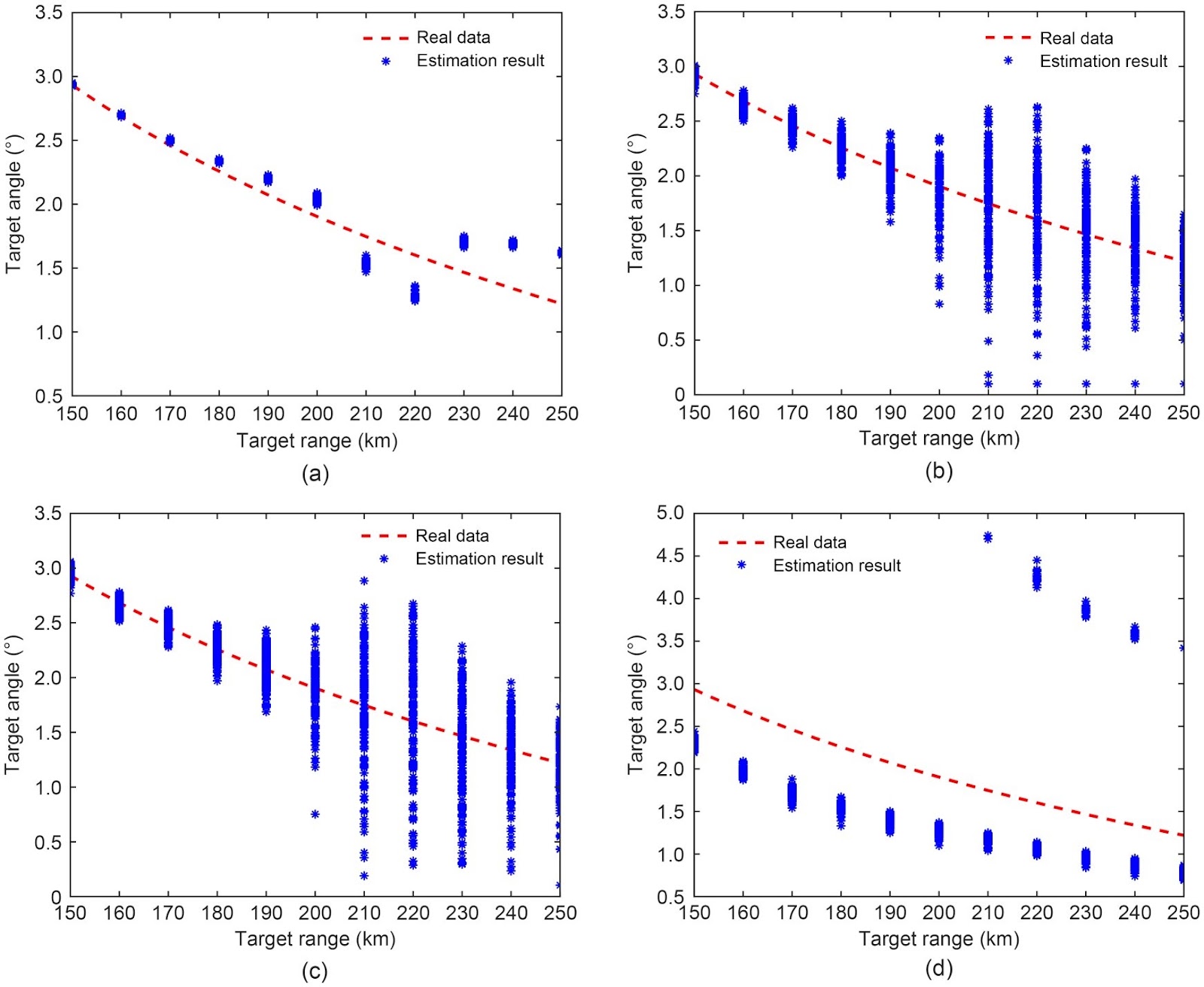
This paper discusses the problem of low-elevation target height estimation for multiple-input multiple-output (MIMO) radar in multipath environments. The beamspace compresses the data and is ideal for reducing the computational burden of elevation estimation. To obtain the height parameter of the target accurately, we propose a height estimation method based on a beamspace joint alternating iterative (BJAI) algorithm in MIMO radar. This method mainly converts the reduced-dimensional MIMO radar e

A height estimation method based on a beamspace joint alternating iterative algorithm in MIMO radar
Graphical Abstract
Original ResearchVol. 32, Issue 7 • pp. 250-262DOI: 10.1631/FITEE_2500286Jul 1, 2025

Bidirectional-pump-controlled reconfigurable nonlinear spoof plasmonic waveguide

Authors: Wenyi Cui, Xinxin Gao, Jingjing Zhang

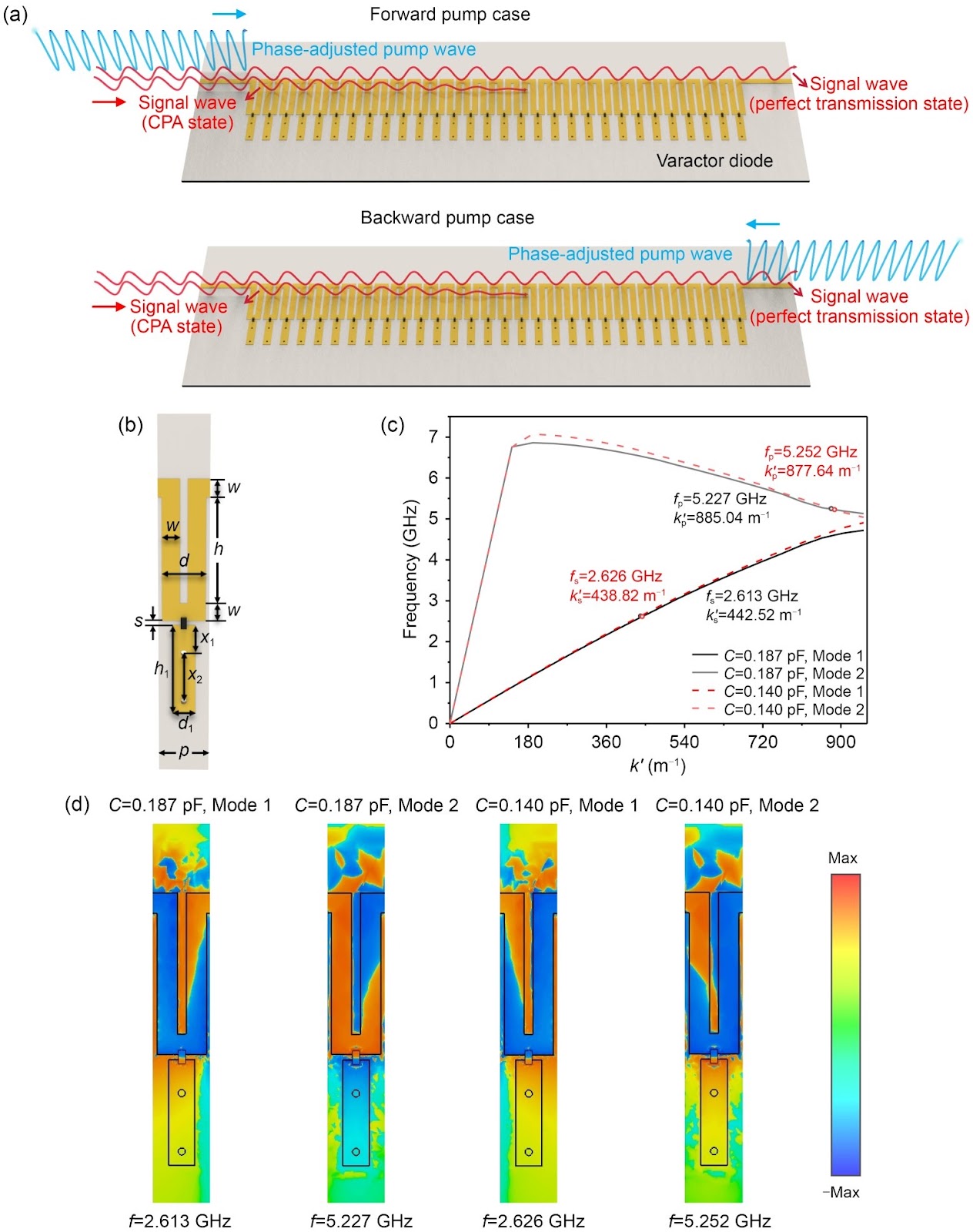
We present a dynamically reconfigurable spoof surface plasmon polariton (SSPP) waveguide capable of bidirectional switching between perfect absorption and perfect transmission through active control. Nonlinear varactor diodes are integrated into the waveguide, enabling degenerate phase matching between pump and signal waves via voltage-tuned dispersion engineering. Three-wave mixing processes are established, allowing bidirectional phase-controlled transitions from destructive to constructive in

Bidirectional-pump-controlled reconfigurable nonlinear spoof plasmonic waveguide
Graphical Abstract
Original ResearchVol. 32, Issue 6 • pp. 797-809DOI: 10.1631/ENG_ITEE_2025_0021Jun 24, 2025

Superresolution reconstruction of E-field for assessing millimeter-wave exposure based on gradient-informed generative adversarial networks with plane-wave integral representation

Authors: Shiwei YI, Congsheng LI, Tongning WU

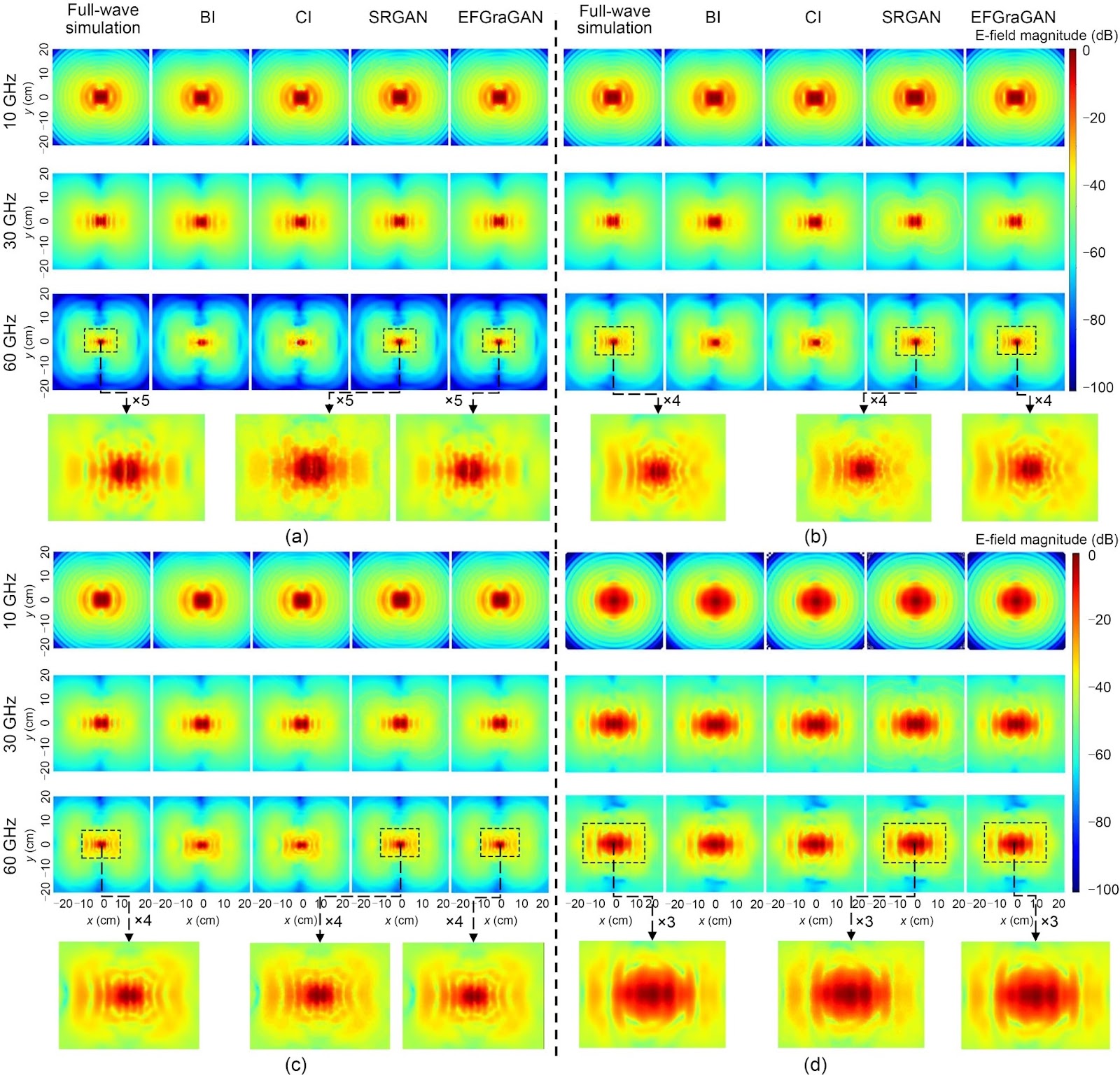
Accurate assessment of human exposure to millimeter-wave (mmWave) electric fields (E-fields) has recently become critical for public health and safety. High-spatial-resolution E-field distribution is required for assessment of mmWave electromagnetic exposure according to the International Electrotechnical Commission (IEC) and the Institute of Electrical and Electronics Engineers (IEEE) (IEC/IEEE 63195-2 standard). This study proposes a generative adversarial network (GAN) integrated with field g

Superresolution reconstruction of E-field for assessing millimeter-wave exposure based on gradient-informed generative adversarial networks with plane-wave integral representation
Graphical Abstract
Original ResearchVol. 32, Issue 6 • pp. 233-245DOI: 10.1631/FITEE_2500173Jun 23, 2025

Uplink puncturing for mixed URLLC and eMBB services in 5G-based IWNs: a model-aided DRL method

Authors: Jingfang DING, Meng ZHENG, Haibin YU, Yitian WANG, Chi XU

The coexistence of ultra-reliable low-latency communication (URLLC) and enhanced mobile broadband (eMBB) services in 5G-based industrial wireless networks (IWNs) poses significant resource slicing challenges due to their inherent performance requirement conflicts. To address this challenge, this paper proposes a puncturing method that uses a model-aided deep reinforcement learning (DRL) algorithm for URLLC over eMBB services in uplink 5G networks. First, a puncturing-based optimization problem i

Uplink puncturing for mixed URLLC and eMBB services in 5G-based IWNs: a model-aided DRL method
Graphical Abstract
Original ResearchVol. 32, Issue 6 • pp. 405-417DOI: 10.1631/FITEE_2400035Jun 21, 2025

Joint active user detection and channel estimation for massive machine-type communications: a difference-of-convex optimization perspective

Authors: Lijun Zhu, Kaihui Liu, Liangtian Wan, Lu Sun, Yifeng Xiong

Sparsity-based joint active user detection and channel estimation (JADCE) algorithms are crucial in grant-free massive machine-type communication (mMTC) systems. The conventional compressed sensing algorithms are tailored for noncoherent communication systems, where the correlation between any two measurements is as minimal as possible. However, existing sparsity-based JADCE approaches may not achieve optimal performance in strongly coherent systems, especially with a small number of pilot subca

Joint active user detection and channel estimation for massive machine-type communications: a difference-of-convex optimization perspective
Graphical Abstract
Original ResearchVol. 32, Issue 6 • pp. 813-825DOI: 10.1631/FITEE_2400944Jun 18, 2025

Miniaturized diplexer with wide-stopband based on half-mode substrate integrated waveguide

Authors: Ziyu Zhou, Gang Dong, Xinqing Lei, Zhangming Zhu

A miniaturized diplexer with a wide-stopband based on half-mode substrate integrated waveguide (HMSIW) is proposed. The diplexer combines a dual-mode resonator (DMR) with single-mode resonators (SMRs). The employment of HMSIW technology breaks through the limitations of SMRs on miniaturization, while effectively addressing the limitation on wide-stopband performance that is typically encountered with the TE202 mode in the SMRs. A second-order prototype, centered at 10.34 GHz and 13.90 GHz, has b

Miniaturized diplexer with wide-stopband based on half-mode substrate integrated waveguide
Graphical Abstract
Original ResearchVol. 32, Issue 6 • pp. 421-433DOI: 10.1631/FITEE_2500118Jun 15, 2025

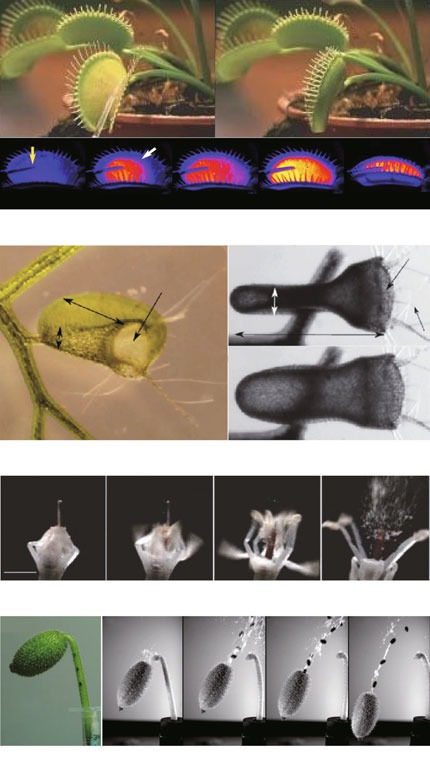
Design of plant-inspired shape-changing interfaces: a review

Authors: Junzhe JI, Chuang CHEN, Boyu FENG, Ye TAO, Guanyun WANG

Shape-changing interfaces use physical changes of shape as input or output to convey information, and interact with users. Plants are natural shape-changing interfaces, expert in adjusting their shape or modality to adapt to the environment. In this paper, plant-derived natural shape-changing phenomena are systematically analyzed. Then, several corresponding plant-inspired design strategies for shape-changing interfaces are summarized with recent advancements including material selections and sy
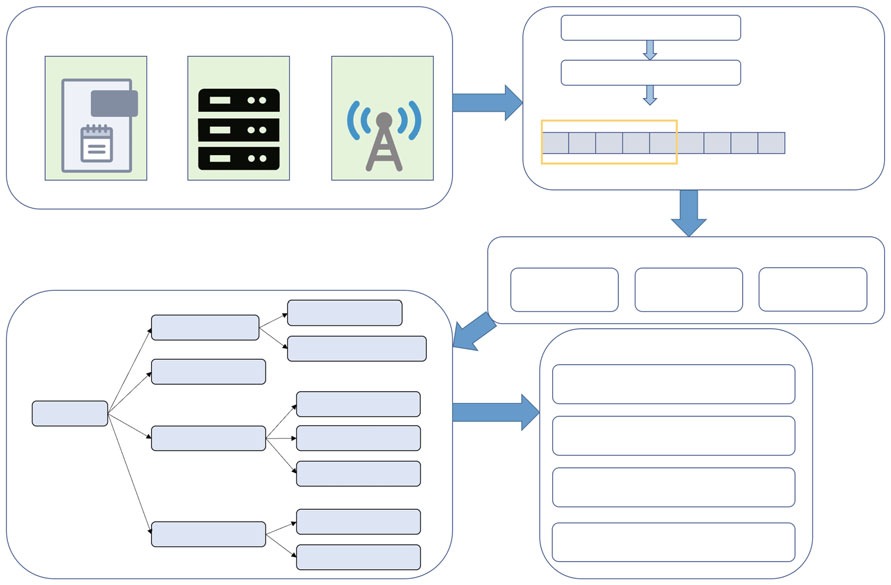
Design of plant-inspired shape-changing interfaces: a review
Graphical Abstract
Original ResearchVol. 32, Issue 6 • pp. 593-605DOI: 10.1631/ENG_ITEE_2025_0159Jun 13, 2025

Leveraging peripheral interactions to improve drivers’ situation awareness and NDRT efficiency

Authors: Hanfei ZHU, Wei XIANG, Yifu ZHANG, Ziyue LEI, Lingyun SUN

L3 automated driving has introduced a trend of drivers engaging in non-driving-related tasks (NDRTs), but it also poses safety challenges for reconstructing drivers’ situation awareness (SA). Two consecutive empirical studies in a driving simulator were conducted to investigate the effect of two peripheral interactions (airflow conveying the intended behaviors of vehicles and surround sound conveying the information of road users) on drivers’ SA performance, NDRT efficiency, workload, and user e
Leveraging peripheral interactions to improve drivers’ situation awareness and NDRT efficiency
Graphical Abstract
Original ResearchVol. 32, Issue 6 • pp. 829-841DOI: 10.1631/FITEE_2500119Jun 12, 2025

Port and radiation pattern decoupled metasurface-loaded patch antenna using deep-learning-assisted optimization for MIMO applications

Authors: Gu LIU, Jiajiang SHEN, Lei MA, Wei QIN, Wenwen YANG, Lei GUO, Jianxin CHEN

A metasurface-loaded 1×2 patch array antenna assisted by a deep-learning optimization method is proposed to realize port and radiation pattern decoupling simultaneously to enhance the isolation among elements in multi-input multi-output (MIMO) systems. The deep-learning-assisted optimization method uses an artificial neural network (ANN) and a particle swarm optimization (PSO) algorithm to seek the optimal structure of the antenna to achieve port decoupling with undistorted radiation patterns. T

Port and radiation pattern decoupled metasurface-loaded patch antenna using deep-learning-assisted optimization for MIMO applications
Graphical Abstract
Original ResearchVol. 32, Issue 6 • pp. 201-213DOI: 10.1631/FITEE_2300816Jun 10, 2025

DRMSpell: dynamically reweighting multimodality for Chinese spelling correction

Authors: Yinghao LI, Heyan HUANG, Baojun WANG, Yang GAO

Chinese spelling correction (CSC) is a task that aims to detect and correct the spelling errors that may occur in Chinese texts. However, the Chinese language exhibits a high degree of complexity, characterized by the presence of multiple phonetic representations known as pinyin, which possess distinct tonal variations that can correspond to various characters. Given the complexity inherent in the Chinese language, the CSC task becomes imperative for ensuring the accuracy and clarity of written

DRMSpell: dynamically reweighting multimodality for Chinese spelling correction
Graphical Abstract
Original ResearchVol. 32, Issue 6 • pp. 437-449DOI: 10.1631/FITEE_2500007Jun 9, 2025

Dynamic joint resource allocation in maritime wireless communication networks: a meta-reinforcement learning approach based on knowledge embedding

Authors: Zhongyang MAO, Zhilin ZHANG, Faping LU, Xiguo LIU, Zhichao XU, Yaozong PAN, Jiafang KANG, Yang YOU

As human exploration of the ocean expands, the demand for continuous, high-quality, and ubiquitous maritime communication is steadily increasing. However, the dynamic nature of the marine environment and resource constraints present significant challenges for traditional heuristic resource allocation methods, complicating the balance between high-quality communication and limited network resources. This results in suboptimal system throughput and an over-reliance on specific problem structures.

Dynamic joint resource allocation in maritime wireless communication networks: a meta-reinforcement learning approach based on knowledge embedding
Graphical Abstract
Original ResearchVol. 32, Issue 6 • pp. 609-621DOI: 10.1631/FITEE_2300873Jun 7, 2025

Spatio-temporal correlation-based incomplete time-series traffic prediction for LEO satellite networks

Authors: Liang Peng, Jie Yan, Peng Wei, Xiaoxiang Wang

Accurate short-term traffic prediction is essential for improving the efficiency of data transmission in low Earth orbit (LEO) satellite networks. However, traffic values may be missing due to collector failures, transmission errors, and memory failures in complex space environments. Incomplete traffic time series prevent the efficient utilization of data, which can significantly reduce the traffic prediction accuracy. To overcome this problem, we propose a novel spatio-temporal correlation-base

Spatio-temporal correlation-based incomplete time-series traffic prediction for LEO satellite networks
Graphical Abstract
Original ResearchVol. 32, Issue 6 • pp. 217-229DOI: 10.1631/FITEE_2400069Jun 4, 2025

SRIS-Net: a robust image steganography algorithm based on feature score maps

Authors: Ai XIAO, Zhi LI, Guomei WANG, Long ZHENG, Haoyuan SUN

Image steganography algorithms based on deep learning are often trained using either spatial- or frequency-domain features. It is difficult for features from a single domain to comprehensively express the content of an entire image, which usually leads to poor performance because steganography is commonly multi-task. To solve this problem, this paper proposes a robust image steganography algorithm based on feature score maps, called the secure and robust image steganography network (SRIS-Net). F

SRIS-Net: a robust image steganography algorithm based on feature score maps
Graphical Abstract
Original ResearchVol. 32, Issue 6 • pp. 453-465DOI: 10.1631/FITEE_2400932Jun 3, 2025

FedSTGCN: a novel federated spatiotemporal graph learning-based network intrusion detection method for the Internet of Things

Authors: Yalu WANG, Jie LI, Zhijie HAN, Pu CHENG, Roshan KUMAR

The rapid growth and increasing complexity of Internet of Things (IoT) devices have made network intrusion detection a critical challenge, especially in edge computing environments where data privacy is a primary concern. Machine learning-based intrusion detection techniques enhance IoT network security but often require centralized network data, posing significant risks to data privacy and security. Although federated learning (FL)-based network intrusion detection methods have emerged in recen

FedSTGCN: a novel federated spatiotemporal graph learning-based network intrusion detection method for the Internet of Things
Graphical Abstract
Original ResearchVol. 32, Issue 6 • pp. 389-401DOI: 10.1631/ENG_ITEE_2025_0024Jun 2, 2025

Energy dynamics and circuit implementation for a neuron with a memcapacitive membrane

Authors: Binchi WANG, Yitong GUO, Guodong REN, Jun MA

The output voltages for the capacitive elements of a neural circuit model can be mapped into dimensionless capacitive variables, which present firing patterns similar to the membrane potentials detected in biological neurons. The inclusion of a memcapacitor also enables consideration of membrane deformation effects, enhancing the model’s capacity to simulate neuronal behavior across varying physiological and environmental conditions. In this study, a capacitor and a memcapacitor are connected th

Energy dynamics and circuit implementation for a neuron with a memcapacitive membrane
Graphical Abstract
Original ResearchVol. 32, Issue 6 • pp. 625-637DOI: 10.1631/FITEE_2400236Jun 1, 2025

Effect of terminal boundary protection on the spread of computer viruses: modeling and simulation

Authors: Kai Gao, Lixin Zhang, Yabing Yao, Yang Yang, Fuzhong Nian

The diversity and complexity of the user population on the campus network increase the risk of computer virus infection during terminal information interactions. Therefore, it is crucial to explore how computer viruses propagate between terminals in such a network. In this study, we establish a novel computer virus spreading model based on the characteristics of the basic network structure and a classical epidemic-spreading dynamics model, adapted to real-world university scenarios. The proposed

Effect of terminal boundary protection on the spread of computer viruses: modeling and simulation
Graphical Abstract
Original ResearchVol. 32, Issue 5 • pp. 372-384DOI: 10.1631/ENG_ITEE_2025_0081May 24, 2025

TP-ViT: truncated uniform-log2 quantizer and progressive bit-decline reconstruction for vision Transformer quantization

Authors: Xichuan ZHOU, Sihuan ZHAO, Rui DING, Jiayu SHI, Jing NIE, Lihui CHEN, Haijun LIU

Vision Transformers (ViTs) have achieved remarkable success across various artificial intelligence-based computer vision applications. However, their demanding computational and memory requirements pose significant challenges for deployment on resource-constrained edge devices. Although post-training quantization (PTQ) provides a promising solution by reducing model precision with minimal calibration data, aggressive low-bit quantization typically leads to substantial performance degradation. To

TP-ViT: truncated uniform-log2 quantizer and progressive bit-decline reconstruction for vision Transformer quantization
Graphical Abstract
Original ResearchVol. 32, Issue 5 • pp. 608-620DOI: 10.1631/FITEE_2401012May 23, 2025

Full-defense framework: multi-level deepfake detection and source tracing

Authors: Hui SHI, Guibin WANG, Yanni LI, Rujia QI

Deepfake poses significant threats to various fields, including politics, journalism, and entertainment. Although many defense methods against deepfake have been proposed based on either passive detection or proactive defense, few have achieved both passive detection and proactive defense. To address this issue, we propose a full-defense framework (FDF) based on cross-domain feature fusion and separable watermarks (SepMark) to achieve copyright protection and deepfake detection, combining the id

Full-defense framework: multi-level deepfake detection and source tracing
Graphical Abstract
Original ResearchVol. 32, Issue 5 • pp. 780-792DOI: 10.1631/ENG_ITEE_2025_0156May 21, 2025

HyRAS: a hybrid redundancy- and serialization-based fault-tolerant architecture for through-silicon vias

Authors: Chenglong SUN, Yanqing ZHOU, Qi WANG, Yan ZHANG

Three-dimensional network-on-chips (3D NoCs) are increasingly used to improve scalability in multicore systems. Through-silicon via (TSV) is a critical technology for enabling vertical interconnects between NoC layers. However, TSV-based interlayer connections are highly prone to faults resulting from manufacturing defects, aging, or other sources, which compromise system reliability. To address these challenges, particularly in chiplet-based 3D NoCs, robust fault-tolerant mechanisms are crucial

HyRAS: a hybrid redundancy- and serialization-based fault-tolerant architecture for through-silicon vias
Graphical Abstract
Original ResearchVol. 32, Issue 5 • pp. 216-228DOI: 10.1631/FITEE_2530000May 20, 2025

Engineering and technology for low-altitude economy infrastructure

Authors: Zhijie Chen, Heung-Yeung Shum, Xianbin Cao, Mark Hansen

The market of low-altitude economy has the potential to reach trillion dollars in 10 years globally. In China, it serves as a hallmark of national strategic emerging industries, and represents new quality productive forces. Exploring innovative engineering and technologies for low-altitude economy infrastructure is expected to promote sustainable growth in this sector. The scope of the low-altitude economy spans from the ground to the air, with its infrastructure encompassing various aspects suc

Engineering and technology for low-altitude economy infrastructure
Graphical Abstract
Original ResearchVol. 32, Issue 5 • pp. 388-400DOI: 10.1631/FITEE_2400102May 18, 2025

XIRAC: an optimized product-oriented near-real-time operating system with unlimited tasks and an innovative programming paradigm based on the maximum entropy method

Authors: Alireza ZIRAK

In the fiercely competitive landscape of product-oriented operating systems, including the Internet of Things (IoT), efficiently managing a substantial stream of real-time tasks coexisting with resource-intensive user applications embedded in constrained hardware presents a significant challenge. Bridging the gap between embedded and general-purpose operating systems, we introduce XIRAC, an optimized operating system shaped by information-theory principles. XIRAC leverages Shannon’s information

XIRAC: an optimized product-oriented near-real-time operating system with unlimited tasks and an innovative programming paradigm based on the maximum entropy method
Graphical Abstract
Original ResearchVol. 32, Issue 5 • pp. 796-808DOI: 10.1631/FITEE_2400547May 15, 2025

An end-to-end automatic methodology to accelerate the accuracy evaluation of deep neural networks under hardware transient faults

Authors: Jiajia JIAO, Ran WEN, Hong YANG

Hardware transient faults are proven to have a significant impact on deep neural networks (DNNs), whose safety-critical misclassification (SCM) in autonomous vehicles, healthcare, and space applications is increased up to four times. However, the inaccuracy evaluation using accurate fault injection is time-consuming and requires several hours and even a couple of days on a complete simulation platform. To accelerate the evaluation of hardware transient faults on DNNs, we design a unified and end

An end-to-end automatic methodology to accelerate the accuracy evaluation of deep neural networks under hardware transient faults
Graphical Abstract
Original ResearchVol. 32, Issue 5 • pp. 404-416DOI: 10.1631/FITEE_2400677May 12, 2025

Algorithm and evaluation of generating pseudo-datasets for integrated circuit power analysis

Authors: Zejia Lyu, Jizhong Shen, Xi Chen

Average power analysis plays a crucial role in the design of large-scale digital integrated circuits (ICs). The integration of data-driven machine learning (ML) methods into the electronic design automation (EDA) fields has increased the demand for extensive datasets. To address this need, we propose a novel pseudo-circuit generation algorithm rooted in graph topology. This algorithm efficiently produces a multitude of power analysis examples by converting randomly generated directed acyclic gra

Algorithm and evaluation of generating pseudo-datasets for integrated circuit power analysis
Graphical Abstract
Original ResearchVol. 32, Issue 5 • pp. 576-588DOI: 10.1631/ENG_ITEE_2025_0047May 10, 2025

DDiNER: domain dictionary-guided Chinese named entity recognition for complex industrial contexts

Authors: Ronghui LIU, Wei CUI, Xiaojun LIANG, Weihua GUI

Accurate Chinese named entity recognition (NER) in the process industry is crucial for applications such as information extraction, knowledge graph construction, and intelligent decision-making. However, challenges, including ambiguous entity boundaries, semantic overlaps, and limited annotated data, significantly hinder performance. To address these issues, this study proposes DDiNER, a domain dictionary-guided Chinese NER framework that integrates a hierarchical industrial domain dictionary wi

DDiNER: domain dictionary-guided Chinese named entity recognition for complex industrial contexts
Graphical Abstract
Original ResearchVol. 32, Issue 5 • pp. 812-824DOI: 10.1631/FITEE_2500582May 9, 2025

AI-agent communication network for 6G: vision, architecture, and key technologies

Authors: Xiaodong Duan, Zhenglei Huang, Shiyu Liang, Shaowen Zheng, Lu Lu, Tao Sun

The booming of artificial intelligence (AI) agents has brought about promising business scenarios for sixth-generation (6G) mobile networks, while simultaneously posing significant challenges to network functionalities and infrastructure. These AI agents can be deployed on end devices (e.g., intelligent robots and intelligent cars) or as digital entities (e.g., personal AI assistants). As novel service entities with autonomous decision-making and task execution capabilities, AI agents introduce

AI-agent communication network for 6G: vision, architecture, and key technologies
Graphical Abstract
Original ResearchVol. 32, Issue 5 • pp. 184-196DOI: 10.1631/FITEE_2300795May 7, 2025

A review of flexible job shop scheduling problems considering transportation vehicles

Authors: Bin Xin, Sai Lu, Qing Wang, Fang Deng

The flexible job shop scheduling problem for processing machines and transportation vehicles (FJSP_PT) has garnered significant attention from academia and industry. Due to the inclusion of transportation vehicle scheduling in the scheduling problem of flexible manufacturing systems, solving FJSP_PT becomes more challenging and significantly more practically relevant compared to the flexible job shop scheduling problem. We summarize the assumptions, constraints, objective functions, and benchmar

A review of flexible job shop scheduling problems considering transportation vehicles
Graphical Abstract
Original ResearchVol. 32, Issue 5 • pp. 420-432DOI: 10.1631/FITEE_2500353May 6, 2025

Robust design for IRS-assisted multiuser systems under practical imperfections: a rate-splitting approach

Authors: Xingyu Peng, Qin Tao, Xiaoming Chen

In practical intelligent reflecting surface (IRS)-assisted multiuser communication systems, inevitable imperfections such as hardware impairments, imperfect channel state information (CSI), and the limited resolution of the IRS phase shifts would introduce interference and thus cause significant performance degradation. As an interference management strategy, rate-splitting multiple access (RSMA) employs the rate-splitting (RS) principle to partition user information into common and private part

Robust design for IRS-assisted multiuser systems under practical imperfections: a rate-splitting approach
Graphical Abstract
Original ResearchVol. 32, Issue 5 • pp. 592-604DOI: 10.1631/FITEE_2400602May 4, 2025

Memory-efficient tensor parallelism for long-sequence Transformer training

Authors: Peng LIANG, Linbo QIAO, Yanqi SHI, Hao ZHENG, Yu TANG, Dongsheng LI

Transformer-based models like large language models (LLMs) have attracted significant attention in recent years due to their superior performance. A long sequence of input tokens is essential for industrial LLMs to provide better user services. However, memory consumption increases quadratically with the increase of sequence length, posing challenges for scaling up long-sequence training. Current parallelism methods produce duplicated tensors during execution, leaving space for improving memory

Memory-efficient tensor parallelism for long-sequence Transformer training
Graphical Abstract
Original ResearchVol. 32, Issue 5 • pp. 200-212DOI: 10.1631/FITEE_2400613May 1, 2025

An optimized formula for the two-point resistance of a cobweb resistance network and its potential application

Authors: Yu Guan, Xiaoyu Jiang, Yanpeng Zheng, Zhaolin Jiang

In recent years, the exploration and application of resistance networks have expanded significantly, and solving the equivalent resistance between two points of a resistance network has been an important topic. In this paper, we focus on optimizing the formula for calculating the two-point resistance of an m × n cobweb resistance network with 2r boundary conditions. To improve the computational efficiency of the equivalent resistance between two points, the formula is optimized by using the opti

An optimized formula for the two-point resistance of a cobweb resistance network and its potential application
Graphical Abstract
Original ResearchVol. 32, Issue 4 • pp. 183-195DOI: 10.1631/FITEE_2500035Apr 23, 2025

Spatial crowdsourcing task allocation for heterogeneous multi-task hybrid scenarios: a model-embedded role division approach

Authors: Zhenhui FENG, Renbin XIAO, Mingzhi XIAO

Spatial crowdsourcing (SC), as an effective paradigm for accomplishing spatiotemporal tasks, has gradually attracted widespread attention from both industry and academia. With the advancement of mobile technology, the service modes of SC have become more diversified and flexible, aiming to better meet the variable requirements of users. However, most research has focused on homogeneous task allocation problems under a single service model, without considering the individual differences among tas

Spatial crowdsourcing task allocation for heterogeneous multi-task hybrid scenarios: a model-embedded role division approach
Graphical Abstract
Original ResearchVol. 32, Issue 4 • pp. 355-367DOI: 10.1631/ENG_ITEE_2025_0173Apr 21, 2025

Key technologies of vertical take-off and landing infrastructure for urban air mobility: a comprehensive review

Authors: Chenglong LI, Runming WANG, Zhaoxuan ZHANG, Yuan ZHENG, Yang WANG, Rui YANG

As the frontier of multidimensional transportation systems, urban air mobility (UAM) is receiving increasing attention from international organizations, governments, and stakeholders in industry and academia owing to its high efficiency, low carbon footprint, and operational flexibility. Vertical take-off and landing (VTOL) infrastructure is the core facility that enables UAM and is therefore essential for its safe, efficient, and large-scale commercial implementation. However, the key technolog

Key technologies of vertical take-off and landing infrastructure for urban air mobility: a comprehensive review
Graphical Abstract
Original ResearchVol. 32, Issue 4 • pp. 591-603DOI: 10.1631/FITEE_2401070Apr 20, 2025

Efficient learning of robust multigait quadruped locomotion for minimizing the cost of transport

Authors: Zhicheng WANG, Xin ZHAO, Meng Yee (Michael) CHUAH, Zhibin LI, Jun WU, Qiuguo ZHU

Quadruped robots are able to exhibit a range of gaits, each with its own traversability and energy efficiency characteristics. By actively coordinating between gaits in different scenarios, energy-efficient and adaptive locomotion can be achieved. This study investigates the performances of learned energy-efficient policies for quadrupedal gaits under different commands. We propose a training–synthesizing framework that integrates learned gait-conditioned locomotion policies into an efficient mu

Efficient learning of robust multigait quadruped locomotion for minimizing the cost of transport
Graphical Abstract
Original ResearchVol. 32, Issue 4 • pp. 763-775DOI: 10.1631/ENG_ITEE_2026_0024Apr 18, 2025

An approach to characterizing the power system security region by integrating distributionally robust optimization and Transformer-based deep learning

Authors: Yuekai Chen, Zhejing Bao, Miao Yu

Renewable generation and load uncertainty pose significant challenges to power system security, necessitating efficient approaches to characterizing high-dimensional security regions. To overcome the curse of dimensionality, uncertainty neglect, and undue conservatism in existing methods, this paper proposes an approach integrating distributionally robust optimization (DRO) and deep learning for security region characterization. First, to properly account for uncertainty while avoiding excessive

An approach to characterizing the power system security region by integrating distributionally robust optimization and Transformer-based deep learning
Graphical Abstract
Original ResearchVol. 32, Issue 4 • pp. 199-211DOI: 10.1631/FITEE_2500534Apr 17, 2025

SPID: a deep reinforcement learning-based solution framework for siting low-altitude takeoff and landing facilities

Authors: Xiaocheng LIU, Meilong LE, Yupu LIU, Minghua HU

Siting low-altitude takeoff and landing platforms (vertiports) is a fundamental challenge for developing urban air mobility (UAM). This study formulates this issue as a variant of the capacitated facility location problem, incorporating flight range and service capacity constraints, and proposes SPID, a deep reinforcement learning (DRL)-based solution framework that models the problem as a Markov decision process. To handle dynamic coverage, the designed DRL framework-based SPID uses a multi-hea

SPID: a deep reinforcement learning-based solution framework for siting low-altitude takeoff and landing facilities
Graphical Abstract
Original ResearchVol. 32, Issue 4 • pp. 371-383DOI: 10.1631/FITEE_2400061Apr 15, 2025

Dynamic prompting class distribution optimization for semi-supervised sound event detection

Authors: Lijian Gao, Qing Zhu, Yaxin Shen, Qirong Mao, Yongzhao Zhan

Semi-supervised sound event detection (SSED) tasks typically leverage a large amount of unlabeled and synthetic data to facilitate model generalization during training, reducing overfitting on a limited set of labeled data. However, the generalization training process often encounters challenges from noisy interference introduced by pseudo-labels or domain knowledge gaps. To alleviate noisy interference in class distribution learning, we propose an efficient semi-supervised class distribution le

Dynamic prompting class distribution optimization for semi-supervised sound event detection
Graphical Abstract
Original ResearchVol. 32, Issue 4 • pp. 779-791DOI: 10.1631/FITEE_2401025Apr 12, 2025

Towards the first principles of explaining DNNs: interactions explain the learning dynamics

Authors: Huilin Zhou, Qihan Ren, Junpeng Zhang, Quanshi Zhang

Most explanation methods are designed in an empirical manner, so exploring whether there exists a first-principles explanation of a deep neural network (DNN) becomes the next core scientific problem in explainable artificial intelligence (XAI). Although it is still an open problem, in this paper, we discuss whether the interaction-based explanation can serve as the first-principles explanation of a DNN. The strong explanatory power of interaction theory comes from the following aspects: (1) it e

Towards the first principles of explaining DNNs: interactions explain the learning dynamics
Graphical Abstract
Original ResearchVol. 32, Issue 4 • pp. 387-399DOI: 10.1631/FITEE_2400395Apr 9, 2025

Few-shot exemplar-driven inpainting with parameter-efficient diffusion fine-tuning

Authors: Shiyuan Yang, Zheng Gu, Wenyue Hao, Yi Wang, Huaiyu Cai, Xiaodong Chen

Text-to-image diffusion models have demonstrated impressive capabilities in image generation and have been effectively applied to image inpainting. While text prompt provides an intuitive guidance for conditional inpainting, users often seek the ability to inpaint a specific object with customized appearance by providing an exemplar image. Unfortunately, existing methods struggle to achieve high fidelity in exemplar-driven inpainting. To address this, we use a plug-and-play low-rank adaptation (

Few-shot exemplar-driven inpainting with parameter-efficient diffusion fine-tuning
Graphical Abstract
Original ResearchVol. 32, Issue 4 • pp. 559-571DOI: 10.1631/ENG_ITEE_2025_0005Apr 7, 2025

FTHOE: a Hamiltonian-driven fault-tolerant routing algorithm for wafer-scale interconnection networks

Authors: Shuaikang Hou, Qinrang Liu, Wenbo Zhang, Ping Lv, Peijie Li, Wei Guo

As application scenarios continue to grow in complexity, wafer-scale systems impose increasingly stringent requirements on the reliability of interconnection networks. Under inevitable process-induced manufacturing defects and environmental disturbances, node and link faults occur frequently in wafer-scale interconnection networks, making fault tolerance a key factor in improving overall system reliability. To address chiplet node faults and link faults in wafer-scale interconnection networks, t

FTHOE: a Hamiltonian-driven fault-tolerant routing algorithm for wafer-scale interconnection networks
Graphical Abstract
Original ResearchVol. 32, Issue 4 • pp. 795-807DOI: 10.1631/FITEE_2401094Apr 6, 2025

Effective fault detection in M3D ICs: a cluster-based BIST for enhanced inter-layer via fault coverage

Authors: Hadi JAHANIRAD, Ahmad MENBARI, Hemin RAHIMI, Daniel ZIENER

Monolithic three-dimensional integrated circuits (M3D ICs) have emerged as an innovative solution to overcome the limitations of traditional 2D scaling, offering improved performance, reduced power consumption, and enhanced functionality. Inter-layer vias (ILVs), crucial components of M3D ICs, provide vertical connectivity between layers but are susceptible to manufacturing and operational defects, such as stuck-at faults (SAFs), shorts, and opens, which can compromise system reliability. These

Effective fault detection in M3D ICs: a cluster-based BIST for enhanced inter-layer via fault coverage
Graphical Abstract
Original ResearchVol. 32, Issue 4 • pp. 167-179DOI: 10.1631/FITEE_2300710Apr 4, 2025

Training large-scale language models with limited GPU memory: a survey

Authors: Yu Tang, Linbo Qiao, Lujia Yin, Peng Liang, Ao Shen, Zhilin Yang, Lizhi Zhang, Dongsheng Li

Large-scale models have gained significant attention in a wide range of fields, such as computer vision and natural language processing, due to their effectiveness across various applications. However, a notable hurdle in training these large-scale models is the limited memory capacity of graphics processing units (GPUs). In this paper, we present a comprehensive survey focused on training large-scale models with limited GPU memory. The exploration commences by scrutinizing the factors that cont

Training large-scale language models with limited GPU memory: a survey
Graphical Abstract
Original ResearchVol. 32, Issue 4 • pp. 403-415DOI: 10.1631/FITEE_2500297Apr 3, 2025

Spectrum sensing method based on a multi-scale feature fusion network

Authors: Honghui XIANG, Kejun LEI, Kaiqing ZHOU, Wenjing TUO, Hongbin LIU

Signal-to-noise ratio (SNR) fluctuations significantly affect spectrum sensing performance in wireless communications. Traditional convolutional neural network (CNN) exhibits limited feature extraction capabilities and inefficient feature utilization at low SNR levels, leading to suboptimal spectrum sensing performance. This paper proposes a spectrum sensing method based on a multi-scale feature fusion network (MSFFNet) to address this issue. First, the proposed method employs a multi-scale feat

Spectrum sensing method based on a multi-scale feature fusion network
Graphical Abstract
Original ResearchVol. 32, Issue 4 • pp. 575-587DOI: 10.1631/FITEE_2400598Apr 1, 2025

Optimal federated fusion of multiple maneuvering targets based on multi-Bernoulli filters

Authors: Yu XUE, Xi'an FENG

A federated fusion algorithm of joint multi-Gaussian mixture multi-Bernoulli (JMGM-MB) filters is proposed to achieve optimal fusion tracking of multiple uncertain maneuvering targets in a hierarchical structure. The JMGM-MB filter achieves a higher level of accuracy than the multi-model Gaussian mixture MB (MM-GM-MB) filter by propagating the state density of each potential target in the interactive multi-model (IMM) filtering manner. Within the hierarchical structure, each sensor node performs

Optimal federated fusion of multiple maneuvering targets based on multi-Bernoulli filters
Graphical Abstract
Original ResearchVol. 32, Issue 3 • pp. 386-398DOI: 10.1631/FITEE_2500522Mar 25, 2025

Integrating the cat’s eye effect and deep learning for low-altitude target detection

Authors: Bin Zhou, Weiming Wang, Ning Yan, Linlin Zhao, Chuanzhen Li

This paper addresses the urgent need to detect low, slow, and small (LSS) unmanned aerial vehicles (UAVs) in complex and critical environments, proposing an active low-altitude target detection method based on the cat’s eye effect. The detection system incorporates a control module, a laser emission component, a co-optical path panoramic scanning optical mechanism structure, an echo reception component, target detection, and visualization processing to achieve small target detection. The light s

Integrating the cat’s eye effect and deep learning for low-altitude target detection
Graphical Abstract
Original ResearchVol. 32, Issue 3 • pp. 558-570DOI: 10.1631/FITEE_2400443Mar 23, 2025

Anti-quantum cross-chain identity authentication approach using dynamic group signature

Authors: Huifang YU, Mengjie HUANG

To solve the privacy leakage and identity island problems in cross-chain interaction, we propose an anti-quantum cross-chain identity authentication approach based on dynamic group signature (DGS-AQCCIDAA) for smart education. The relay-based cross-chain model promotes interconnection in heterogeneous consortium blockchains. DGS is used as the endorsement strategy for cross-chain identity authentication. Our approach can ensure quantum security under the learning with error (LWE) and inhomogeneo

Anti-quantum cross-chain identity authentication approach using dynamic group signature
Graphical Abstract
Original ResearchVol. 32, Issue 3 • pp. 166-178DOI: 10.1631/FITEE_2400945Mar 20, 2025

Analysis of the Pareto equilibrium in multi-objective games using semi-tensor product

Authors: Fanyueyang ZHANG, Jun’e FENG

Multi-objective games (MOGs) have received much attention in recent years as a class of games with vector payoffs. Based on the semi-tensor product (STP), this paper discusses the MOG, including the existence, finite-step reachability, and finite-step controllability of Pareto equilibrium of this model, from both static and dynamic perspectives. First, the MOG concept is presented using multi-layer graphs, and STP is used to convert the payoff function into its algebraic form. Then, from the sta

Analysis of the Pareto equilibrium in multi-objective games using semi-tensor product
Graphical Abstract
Original ResearchVol. 32, Issue 3 • pp. 338-350DOI: 10.1631/ENG_ITEE_2025_0127Mar 18, 2025

A review of UAV positioning in LAIN: toward a 5G-core “space−air−ground” integrated and cooperative architecture

Authors: Yao JIN, Zhongliang DENG, He ZHANG, Zhenke DING, Xiongyan TANG, Zelin WANG

The rapid expansion of the low-altitude economy is driving strong demand for highly accurate and reliable positioning technologies to support diverse aerial operations. This review examines core positioning methodologies within the low-altitude intelligent network (LAIN) framework, beginning with an analysis of positioning requirements and performance metrics for low-altitude flight scenarios. It systematically assesses the principles, strengths, and limitations of mainstream positioning systems

A review of UAV positioning in LAIN: toward a 5G-core “space−air−ground” integrated and cooperative architecture
Graphical Abstract
Original ResearchVol. 32, Issue 3 • pp. 574-586DOI: 10.1631/FITEE_2500015Mar 17, 2025

Numerical investigation of resolution in single emitter localization-based imaging systems

Authors: Yueying WANG, Yiwen HU, Yuehan ZHAO, Cuifang KUANG, Xiang HAO

In this paper, we numerically analyze the factors determining localization precision and resolution in single emitter localization-based imaging systems. While previous studies have considered a limited set of parameters, our numerical approach incorporates additional parameters with significant reference values, yielding a more comprehensive analysis of the results. We differentiate between the effects of additive and multiplicative noise on localization precision using numerical modeling and t

Numerical investigation of resolution in single emitter localization-based imaging systems
Graphical Abstract
Original ResearchVol. 32, Issue 3 • pp. 746-758DOI: 10.1631/ENG_ITEE_2025_0043Mar 15, 2025

MH-Raft: an efficient and low-latency consensus algorithm for distributed systems via MOEA/D and hybrid hierarchical clustering

Authors: Fei ZHAO, Guilong PENG, Tianyi ZANG

Raft is a foundational consensus protocol for distributed systems, architected to ensure state machine replication and data consistency across machine clusters. However, traditional Raft faces significant performance bottlenecks, particularly regarding suboptimal election efficiency and substantial consensus latency in large-scale deployments. To address these challenges, this study presents MH-Raft, an enhanced consensus variant designed for high efficiency and minimal latency. We propose a hie

MH-Raft: an efficient and low-latency consensus algorithm for distributed systems via MOEA/D and hybrid hierarchical clustering
Graphical Abstract
Original ResearchVol. 32, Issue 3 • pp. 182-194DOI: 10.1631/FITEE_2500411Mar 14, 2025

Multi-talker audio–visual speech recognition towards diverse scenarios

Authors: Yuxiao LIN, Tao JIN, Xize CHENG, Zhou ZHAO, Fei WU

Recently, audio–visual speech recognition (AVSR) has attracted increasing attention. However, most existing works simplify the complex challenges in real-world applications and only focus on scenarios with two speakers and perfectly aligned audio-video clips. In this work, we study the effect of speaker number and modal misalignment in the AVSR task, and propose an end-to-end AVSR framework under a more realistic condition. Specifically, we propose a speaker-number-aware mixture-of-experts (SA-M

Multi-talker audio–visual speech recognition towards diverse scenarios
Graphical Abstract
Original ResearchVol. 32, Issue 3 • pp. 354-366DOI: 10.1631/FITEE_2400220Mar 12, 2025

Handling polysemous triggers and arguments in event extraction: an adaptive semantics learning strategy with reward–penalty mechanism

Authors: Haili LI, Zhiliang TIAN, Xiaodong WANG, Yunyan ZHOU, Shilong PAN, Jie ZHOU, Qiubo XU, Dongsheng LI

Event extraction (EE) is a complex natural language processing (NLP) task that aims at identifying and classifying triggers and arguments in raw text. The polysemy of triggers and arguments stands out as one of the key challenges affecting the precise extraction of events. Existing approaches commonly consider the semantic distribution of triggers and arguments to be balanced. However, the sample quantities of different semantics in the same trigger or argument vary in real-world scenarios, lead

Handling polysemous triggers and arguments in event extraction: an adaptive semantics learning strategy with reward–penalty mechanism
Graphical Abstract
Original ResearchVol. 32, Issue 3 • pp. 762-774DOI: 10.1631/FITEE_2400753Mar 9, 2025

Multisensor contrast neural network for remaining useful life prediction of rolling bearings under scarce labeled data

Authors: Binkun Liu, Zhenyi Xu, Yu Kang, Yang Cao, Yunbo Zhao

Predicting remaining useful life (RUL) of bearings under scarce labeled data is significant for intelligent manufacturing. Current approaches typically encounter the challenge that different degradation stages have similar behaviors in multisensor scenarios. Given that cross-sensor similarity improves the discrimination of degradation features, we propose a multisensor contrast method for RUL prediction under scarce RUL-labeled data, in which we use cross-sensor similarity to mine multisensor si

Multisensor contrast neural network for remaining useful life prediction of rolling bearings under scarce labeled data
Graphical Abstract
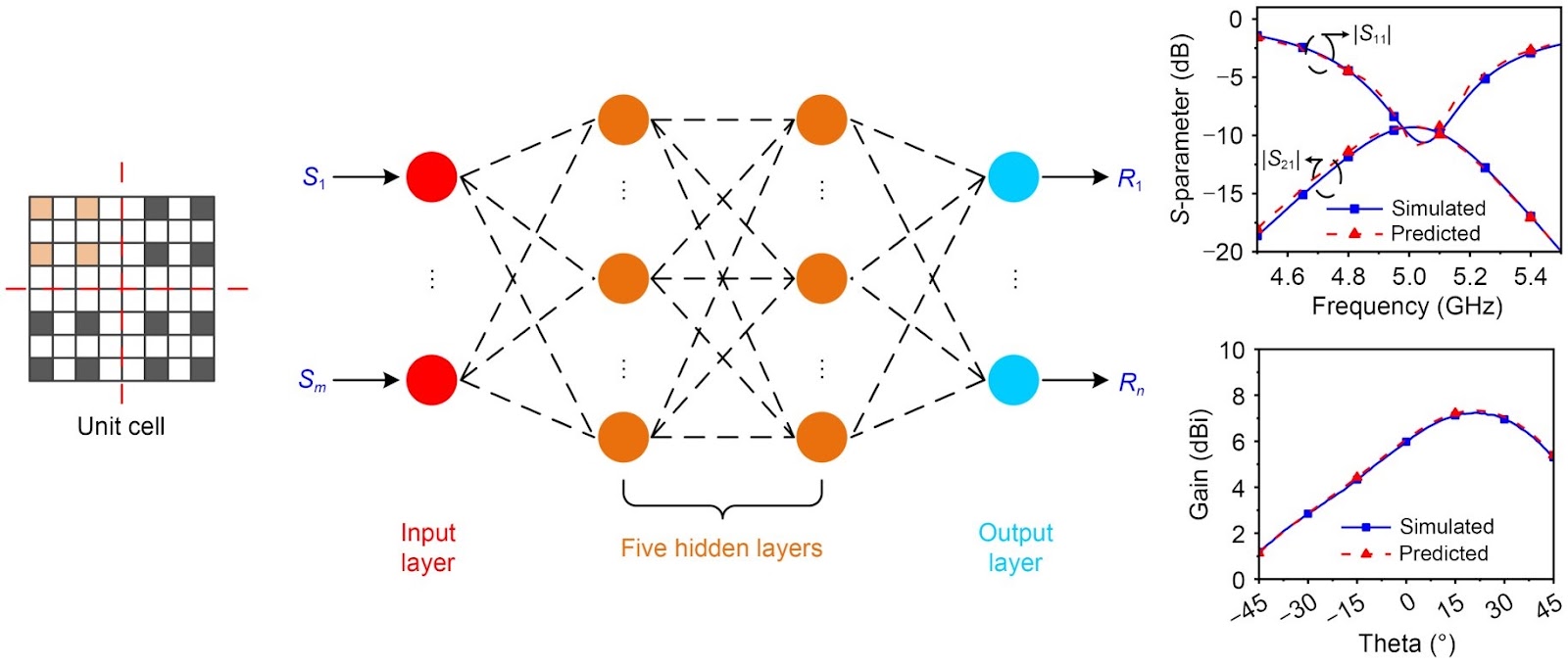
Original ResearchVol. 32, Issue 3 • pp. 370-382DOI: 10.1631/FITEE_2400869Mar 6, 2025

Joint target tracking using an autonomous underwater vehicle and underwater sensor networks for underwater applications

Authors: Zhaohong LV, Zhenkai ZHANG, Boon-Chong SEET, Yi YANG

Because underwater sensor networks (USNs) have limited energy resources due to environmental constraints, it is essential to improve energy utilization. For this purpose, an autonomous underwater vehicle (AUV) with greater onboard computation power is used to process measurement data, and the mobility of the AUV is leveraged to optimize the USN topology, enhancing tracking accuracy. First, to address the transmission delay of underwater acoustic signals, a time-delay compensated centralized exte

Joint target tracking using an autonomous underwater vehicle and underwater sensor networks for underwater applications
Graphical Abstract
Original ResearchVol. 32, Issue 3 • pp. 606-618DOI: 10.1631/FITEE_2400967Mar 5, 2025

An adaptive dung beetle optimizer based on an elastic annealing mechanism and its application to numerical problems and optimization of Reed–Muller logic circuits

Authors: Lixin MIAO, Zhenxue HE, Xiaojun ZHAO, Yijin WANG, Xiaodan ZHANG, Kui YU, Limin XIAO, Zhisheng HUO

The dung beetle optimizer (DBO) is a metaheuristic algorithm with fast convergence and powerful search capabilities, which has shown excellent performance in solving various optimization problems. However, it suffers from the problems of easily falling into local optimal solutions and poor convergence accuracy when dealing with large-scale complex optimization problems. Therefore, we propose an adaptive DBO (ADBO) based on an elastic annealing mechanism to address these issues. First, the conver

An adaptive dung beetle optimizer based on an elastic annealing mechanism and its application to numerical problems and optimization of Reed–Muller logic circuits
Graphical Abstract
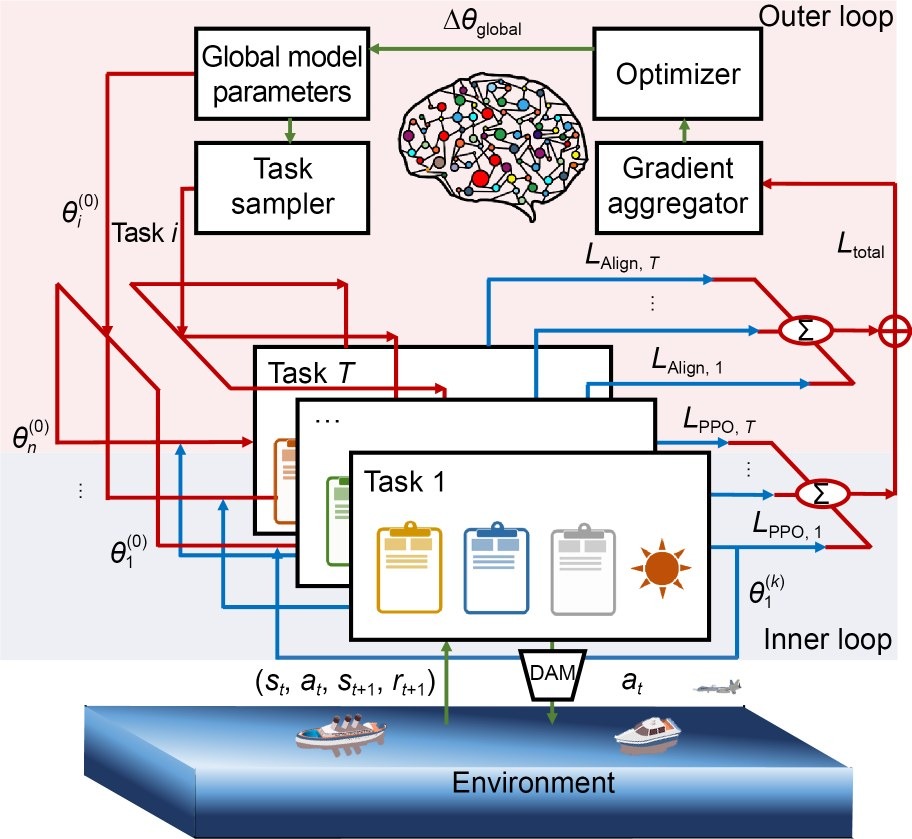
Original ResearchVol. 32, Issue 3 • pp. 542-554DOI: 10.1631/ENG_ITEE_2025_0180Mar 4, 2025

De-blocking adaptive feedback control design for shared-buffer CIOQ switching architecture

Authors: Rui Zheng, Jianliang Shen, Fan Zhang, Ping Lv, Peijie Li, Yu Shao, Zhengbin Zhu

To address the issues of head-of-line (HOL) blocking at the virtual output queue (VOQ) level, packet loss, and congestion spreading caused by buffer overflow in the shared-buffer-based combined input and output queued (CIOQ) switching architecture, while enhancing its performance and stability, we propose a de-blocking adaptive feedback control (AFC) design in this study. The introduction of the credit timeout detection mechanism (CTDM) enables the CIOQ to achieve theoretical 100% non-blocking s

De-blocking adaptive feedback control design for shared-buffer CIOQ switching architecture
Graphical Abstract
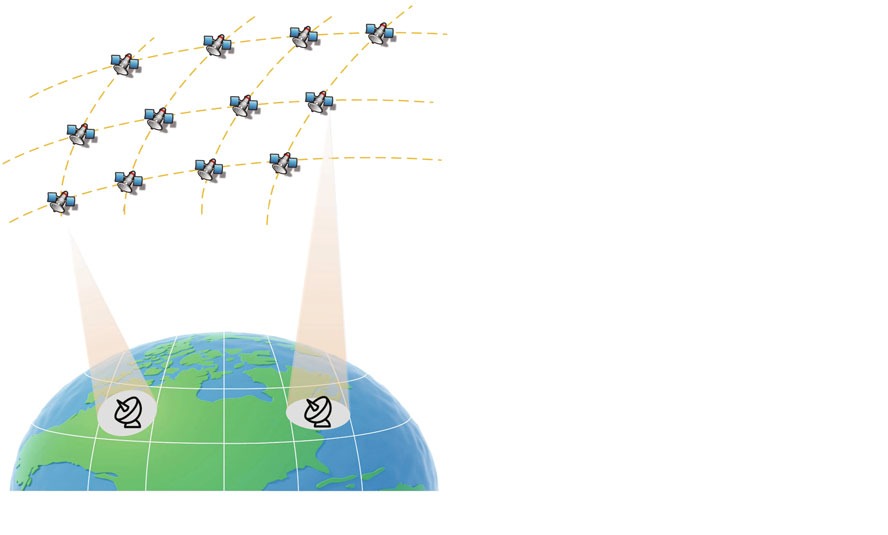
Original ResearchVol. 32, Issue 3 • pp. 778-790DOI: 10.1631/FITEE_2500169Mar 3, 2025

MltAuxTSPP: a unified benchmark for deep learning-based traffic state prediction with multi-source auxiliary data

Authors: Yusong ZHOU, Xiaoyu JIANG, Shu SUN, Xinmin ZHANG, Yuanqiu MO, Zhihuan SONG

Deep learning has empowered traffic prediction models to integrate diverse auxiliary data sources, such as weather and temporal features, for enhanced forecasting accuracy. However, existing approaches often suffer from limited generality and scalability, and the field lacks a unified benchmark for fair model comparison. This absence hinders consistent performance evaluation, slows the development of robust and adaptable models, and makes it challenging to quantify the incremental benefits of di

MltAuxTSPP: a unified benchmark for deep learning-based traffic state prediction with multi-source auxiliary data
Graphical Abstract
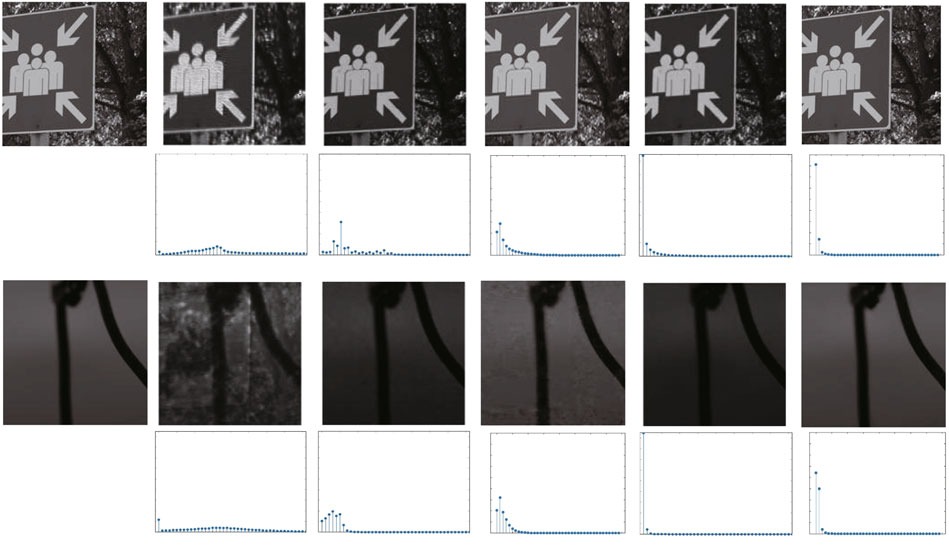
Original ResearchVol. 32, Issue 3 • pp. 150-162DOI: 10.1631/FITEE_2400285Mar 1, 2025

Robust wideband waveform design with constant modulus and discrete phase constraints for distributed precision jamming

Authors: Qingsong Zhou, Jialong Qian, Zhongping Yang, Chao Huang, Qinxian Chen, Yibo Xu, Zhengkai Wei

Distributed precision jamming (DPJ) is a novel blanket jamming concept in electronic warfare, which delivers the jamming resource to the opponent equipment precisely and ensures that friendly devices are not affected. Robust jamming performance and low hardware burden on the jammers are crucial for practical DPJ implementation. To achieve these goals, we study the robust design of wideband constant modulus (CM) discrete phase waveform for DPJ, where the worst-case combined power spectrum (CPS) o

Robust wideband waveform design with constant modulus and discrete phase constraints for distributed precision jamming
Graphical Abstract
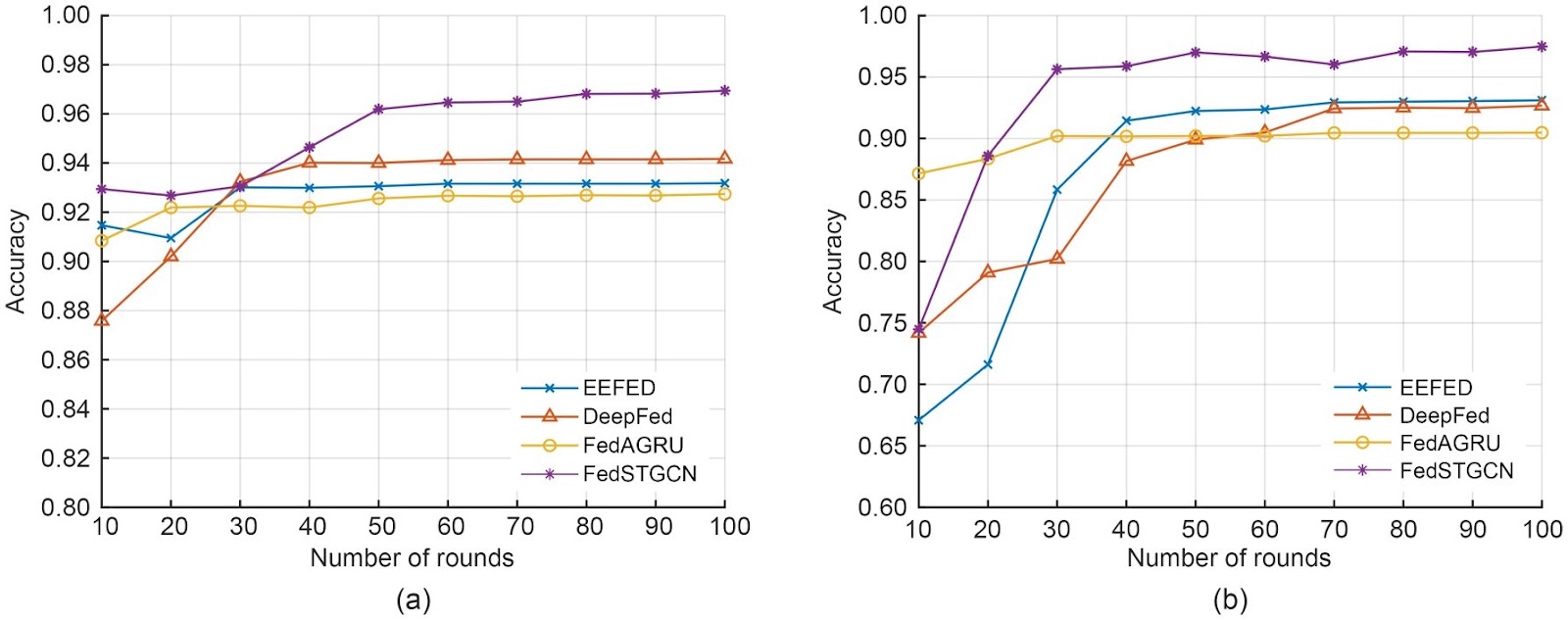
Original ResearchVol. 32, Issue 2 • pp. 761-773DOI: 10.1631/FITEE_2500287Feb 25, 2025

Jiu fusion artificial intelligence (JFA): a two-stage reinforcement learning model with hierarchical neural networks and human knowledge for Tibetan Jiu chess

Authors: Xiali LI, Xiaoyu FAN, Junzhi YU, Zhicheng DONG, Xianmu CAIRANG, Ping LAN

Tibetan Jiu chess, recognized as a national intangible cultural heritage, is a complex game comprising two distinct phases: the layout phase and the battle phase. Improving the performance of deep reinforcement learning (DRL) models for Tibetan Jiu chess is challenging, especially given the constraints of hardware resources. To address this, we propose a two-stage model called JFA, which incorporates hierarchical neural networks and knowledge-guided techniques. The model includes sub-models: str

Jiu fusion artificial intelligence (JFA): a two-stage reinforcement learning model with hierarchical neural networks and human knowledge for Tibetan Jiu chess
Graphical Abstract
Original ResearchVol. 32, Issue 2 • pp. 133-145DOI: 10.1631/FITEE_2300684Feb 23, 2025

Automatic parallelism strategy generation with minimal memory redundancy

Authors: Yanqi SHI, Peng LIANG, Hao ZHENG, Linbo QIAO, Dongsheng LI

Large-scale deep learning models are trained distributedly due to memory and computing resource limitations. Few existing strategy generation approaches take optimal memory minimization as the objective. To fill in this gap, we propose a novel algorithm that generates optimal parallelism strategies with the constraint of minimal memory redundancy. We propose a novel redundant memory cost model to calculate the memory overhead of each operator in a given parallel strategy. To generate the optimal

Automatic parallelism strategy generation with minimal memory redundancy
Graphical Abstract
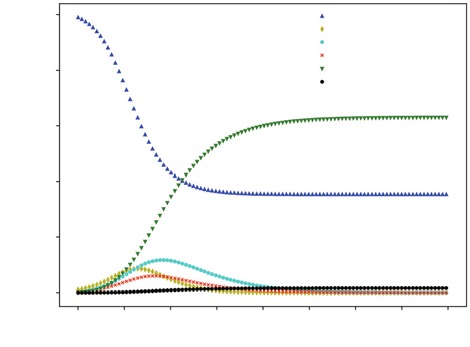
Original ResearchVol. 32, Issue 2 • pp. 369-381DOI: 10.1631/FITEE_2500429Feb 22, 2025

GMCoT: a graph-augmented multimodal chain-of-thought reasoning framework for multi-label zero-shot learning

Authors: Xiang Wen, Haobo Wang, Ke Chen, Tianlei Hu, Gang Chen

In recent years, multi-label zero-shot learning (ML-ZSL) has garnered increasing attention because of its wide range of potential applications, such as image annotation, text classification, and bioinformatics. The central challenge in ML-ZSL lies in predicting multiple labels for unseen classes without requiring any labeled training data, which contrasts with conventional supervised learning paradigms. However, existing methods face several significant challenges. These include the substantial

GMCoT: a graph-augmented multimodal chain-of-thought reasoning framework for multi-label zero-shot learning
Graphical Abstract
Original ResearchVol. 32, Issue 2 • pp. 541-553DOI: 10.1631/FITEE_2400594Feb 20, 2025

S3Det: a fast object detector for remote sensing images based on artificial to spiking neural network conversion

Authors: Li Chen, Fan Zhang, Guangwei Xie, Yanzhao Gao, Xiaofeng Qi, Mingqian Sun

Artificial neural networks (ANNs) have made great strides in the field of remote sensing image object detection. However, low detection efficiency and high power consumption have always been significant bottlenecks in remote sensing. Spiking neural networks (SNNs) process information in the form of sparse spikes, creating the advantage of high energy efficiency for computer vision tasks. However, most studies have focused on simple classification tasks, and only a few researchers have applied SN

S3Det: a fast object detector for remote sensing images based on artificial to spiking neural network conversion
Graphical Abstract
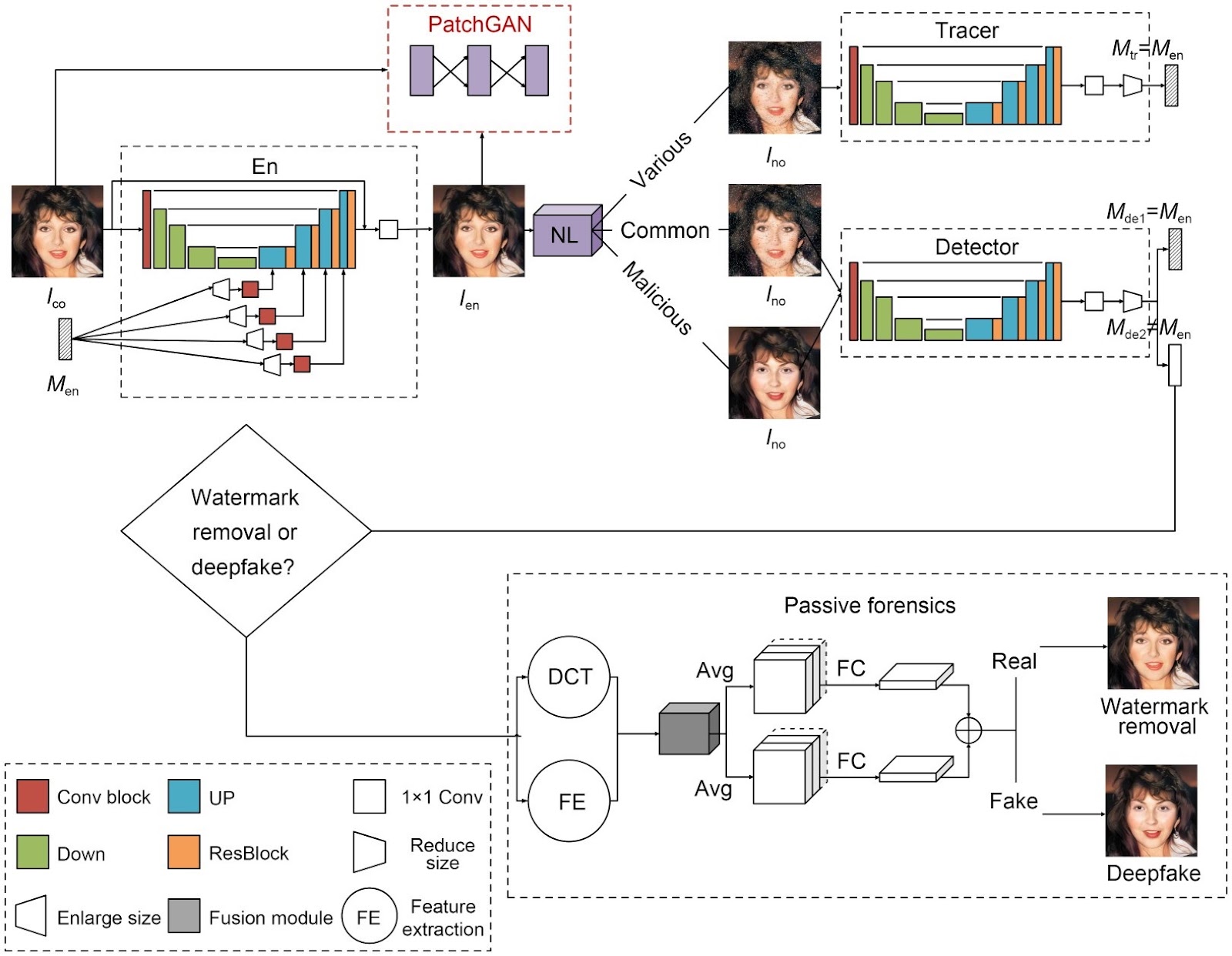
Original ResearchVol. 32, Issue 2 • pp. 149-161DOI: 10.1631/FITEE_2400975Feb 17, 2025

AOI-OPEN: federated operation and control for DAO-based trustworthy and intelligent AOI ecology

Authors: Yansong CAO, Yutong WANG, Jing YANG, Yonglin TIAN, Jiangong WANG, Fei-Yue WANG

Isolated data islands are prevalent in intelligent automated optical inspection (AOI) systems, limiting the full utilization of data resources and impeding the potential of AOI systems. Establishing a collaborative ecology involving software providers, hardware manufacturers, and factories offers an encouraging solution to build a closed-loop data flow and achieve optimal data resource utilization. However, concerns about privacy issues, rights infringement, and threats from other participants p

AOI-OPEN: federated operation and control for DAO-based trustworthy and intelligent AOI ecology
Graphical Abstract
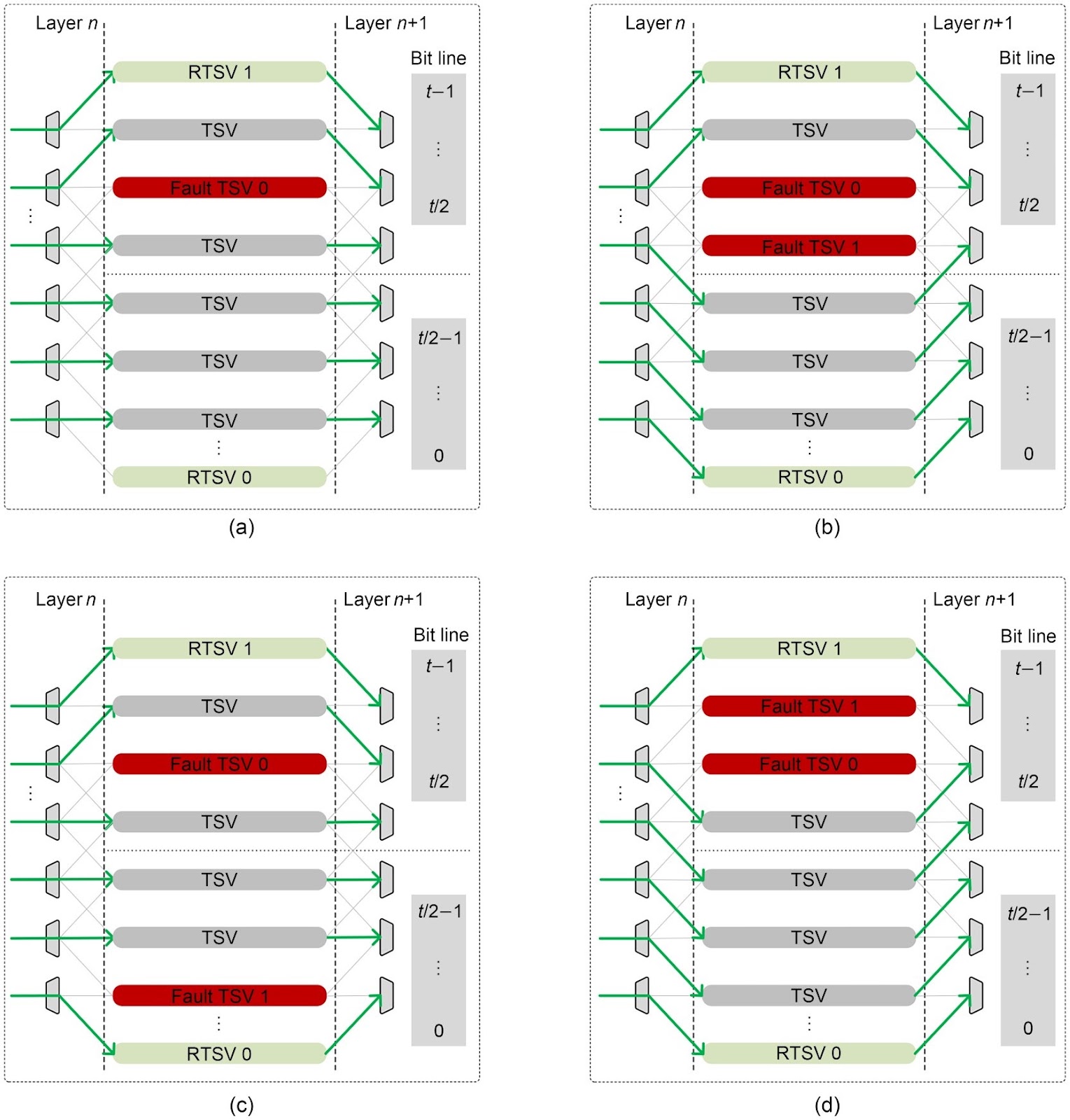
Original ResearchVol. 32, Issue 2 • pp. 557-569DOI: 10.1631/FITEE_2401000Feb 14, 2025

Sum-based dynamic discrete event-triggered mechanism for synchronization of delayed neural networks under deception attacks

Authors: Zhongjing YU, Duo ZHANG, Shihan KONG, Deqiang OUYANG, Hongfei LI, Junzhi YU

This paper focuses on the design of event-triggered controllers for the synchronization of delayed Takagi–Sugeno (T–S) fuzzy neural networks (NNs) under deception attacks. The traditional event-triggered mechanism (ETM) determines the next trigger based on the current sample, resulting in network congestion. Furthermore, such methods suffer from the issues of deception attacks and unmeasurable system states. To enhance the system stability, we adaptively detect the occurrence of events over a pe

Sum-based dynamic discrete event-triggered mechanism for synchronization of delayed neural networks under deception attacks
Graphical Abstract

Original ResearchVol. 32, Issue 2 • pp. 729-741DOI: 10.1631/ENG_ITEE_2026_0005Feb 12, 2025

High-precision temperature prediction for atmospheric refractivity correction using Kalman spatiotemporal data fusion

Authors: Ziru LI, Zhaobin XU, Tao ZHANG, Xinbo YUAN, Zhonghe JIN

In absolute distance measurement and positioning applications, atmospheric refraction error is a critical factor limiting measurement accuracy. Temperature plays a dominant role in computing the atmospheric refractive index. However, accurately acquiring the temperature field along the ranging path in complex and dynamic outdoor environments remains challenging due to limited sensor deployment and environmental nonstationarity. We propose a spatiotemporal temperature data fusion method for atmos

High-precision temperature prediction for atmospheric refractivity correction using Kalman spatiotemporal data fusion
Graphical Abstract

Original ResearchVol. 32, Issue 2 • pp. 165-177DOI: 10.1631/FITEE_2500280Feb 11, 2025

QuantBench: benchmarking AI methods for quantitative investment from a full pipeline perspective

Authors: Saizhuo WANG, Hao KONG, Jiadong GUO, Fengrui HUA, Yiyan QI, Wanyun ZHOU, Jiahao ZHENG, Xinyu WANG, Lionel M. NI, Jian GUO

The field of artificial intelligence (AI) in quantitative investment has seen significant advancements, yet it lacks a standardized benchmark aligned with industry practices. This gap hinders research progress and limits the practical application of academic innovations. We present QuantBench, an industrial-grade benchmark platform designed to address this critical need. QuantBench offers three key strengths: (1) standardization that aligns with quantitative investment industry practices; (2) fl

QuantBench: benchmarking AI methods for quantitative investment from a full pipeline perspective
Graphical Abstract
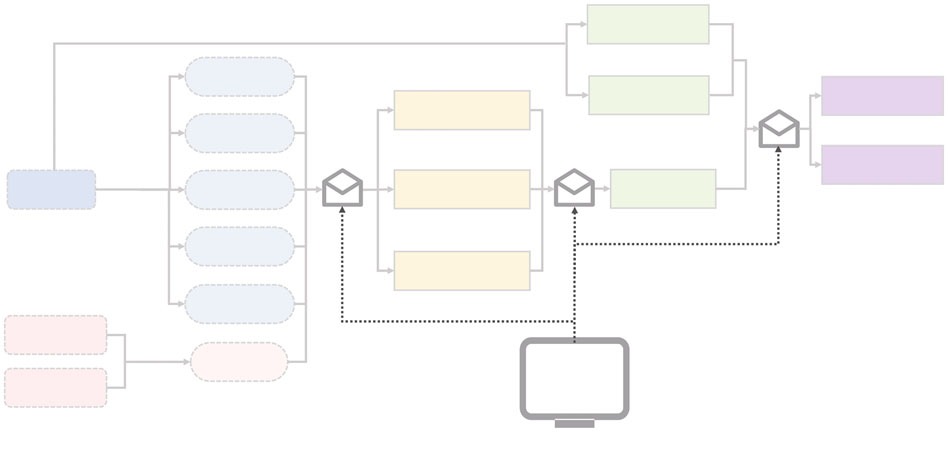
Original ResearchVol. 32, Issue 2 • pp. 337-349DOI: 10.1631/FITEE_2300867Feb 9, 2025

A comprehensive survey of physical adversarial vulnerabilities in autonomous driving systems

Authors: Shuai ZHAO, Boyuan ZHANG, Yucheng SHI, Yang ZHAI, Yahong HAN, Qinghua HU

Autonomous driving systems (ADSs) have attracted wide attention in the machine learning communities. With the help of deep neural networks (DNNs), ADSs have shown both satisfactory performance under significant uncertainties in the environment and the ability to compensate for system failures without external intervention. However, the vulnerability of ADSs has raised concerns since DNNs have been proven vulnerable to adversarial attacks. In this paper, we present a comprehensive survey of curre

A comprehensive survey of physical adversarial vulnerabilities in autonomous driving systems
Graphical Abstract
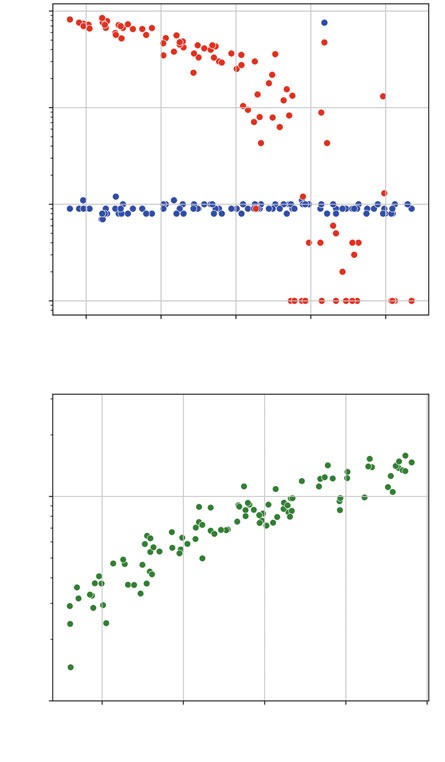
Original ResearchVol. 32, Issue 2 • pp. 745-757DOI: 10.1631/FITEE_2400033Feb 6, 2025

A novel frequency-protection interval adjustment method based on Doppler frequency offset pre-compensation for space-based Internet of Things

Authors: Qingquan Liu, Lihu Chen, Songting Li, Yiran Xiang, Baokang Zhao

To meet the access demands of massive terminal users, the space-based Internet of Things (IoT) requires sufficient frequency resources for allocation. However, the frequency resources that are currently available have already been allocated to a great extent. Furthermore, the utilization rate of the allocated frequency resources is low. To support massive user access under restricted frequency resources, this work proposes a scheme based on Doppler frequency offset (DFO) pre-compensation to enha

A novel frequency-protection interval adjustment method based on Doppler frequency offset pre-compensation for space-based Internet of Things
Graphical Abstract
Original ResearchVol. 32, Issue 2 • pp. 353-365DOI: 10.1631/FITEE_2500162Feb 3, 2025

E-CGL: an efficient continual graph learner

Authors: Jianhao Guo, Zixuan Ni, Yun Zhu, Siliang Tang

Continual learning (CL) has emerged as a crucial paradigm for learning from sequential data while retaining previous knowledge. Continual graph learning (CGL), characterized by dynamically evolving graphs from streaming data, presents distinct challenges that demand efficient algorithms to prevent catastrophic forgetting. The first challenge stems from the interdependencies between different graph data, in which previous graphs influence new data distributions. The second challenge is handling l

E-CGL: an efficient continual graph learner
Graphical Abstract
Original ResearchVol. 32, Issue 2 • pp. 589-601DOI: 10.1631/FITEE_2400492Feb 2, 2025

Enhanced hippopotamus optimization algorithm for tuning proportional–integral–derivative controllers

Authors: Kailong MOU, Mengjian ZHANG, Deguang WANG, Ming YANG, Chengbin LIANG

Effectively tuning the parameters of proportional–integral–derivative (PID) controllers has persistently posed a challenge in control engineering. This study proposes enhanced hippopotamus optimization (EHO) to address this challenge. Latin hypercube sampling and adaptive lens reverse learning are used to initialize the population to improve population diversity and enhance global search. Additionally, an adaptive perturbation mechanism is introduced into the position update in the exploration p

Enhanced hippopotamus optimization algorithm for tuning proportional–integral–derivative controllers
Graphical Abstract
Original ResearchVol. 32, Issue 2 • pp. 525-537DOI: 10.1631/ENG_ITEE_2025_0149Feb 1, 2025

A dual-band filtering push‒pull power amplifier with a large frequency ratio employing a hybrid-mode bandpass response balun

Authors: Jiyang CHU, Xiang WANG, Tianxiang CHEN, Jindong ZHANG, Jun HU, Huangyan LI, Boyu SIMA, Wen WU

A dual-band filtering push‒pull power amplifier (PA) with a large frequency ratio is presented in this paper. The proposed filtering power dividing/combining network is based on a hybrid-mode filtering balun using microstrip line (MSL) and substrate integrated waveguide (SIW). The MSL filtering balun operates in the S-band, with a frequency range of 2.6‒2.86 GHz. Meanwhile, the SIW filtering balun is designed for Ku-band operation, covering a frequency range of 13‒13.65 GHz. Under these conditio

A dual-band filtering push‒pull power amplifier with a large frequency ratio employing a hybrid-mode bandpass response balun
Graphical Abstract
Original ResearchVol. 32, Issue 1 • pp. 336-348DOI: 10.1631/FITEE_2400081Jan 25, 2025

Single-layer chiral metasurface for circularly polarized light detection

Authors: Xinjie SUN, Xin HE, Zixin CAI, Xiang HAO

Circular polarizers based on the metasurface suffer from a trade-off between the structural complexity and the polarization extinction ratio (ER). Herein, we present a single-layer chiral metasurface with strong circular dichroism. The structure turns a circularly polarized incident beam into a linearly polarized beam, achieving a high circular polarization ER. The operating wavelength of the proposed metasurface is tunable by changing the geometric parameters. The metasurface’s localized surfac

Single-layer chiral metasurface for circularly polarized light detection
Graphical Abstract
Original ResearchVol. 32, Issue 1 • pp. 572-584DOI: 10.1631/FITEE_2400766Jan 24, 2025

Q-space-coordinate-guided neural networks for high-fidelity diffusion tensor estimation from minimal diffusion-weighted images

Authors: Maokun Zheng, Zhi Li, Long Zheng, Weidong Wang, Dandan Li, Guomei Wang

Diffusion tensor imaging (DTI) is a widely used imaging technique for mapping living human brain tissue's microstructure and structural connectivity. Recently, deep learning methods have been proposed to rapidly estimate diffusion tensors (DTs) using only a small quantity of diffusion-weighted (DW) images. However, these methods typically use the DW images obtained with fixed q-space sampling schemes as the training data, limiting the application scenarios of such methods. To address this issue,

Q-space-coordinate-guided neural networks for high-fidelity diffusion tensor estimation from minimal diffusion-weighted images
Graphical Abstract
Original ResearchVol. 32, Issue 1 • pp. 508-520DOI: 10.1631/ENG_ITEE_2025_0177Jan 23, 2025

An attention mechanism-based multi-domain feature fusion approach for active sonar target recognition

Authors: Tongjing Sun, Haoran Xu, Shishuo Ren, Denghui Zhang

Due to the complex and changeable marine environment, the active sonar target recognition problem has always been difficult in the field of underwater acoustics. Deep learning-based fusion recognition technology provides an effective way to solve this problem, but relying on simple concatenation strategies to fuse multi-domain features can cause information redundancy, and it is not easy to effectively mine correlation information between domains. Therefore, this paper proposes an attention mech

An attention mechanism-based multi-domain feature fusion approach for active sonar target recognition
Graphical Abstract
Original ResearchVol. 32, Issue 1 • pp. 744-756DOI: 10.1631/FITEE_2500038Jan 22, 2025

Large language model-enhanced probabilistic modeling for effective static analysis alarms

Authors: Xinlong PAN, Jianhua LI, Zhihong ZHOU, Gaolei LI, Xiuzhen CHEN, Jin MA, Jun WU, Quanhai ZHANG

Static analysis presents significant challenges in alarm handling, where probabilistic models and alarm prioritization are essential methods for addressing these issues. These models prioritize alarms based on user feedback, thereby alleviating the burden on users to manually inspect alarms. However, they often encounter limitations related to efficiency and issues such as false generalization. While learning-based approaches have demonstrated promise, they typically incur high training costs an

Large language model-enhanced probabilistic modeling for effective static analysis alarms
Graphical Abstract
Original ResearchVol. 32, Issue 1 • pp. 116-128DOI: 10.1631/FITEE_2400184Jan 20, 2025

Parallel fault diagnosis using hierarchical fuzzy Petri net by reversible and dynamic decomposition mechanism

Authors: Yinhong XIANG, Kaiqing ZHOU, Arezoo SARKHEYLI-HÄGELE, Yusliza YUSOFF, Diwen KANG, Azlan Mohd ZAIN

The state space explosion, a challenge analogous to that encountered in a Petri net (PN), has constrained the extensive study of fuzzy Petri nets (FPNs). Current reasoning algorithms employing FPNs, which operate through forward, backward, and bidirectional mechanisms, are examined. These algorithms streamline the inference process by eliminating irrelevant components of the FPN. However, as the scale of the FPN grows, the complexity of these algorithms escalates sharply, posing a significant ch

Parallel fault diagnosis using hierarchical fuzzy Petri net by reversible and dynamic decomposition mechanism
Graphical Abstract
Original ResearchVol. 32, Issue 1 • pp. 352-364DOI: 10.1631/FITEE_2400487Jan 19, 2025

Active inference of protocol state machines from incomplete message domains

Authors: Maohua GUO, Yuefei ZHU, Jinlong FEI

Inferring protocol state machines from observable information presents a significant challenge in protocol reverse engineering (PRE), especially when passively collected traffic suffers from message loss, resulting in an incomplete protocol state space. This paper introduces an innovative method for actively inferring protocol state machines using the minimally adequate teacher (MAT) framework. By incorporating session completion and deterministic mutation techniques, this method broadens the ra

Active inference of protocol state machines from incomplete message domains
Graphical Abstract
Original ResearchVol. 32, Issue 1 • pp. 524-536DOI: 10.1631/FITEE_2400344Jan 17, 2025

Neural mesh refinement

Authors: Zhiwei ZHU, Xiang GAO, Lu YU, Yiyi LIAO

Subdivision is a widely used technique for mesh refinement. Classic methods rely on fixed manually defined weighting rules and struggle to generate a finer mesh with appropriate details, while advanced neural subdivision methods achieve data-driven nonlinear subdivision but lack robustness, suffering from limited subdivision levels and artifacts on novel shapes. To address these issues, this paper introduces a neural mesh refinement (NMR) method that uses the geometric structural priors learned

Neural mesh refinement
Graphical Abstract
Original ResearchVol. 32, Issue 1 • pp. 132-144DOI: 10.1631/FITEE_2400696Jan 14, 2025

Data-driven intermittent connection fault diagnosis for complex topology DeviceNet based on Bayesian inference

Authors: Longkai WANG, Yong LEI

As the topology of DeviceNet in industrial automation systems grows more complex and the reliability requirement for industrial equipment and processes becomes more stringent, the importance of network troubleshooting is increasingly evident. Intermittent connection (IC) faults frequently occur in DeviceNet systems, impairing production performance and even operational safety. However, existing IC troubleshooting methods for DeviceNet, especially those with complex topologies, cannot directly ha

Data-driven intermittent connection fault diagnosis for complex topology DeviceNet based on Bayesian inference
Graphical Abstract
Original ResearchVol. 32, Issue 1 • pp. 540-552DOI: 10.1631/FITEE_2400867Jan 11, 2025

SAPER-AI accelerator: a systolic array-based power-efficient reconfigurable AI accelerator

Authors: Fahad Bin Muslim, Kashif Inayat, Muhammad Zain Siddiqi, Safiullah Khan, Tayyeb Mahmood, Ihtesham ul Islam

Deep learning (DL) accelerators are critical for handling the growing computational demands of modern neural networks. Systolic array (SA)-based accelerators consist of a 2D mesh of processing elements (PEs) working cooperatively to accelerate matrix multiplication. The power efficiency of such accelerators is of primary importance, especially considering the edge AI regime. This work presents the SAPER-AI accelerator, an SA accelerator with power intent specified via a unified power format repr

SAPER-AI accelerator: a systolic array-based power-efficient reconfigurable AI accelerator
Graphical Abstract
Original ResearchVol. 32, Issue 1 • pp. 712-724DOI: 10.1631/ENG_ITEE_2025_0063Jan 9, 2025

From software-defined interconnect to software-defined system-on-wafer: a computing architecture revolution in the post-Moore era

Authors: Ping LV, Qinrang LIU, Jiangxing WU, Jianliang SHEN, Mengke LIAN, Rui CAO, Shuai WEI, Zhichao LI, Peijie LI, Wei GUO, Wenjian ZHANG, Hong YU, Yanzhao GAO

As Moore’s law approaches its fundamental physical and economic limits, the semiconductor industry faces unprecedented challenges in maintaining performance growth. This study presents the revolutionary evolution from software-defined interconnect (SDI) to software-defined system-on-wafer (SDSoW), a paradigm-shifting architectural approach that transcends traditional scaling constraints through wafer-level heterogeneous integration. Our proposed SDSoW enables dynamic reconfiguration of thousands

From software-defined interconnect to software-defined system-on-wafer: a computing architecture revolution in the post-Moore era
Graphical Abstract
Original ResearchVol. 32, Issue 1 • pp. 148-160DOI: 10.1631/FITEE_2500348Jan 8, 2025

E2MN: human-inspired end-to-end mapless navigation with oscillation suppression and short-term memory

Authors: Yinan Yang, Zhiye Wang, Xuan Kong, Peng Zhi, Dapeng Zhang, Rui Zhou, Qingguo Zhou

Robotic navigation in unknown environments is challenging due to the lack of high-definition maps. Building maps in real time requires significant computational resources. Nevertheless, sensor data can provide sufficient environmental context for robots’ navigation. This paper presents an interpretable and mapless navigation method using only two-dimensional (2D) light detection and ranging (LiDAR), mimicking human strategies to escape from dead ends. Unlike traditional planners, which depend on

E2MN: human-inspired end-to-end mapless navigation with oscillation suppression and short-term memory
Graphical Abstract
Original ResearchVol. 32, Issue 1 • pp. 320-332DOI: 10.1631/FITEE_2400259Jan 6, 2025

Optimization methods in fully cooperative scenarios: a review of multiagent reinforcement learning

Authors: Tao Yang, Xinhao Shi, Qinghan Zeng, Yulin Yang, Cheng Xu, Hongzhe Liu

Multiagent reinforcement learning (MARL) has become a dazzling new star in the field of reinforcement learning in recent years, demonstrating its immense potential across many application scenarios. The reward function directs agents to explore their environments and make optimal decisions within them by establishing evaluation criteria and feedback mechanisms. Concurrently, cooperative objectives at the macro level provide a trajectory for agents’ learning, ensuring alignment between individual

Optimization methods in fully cooperative scenarios: a review of multiagent reinforcement learning
Graphical Abstract
Original ResearchVol. 32, Issue 1 • pp. 728-740DOI: 10.1631/FITEE_2400383Jan 3, 2025

Prototype-guided cross-task knowledge distillation

Authors: Deng LI, Peng LI, Aming WU, Yahong HAN

Recently, large-scale pretrained models have revealed their benefits in various tasks. However, due to the enormous computation complexity and storage demands, it is challenging to apply large-scale models to real scenarios. Existing knowledge distillation methods require mainly the teacher model and the student model to share the same label space, which restricts their application in real scenarios. To alleviate the constraint of different label spaces, we propose a prototype-guided cross-task

Prototype-guided cross-task knowledge distillation
Graphical Abstract