Key Takeaways & Executive Findings
- •• QCG-DTI enables accurate diffusion tensor estimation from minimal DW images with flexible q-space sampling schemes, overcoming limitations of fixed sampling schemes. • Introduces a q-space-coordinate-embedded feature consistency strategy and a QCF module to embed q-space coordinates into multiscale features, eliminating dependence on fixed diffusion sampling. • The multiscale feature residual dense (MRD) module enhances feature extraction and image reconstruction through dual-branch convolutions with different kernel sizes. • Achieves approximately 15% reduction in mean absolute error on fractional anisotropy and 25% on mean diffusivity compared to state-of-the-art deep learning methods.
Abstract
Diffusion tensor imaging (DTI) is a widely used imaging technique for mapping living human brain tissue's microstructure and structural connectivity. Recently, deep learning methods have been proposed to rapidly estimate diffusion tensors (DTs) using only a small quantity of diffusion-weighted (DW) images. However, these methods typically use the DW images obtained with fixed q-space sampling schemes as the training data, limiting the application scenarios of such methods. To address this issue, we develop a new deep neural network called q-space-coordinate-guided diffusion tensor imaging (QCG-DTI), which can efficiently and correctly estimate DTs under flexible q-space sampling schemes. First, we propose a q-space-coordinate-embedded feature consistency strategy to ensure the correspondence between q-space-coordinates and their respective DW images. Second, a q-space-coordinate fusion (QCF) module is introduced which efficiently embeds q-space-coordinates into multiscale features of the corresponding DW images by linearly adjusting the feature maps along the channel dimension, thus eliminating the dependence on fixed diffusion sampling schemes. Finally, a multiscale feature residual dense (MRD) module is proposed which enhances the network's feature extraction and image reconstruction capabilities by using dual-branch convolutions with different kernel sizes to extract features at different scales. Compared to state-of-the-art methods that rely on a fixed sampling scheme, the proposed network can obtain high-quality diffusion tensors and derived parameters even using DW images acquired with flexible q-space sampling schemes. Compared to state-of-the-art deep learning methods, QCG-DTI reduces the mean absolute error by approximately 15% on fractional anisotropy and around 25% on mean diffusivity.
1. Introduction
Magnetic resonance imaging (MRI) is currently the mainstream and commonly used clinical detection and diagnostic method in medical imaging. Diffusion magnetic resonance imaging (dMRI) is a new type of MRI technology that has developed in recent years (Alexander et al., 2007). For imaging, dMRI uses mainly the different diffusion motion characteristics of water molecules in various organ tissues under the influence of magnetic fields with different diffusion gradient directions. The difference between dMRI and traditional MRI images is that the features of each voxel not only are described by grayscale values but also contain a high-dimensional tensor to describe the diffusion characteristics of water molecules in organs.
In clinical applications, it is necessary to collect diffusion-weighted imaging (DWI) images through dMRI to calculate the diffusion tensor (DT) (Le Bihan et al., 2001; Alexander et al., 2007) and use DT to derive a series of parameters, such as mean diffusivity (MD), fractional anisotropy (FA), axial diffusivity (AD), and radial diffusivity (RD). These tensor-derived parameters have been widely used in studies of brain development (Barnea-Goraly et al., 2005; Lebel et al., 2008) and various diseases (Eriksson et al., 2001; Barnea-Goraly et al., 2004; Roosendaal et al., 2009). DT imaging (DTI) is an essential tool for neuroscience research and has many clinical applications.
In traditional algorithms, only six diffusion-weighted (DW) images and one non-DW image are theoretically needed to estimate the DT. However, DW images obtained in clinical practice usually have low signal-to-noise ratios (SNRs). The traditional DT estimation algorithms cannot accurately estimate the DT for DW images with low SNR. The ordinary least-squares (OLS) method was initially proposed to estimate DTs (Pierpaoli et al., 1996), but it is susceptible to noise and variations in local magnetic susceptibility. To enhance the reliability of the estimation results, the weighted least-squares (WLS) method was proposed (Basser et al., 2000). WLS adjusts the accuracy of the data and the noise level through a weighting matrix. However, these traditional methods still have certain limitations in DT estimation. Consequently, it is...
Loading authentic research manuscript (Pages 1–5)...
Maokun Zheng, Zhi Li, Long Zheng, Weidong Wang, Dandan Li, Guomei Wang (2025). Q-space-coordinate-guided neural networks for high-fidelity diffusion tensor estimation from minimal diffusion-weighted images. Frontiers of Information Technology & Electronic Engineering. https://doi.org/10.1631/FITEE_2400766
Research & Educational Purpose Only:The translations, structured abstracts, analytical annotations, and data reports provided by SinoTechIntel are intended exclusively for academic research, internal corporate R&D, and educational benchmarking. They do not constitute formal engineering, chemical safety, legal, or professional advice.
Copyright & Intellectual Property Notice: Original copyright of the underlying source articles and experimental data remains with the respective authors, institutions, and original publishing journals. SinoTechIntel claims intellectual property only over its proprietary translations, analytical syntheses, and AEO structured enhancements in accordance with international fair use and academic citation principles.
Frequently Asked Questions
What is QCG-DTI?
QCG-DTI (q-space-coordinate-guided diffusion tensor imaging) is a deep neural network designed to estimate diffusion tensors from minimal diffusion-weighted images under flexible q-space sampling schemes, overcoming the limitations of methods that require fixed sampling.
How does QCG-DTI handle flexible q-space sampling?
It uses a q-space-coordinate-embedded feature consistency strategy and a q-space-coordinate fusion module to embed q-space coordinates into multiscale features, allowing the network to adapt to any sampling scheme without retraining.
What are the main components of QCG-DTI?
The main components are the q-space-coordinate-embedded feature consistency strategy, the q-space-coordinate fusion (QCF) module, and the multiscale feature residual dense (MRD) module.
How much error reduction does QCG-DTI achieve?
Compared to state-of-the-art deep learning methods, QCG-DTI reduces mean absolute error by approximately 15% on fractional anisotropy and around 25% on mean diffusivity.
What are the potential applications of QCG-DTI?
QCG-DTI can be used in clinical and research settings for rapid and reliable diffusion tensor estimation, particularly when acquisition time is limited or flexible q-space sampling is required, such as in brain development studies and disease diagnostic applications.
Related Technical Papers & Translations
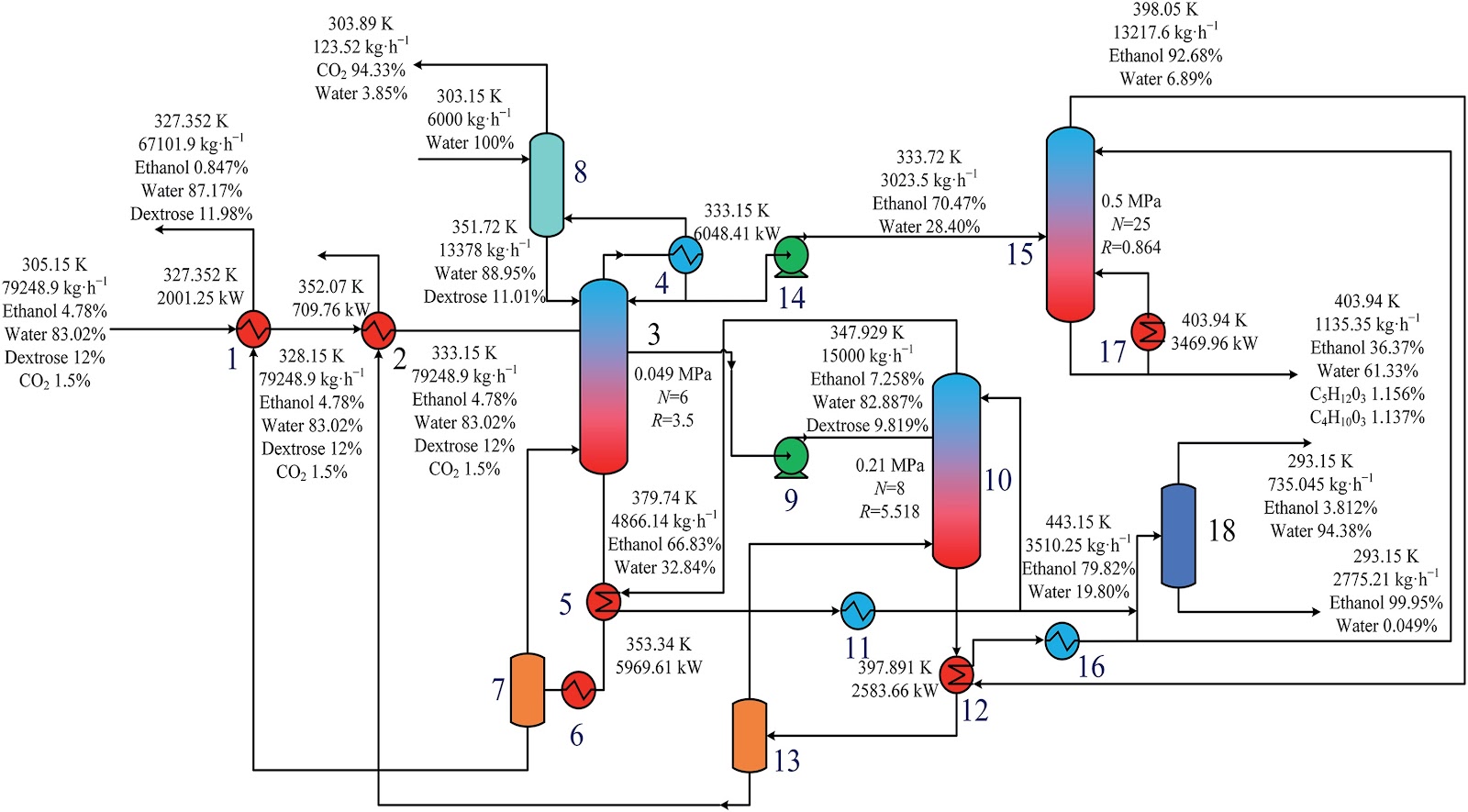
Design and optimization of a high-efficiency distillation process for cellulosic fuel ethanol integrated with thermal coupling and molecular sieve adsorption
To address the challenges of high energy consumption and prominent costs in the traditional three-columns distillation process for cellulosic fuel ethanol, a distillation—molecular sieve coupling separation process is proposed. This process integrates a three-column (crude distillation column, first distillation column, second distillation column) system with a 3A molecular sieve adsorption deep dehydration unit. A thermal coupling network is constructed via differential pressure design (steam from medium/high-pressure columns as mutual heat sources, reboiler liquid waste heat for feed preheating), and molecular sieve adsorption conditions are optimized. The study first performs a thermodynamic consistency test on the ethanol—water system, determines optimal non-random two-liquid (NRTL) model binary interaction parameters via experimental data regression for Aspen Plus simulation. Aiming at minimum total annual cost (TAC), Aspen Plus is used to optimize process parameters (theoretical tray number, feed location, reflux ratio, side-draw position, etc.). Economic analysis shows this process reduces CO2 emission costs by 27.56%, TAC by 15.58% (to 5.123 × 10⁶ USD·a-1), and increases ethanol purity to >99.6%, providing an effective solution for green, efficient separation.
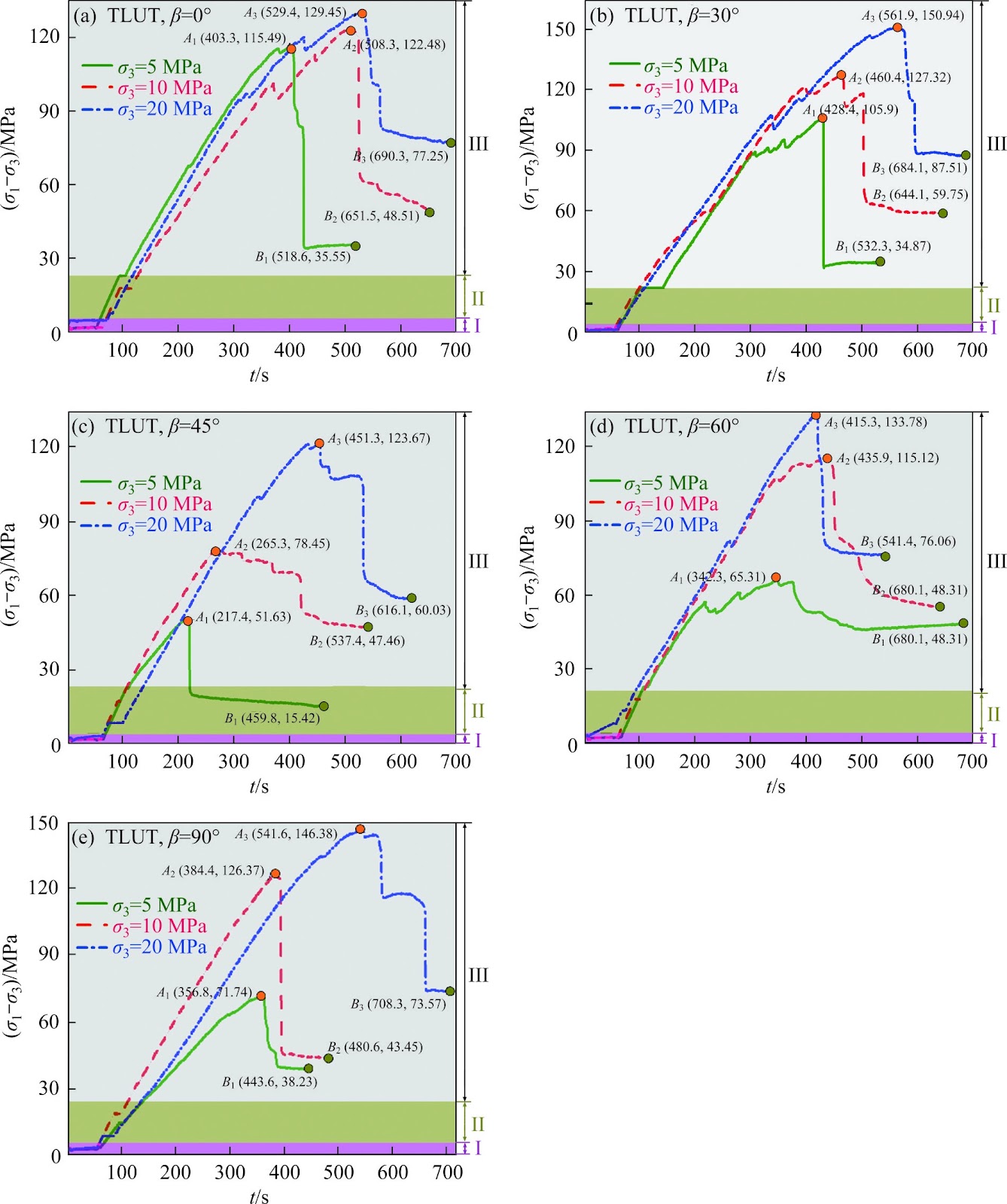
A cohesion loss model for determining residual strength of deep bedded sandstone
Rock residual strength, as an important input parameter, plays an indispensable role in proposing the reasonable and scientific scheme about stope design, underground tunnel excavation and stability evaluation of deep chambers. Therefore, previous residual strength models of rocks established were reviewed. And corresponding related problems were stated. Subsequently, starting from the effects of bedding and whole life-cycle evolution process, series of triaxial mechanical tests of deep bedded s
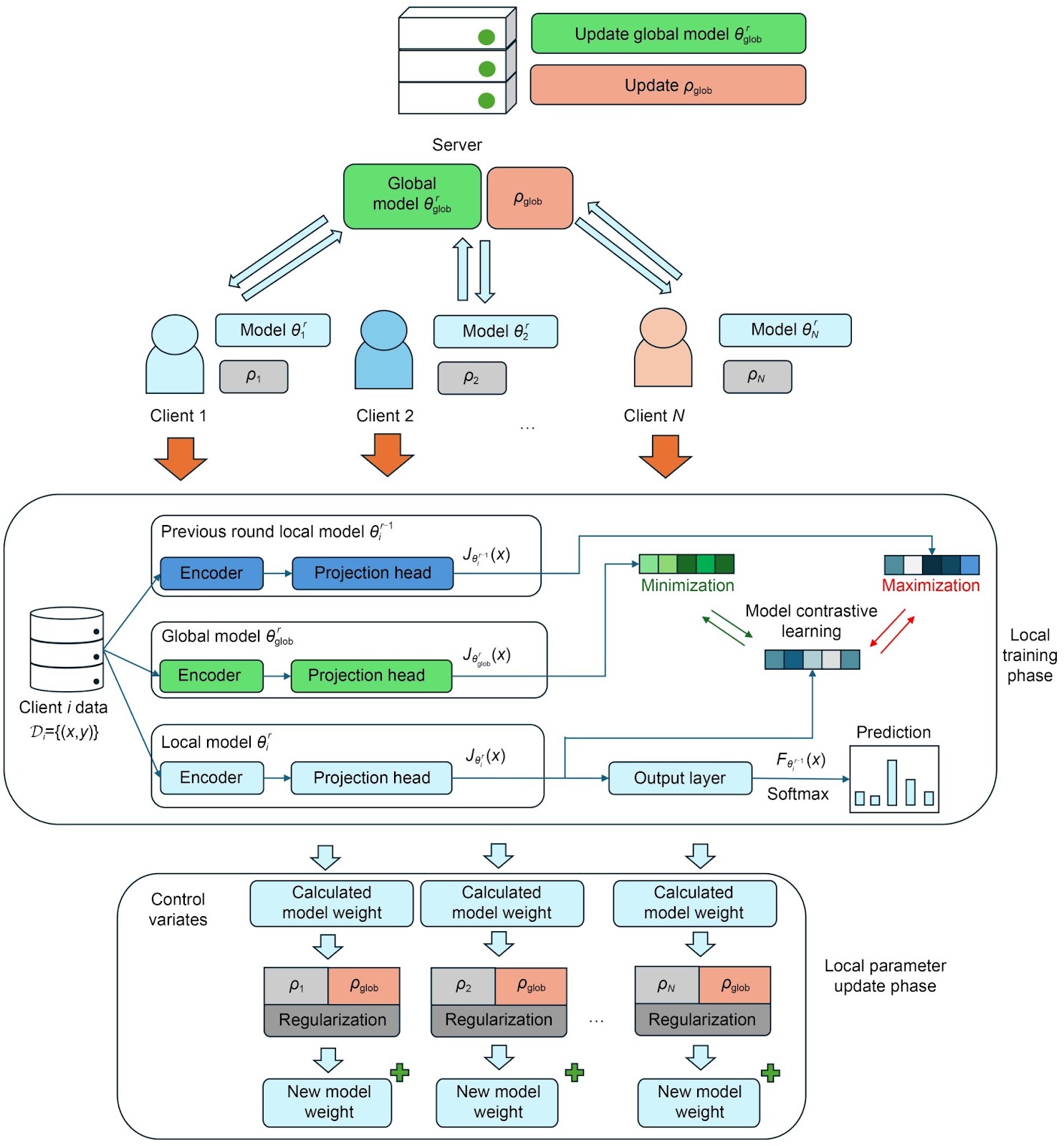
Federated model with contrastive learning and adaptive control variates for human activity recognition
Recent attention to privacy issues demands a communication-safe method for training human activity recognition (HAR) models on client activity data. Federated learning (FL) has become a compelling technique to facilitate model training between the server and clients while preserving data privacy. However, classical FL methods often assume independent and identically distributed (IID) data among clients. This assumption does not hold true in practical scenarios. Human activity in real-world scena