Key Takeaways & Executive Findings
- •• Proposes a dynamic group signature-based cross-chain identity authentication approach to mitigate privacy leakage and identity island problems in smart education. • Achieves anti-quantum security under LWE and ISIS assumptions, ensuring long-term cryptographic robustness. • Utilizes non-interactive zero-knowledge proof (NIZKP) to protect user identity privacy during cross-chain interactions. • Demonstrates low computational overhead, making it suitable for practical cross-chain authentication in heterogeneous consortium blockchains.
Abstract
To solve the privacy leakage and identity island problems in cross-chain interaction, we propose an anti-quantum cross-chain identity authentication approach based on dynamic group signature (DGS-AQCCIDAA) for smart education. The relay-based cross-chain model promotes interconnection in heterogeneous consortium blockchains. DGS is used as the endorsement strategy for cross-chain identity authentication. Our approach can ensure quantum security under the learning with error (LWE) and inhomogeneous small integer solution (ISIS) assumptions, and it uses non-interactive zero-knowledge proof (NIZKP) to protect user identity privacy. Our scheme has low calculation overhead and provides anonymous cross-chain identity authentication in the smart education system.
1. Introduction
Blockchain is a combination of cryptography, peer-to-peer communication, consensus mechanisms, smart contracts, and other technologies. Blockchain is used to construct a trusted system (Ma et al., 2020) because of its decentralization and anti-tampering. There are three types of blockchain: the public blockchain is completely open and transparent with no identity authorization, the consortium blockchain includes the identity authorization access mechanism, and the private blockchain is maintained by a single node in the network.
Public key infrastructure (PKI) based identity management in the consortium chain uses a certificate to authenticate the user identity. The certificate-based authentication scheme cannot provide anonymous authentication services and will result in leakage of private information. In addition, because each consortium blockchain is independent with no unified identity management system, the identity island problem (Yang et al., 2019) exists. Providing a unified identity for different blockchains and protecting user information are vital problems of blockchain.
Cross-chain technology (Yu and Mu, 2024) is an important method for consortium blockchain to achieve interoperability and improve scalability. Cross-chain identity authentication technology can achieve unified identity management and authentication between blockchains, and solve the problem of identity islands. There have been several cross-chain authentication schemes. An identity authentication model for cross-chain (Wang et al., 2022b) solves the identity authentication problem in heterogeneous application chains and eliminates duplicate authentication when the application chain accesses the cross-chain system, but identity information leakage still occurs in cross-chain transactions. The cross-chain identity authentication mechanism in the Internet of Things (IoT) using identity-based encryption (Shao et al., 2021) causes a performance bottleneck. Lightweight identity authentication (Wang et al., 2022a) in a cross-chain framework cannot protect the identity of users in cross-chain interaction. The cross-chain authentication scheme based on certificate-less signcryption (Liu et al., 2024) has a high degree of decentralization and scalability, but it is unable to solve the problem of user identity information leakage in the identity authentication process. Currently, cross-chain identity authentication is focused mainly on decentralized identity management and authentication, and no research has been reported on anonymous identity authentication.
The group signature is anonymous and traceable, so it can be used to construct anonymous authentication protocols. However, traditional group signature schemes are not resistant to quantum computing attacks. The lattice-based cryptosystem (Yu et al., 2023; Yu and Bai, 2024) has attracted extensive attention due to its anti-quantum security. Gordon et al. (2010) combined the preimage sampling function and zero-knowledge proof technique to achieve a lattice-based group signature. This scheme has a long key and signature and the identity of group members cannot be changed in the initial phase, so it cannot be applied in scenarios that have dynamic features. An anonymous authentication system using lattice-based group signatures (Libert et al., 2016) adds a group member access mechanism to allow new users to join the group, but the joining process is complex and there is no group member revocation.
Loading authentic research manuscript (Pages 1–5)...
Huifang YU, Mengjie HUANG (2025). Anti-quantum cross-chain identity authentication approach using dynamic group signature. Frontiers of Information Technology & Electronic Engineering. https://doi.org/10.1631/FITEE_2400443
Research & Educational Purpose Only:The translations, structured abstracts, analytical annotations, and data reports provided by SinoTechIntel are intended exclusively for academic research, internal corporate R&D, and educational benchmarking. They do not constitute formal engineering, chemical safety, legal, or professional advice.
Copyright & Intellectual Property Notice: Original copyright of the underlying source articles and experimental data remains with the respective authors, institutions, and original publishing journals. SinoTechIntel claims intellectual property only over its proprietary translations, analytical syntheses, and AEO structured enhancements in accordance with international fair use and academic citation principles.
Frequently Asked Questions
What is the main contribution of this paper?
The paper proposes an anti-quantum cross-chain identity authentication approach using dynamic group signature (DGS-AQCCIDAA) for smart education, addressing privacy leakage and identity island problems through anonymous and traceable authentication.
How does the proposed approach achieve quantum security?
It ensures quantum security under the learning with error (LWE) and inhomogeneous small integer solution (ISIS) assumptions, which are believed to be hard for quantum computers.
What are the benefits of using dynamic group signature in cross-chain authentication?
Dynamic group signature provides anonymity and traceability, supports dynamic membership changes, and helps protect user identity privacy during cross-chain interactions.
What problem does the approach solve in cross-chain systems?
It solves privacy leakage and identity island problems, enabling unified and anonymous cross-chain identity authentication across heterogeneous consortium blockchains.
What is the computational overhead of the proposed scheme?
The scheme has low calculation overhead, making it efficient and practical for deployment in smart education systems and real-time cross-chain authentication scenarios.
Related Technical Papers & Translations
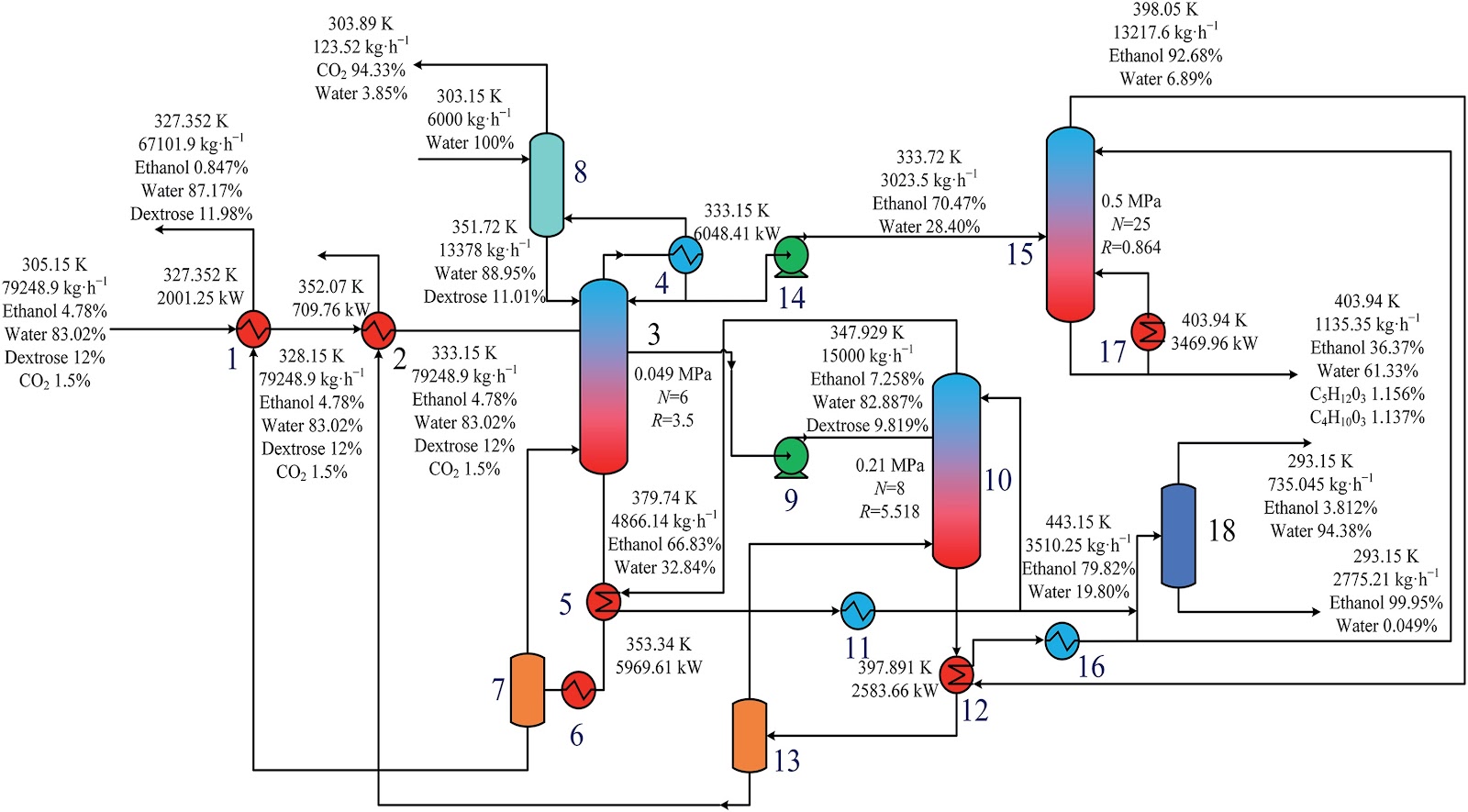
Design and optimization of a high-efficiency distillation process for cellulosic fuel ethanol integrated with thermal coupling and molecular sieve adsorption
To address the challenges of high energy consumption and prominent costs in the traditional three-columns distillation process for cellulosic fuel ethanol, a distillation—molecular sieve coupling separation process is proposed. This process integrates a three-column (crude distillation column, first distillation column, second distillation column) system with a 3A molecular sieve adsorption deep dehydration unit. A thermal coupling network is constructed via differential pressure design (steam from medium/high-pressure columns as mutual heat sources, reboiler liquid waste heat for feed preheating), and molecular sieve adsorption conditions are optimized. The study first performs a thermodynamic consistency test on the ethanol—water system, determines optimal non-random two-liquid (NRTL) model binary interaction parameters via experimental data regression for Aspen Plus simulation. Aiming at minimum total annual cost (TAC), Aspen Plus is used to optimize process parameters (theoretical tray number, feed location, reflux ratio, side-draw position, etc.). Economic analysis shows this process reduces CO2 emission costs by 27.56%, TAC by 15.58% (to 5.123 × 10⁶ USD·a-1), and increases ethanol purity to >99.6%, providing an effective solution for green, efficient separation.
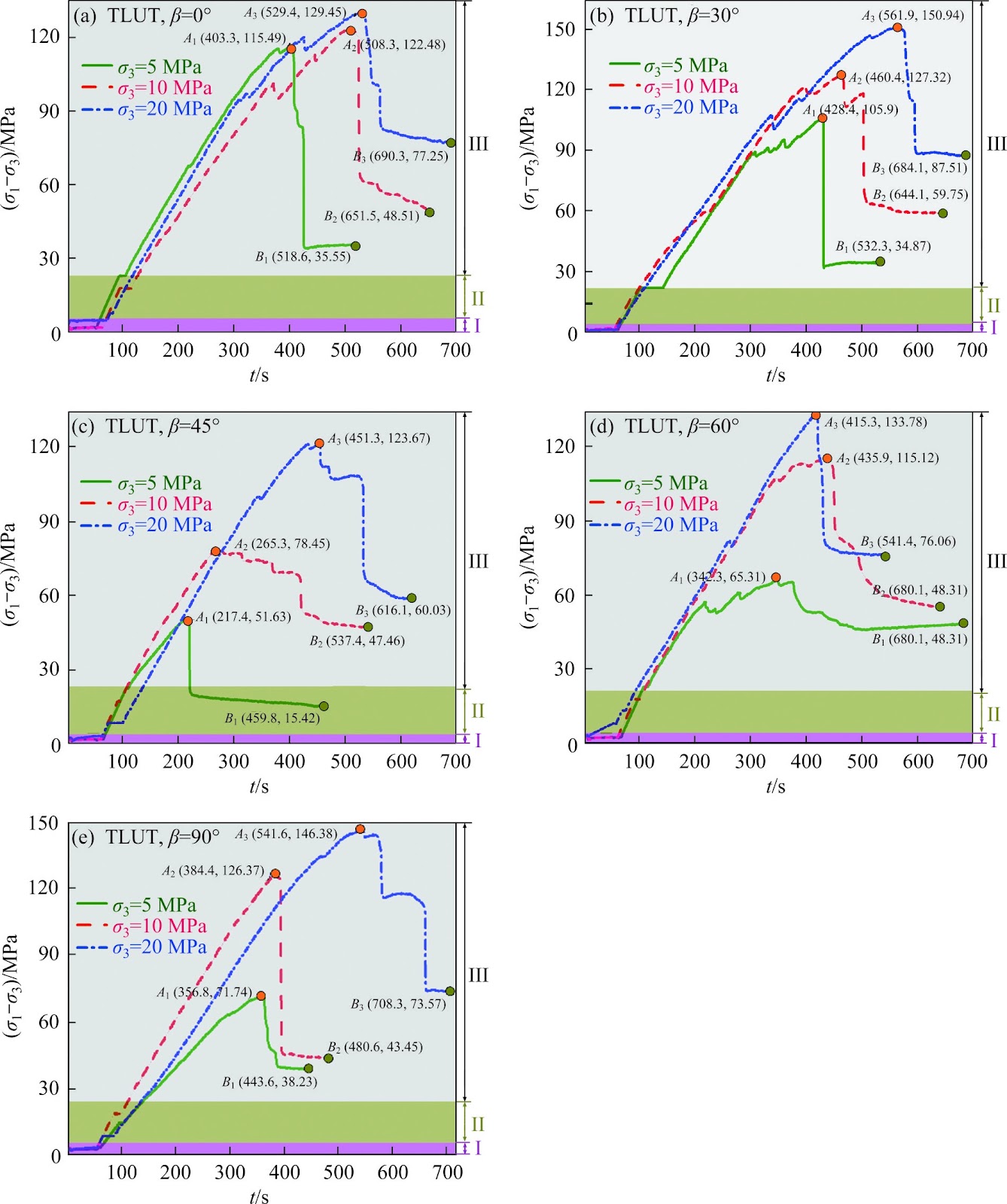
A cohesion loss model for determining residual strength of deep bedded sandstone
Rock residual strength, as an important input parameter, plays an indispensable role in proposing the reasonable and scientific scheme about stope design, underground tunnel excavation and stability evaluation of deep chambers. Therefore, previous residual strength models of rocks established were reviewed. And corresponding related problems were stated. Subsequently, starting from the effects of bedding and whole life-cycle evolution process, series of triaxial mechanical tests of deep bedded s
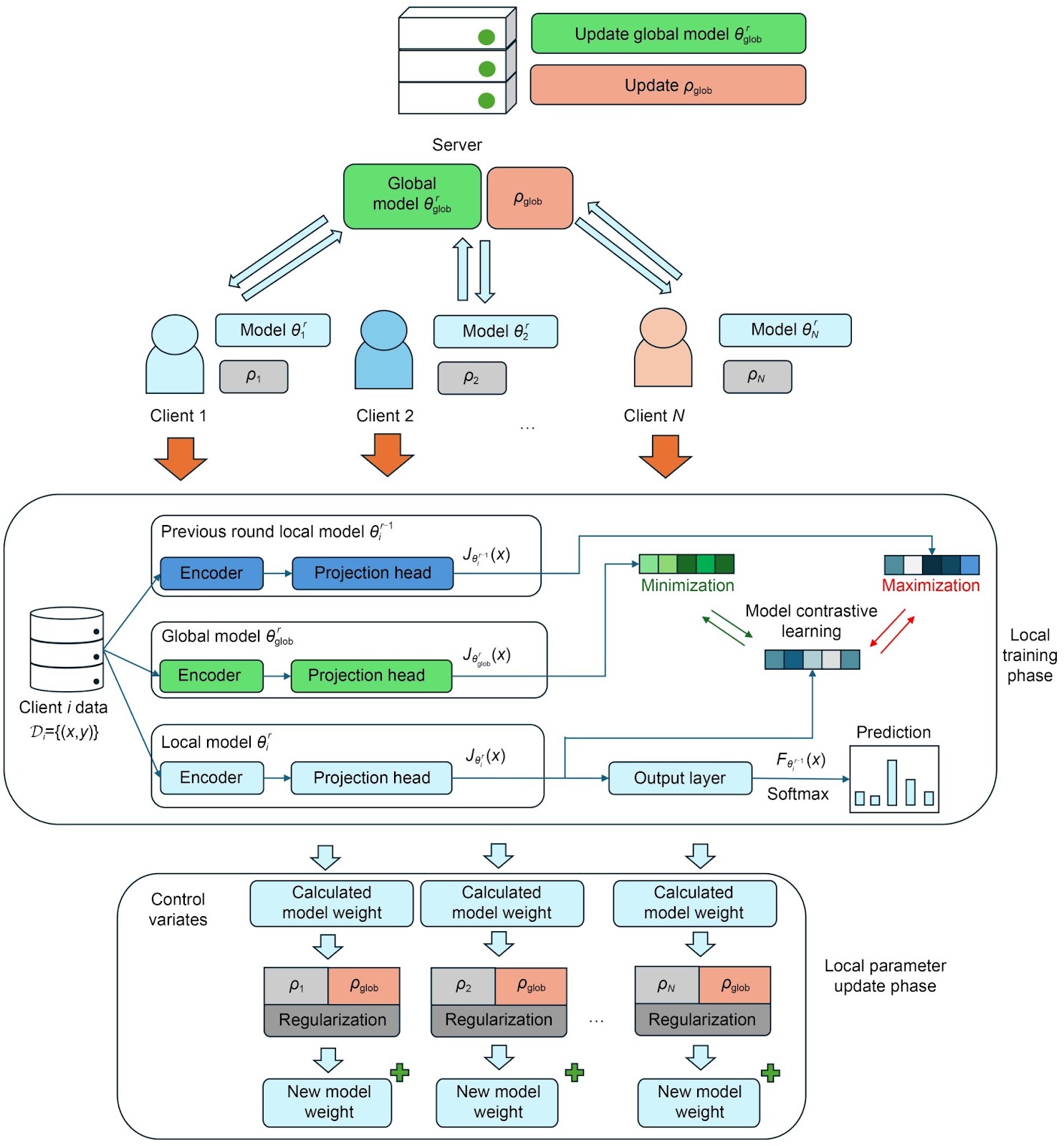
Federated model with contrastive learning and adaptive control variates for human activity recognition
Recent attention to privacy issues demands a communication-safe method for training human activity recognition (HAR) models on client activity data. Federated learning (FL) has become a compelling technique to facilitate model training between the server and clients while preserving data privacy. However, classical FL methods often assume independent and identically distributed (IID) data among clients. This assumption does not hold true in practical scenarios. Human activity in real-world scena