Key Takeaways & Executive Findings
- •• LLM-based alpha mining frameworks provide a scalable interface between human expertise and full automation, enabling rapid transformation of qualitative hypotheses into testable alpha factors. • LLMs serve multiple functional roles in alpha mining—as miners, evaluators, and interactive assistants—offering semantic depth alongside computational speed. • Critical remaining challenges include simplified performance evaluation, limited numerical reasoning, lack of diversity and originality, weak exploration dynamics, temporal data leakage, and black-box/compliance risks. • Future research should focus on reasoning alignment, new data modalities, improved evaluation protocols, and integration of LLMs into general-purpose quantitative systems to realize a complementary human-AI paradigm.
Abstract
Alpha mining, which refers to the systematic discovery of data-driven signals predictive of future cross-sectional returns, is a central task in quantitative research. Recent progress in large language models (LLMs) has sparked interest in LLM-based alpha mining frameworks, which offer a promising middle ground between human-guided and fully automated alpha mining approaches and deliver both speed and semantic depth. This study presents a structured review of emerging LLM-based alpha mining systems from an agentic perspective, and analyzes the functional roles of LLMs, ranging from miners and evaluators to interactive assistants. Despite early progress, key challenges remain, including simplified performance evaluation, limited numerical understanding, lack of diversity and originality, weak exploration dynamics, temporal data leakage, and black-box risks and compliance challenges. Accordingly, we outline future directions, including improving reasoning alignment, expanding to new data modalities, rethinking evaluation protocols, and integrating LLMs into more general-purpose quantitative systems. Our analysis suggests that LLM is a scalable interface for amplifying both domain expertise and algorithmic rigor, as it amplifies domain expertise by transforming qualitative hypotheses into testable factors and enhances algorithmic rigor for rapid backtesting and semantic reasoning. The result is a complementary paradigm, where intuition, automation, and language-based reasoning converge to redefine the future of quantitative research.
1. Introduction
The construction of quantitative investment strategies is an inherently iterative and data-driven process, involving stages such as data preprocessing, alpha factor design, model training, portfolio optimization, trade execution, and performance attribution. At the core of this process lies alpha mining, the systematic discovery of signals that predict future cross-sectional returns. From a computational perspective, an alpha refers to any variable, either constructed or observed, which can be used to rank financial assets by their expected relative performance. Rather than forecasting exact price levels, an alpha aims to distinguish between likely outperformers and underperformers over a given horizon.
A key feature of alpha mining is its practical orientation. Therefore, in this paper, we adopt a broad and practical definition: an alpha is any data-derived signal that exhibits empirical predictive power for excess returns. It may originate from financial ratios, technical indicators, sentiment scores, or other structured or unstructured information sources. This view extends beyond the classical asset pricing notion, where the alpha denotes returns unexplained by known risk factors. In addition, the alpha mining research field concentrates mostly on single-factor alphas, i.e., structured, interpretable signals that encode specific return hypotheses. These alphas are typically defined in symbolic or rule-based form, and may depend on one or multiple features.
Compared to black-box models that extract latent structure from high-dimensional inputs, single-factor alphas provide transparency, control, and attribution. Each single-factor alpha can be tested independently, evaluated statistically, and combined modularly to form larger alpha libraries. These properties make them suitable for systematic validation and scalable deployment. Alpha mining methodologies have evolved through multiple stages. Traditionally, the process has relied on human-driven alpha design, where candidate signals are manually constructed and peer-reviewed based on economic theory or domain expertise. Despite growing automation, such handcrafted alphas remain a cornerstone of quantitative research, valued for their interpretability, domain alignment, and theoretical grounding. With the surge of artificial intelligence (AI), algorithm-based alpha mining emerges as a scalable alternative. Early systems leverage heuristic search, automated feature construction, deep learning, and reinforcement learning to uncover patterns across large feature spaces. These approaches expand the search frontier and reveal signals that often elude manual exploration.
Loading authentic research manuscript (Pages 1–5)...
Junjie ZHANG, Shuoling LIU, Tongzhe ZHANG, Yuchen SHI (2025). A survey on large language model-based alpha mining. Frontiers of Information Technology & Electronic Engineering. https://doi.org/10.1631/FITEE_2500386
Research & Educational Purpose Only:The translations, structured abstracts, analytical annotations, and data reports provided by SinoTechIntel are intended exclusively for academic research, internal corporate R&D, and educational benchmarking. They do not constitute formal engineering, chemical safety, legal, or professional advice.
Copyright & Intellectual Property Notice: Original copyright of the underlying source articles and experimental data remains with the respective authors, institutions, and original publishing journals. SinoTechIntel claims intellectual property only over its proprietary translations, analytical syntheses, and AEO structured enhancements in accordance with international fair use and academic citation principles.
Frequently Asked Questions
What is alpha mining?
Alpha mining is the systematic discovery of data-driven signals that can predict future cross-sectional returns, helping to distinguish likely outperformers from underperformers in financial markets.
How do large language models (LLMs) contribute to alpha mining?
LLMs act as miners, evaluators, and interactive assistants, offering a middle ground between human-guided and fully automated alpha mining by combining speed with semantic depth.
What are the key challenges in LLM-based alpha mining?
Challenges include simplified performance evaluation, limited numerical understanding, lack of diversity and originality, weak exploration dynamics, temporal data leakage, and black-box risks with compliance concerns.
What future directions do the authors propose?
The authors suggest improving reasoning alignment, expanding to new data modalities, rethinking evaluation protocols, and integrating LLMs into more general-purpose quantitative systems.
How does the paper define an alpha?
An alpha is defined as any data-derived signal that exhibits empirical predictive power for excess returns, originating from financial ratios, technical indicators, sentiment scores, or other structured/unstructured information sources.
Related Technical Papers & Translations
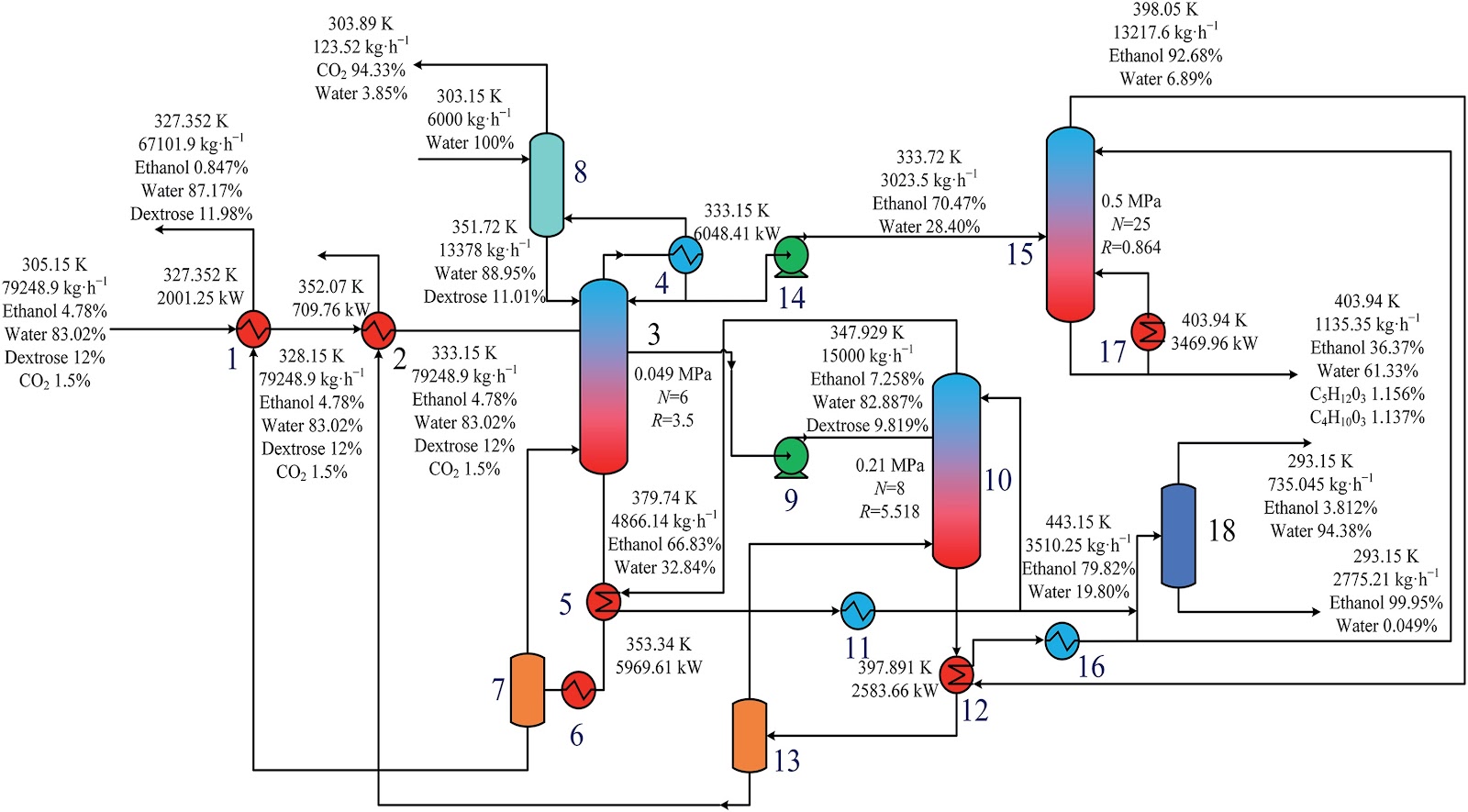
Design and optimization of a high-efficiency distillation process for cellulosic fuel ethanol integrated with thermal coupling and molecular sieve adsorption
To address the challenges of high energy consumption and prominent costs in the traditional three-columns distillation process for cellulosic fuel ethanol, a distillation—molecular sieve coupling separation process is proposed. This process integrates a three-column (crude distillation column, first distillation column, second distillation column) system with a 3A molecular sieve adsorption deep dehydration unit. A thermal coupling network is constructed via differential pressure design (steam from medium/high-pressure columns as mutual heat sources, reboiler liquid waste heat for feed preheating), and molecular sieve adsorption conditions are optimized. The study first performs a thermodynamic consistency test on the ethanol—water system, determines optimal non-random two-liquid (NRTL) model binary interaction parameters via experimental data regression for Aspen Plus simulation. Aiming at minimum total annual cost (TAC), Aspen Plus is used to optimize process parameters (theoretical tray number, feed location, reflux ratio, side-draw position, etc.). Economic analysis shows this process reduces CO2 emission costs by 27.56%, TAC by 15.58% (to 5.123 × 10⁶ USD·a-1), and increases ethanol purity to >99.6%, providing an effective solution for green, efficient separation.
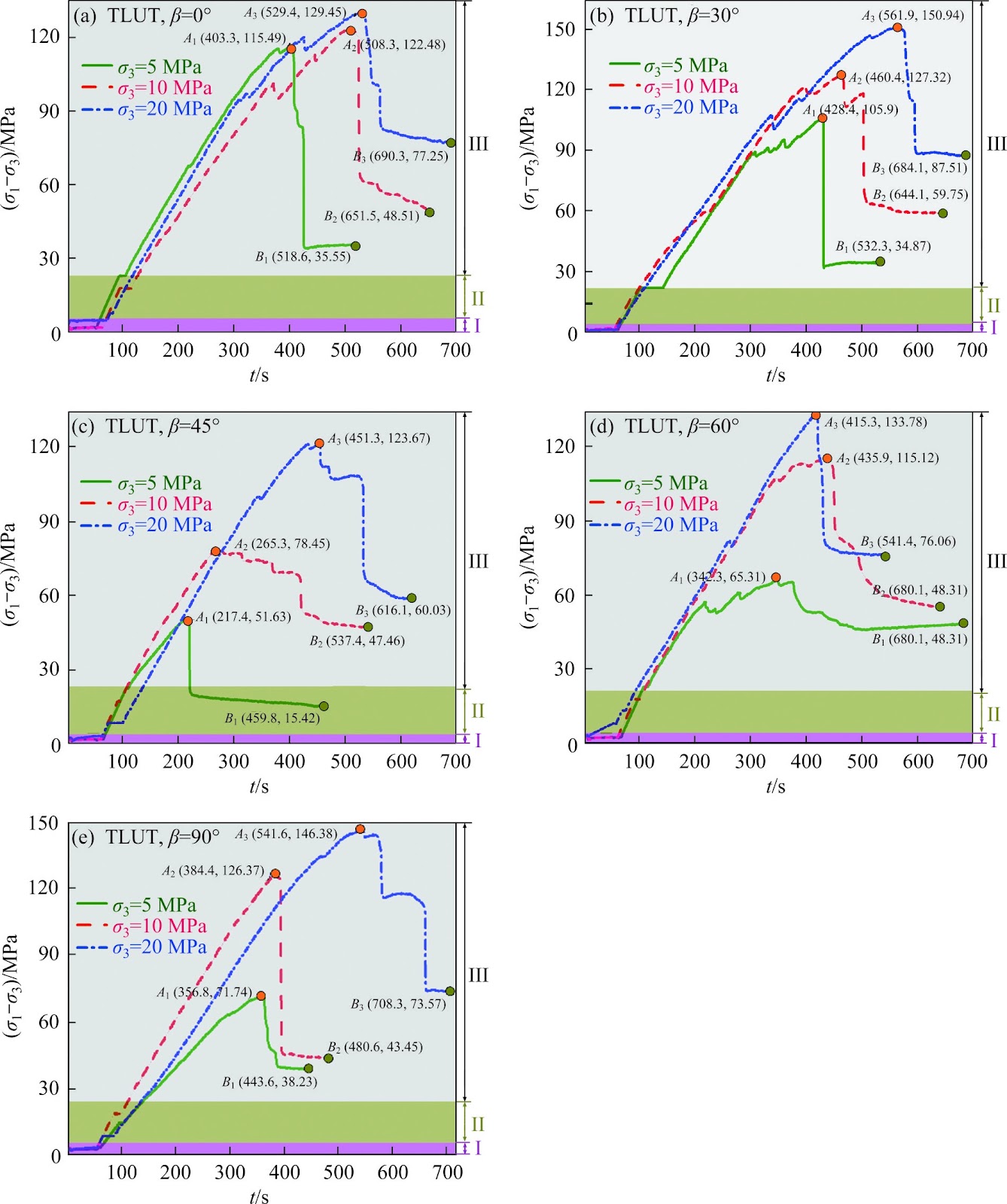
A cohesion loss model for determining residual strength of deep bedded sandstone
Rock residual strength, as an important input parameter, plays an indispensable role in proposing the reasonable and scientific scheme about stope design, underground tunnel excavation and stability evaluation of deep chambers. Therefore, previous residual strength models of rocks established were reviewed. And corresponding related problems were stated. Subsequently, starting from the effects of bedding and whole life-cycle evolution process, series of triaxial mechanical tests of deep bedded s
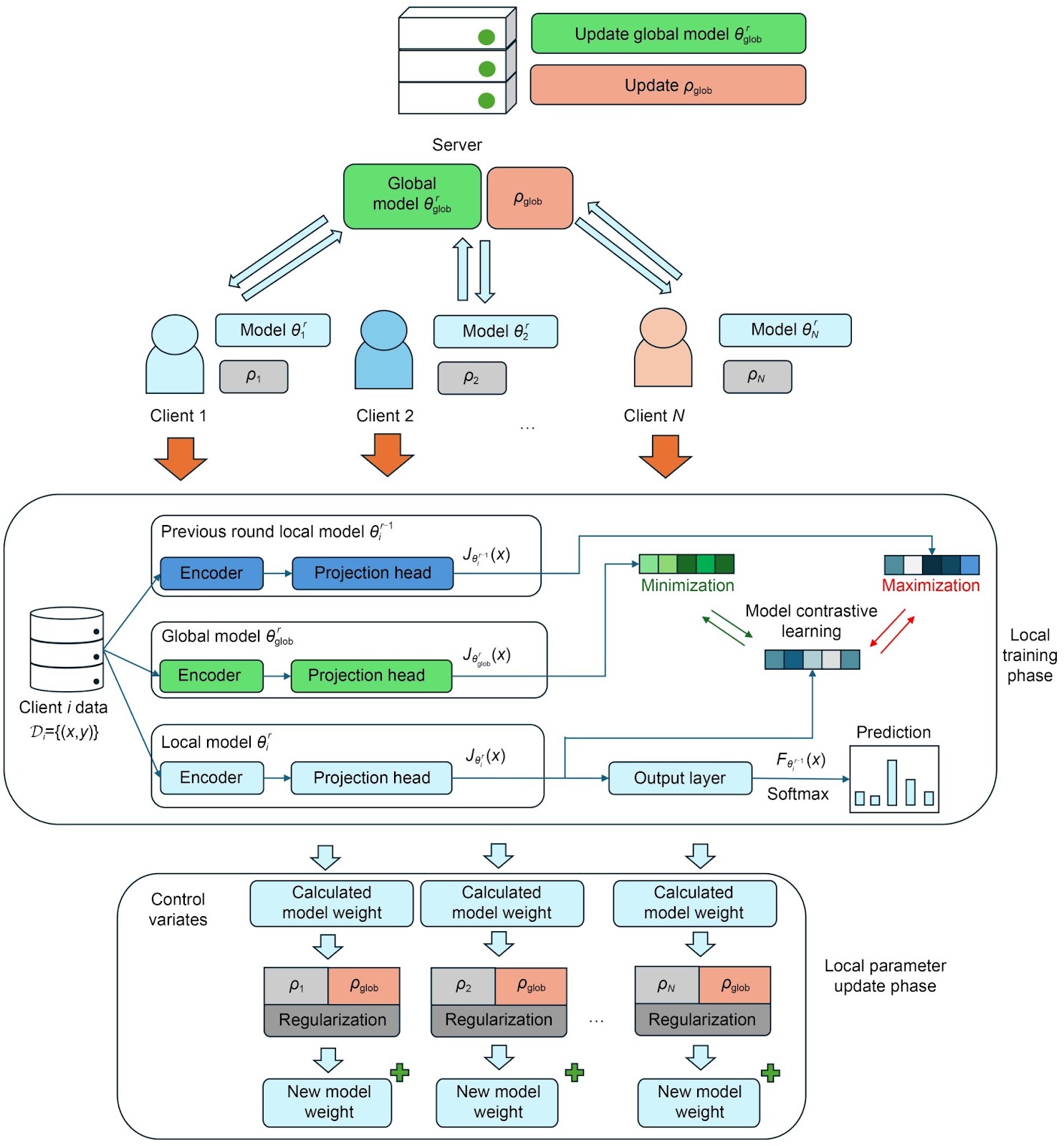
Federated model with contrastive learning and adaptive control variates for human activity recognition
Recent attention to privacy issues demands a communication-safe method for training human activity recognition (HAR) models on client activity data. Federated learning (FL) has become a compelling technique to facilitate model training between the server and clients while preserving data privacy. However, classical FL methods often assume independent and identically distributed (IID) data among clients. This assumption does not hold true in practical scenarios. Human activity in real-world scena