
Key Takeaways & Executive Findings
- •• Proposes a plug-and-play LoRA module for few-shot fine-tuning, enabling exemplar-driven inpainting with high fidelity and customization. • Introduces GPT-4V prompting and prior noise initialization to further enhance the fidelity of inpainting outputs. • Achieves state-of-the-art performance both qualitatively and quantitatively compared to existing methods (Textual Inversion and Paint by Example). • Provides a practical solution for object insertion from a single exemplar image without requiring large-scale dataset training.
Abstract
Text-to-image diffusion models have demonstrated impressive capabilities in image generation and have been effectively applied to image inpainting. While text prompt provides an intuitive guidance for conditional inpainting, users often seek the ability to inpaint a specific object with customized appearance by providing an exemplar image. Unfortunately, existing methods struggle to achieve high fidelity in exemplar-driven inpainting. To address this, we use a plug-and-play low-rank adaptation (LoRA) module based on a pretrained text-driven inpainting model. The LoRA module is dedicated to learn the exemplar-specific concepts through few-shot fine-tuning, bringing improved fitting capability to customized exemplar images, without intensive training on large-scale datasets. Additionally, we introduce GPT-4V prompting and prior noise initialization techniques to further facilitate the fidelity in inpainting results. In brief, the denoising diffusion process first starts with the noise derived from a composite exemplar–background image, and is subsequently guided by an expressive prompt generated from the exemplar using the GPT-4V model. Extensive experiments demonstrate that our method achieves state-of-the-art performance, qualitatively and quantitatively, offering users an exemplar-driven inpainting tool with enhanced customization capability.
1. Introduction
Image inpainting is a typical image editing technique commonly used to modify local areas within an image, including object removal and replacement. Traditional inpainting algorithms based on PatchMatch (Criminisi et al., 2004; Barnes et al., 2009) or generative adversarial networks (GANs) (Nazeri et al., 2019; Li JY et al., 2020) often do not support user-provided guidance signals, and the lack of controllability limits their further application. Recent years have seen breakthrough progress in artificial intelligence-generated content (AIGC) (Zhang JP et al., 2024), especially in image generation with the advent of large-scale text-to-image (T2I) diffusion models, e.g., stable diffusion (Rombach et al., 2022), DALLE2 (Ramesh et al., 2022), and Imagen (Saharia et al., 2022). These models can generate high-quality and highly diverse images from the user-provided text. Due to the simple and intuitive nature of natural language, text-driven image editing has evolved rapidly, e.g., p2pEdit (Hertz et al., 2022) and InstructPix2Pix (Brooks et al., 2023). The use of text guidance has been successfully applied in image inpainting (Wang et al., 2023; Xie et al., 2023), with the most notable method being the stable inpainting (SD-inpaint) (Rombach et al., 2022), allowing users to fill in local areas of an image using a simple natural prompt, which has become the most widely used and state-of-the-art text-driven inpainting tool.
While natural language provides an intuitive approach to image editing, as the saying goes “a picture is worth a thousand words,” even a detailed language description struggles to precisely convey detailed object features, such as in custom scenarios where users wish to inpaint specific items like their own toy (Fig. 1). Therefore, beyond conventional text-driven inpainting, a more effective solution would be the exemplar-driven inpainting, which allows users to provide a reference image (exemplar), enabling the model to insert the object from the exemplar into a background image. However, exemplar-driven inpainting is an under-explored topic, with the following two main existing strategies: (1) Textual Inversion (TxtInv) (Gal et al., 2022), which learns textual embedding from exemplar images and reuses it during inference, and (2) Paint by Example (PbE) (Yang BX et al., 2023), which relies on a dataset to train a model that directly accepts exemplar as input conditions during inference. Both methods face challenges in achieving high-fidelity inpainting. The limitation of TxtInv lies in the fact that merely learning a textual embedding still cannot adequately represent the reference image as the textual embedding contains very limited parameters that can be less expressive. Moreover, TxtInv employs the background blending technique to maintain the known area, which often leads to visually noticeable boundary artifacts. The limitation of PbE is its dependency on the dataset, which cannot cover all
Loading authentic research manuscript (Pages 1–5)...
Shiyuan Yang, Zheng Gu, Wenyue Hao, Yi Wang, Huaiyu Cai, Xiaodong Chen (2025). Few-shot exemplar-driven inpainting with parameter-efficient diffusion fine-tuning. Frontiers of Information Technology & Electronic Engineering. https://doi.org/10.1631/FITEE_2400395
Research & Educational Purpose Only:The translations, structured abstracts, analytical annotations, and data reports provided by SinoTechIntel are intended exclusively for academic research, internal corporate R&D, and educational benchmarking. They do not constitute formal engineering, chemical safety, legal, or professional advice.
Copyright & Intellectual Property Notice: Original copyright of the underlying source articles and experimental data remains with the respective authors, institutions, and original publishing journals. SinoTechIntel claims intellectual property only over its proprietary translations, analytical syntheses, and AEO structured enhancements in accordance with international fair use and academic citation principles.
Frequently Asked Questions
What is exemplar-driven inpainting?
Exemplar-driven inpainting is an image editing technique that allows users to provide a reference image (exemplar) to fill in a masked or missing region of another image, inserting the object from the exemplar into the target background.
How does the proposed method achieve high-fidelity exemplar-driven inpainting?
The method employs a plug-and-play low-rank adaptation (LoRA) module fine-tuned on a few exemplar images, combined with GPT-4V prompting and prior noise initialization to guide the denoising diffusion process, resulting in improved fidelity and customization.
What are the limitations of existing exemplar-driven inpainting methods?
Existing methods like Textual Inversion suffer from limited expressiveness of textual embeddings and boundary artifacts, while Paint by Example depends on large-scale datasets that cannot cover all custom objects, leading to suboptimal fidelity.
What is the role of GPT-4V in this method?
GPT-4V is used to generate an expressive prompt from the exemplar image, which guides the diffusion model during the inpainting process, improving the semantic alignment and fidelity of the result.
Related Technical Papers & Translations
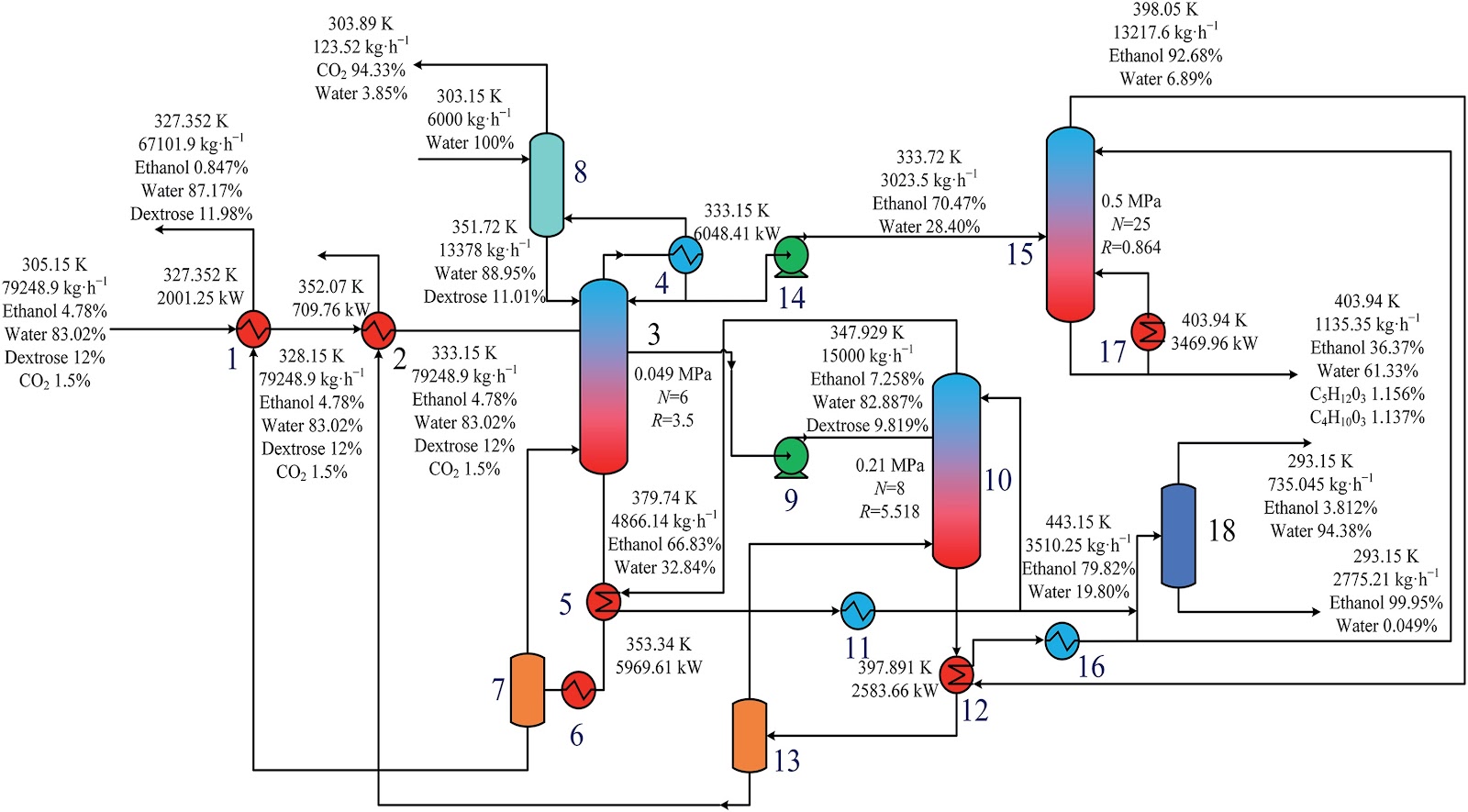
Design and optimization of a high-efficiency distillation process for cellulosic fuel ethanol integrated with thermal coupling and molecular sieve adsorption
To address the challenges of high energy consumption and prominent costs in the traditional three-columns distillation process for cellulosic fuel ethanol, a distillation—molecular sieve coupling separation process is proposed. This process integrates a three-column (crude distillation column, first distillation column, second distillation column) system with a 3A molecular sieve adsorption deep dehydration unit. A thermal coupling network is constructed via differential pressure design (steam from medium/high-pressure columns as mutual heat sources, reboiler liquid waste heat for feed preheating), and molecular sieve adsorption conditions are optimized. The study first performs a thermodynamic consistency test on the ethanol—water system, determines optimal non-random two-liquid (NRTL) model binary interaction parameters via experimental data regression for Aspen Plus simulation. Aiming at minimum total annual cost (TAC), Aspen Plus is used to optimize process parameters (theoretical tray number, feed location, reflux ratio, side-draw position, etc.). Economic analysis shows this process reduces CO2 emission costs by 27.56%, TAC by 15.58% (to 5.123 × 10⁶ USD·a-1), and increases ethanol purity to >99.6%, providing an effective solution for green, efficient separation.
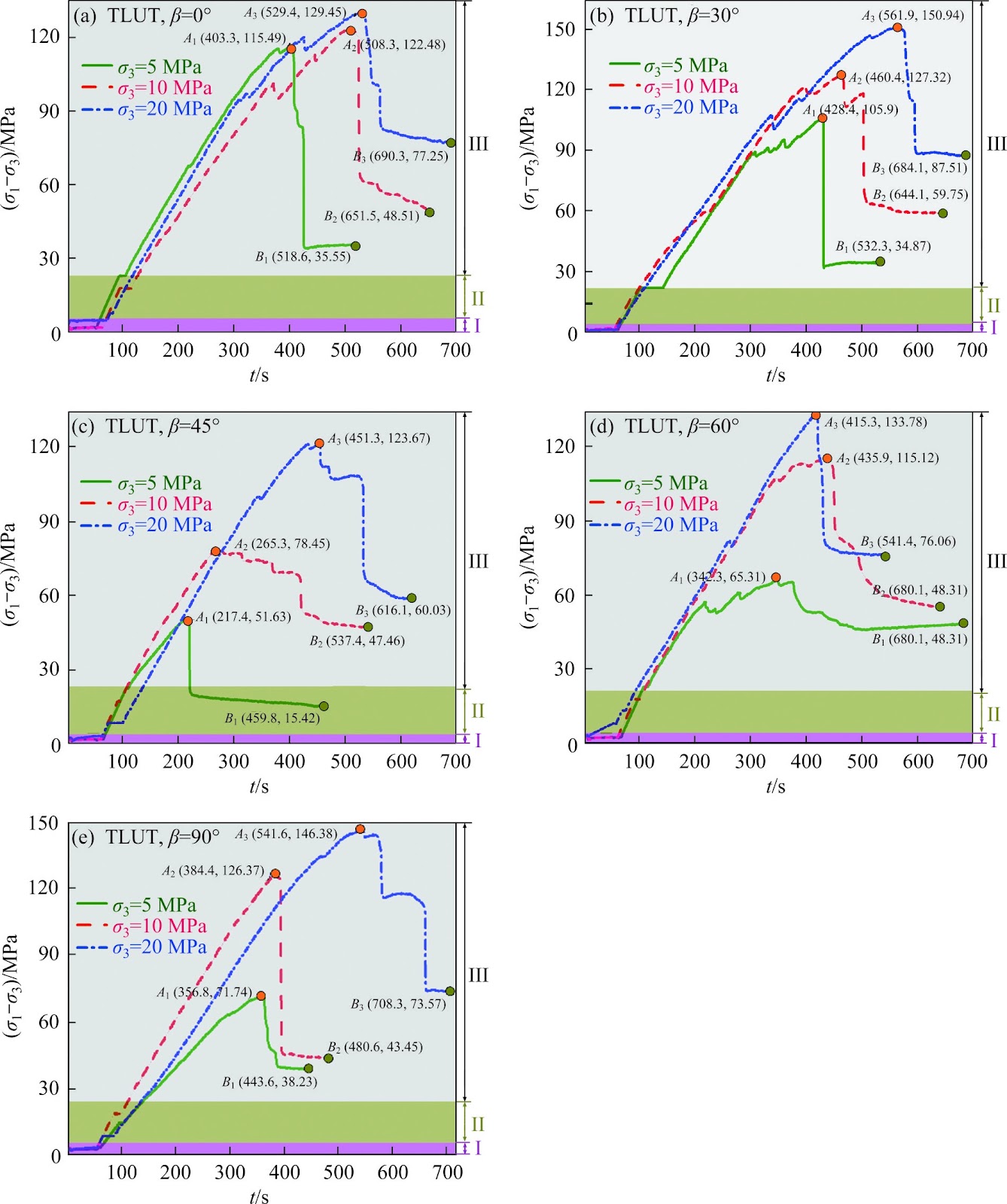
A cohesion loss model for determining residual strength of deep bedded sandstone
Rock residual strength, as an important input parameter, plays an indispensable role in proposing the reasonable and scientific scheme about stope design, underground tunnel excavation and stability evaluation of deep chambers. Therefore, previous residual strength models of rocks established were reviewed. And corresponding related problems were stated. Subsequently, starting from the effects of bedding and whole life-cycle evolution process, series of triaxial mechanical tests of deep bedded s
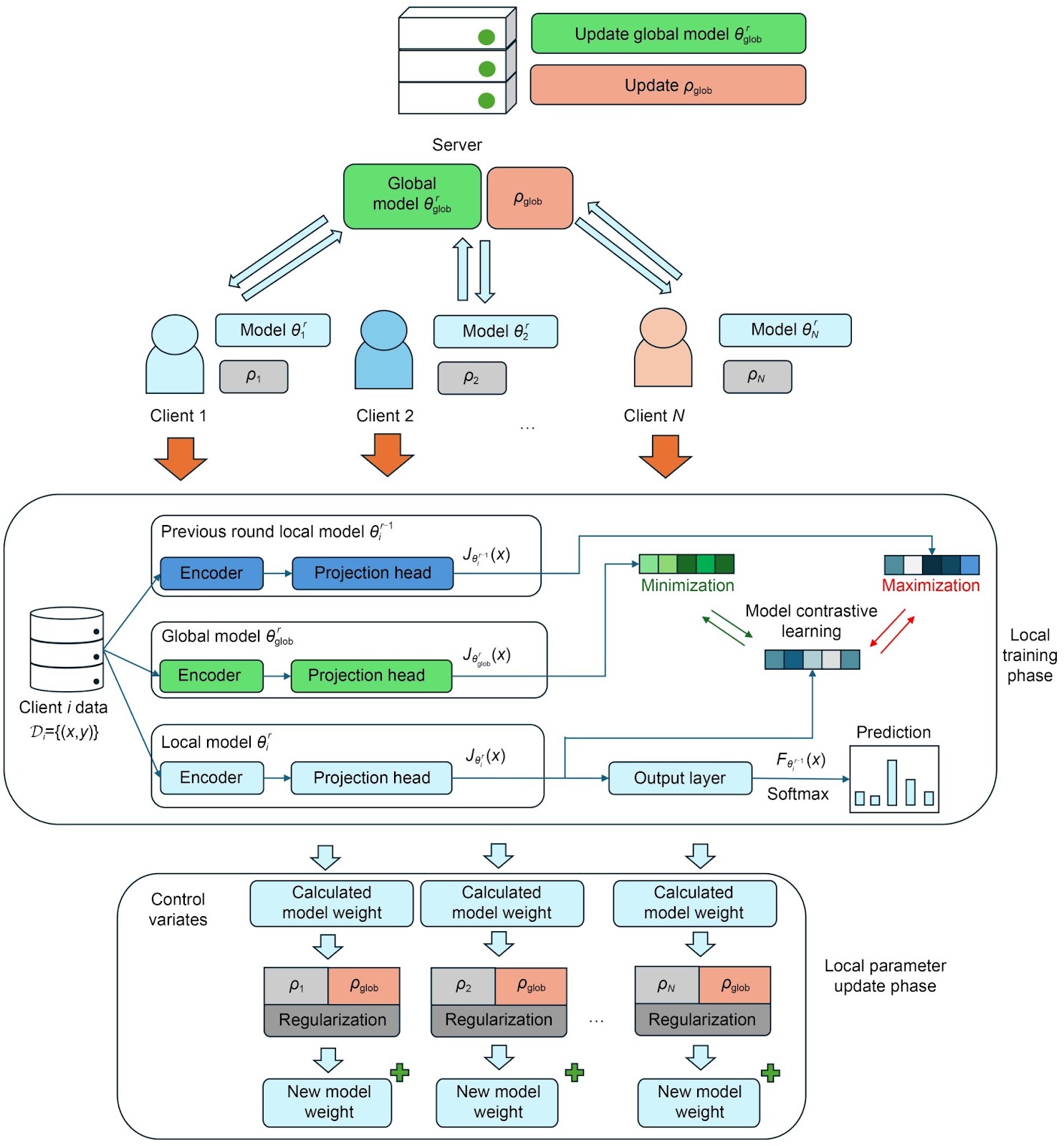
Federated model with contrastive learning and adaptive control variates for human activity recognition
Recent attention to privacy issues demands a communication-safe method for training human activity recognition (HAR) models on client activity data. Federated learning (FL) has become a compelling technique to facilitate model training between the server and clients while preserving data privacy. However, classical FL methods often assume independent and identically distributed (IID) data among clients. This assumption does not hold true in practical scenarios. Human activity in real-world scena