
Key Takeaways & Executive Findings
- •• Proposes a novel hierarchical algorithm that classifies parts into three levels based on area and fullness, enabling efficient packing of up to 1400 irregular parts on multiple sheets—a scale beyond prior irregular packing studies. • Introduces an innovative "shape matching" method that uses rotation and translation to achieve contour complementarity, with a shape matching coefficient (SMC) to evaluate match quality. • Integrates box stacking, shape matching, and gravity packing strategies to avoid hooking issues and promote orderly, compact arrangements, yielding higher material utilization than traditional gravity packing. • Maintains computation time suitable for engineering applications, making it practical for shipbuilding, sheet metal processing, and large-scale manufacturing.
Abstract
To address the challenge of large-scale packing problems, this paper proposes a novel hierarchical algorithm based on the geometrical classification of parts. The algorithm begins by classifying parts into three levels based on their area and fullness and then applies distinct packing strategies to each category. An innovative “shape matching” method is introduced, which, together with the “box stacking” (for rectangular parts) and “gravity packing,” forms a comprehensive hierarchical packing system. Level‑1 comprises large rectangular parts, which are arranged using the box stacking algorithm. By aligning the corner points of the parts’ bounding boxes, this method avoids the hooking issue commonly encountered in gravity packing. Level‑2 includes both large, irregular parts and medium-sized parts. They are first processed using the shape matching algorithm, where rotation and translation are applied to achieve contour complementarity. The quality of the match is evaluated using the shape matching coefficient (SMC). If the SMC fails to reach the preset quality threshold, the system switches to box stacking (for large, irregular parts) or gravity packing (for medium-sized parts). Level‑3 comprises the remaining smaller parts and those that failed to pack in the previous two levels. For these parts, shape matching is attempted first, and the system resorts to gravity packing in case of failure. The experimental and comparative results demonstrate that the proposed hierarchical algorithm achieves higher material utilization than the traditional gravity packing algorithm. This improvement is facilitated by the box stacking and shape matching strategies, which promote a more orderly and compact arrangement of parts.
1. Introduction
Packing problems involve the optimal arrangement of parts of varying shapes and sizes on raw materials, such as metal sheets, fabrics, and wood, to maximize material utilization while satisfying process constraints, including orientation and gap requirements (Francescatto and Júnior, 2025). This process is widely employed in industries such as sheet metal processing, garment manufacturing, and furniture production, and directly affects both material costs and production efficiency.
The trend in manufacturing is increasingly leaning toward ever-larger scales. Taking the shipbuilding industry as an example, the larger a vessel’s deadweight tonnage is, the lower its unit manufacturing and cargo transportation costs. This trend toward large-scale manufacturing presents three primary challenges for packing problems: (1) a large quantity of parts; (2) irregular part geometries; (3) the use of multiple sheets (raw material plate). However, no existing studies have effectively tackled all three issues in an integrated manner. While Zhou et al. (2024) and Lai et al. (2025) focused on the large-scale packing problem of regular parts (with the number of circles reaching 1000), research on the packing of irregularly shaped parts (Stoyan and Pankratov, 1999; Cheng and Rao, 2000; Costa et al., 2009; Al Theeb et al., 2021; Liu YL and Zheng, 2025) is limited to a maximum of 450 parts and one single sheet. Guo et al. (2025) investigated the packing of irregular parts on multiple sheets, but their study only considered a maximum of 130 parts.
This paper proposes a new packing algorithm that can pack 1400 irregular parts across multiple sheets while maintaining the computation time suitable for engineering applications. The algorithm classifies parts by area and fullness and employs a combination of “box stacking,” “shape matching,” and “gravity packing” strategies. Among these, box stacking is essentially a form of rectangular packing, gravity packing refers to an algorithm developed over the past decade, and shape matching is a novel method introduced in the present work. Before presenting the proposed approach, it is helpful to briefly review traditional algorithms for rectangular and irregular part packing. In certain engineering applications, the area of rectangular parts constitutes a significant proportion of the total area. For instance, in shipbuilding, the presence of a parallel mid-body results in a large number of parts that are approximately rectangular in shape (hereinafter referred to as “box-like parts”), with the remaining parts being irregular.
Loading authentic research manuscript (Pages 1–5)...
Xiao LIU (2025). Hierarchical algorithm for large-scale irregular packing problems. ENGINEERING Information Technology & Electronic Engineering. https://doi.org/10.1631/ENG_ITEE_2025_0080
Research & Educational Purpose Only:The translations, structured abstracts, analytical annotations, and data reports provided by SinoTechIntel are intended exclusively for academic research, internal corporate R&D, and educational benchmarking. They do not constitute formal engineering, chemical safety, legal, or professional advice.
Copyright & Intellectual Property Notice: Original copyright of the underlying source articles and experimental data remains with the respective authors, institutions, and original publishing journals. SinoTechIntel claims intellectual property only over its proprietary translations, analytical syntheses, and AEO structured enhancements in accordance with international fair use and academic citation principles.
Frequently Asked Questions
What is the hierarchical algorithm for large-scale irregular packing?
The hierarchical algorithm classifies parts into three levels based on area and fullness, then applies distinct packing strategies—box stacking, shape matching, and gravity packing—to each category. It can efficiently pack up to 1400 irregular parts across multiple sheets while maintaining computation time suitable for engineering applications.
How does shape matching improve material utilization?
Shape matching uses rotation and translation to achieve contour complementarity between irregular parts, evaluated by the shape matching coefficient (SMC). This promotes more orderly and compact arrangements, leading to higher material utilization compared to traditional gravity packing.
What are the three levels of parts in the proposed algorithm?
Level-1 comprises large rectangular parts packed via box stacking; Level-2 includes large irregular and medium-sized parts processed with shape matching, with fallback to box stacking or gravity packing; Level-3 contains smaller parts and previously failed parts, using shape matching first and gravity packing as a fallback.
What is gravity packing?
Gravity packing is a packing algorithm developed over the past decade that simulates parts falling under gravity to find a compact arrangement. It serves as a baseline and fallback strategy within the hierarchical framework.
What is the maximum scale of parts handled by the proposed algorithm?
The proposed algorithm can pack up to 1400 irregular parts across multiple sheets, exceeding the limits of previous irregular packing studies which were restricted to at most 450 parts on a single sheet.
Related Technical Papers & Translations
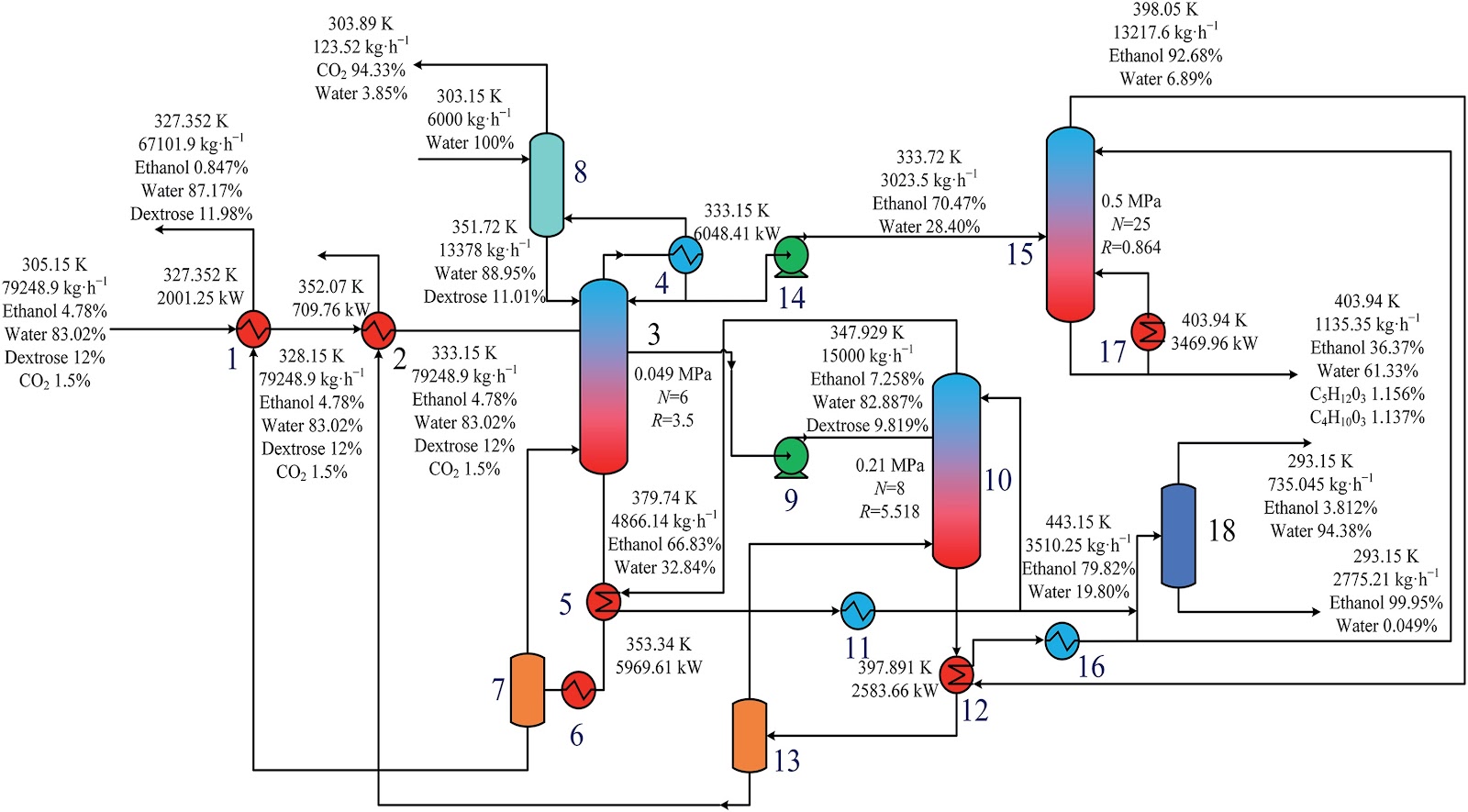
Design and optimization of a high-efficiency distillation process for cellulosic fuel ethanol integrated with thermal coupling and molecular sieve adsorption
To address the challenges of high energy consumption and prominent costs in the traditional three-columns distillation process for cellulosic fuel ethanol, a distillation—molecular sieve coupling separation process is proposed. This process integrates a three-column (crude distillation column, first distillation column, second distillation column) system with a 3A molecular sieve adsorption deep dehydration unit. A thermal coupling network is constructed via differential pressure design (steam from medium/high-pressure columns as mutual heat sources, reboiler liquid waste heat for feed preheating), and molecular sieve adsorption conditions are optimized. The study first performs a thermodynamic consistency test on the ethanol—water system, determines optimal non-random two-liquid (NRTL) model binary interaction parameters via experimental data regression for Aspen Plus simulation. Aiming at minimum total annual cost (TAC), Aspen Plus is used to optimize process parameters (theoretical tray number, feed location, reflux ratio, side-draw position, etc.). Economic analysis shows this process reduces CO2 emission costs by 27.56%, TAC by 15.58% (to 5.123 × 10⁶ USD·a-1), and increases ethanol purity to >99.6%, providing an effective solution for green, efficient separation.
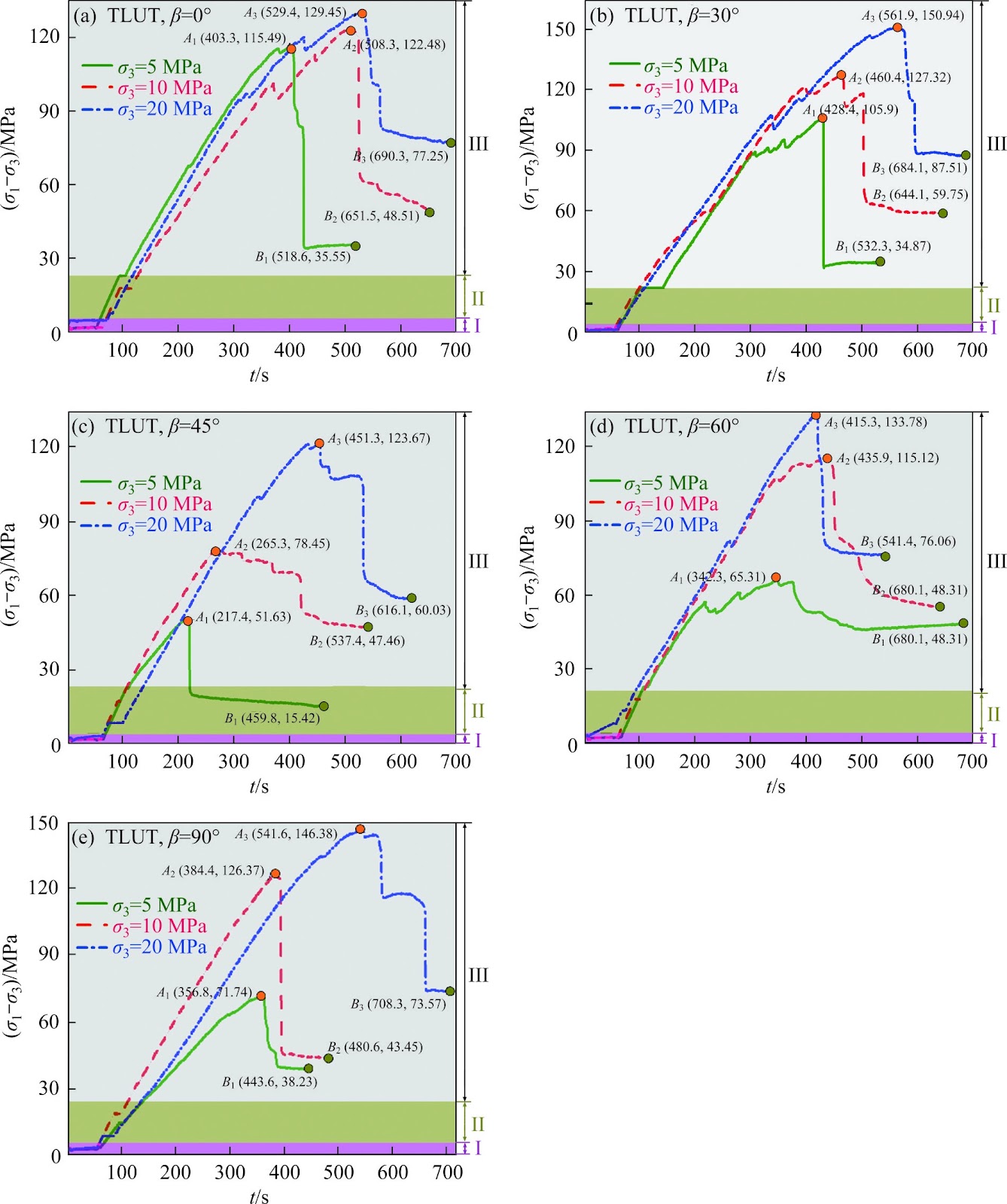
A cohesion loss model for determining residual strength of deep bedded sandstone
Rock residual strength, as an important input parameter, plays an indispensable role in proposing the reasonable and scientific scheme about stope design, underground tunnel excavation and stability evaluation of deep chambers. Therefore, previous residual strength models of rocks established were reviewed. And corresponding related problems were stated. Subsequently, starting from the effects of bedding and whole life-cycle evolution process, series of triaxial mechanical tests of deep bedded s
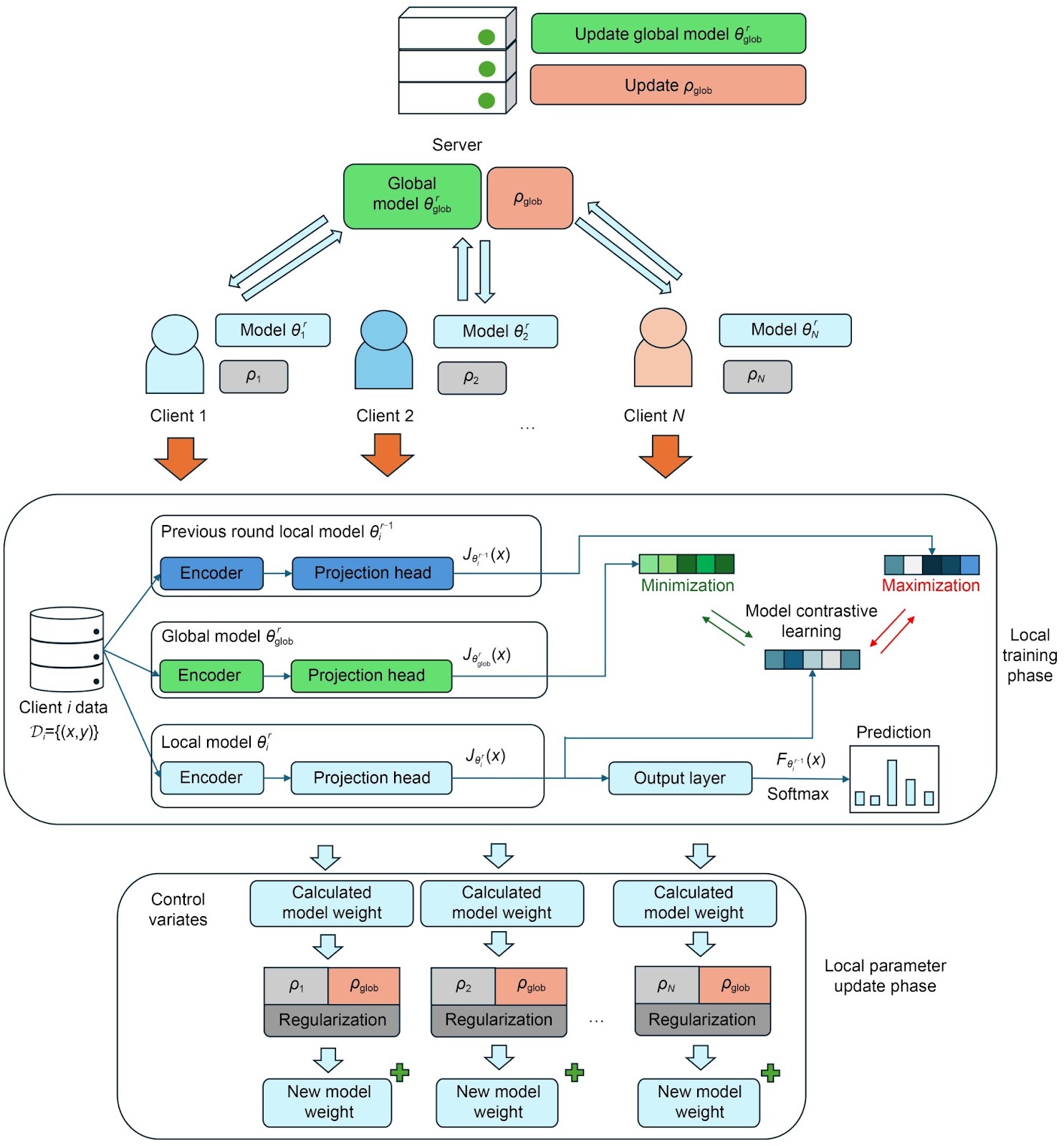
Federated model with contrastive learning and adaptive control variates for human activity recognition
Recent attention to privacy issues demands a communication-safe method for training human activity recognition (HAR) models on client activity data. Federated learning (FL) has become a compelling technique to facilitate model training between the server and clients while preserving data privacy. However, classical FL methods often assume independent and identically distributed (IID) data among clients. This assumption does not hold true in practical scenarios. Human activity in real-world scena