Key Takeaways & Executive Findings
- •• mmWave communications rely on high-directional beams to compensate for path loss, making precise beam alignment essential for reliable links. • Beam tracking is critical for maintaining connectivity in mobile 5G and vehicular scenarios where frequent transceiver movement causes beam misalignment. • Hybrid beamforming offers a flexible and low-complexity architecture that supports effective beam tracking while balancing hardware cost and performance. • Traditional sub-6 GHz tracking algorithms such as LMS, RLS, and Kalman filter are unsuitable for mmWave due to shorter coherence time, necessitating faster strategies.
Abstract
Millimeter-wave (mmWave) communication is the key to increasing the demand for high data rates and low latency resulting from the rapid evolution of wireless communications, especially in the fifth generation (5G) of wireless communication systems and beyond. The mmWave band suffers from high path loss and obstacle blockage, significantly reducing the transmission range. Note that high-directional beams are required to perform well in the mmWave band. Hence, beam alignment is crucial for high-data-rate transmission between the transmitter (Tx) and the receiver (Rx). One of the drawbacks is getting an accurate beam alignment when the transceiver (Tx, Rx, or both) is mobile. Beam tracking plays a considerable role in 5G communications, especially in vehicular communications, due to the repeated change of the transceiver (Tx, Rx, or both) position. This work presents an overview of the different beam-tracking methods used in mmWave communications, focusing on hybrid beamforming techniques. We also compare the various tracking techniques in a recommendation table. This overview suggests that some tracking methods used in the sub-6-GHz band, such as least mean squares (LMS), recursive least squares (RLS), and Kalman filter, are unsuitable for the mmWave band (due to higher frequency and shorter coherence time), and it recommends faster tracking strategies.
1. Introduction
Millimeter-wave (mmWave) communication technology is viable for fifth-generation (5G) wireless communication systems and beyond because of the growing demand for data speeds and the restricted spectrum available for the sub-6-GHz band (Samimi et al., 2016). These frequencies have an available spectrum up to 200 times larger than current cellular spectrums (Barati et al., 2015; Kokshoorn et al., 2016) and frequency bands ranging from 30 GHz to 300 GHz (Wang P et al., 2015; Wang CX et al., 2020). mmWave frequencies suffer from high path loss and keen shadowing compared to traditional sub-6-GHz frequencies (Haghighatshoar and Caire, 2016) because they have a much smaller wavelength of about 1–10 mm (Wu S et al., 2021). This makes them susceptible to precipitation and oxygen absorption (Hur et al., 2013). Therefore, the receiver (Rx) and the transmitter (Tx) use directional beamforming (BF) to get around the channel attenuation problem (Va, 2018) and reduce interference in mmWave networks (Hashemi et al., 2018; Liu Q et al., 2022). They use large antenna arrays to obtain high gain with narrow beams (Wu W et al., 2019).
mmWave communications use different BF techniques, such as analog BF (ABF), digital BF (DBF), and hybrid BF (HBF), to beat the rise in power consumption and the enormous hardware cost that results from using a large array of antennas (Han C et al., 2019). As seen in Fig. S1, ABF uses only one radio frequency (RF) chain with phase shifters to form the beams. To compensate for the large amount of channel attenuation, ABF uses directivity gains and spatial division to send the signal to different areas. DBF allows enormous flexibility in molding the transmitted beams. Because many antennas operate in a considerable bandwidth, DBF requires one RF chain for each antenna element, raising the cost and complexity. Using the channel state information (CSI) of an active channel with a tiny dimension, DBF lowers the intrasector interference and provides a gain (El Ayach et al., 2014). As seen in Fig. S2, the HBF technology combines ABF and DBF into a single structure. ABF is produced in HBF by connecting a series of phase shifters for every RF chain (Perfecto et al., 2017). HBF gives a reasonable solution for both hardware complexity and performance gain (Mavromatis et al., 2017). For the mmWave, the channels’ sparseness reduces the design’s HBF complexity. The capacity to create beam patterns from the sum of two or more RF chain BF vectors is the primary benefit of HBF structures (Tagliaferri et al., 2021). The BF and precoding steps improve the mmWave spectral efficiency (Ciaramitaro et al., 2023). This paper focuses on HBF due to its flexibility and low complexity. Subsequently, BF with precoding (multiple data streams) improves the mmWave spectral efficiency (Ali et al., 2020). Beam alignment is necessary for fast-moving states because the angular spread of each path is very small. There are other works of literature illustrating the beam alignment problem in different scenarios.
Loading authentic research manuscript (Pages 1–5)...
Ruaa Shallal Abbas ANOOZ, Jafar POURROSTAM, Mohanad Al-IBADI (2025). An overview of beam-tracking techniques for mmWave wireless communications. Frontiers of Information Technology & Electronic Engineering. https://doi.org/10.1631/FITEE_2500138
Research & Educational Purpose Only:The translations, structured abstracts, analytical annotations, and data reports provided by SinoTechIntel are intended exclusively for academic research, internal corporate R&D, and educational benchmarking. They do not constitute formal engineering, chemical safety, legal, or professional advice.
Copyright & Intellectual Property Notice: Original copyright of the underlying source articles and experimental data remains with the respective authors, institutions, and original publishing journals. SinoTechIntel claims intellectual property only over its proprietary translations, analytical syntheses, and AEO structured enhancements in accordance with international fair use and academic citation principles.
Frequently Asked Questions
What is beam tracking in mmWave communications?
Beam tracking is the process of continuously adjusting the direction of the transmit and receive beams to maintain accurate alignment between a mobile transmitter and receiver in millimeter-wave (mmWave) communication systems.
Why is beam tracking critical for 5G and vehicular communications?
Since mmWave systems use highly directional beams to overcome path loss, any movement of the transceiver causes misalignment. Beam tracking ensures reliable high-data-rate links in fast-moving environments such as vehicles, which is essential for 5G and beyond.
What are the main beam tracking methods discussed in this paper?
The paper reviews various beam tracking techniques for mmWave communications, focusing on methods based on hybrid beamforming, including both conventional algorithms (e.g., least mean squares, recursive least squares, Kalman filter) and faster strategies suitable for short coherence times.
Why are sub-6 GHz tracking algorithms like LMS, RLS, and Kalman filter unsuitable for mmWave?
Due to the higher frequency and shorter coherence time in mmWave bands, these conventional algorithms are too slow to keep up with rapid beam changes, and thus faster tracking strategies are recommended.
What role does hybrid beamforming play in beam tracking?
Hybrid beamforming combines analog and digital beamforming to reduce hardware complexity and power consumption while maintaining performance, making it a flexible and efficient architecture for implementing beam tracking in mmWave systems.
Related Technical Papers & Translations
Design and optimization of a high-efficiency distillation process for cellulosic fuel ethanol integrated with thermal coupling and molecular sieve adsorption
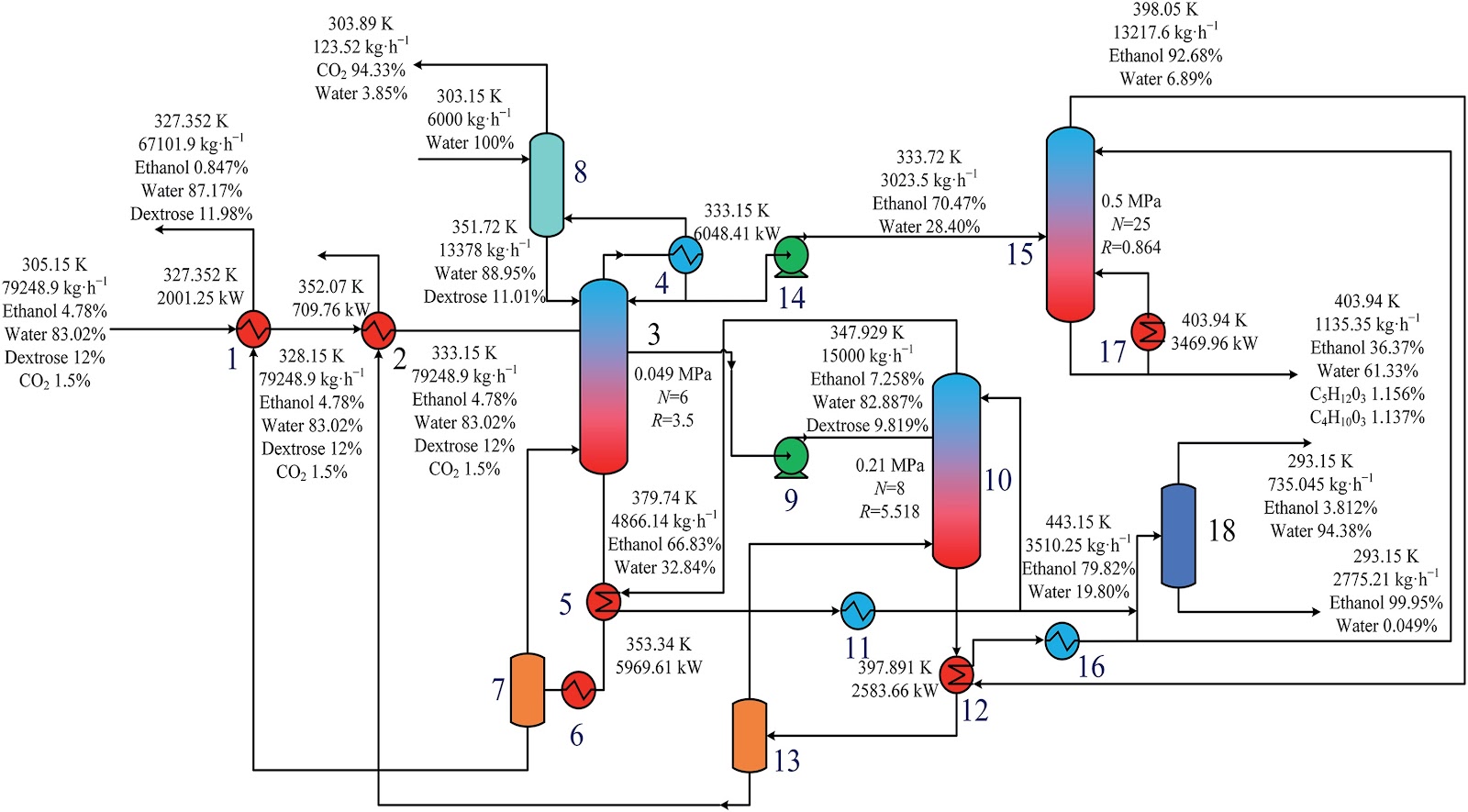
To address the challenges of high energy consumption and prominent costs in the traditional three-columns distillation process for cellulosic fuel ethanol, a distillation—molecular sieve coupling separation process is proposed. This process integrates a three-column (crude distillation column, first distillation column, second distillation column) system with a 3A molecular sieve adsorption deep dehydration unit. A thermal coupling network is constructed via differential pressure design (steam from medium/high-pressure columns as mutual heat sources, reboiler liquid waste heat for feed preheating), and molecular sieve adsorption conditions are optimized. The study first performs a thermodynamic consistency test on the ethanol—water system, determines optimal non-random two-liquid (NRTL) model binary interaction parameters via experimental data regression for Aspen Plus simulation. Aiming at minimum total annual cost (TAC), Aspen Plus is used to optimize process parameters (theoretical tray number, feed location, reflux ratio, side-draw position, etc.). Economic analysis shows this process reduces CO2 emission costs by 27.56%, TAC by 15.58% (to 5.123 × 10⁶ USD·a-1), and increases ethanol purity to >99.6%, providing an effective solution for green, efficient separation.
A cohesion loss model for determining residual strength of deep bedded sandstone
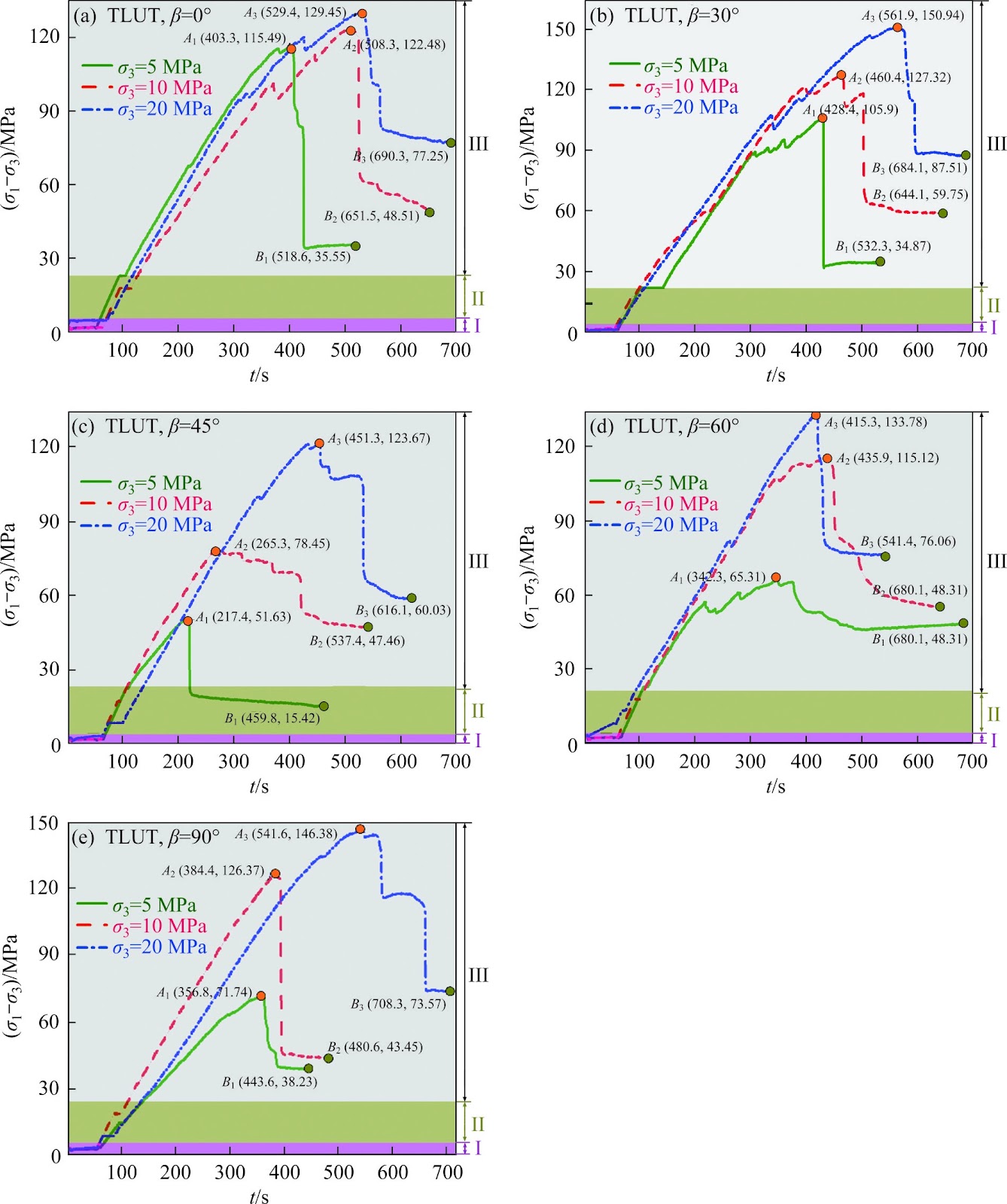
Rock residual strength, as an important input parameter, plays an indispensable role in proposing the reasonable and scientific scheme about stope design, underground tunnel excavation and stability evaluation of deep chambers. Therefore, previous residual strength models of rocks established were reviewed. And corresponding related problems were stated. Subsequently, starting from the effects of bedding and whole life-cycle evolution process, series of triaxial mechanical tests of deep bedded s
Federated model with contrastive learning and adaptive control variates for human activity recognition
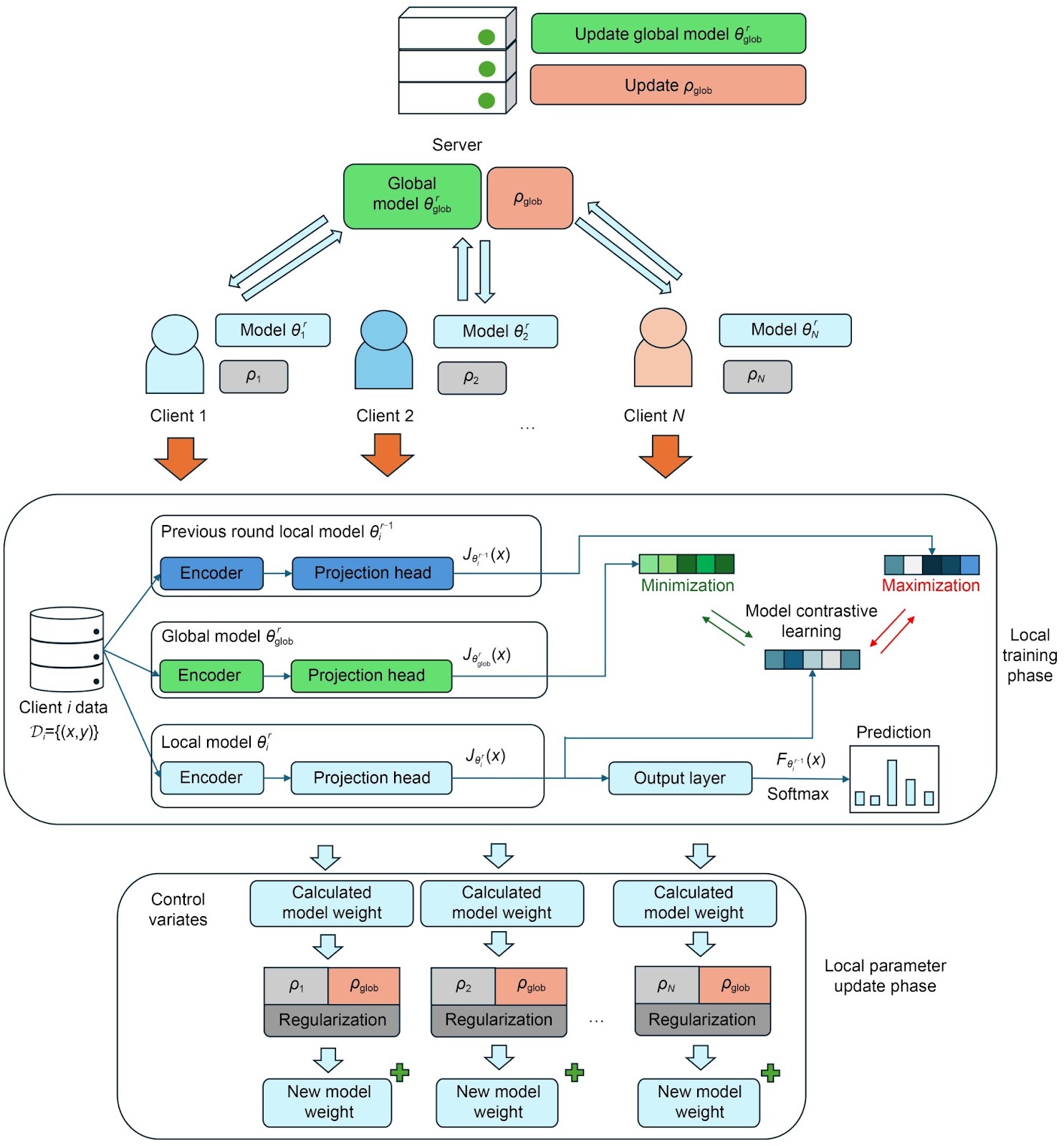
Recent attention to privacy issues demands a communication-safe method for training human activity recognition (HAR) models on client activity data. Federated learning (FL) has become a compelling technique to facilitate model training between the server and clients while preserving data privacy. However, classical FL methods often assume independent and identically distributed (IID) data among clients. This assumption does not hold true in practical scenarios. Human activity in real-world scena