Key Takeaways & Executive Findings
- •• Proposes PPDO, a privacy-preservation-aware delay optimization task-offloading algorithm for collaborative edge computing systems. • Introduces a privacy task model that obfuscates location and usage pattern data to protect user privacy against edge servers. • Leverages an MDP policy-iteration framework to minimize task offloading delay while maintaining privacy constraints. • Demonstrates through EUA dataset simulations that PPDO achieves an optimal privacy–delay trade-off and lower delay than existing algorithms.
Abstract
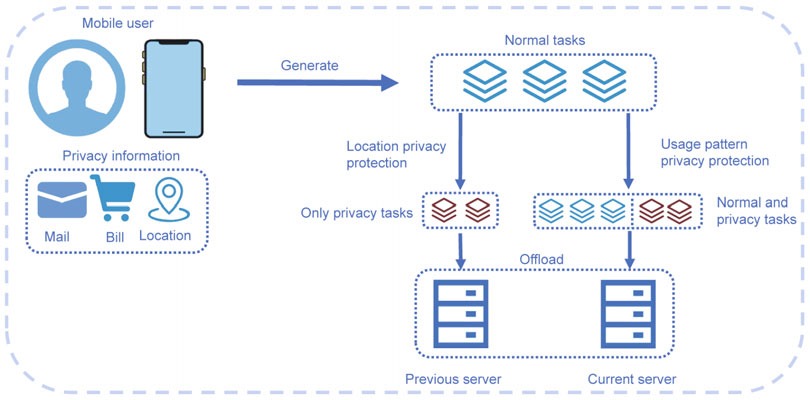
Although collaborative edge computing (CEC) systems are beneficial in enhancing the performance of mobile edge computing (MEC), the issue of user privacy leakage becomes prominent during task offloading. To address this issue, we design a privacy-preservation-aware delay optimization task-offloading algorithm (PPDO) in a CEC system. By considering location and usage pattern privacy protection, we establish a privacy task model to interfere with the edge server and ensure user privacy. To address the extra delay arising from privacy protection, we subsequently leverage a Markov decision processing (MDP) policy-iteration-based algorithm to minimize delays without compromising privacy. To simultaneously accelerate the MDP operation, we develop an extension that improves the PPDO by optimizing the action set. Finally, a comprehensive simulation was conducted using the edge user allocation (EUA) dataset. The results demonstrated that PPDO achieves an optimal trade-off between privacy protection and delay with a minimum delay compared with existing algorithms. Moreover, we examined the advantages and disadvantages of improving PPDO.
1. Introduction
With the rapid growth of the scale of mobile networks, intelligence-based mobile devices have become widely used in numerous fields. Owing to the many requirements of resource-intensive applications (Ouyang et al., 2019), there is a significant increase in data volume and demand for less delay (Wang F et al., 2018), especially for applications that require a high quality of service (QoS) and are vulnerable to delays (Taleb et al., 2017; Chen et al., 2020), such as mobile gaming (Yang et al., 2020), virtual reality (VR) (Lin et al., 2021), image video processing (Mach and Becvar, 2017), and speech recognition (Yousaf et al., 2018). However, the resources of mobile cloud computing (MCC) are usually located far from the mobile devices, with high latency and energy consumption for data transmission owing to network congestion and speed limitations (Gao et al., 2023a). Fortunately, these issues can be addressed by the emerging technology of mobile edge computing (MEC) (Abbas et al., 2018). By situating servers at the edge of the network, edge computing can minimize latency (Dong et al., 2023).
Collaborative edge computing (CEC) systems have attracted significant attention owing to the constrained edge server (ES) resources of MEC as compared to MCC (Lee et al., 2021). CEC, characterized by the distribution of computational tasks among distributed edge nodes (Sahni et al., 2019), ensures appropriate collaboration on ESs when faced with a risk of privacy leakage owing to a reduced communication overhead in selecting a closer ES. Moreover, when the network conditions are poor or the ES processing queues are congested, certain tasks can be processed by mobile devices instead of being offloaded to the ES. By appropriately offloading tasks, CEC can greatly improve the performance of MEC. Several studies have addressed the costs associated with task offloading in edge computing, generally including execution delay and energy consumption. Mao YY et al. (2017) proposed an algorithm based on Lyapunov optimization to solve the cost optimization problem in edge computing systems with limited computational resources. Similarly, Cao et al. (2021) adopted the Lyapunov optimization framework to minimize user QoS losses stemming from network delay and low frame rates under cost constraints. Chu et al. (2023) proposed a distributed online version of the mechanism to maximize user QoS in MEC by jointly optimizing service caching, resource allocation, and task offloading decisions. Qin et al. (2021) devised a threshold-based distributed task offloading algorithm that allows MEC users to update their thresholds based on their cost functions. Ren et al. (2019) considered collaboration between cloud and edge computing, with a joint communication resource and computation resource allocation problem formulated to minimize the latency of mobile devices. Wang JD et al. (2021) designed a resource allocation scheme that rationally assigns computational and network resources under changeable edge computing conditions. However, most of these studies focused on cost optimization, ignoring the importance of privacy protection during offloading.
When ESs are located closer to mobile devices, the QoS of users can benefit from the advantages of edge computing. However, edge computing raises the severe issue of privacy leakage.
Loading authentic research manuscript (Pages 1–5)...
Chao Jing, Jianwu Xu (2025). PPDO: a privacy-preservation-aware delay optimization task-offloading algorithm for collaborative edge computing. Frontiers of Information Technology & Electronic Engineering. https://doi.org/10.1631/FITEE_2300741
Research & Educational Purpose Only:The translations, structured abstracts, analytical annotations, and data reports provided by SinoTechIntel are intended exclusively for academic research, internal corporate R&D, and educational benchmarking. They do not constitute formal engineering, chemical safety, legal, or professional advice.
Copyright & Intellectual Property Notice: Original copyright of the underlying source articles and experimental data remains with the respective authors, institutions, and original publishing journals. SinoTechIntel claims intellectual property only over its proprietary translations, analytical syntheses, and AEO structured enhancements in accordance with international fair use and academic citation principles.
Frequently Asked Questions
What is PPDO in collaborative edge computing?
PPDO is a privacy-preservation-aware delay optimization task-offloading algorithm designed for collaborative edge computing systems. It reduces task offloading delay while protecting user privacy from edge servers.
How does PPDO protect user privacy?
PPDO establishes a privacy task model that considers location and usage pattern privacy protection. This model interferes with the edge server's ability to infer sensitive user information during task offloading.
What optimization method does PPDO use to minimize delay?
PPDO leverages a Markov decision process (MDP) policy-iteration-based algorithm to minimize delays without compromising privacy. An extension also optimizes the action set to accelerate MDP operation.
What dataset was used to evaluate PPDO?
PPDO was evaluated using the edge user allocation (EUA) dataset in a comprehensive simulation environment.
How does PPDO compare with existing offloading algorithms?
Simulation results show that PPDO achieves an optimal trade-off between privacy protection and delay, with a minimum delay compared with existing algorithms.
Related Technical Papers & Translations
Design and optimization of a high-efficiency distillation process for cellulosic fuel ethanol integrated with thermal coupling and molecular sieve adsorption
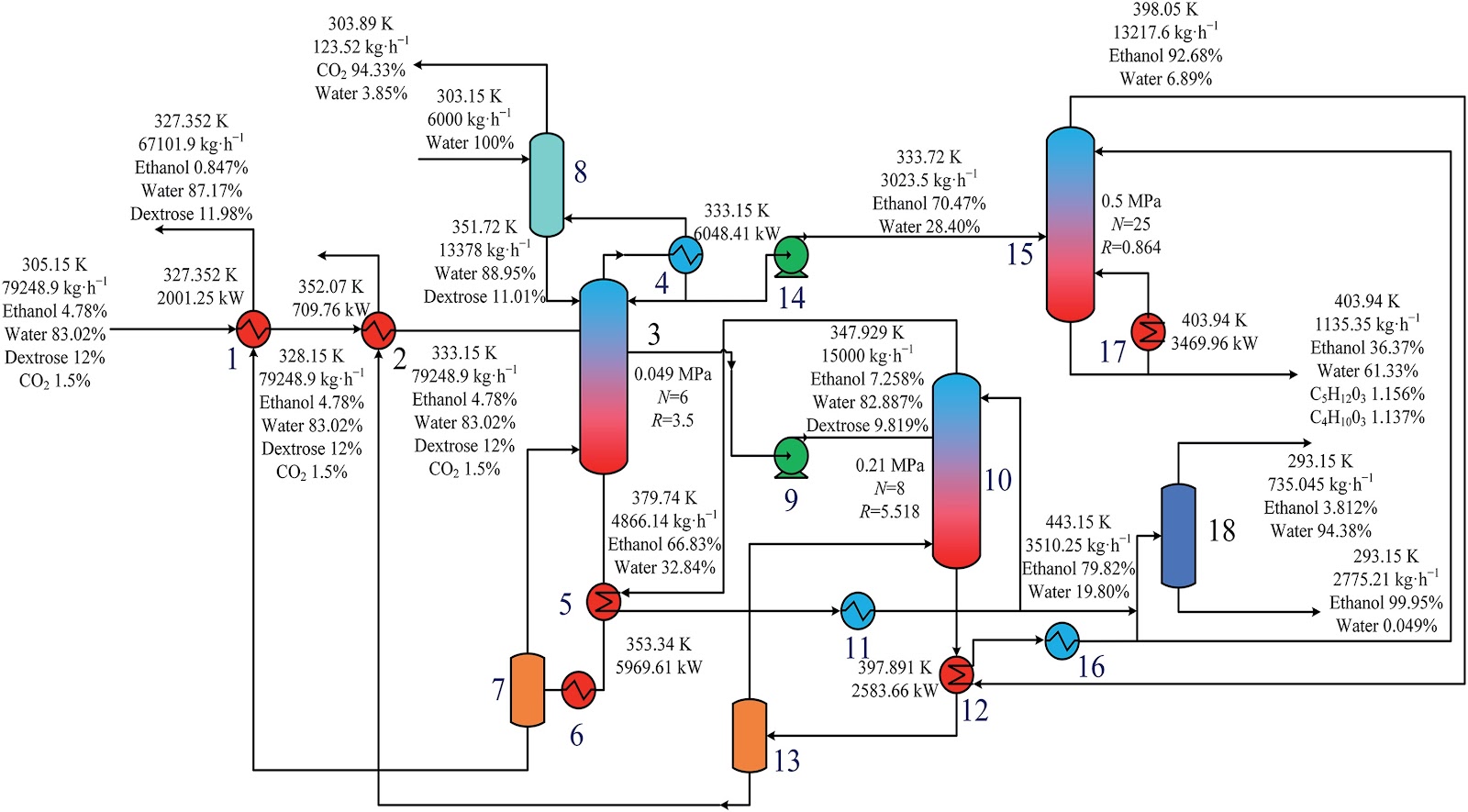
To address the challenges of high energy consumption and prominent costs in the traditional three-columns distillation process for cellulosic fuel ethanol, a distillation—molecular sieve coupling separation process is proposed. This process integrates a three-column (crude distillation column, first distillation column, second distillation column) system with a 3A molecular sieve adsorption deep dehydration unit. A thermal coupling network is constructed via differential pressure design (steam from medium/high-pressure columns as mutual heat sources, reboiler liquid waste heat for feed preheating), and molecular sieve adsorption conditions are optimized. The study first performs a thermodynamic consistency test on the ethanol—water system, determines optimal non-random two-liquid (NRTL) model binary interaction parameters via experimental data regression for Aspen Plus simulation. Aiming at minimum total annual cost (TAC), Aspen Plus is used to optimize process parameters (theoretical tray number, feed location, reflux ratio, side-draw position, etc.). Economic analysis shows this process reduces CO2 emission costs by 27.56%, TAC by 15.58% (to 5.123 × 10⁶ USD·a-1), and increases ethanol purity to >99.6%, providing an effective solution for green, efficient separation.
A cohesion loss model for determining residual strength of deep bedded sandstone
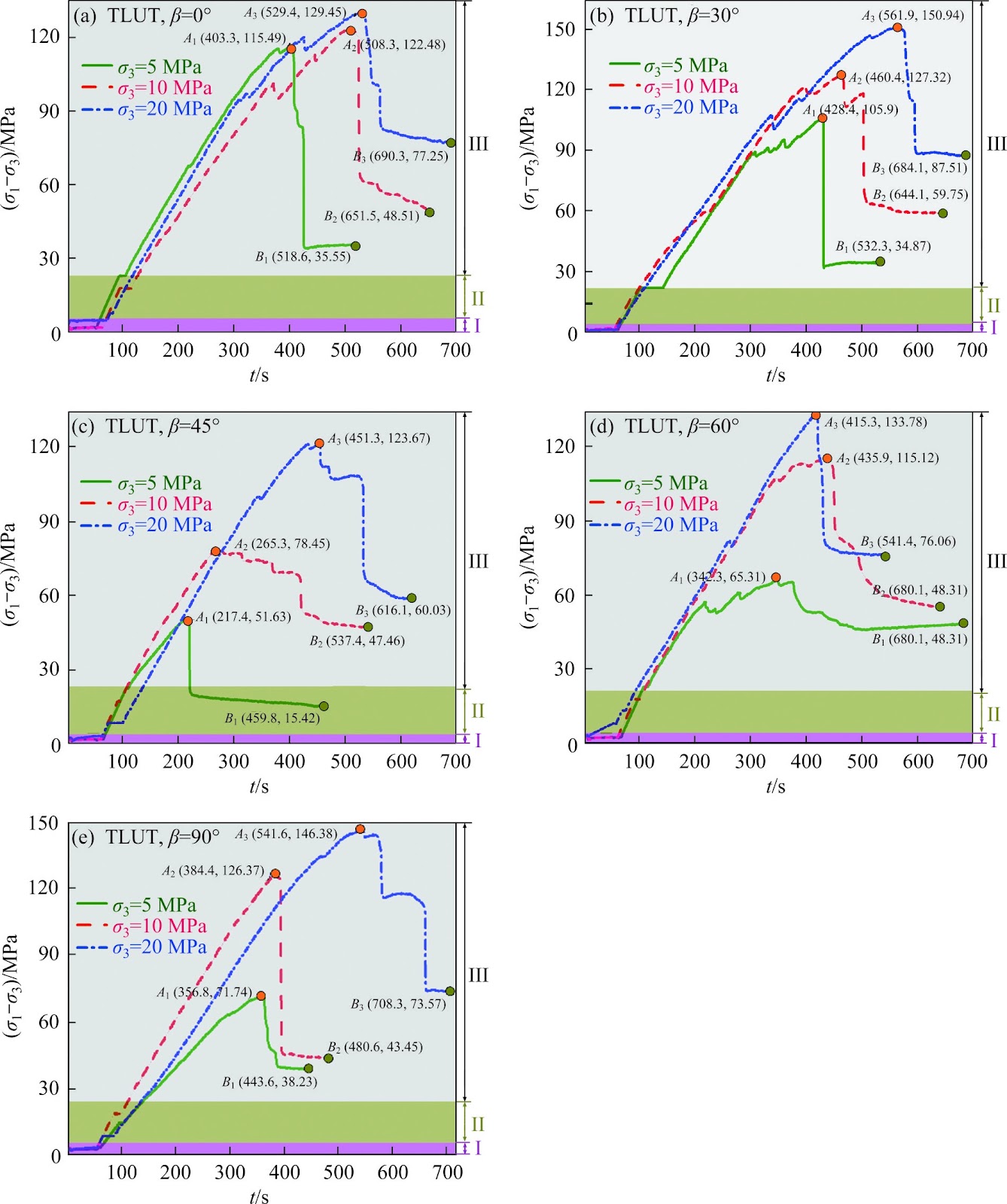
Rock residual strength, as an important input parameter, plays an indispensable role in proposing the reasonable and scientific scheme about stope design, underground tunnel excavation and stability evaluation of deep chambers. Therefore, previous residual strength models of rocks established were reviewed. And corresponding related problems were stated. Subsequently, starting from the effects of bedding and whole life-cycle evolution process, series of triaxial mechanical tests of deep bedded s
Federated model with contrastive learning and adaptive control variates for human activity recognition
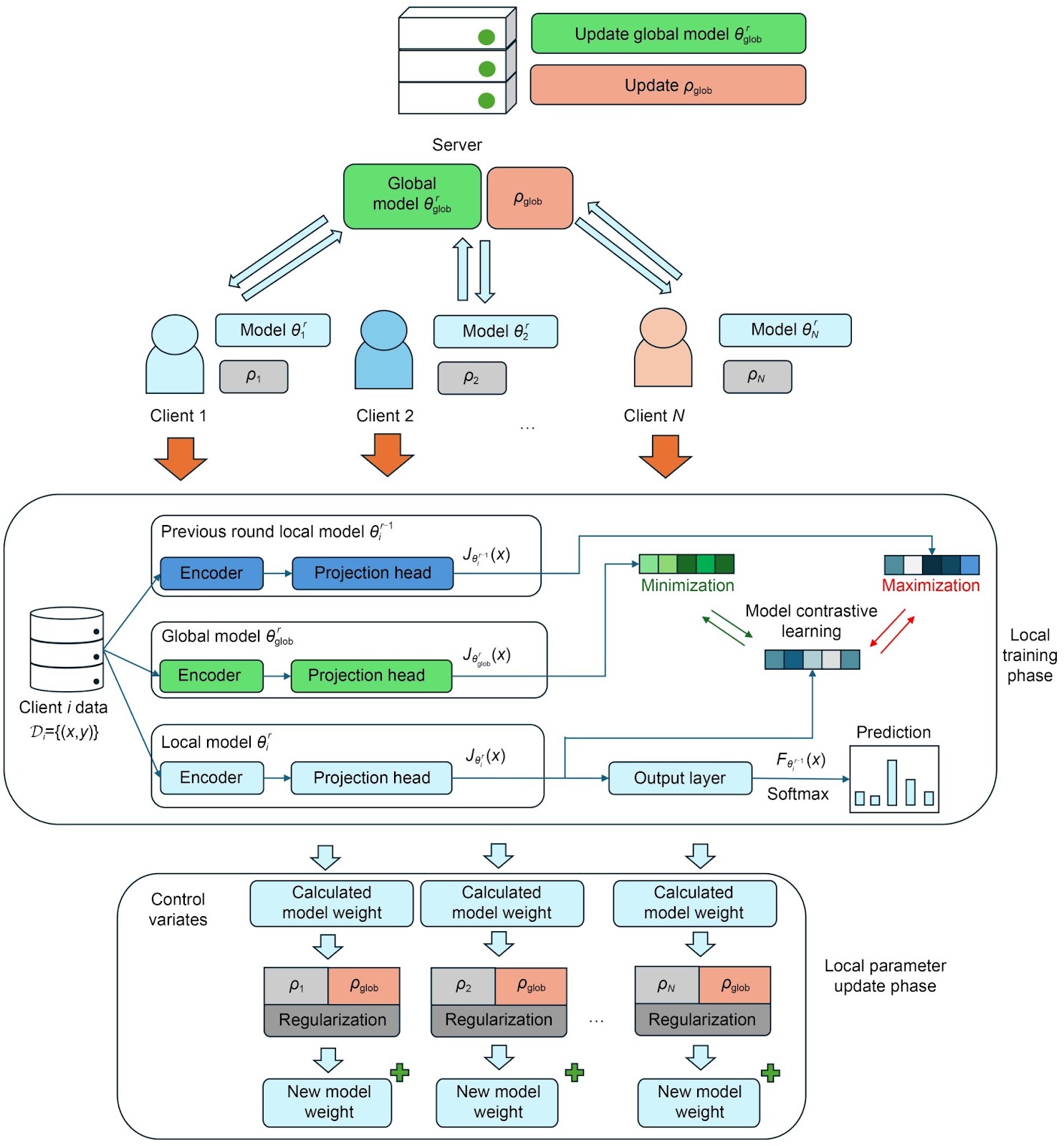
Recent attention to privacy issues demands a communication-safe method for training human activity recognition (HAR) models on client activity data. Federated learning (FL) has become a compelling technique to facilitate model training between the server and clients while preserving data privacy. However, classical FL methods often assume independent and identically distributed (IID) data among clients. This assumption does not hold true in practical scenarios. Human activity in real-world scena