Key Takeaways & Executive Findings
- •• Introduces a composite control structure combining an enhanced error-based observer with repetitive control for electro-optical tracking systems. • Targets two complex disturbance types: periodic harmonic disturbance and narrow-band peak periodic disturbance, ensuring stability while suppressing disturbances across multiple frequencies. • Provides rigorous proofs of stability and efficacy, addressing limitations of existing disturbance suppression methods. • Validates the proposed methods through an experimental electro-optical tracking platform, demonstrating reliable performance under various operating conditions.
Abstract
Electro-optical tracking systems have been widely used in the cutting-edge domains of free space environment detection and communication owing to their exceptional performance. However, external disturbances often significantly impact the working accuracy of these systems. As their scope of application continues to broaden, increasingly complex operating conditions introduce more intricate environments and disturbances. This paper introduces a composite control structure of an enhanced error-based observer, rooted in the repetitive control strategy, tailored for two types of complex disturbances: periodic harmonic disturbance and narrow-band peak periodic disturbance. This structure not only ensures the system's stability, but also suppresses periodic disturbances across multiple frequencies, effectively addressing the challenge that current disturbance suppression methods face in mitigating complex periodic disturbances. Moreover, necessary proofs are provided and an experimental platform is established for the electro-optical system, demonstrating the efficacy and reliability of the proposed control methods under various conditions.
1. Introduction
The electro-optical tracking system refers to a comprehensive optical instrument that integrates mechanical structures, electronic power, control system, and other structures. It has been widely used in biomedicine, aerospace, astronomical observations, quantum computing, microstructure characterization, long-distance information transmission, and other fields (Berkefeld et al., 2010; Beaulieu-Laroche et al., 2021; Madsen et al., 2022; Kalita et al., 2023; Snigirev et al., 2023). For the control of the electro-optical tracking system, the main purpose is to improve the stability (Downey and Stockum, 1989; Li et al., 2022) and to enhance the disturbance suppression ability while ensuring the stability of the system (Zhao et al., 2023). As the mobile platform gradually becomes the application carrier of the electro-optical system (Kennedy and Kennedy, 2003; Ricks et al., 2004), the working characteristics of these carriers will directly affect the working accuracy of the electro-optical tracking system. The vibration of the mechanical structure, the fluctuation of the mobile platform, the atmospheric disturbance around the work site, and other external factors will act as interference factors in the working process and affect the performance of the electro-optical system (Somaschini et al., 2019). These perturbations have complex properties, including periodic and aperiodic disturbances. Specifically, periodic disturbances may seriously affect the working process of the electro-optical tracking system (Deng et al., 2023).
Numerous researchers globally have conducted studies to address this issue (Caruso, 2001; Lu et al., 2024). For example, the use of disturbance feedforward control has been demonstrated to improve the stability of the stable platform and significantly enhance both the stability and disturbance suppression performance of the tracking platform (Ren et al., 2018). To address the time delay in the open-loop system, an enhanced disturbance rejection technique was proposed by Shamsuzzoha and Lee (2009). Furthermore, an adaptive disturbance rejection method was applied to adjust hard disk drives in the dead zone (Lee JS et al., 2016). Active disturbance rejection control (ADRC), a method designed to improve both the transient and immunity performances of systems plagued with uncertainties (Dong et al., 2018), incorporates an algorithm proposed to enhance the response speed through a model-assisted active disturbance rejection controller (Sobhy and Lei, 2021). Additionally, sliding mode control can effectively solve the buffeting problem and ensure the stability of the system in the process of disturbance suppression. Adaptive second-order sliding mode control has also been used for enhanced disturbance rejection for grid-connected neutral point clamped (NPC) converters (Shen et al., 2022).
Loading authentic research manuscript (Pages 1–5)...
Mai TANG, Wenqiang XIA, Jiuqiang DENG, Yao MAO (2025). An error-based observer improved by the repetitive control strategy for electro-optical tracking systems. Frontiers of Information Technology & Electronic Engineering. https://doi.org/10.1631/FITEE_2300796
Research & Educational Purpose Only:The translations, structured abstracts, analytical annotations, and data reports provided by SinoTechIntel are intended exclusively for academic research, internal corporate R&D, and educational benchmarking. They do not constitute formal engineering, chemical safety, legal, or professional advice.
Copyright & Intellectual Property Notice: Original copyright of the underlying source articles and experimental data remains with the respective authors, institutions, and original publishing journals. SinoTechIntel claims intellectual property only over its proprietary translations, analytical syntheses, and AEO structured enhancements in accordance with international fair use and academic citation principles.
Frequently Asked Questions
What is an electro-optical tracking system?
An electro-optical tracking system is a comprehensive optical instrument integrating mechanical structures, electronic power, and control systems. It is widely used in fields such as biomedicine, aerospace, astronomical observations, quantum computing, and long-distance information transmission.
What types of disturbances are addressed in this paper?
This paper addresses two complex disturbances affecting electro-optical tracking systems: periodic harmonic disturbance and narrow-band peak periodic disturbance.
How does the proposed error-based observer with repetitive control improve performance?
The proposed composite control structure ensures system stability while suppressing periodic disturbances across multiple frequencies. It effectively overcomes the limitations of current disturbance suppression methods in mitigating complex periodic disturbances.
What are the main contributions of this research?
The main contributions include the development of an enhanced error-based observer rooted in repetitive control, rigorous stability proofs, and experimental validation on an electro-optical tracking platform under various disturbance conditions.
Where was the experimental validation performed?
The experimental validation was performed on an established electro-optical tracking system platform, demonstrating the efficacy and reliability of the proposed control method under various conditions.
Related Technical Papers & Translations
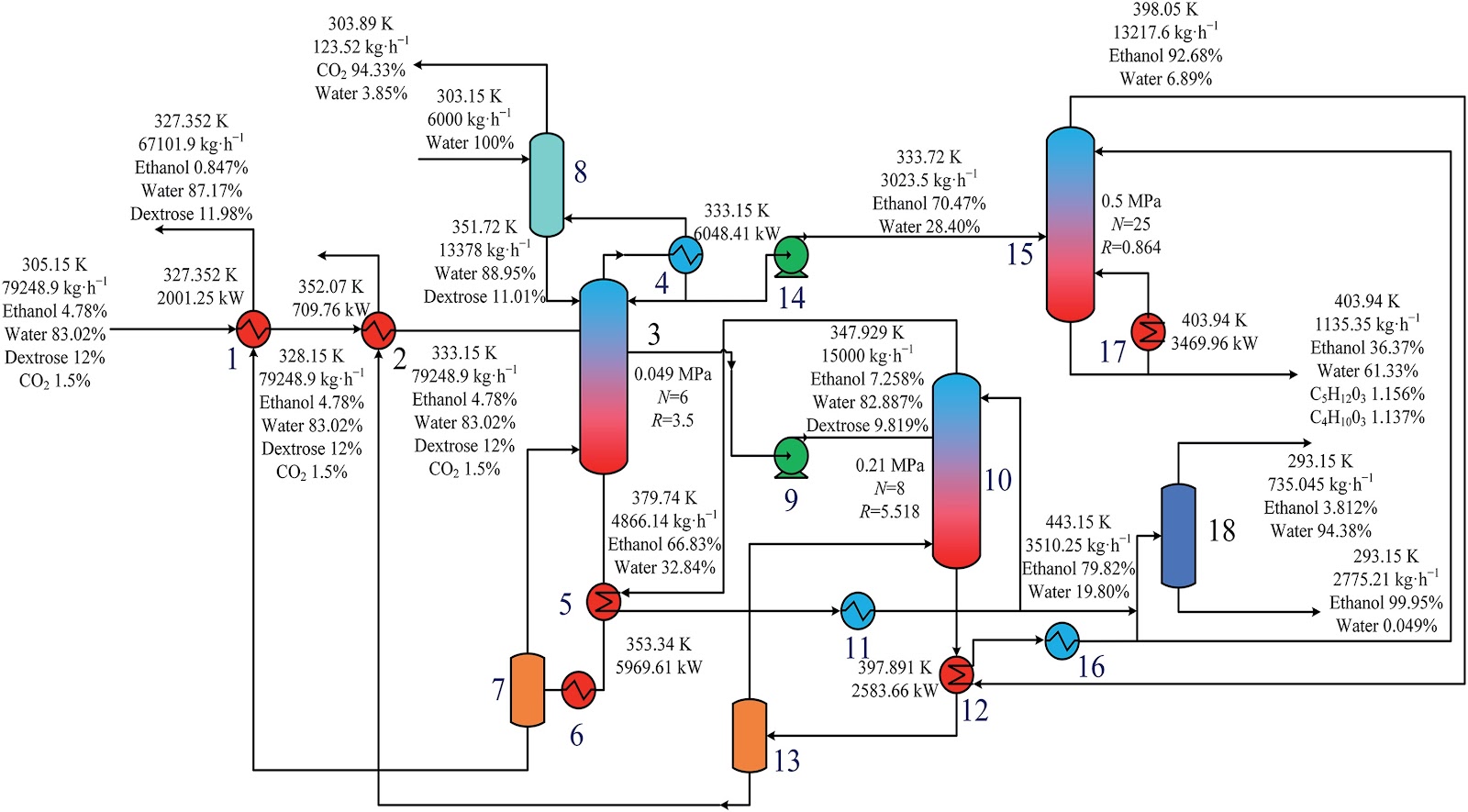
Design and optimization of a high-efficiency distillation process for cellulosic fuel ethanol integrated with thermal coupling and molecular sieve adsorption
To address the challenges of high energy consumption and prominent costs in the traditional three-columns distillation process for cellulosic fuel ethanol, a distillation—molecular sieve coupling separation process is proposed. This process integrates a three-column (crude distillation column, first distillation column, second distillation column) system with a 3A molecular sieve adsorption deep dehydration unit. A thermal coupling network is constructed via differential pressure design (steam from medium/high-pressure columns as mutual heat sources, reboiler liquid waste heat for feed preheating), and molecular sieve adsorption conditions are optimized. The study first performs a thermodynamic consistency test on the ethanol—water system, determines optimal non-random two-liquid (NRTL) model binary interaction parameters via experimental data regression for Aspen Plus simulation. Aiming at minimum total annual cost (TAC), Aspen Plus is used to optimize process parameters (theoretical tray number, feed location, reflux ratio, side-draw position, etc.). Economic analysis shows this process reduces CO2 emission costs by 27.56%, TAC by 15.58% (to 5.123 × 10⁶ USD·a-1), and increases ethanol purity to >99.6%, providing an effective solution for green, efficient separation.
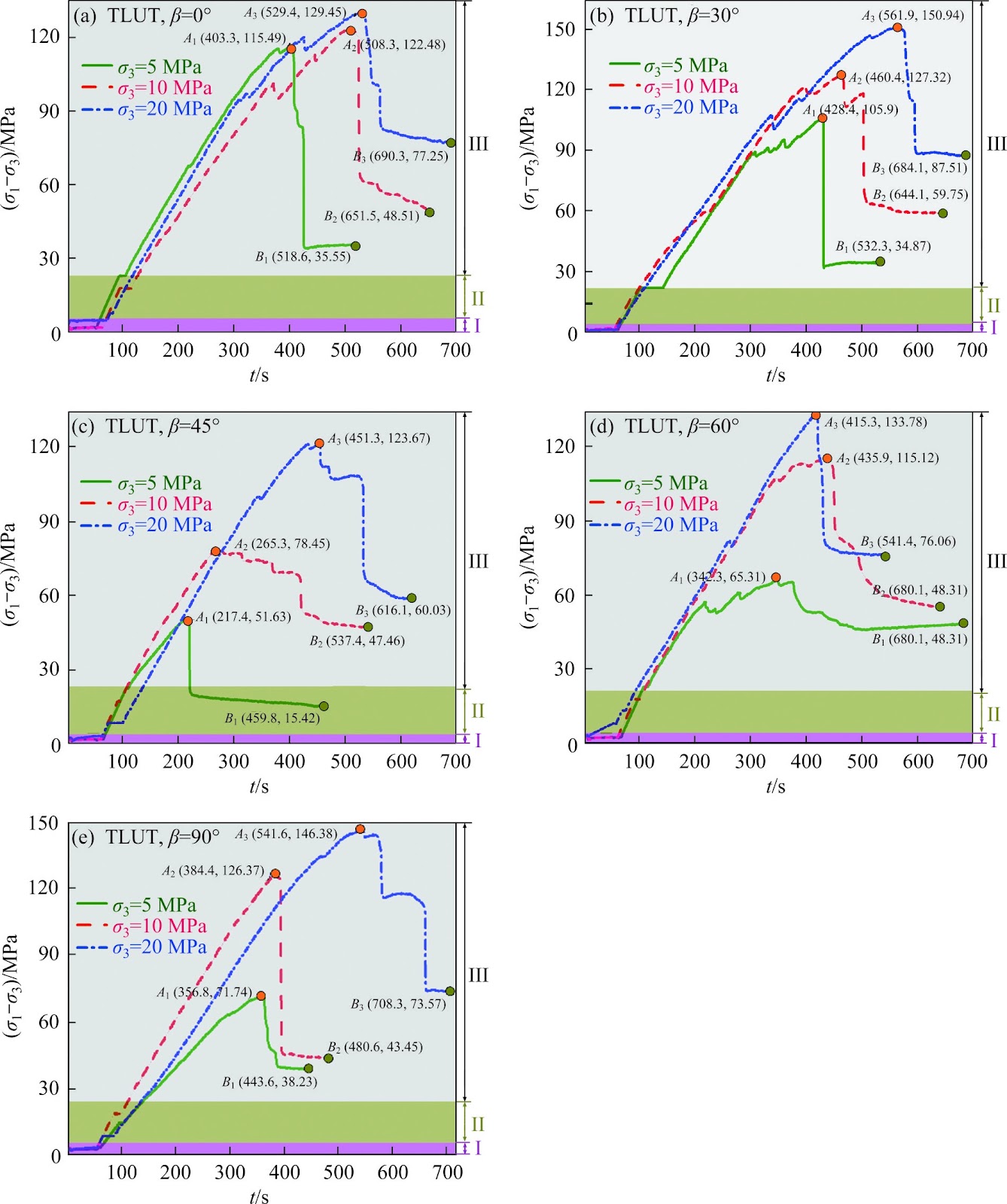
A cohesion loss model for determining residual strength of deep bedded sandstone
Rock residual strength, as an important input parameter, plays an indispensable role in proposing the reasonable and scientific scheme about stope design, underground tunnel excavation and stability evaluation of deep chambers. Therefore, previous residual strength models of rocks established were reviewed. And corresponding related problems were stated. Subsequently, starting from the effects of bedding and whole life-cycle evolution process, series of triaxial mechanical tests of deep bedded s
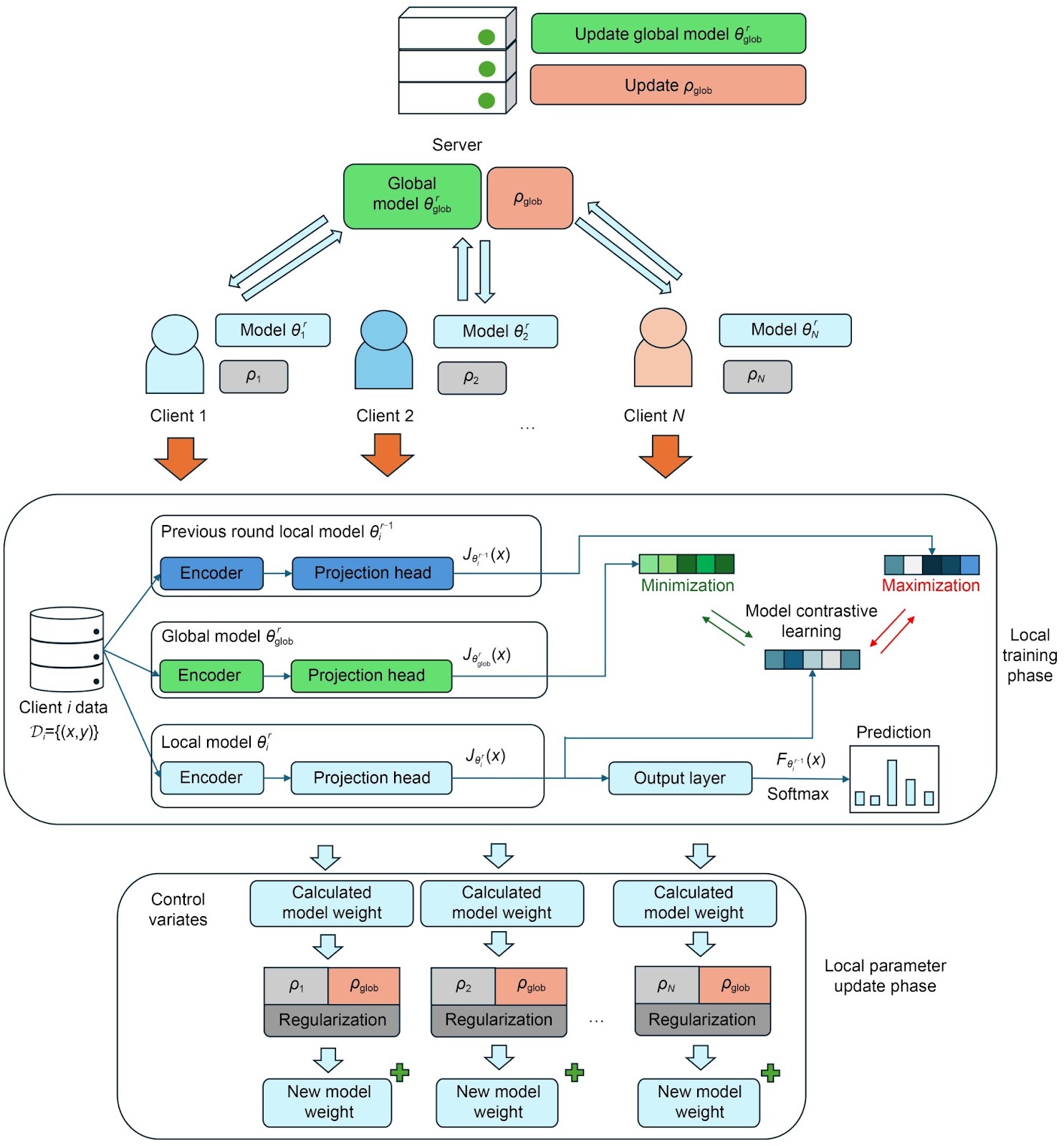
Federated model with contrastive learning and adaptive control variates for human activity recognition
Recent attention to privacy issues demands a communication-safe method for training human activity recognition (HAR) models on client activity data. Federated learning (FL) has become a compelling technique to facilitate model training between the server and clients while preserving data privacy. However, classical FL methods often assume independent and identically distributed (IID) data among clients. This assumption does not hold true in practical scenarios. Human activity in real-world scena