Key Takeaways & Executive Findings
- •• MARL has become a key research area with applications in autonomous driving, drone collaboration, smart cities, smart grids, and robotic cooperation. • The reward function is fundamental in MARL, providing feedback that guides agents to optimal decisions; careful design is essential for fostering cooperation. • Cooperative objective optimization ensures alignment of individual strategies with collective goals, enabling efficient collaboration and adaptability. • The review highlights simulation environments and discusses future trends, offering a roadmap for continued research in cooperative MARL.
Abstract
Multiagent reinforcement learning (MARL) has become a dazzling new star in the field of reinforcement learning in recent years, demonstrating its immense potential across many application scenarios. The reward function directs agents to explore their environments and make optimal decisions within them by establishing evaluation criteria and feedback mechanisms. Concurrently, cooperative objectives at the macro level provide a trajectory for agents’ learning, ensuring alignment between individual behavioral strategies and the overarching system goals. The interplay between reward structures and cooperative objectives not only bolsters the effectiveness of individual agents but also fosters interagent collaboration, offering both momentum and direction for the development of swarm intelligence and the harmonious operation of multiagent systems. This review delves deeply into the methods for designing reward structures and optimizing cooperative objectives in MARL, along with the most recent scientific advancements in this field. The article meticulously reviews the application of simulation environments in cooperative scenarios and discusses future trends and potential research directions in the field, providing a forward-looking perspective and inspiration for subsequent research efforts.
1. Introduction
Multiagent reinforcement learning (MARL) has become a research hotspot in the field of reinforcement learning (RL) in recent years and has made significant progress, opening up a series of highly complex and challenging application areas, such as autonomous driving (Zhang KQ et al., 2021; Huang et al., 2024; Ren FY et al., 2024; Ren Y et al., 2024), drone collaboration (Jia et al., 2023; Nian et al., 2024; Wang BL et al., 2024), smart cities (Wu T et al., 2020; Qiao et al., 2024), smart grids (Xu X et al., 2020; Wang JH et al., 2021a; Gou et al., 2022), and robotic cooperation (Chen HB et al., 2023; Gu et al., 2023).
The reward function is a fundamental component of MARL, which guides agents to learn how to make optimal decisions within an environment by defining and providing a feedback mechanism (Icarte et al., 2022). The reward function operates by assessing the outcomes of agents’ actions and determining the appropriate rewards or penalties to be assigned. This feedback mechanism directly influences the agents’ behavioral strategies, as they learn to prioritize actions that yield higher rewards and avoid those that lead to penalties. In the domain of multiagent systems (MASs), crafting an appropriate reward structure is paramount, as it necessitates judicious reward allocation among individual agents and collective entities within the team. This is done to foster various interactive dynamics, such as cooperation or competition, and to guarantee the alignment of agent objectives toward the attainment of shared goals (Shou and Di, 2020). A meticulously formulated reward function is instrumental in augmenting the efficiency of collective learning processes, optimizing synergistic collaboration among agents, and equipping the agents with the capacity for adaptation and proficiency in environments characterized by their complexity and dynamism.
The optimization of cooperative objectives plays a crucial role within the framework of MARL, as it integrates and optimizes individual reward signals, providing a quantified optimization criterion for the adjustment of agent strategies. By aiming for the maximization of long-term cumulative rewards, it guides agents to search for the optimal sequence of actions within the strategy space and ensures the alignment of the agents’ decision-making processes with collective goals (Yang NK et al., 2023). This optimization not only reinforces the goal-directedness of agents but also promotes efficient collaboration and the development of adaptability within MASs.
Loading authentic research manuscript (Pages 1–5)...
Tao Yang, Xinhao Shi, Qinghan Zeng, Yulin Yang, Cheng Xu, Hongzhe Liu (2025). Optimization methods in fully cooperative scenarios: a review of multiagent reinforcement learning. Frontiers of Information Technology & Electronic Engineering. https://doi.org/10.1631/FITEE_2400259
Research & Educational Purpose Only:The translations, structured abstracts, analytical annotations, and data reports provided by SinoTechIntel are intended exclusively for academic research, internal corporate R&D, and educational benchmarking. They do not constitute formal engineering, chemical safety, legal, or professional advice.
Copyright & Intellectual Property Notice: Original copyright of the underlying source articles and experimental data remains with the respective authors, institutions, and original publishing journals. SinoTechIntel claims intellectual property only over its proprietary translations, analytical syntheses, and AEO structured enhancements in accordance with international fair use and academic citation principles.
Frequently Asked Questions
What is multiagent reinforcement learning (MARL)?
Multiagent reinforcement learning is a branch of reinforcement learning where multiple agents interact in a shared environment to achieve individual or collective goals. It combines principles of RL with multiagent systems, enabling agents to learn optimal strategies through trial and error.
Why is the reward function important in MARL?
The reward function provides feedback to agents, guiding them to learn actions that maximize cumulative rewards. In cooperative settings, reward shaping helps align individual actions with team objectives, fostering collaboration and efficient learning.
What are cooperative objectives in MARL?
Cooperative objectives refer to the overarching goals of a multiagent system that require agents to work together. Optimizing these objectives ensures that individual strategies contribute to the collective outcome, often through global reward maximization.
What applications benefit from cooperative MARL?
Cooperative MARL has been applied in autonomous driving, drone collaboration, smart cities, smart grids, and robotic cooperation, where agents must coordinate to achieve efficient and safe outcomes.
What future research directions are discussed in this review?
The review discusses trends such as improved reward shaping, credit assignment, scalability to large agent populations, and the use of advanced simulation environments to bridge the gap between research and real-world applications.
Related Technical Papers & Translations
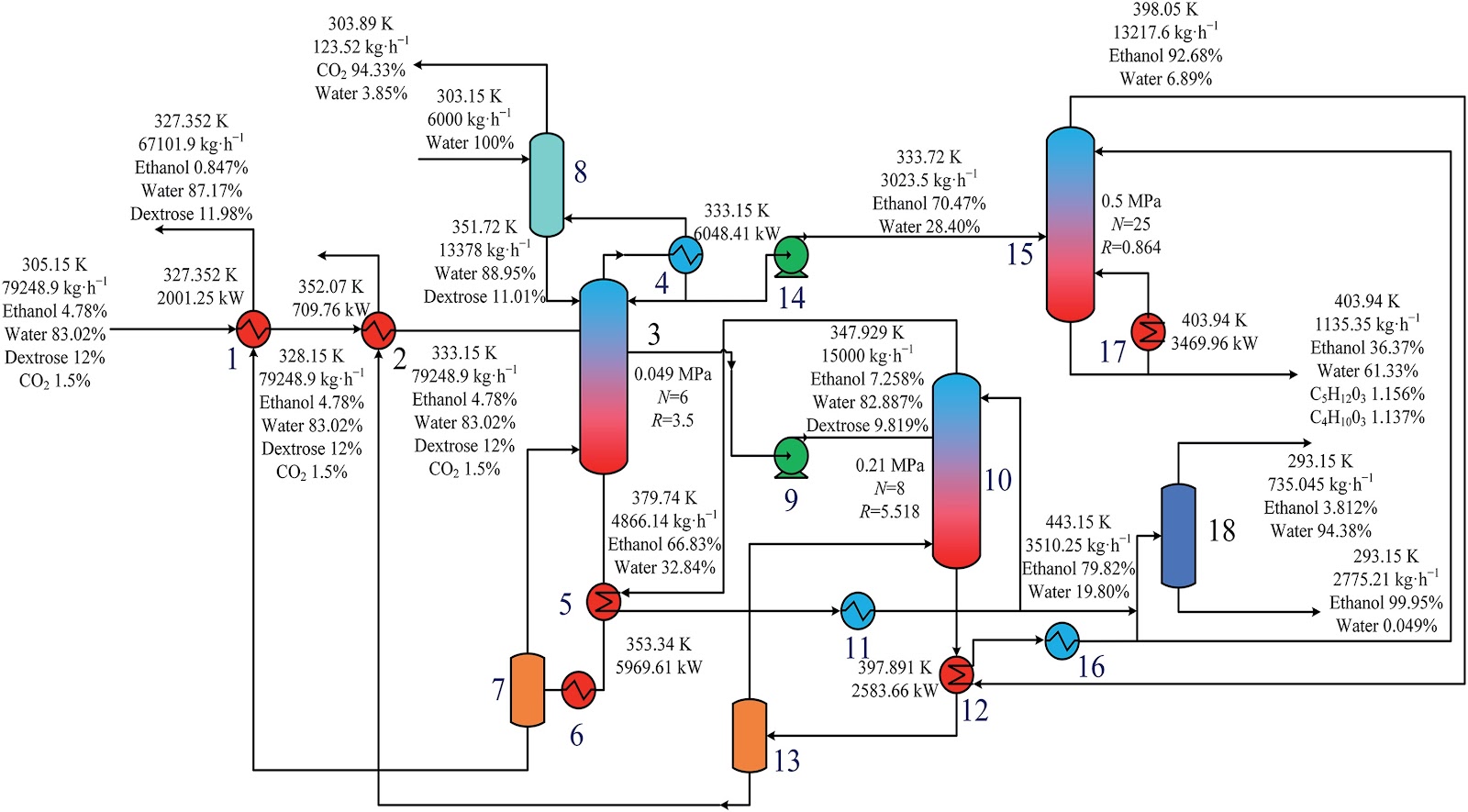
Design and optimization of a high-efficiency distillation process for cellulosic fuel ethanol integrated with thermal coupling and molecular sieve adsorption
To address the challenges of high energy consumption and prominent costs in the traditional three-columns distillation process for cellulosic fuel ethanol, a distillation—molecular sieve coupling separation process is proposed. This process integrates a three-column (crude distillation column, first distillation column, second distillation column) system with a 3A molecular sieve adsorption deep dehydration unit. A thermal coupling network is constructed via differential pressure design (steam from medium/high-pressure columns as mutual heat sources, reboiler liquid waste heat for feed preheating), and molecular sieve adsorption conditions are optimized. The study first performs a thermodynamic consistency test on the ethanol—water system, determines optimal non-random two-liquid (NRTL) model binary interaction parameters via experimental data regression for Aspen Plus simulation. Aiming at minimum total annual cost (TAC), Aspen Plus is used to optimize process parameters (theoretical tray number, feed location, reflux ratio, side-draw position, etc.). Economic analysis shows this process reduces CO2 emission costs by 27.56%, TAC by 15.58% (to 5.123 × 10⁶ USD·a-1), and increases ethanol purity to >99.6%, providing an effective solution for green, efficient separation.
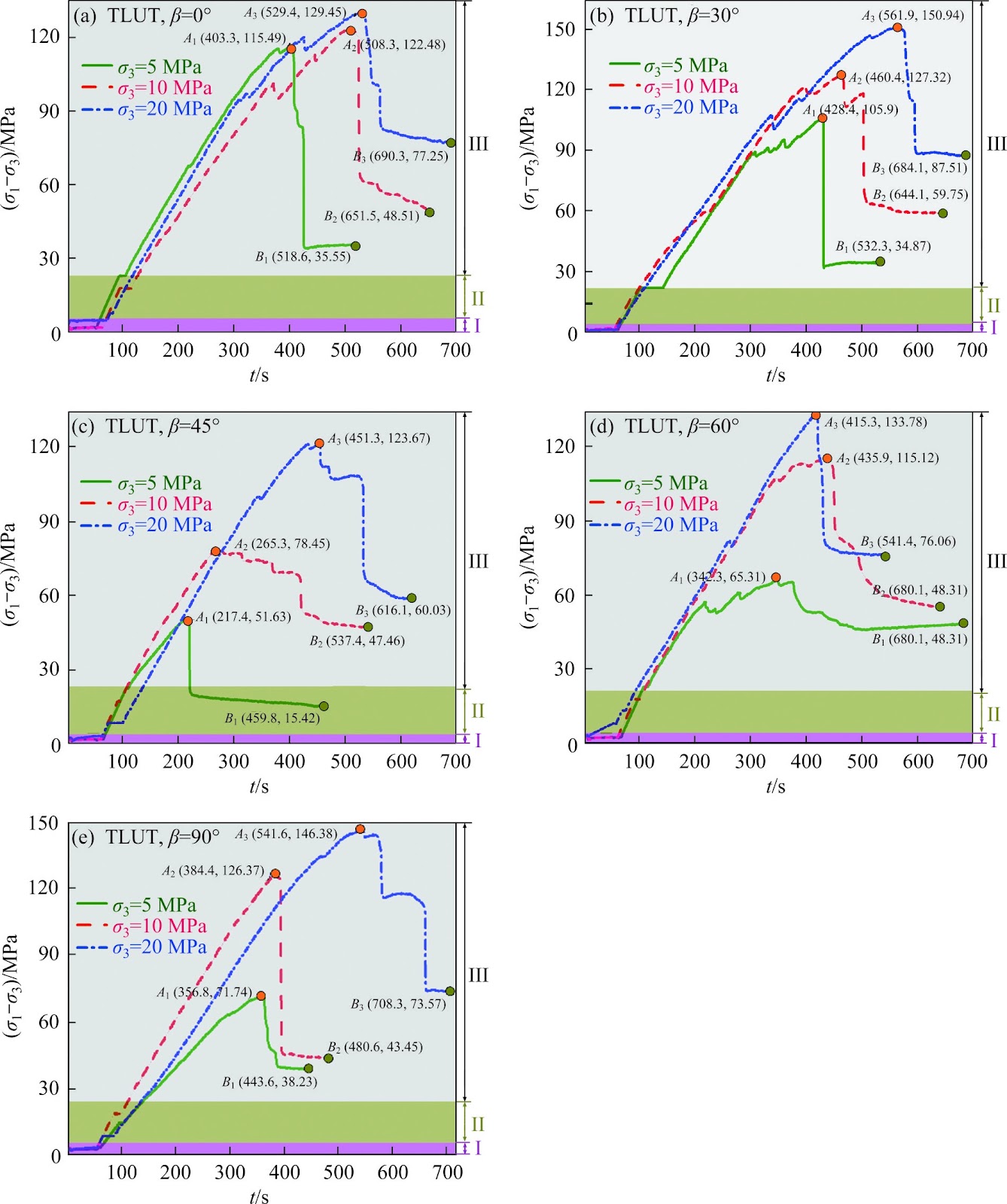
A cohesion loss model for determining residual strength of deep bedded sandstone
Rock residual strength, as an important input parameter, plays an indispensable role in proposing the reasonable and scientific scheme about stope design, underground tunnel excavation and stability evaluation of deep chambers. Therefore, previous residual strength models of rocks established were reviewed. And corresponding related problems were stated. Subsequently, starting from the effects of bedding and whole life-cycle evolution process, series of triaxial mechanical tests of deep bedded s
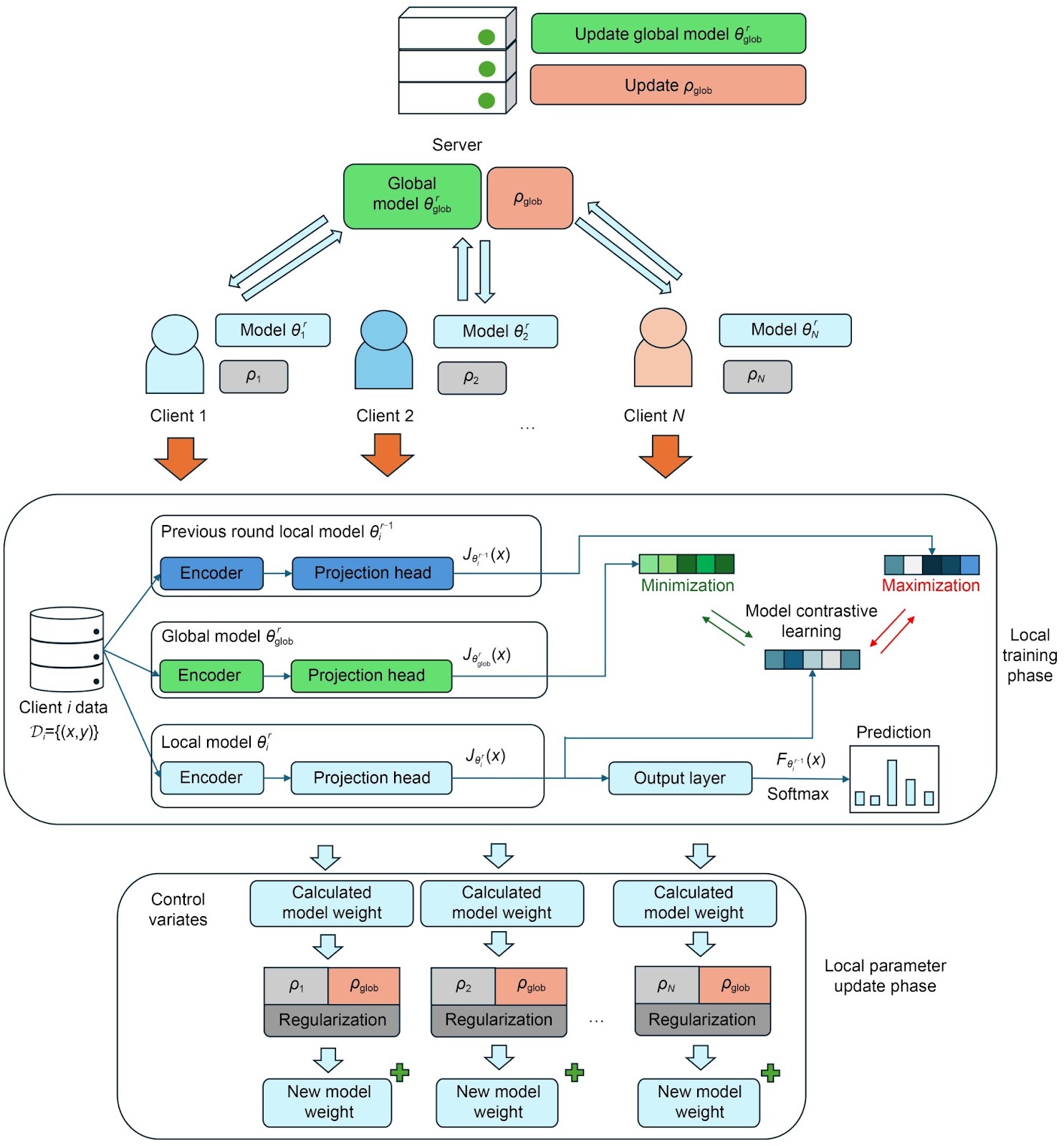
Federated model with contrastive learning and adaptive control variates for human activity recognition
Recent attention to privacy issues demands a communication-safe method for training human activity recognition (HAR) models on client activity data. Federated learning (FL) has become a compelling technique to facilitate model training between the server and clients while preserving data privacy. However, classical FL methods often assume independent and identically distributed (IID) data among clients. This assumption does not hold true in practical scenarios. Human activity in real-world scena