Key Takeaways & Executive Findings
- •• ASG enables autonomous generation of circuit schematics, serving as a cornerstone technology in electronic design automation (EDA) and PCB reverse engineering. • The review systematically analyzes core algorithms—layout and routing—and identifies critical bottlenecks caused by complex PCB manufacturing processes and legal/ethical concerns. • The paper proposes feasible solutions to overcome technical barriers, aiming to enhance the security, maintenance, and intellectual property verification of PCB equipment. • By promoting automation in PCB reverse engineering, ASG contributes to the safe and reliable operation of electronic systems across modern infrastructure.
Abstract
The printed circuit board (PCB) stands as the cornerstone of electronic equipment, with its schematic holding paramount importance for system performance and reliability. In light of the pervasive use of electronic devices in society, concerns regarding maintenance, safety, backdoors, and other latent issues have garnered significant attention. Automatic schematic generation (ASG), with its distinct capability for generating circuit schematics autonomously, not only plays a pivotal role in electronic design automation (EDA) but also aids in deciphering the fundamental principles of PCB equipment to effectively address these underlying issues. However, constrained by the increasingly sophisticated manufacturing processes of PCBs and the inherent legal and ethical controversies surrounding reverse engineering, the development of related technologies faces notable bottlenecks. To break through technical barriers and advance technological progress, this paper comprehensively combs through the existing ASG, offers in-depth description of the core algorithms of the technology—layout and routing, and for the application of the technology in PCB reverse engineering, analyzes in detail the current challenges and the faced problems. Around these challenges, feasible solutions are discussed in this paper, with the aims of promoting the research of automatic PCB schematic generation technology and contributing new strength to EDA and PCB reverse engineering automation.
1. Introduction
The rapid advancement of electronic information technology has rendered electronic devices an essential infrastructure in contemporary society, which greatly promotes the facilitation of life and work. In this development process, the printed circuit board (PCB) plays a pivotal role. As the "nervous system" of electronic devices, it is the carrier of circuits, providing a foundation for the realization of device functions.
However, as electronic technology progresses and equipment functions become more complex, PCBs face new challenges such as potential hardware Trojan insertions, intellectual property rights verification, and the maintenance of older equipment (Rematska and Bourbakis, 2016; Botero et al., 2020). Therefore, conducting reverse engineering research on PCBs to accurately reconstruct their original circuit diagrams has become a key strategy to tackle these challenges. Through reverse engineering, designers can analyze circuit structures, optimize design schemes, and ultimately enhance the performance and safety of electronic devices.
In PCB reverse engineering, schematic generation stands out as a critical phase. Serving as a visual representation of the circuit, the schematic illustrates the interconnections among electronic components. It not only forms the foundation for understanding and analyzing circuits, but also serves as a valuable guide for circuit design and optimization (Yang et al., 2024). However, the complexity and time-consuming nature of this process should not be underestimated, especially when dealing with the large-scale, high-density PCBs. Manual generation of schematic diagrams becomes notably challenging in such scenarios. Therefore, the study of automatic schematic generation (ASG) is not only an important prerequisite to promote the automation of PCB reverse engineering, but also an important technical demand to enhance the potential safety of electronic devices.
Despite the strides made in research on ASG over the past decades, the extensive adoption of this technology in the realm of PCBs is hindered by the complex and irregular nature of PCB schematic structures, leading to various challenges. To tackle these challenges and promote the extensive adoption of ASG in PCBs, this paper provides a review of the current research situation, fundamental procedures, and prevalent algorithms of ASG. Building upon this foundation, the paper further discusses the specific difficulties of ASG in PCB reverse engineering, and analyzes the possible solutions. The purpose of this research is to promote the further development of ASG in PCB reverse engineering and provide technical support for the application expansion and security of PCB electronic products.
Loading authentic research manuscript (Pages 1–5)...
Jie Yang, Kai Qiao, Jian Chen, Chen Chen, Lixiang Guo, Bin Yan (2025). A review of automatic schematic generation techniques and their application to printed circuit boards. Frontiers of Information Technology & Electronic Engineering. https://doi.org/10.1631/FITEE_2400612
Research & Educational Purpose Only:The translations, structured abstracts, analytical annotations, and data reports provided by SinoTechIntel are intended exclusively for academic research, internal corporate R&D, and educational benchmarking. They do not constitute formal engineering, chemical safety, legal, or professional advice.
Copyright & Intellectual Property Notice: Original copyright of the underlying source articles and experimental data remains with the respective authors, institutions, and original publishing journals. SinoTechIntel claims intellectual property only over its proprietary translations, analytical syntheses, and AEO structured enhancements in accordance with international fair use and academic citation principles.
Frequently Asked Questions
What is automatic schematic generation (ASG)?
ASG is a technology that autonomously generates circuit schematics, playing a pivotal role in electronic design automation and PCB reverse engineering. It helps decipher the principles of PCB equipment to address maintenance, safety, and intellectual property issues.
Why is schematic generation important in PCB reverse engineering?
Schematic generation provides a visual representation of circuit interconnections, forming the foundation for circuit analysis, design optimization, and enhancing device performance and safety. Automating this process is critical for handling large-scale, high-density PCBs.
What are the main challenges of applying ASG to PCBs?
The challenges include the increasing complexity of PCB manufacturing processes, the irregular nature of PCB schematic structures, and the legal and ethical controversies surrounding reverse engineering, which collectively hinder the extensive adoption of ASG.
What solutions does the paper propose to advance ASG?
The paper reviews core algorithms (layout and routing) and discusses feasible solutions to overcome technical barriers, aiming to promote research in automatic PCB schematic generation and contribute to EDA and PCB reverse engineering automation.
What are the key algorithms reviewed in the paper?
The paper offers an in-depth description of the core algorithms of ASG, specifically focusing on layout and routing, which are fundamental to generating circuit schematics.
Related Technical Papers & Translations
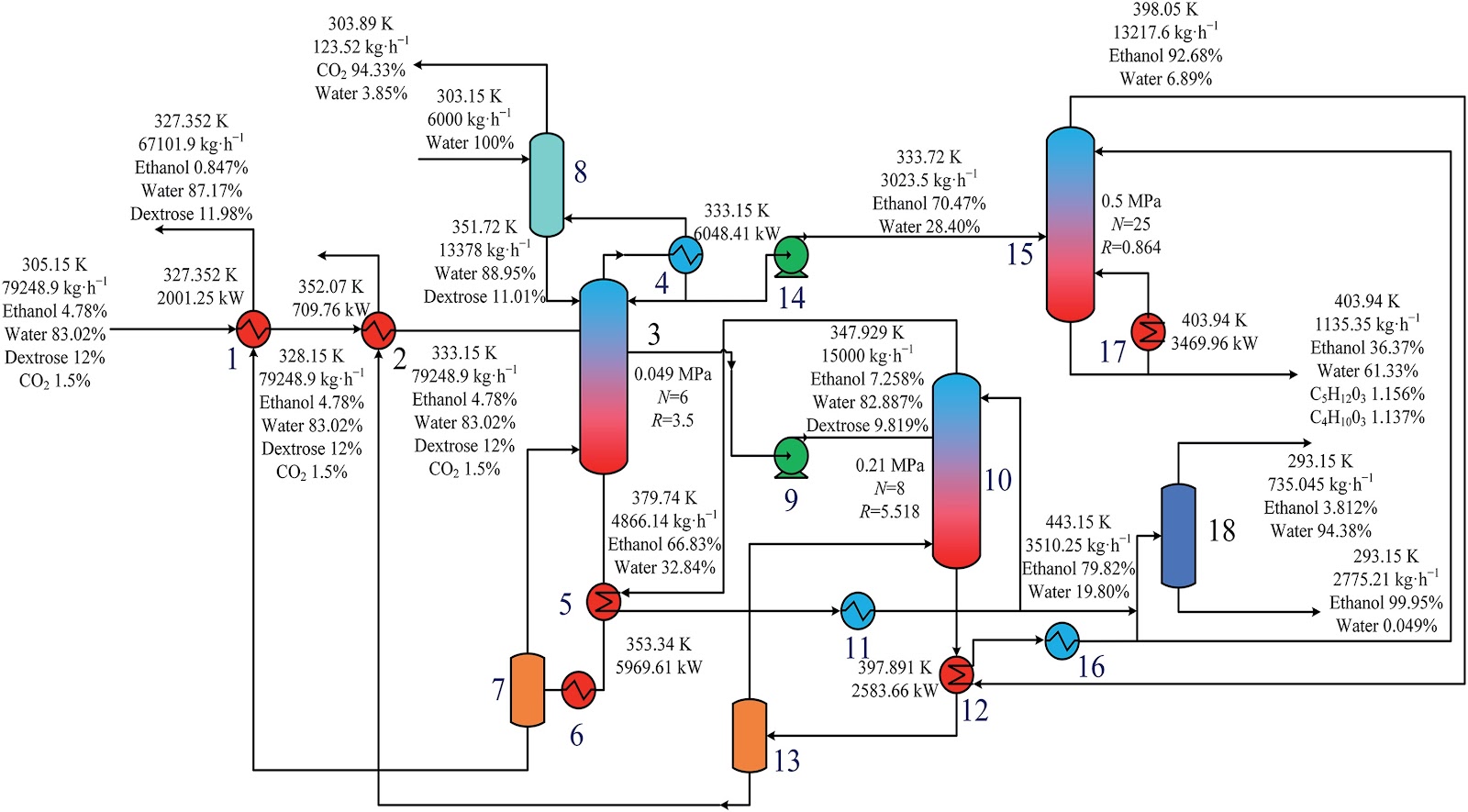
Design and optimization of a high-efficiency distillation process for cellulosic fuel ethanol integrated with thermal coupling and molecular sieve adsorption
To address the challenges of high energy consumption and prominent costs in the traditional three-columns distillation process for cellulosic fuel ethanol, a distillation—molecular sieve coupling separation process is proposed. This process integrates a three-column (crude distillation column, first distillation column, second distillation column) system with a 3A molecular sieve adsorption deep dehydration unit. A thermal coupling network is constructed via differential pressure design (steam from medium/high-pressure columns as mutual heat sources, reboiler liquid waste heat for feed preheating), and molecular sieve adsorption conditions are optimized. The study first performs a thermodynamic consistency test on the ethanol—water system, determines optimal non-random two-liquid (NRTL) model binary interaction parameters via experimental data regression for Aspen Plus simulation. Aiming at minimum total annual cost (TAC), Aspen Plus is used to optimize process parameters (theoretical tray number, feed location, reflux ratio, side-draw position, etc.). Economic analysis shows this process reduces CO2 emission costs by 27.56%, TAC by 15.58% (to 5.123 × 10⁶ USD·a-1), and increases ethanol purity to >99.6%, providing an effective solution for green, efficient separation.
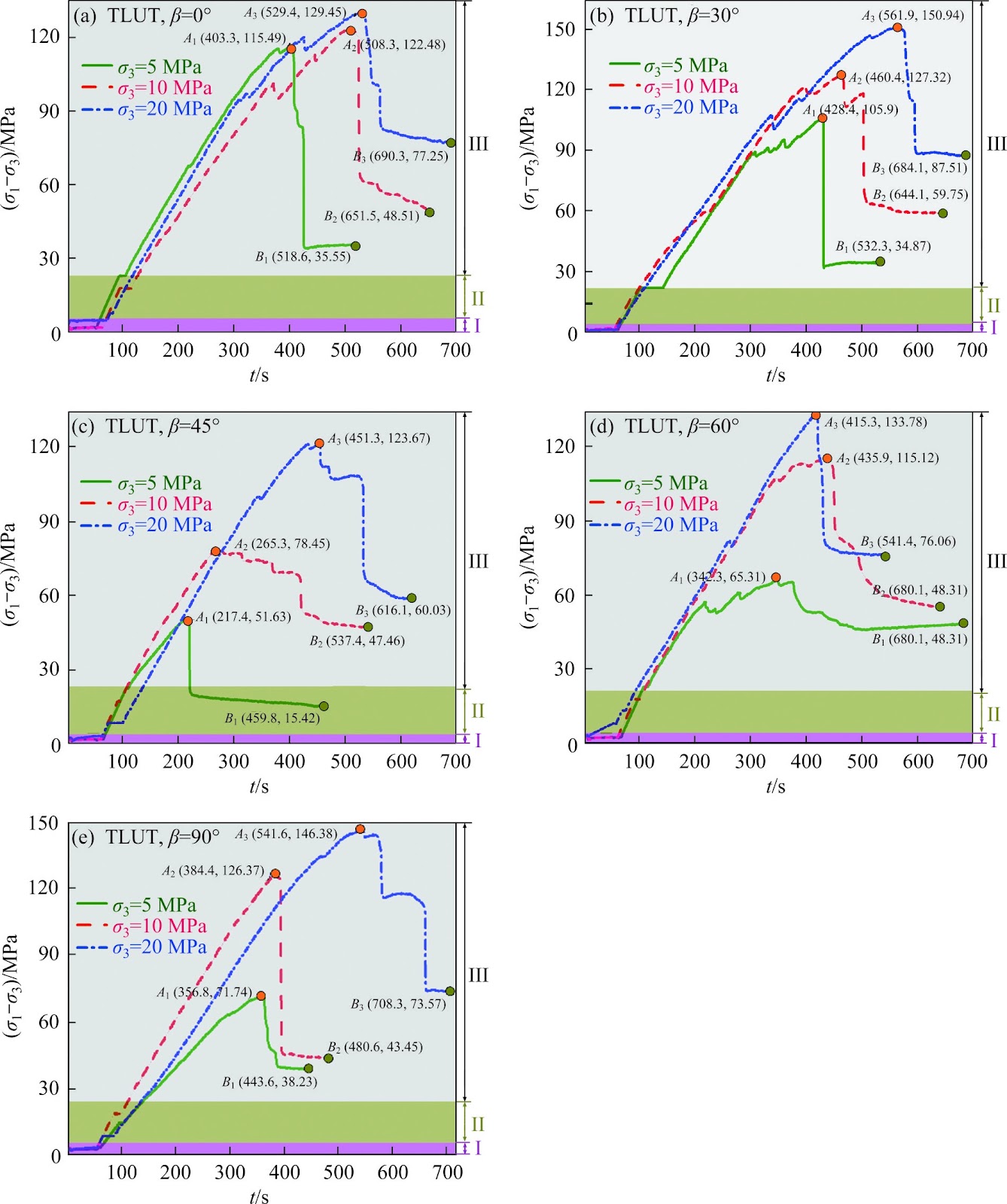
A cohesion loss model for determining residual strength of deep bedded sandstone
Rock residual strength, as an important input parameter, plays an indispensable role in proposing the reasonable and scientific scheme about stope design, underground tunnel excavation and stability evaluation of deep chambers. Therefore, previous residual strength models of rocks established were reviewed. And corresponding related problems were stated. Subsequently, starting from the effects of bedding and whole life-cycle evolution process, series of triaxial mechanical tests of deep bedded s
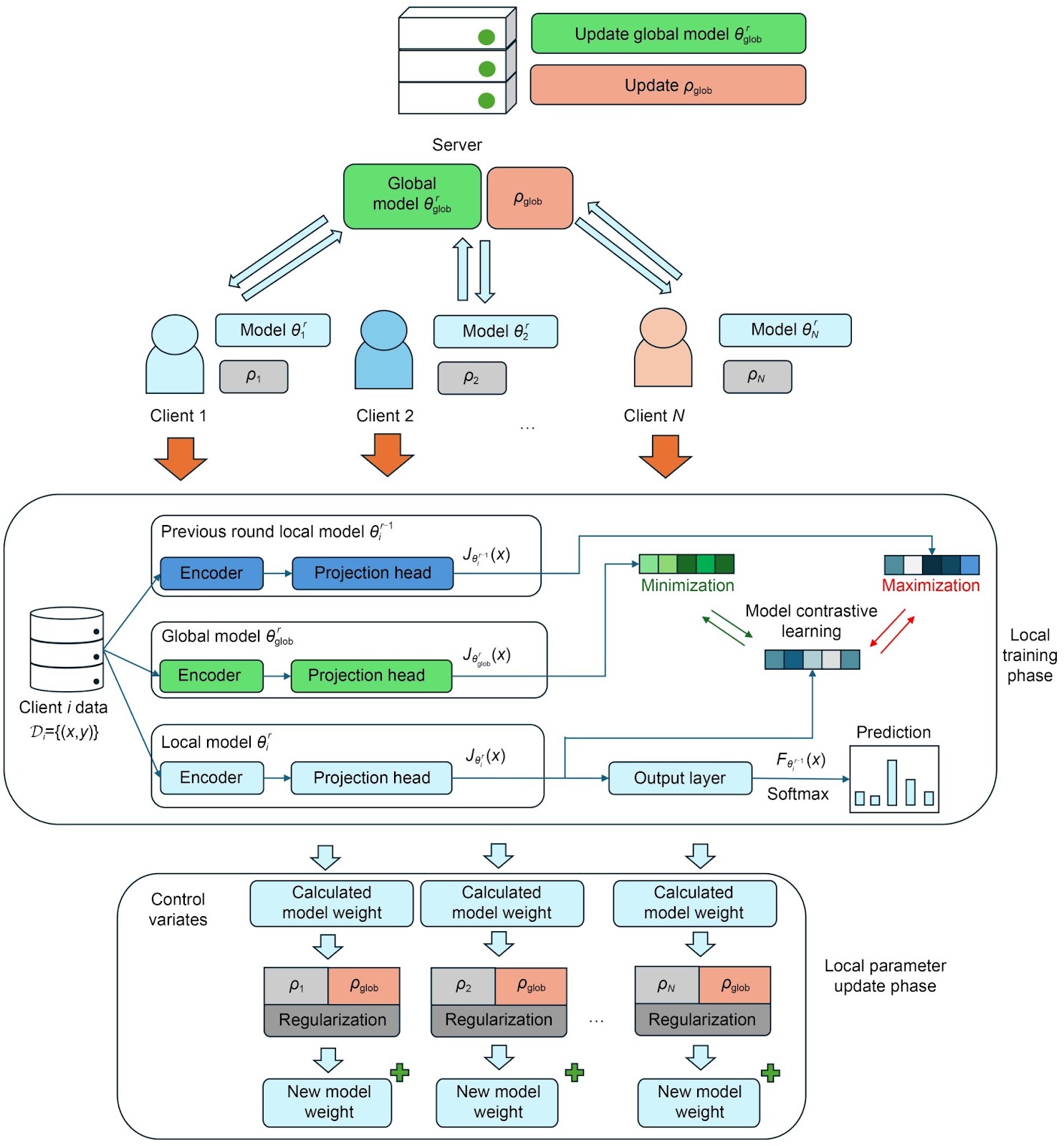
Federated model with contrastive learning and adaptive control variates for human activity recognition
Recent attention to privacy issues demands a communication-safe method for training human activity recognition (HAR) models on client activity data. Federated learning (FL) has become a compelling technique to facilitate model training between the server and clients while preserving data privacy. However, classical FL methods often assume independent and identically distributed (IID) data among clients. This assumption does not hold true in practical scenarios. Human activity in real-world scena