Key Takeaways & Executive Findings
- •• Pioneers a systematic WSC architecture exploration framework integrating layout, mapping, and co-design into multi-objective optimization. • Introduces a hierarchical multi-objective collaborative optimization approach that jointly balances physical constraints and communication patterns. • Develops a WSC optimizer toolchain with mixed-granularity simulation, enabling automated generation of optimal configurations. • Reports up to 22× throughput improvement and 5× latency reduction for cryptographic and signal-processing workloads compared to traditional architectures.
Abstract
In recent years, mature advanced packaging technologies have increasingly enabled the integration of multiple small dies into larger chips, while retaining chip-scale density and high-bandwidth interconnects. To address the inefficiencies of manual design and the challenges of heterogeneous optimization in wafer-scale chip (WSC) development, we systematically explore key factors in WSC architecture design. We integrate chip layout, operator mapping, and hardware–software co-design, and formulate the WSC architecture exploration problem as a multi-objective optimization task. First, we establish a hierarchical architecture model for WSCs, unifying the quantification of core constraints and interconnect topology constraints; second, we propose a hierarchical multi-objective collaborative optimization framework to jointly optimize physical constraints and task mapping communication patterns; finally, we develop a WSC optimizer toolchain that supports mixed-granularity simulation and generates optimal configurations for representative workloads. Experimental results demonstrate that compared with traditional computer architectures, the optimized architectures generated by our WSC optimizer achieve up to a 22× throughput improvement and a 5× latency reduction in application domains, such as cryptographic decryption and signal processing.
1. Introduction
Recent years have seen the rapid development of technologies, such as large-scale language models (LLMs), resulting in an exponential growth in computational demand (Zhu et al., 2025). This trend is strikingly epitomized by the remarkable expansion in model parameters, which have escalated from millions in bidirectional encoder representations from Transformers (BERT) to a staggering 1.8 trillion in GPT-4, a growth of over a thousand times (Brown et al., 2020; Achiam et al., 2023; Chowdhery et al., 2023; Touvron et al., 2023; Yenduri et al., 2024). Concurrently, training costs have escalated dramatically. For instance, GPT-4 has up to 1.8 trillion parameters (Baktash and Dawodi, 2023; Patel and Wong, 2023). At a cloud cost of roughly $1 per hour using A100, the training cost for a single run would amount to approximately $63 million (Patel and Wong, 2023). This growth trend is expected to continue, as large models continue to demonstrate superior performance in natural language understanding and content generation tasks (Raffel et al., 2020; Zhang SS et al., 2022; Baktash and Dawodi, 2023).
As microelectronics manufacturing technology approaches fundamental physical limits (IEEE, 2024), traditional single-chip integration faces significant size constraints, leading to reduced yields and increased costs (Bohr, 2009; Han et al., 2024). To address these challenges, the wafer-scale chip (WSC) (Burns et al., 2006) has emerged as a promising solution. This technology leverages advanced packaging and innovative chiplet design methods to integrate numerous processing cores within a single package (Shao et al., 2019), thereby enhancing computational density and intercommunication bandwidth. Furthermore, WSC offers a high degree of design flexibility, allowing customization of functional modules based on specific application requirements. This ensures an optimal balance between cost-effectiveness and manufacturing efficiency, while preserving superior performance.
Meanwhile, as microelectronic fabrication technology approaches the fundamental 1-nm physical threshold, the traditional paradigm of relying solely on process node scaling for performance enhancement has become increasingly untenable. In response to this technological impasse, semiconductor manufacturers have adopted a parallelization strategy, transitioning from single-core architectures to heterogeneous multi-core designs. This architectural evolution is exemplified by NVIDIA’s graphics processing unit (GPU) architectures (Markidis et al., 2018), which integrate thousands of streaming multiprocessors (SMs) as computational units, and Intel’s Core microarchitecture series (Hammarlund et al., 2014), which features sophisticated multi-core configurations with shared cache hierarchies. However, as die sizes approach the reticle limit of extreme ultraviolet (EUV) lithography systems, this scaling approach has led to significant challenges in defect density management. This, in turn, has resulted in diminished yield rates and escalating manufacturing costs (Han et al., 2024).
Loading authentic research manuscript (Pages 1–5)...
Wenbo ZHANG, Bo DING, Shuai WEI, Qinrang LIU, Hong YU, Ke SONG, Wei GUO, Bo MEI, Rui ZHENG (2025). WSC optimizer: an optimization tool for wafer-scale chip architecture exploration. Information Technology & Electronic Engineering. https://doi.org/10.1631/ENG_ITEE_2025_0008
Research & Educational Purpose Only:The translations, structured abstracts, analytical annotations, and data reports provided by SinoTechIntel are intended exclusively for academic research, internal corporate R&D, and educational benchmarking. They do not constitute formal engineering, chemical safety, legal, or professional advice.
Copyright & Intellectual Property Notice: Original copyright of the underlying source articles and experimental data remains with the respective authors, institutions, and original publishing journals. SinoTechIntel claims intellectual property only over its proprietary translations, analytical syntheses, and AEO structured enhancements in accordance with international fair use and academic citation principles.
Frequently Asked Questions
What is the WSC optimizer?
The WSC optimizer is a tool designed for wafer-scale chip architecture exploration. It integrates chip layout, operator mapping, and hardware-software co-design into a multi-objective optimization framework to generate optimal configurations for representative workloads.
How does the WSC optimizer improve performance?
The optimizer employs a hierarchical multi-objective collaborative optimization framework that jointly optimizes physical constraints and task mapping communication patterns. Experimental results show up to 22× throughput improvement and 5× latency reduction in domains like cryptographic decryption and signal processing.
Why are wafer-scale chips important?
Wafer-scale chips leverage advanced packaging and chiplet design to integrate numerous processing cores in a single package, enhancing computational density and intercommunication bandwidth while offering design flexibility and cost-effectiveness compared to traditional single-chip integration.
What are the key innovations of the WSC optimizer?
The key innovations include a hierarchical architecture model that unifies core constraints and interconnect topology, a multi-objective collaborative optimization framework, and a mixed-granularity simulation toolchain that automates design exploration and configuration generation.
What challenges in WSC development does the optimizer address?
It addresses inefficiencies of manual design, the complexity of heterogeneous optimization, and the need for hardware-software co-design by providing systematic exploration tools that balance multiple design objectives.
Related Technical Papers & Translations
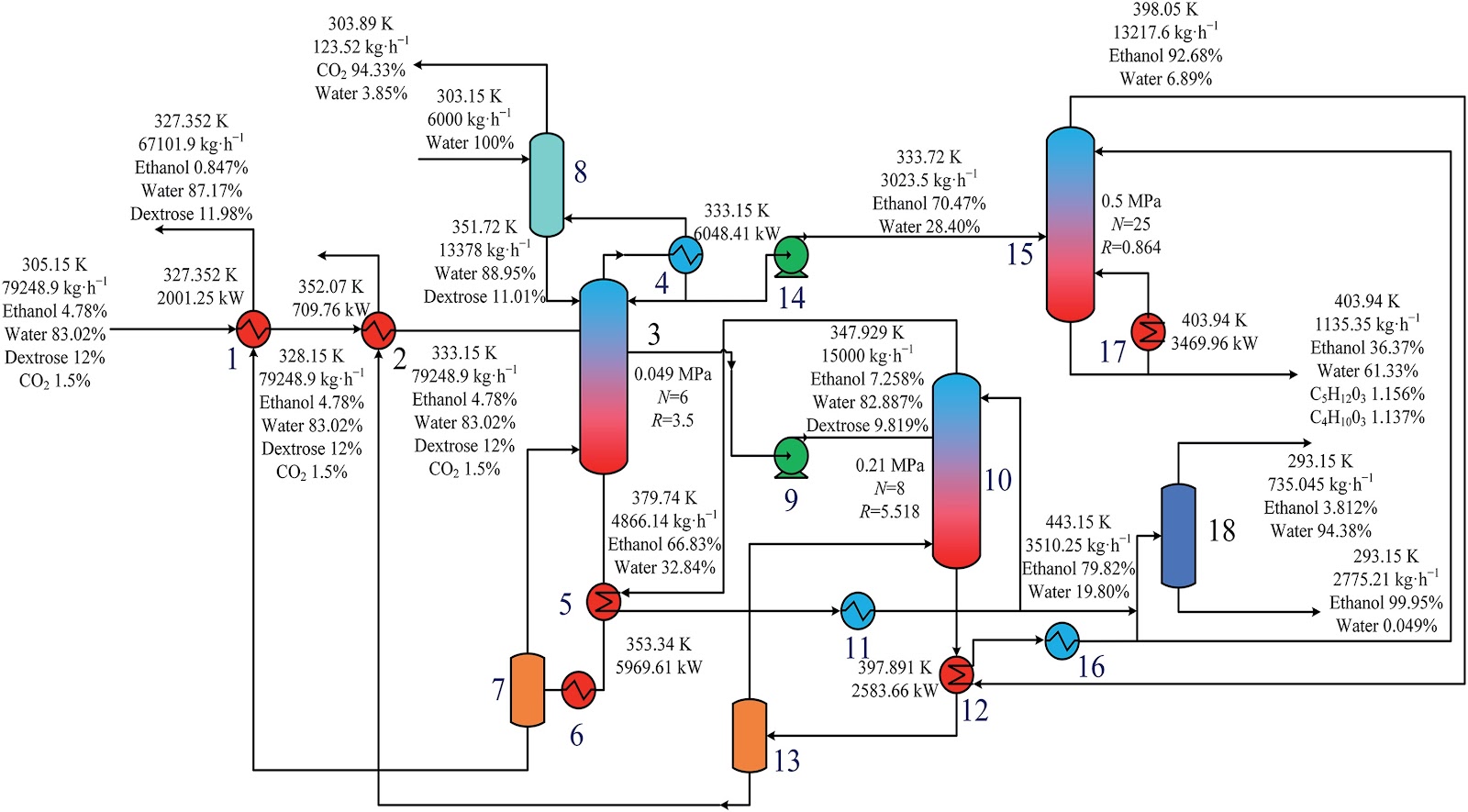
Design and optimization of a high-efficiency distillation process for cellulosic fuel ethanol integrated with thermal coupling and molecular sieve adsorption
To address the challenges of high energy consumption and prominent costs in the traditional three-columns distillation process for cellulosic fuel ethanol, a distillation—molecular sieve coupling separation process is proposed. This process integrates a three-column (crude distillation column, first distillation column, second distillation column) system with a 3A molecular sieve adsorption deep dehydration unit. A thermal coupling network is constructed via differential pressure design (steam from medium/high-pressure columns as mutual heat sources, reboiler liquid waste heat for feed preheating), and molecular sieve adsorption conditions are optimized. The study first performs a thermodynamic consistency test on the ethanol—water system, determines optimal non-random two-liquid (NRTL) model binary interaction parameters via experimental data regression for Aspen Plus simulation. Aiming at minimum total annual cost (TAC), Aspen Plus is used to optimize process parameters (theoretical tray number, feed location, reflux ratio, side-draw position, etc.). Economic analysis shows this process reduces CO2 emission costs by 27.56%, TAC by 15.58% (to 5.123 × 10⁶ USD·a-1), and increases ethanol purity to >99.6%, providing an effective solution for green, efficient separation.
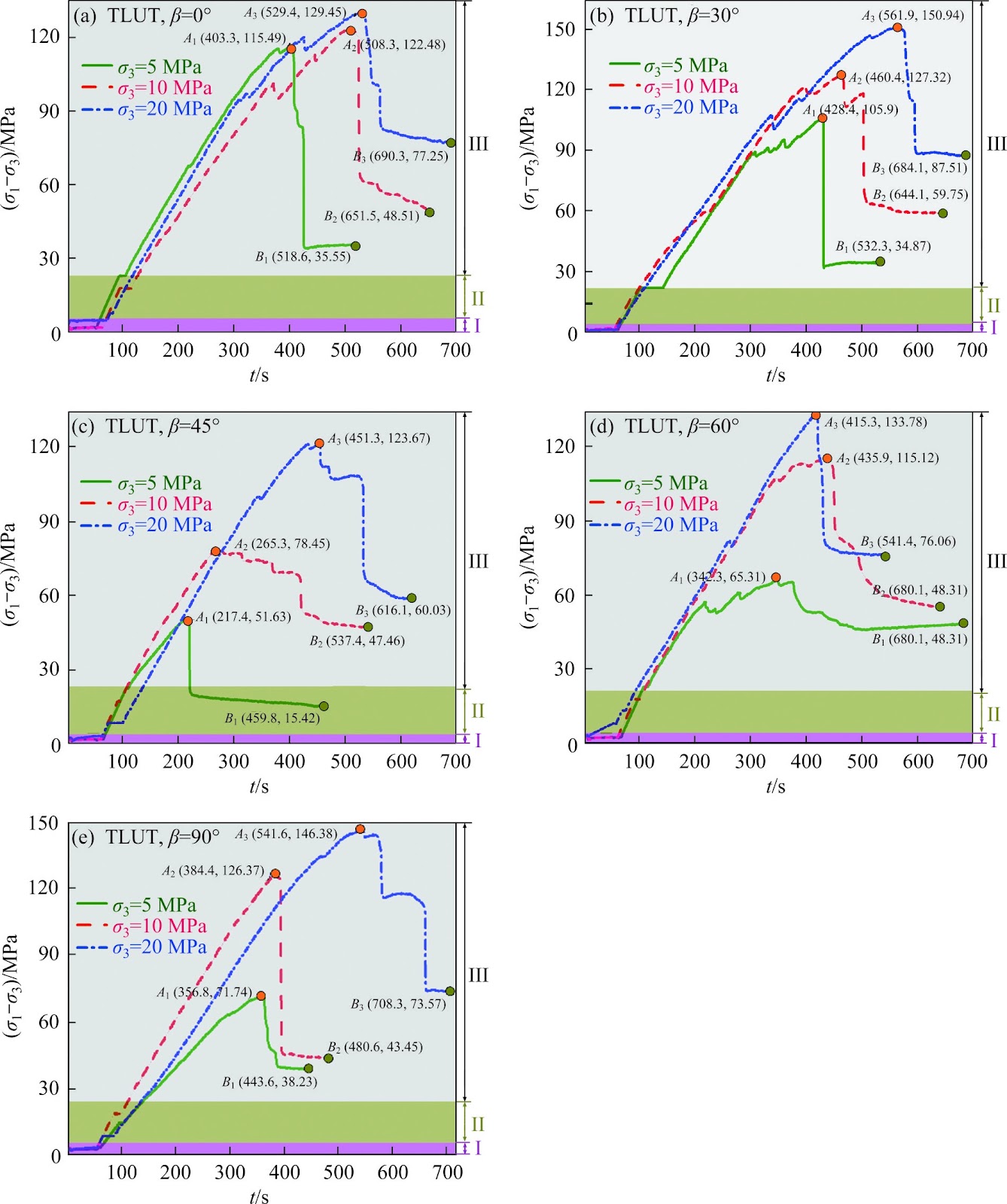
A cohesion loss model for determining residual strength of deep bedded sandstone
Rock residual strength, as an important input parameter, plays an indispensable role in proposing the reasonable and scientific scheme about stope design, underground tunnel excavation and stability evaluation of deep chambers. Therefore, previous residual strength models of rocks established were reviewed. And corresponding related problems were stated. Subsequently, starting from the effects of bedding and whole life-cycle evolution process, series of triaxial mechanical tests of deep bedded s
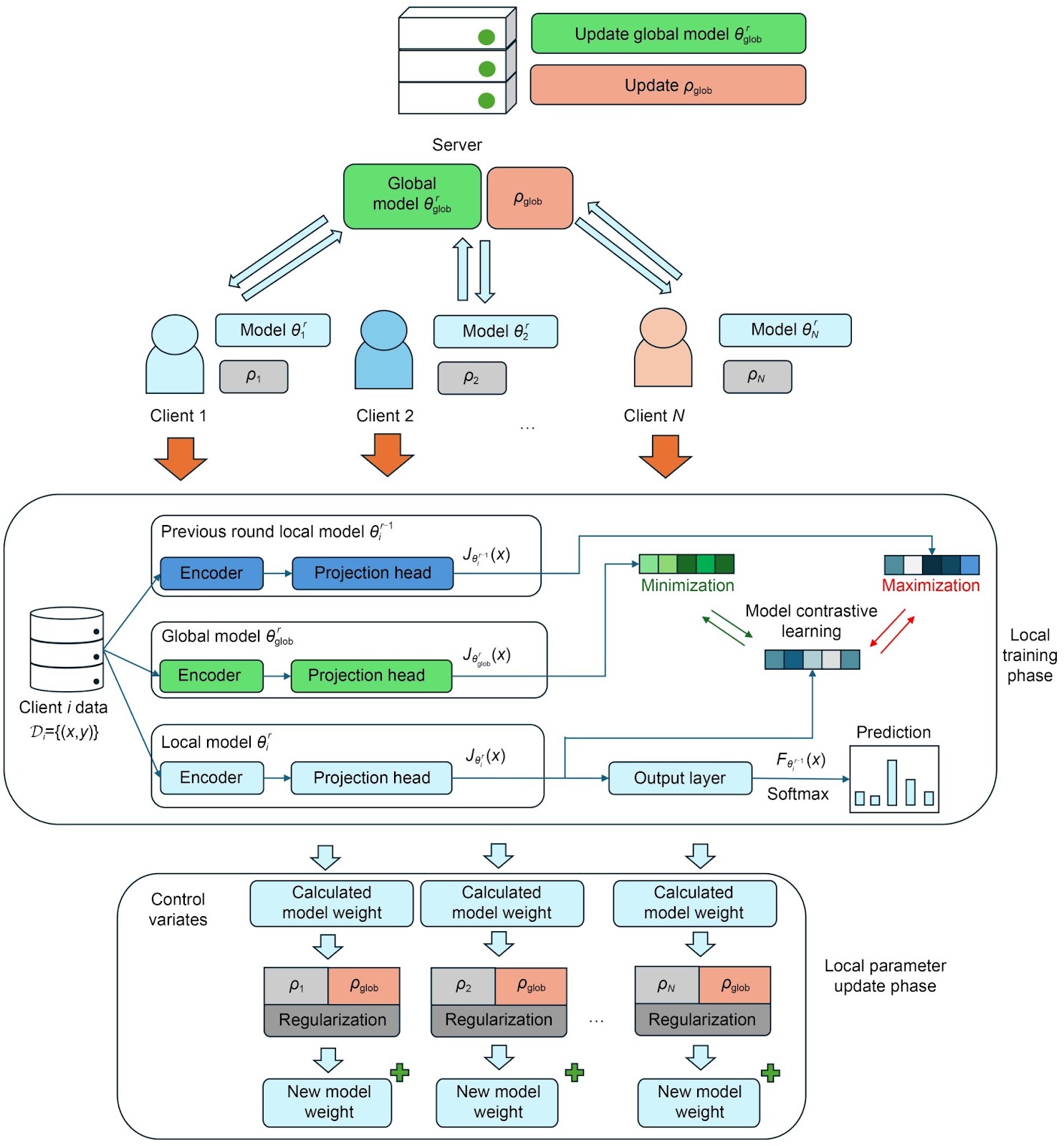
Federated model with contrastive learning and adaptive control variates for human activity recognition
Recent attention to privacy issues demands a communication-safe method for training human activity recognition (HAR) models on client activity data. Federated learning (FL) has become a compelling technique to facilitate model training between the server and clients while preserving data privacy. However, classical FL methods often assume independent and identically distributed (IID) data among clients. This assumption does not hold true in practical scenarios. Human activity in real-world scena