
Key Takeaways & Executive Findings
- •• AOI-OPEN establishes a trustworthy AOI ecology via decentralized autonomous organizations (DAOs), enabling secure collaboration among software providers, hardware manufacturers, and factories. • A parallel data pipeline generates large-scale virtual samples from small-scale real data, addressing data scarcity in AOI systems. • Federated learning leverages distributed data resources across entities while preserving privacy, building robust inspection models. • Experimental results on defect classification demonstrate improved data utilization and model accuracy under privacy-preserving conditions.
Abstract
Isolated data islands are prevalent in intelligent automated optical inspection (AOI) systems, limiting the full utilization of data resources and impeding the potential of AOI systems. Establishing a collaborative ecology involving software providers, hardware manufacturers, and factories offers an encouraging solution to build a closed-loop data flow and achieve optimal data resource utilization. However, concerns about privacy issues, rights infringement, and threats from other participants present challenges in establishing an efficient and effective community. In this paper, we propose a novel framework, AOI-OPEN, which first creates a trustworthy AOI ecology to gather related entities with decentralized autonomous organization (DAO) mechanisms. Then, a parallel data pipeline is proposed to generate large-scale virtual samples from small-scale real data for AOI systems. Finally, federated learning (FL) is adopted to use the distributed data resources among multiple entities and build privacy-preserving big models. Experiments on defect classification tasks show that, with privacy preserved, AOI-OPEN greatly strengthens the utilization of distributed data resources and improves the accuracy of inspection models.
1. Introduction
Automated optical inspection (AOI) systems play important roles in the manufacturing industry and are widely used in automotive industry, consumer electronics, communication industry, aerospace, and other fields. The development of robust and high-performance machine vision systems crucially depends on the availability of extensive and diverse datasets for training and validating visual models. Unfortunately, the construction of representative datasets is challenging due to the lack of effective collaboration mechanisms within the AOI ecology. In the AOI industry, collaboration is often limited to product-level partnerships, leading to data islands, particularly in downstream processes like printed circuit board (PCB) manufacturing. These data islands arise when production data are either not collected or not shared among stakeholders, hindering innovation.
While AOI device users, such as factories, have access to extensive data, they typically lack the incentive to collect and use the data fully, as the data collection process can increase operational costs and does not align with their primary production objectives. This lack of data utilization creates significant barriers to developing advanced artificial intelligence (AI) models and optimizing system performance. Additionally, concerns over protecting business secrets prevent data sharing between factories and other stakeholders, like hardware and software providers. This limitation stifles the development of high-performance models and the fine-tuning of devices, obstructing collaborative advancements and the overall potential of AOI technology in industrial applications. Building a collaborative ecology or community containing hardware manufacturers, software manufacturers, and inspection device users is promising to connect the data islands and achieve full utilization of data resources.
Despite this attractiveness, there has been little attention and work on this kind of collaborative framework or community. Most of the existing work on AOI is focused on optical imaging and image processing methods and neglects the inclusion of as many participants as possible and the management of data. In this paper, we propose a collaborative framework to help construct an intelligent and trustworthy community. However, this goal is not easy to achieve, and several concerns including the leakage of private data, damage to own rights, and threats from other participants, have to be thoroughly considered before we can set up an effective collaborative mechanism. The rise of decentralized autonomous organizations (DAOs) has garnered attention for enabling decentralized governance and collaboration among physical entities, addressing data sharing and utilization challenges in scenarios like AOI. This paper proposes a data-centric framework to construct a trustworthy, intelligent AOI ecosystem based on DAOs.
Loading authentic research manuscript (Pages 1–5)...
Yansong CAO, Yutong WANG, Jing YANG, Yonglin TIAN, Jiangong WANG, Fei-Yue WANG (2025). AOI-OPEN: federated operation and control for DAO-based trustworthy and intelligent AOI ecology. Frontiers of Information Technology & Electronic Engineering. https://doi.org/10.1631/FITEE_2400975
Research & Educational Purpose Only:The translations, structured abstracts, analytical annotations, and data reports provided by SinoTechIntel are intended exclusively for academic research, internal corporate R&D, and educational benchmarking. They do not constitute formal engineering, chemical safety, legal, or professional advice.
Copyright & Intellectual Property Notice: Original copyright of the underlying source articles and experimental data remains with the respective authors, institutions, and original publishing journals. SinoTechIntel claims intellectual property only over its proprietary translations, analytical syntheses, and AEO structured enhancements in accordance with international fair use and academic citation principles.
Frequently Asked Questions
What is AOI-OPEN?
AOI-OPEN is a novel framework for automated optical inspection that combines decentralized autonomous organizations (DAOs), parallel data generation, and federated learning to create a trustworthy and intelligent ecology for data sharing and collaborative model improvement.
How does AOI-OPEN address data islands?
AOI-OPEN establishes a collaborative ecology among factories, hardware providers, and software providers using DAO mechanisms. It employs federated learning to train models on distributed data without raw data leaving local sites, thus connecting data islands.
What role do decentralized autonomous organizations (DAOs) play in AOI-OPEN?
DAOs provide decentralized governance mechanisms that ensure trust, transparency, and fair participation among stakeholders, enabling secure data sharing and collaboration in the AOI ecosystem.
How does parallel data generation work in AOI-OPEN?
A parallel data pipeline generates large-scale virtual samples from small-scale real data, augmenting limited datasets and improving the training of inspection models.
What are the experimental results of AOI-OPEN?
Experiments on defect classification show that AOI-OPEN improves inspection accuracy and utilization of distributed data resources while preserving privacy.
Related Technical Papers & Translations
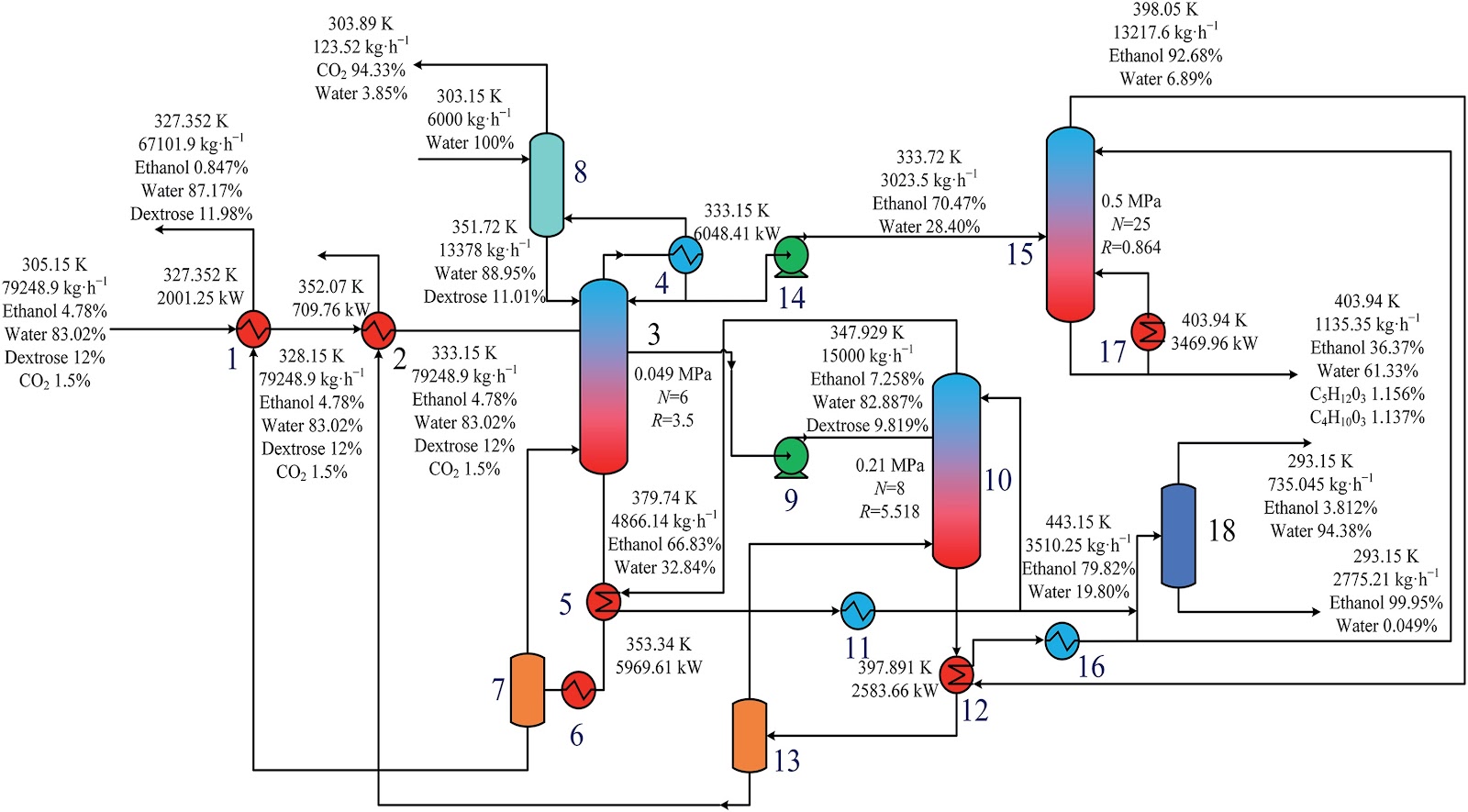
Design and optimization of a high-efficiency distillation process for cellulosic fuel ethanol integrated with thermal coupling and molecular sieve adsorption
To address the challenges of high energy consumption and prominent costs in the traditional three-columns distillation process for cellulosic fuel ethanol, a distillation—molecular sieve coupling separation process is proposed. This process integrates a three-column (crude distillation column, first distillation column, second distillation column) system with a 3A molecular sieve adsorption deep dehydration unit. A thermal coupling network is constructed via differential pressure design (steam from medium/high-pressure columns as mutual heat sources, reboiler liquid waste heat for feed preheating), and molecular sieve adsorption conditions are optimized. The study first performs a thermodynamic consistency test on the ethanol—water system, determines optimal non-random two-liquid (NRTL) model binary interaction parameters via experimental data regression for Aspen Plus simulation. Aiming at minimum total annual cost (TAC), Aspen Plus is used to optimize process parameters (theoretical tray number, feed location, reflux ratio, side-draw position, etc.). Economic analysis shows this process reduces CO2 emission costs by 27.56%, TAC by 15.58% (to 5.123 × 10⁶ USD·a-1), and increases ethanol purity to >99.6%, providing an effective solution for green, efficient separation.
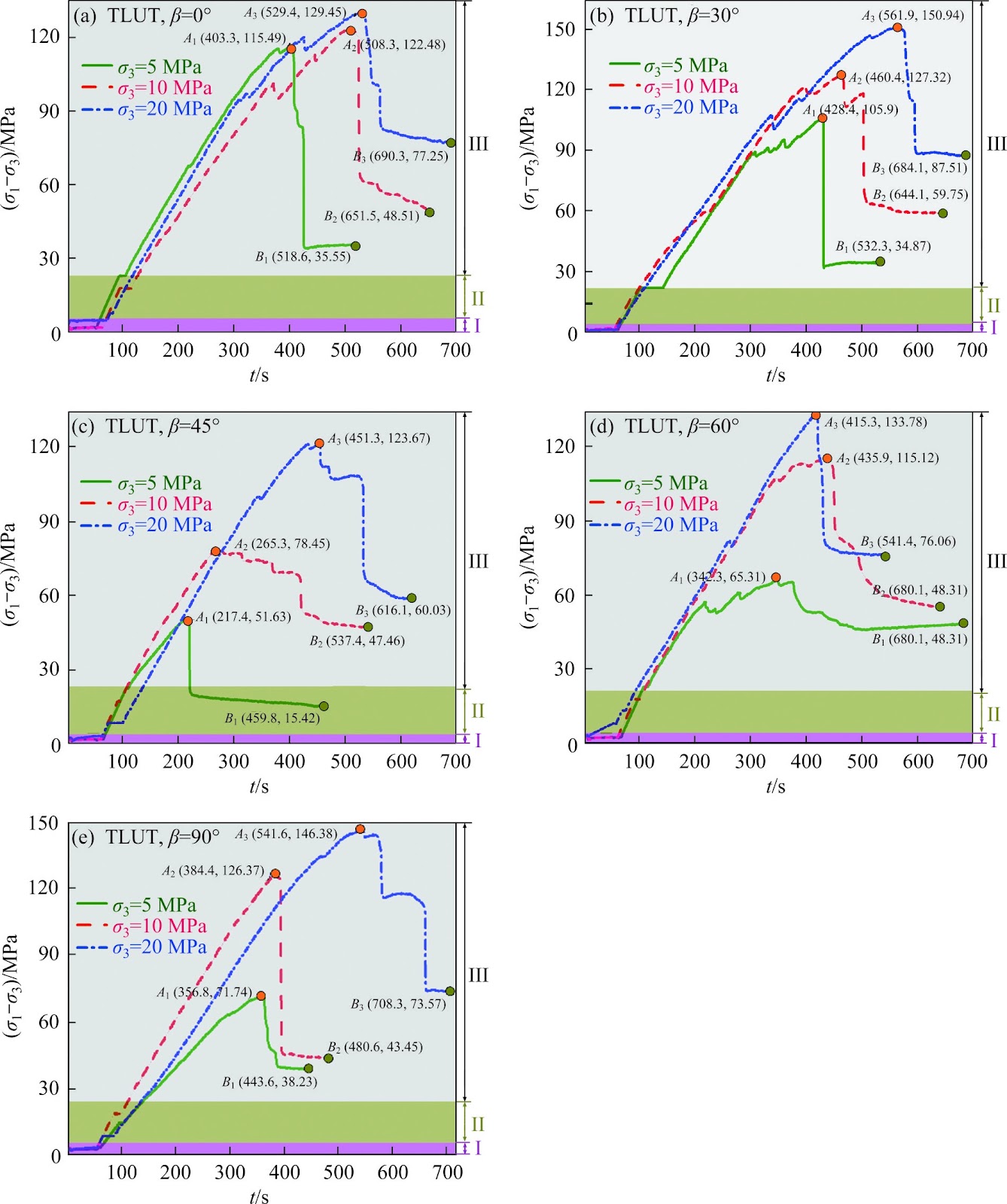
A cohesion loss model for determining residual strength of deep bedded sandstone
Rock residual strength, as an important input parameter, plays an indispensable role in proposing the reasonable and scientific scheme about stope design, underground tunnel excavation and stability evaluation of deep chambers. Therefore, previous residual strength models of rocks established were reviewed. And corresponding related problems were stated. Subsequently, starting from the effects of bedding and whole life-cycle evolution process, series of triaxial mechanical tests of deep bedded s
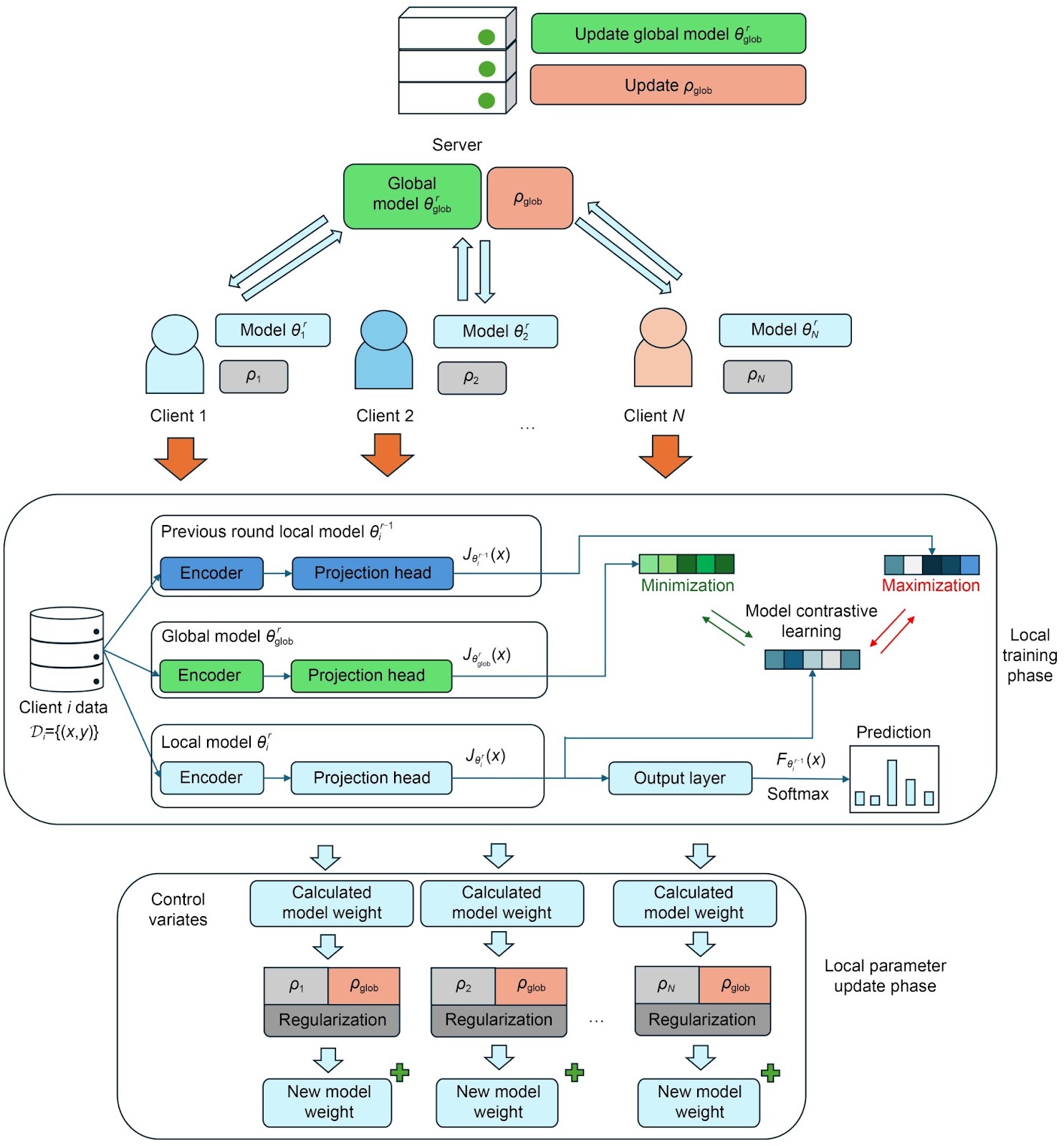
Federated model with contrastive learning and adaptive control variates for human activity recognition
Recent attention to privacy issues demands a communication-safe method for training human activity recognition (HAR) models on client activity data. Federated learning (FL) has become a compelling technique to facilitate model training between the server and clients while preserving data privacy. However, classical FL methods often assume independent and identically distributed (IID) data among clients. This assumption does not hold true in practical scenarios. Human activity in real-world scena