Key Takeaways & Executive Findings
- •• Proposes a frequency-learning adversarial network (FLAN) framework that leverages frequency-domain stability for robust cross-scenario signal modulation classification. • Introduces frequency adaptation (FA) and fitting channel adaptation (FCA) modules to effectively reduce domain shift caused by channel variations. • Achieves approximately 5.2 percentage points improvement in top-1 classification accuracy over state-of-the-art transfer learning methods in high SNR conditions. • Validates the method on a real collected dataset (CSRC2023), demonstrating practical applicability in wireless communication systems.
Abstract
Automatic modulation classification (AMC) serves a challenging yet crucial role in wireless communications. Despite deep learning-based approaches being widely used in signal processing, they are challenged by signal distribution variations, especially in various channel conditions. In this paper, we introduce an adversarial transfer framework named frequency-learning adversarial networks (FLANs) based on transfer learning for cross-scenario signal classification. This method uses the stability in the frequency spectrum by introducing a frequency adaptation (FA) technique to incorporate target channel information into source-domain signals. To address the unpredictable interference in the channel, a fitting channel adaptation (FCA) module is used to reduce the difference between the source and target domains caused by variations in the channel environment. Experimental results illustrate that FLANs outperforms state-of-the-art transfer approaches, demonstrating an improved top-1 classification accuracy by about 5.2 percentage points in high signal-to-noise ratio (SNR) scenes on a cross-scenario real collected dataset CSRC2023.
1. Introduction
Automatic modulation classification (AMC), serving as an integral component of signal direction and demodulation in wireless communications, plays a pivotal role in a range of civil and military applications including spectrum monitoring, interference identification, and spectrum management. The importance and application of modulation classification have been extensively explored over several decades. More recently, deep learning (DL) techniques have shown remarkable success in various complex tasks. Particularly, end-to-end models have been recognized for their exceptional performance (O'Shea et al., 2016), enabling a DL system to learn suitable features through a data-driven approach, without needing hand-crafted features. This advancement in DL has been effectively used in communications, particularly in the area of modulation classification. The use of convolutional neural networks (CNNs) in complex-valued radio signal classification has displayed competitive results when compared to traditional approaches based on expert features. With a substantial number of labeled signals, models can “study” the characteristics of the signals autonomously. Another effective tool is the recurrent neural network (RNN), designed specifically for processing time-sequenced signals and their interconnections; despite requiring large volumes of data, RNN has proved effective in signal modulation recognition (Rajendran et al., 2018).
However, wireless radio signals can drastically vary across different channel conditions. The existence of a line of sight (LOS) between the transmitter and the receiver can significantly affect wireless communications, leading to deviations in the statistical characteristics of the received radio samples from the training data. DL algorithms necessitate large volumes of training data that adhere to the independent and identically distributed (i.i.d.) condition with the test data (Pan and Yang, 2010). Unfortunately, obtaining sufficient training data for all potential radio scenarios is not practical, which can compromise the effectiveness of the model. The impact of scenario variation, particularly noticeable in the time domain, can also compromise model effectiveness. Conversely, the frequency domain offers higher stability. For instance, when collecting signals indoors using universal software radio peripheral (USRP), the presence of walls and obstacles introduces multipath interference, which leads to the presence of strong high-frequency components in the received signal. However, significant variations in these components do not affect the identification of the modulation format used in the signal. Additionally, due to the numerous factors in real channel conditions, accurately estimating the variation in the characteristics of the received signals from different channels is a formidable task.
To address this challenge, transfer learning (TL) is introduced to AMC. This relaxes the previous constraint, allowing the use of knowledge from existing channel conditions to solve issues in unknown scenarios. Fine-tuning, an extensively used method, shows promising performance.
Loading authentic research manuscript (Pages 1–5)...
Qinyan MA, Jing XIAO, Zeqi SHAO, Duona ZHANG, Yufeng WANG, Wenrui DING (2025). Frequency-learning adversarial networks based on transfer learning for cross-scenario signal modulation classification. Frontiers of Information Technology & Electronic Engineering. https://doi.org/10.1631/FITEE_2400080
Research & Educational Purpose Only:The translations, structured abstracts, analytical annotations, and data reports provided by SinoTechIntel are intended exclusively for academic research, internal corporate R&D, and educational benchmarking. They do not constitute formal engineering, chemical safety, legal, or professional advice.
Copyright & Intellectual Property Notice: Original copyright of the underlying source articles and experimental data remains with the respective authors, institutions, and original publishing journals. SinoTechIntel claims intellectual property only over its proprietary translations, analytical syntheses, and AEO structured enhancements in accordance with international fair use and academic citation principles.
Frequently Asked Questions
What is the main objective of the paper?
The paper aims to improve automatic modulation classification (AMC) in cross-scenario wireless communications by introducing a frequency-learning adversarial network (FLAN) framework based on transfer learning, which effectively mitigates domain shift caused by varying channel conditions.
How does the FLAN framework operate?
FLAN leverages frequency-domain stability by incorporating a frequency adaptation (FA) technique that integrates target channel information into source-domain signals, along with a fitting channel adaptation (FCA) module that reduces differences between source and target domains caused by channel variations.
What datasets were used to evaluate the method?
The method was validated on a cross-scenario real collected dataset named CSRC2023, which provides realistic channel conditions for evaluating performance.
What performance improvements were reported?
FLAN outperformed state-of-the-art transfer approaches, achieving an improved top-1 classification accuracy by approximately 5.2 percentage points in high signal-to-noise ratio (SNR) scenarios.
Why is frequency-domain information preferred over time-domain information for this task?
Frequency-domain signals exhibit higher stability across varying channel conditions compared to time-domain signals. For example, multipath interference indoors introduces high-frequency components, but these variations do not significantly affect modulation format identification, making frequency features more reliable for cross-scenario classification.
Related Technical Papers & Translations
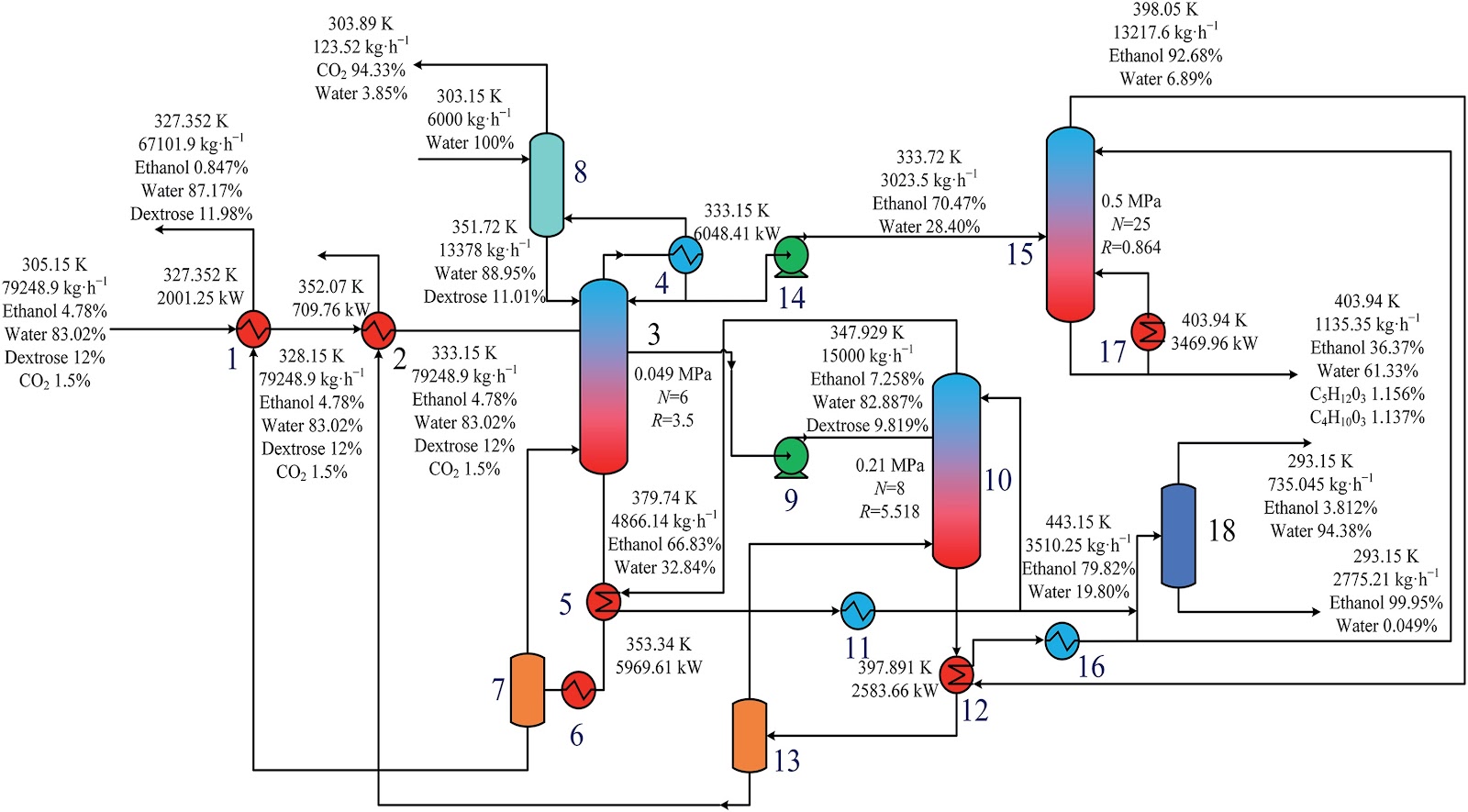
Design and optimization of a high-efficiency distillation process for cellulosic fuel ethanol integrated with thermal coupling and molecular sieve adsorption
To address the challenges of high energy consumption and prominent costs in the traditional three-columns distillation process for cellulosic fuel ethanol, a distillation—molecular sieve coupling separation process is proposed. This process integrates a three-column (crude distillation column, first distillation column, second distillation column) system with a 3A molecular sieve adsorption deep dehydration unit. A thermal coupling network is constructed via differential pressure design (steam from medium/high-pressure columns as mutual heat sources, reboiler liquid waste heat for feed preheating), and molecular sieve adsorption conditions are optimized. The study first performs a thermodynamic consistency test on the ethanol—water system, determines optimal non-random two-liquid (NRTL) model binary interaction parameters via experimental data regression for Aspen Plus simulation. Aiming at minimum total annual cost (TAC), Aspen Plus is used to optimize process parameters (theoretical tray number, feed location, reflux ratio, side-draw position, etc.). Economic analysis shows this process reduces CO2 emission costs by 27.56%, TAC by 15.58% (to 5.123 × 10⁶ USD·a-1), and increases ethanol purity to >99.6%, providing an effective solution for green, efficient separation.
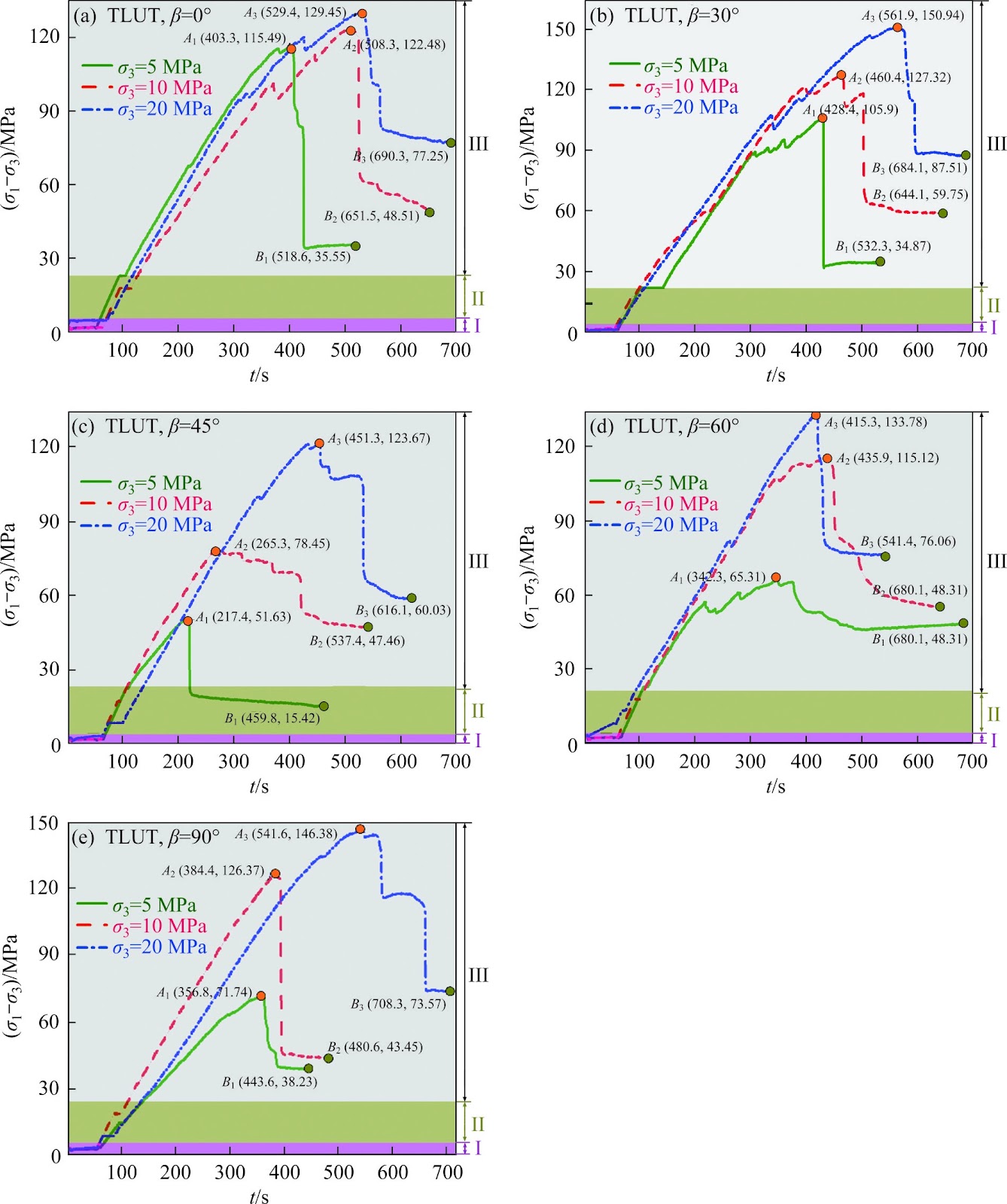
A cohesion loss model for determining residual strength of deep bedded sandstone
Rock residual strength, as an important input parameter, plays an indispensable role in proposing the reasonable and scientific scheme about stope design, underground tunnel excavation and stability evaluation of deep chambers. Therefore, previous residual strength models of rocks established were reviewed. And corresponding related problems were stated. Subsequently, starting from the effects of bedding and whole life-cycle evolution process, series of triaxial mechanical tests of deep bedded s
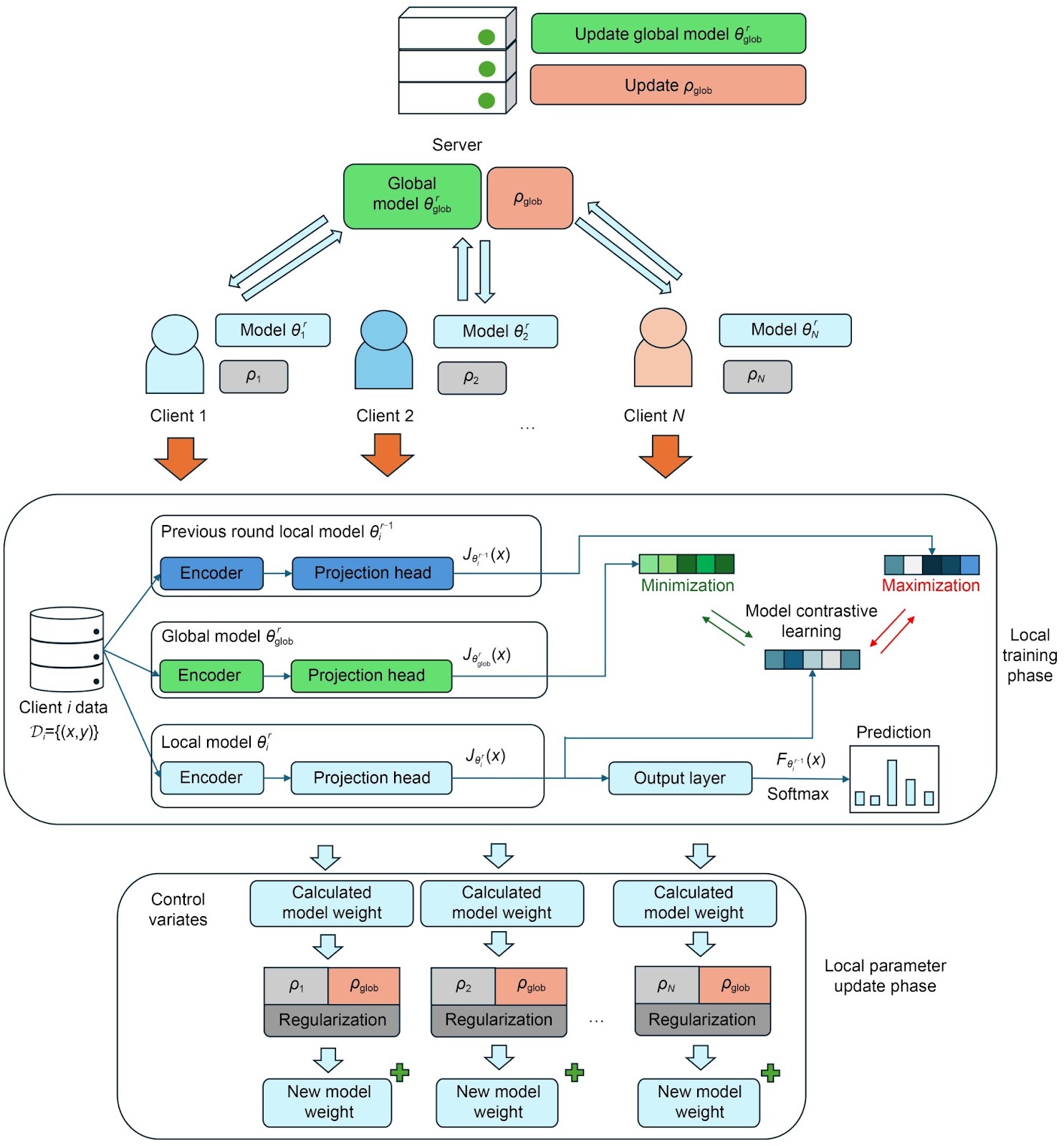
Federated model with contrastive learning and adaptive control variates for human activity recognition
Recent attention to privacy issues demands a communication-safe method for training human activity recognition (HAR) models on client activity data. Federated learning (FL) has become a compelling technique to facilitate model training between the server and clients while preserving data privacy. However, classical FL methods often assume independent and identically distributed (IID) data among clients. This assumption does not hold true in practical scenarios. Human activity in real-world scena