Key Takeaways & Executive Findings
- •• Bidirectional pump-controlled SSPP waveguide enables dynamic switching between perfect absorption and perfect transmission. • Nonlinear varactor diodes and voltage-tuned dispersion engineering achieve degenerate phase matching and three-wave mixing. • Experimental results show signal gain tunability from −69.50 to +1.04 dB (forward pumping) and −70.49 to +1.45 dB (backward pumping). • Offers new design paradigms for reconfigurable electromagnetic devices in adaptive energy harvesting and high-speed signal processing.
Abstract
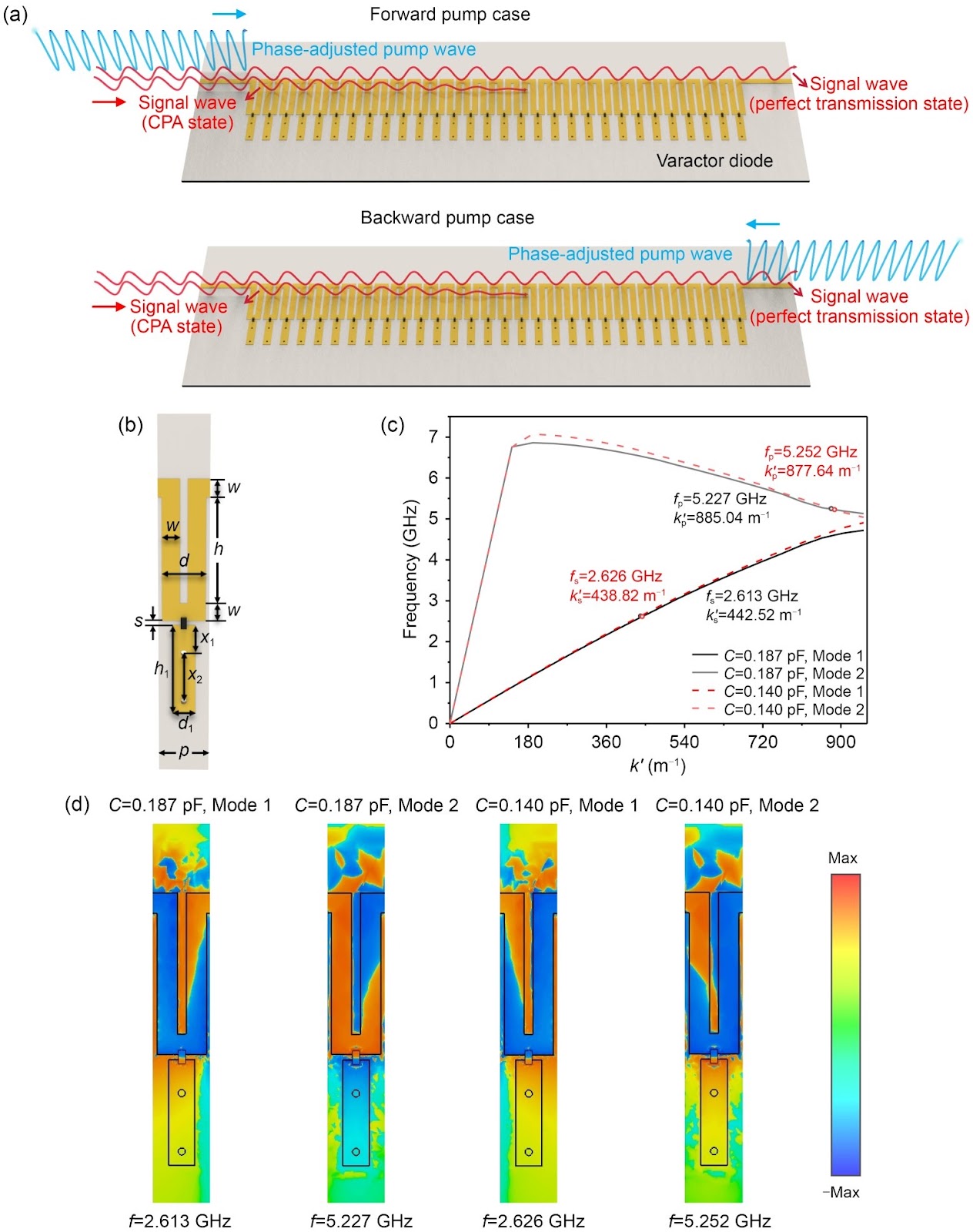
We present a dynamically reconfigurable spoof surface plasmon polariton (SSPP) waveguide capable of bidirectional switching between perfect absorption and perfect transmission through active control. Nonlinear varactor diodes are integrated into the waveguide, enabling degenerate phase matching between pump and signal waves via voltage-tuned dispersion engineering. Three-wave mixing processes are established, allowing bidirectional phase-controlled transitions from destructive to constructive interference. The proposed SSPP waveguide overcomes traditional pumping constraints with its bidirectional configuration, supporting both forward- and backward-propagating pump-signal configurations and permitting signal amplitude modulations at both the transmitter and receiver ends. Experimental characterization demonstrates remarkable signal gain tunability: the forward pumping configuration achieves a dynamic range spanning from −69.50 to +1.04 dB, while the backward configuration spans from −70.49 to +1.45 dB. This work provides new design paradigms for microwave coherent systems and advances the development of reconfigurable electromagnetic devices for adaptive energy harvesting and high-speed signal processing applications.
1. Introduction
Absorbers belong to a category of functional devices capable of selectively absorbing electromagnetic energy at specific frequency bands, which can suppress the adjacent-channel or noise interference in communication systems, enhance signal quality and system sensitivity, and convert electromagnetic energy into thermal or electrical energy. These capabilities endow absorbers with significant application value (Chong et al., 2010; Kats and Capasso, 2016; Baranov et al., 2017; Xomalis et al., 2019; Khurgin et al., 2024) in all-optical switches and logic gates (Fang et al., 2014, 2015; Kim et al., 2016; Papaioannou et al., 2016), photodetectors (Goykhman et al., 2011, 2012, 2016), sensing (Xiao SY et al., 2016; Li CW et al., 2019; Grimm et al., 2021; Zhang Y et al., 2023), imaging (Monticone et al., 2016; Zhao WL et al., 2023), heat transfer control (Li Y et al., 2022), non-destructive measurement (Zanotto et al., 2017), and other fields. Absorption can be achieved through various methods, such as electromagnetic resonance coupling (Liao et al., 2015; Wang P et al., 2021; Li YP et al., 2025), hot electron excitation (Khurgin et al., 2024), and coherent wave interference.
Compared to absorbers with fixed parameters, those with dynamically adjustable absorption characteristics (such as absorption rates or operational frequency bands) can significantly enhance the system adaptability and energy efficiency. For instance, in solar thermal collection systems, adjusting the absorption rates based on light intensity can improve the energy conversion efficiency while preventing overheating. These devices have become critical components in dynamic electromagnetic regulation systems.
Traditional absorption devices with tunable absorption rates typically rely on modifying the physical parameters of absorptive materials (e.g., thickness or loss) (Pu et al., 2012; Nie et al., 2014a; Zyablovsky et al., 2014; Bai et al., 2016; Jin and Yu, 2020) or adjusting the phase differences between the counter-propagating coherent waves (Wan et al., 2011; Nie et al., 2014a, 2014b; Yan et al., 2014; Wong et al., 2016; Zhao H et al., 2016; Xiao D et al., 2017; Huang et al., 2018; Guo and Argyropoulos, 2019, 2020; Alaee et al., 2020; Jin and Yu, 2020; Wang C et al., 2022; Chen JT et al., 2024; Zou et al., 2024). However, post-fabrication modification of the physical parameters of the materials is challenging, whereas coherent control over multiple incident waves is simple and can offer enhanced tunability. Notably, low absorption rates do not necessarily correspond to high transmission but may instead indicate high reflection. Conventional high-transmission schemes based on standard interference often induce waveform distortion. To address these limitations, a nonlinear
Loading authentic research manuscript (Pages 1–5)...
Wenyi Cui, Xinxin Gao, Jingjing Zhang (2025). Bidirectional-pump-controlled reconfigurable nonlinear spoof plasmonic waveguide. Frontiers of Information Technology & Electronic Engineering. https://doi.org/10.1631/FITEE_2500286
Research & Educational Purpose Only:The translations, structured abstracts, analytical annotations, and data reports provided by SinoTechIntel are intended exclusively for academic research, internal corporate R&D, and educational benchmarking. They do not constitute formal engineering, chemical safety, legal, or professional advice.
Copyright & Intellectual Property Notice: Original copyright of the underlying source articles and experimental data remains with the respective authors, institutions, and original publishing journals. SinoTechIntel claims intellectual property only over its proprietary translations, analytical syntheses, and AEO structured enhancements in accordance with international fair use and academic citation principles.
Frequently Asked Questions
What is a bidirectional-pump-controlled nonlinear spoof plasmonic waveguide?
It is a dynamically reconfigurable waveguide based on spoof surface plasmon polaritons that integrates nonlinear varactor diodes. It uses voltage-tuned dispersion engineering to achieve degenerate phase matching between pump and signal waves, enabling bidirectional switching between perfect absorption and perfect transmission.
How does the waveguide achieve perfect absorption and transmission?
The waveguide uses three-wave mixing processes triggered by nonlinear varactor diodes. By controlling the phase relationship between pump and signal waves, it can transition between destructive interference (perfect absorption) and constructive interference (perfect transmission) bidirectionally.
What are the key advantages of this design over traditional absorbers?
Unlike traditional absorbers that rely on fixed material properties or complex fabrication, this design offers dynamic tunability via voltage control, supports bidirectional pump configurations, and provides a wide dynamic range for signal gain, making it suitable for adaptive energy harvesting and high-speed signal processing.
What dynamic range is achieved in the experimental characterization?
The forward pumping configuration achieves a dynamic range from −69.50 to +1.04 dB, while the backward pumping configuration spans from −70.49 to +1.45 dB, demonstrating remarkable signal gain tunability.
What potential applications could this technology enable?
The technology could advance microwave coherent systems, adaptive energy harvesting, reconfigurable electromagnetic devices, and high-speed signal processing, offering new design paradigms for dynamic electromagnetic regulation.
Related Technical Papers & Translations
Design and optimization of a high-efficiency distillation process for cellulosic fuel ethanol integrated with thermal coupling and molecular sieve adsorption
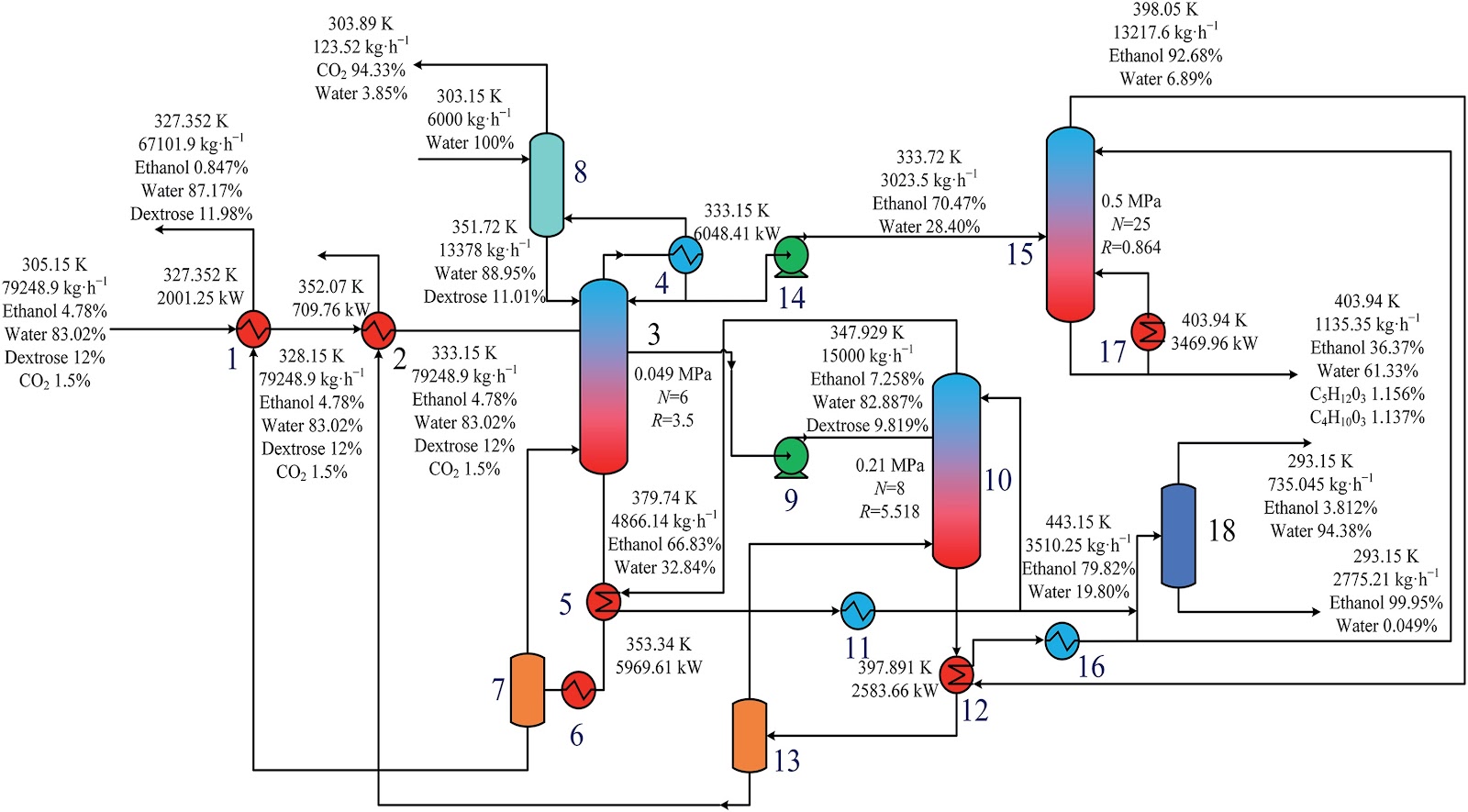
To address the challenges of high energy consumption and prominent costs in the traditional three-columns distillation process for cellulosic fuel ethanol, a distillation—molecular sieve coupling separation process is proposed. This process integrates a three-column (crude distillation column, first distillation column, second distillation column) system with a 3A molecular sieve adsorption deep dehydration unit. A thermal coupling network is constructed via differential pressure design (steam from medium/high-pressure columns as mutual heat sources, reboiler liquid waste heat for feed preheating), and molecular sieve adsorption conditions are optimized. The study first performs a thermodynamic consistency test on the ethanol—water system, determines optimal non-random two-liquid (NRTL) model binary interaction parameters via experimental data regression for Aspen Plus simulation. Aiming at minimum total annual cost (TAC), Aspen Plus is used to optimize process parameters (theoretical tray number, feed location, reflux ratio, side-draw position, etc.). Economic analysis shows this process reduces CO2 emission costs by 27.56%, TAC by 15.58% (to 5.123 × 10⁶ USD·a-1), and increases ethanol purity to >99.6%, providing an effective solution for green, efficient separation.
A cohesion loss model for determining residual strength of deep bedded sandstone
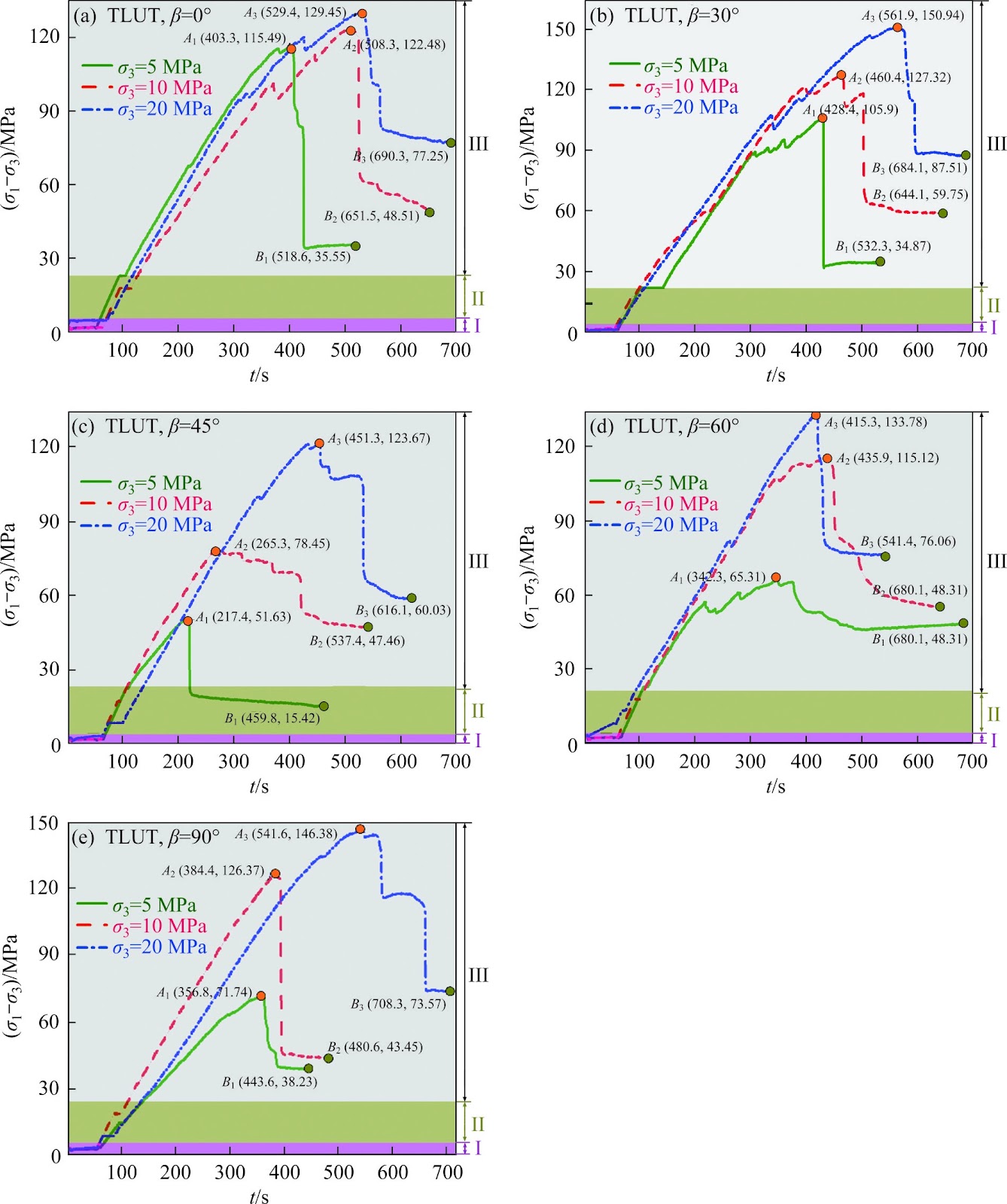
Rock residual strength, as an important input parameter, plays an indispensable role in proposing the reasonable and scientific scheme about stope design, underground tunnel excavation and stability evaluation of deep chambers. Therefore, previous residual strength models of rocks established were reviewed. And corresponding related problems were stated. Subsequently, starting from the effects of bedding and whole life-cycle evolution process, series of triaxial mechanical tests of deep bedded s
Federated model with contrastive learning and adaptive control variates for human activity recognition
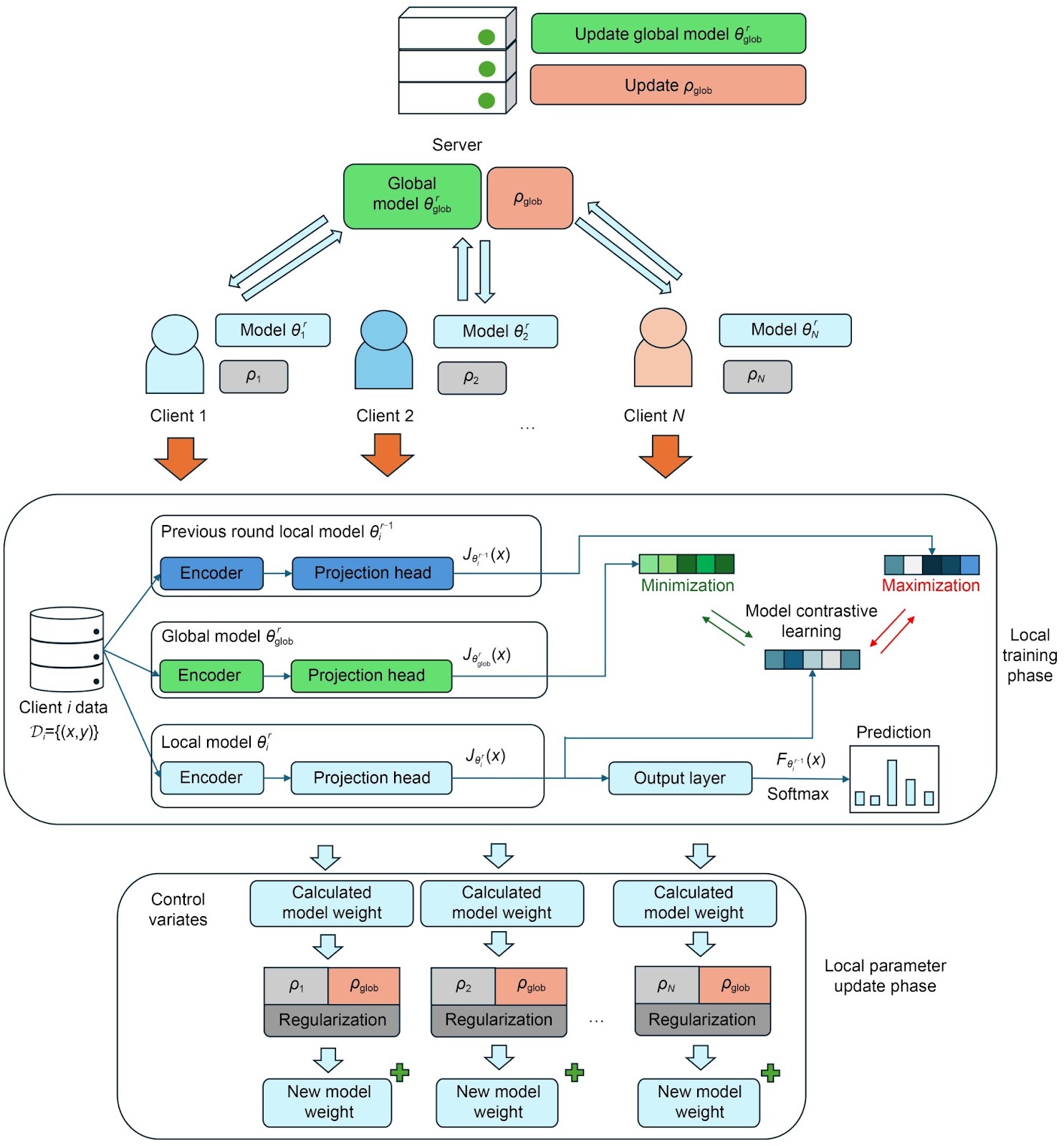
Recent attention to privacy issues demands a communication-safe method for training human activity recognition (HAR) models on client activity data. Federated learning (FL) has become a compelling technique to facilitate model training between the server and clients while preserving data privacy. However, classical FL methods often assume independent and identically distributed (IID) data among clients. This assumption does not hold true in practical scenarios. Human activity in real-world scena