
Key Takeaways & Executive Findings
- •• The proposed USC architecture integrates divisible shared control (DSC) and interactive shared control (ISC) to reduce operator workload in UVMS operations. • Task-priority-based DSC divides whole-body tasks into constraints, operation, and posture optimization, enabling autonomous self-collision avoidance and posture adjustment according to user preferences. • ISC incorporates haptic feedback via a whole-body controller, enhancing human–robot collaboration and allowing seamless integration with the operation task. • Simulations and pool experiments show significant reductions in completion time (17.50%–22.73%), operator input length (25.00%–40.00%), and cognitive load (29.91%–35.53%) compared to manual control.
Abstract
It is challenging for underwater vehicle–manipulator systems (UVMSs) to operate autonomously in unstructured underwater environments. Relying solely on teleoperation for both underwater vehicle (UV) and underwater manipulator (UM) imposes a considerable cognitive and physical load on the operator. In this paper, we propose a unified shared control (USC) architecture for the UVMS, integrating divisible shared control (DSC) and interactive shared control (ISC) to alleviate the operator’s workload. By applying task priority based on DSC, we divide the whole-body task into constraints, operation, and posture optimization subtasks. The robot autonomously avoids self-collisions and adjusts its posture according to the user’s visual preferences. ISC incorporates haptic feedback to enhance human–robot collaboration, seamlessly integrating it into the operation task via a whole-body controller for the UVMS. Simulations and pool experiments are conducted to verify the feasibility of the method. Compared to manual control (MC), the proposed method reduces completion time by 17.50%, operator input length by 25.00%, and cognitive load by 35.53% in the simulations, with corresponding reductions of 22.73%, 40.00%, and 29.91% in the pool experiments. Subjective measurements demonstrate the reduction in operator workload with the proposed method.
1. Introduction
The proliferation of ocean exploration by humans has led to an increasing demand for underwater missions, including persistent underwater observation (Lin and Yang, 2020) and underwater manipulation (Petillot et al., 2019). Underwater tasks encompass a wide range of missions, such as scientific expeditions, marine rescue, and offshore industries (Ridao et al., 2015). Skilled divers are capable of undertaking some underwater interventions but face limitations in deep or prolonged underwater missions. Consequently, underwater vehicle–manipulator systems (UVMSs) have become essential for underwater operations (Sahoo et al., 2019).
In the early stages of UVMS development, operators remotely control the vehicle and manipulator independently. However, full teleoperation requires operators to maintain sustained focus and patience for precise movements (Shim et al., 2010). This process places significant physical and cognitive load on operators, rendering it difficult to maintain during prolonged periods (Capocci et al., 2018). In addressing this challenge, numerous UVMSs have been developed. Some are fully autonomous, such as GIRONA 500 (Ribas et al., 2015) and Aquanaut (Manley et al., 2018). Others, like Ocean One (Khatib et al., 2016) and DexROV (Di Lillo et al., 2021) operate in semi-autonomous mode. Notably, task priority control (Simetti et al., 2018) is widely used in UVMSs, and offers a hierarchical motion resolution framework for redundant robotic systems through the prioritization of control objectives.
For instance, using task priority control, GIRONA 500 completed underwater tasks such as object recovery, valve turning (Maurelli et al., 2016), and pipeline inspection tasks (Cieślak and Ridao, 2018). This approach enables a UVMS to adapt to various operational scenarios featuring diverse control objectives and activation functions. Although underwater manipulation autonomy has been improved significantly (Zhang et al., 2017), fully automated control is still inadequate for complex and delicate operations in open and unstructured underwater environments. Underwater operations continue to require human intervention (Sivčev et al., 2018). Human–machine hybrid augmented intelligence (HMAI) has the potential to significantly enhance the capabilities of complex systems (Wang et al., 2022). Human–robot shared control (SC) technology has garnered significant attention over the past decade. SC leverages human high-level cognition and decision-making while integrating robotic capabilities for low-level task execution (Yang et al., 2022b). SC methods are typically classified into divisible shared control (DSC) and interactive shared control (ISC).
Loading authentic research manuscript (Pages 1–5)...
Zhangpeng TU, Yuanchao ZHU, Xin WU, Canjun YANG (2025). A unified shared control architecture for underwater vehicle–manipulator systems using task priority. Frontiers of Information Technology & Electronic Engineering. https://doi.org/10.1631/FITEE_2400471
Research & Educational Purpose Only:The translations, structured abstracts, analytical annotations, and data reports provided by SinoTechIntel are intended exclusively for academic research, internal corporate R&D, and educational benchmarking. They do not constitute formal engineering, chemical safety, legal, or professional advice.
Copyright & Intellectual Property Notice: Original copyright of the underlying source articles and experimental data remains with the respective authors, institutions, and original publishing journals. SinoTechIntel claims intellectual property only over its proprietary translations, analytical syntheses, and AEO structured enhancements in accordance with international fair use and academic citation principles.
Frequently Asked Questions
What is the unified shared control (USC) architecture for underwater vehicle–manipulator systems (UVMSs)?
The USC architecture integrates divisible shared control (DSC) and interactive shared control (ISC) to reduce operator workload. DSC applies task priority to divide the whole-body task into constraints, operation, and posture optimization subtasks, while ISC incorporates haptic feedback for enhanced human–robot collaboration.
How does the proposed USC method reduce operator workload compared to manual control?
In simulations, the method reduces completion time by 17.50%, operator input length by 25.00%, and cognitive load by 35.53%. In pool experiments, reductions are 22.73%, 40.00%, and 29.91% for the respective metrics, demonstrating a consistent decrease in operator workload.
What are the key components of the task-priority-based shared control approach?
The approach divides the UVMS whole-body task into three subtasks: constraints, operation, and posture optimization. This allows the robot to autonomously avoid self-collisions and adjust its posture according to user visual preferences, while the operator focuses on the main operation.
What experimental validations were conducted in this study?
Both simulations and physical pool experiments were conducted to verify the feasibility of the USC method. The experiments measured completion time, operator input length, and cognitive load, and the results confirmed significant improvements over manual control.
What is the significance of haptic feedback in the interactive shared control (ISC) module?
ISC integrates haptic feedback into the operation task via a whole-body controller for the UVMS. This enhances human–robot collaboration by providing the operator with tactile information about the robot's interactions, improving precision and reducing cognitive load.
Related Technical Papers & Translations
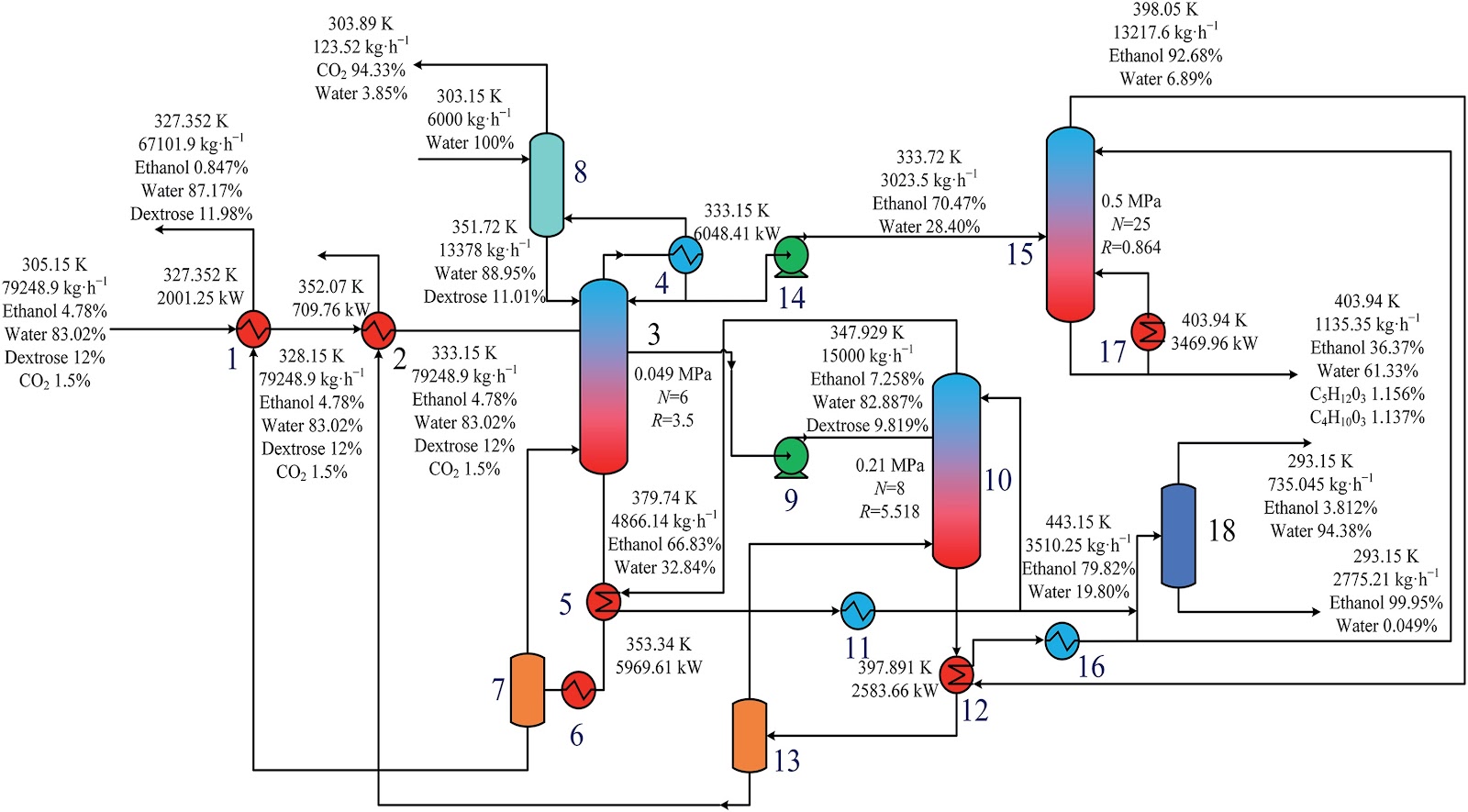
Design and optimization of a high-efficiency distillation process for cellulosic fuel ethanol integrated with thermal coupling and molecular sieve adsorption
To address the challenges of high energy consumption and prominent costs in the traditional three-columns distillation process for cellulosic fuel ethanol, a distillation—molecular sieve coupling separation process is proposed. This process integrates a three-column (crude distillation column, first distillation column, second distillation column) system with a 3A molecular sieve adsorption deep dehydration unit. A thermal coupling network is constructed via differential pressure design (steam from medium/high-pressure columns as mutual heat sources, reboiler liquid waste heat for feed preheating), and molecular sieve adsorption conditions are optimized. The study first performs a thermodynamic consistency test on the ethanol—water system, determines optimal non-random two-liquid (NRTL) model binary interaction parameters via experimental data regression for Aspen Plus simulation. Aiming at minimum total annual cost (TAC), Aspen Plus is used to optimize process parameters (theoretical tray number, feed location, reflux ratio, side-draw position, etc.). Economic analysis shows this process reduces CO2 emission costs by 27.56%, TAC by 15.58% (to 5.123 × 10⁶ USD·a-1), and increases ethanol purity to >99.6%, providing an effective solution for green, efficient separation.
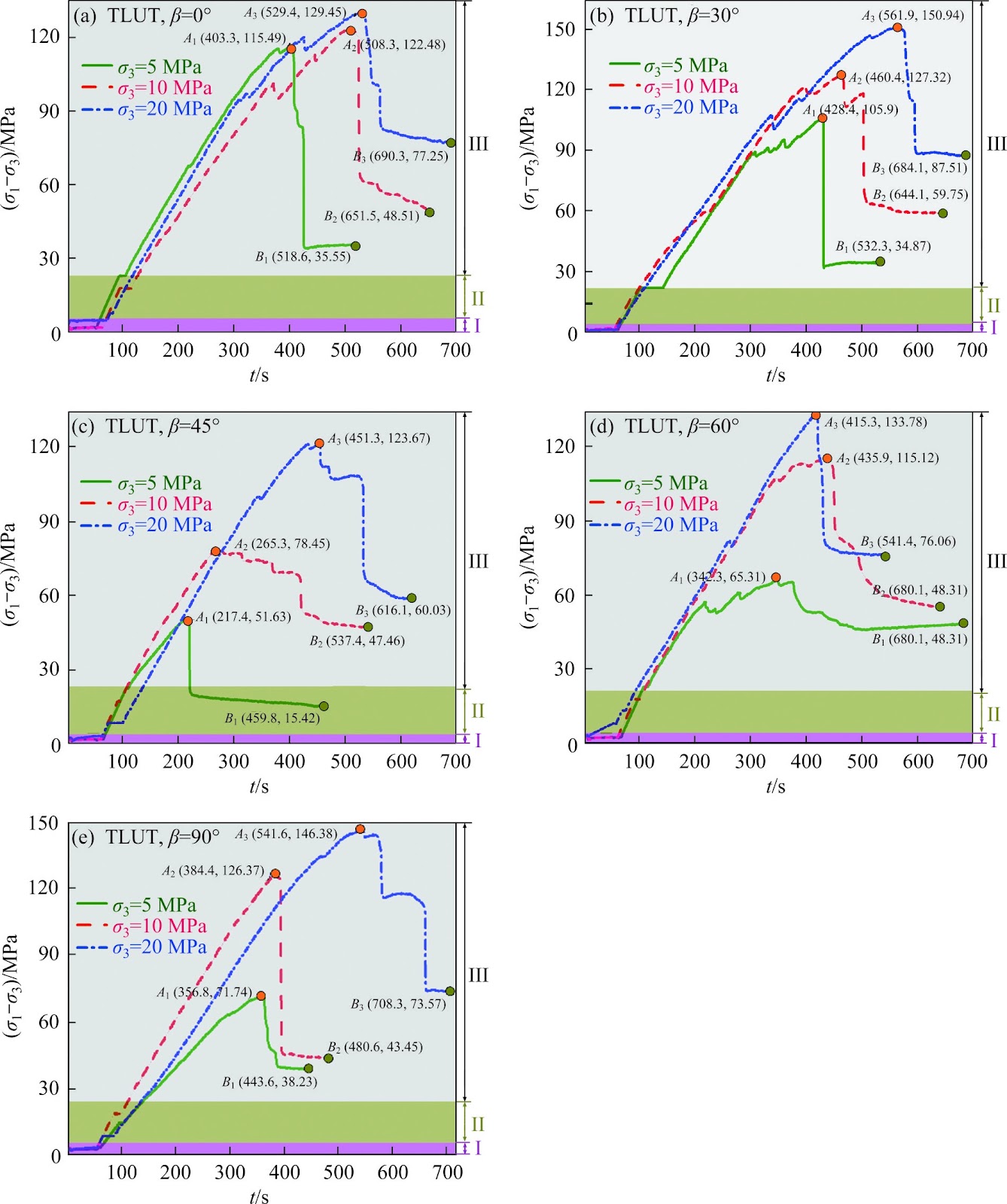
A cohesion loss model for determining residual strength of deep bedded sandstone
Rock residual strength, as an important input parameter, plays an indispensable role in proposing the reasonable and scientific scheme about stope design, underground tunnel excavation and stability evaluation of deep chambers. Therefore, previous residual strength models of rocks established were reviewed. And corresponding related problems were stated. Subsequently, starting from the effects of bedding and whole life-cycle evolution process, series of triaxial mechanical tests of deep bedded s
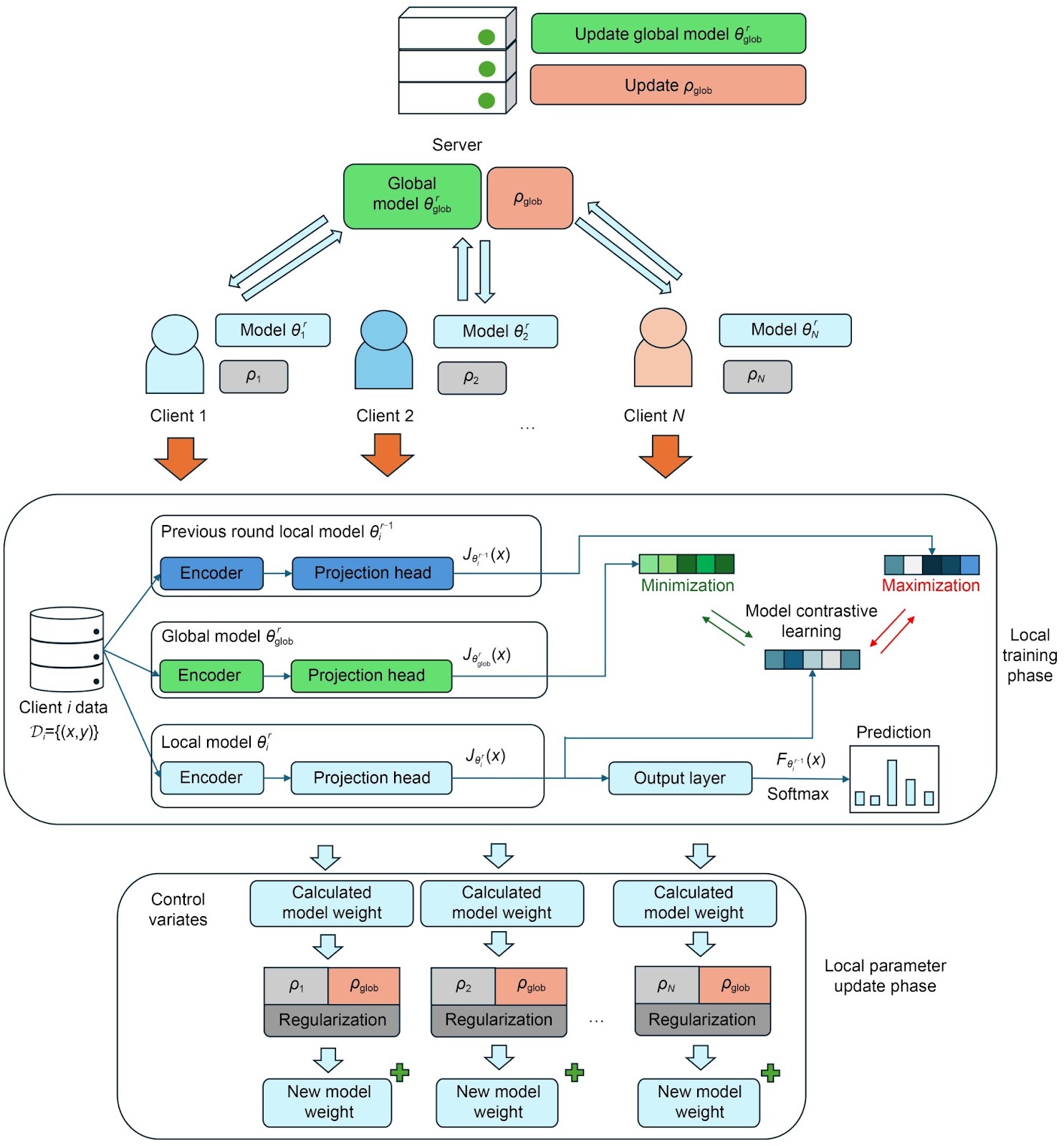
Federated model with contrastive learning and adaptive control variates for human activity recognition
Recent attention to privacy issues demands a communication-safe method for training human activity recognition (HAR) models on client activity data. Federated learning (FL) has become a compelling technique to facilitate model training between the server and clients while preserving data privacy. However, classical FL methods often assume independent and identically distributed (IID) data among clients. This assumption does not hold true in practical scenarios. Human activity in real-world scena