
Key Takeaways & Executive Findings
- •• Proposes GC bypass, a novel architecture that decouples garbage collection from the flash translation layer to reduce long-tail latency in SSDs. • Utilizes dedicated controllers and priority-aware scheduling to ensure user I/O preempts low-priority GC operations, mitigating path conflicts. • Achieves up to 25% reduction in the 99.99th percentile long-tail latency compared to the state-of-the-art Venice scheme. • Maintains the benefits of path diversity while effectively isolating critical I/O from background maintenance tasks.
Abstract
NAND flash-based solid-state drives (SSDs) have been adopted by many data centers due to their high performance and low power consumption. However, the physical characteristics of the underlying flash memory necessitate garbage collection (GC) operations. Valid page migration during GC contributes significantly to latency overhead while competing for flash channel bandwidth and controller resources with user I/O requests through shared physical paths, leading to path conflicts and elevated long-tail latency. The existing Venice scheme introduces a low-cost interconnected network with path reservation mechanisms to provide substantial path diversity for SSDs. Nevertheless, its fair scheduling policy lacks priority differentiation between I/O and GC requests. In this paper, we propose GC bypass, which leverages Venice’s path diversity while enforcing GC request transmission through dedicated controllers. GC bypass decomposes GC requests into sub-requests and assigns low priority to valid page writes, enabling high-priority operations including user I/O, valid page reads, and block erases, to preempt paths reserved by low-priority requests. Valid pages failing to secure reserved paths are temporarily buffered for retry. Experimental results demonstrate that GC bypass reduces the 99.99th percentile long-tail latency by up to 25% compared to Venice. GC bypass effectively mitigates interference between critical I/O operations and background maintenance tasks while maintaining the architectural benefits of path diversity.
1. Introduction
With data-intensive workloads, such as artificial intelligence and high-performance computing, increasingly dominating data centers, NAND flash-based solid-state drives (SSDs) have widely replaced traditional hard disk drives (HDDs) as the primary storage components in data centers. SSDs exhibit significant advantages in multiple aspects due to their superior bandwidth, performance, reliability, and energy efficiency. In data center environments, SSDs face numerous challenges, one of the most critical being the long-tail latency caused by garbage collection (GC). GC not only occupies storage cells within flash chips but also directly competes with user I/O requests on the physical channel bus, leading to temporary suspension of I/O requests and creating a significant performance bottleneck. Although SSDs are designed with multiple independent physical channels connecting flash chips, theoretically enabling parallel processing of multiple requests, when valid page migration operations and user I/O access the same channel or chip simultaneously, SSDs are forced to serialize concurrent requests to serial execution, a phenomenon known as “path conflict.” Path conflicts undermine the parallel advantages of SSD multi-channel architectures and lead to two key performance issues. When GC operations preempt channel resources, interrupted user I/O may experience millisecond-level waiting delays. In sustained write scenarios or when SSDs approach full capacity, frequently triggered GC prolongs the queuing time of I/O requests, resulting in long-tail latency. Additionally, since GC typically employs a threshold-triggered mechanism, its execution causes intermittent I/O performance fluctuations.
To mitigate the long-tail latency caused by GC, researchers focus on optimizing GC firmware algorithms and improving scheduling schemes between GC and I/O. However, firmware-based GC optimization still has limitations: it can operate only within the constraints of the existing hardware architecture and cannot fundamentally alter the allocation and utilization of hardware resources. Moreover, the effectiveness of firmware optimization largely depends on the specific implementation and the quality of the optimization algorithms, which may vary across different SSD manufacturers and models, thereby increasing the difficulty and uncertainty of optimization. Existing studies have proposed various optimization techniques at the logical scheduling level, such as dynamically adjusting the priority weights of GC and user I/O (Lee et al., 2013; Yan et al., 2017; Mao et al., 2018), performing fine-grained GC operations during I/O request intervals (Kang et al., 2017; Paik et al., 2018; Sha et al., 2021), or exploiting intra-flash parallelism by parallelizing GC tasks (Gao et al., 2017, 2020b). While these schemes can partially alleviate resource contention under traditional multi-channel shared bus architectures, they still face inherent limitations due to the lack of dedicated path support.
Loading authentic research manuscript (Pages 1–5)...
Shiqiang NIE, Jie NIU, Yingzhao SHAO, Xiaobo LI, Mingming ZHANG, Weiguo WU (2025). GC bypass: decoupling GC from the flash translation layer to eliminate GC-induced long-tail latency inside SSD. Engineering Information Technology and Electronic Engineering. https://doi.org/10.1631/ENG_ITEE_2025_0152
Research & Educational Purpose Only:The translations, structured abstracts, analytical annotations, and data reports provided by SinoTechIntel are intended exclusively for academic research, internal corporate R&D, and educational benchmarking. They do not constitute formal engineering, chemical safety, legal, or professional advice.
Copyright & Intellectual Property Notice: Original copyright of the underlying source articles and experimental data remains with the respective authors, institutions, and original publishing journals. SinoTechIntel claims intellectual property only over its proprietary translations, analytical syntheses, and AEO structured enhancements in accordance with international fair use and academic citation principles.
Frequently Asked Questions
What is GC bypass in SSDs?
GC bypass is an architecture that decouples garbage collection from the flash translation layer by directing GC requests through dedicated controllers and assigning them low priority, thereby reducing interference with user I/O operations.
How does GC bypass reduce long-tail latency?
By leveraging path diversity and priority-aware scheduling, GC bypass allows high-priority user I/O to preempt low-priority GC operations, reducing path conflicts and minimizing millisecond-level delays that contribute to long-tail latency.
What are the key components of the GC bypass design?
The design decomposes GC requests into sub-requests, assigns low priority to valid page writes, and uses temporary buffering for valid pages that cannot secure reserved paths, while dedicated controllers ensure efficient transmission.
How does GC bypass compare to the Venice scheme?
Unlike Venice's fair scheduling policy, GC bypass introduces priority differentiation between I/O and GC requests, achieving up to 25% reduction in the 99.99th percentile long-tail latency while preserving the benefits of path diversity.
Why is decoupling GC from the flash translation layer important?
Decoupling allows GC operations to be managed independently without competing for resources with user I/O on the same pathways, enhancing SSD performance consistency and reducing tail latency in data center workloads.
Related Technical Papers & Translations
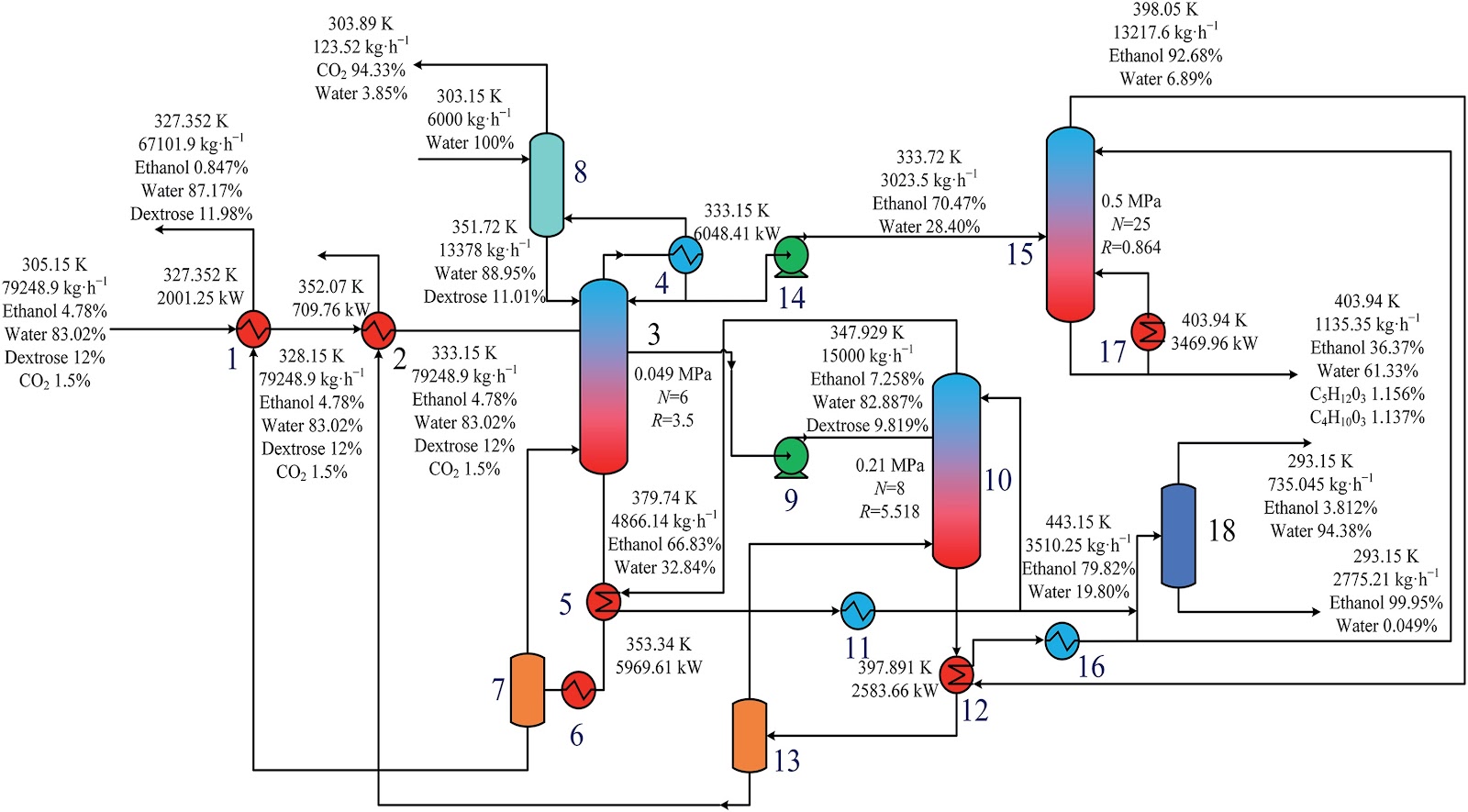
Design and optimization of a high-efficiency distillation process for cellulosic fuel ethanol integrated with thermal coupling and molecular sieve adsorption
To address the challenges of high energy consumption and prominent costs in the traditional three-columns distillation process for cellulosic fuel ethanol, a distillation—molecular sieve coupling separation process is proposed. This process integrates a three-column (crude distillation column, first distillation column, second distillation column) system with a 3A molecular sieve adsorption deep dehydration unit. A thermal coupling network is constructed via differential pressure design (steam from medium/high-pressure columns as mutual heat sources, reboiler liquid waste heat for feed preheating), and molecular sieve adsorption conditions are optimized. The study first performs a thermodynamic consistency test on the ethanol—water system, determines optimal non-random two-liquid (NRTL) model binary interaction parameters via experimental data regression for Aspen Plus simulation. Aiming at minimum total annual cost (TAC), Aspen Plus is used to optimize process parameters (theoretical tray number, feed location, reflux ratio, side-draw position, etc.). Economic analysis shows this process reduces CO2 emission costs by 27.56%, TAC by 15.58% (to 5.123 × 10⁶ USD·a-1), and increases ethanol purity to >99.6%, providing an effective solution for green, efficient separation.
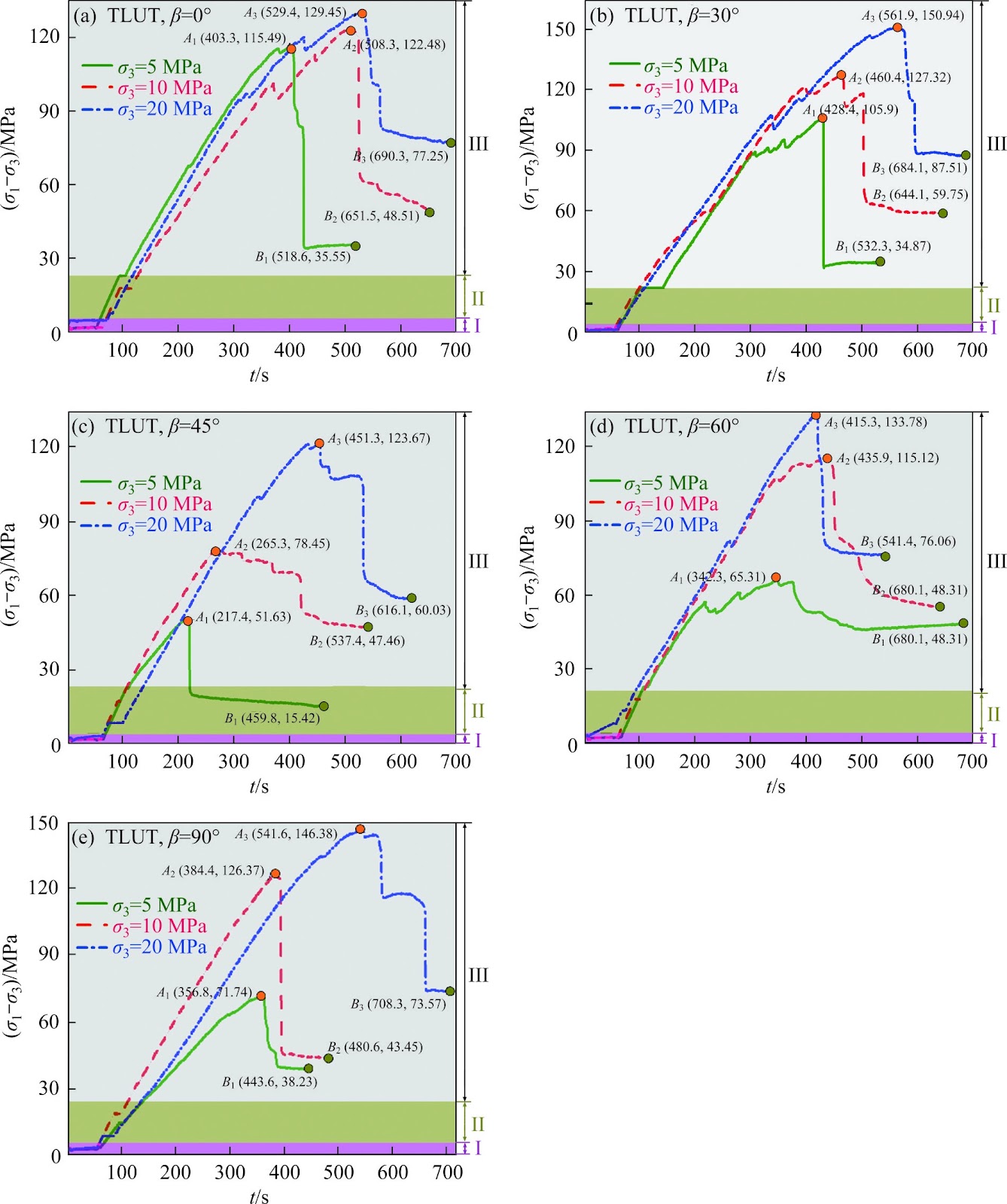
A cohesion loss model for determining residual strength of deep bedded sandstone
Rock residual strength, as an important input parameter, plays an indispensable role in proposing the reasonable and scientific scheme about stope design, underground tunnel excavation and stability evaluation of deep chambers. Therefore, previous residual strength models of rocks established were reviewed. And corresponding related problems were stated. Subsequently, starting from the effects of bedding and whole life-cycle evolution process, series of triaxial mechanical tests of deep bedded s
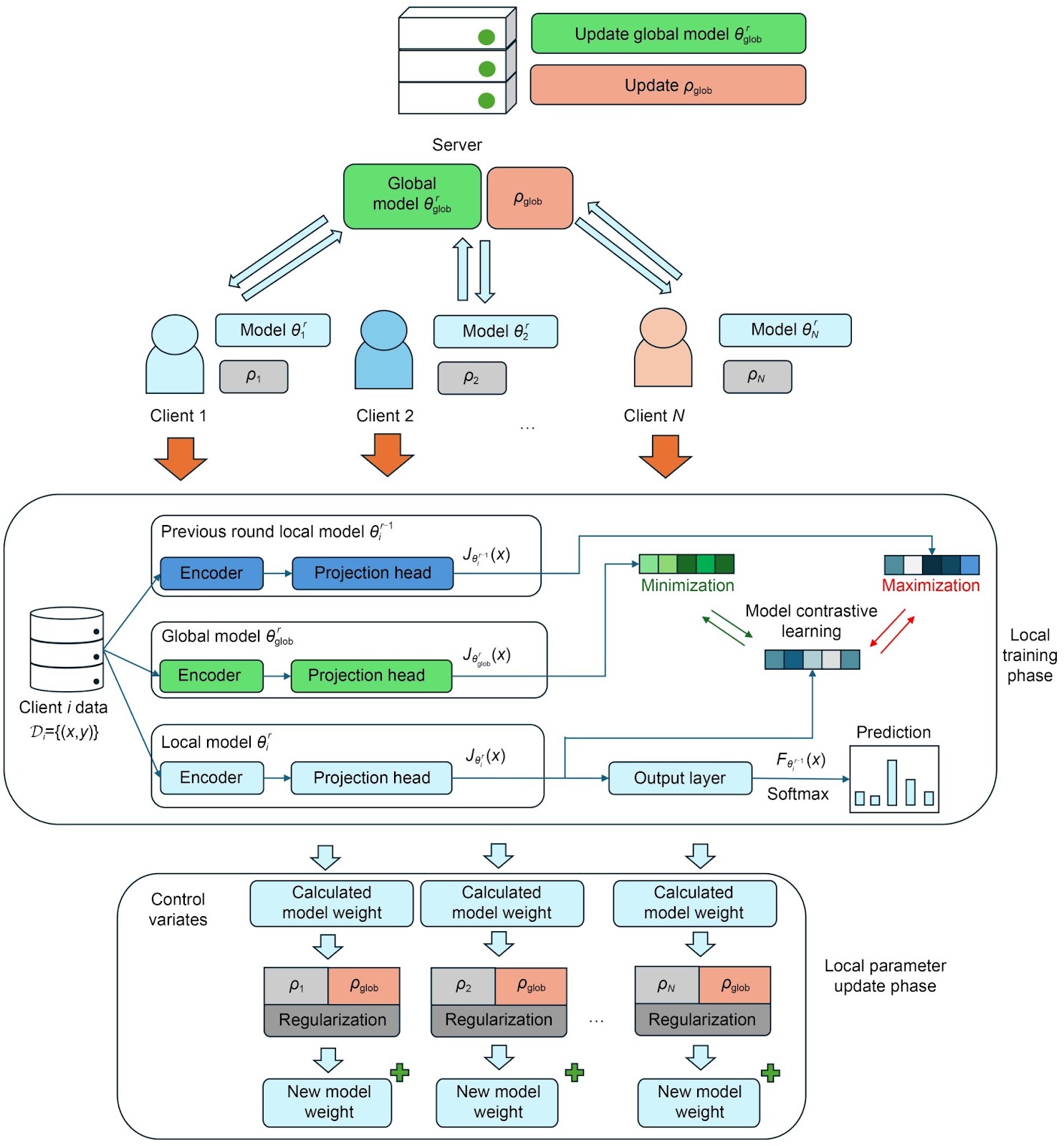
Federated model with contrastive learning and adaptive control variates for human activity recognition
Recent attention to privacy issues demands a communication-safe method for training human activity recognition (HAR) models on client activity data. Federated learning (FL) has become a compelling technique to facilitate model training between the server and clients while preserving data privacy. However, classical FL methods often assume independent and identically distributed (IID) data among clients. This assumption does not hold true in practical scenarios. Human activity in real-world scena