Key Takeaways & Executive Findings
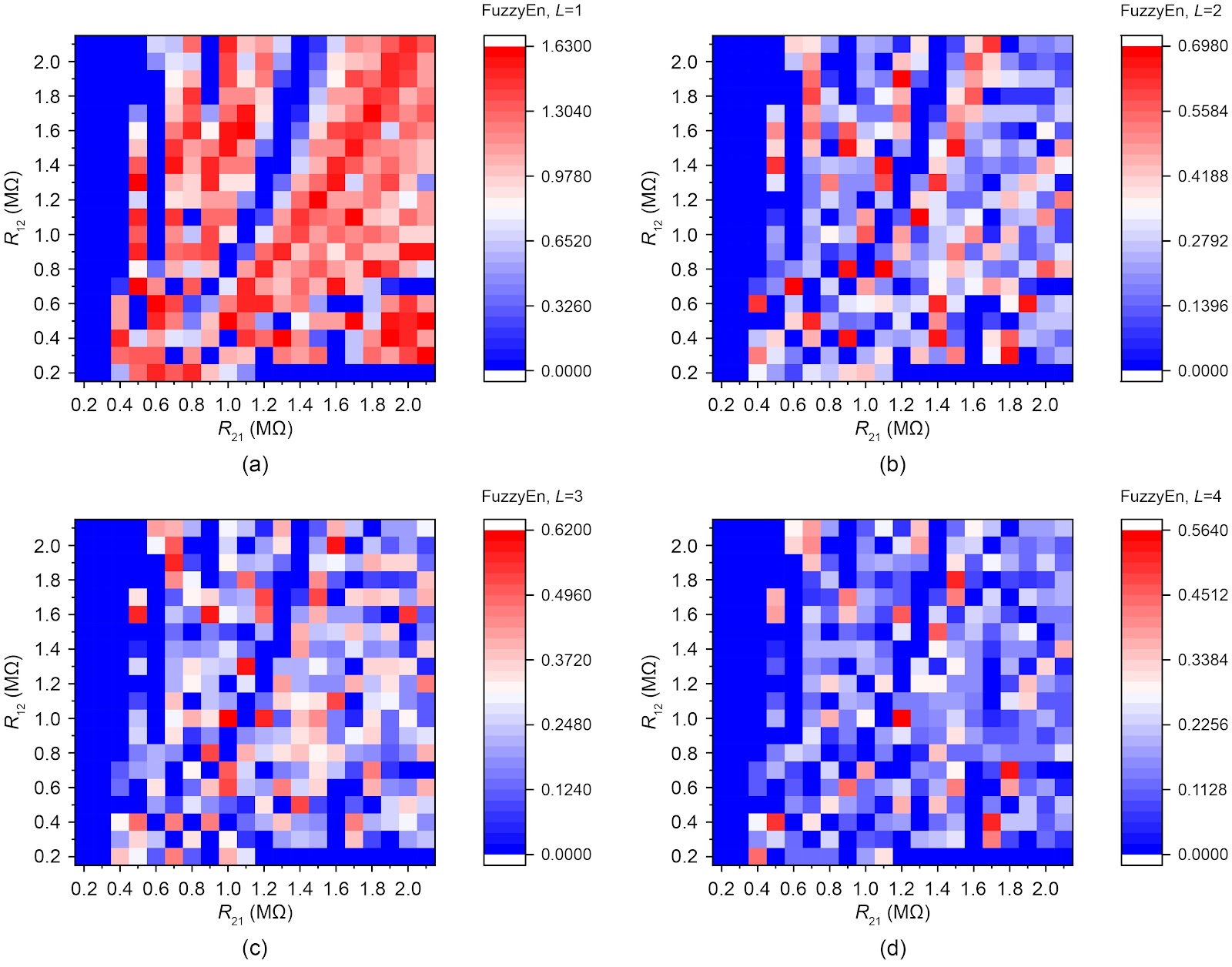
- •• Introduces a novel entropy-statistical approach for phase-locking detection using fuzzy entropy (FuzzyEn) computed from subharmonic ratio (SHR) time series. • Demonstrates that low and high FuzzyEn values correspond to strong and weak synchronization, enabling entropy-map visualization of synchronized modes in resistively coupled pulse oscillators. • Proposes a classification of synchronization states based on the dependency of FuzzyEn on embedding vector length, adding a new diagnostic dimension to synchronization analysis. • Extends the method beyond pulse signals to non-spike data, successfully analyzing phase–phase coupling of rat hippocampal local field potentials, and is lightweight enough for digital mobile platforms.
Abstract
This study proposes a method for analyzing synchronization in oscillator systems, illustrated by modeling the dynamics of a circuit of two resistively coupled pulse oscillators. The dynamic characteristic of synchronization is the fuzzy entropy (FuzzyEn), which is calculated from a time series composed of the ratios of the number of pulse periods (subharmonic ratio, SHR) at phase-locking intervals. Low and high entropy values indicate strong and weak synchronization between the two oscillators, respectively. The proposed method effectively visualizes synchronized modes of the circuit using entropy maps of synchronization states. In addition, a classification of synchronization states is proposed based on the dependency of FuzzyEn on the embedding vector length of the SHR time series. An extension of this method for analyzing non-pulse (non-spike) signals is demonstrated using the example of phase–phase coupling rhythms of the local field potential of the rat hippocampus. The proposed entropy-statistical approach, using integers and pulse signal forms, is well-suited for signal synchronization analysis and can be implemented on digital mobile platforms.
1. Introduction
Synchronization is a fundamental phenomenon that plays a critical role in various fields of science and technology (Pikovsky et al., 2002; Park et al., 2003; Belluscio et al., 2012; Nikonov et al., 2015; Lowet et al., 2016). For example, in all digital communication systems, synchronization is essential for establishing precise phase relationships between the transmission and reception cycles of digital signals (Park et al., 2003). In neurophysiology, neuronal oscillatory synchronization is the basis for information coordination between cortical neural networks (Belluscio et al., 2012; Lowet et al., 2016).
A new direction in neural network technologies, known as oscillator computing, is entirely based on the effect of synchronization (Nikonov et al., 2015; Romera et al., 2018; Chou et al., 2019; Wang and Roychowdhury, 2019; Mallick et al., 2020). For example, the ability to perform vowel classification using the frequency synchronization characteristics of four coupled spin-torque nano-oscillators has been demonstrated (Romera et al., 2018). Chou et al. (2019) and Wang and Roychowdhury (2019) solved the max-cut problem using the synchronization of tank oscillators.
The regular or irregular nature of dynamics in many applied tasks indicates the “correct” or “incorrect” system operation, respectively. Examples include jitter in digital devices, which is a primary source of distortion in frequency synthesizers (Li et al., 2023), anomalies in electrocardiograms (Ramírez et al., 2024), irregularities in the rotational speed of gears and motors (Bonet-Jara et al., 2021; Cui et al., 2024), and irregularities in earthquake precursors (Biagi et al., 2001). Signal regularity is typically assessed by calculating the signal entropy, such as fuzzy (Ishikawa and Mieno, 1979), sample (Delgado-Bonal and Marshak, 2019), or singular value decomposition (Alter et al., 2000) entropy indicators. The synchronization of oscillations in interacting systems is closely related to the regularity of their joint dynamics. Therefore, entropy calculation is a promising approach for detecting and analyzing oscillation synchronization.
Loading authentic research manuscript (Pages 1–5)...
Petr BORISKOV, Vadim PUTROLAYNEN, Andrei VELICHKO, Kristina PELTONEN (2025). Entropy-statistical approach to phase-locking detection of oscillations. Frontiers of Information Technology & Electronic Engineering. https://doi.org/10.1631/FITEE_2500402
Research & Educational Purpose Only:The translations, structured abstracts, analytical annotations, and data reports provided by SinoTechIntel are intended exclusively for academic research, internal corporate R&D, and educational benchmarking. They do not constitute formal engineering, chemical safety, legal, or professional advice.
Copyright & Intellectual Property Notice: Original copyright of the underlying source articles and experimental data remains with the respective authors, institutions, and original publishing journals. SinoTechIntel claims intellectual property only over its proprietary translations, analytical syntheses, and AEO structured enhancements in accordance with international fair use and academic citation principles.
Frequently Asked Questions
What is the entropy-statistical approach to phase-locking detection?
It is a method that uses fuzzy entropy (FuzzyEn) calculated from a time series of subharmonic ratios (SHR) at phase-locking intervals to detect and visualize synchronization in oscillator systems, including resistive coupled pulse oscillators.
How does fuzzy entropy indicate synchronization strength?
Low FuzzyEn values indicate strong synchronization between oscillators, while high values indicate weak or absent synchronization. Entropy maps built from these values effectively visualize synchronized modes.
What is the subharmonic ratio (SHR) in this method?
SHR is the ratio of the number of pulse periods of two interacting oscillators at phase-locking intervals. The time series of SHR values is used as the input for fuzzy entropy calculation.
Can this method be applied to non-pulse signals?
Yes. The authors demonstrate its extension to non-pulse (non-spike) signals using phase–phase coupling rhythms of local field potentials from the rat hippocampus, showing broad applicability.
Why is the proposed method suitable for mobile digital platforms?
The method uses simple integer-based and pulse-signal computations, making it lightweight and easily implementable on microcontrollers and other digital mobile platforms with low computing resources.
Related Technical Papers & Translations
Design and optimization of a high-efficiency distillation process for cellulosic fuel ethanol integrated with thermal coupling and molecular sieve adsorption
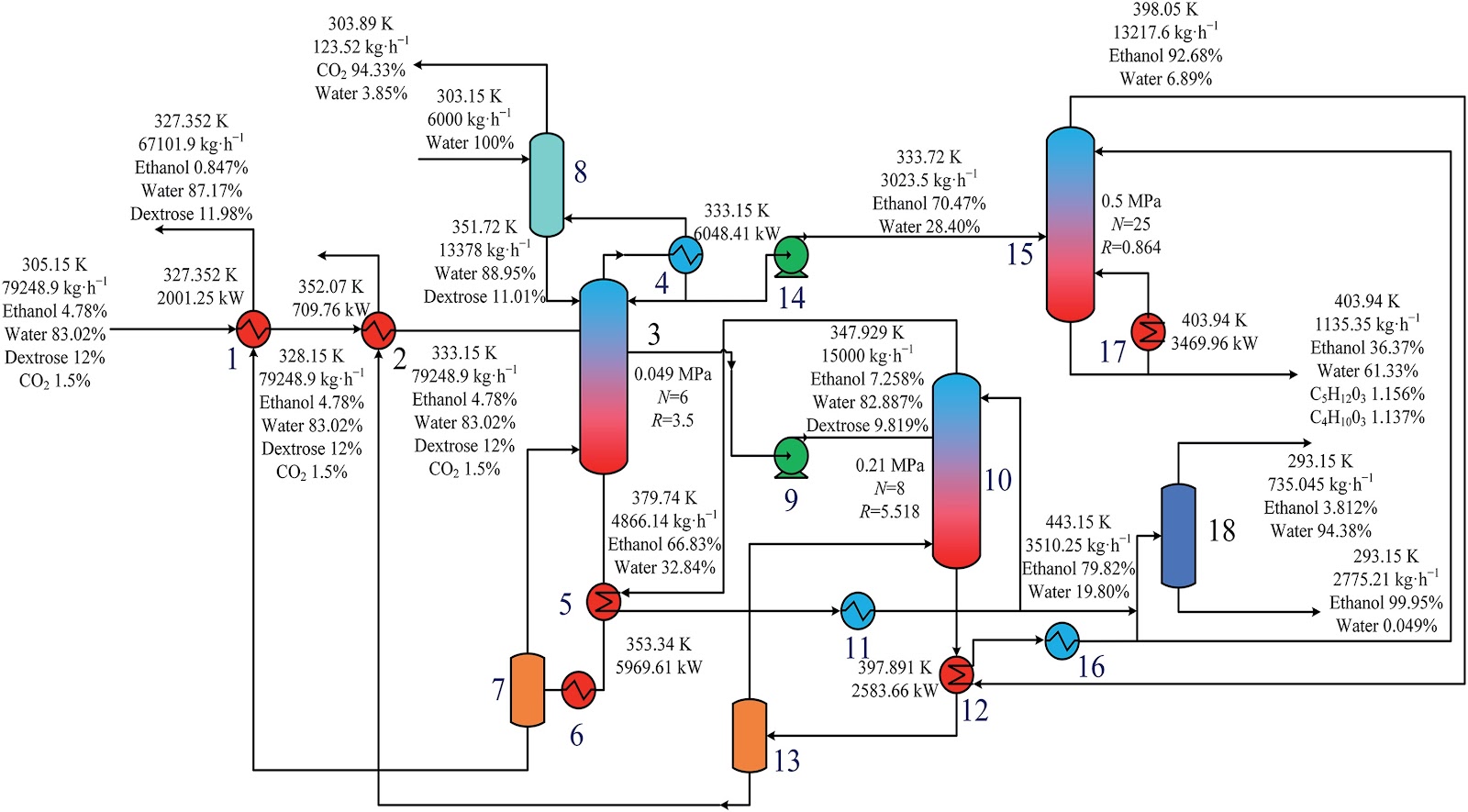
To address the challenges of high energy consumption and prominent costs in the traditional three-columns distillation process for cellulosic fuel ethanol, a distillation—molecular sieve coupling separation process is proposed. This process integrates a three-column (crude distillation column, first distillation column, second distillation column) system with a 3A molecular sieve adsorption deep dehydration unit. A thermal coupling network is constructed via differential pressure design (steam from medium/high-pressure columns as mutual heat sources, reboiler liquid waste heat for feed preheating), and molecular sieve adsorption conditions are optimized. The study first performs a thermodynamic consistency test on the ethanol—water system, determines optimal non-random two-liquid (NRTL) model binary interaction parameters via experimental data regression for Aspen Plus simulation. Aiming at minimum total annual cost (TAC), Aspen Plus is used to optimize process parameters (theoretical tray number, feed location, reflux ratio, side-draw position, etc.). Economic analysis shows this process reduces CO2 emission costs by 27.56%, TAC by 15.58% (to 5.123 × 10⁶ USD·a-1), and increases ethanol purity to >99.6%, providing an effective solution for green, efficient separation.
A cohesion loss model for determining residual strength of deep bedded sandstone
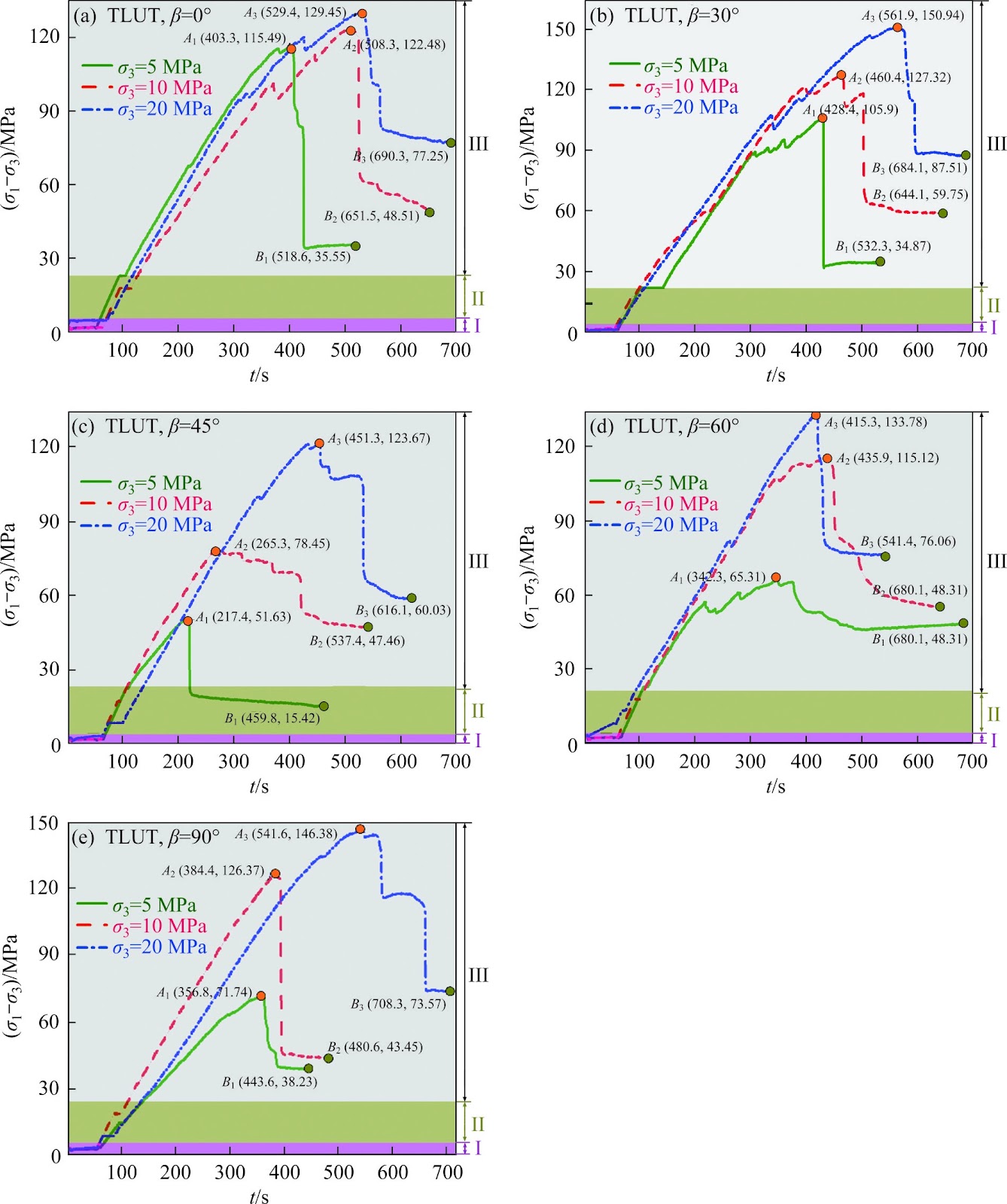
Rock residual strength, as an important input parameter, plays an indispensable role in proposing the reasonable and scientific scheme about stope design, underground tunnel excavation and stability evaluation of deep chambers. Therefore, previous residual strength models of rocks established were reviewed. And corresponding related problems were stated. Subsequently, starting from the effects of bedding and whole life-cycle evolution process, series of triaxial mechanical tests of deep bedded s
Federated model with contrastive learning and adaptive control variates for human activity recognition
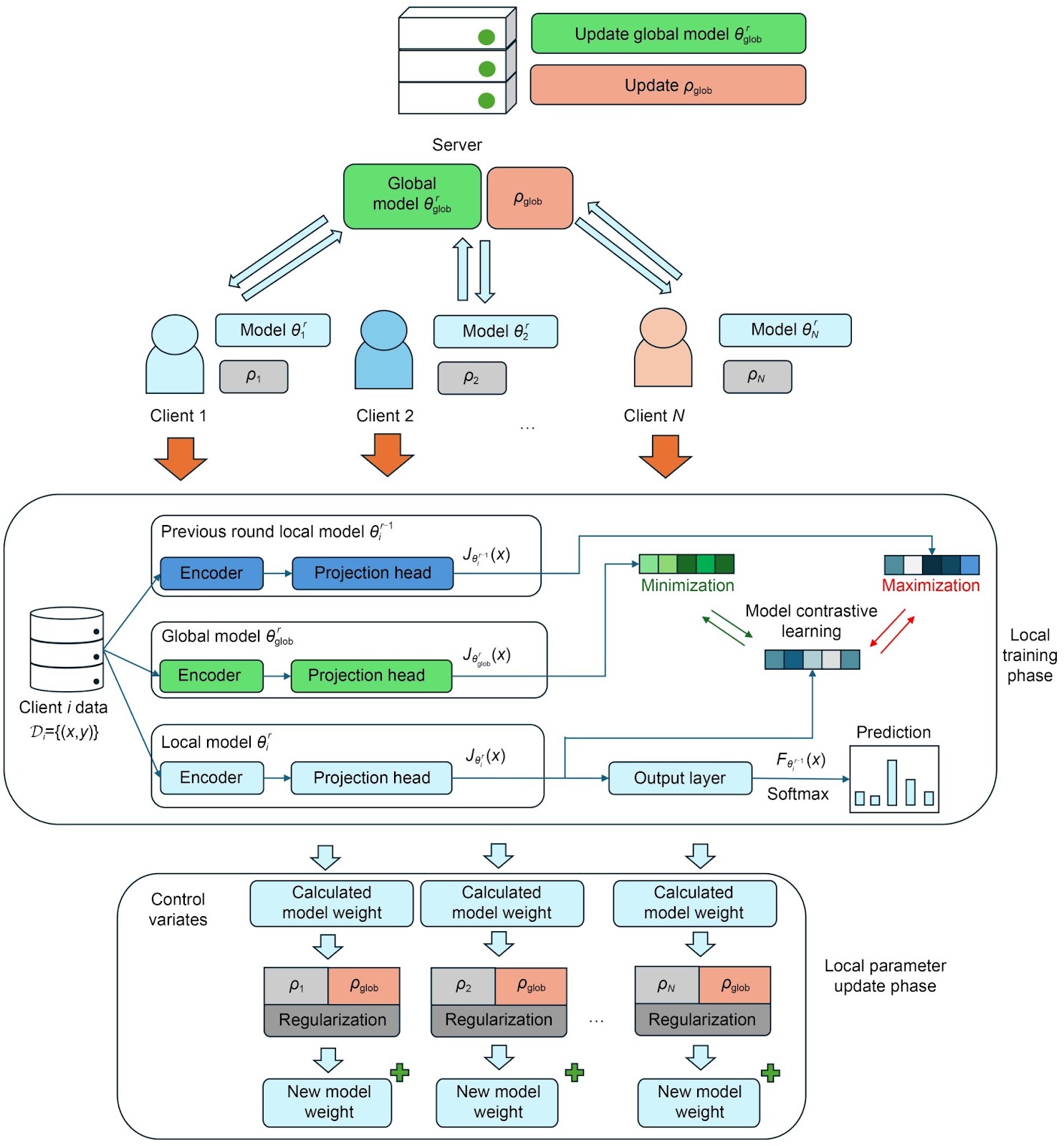
Recent attention to privacy issues demands a communication-safe method for training human activity recognition (HAR) models on client activity data. Federated learning (FL) has become a compelling technique to facilitate model training between the server and clients while preserving data privacy. However, classical FL methods often assume independent and identically distributed (IID) data among clients. This assumption does not hold true in practical scenarios. Human activity in real-world scena