Key Takeaways & Executive Findings
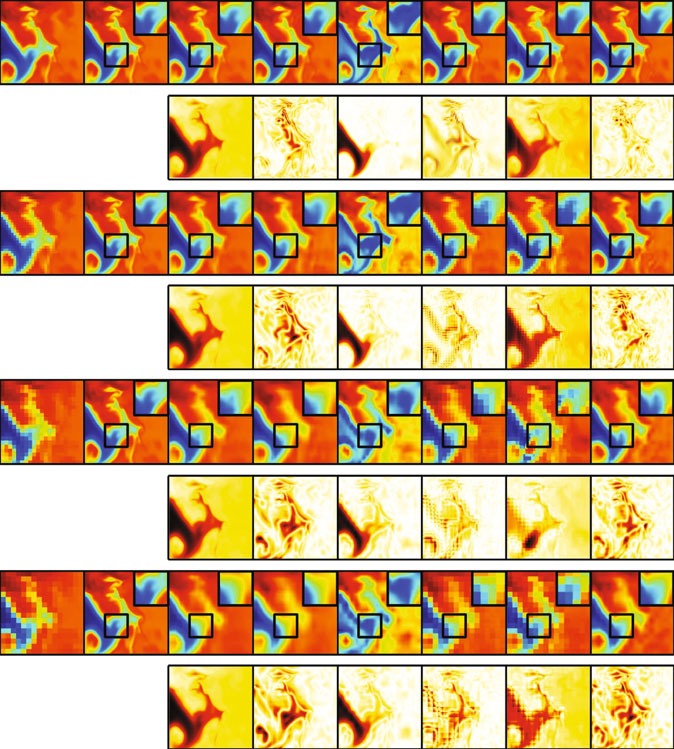
- •• Proposes HADF, a hash-adaptive dynamic fusion implicit network that reconstructs high-resolution turbulent flows from low-resolution inputs, addressing paired-data scarcity and multi-scale requirements. • Introduces a low-resolution consistency loss enabling training with partially unpaired datasets, eliminating the need for perfectly matched LR/HR pairs. • Employs hash-adaptive spatial encoding and dynamic feature fusion with implicit neural representations, allowing arbitrary-resolution reconstruction in a unified framework. • Demonstrates superior global and local reconstruction accuracy, robustness to noise, and one-time training for diverse resolutions, significantly reducing computational costs of turbulence data acquisition.
Abstract
Turbulence, a complex multi-scale phenomenon inherent in fluid flow systems, presents critical challenges and opportunities for understanding physical mechanisms across scientific and engineering domains. Although high-resolution (HR) turbulence data remain indispensable for advancing both theoretical insights and engineering solutions, their acquisition is severely limited by prohibitively high computational costs. While deep learning architectures show transformative potential in reconstructing high-fidelity flow representations from sparse measurements, current methodologies suffer from two inherent constraints: strict reliance on perfectly paired training data and inability to perform multi-scale reconstruction within a unified framework. To address these challenges, we propose HADF, a hash-adaptive dynamic fusion implicit network for turbulence reconstruction. Specifically, we develop a low-resolution (LR) consistency loss that facilitates effective model training under conditions of missing paired data, eliminating the conventional requirement for fully matched LR and HR datasets. We further employ hash-adaptive spatial encoding and dynamic feature fusion to extract turbulence features, mapping them with implicit neural representations for reconstruction at arbitrary resolutions. Experimental results demonstrate that HADF achieves superior performance in global reconstruction accuracy and local physical properties compared to state-of-the-art models. It precisely recovers fine turbulence details for partially unpaired data conditions and diverse resolutions by training only once while maintaining robustness against noise.
1. Introduction
Turbulence is present in diverse engineering and natural systems, including aerospace propulsion, combustion engines, wind energy infrastructure, and atmospheric dynamics (Davidson, 2015). The inherent nonlinearity and multiscale characteristics of turbulent flows significantly influence system performance and stability (Wang et al., 2022). A comprehensive understanding of turbulent processes is therefore critical for optimizing system design and driving technological innovation. To resolve the intricate details of turbulence, acquiring high-resolution (HR) data has become imperative which provides the foundation for accurate characterization and modeling of these dynamic phenomena.
Turbulence data can be directly obtained through professional measurement techniques, such as tomography (Pareja et al., 2019) and laser diagnostics (Liu N and Ma, 2020). These approaches are constrained by instrument precision and experimental complexity, preventing them from fully capturing the HR details of turbulent flows (Liu HC et al., 2019). Alternatively, scientific computing approaches have been developed to simulate complex turbulent flows. These methods resolve the physical conservation equations over fine-grained computational grids to capture HR turbulence structures (Chen XH et al., 2021b). Nevertheless, they typically require complex mesh generation and expensive numerical iterations, leading to substantial computational costs (Cant et al., 2022; Chen XH et al., 2024).
Super-resolution reconstruction provides an optional strategy to address the limitations by recovering HR turbulent flows from low-resolution (LR) inputs (Fukami et al., 2023). Traditional methods, such as interpolation, are commonly employed to generate HR outputs by estimating intermediate values from surrounding LR data. However, because these methods rely only on simplistic data calculations without accounting for relevant physical constraints, they fail to reconstruct the nonlinear turbulent features governed by the Navier–Stokes equations. Recently, deep learning techniques have been employed to extract features from LR data and upsample these latent features to reconstruct HR flow fields (Fukami et al., 2019). By capturing the complex and nonlinear characteristics of turbulent flows, deep learning methods enable accurate reconstruction of intricate turbulence details.
Loading authentic research manuscript (Pages 1–5)...
Yunfei LIU, Xinhai CHEN, Gen ZHANG, Qingyang ZHANG, Qinglin WANG, Jie LIU (2025). HADF: a hash-adaptive dual fusion implicit network for super-resolution of turbulent flows. Frontiers of Information Technology & Electronic Engineering. https://doi.org/10.1631/FITEE_2500419
Research & Educational Purpose Only:The translations, structured abstracts, analytical annotations, and data reports provided by SinoTechIntel are intended exclusively for academic research, internal corporate R&D, and educational benchmarking. They do not constitute formal engineering, chemical safety, legal, or professional advice.
Copyright & Intellectual Property Notice: Original copyright of the underlying source articles and experimental data remains with the respective authors, institutions, and original publishing journals. SinoTechIntel claims intellectual property only over its proprietary translations, analytical syntheses, and AEO structured enhancements in accordance with international fair use and academic citation principles.
Frequently Asked Questions
What is the key innovation of the HADF network?
HADF is a hash-adaptive dynamic fusion implicit network that reconstructs high-resolution turbulent flows from low-resolution data. It removes the need for perfectly paired LR-HR training data by using a low-resolution consistency loss, and supports arbitrary resolution reconstruction through implicit neural representations.
How does HADF handle unpaired training data?
It introduces a low-resolution (LR) consistency loss that allows effective training even when only partially matched LR and HR datasets are available, eliminating the strict requirement for fully paired samples.
What are the main advantages of HADF compared to existing super-resolution models?
HADF achieves superior global reconstruction accuracy and preserves local physical properties, while maintaining robustness to noise. It also enables multi-scale reconstruction from a single trained model, reducing computational costs.
What is the significance of turbulence super-resolution in engineering?
High-resolution turbulence data are crucial for understanding fluid dynamics in aerospace, combustion, wind energy, and atmospheric systems. HADF provides a cost-effective way to obtain accurate HR flow fields from sparse LR measurements, supporting better system design and analysis.
Which applications can benefit from HADF?
Any field requiring high-fidelity turbulence data—such as aerospace propulsion, combustion engines, wind energy infrastructure, and atmospheric modeling—can benefit from HADF's efficient and robust super-resolution capabilities.
Related Technical Papers & Translations
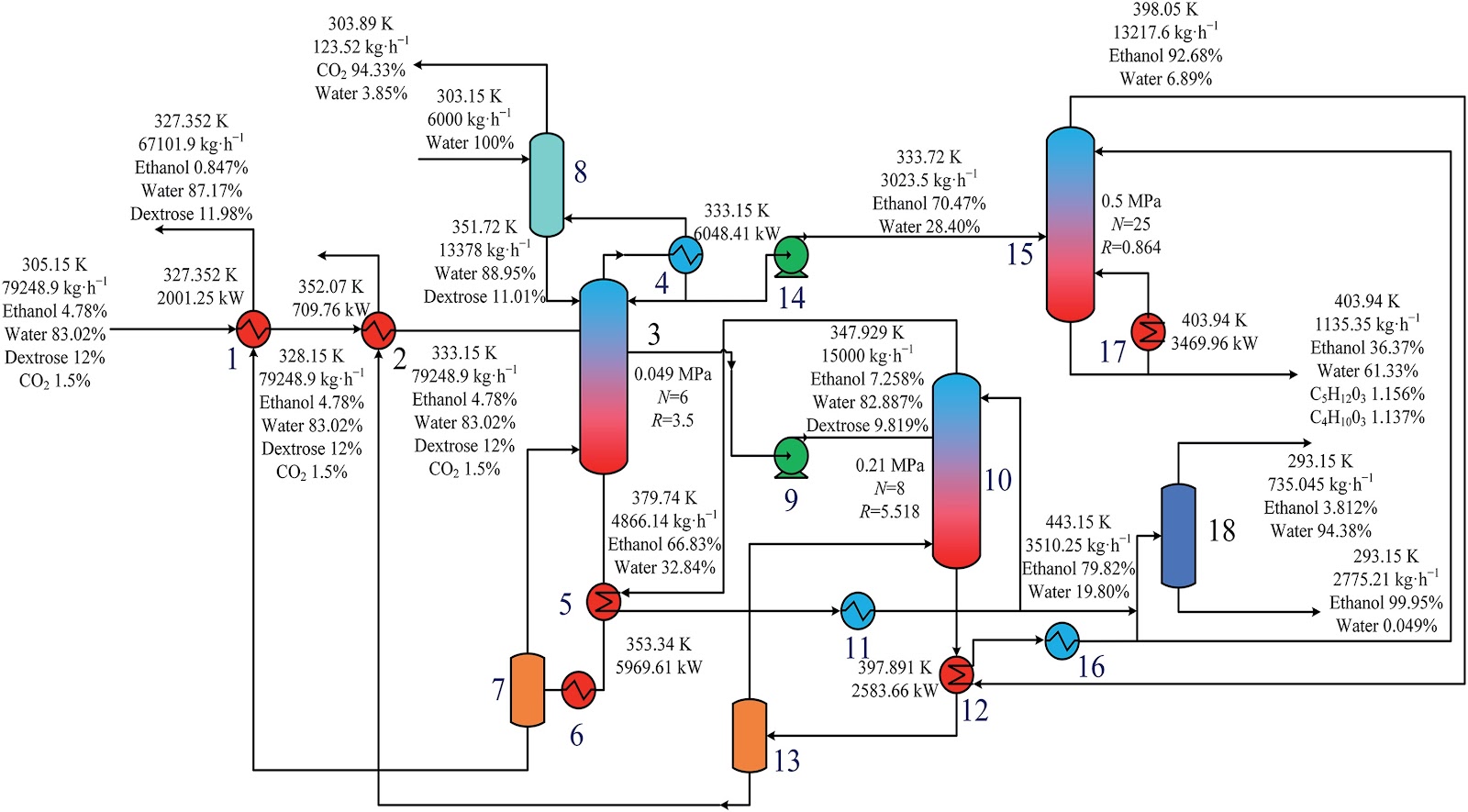
Design and optimization of a high-efficiency distillation process for cellulosic fuel ethanol integrated with thermal coupling and molecular sieve adsorption
To address the challenges of high energy consumption and prominent costs in the traditional three-columns distillation process for cellulosic fuel ethanol, a distillation—molecular sieve coupling separation process is proposed. This process integrates a three-column (crude distillation column, first distillation column, second distillation column) system with a 3A molecular sieve adsorption deep dehydration unit. A thermal coupling network is constructed via differential pressure design (steam from medium/high-pressure columns as mutual heat sources, reboiler liquid waste heat for feed preheating), and molecular sieve adsorption conditions are optimized. The study first performs a thermodynamic consistency test on the ethanol—water system, determines optimal non-random two-liquid (NRTL) model binary interaction parameters via experimental data regression for Aspen Plus simulation. Aiming at minimum total annual cost (TAC), Aspen Plus is used to optimize process parameters (theoretical tray number, feed location, reflux ratio, side-draw position, etc.). Economic analysis shows this process reduces CO2 emission costs by 27.56%, TAC by 15.58% (to 5.123 × 10⁶ USD·a-1), and increases ethanol purity to >99.6%, providing an effective solution for green, efficient separation.
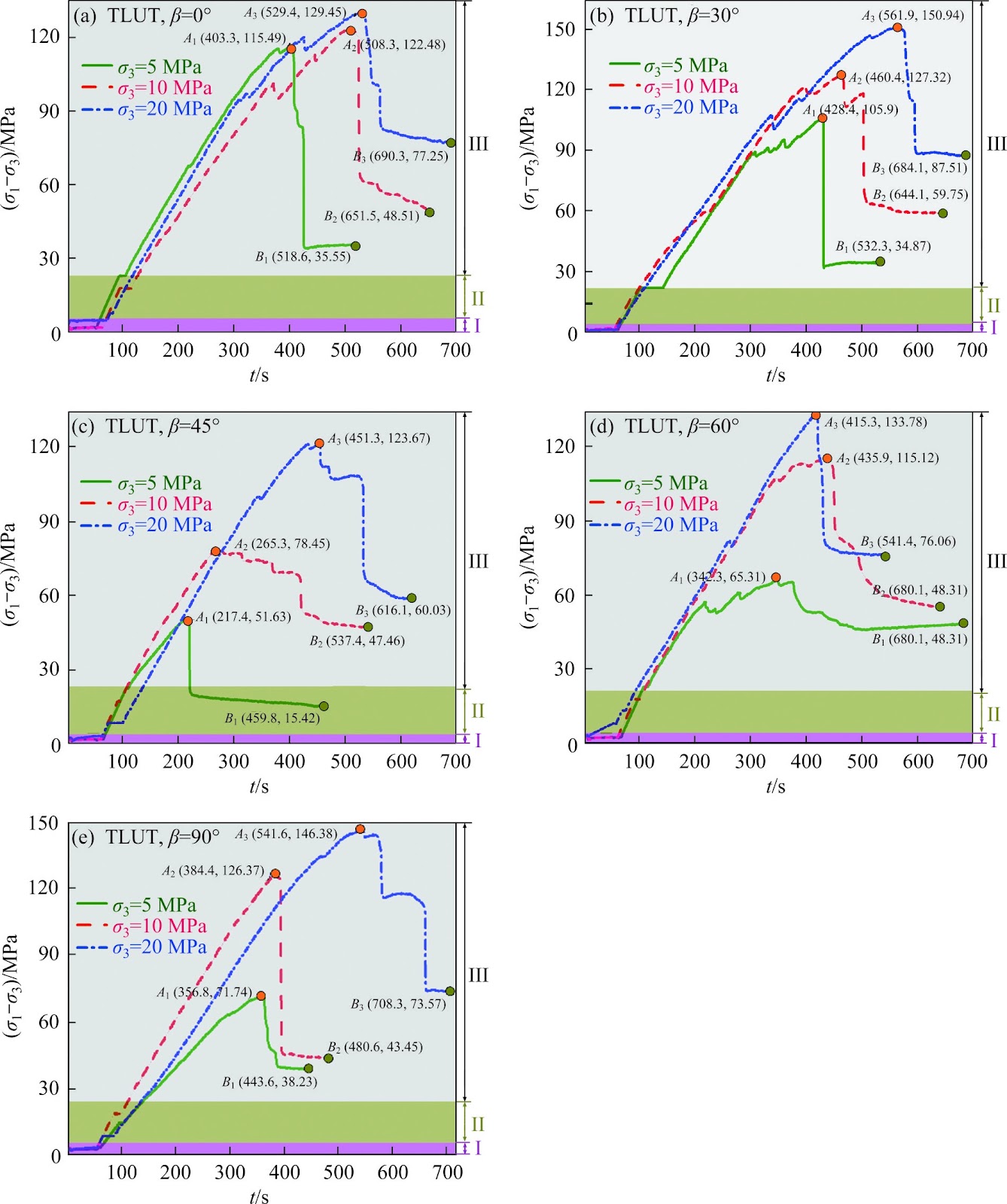
A cohesion loss model for determining residual strength of deep bedded sandstone
Rock residual strength, as an important input parameter, plays an indispensable role in proposing the reasonable and scientific scheme about stope design, underground tunnel excavation and stability evaluation of deep chambers. Therefore, previous residual strength models of rocks established were reviewed. And corresponding related problems were stated. Subsequently, starting from the effects of bedding and whole life-cycle evolution process, series of triaxial mechanical tests of deep bedded s
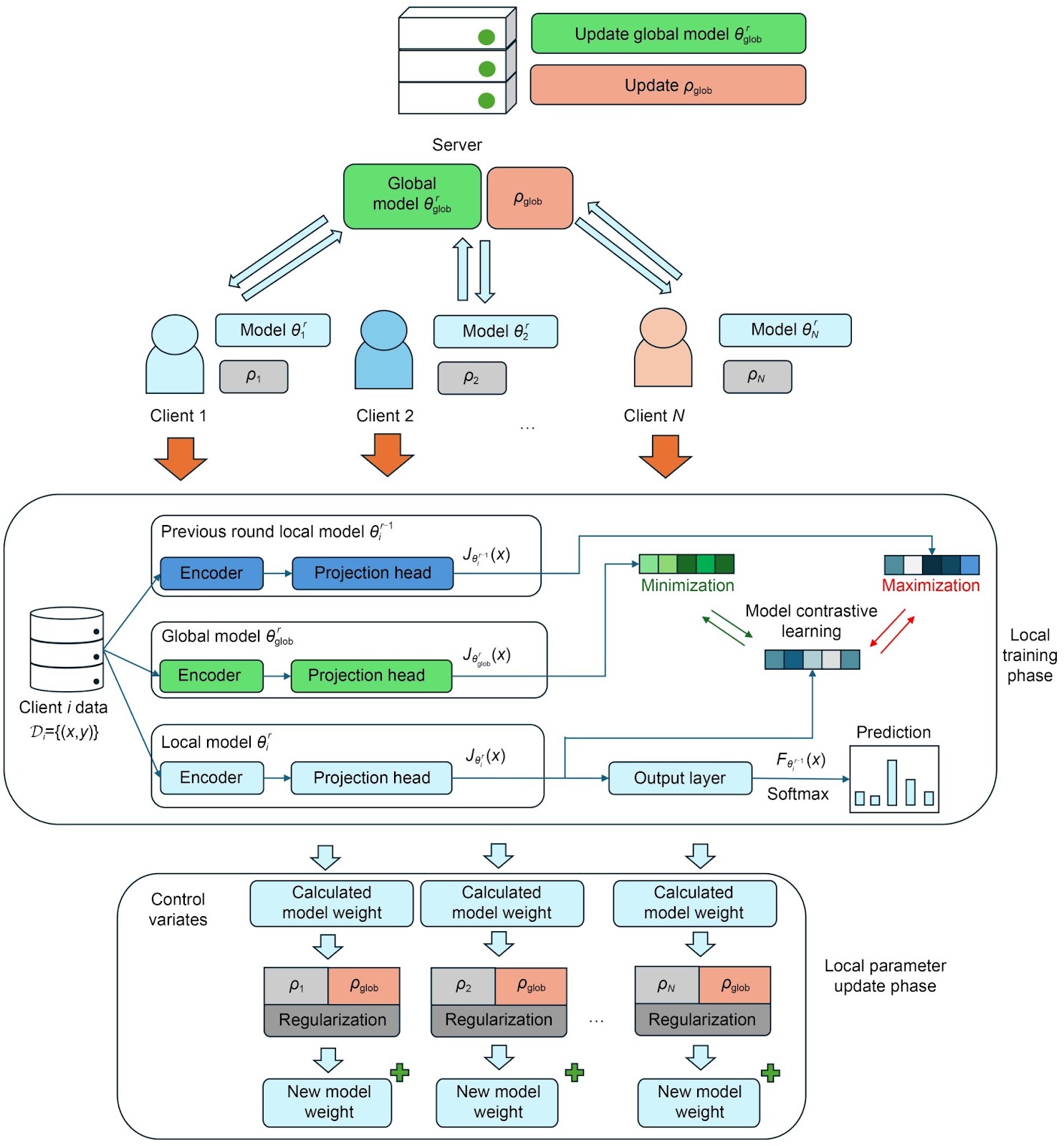
Federated model with contrastive learning and adaptive control variates for human activity recognition
Recent attention to privacy issues demands a communication-safe method for training human activity recognition (HAR) models on client activity data. Federated learning (FL) has become a compelling technique to facilitate model training between the server and clients while preserving data privacy. However, classical FL methods often assume independent and identically distributed (IID) data among clients. This assumption does not hold true in practical scenarios. Human activity in real-world scena