Key Takeaways & Executive Findings
- •• Proposes a novel active low-altitude target detection method based on the cat's eye effect, integrating MEMS mirrors and APD for high-sensitivity echo reception. • Combines local pyramid attention (LPA) and field pyramid network (FPN) with SKNet21 to suppress false alarms and enhance small-target identification. • Achieves mean average precision of 0.809 at IoU 0.50 and 0.324 at IoU 0.50–0.95, with a throughput of 49.8 GFLOPs, demonstrating feasibility and efficiency. • Addresses critical limitations in current LSS UAV detection, including false alarm reduction and improved detection accuracy in complex environments.
Abstract
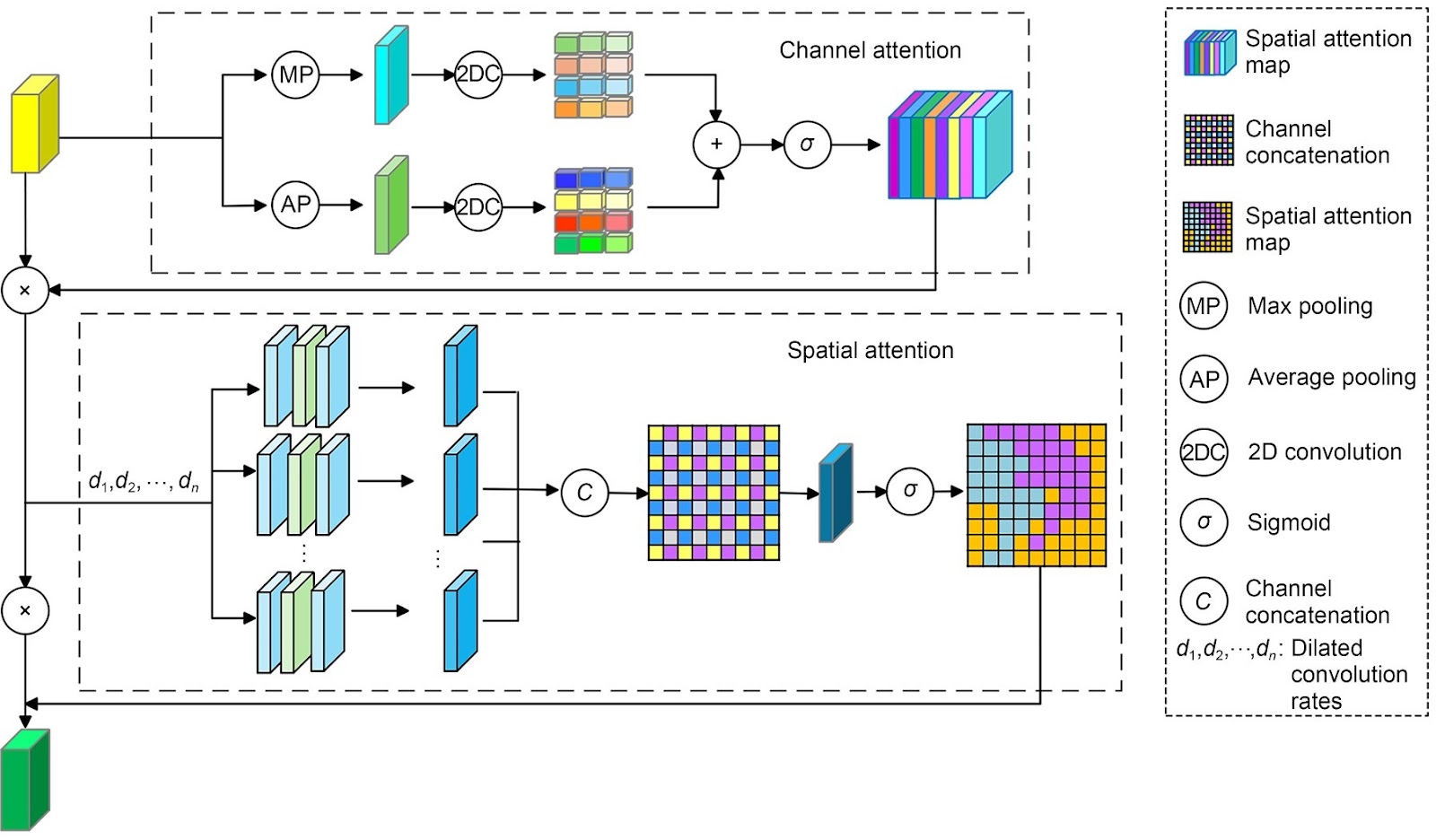
This paper addresses the urgent need to detect low, slow, and small (LSS) unmanned aerial vehicles (UAVs) in complex and critical environments, proposing an active low-altitude target detection method based on the cat’s eye effect. The detection system incorporates a control module, a laser emission component, a co-optical path panoramic scanning optical mechanism structure, an echo reception component, target detection, and visualization processing to achieve small target detection. The light source is emitted by a near-infrared laser, and the scanning optical path is realized using micro-electro-mechanical system (MEMS) mirrors and servo mechanisms. The echo reception signal is received by an avalanche photodiode (APD) and the target detection module, which captures the reflected signal and distance information. The detection software integrates the local pyramid attention (LPA) module and the field pyramid network (FPN) through the UAV micro lens identification algorithm. It eliminates false alarms by incorporating SKNet21 and uses the APD to collect echo intensity and flight time, thereby reducing the false alarm rate. The results demonstrate the feasibility of the proposed target detection method, which achieves a mean average precision of 0.809 at an intersection over union (IoU) of 0.50, a mean average precision of 0.324 at an IoU of 0.50–0.95, and a throughput of 49.8 Giga floating-point operations per second (GFLOPs), indicating that it can address the current limitations in LSS target detection.
1. Introduction
Low, slow, and small (LSS) targets, primarily represented by unmanned aerial vehicles (UAVs), typically refer to flying objects with low flight altitudes, slow movement speeds, and a small radar cross-section (Bishop and Tufariello, 2019). Currently, the primary methods for detecting UAVs include radar detection, radio spectrum detection, and acoustic wave detection (Farlik et al., 2019; Liaquat et al., 2024; Zakaria et al., 2024; Wang XW et al., 2025). Radar can detect targets in various weather conditions, is less susceptible to electromagnetic interference, and can track and locate multiple targets over long distances. However, radar detection of low-altitude micro UAVs necessitates the effective filtering of clutter interference or suppression of the multipath effect due to these vehicles’ small radar cross-section, significant electromagnetic wave echo interference, and severe multipath effect (Bao et al., 2025; Figueiredo et al., 2025). The echo signals also need to be processed in a refined manner. Radio spectrum detection technology can distinguish a UAV’s model by analyzing its unique radio frequency characteristics, and can determine its intentions when combined with artificial intelligence (AI). This technology can effectively reduce the false alarm rate, but it relies on the communication between UAVs, resulting in a significant reduction in the detection rate. Additionally, its detection range is limited and significantly affected by the surrounding electromagnetic environment. Thus, the use of radio spectrum detection technology should be coordinated with radar and electro-optical systems to form a “detection–identification–attack” closed loop (Zhang WH et al., 2025). Finally, acoustic wave detection technology for low-altitude UAVs can achieve passive detection; however, the detection range is limited to small areas with low accuracy (Goldman, 2016). Currently, UAVs are used in both military and civilian contexts due to their economic benefits and flexibility. While they have benefited the public, they have also led to numerous illegal data collection and criminal activities, making it necessary to develop a method for detecting low-altitude LSS UAVs.
Numerous algorithms have been proposed in the field of target detection and recognition, particularly for detecting UAVs (Li et al., 2021; Liu YC et al., 2021; Liu BL and Luo, 2022; AlKhonaini et al., 2024; Rahman et al., 2024; Randieri et al., 2025; Zheng et al., 2025). Anti-UAV technology can be classified as UAV recognition, positioning, or interception technologies (Xu and Luo, 2025). In recent years, Zhang QQ et al. (2024) have proposed an improved small target detection method based on Picodet to address the real-time issue of UAV detection. They enhanced detection accuracy by refining the feature pyramid structure.
Loading authentic research manuscript (Pages 1–5)...
Bin Zhou, Weiming Wang, Ning Yan, Linlin Zhao, Chuanzhen Li (2025). Integrating the cat’s eye effect and deep learning for low-altitude target detection. Frontiers of Information Technology & Electronic Engineering. https://doi.org/10.1631/FITEE_2500522
Research & Educational Purpose Only:The translations, structured abstracts, analytical annotations, and data reports provided by SinoTechIntel are intended exclusively for academic research, internal corporate R&D, and educational benchmarking. They do not constitute formal engineering, chemical safety, legal, or professional advice.
Copyright & Intellectual Property Notice: Original copyright of the underlying source articles and experimental data remains with the respective authors, institutions, and original publishing journals. SinoTechIntel claims intellectual property only over its proprietary translations, analytical syntheses, and AEO structured enhancements in accordance with international fair use and academic citation principles.
Frequently Asked Questions
What is the cat's eye effect in the context of this research?
The cat's eye effect refers to the optical phenomenon where a retroreflective surface, such as a UAV's lens or camera, reflects light back toward the source. This effect is exploited in the proposed detection system by emitting a near-infrared laser and detecting the reflected signal to identify low-altitude UAVs, even those with small radar cross-sections.
How does the proposed detection system work?
The system integrates a control module, a laser emission component, a co-optical path panoramic scanning optical mechanism using MEMS mirrors and servo mechanisms, an echo reception component with an avalanche photodiode (APD), and a target detection and visualization module. The near-infrared laser scans the environment, and the APD captures reflected signals and distance information, which are then processed by a deep learning algorithm to identify UAVs and reduce false alarms.
What deep learning components are integrated into the detection algorithm?
The detection software integrates the local pyramid attention (LPA) module and the field pyramid network (FPN) through a UAV micro lens identification algorithm. It incorporates SKNet21 to eliminate false alarms and uses the APD to collect echo intensity and flight time, enhancing detection precision.
What performance metrics are achieved by the proposed method?
The method achieves a mean average precision of 0.809 at an intersection over union (IoU) of 0.50, a mean average precision of 0.324 at an IoU of 0.50–0.95, and a throughput of 49.8 GFLOPs, demonstrating its feasibility and efficiency for LSS target detection.
What are the advantages of this method over traditional UAV detection approaches?
Unlike radar, radio spectrum, and acoustic methods, the cat's eye effect-based active optical detection offers a complementary approach with high sensitivity and low false alarm rate, especially for small, low-altitude UAVs. The integration of deep learning further enhances detection accuracy and real-time performance, addressing limitations of existing methods in complex environments.
Related Technical Papers & Translations

Design and optimization of a high-efficiency distillation process for cellulosic fuel ethanol integrated with thermal coupling and molecular sieve adsorption
To address the challenges of high energy consumption and prominent costs in the traditional three-columns distillation process for cellulosic fuel ethanol, a distillation—molecular sieve coupling separation process is proposed. This process integrates a three-column (crude distillation column, first distillation column, second distillation column) system with a 3A molecular sieve adsorption deep dehydration unit. A thermal coupling network is constructed via differential pressure design (steam from medium/high-pressure columns as mutual heat sources, reboiler liquid waste heat for feed preheating), and molecular sieve adsorption conditions are optimized. The study first performs a thermodynamic consistency test on the ethanol—water system, determines optimal non-random two-liquid (NRTL) model binary interaction parameters via experimental data regression for Aspen Plus simulation. Aiming at minimum total annual cost (TAC), Aspen Plus is used to optimize process parameters (theoretical tray number, feed location, reflux ratio, side-draw position, etc.). Economic analysis shows this process reduces CO2 emission costs by 27.56%, TAC by 15.58% (to 5.123 × 10⁶ USD·a-1), and increases ethanol purity to >99.6%, providing an effective solution for green, efficient separation.

A cohesion loss model for determining residual strength of deep bedded sandstone
Rock residual strength, as an important input parameter, plays an indispensable role in proposing the reasonable and scientific scheme about stope design, underground tunnel excavation and stability evaluation of deep chambers. Therefore, previous residual strength models of rocks established were reviewed. And corresponding related problems were stated. Subsequently, starting from the effects of bedding and whole life-cycle evolution process, series of triaxial mechanical tests of deep bedded s

Federated model with contrastive learning and adaptive control variates for human activity recognition
Recent attention to privacy issues demands a communication-safe method for training human activity recognition (HAR) models on client activity data. Federated learning (FL) has become a compelling technique to facilitate model training between the server and clients while preserving data privacy. However, classical FL methods often assume independent and identically distributed (IID) data among clients. This assumption does not hold true in practical scenarios. Human activity in real-world scena