Key Takeaways & Executive Findings
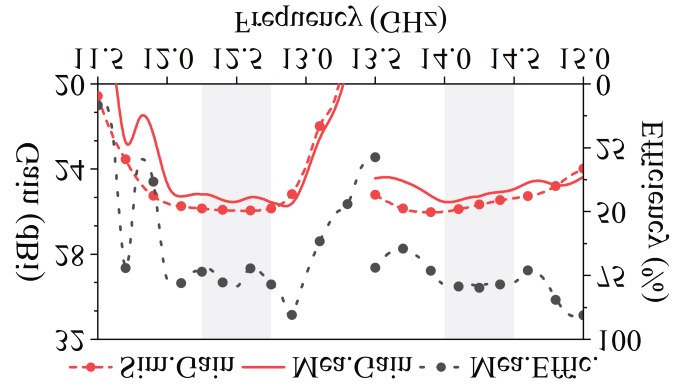
- •• A compact 3D-printed dual-band dual-polarized gap waveguide slot antenna array is designed for Ku-band satellite communications, covering both Tx (14.0–14.5 GHz) and Rx (12.25–12.75 GHz) bands. • Two stacked GWGs excite quasi-TE420 and quasi-TE240 modes via orthogonal slots, enabling dual polarization with high isolation and low sidelobe levels through amplitude-tapered feeding networks. • An unequal power divider based on ridge gap waveguide achieves a large power division ratio, enabling compact two-dimensional amplitude tapering for sidelobe suppression. • Measured results demonstrate a maximum gain of 25.6 dBi and radiation efficiency above 72% across both bands, confirming the feasibility of DMLS-based fabrication for high-performance antenna arrays.
Abstract
A 3D-printed dual-band dual-polarization gap waveguide (GWG) slot antenna array is presented for Ku-band satellite communications (SATCOMs) in this paper. Two stacked GWGs excite the quasi-TE420 and quasi-TE240 modes in the cavity separately through orthogonal slots. An unequal power divider with a large power division ratio is proposed based on a ridge gap waveguide (RGW). Two power tapering distribution networks are realized for dual polarizations, and the sidelobe level (SLL) is suppressed. The antenna is fabricated in parts by direct metal laser sintering (DMLS), and the whole antenna is obtained by screw assembly. The measured impedance bandwidth well covers both the transmitting band (Tx, from 14.0 GHz to 14.5 GHz) and the receiving band (Rx, from 12.25 GHz to 12.75 GHz) required for Ku-band SATCOMs. Measurement results show that the maximum gain reaches 25.6 dBi, and that the radiation efficiency of the dual-band is >72%.
1. Introduction
Satellite communications (SATCOMs) have the advantages of wide coverage, long communication distance, and little impact of natural disasters. As a commonly used frequency band for SATCOM, the Ku band covers 13.7–14.5 GHz and 10.70–12.75 GHz, which are used for uplink and downlink data transmission, respectively (Zhang JJ et al., 2022). At the same time, to reduce the number of antennas in transceiver systems, dual-polarized antennas are usually adopted (Zhao et al., 2017; Yu et al., 2023). Considering that a high-throughput satellite system often requires high effective isotropic radiated power (EIRP) (Fenech et al., 2015), antennas are required to have high power capacity and high gain performance (Dimitrov et al., 2020; Garcia-Marin et al., 2021). Therefore, waveguide dual-polarized antenna becomes another feasible scheme (Chen et al., 2020; Cheng et al., 2020; You et al., 2022; Zhang J et al., 2022; Lu et al., 2023). However, waveguide antennas require cooperated feeding networks, which makes the antenna very complex and large (Sun et al., 2022), so high processing accuracy is required (Miura et al., 2011). Gap waveguide (GWG) has similar transmission characteristics to waveguides and has lower requirements for processing. A large number of studies have proved that it is suitable for designing high-gain antennas (Zaman and Kildal, 2014; Akbari et al., 2019; Ferrando-Rocher et al., 2019a, 2019b). In Ferrando-Rocher et al. (2019b), the Ka-band 8 × 8 dual-polarized antenna showed a high gain of 27 dBi. However, the physical sizes of the antennas are large, resulting in high sidelobe levels (SLLs). A common way to reduce SLL is to introduce an amplitude-tapering feeding network (Jiang et al., 2019; Ran et al., 2022). A method suitable for GWG to design an unequal T-junction was proposed by Ran et al. (2022). Unfortunately, the antenna requires an additional layer of power divider to compensate for the phase inversion of adjacent units caused by the feeding method, thus sacrificing some gain.
In this paper, a dual-band dual-polarized antenna with both high gain and low SLL is proposed. The high-gain design is guided by mode analysis in the cavity. To realize the two-dimensional (2D) tapered amplitude distribution, an unequal T-junction power divider with a large power division ratio is proposed. Limited by the physical size of the unit feed structure, the power distributor adopts the combined groove ridge gap waveguide (RGW) to achieve a compact feeding network. Based on the structural characteristics of GWG, the antenna is processed by metal 3D printing techniques. The antenna is split into four layers for independent printing and finally obtained as a whole through screw assembly.
Loading authentic research manuscript (Pages 1–5)...
Yuqi Xia, Xiuping Li, Genqiang Kou, Wenyu Zhao, Jie Zhang, Muhammad Ishfaq, Zihang Qi (2025). Three-dimensional-printed low-sidelobe dual-band dual-polarized antenna array for Ku-band satellite communications. Frontiers of Information Technology & Electronic Engineering. https://doi.org/10.1631/FITEE_2400709
Research & Educational Purpose Only:The translations, structured abstracts, analytical annotations, and data reports provided by SinoTechIntel are intended exclusively for academic research, internal corporate R&D, and educational benchmarking. They do not constitute formal engineering, chemical safety, legal, or professional advice.
Copyright & Intellectual Property Notice: Original copyright of the underlying source articles and experimental data remains with the respective authors, institutions, and original publishing journals. SinoTechIntel claims intellectual property only over its proprietary translations, analytical syntheses, and AEO structured enhancements in accordance with international fair use and academic citation principles.
Frequently Asked Questions
What frequency bands does the proposed antenna cover?
The antenna covers the Ku-band transmitting band (Tx) from 14.0 GHz to 14.5 GHz and the receiving band (Rx) from 12.25 GHz to 12.75 GHz, meeting the requirements for Ku-band satellite communications.
How is low sidelobe level achieved in this design?
Low sidelobe level is achieved by introducing amplitude-tapering feeding networks for both polarizations. An unequal power divider based on ridge gap waveguide (RGW) provides a large power division ratio for two-dimensional tapered amplitude distribution.
What is the measured maximum gain and radiation efficiency?
The measured maximum gain is 25.6 dBi, and the radiation efficiency is greater than 72% across both the transmitting and receiving bands.
What fabrication technique is used for the antenna?
The antenna is fabricated in parts using direct metal laser sintering (DMLS), a metal 3D printing technique. The parts are then assembled with screws to form the complete antenna.
Which modes are excited for dual-polarized operation?
Two stacked gap waveguides excite the quasi-TE420 and quasi-TE240 modes in the cavity separately through orthogonal slots, enabling dual-polarized radiation.
Related Technical Papers & Translations
Design and optimization of a high-efficiency distillation process for cellulosic fuel ethanol integrated with thermal coupling and molecular sieve adsorption
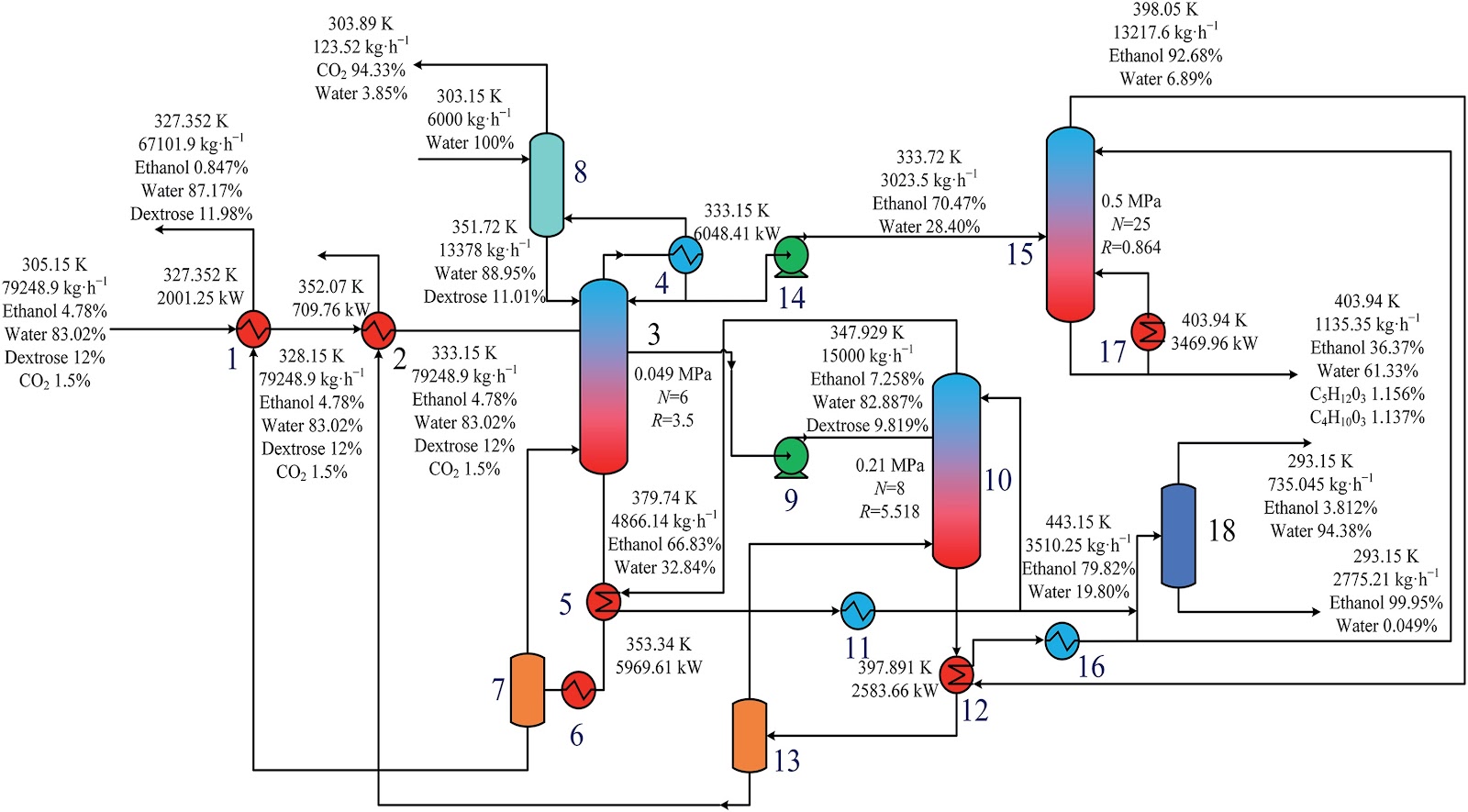
To address the challenges of high energy consumption and prominent costs in the traditional three-columns distillation process for cellulosic fuel ethanol, a distillation—molecular sieve coupling separation process is proposed. This process integrates a three-column (crude distillation column, first distillation column, second distillation column) system with a 3A molecular sieve adsorption deep dehydration unit. A thermal coupling network is constructed via differential pressure design (steam from medium/high-pressure columns as mutual heat sources, reboiler liquid waste heat for feed preheating), and molecular sieve adsorption conditions are optimized. The study first performs a thermodynamic consistency test on the ethanol—water system, determines optimal non-random two-liquid (NRTL) model binary interaction parameters via experimental data regression for Aspen Plus simulation. Aiming at minimum total annual cost (TAC), Aspen Plus is used to optimize process parameters (theoretical tray number, feed location, reflux ratio, side-draw position, etc.). Economic analysis shows this process reduces CO2 emission costs by 27.56%, TAC by 15.58% (to 5.123 × 10⁶ USD·a-1), and increases ethanol purity to >99.6%, providing an effective solution for green, efficient separation.
A cohesion loss model for determining residual strength of deep bedded sandstone
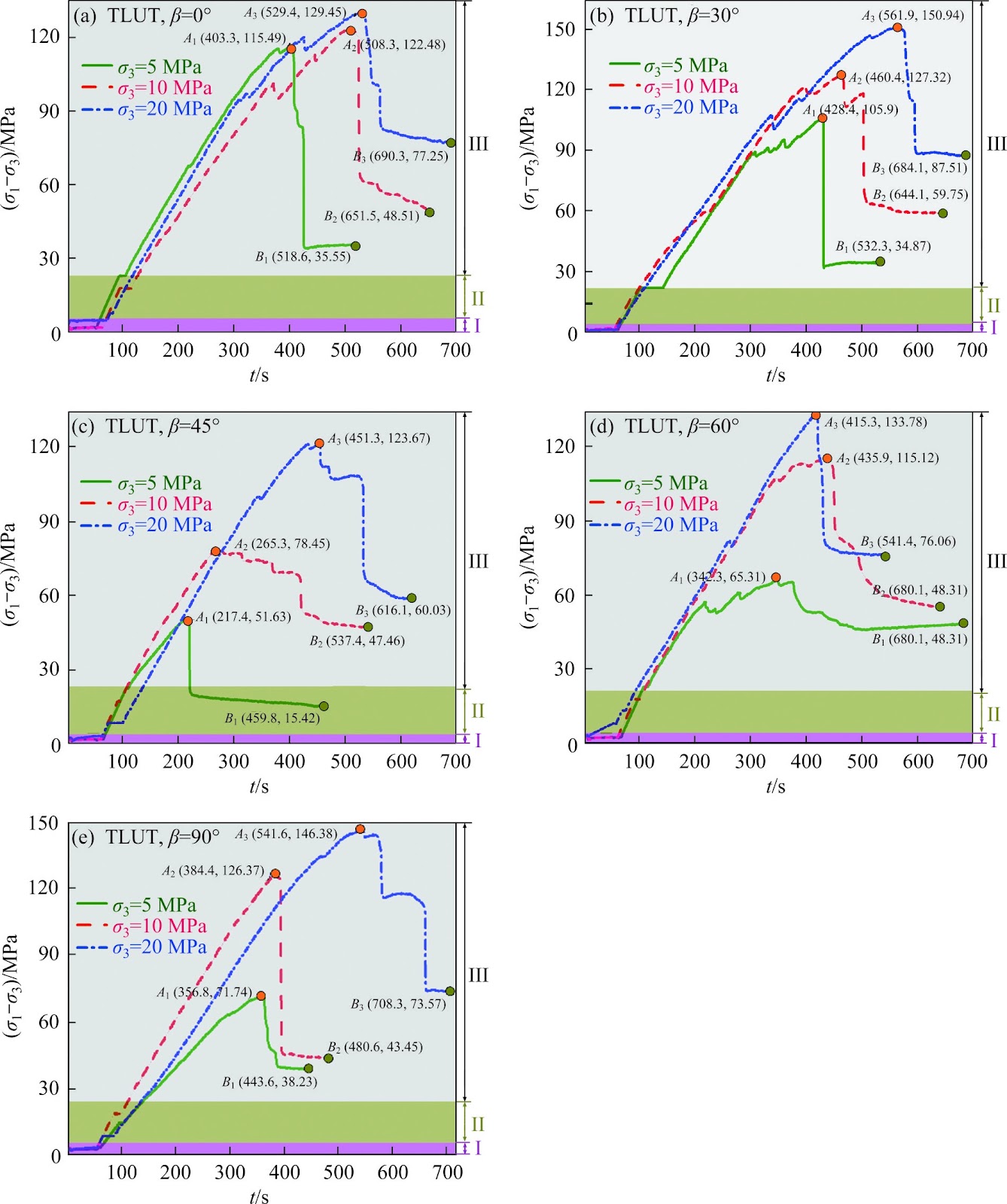
Rock residual strength, as an important input parameter, plays an indispensable role in proposing the reasonable and scientific scheme about stope design, underground tunnel excavation and stability evaluation of deep chambers. Therefore, previous residual strength models of rocks established were reviewed. And corresponding related problems were stated. Subsequently, starting from the effects of bedding and whole life-cycle evolution process, series of triaxial mechanical tests of deep bedded s
Federated model with contrastive learning and adaptive control variates for human activity recognition
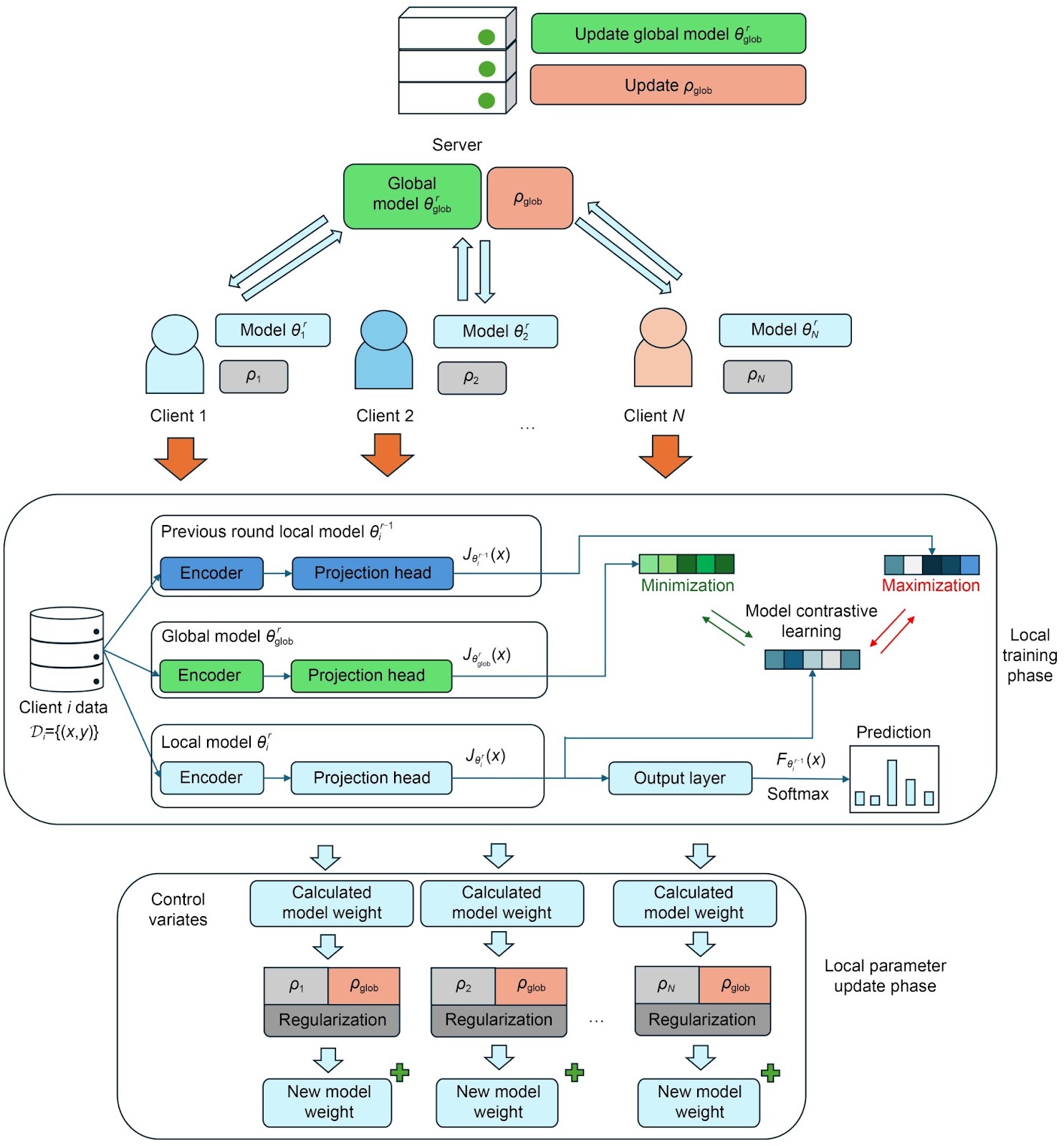
Recent attention to privacy issues demands a communication-safe method for training human activity recognition (HAR) models on client activity data. Federated learning (FL) has become a compelling technique to facilitate model training between the server and clients while preserving data privacy. However, classical FL methods often assume independent and identically distributed (IID) data among clients. This assumption does not hold true in practical scenarios. Human activity in real-world scena