Key Takeaways & Executive Findings
- •• Proposes DRL-EnVar, a deep reinforcement learning-based method for adaptive hybrid ensemble–variational data assimilation, dynamically optimizing hybrid weights. • A novel cyclic convolution module extracts abstract features from data to improve the estimation of background error covariance. • Outperforms traditional EnKF and hybrid covariance DA methods, especially under sparse observations and transitional weather regimes, with competitive or superior accuracy at lower computational cost. • Can be flexibly integrated into both 3DVar and 4DVar frameworks, offering a novel approach for improving forecast skill during transitional weather states.
Abstract
Accurate estimation of the background error covariance matrix denoted as B remains a critical challenge in numerical weather prediction (NWP), directly influencing data assimilation (DA) performance and forecast accuracy. Although hybrid ensemble–variational (EnVar) methods combine static and flow-dependent matrices to improve assimilation, their effectiveness is constrained by empirically fixed weights. To address this limitation, we propose DRL-EnVar, an adaptive hybrid EnVar DA method enhanced with deep reinforcement learning. DRL-EnVar integrates deep learning (DL) components, including a novel cyclic convolution module to extract abstract features from data, and employs reinforcement learning (RL) to dynamically optimize hybrid weighting strategies. The system adaptively combines multiple ensemble-based flow-dependent matrices with one or more static matrices to construct a time-varying hybrid matrix B that better reflects real-time background errors. Experimental results demonstrate that DRL-EnVar performs better than the traditional ensemble Kalman filter (EnKF) and hybrid covariance DA (HCDA) methods, especially under sparse observations or transitional changes in state variables. It achieves competitive or superior assimilation accuracy with lower computational cost, and can be flexibly integrated into both three-dimensional variational assimilation (3DVar) and four-dimensional variational assimilation (4DVar) frameworks. Overall, DRL-EnVar offers a novel and efficient approach to adaptive DA, particularly valuable for improving forecast skill during transitional weather regimes.
1. Introduction
Data assimilation (DA) is vital in numerical weather prediction (NWP), climate monitoring, and environmental prediction (Sanz-Alonso et al., 2023). It improves the initial state by combining observations with background information from numerical models, improving the accuracy and reliability of predictions. The background error covariance matrix denoted as B plays a central role in DA, quantifying the uncertainty in the background state, balancing observations and model priors, and directly influencing the performance of DA (Kalman, 1960). In scenarios with sparse observations and transitional weather regimes, accurately estimating B to ensure timely responses and precise evolution of background error information remains a key challenge in high-frequency DA research (James et al., 2022).
Among classical DA methods, three-dimensional variational assimilation (3DVar) is widely used in high-frequency assimilation due to its timeliness (Yokota et al., 2024). In 3DVar, B is typically estimated using the national meteorological center (NMC) method (Parrish and Derber, 1992). However, the NMC-derived B is static, climatological, and isotropic (hereafter denoted as Bs) and fails to capture the flow-dependent characteristics of the atmosphere (Bannister, 2008a, 2008b). To address this drawback, many operational DA systems have adopted the hybrid ensemble–variational (EnVar) assimilation method (Leng et al., 2013), which uses ensemble forecast statistics to derive a flow-dependent error covariance (denoted as Be). A weighted average of Be and Bs produces the hybrid background error covariance Bh, which is incorporated into the 3DVar cost function to improve adaptability to flow variability (Bannister, 2017).
The core of the EnVar method is to combine the strengths of Bs and Be and aims to improve assimilation accuracy while maintaining computational efficiency. However, it faces three main challenges: first, the quality of the flow-dependent B depends on the accuracy of the ensemble forecasts; second, the computational cost is limited by the cost of collecting ensemble samples; third, assimilation performance is sensitive to the choice of hybrid weights.
Loading authentic research manuscript (Pages 1–5)...
Lilan HUANG, Hongze LENG, Junqiang SONG, Dongzi WANG, Wuxin WANG, Ruisheng HU, Hang CAO (2025). DRL-EnVar: an adaptive hybrid ensemble–variational data assimilation method based on deep reinforcement learning. Frontiers of Information Technology & Electronic Engineering. https://doi.org/10.1631/FITEE_2401063
Research & Educational Purpose Only:The translations, structured abstracts, analytical annotations, and data reports provided by SinoTechIntel are intended exclusively for academic research, internal corporate R&D, and educational benchmarking. They do not constitute formal engineering, chemical safety, legal, or professional advice.
Copyright & Intellectual Property Notice: Original copyright of the underlying source articles and experimental data remains with the respective authors, institutions, and original publishing journals. SinoTechIntel claims intellectual property only over its proprietary translations, analytical syntheses, and AEO structured enhancements in accordance with international fair use and academic citation principles.
Frequently Asked Questions
What is DRL-EnVar?
DRL-EnVar is an adaptive hybrid ensemble–variational data assimilation method that uses deep reinforcement learning to dynamically optimize the weighting between ensemble-based flow-dependent and static background error covariance matrices.
Why is background error covariance important in data assimilation?
Background error covariance (B) quantifies uncertainty in the background state, balancing observations and model priors, and directly influences the performance of data assimilation.
What are the limitations of traditional hybrid EnVar methods?
Traditional hybrid EnVar methods rely on empirically fixed weights, which constrain their effectiveness, especially in transitional weather regimes or with sparse observations.
How does DRL-EnVar improve over existing methods?
DRL-EnVar integrates deep learning and reinforcement learning to create a time-varying hybrid B matrix, achieving better assimilation accuracy and lower computational cost compared to EnKF and HCDA, and can be integrated into both 3DVar and 4DVar frameworks.
What are the main applications of DRL-EnVar?
DRL-EnVar is mainly applied in numerical weather prediction, climate monitoring, and environmental prediction, particularly valuable for improving forecast skill during transitional weather regimes.
Related Technical Papers & Translations
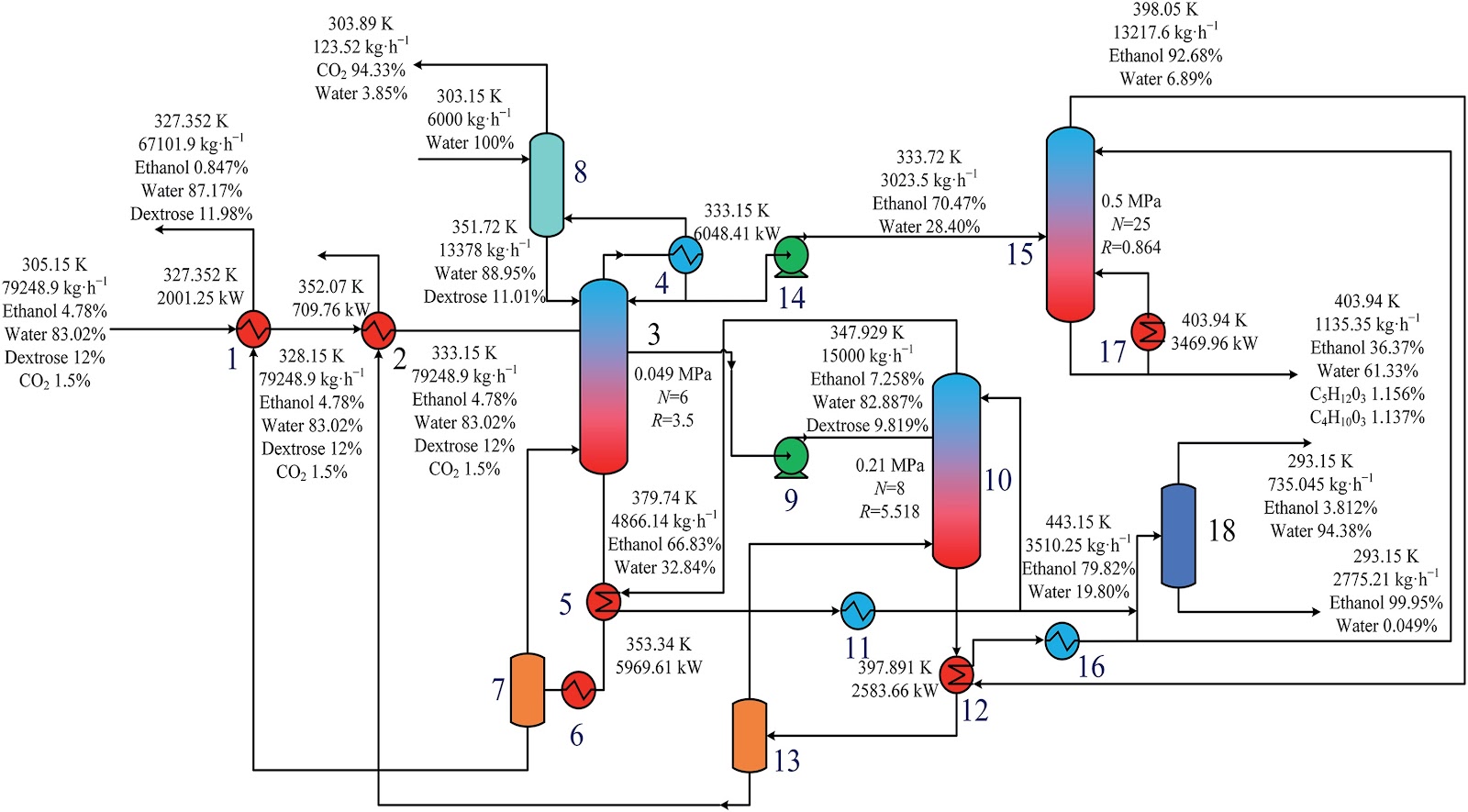
Design and optimization of a high-efficiency distillation process for cellulosic fuel ethanol integrated with thermal coupling and molecular sieve adsorption
To address the challenges of high energy consumption and prominent costs in the traditional three-columns distillation process for cellulosic fuel ethanol, a distillation—molecular sieve coupling separation process is proposed. This process integrates a three-column (crude distillation column, first distillation column, second distillation column) system with a 3A molecular sieve adsorption deep dehydration unit. A thermal coupling network is constructed via differential pressure design (steam from medium/high-pressure columns as mutual heat sources, reboiler liquid waste heat for feed preheating), and molecular sieve adsorption conditions are optimized. The study first performs a thermodynamic consistency test on the ethanol—water system, determines optimal non-random two-liquid (NRTL) model binary interaction parameters via experimental data regression for Aspen Plus simulation. Aiming at minimum total annual cost (TAC), Aspen Plus is used to optimize process parameters (theoretical tray number, feed location, reflux ratio, side-draw position, etc.). Economic analysis shows this process reduces CO2 emission costs by 27.56%, TAC by 15.58% (to 5.123 × 10⁶ USD·a-1), and increases ethanol purity to >99.6%, providing an effective solution for green, efficient separation.
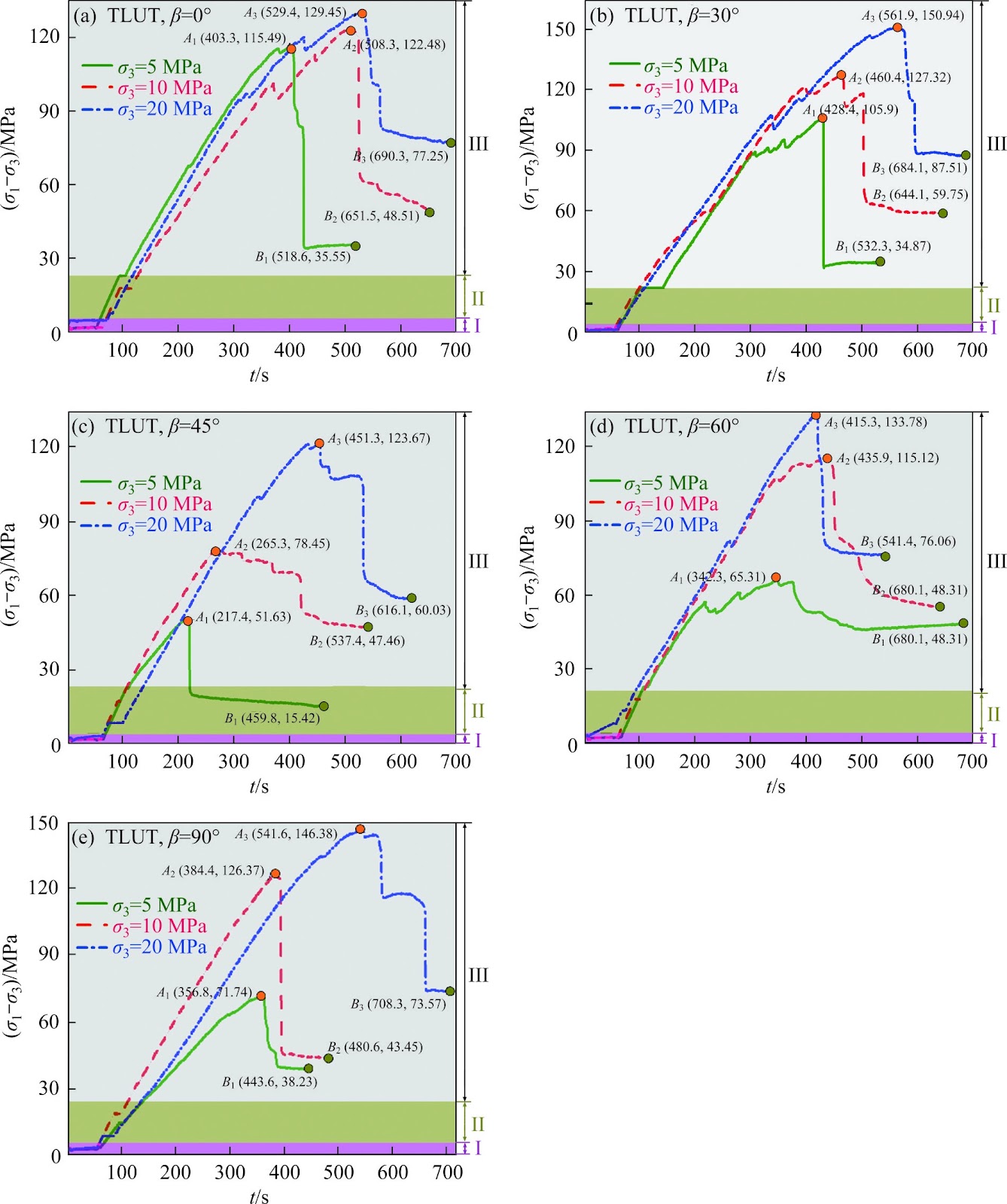
A cohesion loss model for determining residual strength of deep bedded sandstone
Rock residual strength, as an important input parameter, plays an indispensable role in proposing the reasonable and scientific scheme about stope design, underground tunnel excavation and stability evaluation of deep chambers. Therefore, previous residual strength models of rocks established were reviewed. And corresponding related problems were stated. Subsequently, starting from the effects of bedding and whole life-cycle evolution process, series of triaxial mechanical tests of deep bedded s
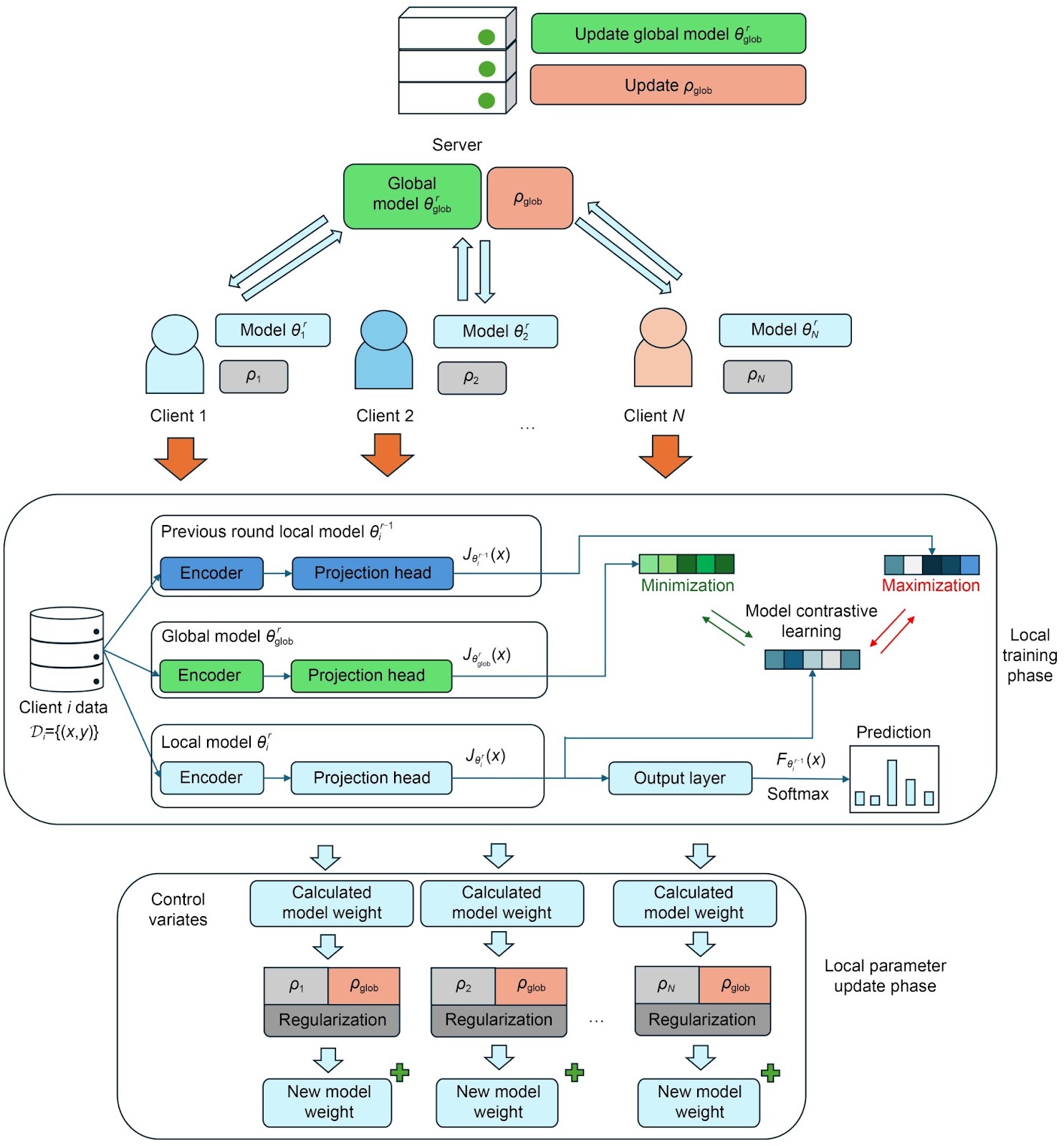
Federated model with contrastive learning and adaptive control variates for human activity recognition
Recent attention to privacy issues demands a communication-safe method for training human activity recognition (HAR) models on client activity data. Federated learning (FL) has become a compelling technique to facilitate model training between the server and clients while preserving data privacy. However, classical FL methods often assume independent and identically distributed (IID) data among clients. This assumption does not hold true in practical scenarios. Human activity in real-world scena