Key Takeaways & Executive Findings
- •• A model-aided deep reinforcement learning algorithm is proposed to jointly optimize puncturing and scheduling for URLLC/eMBB coexistence in uplink 5G industrial wireless networks. • A random repetition coding-based contention (RRCC) scheme is designed for sporadic URLLC traffic, with an analytical reliability model that enables robust decision-making. • The model-aided DRL approach accelerates convergence and adapts dynamically to changing network conditions, balancing strict URLLC latency/reliability with eMBB throughput. • Simulations demonstrate superior resource efficiency of the proposed method over existing approaches, confirming its practical value for 5G industrial automation.
Abstract
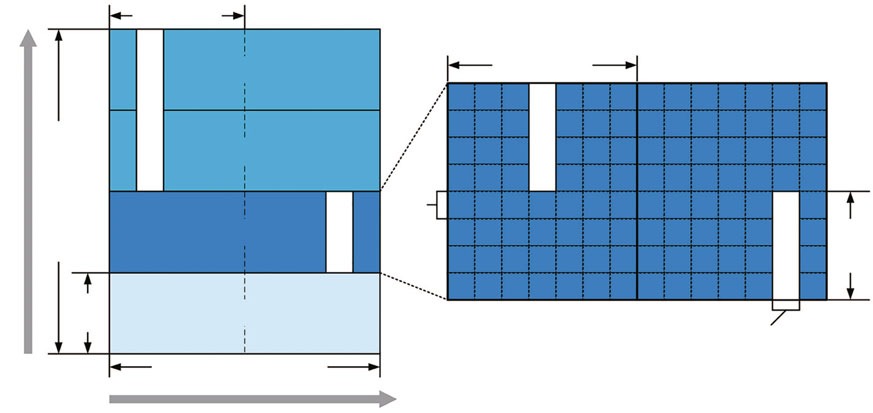
The coexistence of ultra-reliable low-latency communication (URLLC) and enhanced mobile broadband (eMBB) services in 5G-based industrial wireless networks (IWNs) poses significant resource slicing challenges due to their inherent performance requirement conflicts. To address this challenge, this paper proposes a puncturing method that uses a model-aided deep reinforcement learning (DRL) algorithm for URLLC over eMBB services in uplink 5G networks. First, a puncturing-based optimization problem is formulated to maximize the eMBB accumulated rate under strict URLLC latency and reliability constraints. Next, we design a random repetition coding-based contention (RRCC) scheme for sporadic URLLC traffic and derive its analytical reliability model. To jointly optimize the scheduling parameters of URLLC and eMBB, a DRL solution based on the reliability model is developed, which is capable of dynamically adapting to changing environments. The accelerated convergence of the model-aided DRL algorithm is demonstrated using simulations, and the superiority in resource efficiency of the proposed method over existing approaches is validated.
1. Introduction
Industrial wireless networks (IWNs) serve as critical enablers of the seamless integration of the Internet of Things in the Industry 4.0 ecosystem and facilitate interconnections among various devices, such as sensors (or cameras), actuators, automated guided vehicles (AGVs), robotic manipulators (RMs), and virtual reality interaction systems, to ensure the efficient and uninterrupted operation of smart manufacturing processes (Sardar et al., 2024). However, the diverse communication requirements of these devices have led to the emergence of heterogeneous services in industrial automation scenarios, primarily ultra-reliable low-latency communication (URLLC) and enhanced mobile broadband (eMBB), both of which are supported by the 5G new radio (NR) (Ji et al., 2018). Specifically, URLLC services, designed for applications requiring low latency and high reliability, must achieve 99.999% reliability when transmitting 32 bytes of data within a user-plane latency of 1 ms, as defined by the 3rd Generation Partnership Project (3GPP) (Ma et al., 2019). In contrast, eMBB services are tailored for high-bandwidth applications and aim to deliver ultra-high data rates with a moderate reliability level of 99.9% (Popovski et al., 2018). This service diversity introduces significant complexities in resource slicing and traffic scheduling, requiring advanced solutions to optimize network performance.
Unlike downlink transmission, where the base station (BS) has full control over data packets, uplink transmission presents a unique challenge because the BS lacks precise information about whether the user equipment (UE) has packets ready to transmit. Moreover, uplink access methods exhibit significant differences across various traffic types. In 5G, three access methods are principally adopted: grant-based (GB) access, semi-persistent scheduling (SPS), and grant-free (GF) access (Nomeir et al., 2023). GB access is suitable for general eMBB traffic without strict latency requirements because it relies on dynamic scheduling requests. SPS is widely used for fully buffered eMBB traffic and periodic URLLC traffic and reduces signaling overhead by pre-allocating resources within specific time intervals. GF access operates in an “arrive-and-go” manner with minimal signaling overhead, making it particularly efficient for sporadic URLLC traffic. This paper focuses mainly on the uplink transmissions of fully buffered eMBB traffic and sporadic URLLC traffic. Unlike schedulable periodic traffic, sporadic traffic, with its uncertain characteristics, requires more in-depth research.
Loading authentic research manuscript (Pages 1–5)...
Jingfang DING, Meng ZHENG, Haibin YU, Yitian WANG, Chi XU (2025). Uplink puncturing for mixed URLLC and eMBB services in 5G-based IWNs: a model-aided DRL method. Frontiers of Information Technology & Electronic Engineering. https://doi.org/10.1631/FITEE_2500173
Research & Educational Purpose Only:The translations, structured abstracts, analytical annotations, and data reports provided by SinoTechIntel are intended exclusively for academic research, internal corporate R&D, and educational benchmarking. They do not constitute formal engineering, chemical safety, legal, or professional advice.
Copyright & Intellectual Property Notice: Original copyright of the underlying source articles and experimental data remains with the respective authors, institutions, and original publishing journals. SinoTechIntel claims intellectual property only over its proprietary translations, analytical syntheses, and AEO structured enhancements in accordance with international fair use and academic citation principles.
Frequently Asked Questions
What is the main objective of the proposed method?
The main objective is to maximize eMBB accumulated rate while strictly satisfying URLLC latency and reliability constraints in uplink 5G industrial wireless networks, by jointly optimizing puncturing and scheduling parameters.
How does puncturing work for URLLC and eMBB coexistence?
Puncturing allows URLLC transmissions to preempt time-frequency resources already allocated to ongoing eMBB transmissions. In the proposed approach, a model-aided deep reinforcement learning algorithm determines when and how to puncture to balance URLLC requirements with eMBB efficiency.
What is the role of deep reinforcement learning in this approach?
Deep reinforcement learning is used to dynamically adapt the scheduling parameters of both URLLC and eMBB services in response to changing network environments. The model-aided component accelerates convergence by incorporating the analytical reliability model of the RRCC scheme.
What is the significance of the random repetition coding-based contention (RRCC) scheme?
The RRCC scheme is designed for sporadic URLLC traffic to enable contention-based access while maintaining high reliability. Its analytical reliability model is integrated into the DRL framework, allowing accurate and efficient decision-making under uncertainty.
What are the key results of the simulations?
Simulations demonstrate that the model-aided DRL algorithm converges faster than standard DRL and achieves superior resource efficiency compared to existing approaches, while still meeting the strict latency and reliability constraints of URLLC.
Related Technical Papers & Translations

Design and optimization of a high-efficiency distillation process for cellulosic fuel ethanol integrated with thermal coupling and molecular sieve adsorption
To address the challenges of high energy consumption and prominent costs in the traditional three-columns distillation process for cellulosic fuel ethanol, a distillation—molecular sieve coupling separation process is proposed. This process integrates a three-column (crude distillation column, first distillation column, second distillation column) system with a 3A molecular sieve adsorption deep dehydration unit. A thermal coupling network is constructed via differential pressure design (steam from medium/high-pressure columns as mutual heat sources, reboiler liquid waste heat for feed preheating), and molecular sieve adsorption conditions are optimized. The study first performs a thermodynamic consistency test on the ethanol—water system, determines optimal non-random two-liquid (NRTL) model binary interaction parameters via experimental data regression for Aspen Plus simulation. Aiming at minimum total annual cost (TAC), Aspen Plus is used to optimize process parameters (theoretical tray number, feed location, reflux ratio, side-draw position, etc.). Economic analysis shows this process reduces CO2 emission costs by 27.56%, TAC by 15.58% (to 5.123 × 10⁶ USD·a-1), and increases ethanol purity to >99.6%, providing an effective solution for green, efficient separation.

A cohesion loss model for determining residual strength of deep bedded sandstone
Rock residual strength, as an important input parameter, plays an indispensable role in proposing the reasonable and scientific scheme about stope design, underground tunnel excavation and stability evaluation of deep chambers. Therefore, previous residual strength models of rocks established were reviewed. And corresponding related problems were stated. Subsequently, starting from the effects of bedding and whole life-cycle evolution process, series of triaxial mechanical tests of deep bedded s

Federated model with contrastive learning and adaptive control variates for human activity recognition
Recent attention to privacy issues demands a communication-safe method for training human activity recognition (HAR) models on client activity data. Federated learning (FL) has become a compelling technique to facilitate model training between the server and clients while preserving data privacy. However, classical FL methods often assume independent and identically distributed (IID) data among clients. This assumption does not hold true in practical scenarios. Human activity in real-world scena