Key Takeaways & Executive Findings
- •• Proposes a novel adjudication mechanism using output difference feedback, improving adaptability by quantifying each executor's output deviation impact on the global decision. • Introduces a system-benefit-based scheduling strategy that formulates quality of service and switching overhead as a bi-objective optimization problem, balancing security and system performance. • Simulation results show the architecture reduces attack success rate and average failure rate, while enhancing adaptability to different network environments. • Advances practical cyber mimic defense by integrating security and performance considerations within the dynamic heterogeneous redundancy framework.
Abstract
Mimic active defense technology effectively disrupts attack routes and reduces the probability of successful attacks by using a dynamic heterogeneous redundancy (DHR) architecture. However, current approaches often overlook the adaptability of the adjudication mechanism in complex and variable network environments, focusing primarily on system security while neglecting performance considerations. To address these limitations, we propose an output difference feedback and system benefit control based DHR architecture. This architecture introduces an adjudication mechanism based on output difference feedback, which enhances adaptability by considering the impact of each executor's output deviation on the global decision. Additionally, the architecture incorporates a scheduling strategy based on system benefit, which models the quality of service and switching overhead as a bi-objective optimization problem, balancing security with reduced computational costs and system overhead. Simulation results demonstrate that our architecture improves adaptability towards different network environments and effectively reduces both the attack success rate and average failure rate.
1. Introduction
Cyberspace has long faced the challenge of being vulnerable to attack and difficult to defend, as traditional passive defense technologies (Cho et al., 2020; Jiang et al., 2024) are unable to effectively respond to complex cybersecurity threats (Hu HC et al., 2018; Shao et al., 2023a) due to their reactive and specific nature. To address these issues, active defense, which adopts dynamic, fault-tolerant, and reconfigurable techniques to create flexible environments that prevent cyber threats (Wang ZH et al., 2023), has become a hot research topic. As a typical active defense technique, cyber mimic defense (CMD) (Wang YW et al., 2018; Wu JX 2022a, 2022b) introduces dynamic heterogeneous redundancy (DHR) with a negative feedback control mechanism to change the system's execution environment based on adjudication outcomes, improving the detection and attack efforts for attackers (Hu JJ et al., 2024; Rehman et al., 2024).
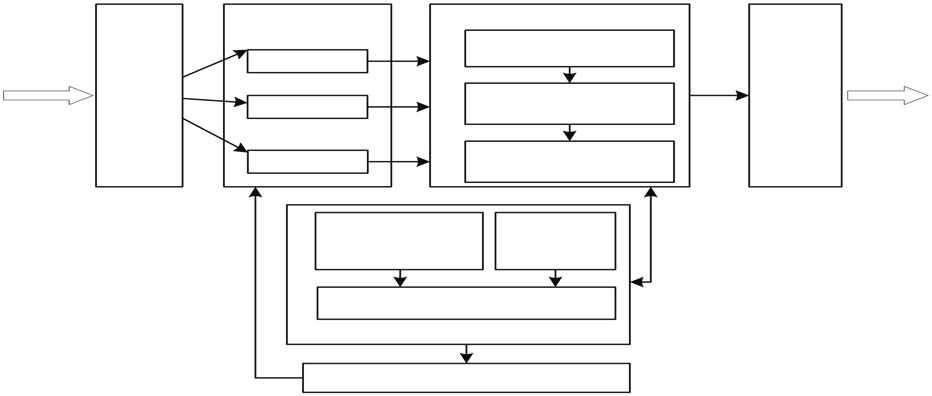
The DHR architecture connects different constructed executors in parallel and adjudicates the independently running executors' outputs to obtain the final result (Ren et al., 2020; Li et al., 2021; Fu et al., 2022), reducing the risk of simultaneous failures in the same functional module. The architecture mainly consists of five modules (Tong and Guo, 2021; Zheng et al., 2022): input/output, processing, adjudication, scheduling, and building. The adjudication and scheduling modules are central to the DHR architecture (Wang ZH et al., 2021; Zhu et al., 2021; Wei et al., 2022), and are crucial for generating external uncertainty. Recent advances in mimic active defense technologies have mainly focused on the adjudication and scheduling modules within the DHR architecture (Lu ZP et al., 2017).
Loading authentic research manuscript (Pages 1–5)...
Sisi SHAO, Zhibo HE, Shangdong LIU, Weili ZHANG, Fei WU, Fukang ZENG, Jun ZUO, Longfei ZHOU, Yukun NIU, Yimu JI (2025). Output difference feedback and system benefit control based dynamic heterogeneous redundancy architecture. Frontiers of Information Technology & Electronic Engineering. https://doi.org/10.1631/FITEE_2400251
Research & Educational Purpose Only:The translations, structured abstracts, analytical annotations, and data reports provided by SinoTechIntel are intended exclusively for academic research, internal corporate R&D, and educational benchmarking. They do not constitute formal engineering, chemical safety, legal, or professional advice.
Copyright & Intellectual Property Notice: Original copyright of the underlying source articles and experimental data remains with the respective authors, institutions, and original publishing journals. SinoTechIntel claims intellectual property only over its proprietary translations, analytical syntheses, and AEO structured enhancements in accordance with international fair use and academic citation principles.
Frequently Asked Questions
What is dynamic heterogeneous redundancy (DHR) architecture?
DHR architecture is a core component of cyber mimic defense. It connects multiple independently constructed executors in parallel and adjudicates their outputs to determine the final result, thereby reducing the risk of simultaneous failures and enhancing system security against cyber attacks.
How does the proposed adjudication mechanism improve adaptability?
The proposed adjudication mechanism uses output difference feedback, which explicitly considers the impact of each executor's output deviation on the global decision. This allows the system to adjust its behavior in complex and variable network environments, improving adaptability beyond traditional security-only approaches.
What is the system-benefit-based scheduling strategy?
The scheduling strategy formulates quality of service and switching overhead as a bi-objective optimization problem. It balances security with reduced computational costs and system overhead, enabling more efficient and performance-aware executor scheduling in the DHR architecture.
What are the main findings of the study?
Simulation results demonstrate that the proposed DHR architecture improves adaptability to different network environments and effectively reduces both the attack success rate and average failure rate compared to existing approaches.
What is mimic active defense?
Mimic active defense is an active defense technique that uses dynamic heterogeneity and redundancy to create unpredictable and flexible execution environments. It aims to disrupt attack routes, increase attacker difficulty, and reduce the probability of successful cyber attacks.
Related Technical Papers & Translations
Design and optimization of a high-efficiency distillation process for cellulosic fuel ethanol integrated with thermal coupling and molecular sieve adsorption
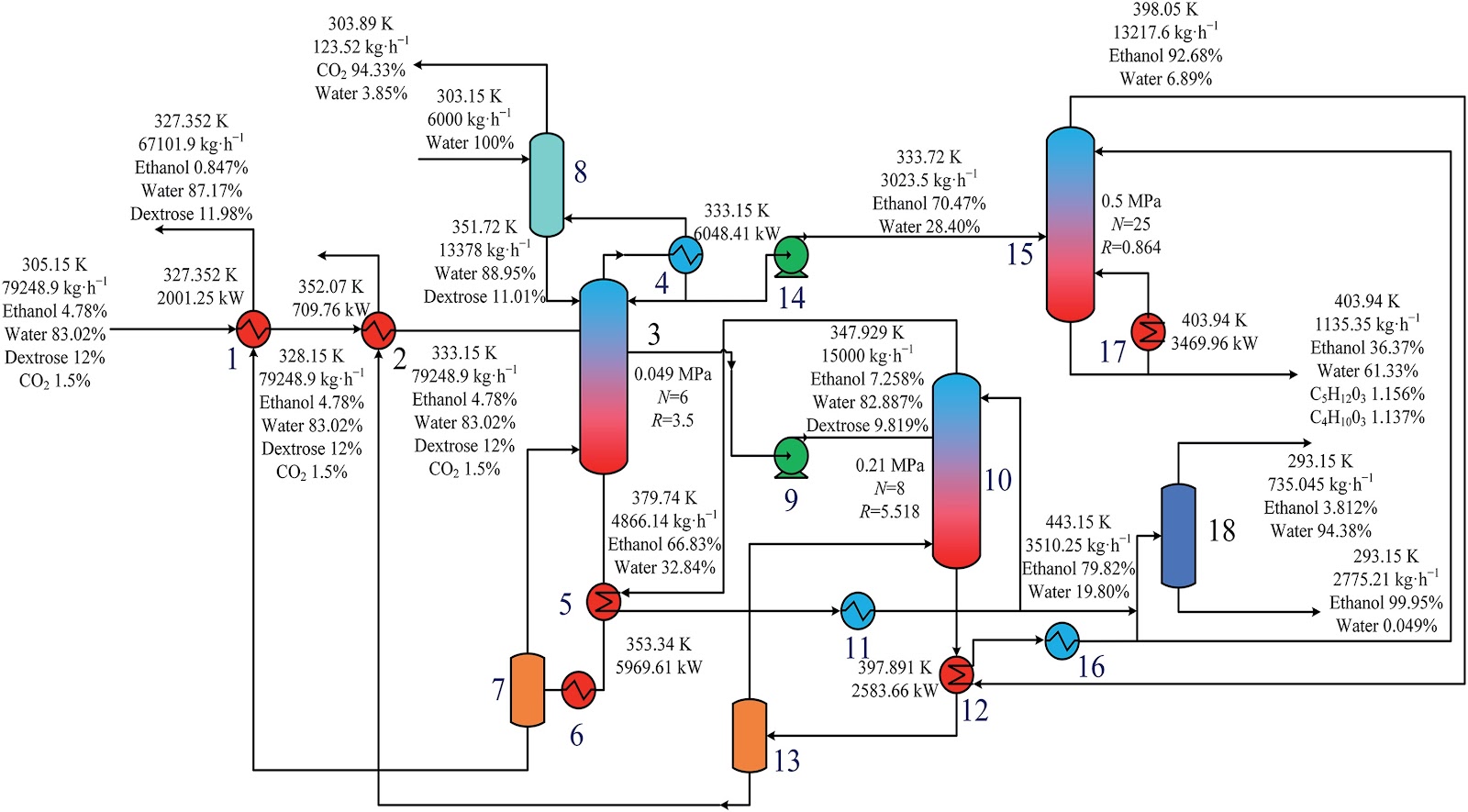
To address the challenges of high energy consumption and prominent costs in the traditional three-columns distillation process for cellulosic fuel ethanol, a distillation—molecular sieve coupling separation process is proposed. This process integrates a three-column (crude distillation column, first distillation column, second distillation column) system with a 3A molecular sieve adsorption deep dehydration unit. A thermal coupling network is constructed via differential pressure design (steam from medium/high-pressure columns as mutual heat sources, reboiler liquid waste heat for feed preheating), and molecular sieve adsorption conditions are optimized. The study first performs a thermodynamic consistency test on the ethanol—water system, determines optimal non-random two-liquid (NRTL) model binary interaction parameters via experimental data regression for Aspen Plus simulation. Aiming at minimum total annual cost (TAC), Aspen Plus is used to optimize process parameters (theoretical tray number, feed location, reflux ratio, side-draw position, etc.). Economic analysis shows this process reduces CO2 emission costs by 27.56%, TAC by 15.58% (to 5.123 × 10⁶ USD·a-1), and increases ethanol purity to >99.6%, providing an effective solution for green, efficient separation.
A cohesion loss model for determining residual strength of deep bedded sandstone
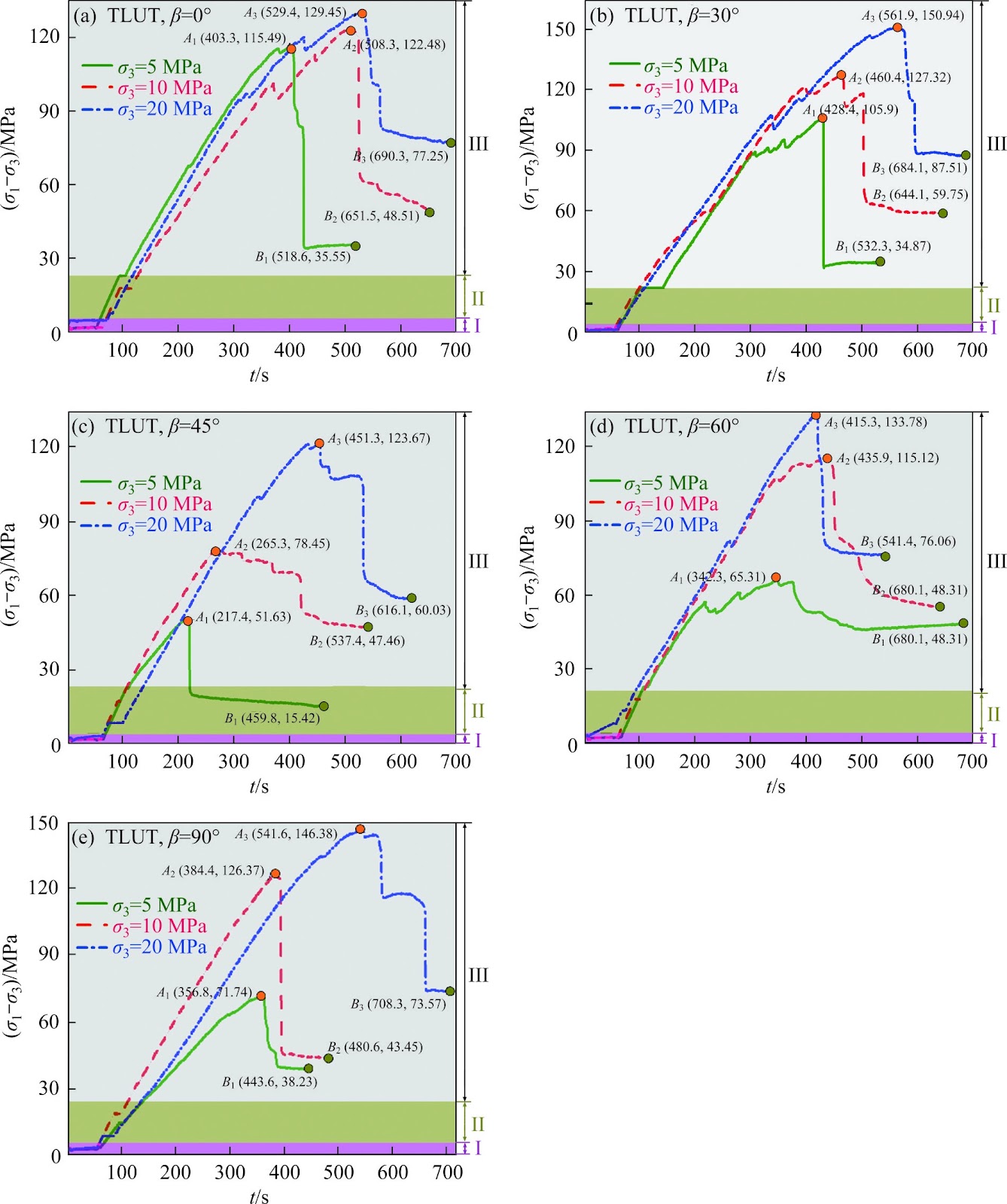
Rock residual strength, as an important input parameter, plays an indispensable role in proposing the reasonable and scientific scheme about stope design, underground tunnel excavation and stability evaluation of deep chambers. Therefore, previous residual strength models of rocks established were reviewed. And corresponding related problems were stated. Subsequently, starting from the effects of bedding and whole life-cycle evolution process, series of triaxial mechanical tests of deep bedded s
Federated model with contrastive learning and adaptive control variates for human activity recognition
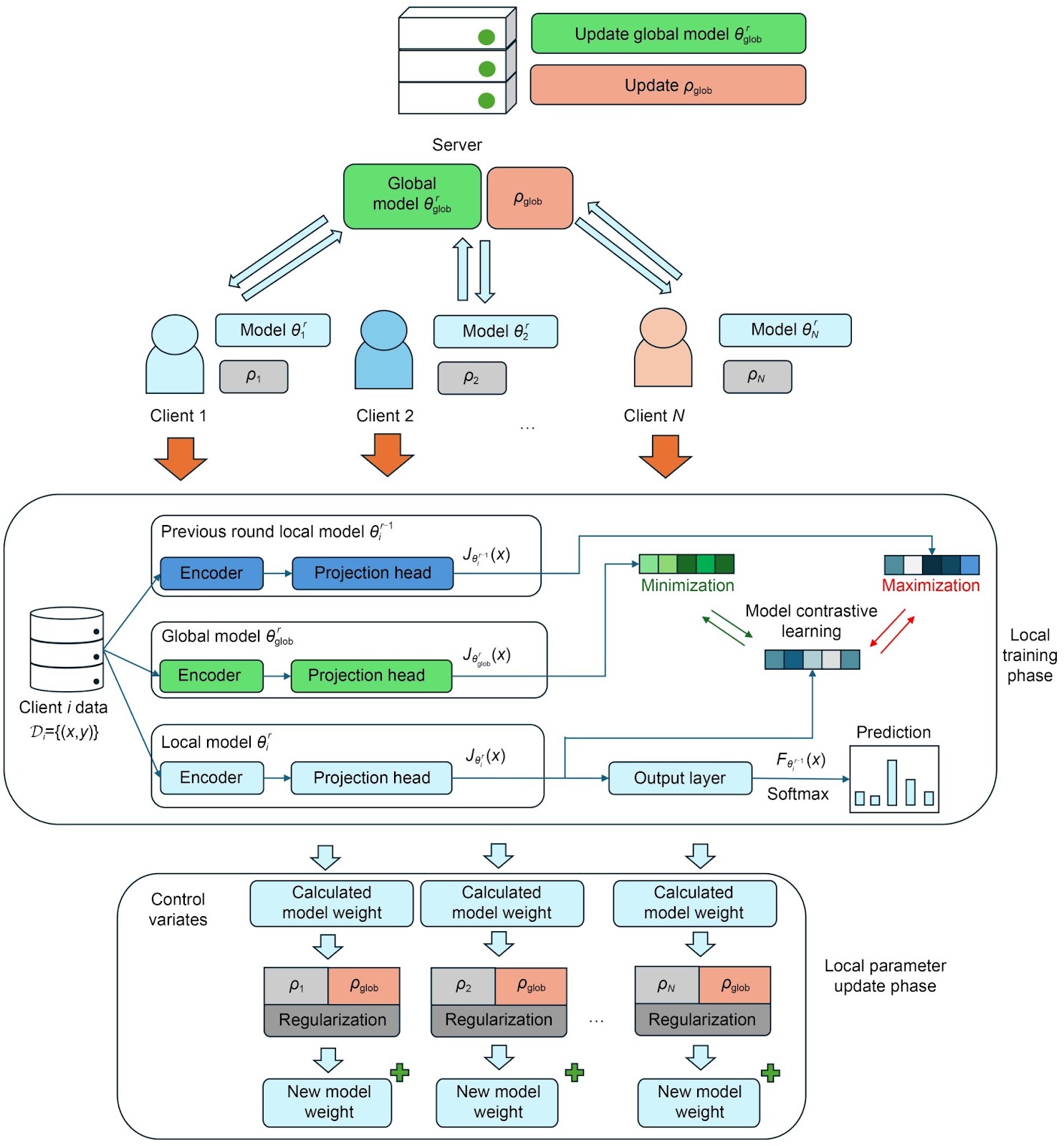
Recent attention to privacy issues demands a communication-safe method for training human activity recognition (HAR) models on client activity data. Federated learning (FL) has become a compelling technique to facilitate model training between the server and clients while preserving data privacy. However, classical FL methods often assume independent and identically distributed (IID) data among clients. This assumption does not hold true in practical scenarios. Human activity in real-world scena