Key Takeaways & Executive Findings
- •• LD-RSM achieves a long working distance of 22.23 mm and an optical resolution of 4.92 μm, overcoming the limitations of conventional smartphone microscopes for industrial in situ inspection. • The system employs a reflective optical path with a beam splitter, enabling illumination and imaging on the same side—critical for non-destructive testing of metallic mesh. • DW-RPCA, combining spectral filter fusion, Hough transform, and double-threshold segmentation, delivers high pixel-level detection accuracy with f-values of 0.856 (square) and 0.848 (circular) metallic mesh. • This portable, cost-effective smartphone-based microscopy approach demonstrates strong potential for real-world in situ quality control in transparent electromagnetic shielding film production.
Abstract
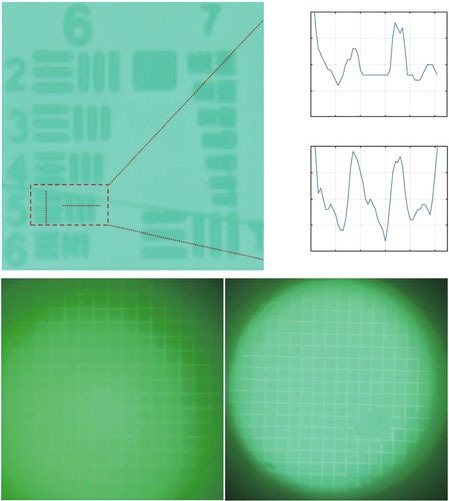
Metallic mesh is a transparent electromagnetic shielding film with a fine metal line structure. However, in production preparation or actual use it can develop defects that affect the optoelectronic performance. The development of in situ non-destructive testing (NDT) devices for metallic mesh requires long working distances, reflective optical path design, and miniaturization. To address the limitations of existing smartphone microscopes, which feature short working distances and inadequate transmission imaging for industrial in situ inspection, we propose a novel long-working-distance reflective smartphone microscopy (LD-RSM) system. LD-RSM comprises a 4f optical imaging system with external optical components and a smartphone. This system uses a beam splitter to achieve reflective imaging with the illumination system and imaging system on the same side of the sample. It achieves an optical resolution of 4.92 μm and a working distance of up to 22.23 mm. Additionally, we introduce dual-prior weighted robust principal component analysis (DW-RPCA) for defect detection. This approach leverages spectral filter fusion and the Hough transform to model different defect types, which enhances the accuracy and efficiency of defect identification. Coupled with a double-threshold segmentation approach, the DW-RPCA method achieves a pixel-level defect detection accuracy (f -value) of 0.856 and 0.848 in square and circular metallic mesh datasets, respectively. Our work shows strong potential in the field of in situ industrial product inspection.
1. Introduction
Recently, the rapid development of optoelectronic devices, including communication and medical devices and detectors, has enhanced human life significantly (Li MX et al., 2023). However, these devices emit a large amount of electromagnetic radiation, leading to electromagnetic interference (EMI).
A well-designed metallic mesh can provide effective EMI shielding while maintaining transparency (Zhang et al., 2021; Liang et al., 2023). Metallic mesh is formed of periodic structures of thin metal films, and achieves high-frequency visible light transmission and low-frequency microwave cutoff by carefully selecting structural unit periods and line widths (Lu et al., 2024).
At present, there are many methods for the preparation of metallic mesh, such as photolithography coating (Qiu TF et al., 2022), the cracked template method (Zhu XY et al., 2021), nanoimprint lithography (Baracu et al., 2021), and direct writing (Li ZH et al., 2022). However, these mature technologies can still result in defects such as broken lines, metal deposition, and photoresist residue due to lithography process parameters and operator errors. In practical applications, metallic mesh can develop significant defects from scratches, impacts, and chemical erosion, which affect the performance of optoelectronic equipment. Defect detection in transparent electromagnetic shielding films during production is often limited to manual visual inspection, with a lack of adequate detection devices suitable for practical applications.
Loading authentic research manuscript (Pages 1–5)...
Zhengang LU, Hongsheng QIN, Jing LI, Ming SUN, Jiubin TAN (2025). Long working distance portable smartphone microscopy for metallic mesh defect detection. Frontiers of Information Technology & Electronic Engineering. https://doi.org/10.1631/FITEE_2401002
Research & Educational Purpose Only:The translations, structured abstracts, analytical annotations, and data reports provided by SinoTechIntel are intended exclusively for academic research, internal corporate R&D, and educational benchmarking. They do not constitute formal engineering, chemical safety, legal, or professional advice.
Copyright & Intellectual Property Notice: Original copyright of the underlying source articles and experimental data remains with the respective authors, institutions, and original publishing journals. SinoTechIntel claims intellectual property only over its proprietary translations, analytical syntheses, and AEO structured enhancements in accordance with international fair use and academic citation principles.
Frequently Asked Questions
What is LD-RSM?
LD-RSM (Long-Working-Distance Reflective Smartphone Microscopy) is a novel smartphone-based imaging system that uses a 4f optical configuration and a beam splitter to achieve reflective imaging with a long working distance of 22.23 mm and an optical resolution of 4.92 μm, designed for in situ industrial defect detection of metallic mesh.
What types of defects can be detected in metallic mesh?
The proposed system detects common defects in metallic mesh, including broken lines, metal deposition, and photoresist residue. These defects typically arise from lithography process variations, operator errors, or in-service damage such as scratches, impacts, and chemical erosion.
How does the DW-RPCA method improve defect detection?
DW-RPCA (Dual-Prior Weighted Robust Principal Component Analysis) incorporates spectral filter fusion and Hough transform to model different defect types, enhancing both accuracy and efficiency. Combined with a double-threshold segmentation approach, it achieves pixel-level f-values of 0.856 and 0.848 for square and circular metallic mesh datasets, respectively.
What are the advantages of using a smartphone microscope for metallic mesh inspection?
Smartphone-based microscopes offer high performance, low cost, miniaturization, and portability compared to conventional inspection systems. LD-RSM specifically adds a reflective optical path and long working distance, making it suitable for in situ non-destructive testing in industrial environments.
What is the practical significance of this research?
This work provides a miniaturized, cost-effective, and portable solution for quality control in the production of transparent electromagnetic shielding films. The ability to perform in situ, non-destructive defect detection improves product durability and reliability, with strong potential for integration into industrial inspection workflows.
Related Technical Papers & Translations
Design and optimization of a high-efficiency distillation process for cellulosic fuel ethanol integrated with thermal coupling and molecular sieve adsorption
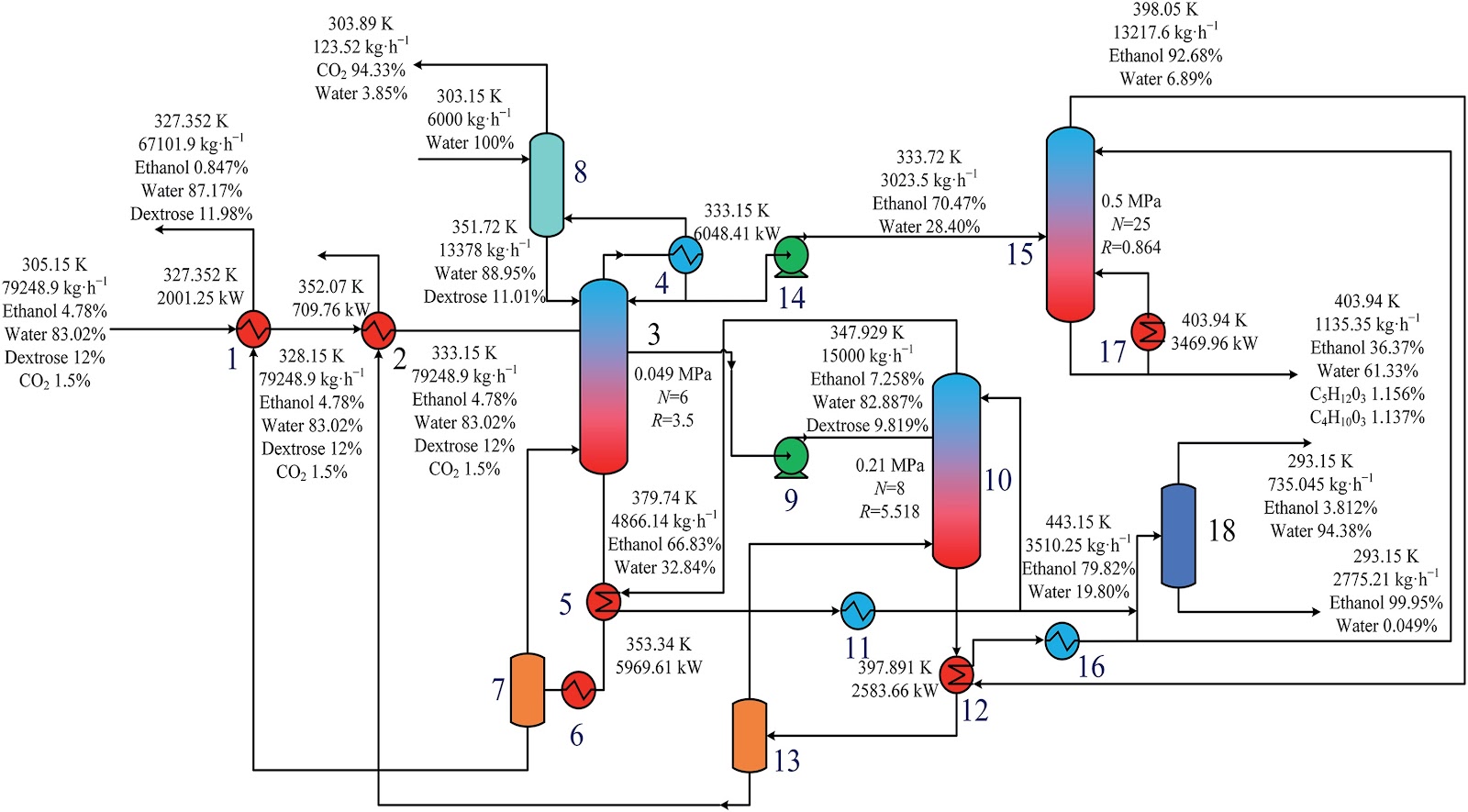
To address the challenges of high energy consumption and prominent costs in the traditional three-columns distillation process for cellulosic fuel ethanol, a distillation—molecular sieve coupling separation process is proposed. This process integrates a three-column (crude distillation column, first distillation column, second distillation column) system with a 3A molecular sieve adsorption deep dehydration unit. A thermal coupling network is constructed via differential pressure design (steam from medium/high-pressure columns as mutual heat sources, reboiler liquid waste heat for feed preheating), and molecular sieve adsorption conditions are optimized. The study first performs a thermodynamic consistency test on the ethanol—water system, determines optimal non-random two-liquid (NRTL) model binary interaction parameters via experimental data regression for Aspen Plus simulation. Aiming at minimum total annual cost (TAC), Aspen Plus is used to optimize process parameters (theoretical tray number, feed location, reflux ratio, side-draw position, etc.). Economic analysis shows this process reduces CO2 emission costs by 27.56%, TAC by 15.58% (to 5.123 × 10⁶ USD·a-1), and increases ethanol purity to >99.6%, providing an effective solution for green, efficient separation.
A cohesion loss model for determining residual strength of deep bedded sandstone
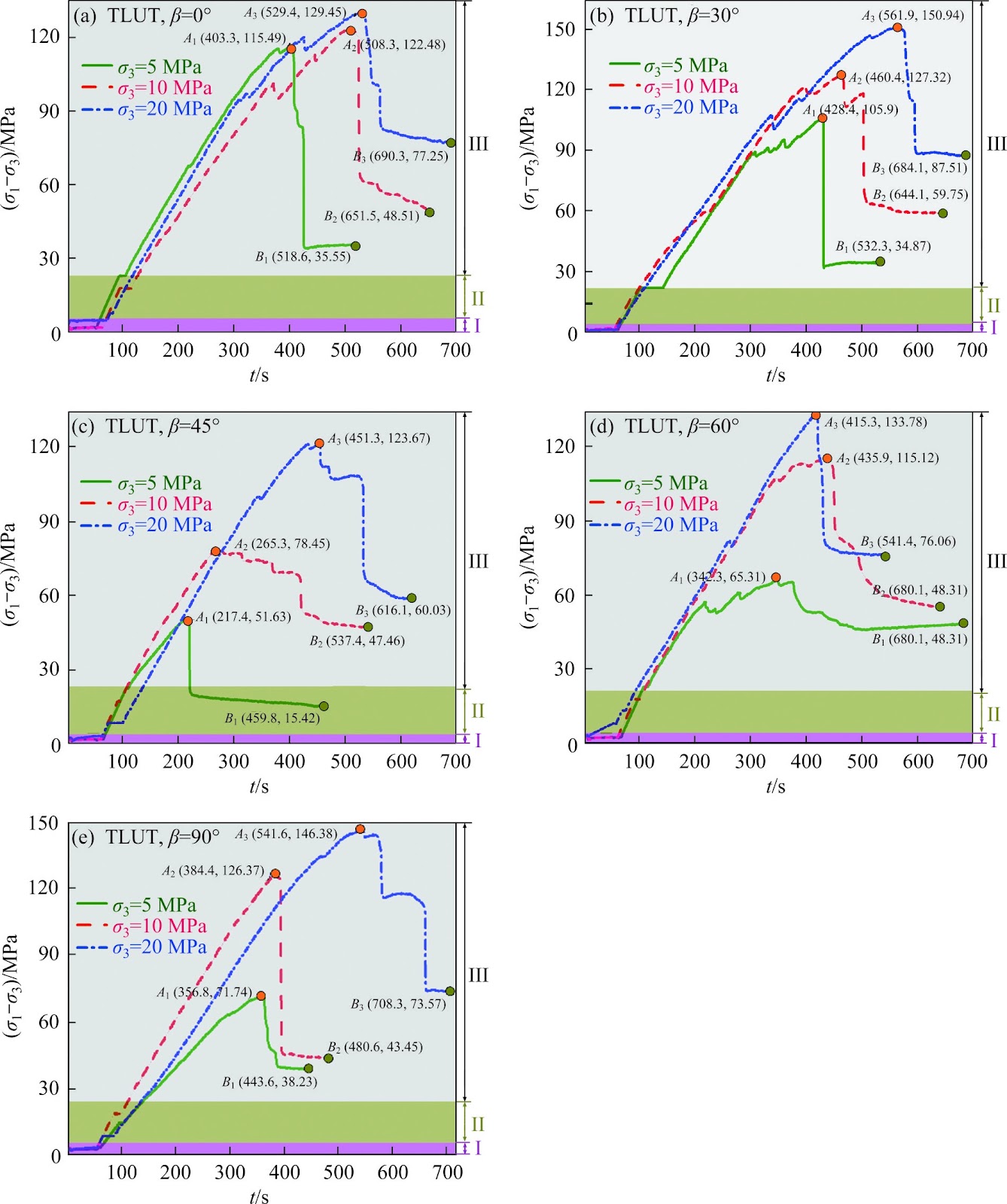
Rock residual strength, as an important input parameter, plays an indispensable role in proposing the reasonable and scientific scheme about stope design, underground tunnel excavation and stability evaluation of deep chambers. Therefore, previous residual strength models of rocks established were reviewed. And corresponding related problems were stated. Subsequently, starting from the effects of bedding and whole life-cycle evolution process, series of triaxial mechanical tests of deep bedded s
Federated model with contrastive learning and adaptive control variates for human activity recognition
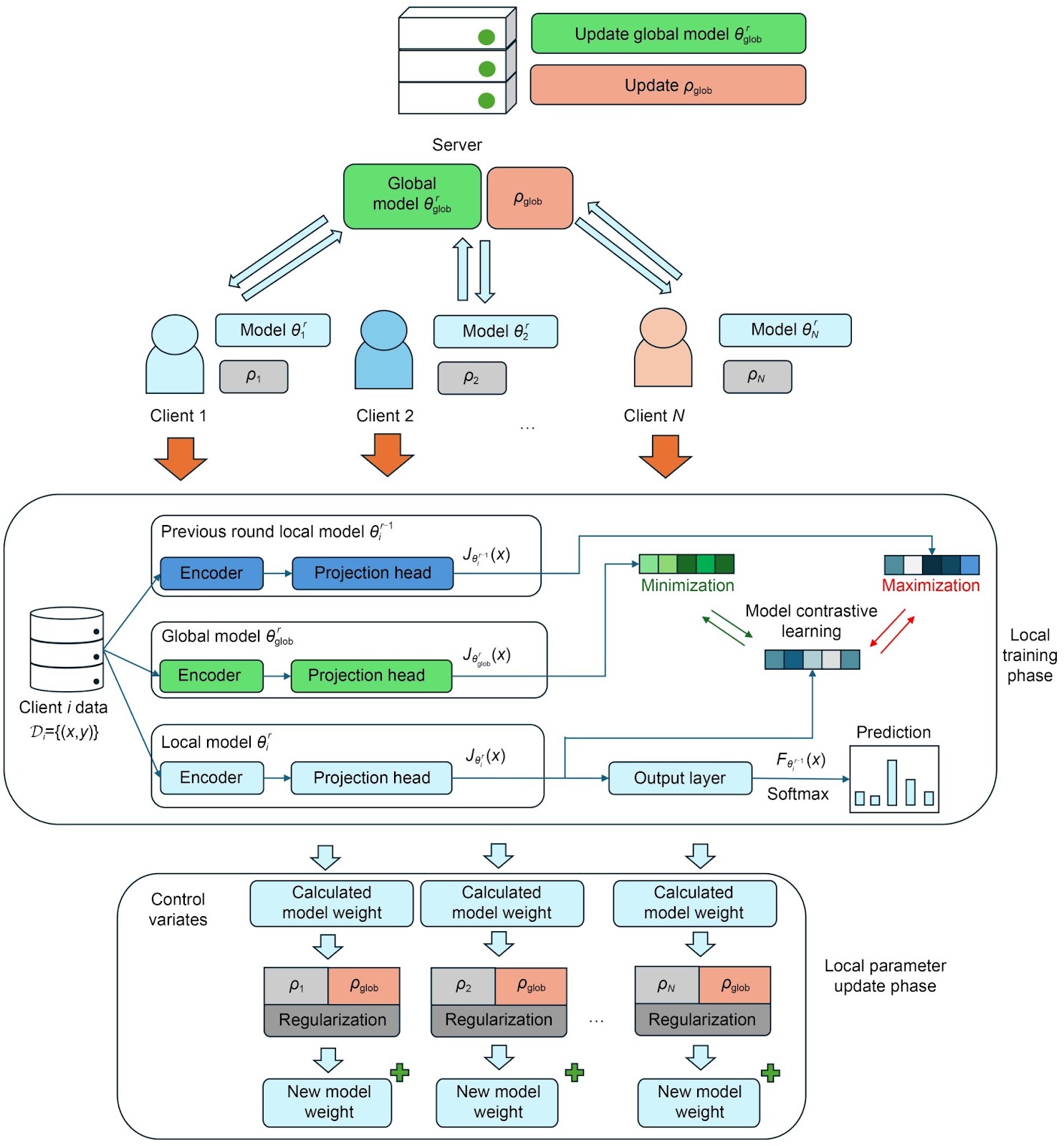
Recent attention to privacy issues demands a communication-safe method for training human activity recognition (HAR) models on client activity data. Federated learning (FL) has become a compelling technique to facilitate model training between the server and clients while preserving data privacy. However, classical FL methods often assume independent and identically distributed (IID) data among clients. This assumption does not hold true in practical scenarios. Human activity in real-world scena