Key Takeaways & Executive Findings
- •• STP-based algebraic formulation converts vector payoff functions of multi-objective games into a tractable algebraic form, enabling rigorous equilibrium analysis. • Two necessary and sufficient conditions are derived to verify whether all players meet their expectations and whether a strategy profile is a Pareto equilibrium. • A strategy updating rule is designed to analyze finite-step reachability of evolutionary multi-objective games, providing a dynamic perspective on equilibrium attainment. • Finite-step controllability is achieved by introducing pseudo-players, and a backward search algorithm identifies the shortest evolutionary process and control sequence.
Abstract
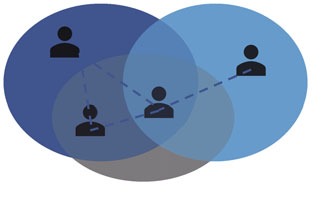
Multi-objective games (MOGs) have received much attention in recent years as a class of games with vector payoffs. Based on the semi-tensor product (STP), this paper discusses the MOG, including the existence, finite-step reachability, and finite-step controllability of Pareto equilibrium of this model, from both static and dynamic perspectives. First, the MOG concept is presented using multi-layer graphs, and STP is used to convert the payoff function into its algebraic form. Then, from the static perspective, two necessary and sufficient conditions are proposed to verify whether all players can meet their expectations and whether the strategy profile is a Pareto equilibrium, separately. Furthermore, from the dynamic perspective, a strategy updating rule is designed to investigate the finite-step reachability of the evolutionary MOG. Finally, the finite-step controllability of the evolutionary MOG is analyzed by adding pseudo-players, and a backward search algorithm is provided to find the shortest evolutionary process and control sequence.
1. Introduction
As one of the important tools in researching interaction mechanisms and behavior among individuals, game theory has a wide range of applications in areas such as cybernetics, biology, and economics. It has also become a popular interdisciplinary field. The payoff function is one of the important components of finite games and can be categorized into scalar and vector forms. Most of the existing references focus on the cases where payoffs are scalar. However, games with vector payoffs, which are commonly known as multi-objective games (MOGs) or multi-criteria games, are ubiquitous in reality. Games with vector payoffs offer a noteworthy study topic when internal motivation is considered (Puerto and Perea, 2018). For instance, considering tobacco consumers as players, as discussed by Ismaili (2018), every player’s payoff vector contains three components: the pleasure of smoking, the cost of cigarettes, and the impact on life expectancy. Consequently, the payoff can be modeled in the form of a vector, the numerical components of which demonstrate commodities (Hamel and Löhne, 2018), and the ultimate payoff depends on each component of the payoff vector. For example, Rădulescu et al. (2020) applied this type of game to MOG multi-agent systems, and every component of the payoff vector represented the performance on a different objective.
Equilibrium analysis is an important issue in game theory. For games with scalar payoffs, the existence of equilibria has been investigated, such as pure Nash equilibrium (Shah-Mansouri and Wong, 2018), Bayesian Nash equilibrium (He et al., 2024), fuzzy strong Nash equilibrium (Huang and Liu, 2022), and stationary Nash equilibrium (Jaśkiewicz and Nowak, 2023). Therefore, it is reasonable and practical to explore the equilibrium of MOGs. Because there is more than one objective for every player in an MOG, an accepted equilibrium is the Pareto equilibrium (Qu et al., 2015). Pareto equilibrium is a strategy profile in which no player can be better without making the others worse (Smith et al., 2014; Yan and Hayakawa, 2024). Based on methods such as Ky Fan’s minimax inequality and fixed-point theorem (Wang SY, 1993; Lu, 2008), the stochastic maximum principle with Markov jumps and Poisson jumps and the Lagrangian multiplier technique (Zhang et al., 2018; Hu et al., 2024), and the theorem of quasi-equilibrium existence (Ding, 2000a, 2000b), the existence of Pareto equilibrium has been investigated. To date, there has been no reference to finite-step reachability or finite-step controllability of Pareto equilibria in MOGs.
Specifically, for the Pareto equilibrium problem in MOGs, it is necessary to discuss the individual expectations of players, because cooperation and competition complement each other in the game process. In particular, for MOGs, if we examine only Pareto equilibrium which is cooperation-oriented, then the equilibrium points may be altruistic but not egoistic, which is not true in most real scenarios. Equally important, if we examine only Nash equilibrium, then such strictly competitive games do not reach an equilibrium point (Choobineh and Mohagheghi, 2019; Peng et al., 2022), because it is nearly impossible for all objectives to simultaneously achieve the best equilibrium. Consequently, by setting the payoff vector and ultimate payoff expectations for every player in an MOG and then researching the Pareto equilibrium, we can achieve more flexible simulation of various problems, where the ultimate payoff can be expressed using the weighted sum, weighted average, polynomial function, and so on.
Loading authentic research manuscript (Pages 1–5)...
Fanyueyang ZHANG, Jun’e FENG (2025). Analysis of the Pareto equilibrium in multi-objective games using semi-tensor product. Frontiers of Information Technology & Electronic Engineering. https://doi.org/10.1631/FITEE_2400945
Research & Educational Purpose Only:The translations, structured abstracts, analytical annotations, and data reports provided by SinoTechIntel are intended exclusively for academic research, internal corporate R&D, and educational benchmarking. They do not constitute formal engineering, chemical safety, legal, or professional advice.
Copyright & Intellectual Property Notice: Original copyright of the underlying source articles and experimental data remains with the respective authors, institutions, and original publishing journals. SinoTechIntel claims intellectual property only over its proprietary translations, analytical syntheses, and AEO structured enhancements in accordance with international fair use and academic citation principles.
Frequently Asked Questions
What is a multi-objective game (MOG)?
A multi-objective game is a finite game in which each player's payoff is a vector rather than a scalar, allowing multiple criteria or objectives to be considered simultaneously. Common examples include tobacco consumption models and multi-agent systems where each payoff component represents performance on a different objective.
What is Pareto equilibrium in multi-objective games?
Pareto equilibrium is a strategy profile in which no player can improve their payoff without making at least one other player worse off. It is the accepted equilibrium concept for multi-objective games because players have multiple, possibly conflicting objectives.
How does semi-tensor product (STP) help analyze multi-objective games?
STP converts the vector payoff functions of a multi-objective game into an algebraic form, enabling rigorous verification of Pareto equilibrium and facilitating analysis of finite-step reachability and controllability from both static and dynamic perspectives.
What are finite-step reachability and controllability of Pareto equilibrium?
Finite-step reachability refers to whether an evolutionary multi-objective game can reach a Pareto equilibrium within a finite number of strategy updates under a designed rule. Finite-step controllability extends this by adding pseudo-players and using a backward search algorithm to find the shortest evolutionary process and control sequence.
What are the practical applications of this research?
The results provide computationally tractable tools for engineering and economics, particularly in multi-agent systems where agents' payoffs are multi-objective. The proposed conditions and algorithms allow designers to verify equilibrium, design optimal control sequences, and analyze dynamic behaviors in complex interactive environments.
Related Technical Papers & Translations

Design and optimization of a high-efficiency distillation process for cellulosic fuel ethanol integrated with thermal coupling and molecular sieve adsorption
To address the challenges of high energy consumption and prominent costs in the traditional three-columns distillation process for cellulosic fuel ethanol, a distillation—molecular sieve coupling separation process is proposed. This process integrates a three-column (crude distillation column, first distillation column, second distillation column) system with a 3A molecular sieve adsorption deep dehydration unit. A thermal coupling network is constructed via differential pressure design (steam from medium/high-pressure columns as mutual heat sources, reboiler liquid waste heat for feed preheating), and molecular sieve adsorption conditions are optimized. The study first performs a thermodynamic consistency test on the ethanol—water system, determines optimal non-random two-liquid (NRTL) model binary interaction parameters via experimental data regression for Aspen Plus simulation. Aiming at minimum total annual cost (TAC), Aspen Plus is used to optimize process parameters (theoretical tray number, feed location, reflux ratio, side-draw position, etc.). Economic analysis shows this process reduces CO2 emission costs by 27.56%, TAC by 15.58% (to 5.123 × 10⁶ USD·a-1), and increases ethanol purity to >99.6%, providing an effective solution for green, efficient separation.

A cohesion loss model for determining residual strength of deep bedded sandstone
Rock residual strength, as an important input parameter, plays an indispensable role in proposing the reasonable and scientific scheme about stope design, underground tunnel excavation and stability evaluation of deep chambers. Therefore, previous residual strength models of rocks established were reviewed. And corresponding related problems were stated. Subsequently, starting from the effects of bedding and whole life-cycle evolution process, series of triaxial mechanical tests of deep bedded s

Federated model with contrastive learning and adaptive control variates for human activity recognition
Recent attention to privacy issues demands a communication-safe method for training human activity recognition (HAR) models on client activity data. Federated learning (FL) has become a compelling technique to facilitate model training between the server and clients while preserving data privacy. However, classical FL methods often assume independent and identically distributed (IID) data among clients. This assumption does not hold true in practical scenarios. Human activity in real-world scena