Key Takeaways & Executive Findings
- •• A two-stage fine-tuning algorithm with instruction-conflicting samples and unlikelihood loss reduces off-target translations in zero-shot directions. • Up to 62.4 percentage points reduction in off-target translation ratio on LLaMA 2 and LLaMA 3 across 16 zero-shot directions. • Up to +9.7 BLEU improvement in translation quality compared to a competitive translation-finetuned baseline. • The method preserves model performance on supervised translation and general tasks, ensuring no degradation of other capabilities.
Abstract
Large language models (LLMs) exhibit remarkable capabilities in various natural language processing tasks, such as machine translation. However, the large number of LLM parameters incurs significant costs during inference. Previous studies have attempted to train translation-tailored LLMs with moderately sized models by fine-tuning them on the translation data. Nevertheless, when performing translations in zero-shot directions that are absent from the fine-tuning data, the problem of ignoring instructions and thus producing translations in the wrong language (i.e., the off-target translation issue) remains unresolved. In this work, we design a two-stage fine-tuning algorithm to improve the instruction-following ability of translation-tailored LLMs, particularly for maintaining accurate translation directions. We first fine-tune LLMs on the translation data to elicit basic translation capabilities. At the second stage, we construct instruction-conflicting samples by randomly replacing the instructions with the incorrect ones. Then, we introduce an extra unlikelihood loss to reduce the probability assigned to those samples. Experiments on two benchmarks using the LLaMA 2 and LLaMA 3 models, spanning 16 zero-shot directions, demonstrate that, compared to the competitive baseline—translation-finetuned LLaMA, our method could effectively reduce the off-target translation ratio (up to −62.4 percentage points), thus improving translation quality (up to +9.7 bilingual evaluation understudy). Analysis shows that our method can preserve the model’s performance on other tasks, such as supervised translation and general tasks. Code is released at https://github.com/alphadl/LanguageAware_Tuning.
1. Introduction
Large language models (LLMs) (Min et al., 2023; Li B et al., 2024) have demonstrated excellent performance on a wide range of natural language processing (NLP) tasks, including reasoning (Wei et al., 2023), summarization (Wang YM et al., 2023; Huang et al., 2024), translation (Hendy et al., 2023), understanding (Zhang HB et al., 2022; Zhong et al., 2023), and evaluation (Lu et al., 2024). LLMs exemplified by GPT-3 (Brown et al., 2020), OPT (Zhang SS et al., 2022), LLaMA (Touvron et al., 2023a), and LLaMA 2 (Touvron et al., 2023b), leverage large-scale monolingual data through pre-training with the causal language modeling task, and exhibit strong zero-shot capabilities with a few demonstration examples. Instruction tuning (Mishra et al., 2022; Wei et al., 2022) further elicits the capacity of LLMs to address general tasks directly with proper guidance, such as task definition. However, due to the significant cost to call state-of-the-art proprietary LLMs, such as GPT-4 (OpenAI, 2024), it is attractive to explore strategies for effectively fitting suitably sized LLMs into specific tasks, such as machine translation (Fu et al., 2023; Xu HR et al., 2024b).
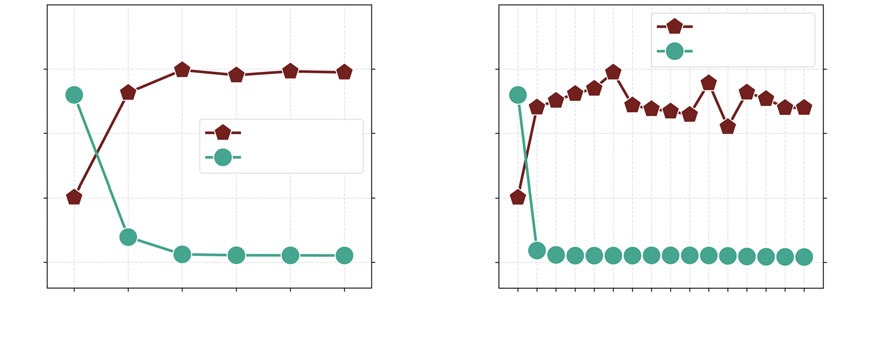
In zero-shot translation (ZST) (Gu et al., 2019; Chen et al., 2023; Zan et al., 2023), the objective is to translate sentences from a source language to a target language, where there is either a lack of direct mapping between the source and target languages in the training data, or the target or source languages are absent during training. Addressing the ZST problem is both vital and challenging, especially for low-resource languages. Recent research demonstrates that building translation-tailored LLMs by fine-tuning translation data can achieve superior translation performance (Liu YJ et al., 2023; Xu HR et al., 2024b; Zeng et al., 2024). However, as illustrated in Fig. 1, our preliminary study shows that when tackling zero-shot directions, translation-tailored LLMs often encounter the off-target translation problem, where the generated translations are in the wrong languages.
Loading authentic research manuscript (Pages 1–5)...
Changtong ZAN, Liang DING, Li SHEN, Yibing ZHAN, Xinghao YANG, Weifeng LIU (2025). Building accurate translation-tailored large language models with language-aware instruction tuning. Frontiers of Information Technology & Electronic Engineering. https://doi.org/10.1631/FITEE_2400458
Research & Educational Purpose Only:The translations, structured abstracts, analytical annotations, and data reports provided by SinoTechIntel are intended exclusively for academic research, internal corporate R&D, and educational benchmarking. They do not constitute formal engineering, chemical safety, legal, or professional advice.
Copyright & Intellectual Property Notice: Original copyright of the underlying source articles and experimental data remains with the respective authors, institutions, and original publishing journals. SinoTechIntel claims intellectual property only over its proprietary translations, analytical syntheses, and AEO structured enhancements in accordance with international fair use and academic citation principles.
Frequently Asked Questions
What is the off-target translation issue in large language models?
The off-target translation issue occurs when a translation-tailored LLM ignores the given instruction and generates translations in the wrong language, especially in zero-shot translation directions not seen during fine-tuning.
How does the proposed method reduce off-target translations?
The proposed two-stage fine-tuning algorithm uses instruction-conflicting samples and an unlikelihood loss to lower the probability of incorrect language outputs, effectively maintaining accurate translation directions.
What improvements were observed on LLaMA 2 and LLaMA 3?
Across 16 zero-shot directions, the method reduced the off-target translation ratio by up to 62.4 percentage points and improved BLEU score by up to 9.7, compared to a competitive baseline.
Does the method preserve performance on other tasks?
Yes, analysis shows that it preserves the model's performance on supervised translation and general tasks, indicating that the approach does not degrade overall capabilities.
Is the code released?
Yes, the code is publicly available at https://github.com/alphadl/LanguageAware_Tuning.
Related Technical Papers & Translations
Design and optimization of a high-efficiency distillation process for cellulosic fuel ethanol integrated with thermal coupling and molecular sieve adsorption
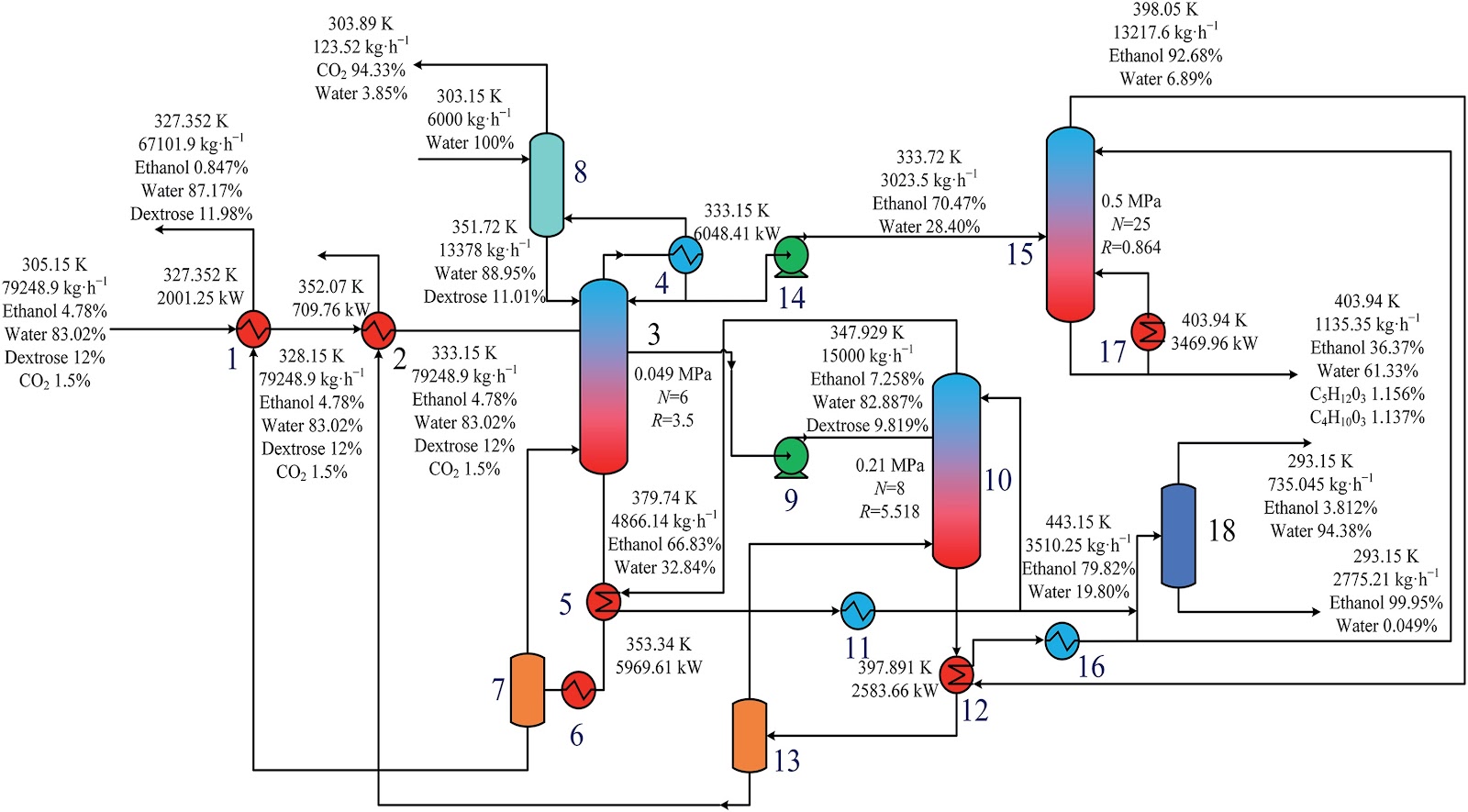
To address the challenges of high energy consumption and prominent costs in the traditional three-columns distillation process for cellulosic fuel ethanol, a distillation—molecular sieve coupling separation process is proposed. This process integrates a three-column (crude distillation column, first distillation column, second distillation column) system with a 3A molecular sieve adsorption deep dehydration unit. A thermal coupling network is constructed via differential pressure design (steam from medium/high-pressure columns as mutual heat sources, reboiler liquid waste heat for feed preheating), and molecular sieve adsorption conditions are optimized. The study first performs a thermodynamic consistency test on the ethanol—water system, determines optimal non-random two-liquid (NRTL) model binary interaction parameters via experimental data regression for Aspen Plus simulation. Aiming at minimum total annual cost (TAC), Aspen Plus is used to optimize process parameters (theoretical tray number, feed location, reflux ratio, side-draw position, etc.). Economic analysis shows this process reduces CO2 emission costs by 27.56%, TAC by 15.58% (to 5.123 × 10⁶ USD·a-1), and increases ethanol purity to >99.6%, providing an effective solution for green, efficient separation.
A cohesion loss model for determining residual strength of deep bedded sandstone
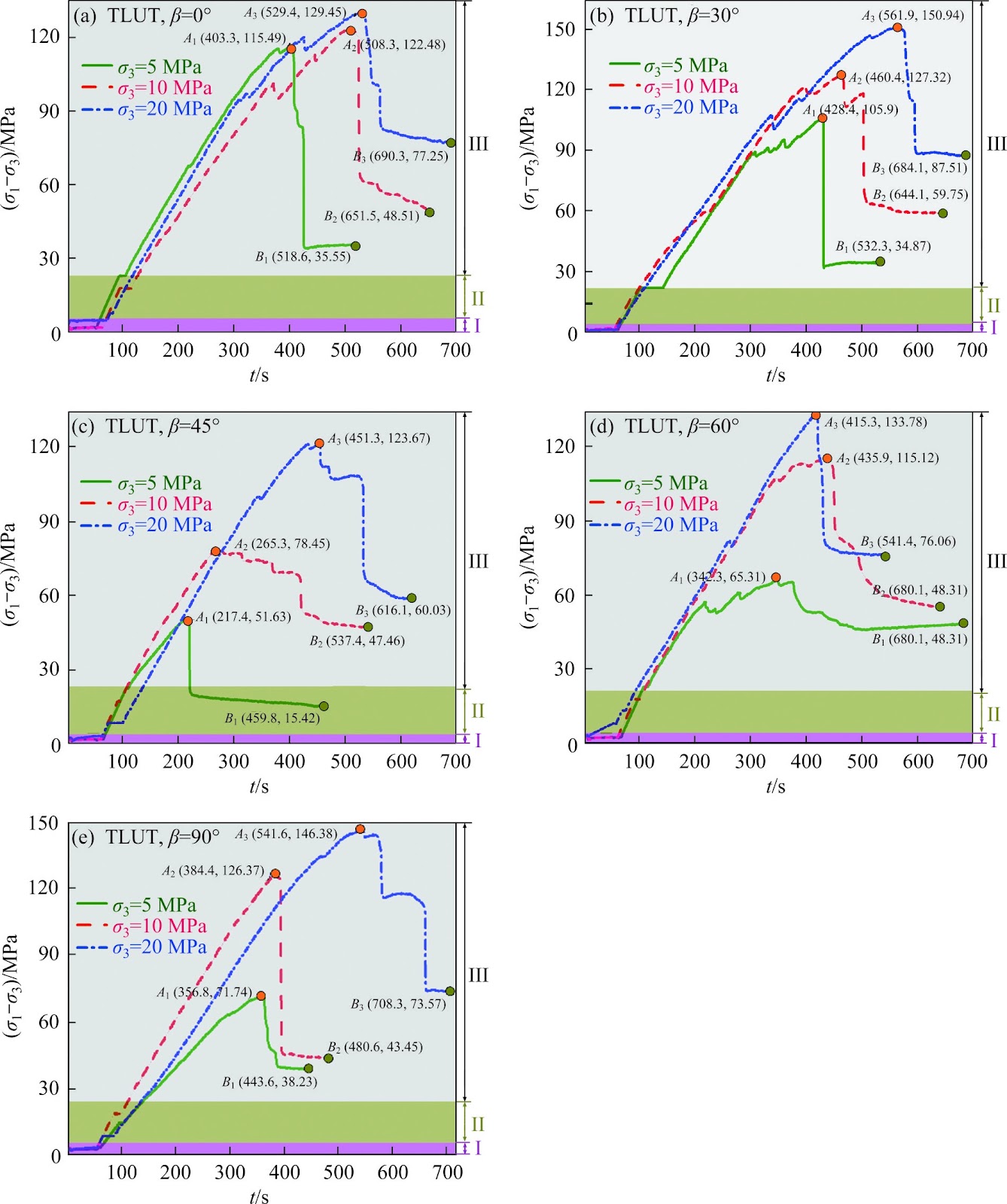
Rock residual strength, as an important input parameter, plays an indispensable role in proposing the reasonable and scientific scheme about stope design, underground tunnel excavation and stability evaluation of deep chambers. Therefore, previous residual strength models of rocks established were reviewed. And corresponding related problems were stated. Subsequently, starting from the effects of bedding and whole life-cycle evolution process, series of triaxial mechanical tests of deep bedded s
Federated model with contrastive learning and adaptive control variates for human activity recognition
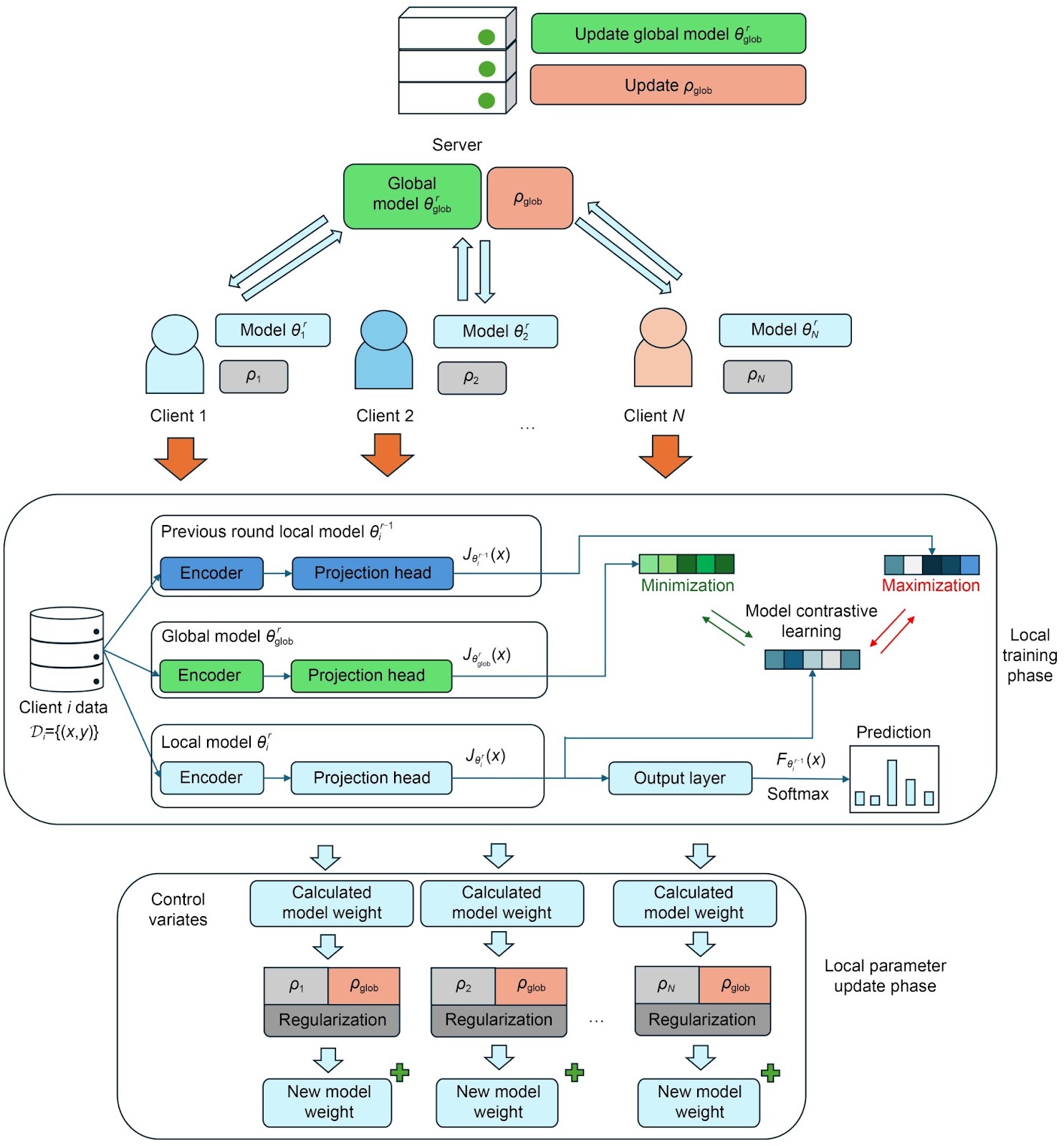
Recent attention to privacy issues demands a communication-safe method for training human activity recognition (HAR) models on client activity data. Federated learning (FL) has become a compelling technique to facilitate model training between the server and clients while preserving data privacy. However, classical FL methods often assume independent and identically distributed (IID) data among clients. This assumption does not hold true in practical scenarios. Human activity in real-world scena