Key Takeaways & Executive Findings
- •• Proposes a novel algorithm for automatic parallelism strategy generation with minimal memory redundancy. • Introduces a redundant memory cost model to compute memory overhead per operator in distributed training. • Formulates the parallelism strategy search as an integer linear programming (ILP) problem for optimal intra-operator parallelism. • Achieves up to 67% memory savings versus Megatron-LM while maintaining comparable throughput.
Abstract
Large-scale deep learning models are trained distributedly due to memory and computing resource limitations. Few existing strategy generation approaches take optimal memory minimization as the objective. To fill in this gap, we propose a novel algorithm that generates optimal parallelism strategies with the constraint of minimal memory redundancy. We propose a novel redundant memory cost model to calculate the memory overhead of each operator in a given parallel strategy. To generate the optimal parallelism strategy, we formulate the parallelism strategy search problem into an integer linear programming problem and use an efficient solver to find minimal-memory intra-operator parallelism strategies. Furthermore, the proposed algorithm has been extended and implemented in a multi-dimensional parallel training framework and is characterized by high throughput and minimal memory redundancy. Experimental results demonstrate that our approach achieves memory savings of up to 67% compared to the latest Megatron-LM strategies; in contrast, the gap between the throughput of our approach and its counterparts is not large.
1. Introduction
Large-scale deep learning models have been a tremendously popular area of study in recent years owing to their excellent performance improvements in various fields, such as image recognition, speech recognition, dialogue systems, natural language processing, and recommendation systems (Krizhevsky et al., 2012; Naumov et al., 2019; Brown et al., 2020; Dan et al., 2023), which is a result of increasing model sizes and dataset sizes (Zhuang et al., 2017). For example, PaLM with 540 billion parameters was trained with a corpus of 780 billion tokens representing a wide range of natural language use cases (Chowdhery et al., 2022). As a result, training these models is computation-intensive and time-consuming, requiring a lot of computing resources. However, resources on a single node are limited and insufficient to train these models (Lan et al., 2018; Guan et al., 2020). To address this challenge, researchers have proposed various parallelism strategies to accelerate the process of training large-scale deep learning models. However, designing parallel strategies is not a straightforward task, and it often requires considerable expertise and trial-and-error exploration to achieve high performance (Mo, 2018; He et al., 2023).
To relieve us from the parallelism design procedure, researchers have proposed auto-parallelism methods (Jia et al., 2018; Cai et al., 2022; Zheng et al., 2022; Liu YL et al., 2023) that can find decent strategies given a specific model and environment. These methods model the communication costs of different parallelism strategies and then use a search algorithm to find the optimal strategy. However, existing studies typically aim to minimize the communication cost for a given model. Under this search objective, the resulting parallelism strategies are often not memory-optimal. To fill in this gap, we propose an algorithm to search for memory-optimized operator-level parallelism strategies by analyzing the memory overhead of neural networks in distributed training. This enables us to further increase the hidden layer or batch size on hardware resources with limited memory. Initially, we instantiate a memory analyzer, enabling the computation of memory overhead for any specified strategy. Subsequently, we formalize the problem of strategy search. To accomplish this, we leverage an external solver specifically designed for integer linear programming (ILP) and employ it as a basis for arriving at the decisions, pertaining to optimal multi-dimensional intra-operator parallelism strategies that minimize memory usage.
Loading authentic research manuscript (Pages 1–5)...
Yanqi SHI, Peng LIANG, Hao ZHENG, Linbo QIAO, Dongsheng LI (2025). Automatic parallelism strategy generation with minimal memory redundancy. Frontiers of Information Technology & Electronic Engineering. https://doi.org/10.1631/FITEE_2300684
Research & Educational Purpose Only:The translations, structured abstracts, analytical annotations, and data reports provided by SinoTechIntel are intended exclusively for academic research, internal corporate R&D, and educational benchmarking. They do not constitute formal engineering, chemical safety, legal, or professional advice.
Copyright & Intellectual Property Notice: Original copyright of the underlying source articles and experimental data remains with the respective authors, institutions, and original publishing journals. SinoTechIntel claims intellectual property only over its proprietary translations, analytical syntheses, and AEO structured enhancements in accordance with international fair use and academic citation principles.
Frequently Asked Questions
What is the main contribution of this paper?
The paper proposes a novel algorithm that automatically generates parallelism strategies with minimal memory redundancy for large-scale deep learning training, using an ILP-based search.
How does the proposed method achieve memory savings?
It introduces a redundant memory cost model to quantify memory overhead per operator and formulates the search as an integer linear programming problem to find memory-optimal intra-operator parallelism strategies.
What are the experimental results compared to Megatron-LM?
The approach achieves up to 67% memory savings while maintaining throughput comparable to the latest Megatron-LM strategies.
What is intra-operator parallelism?
Intra-operator parallelism partitions an operator's tensors along some dimensions and assigns the computation to multiple devices, as opposed to inter-operator parallelism which pipelines different operators.
How is the strategy search formulated?
The parallelism strategy search is formulated as an integer linear programming (ILP) problem and solved with an efficient ILP solver.
Related Technical Papers & Translations
Design and optimization of a high-efficiency distillation process for cellulosic fuel ethanol integrated with thermal coupling and molecular sieve adsorption
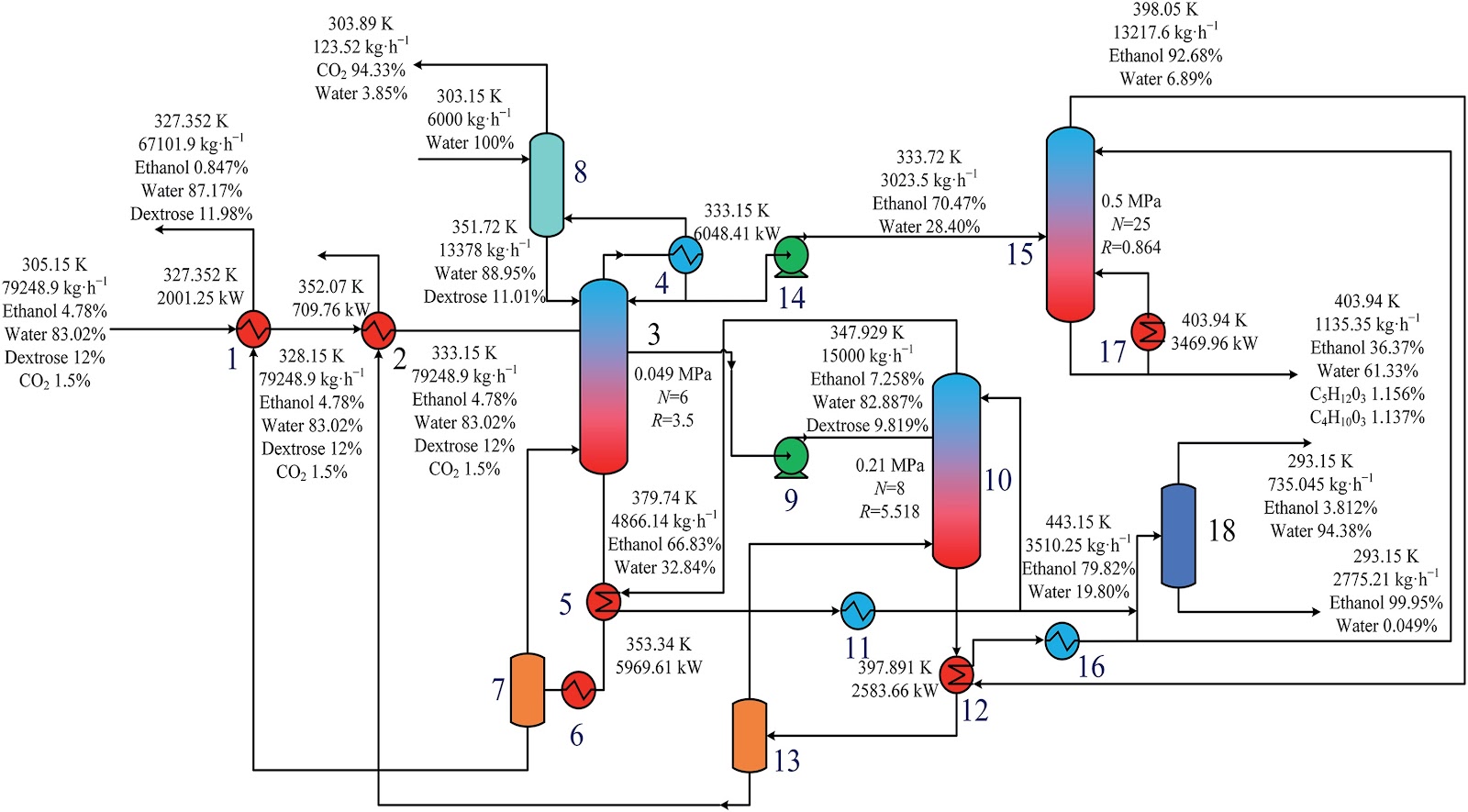
To address the challenges of high energy consumption and prominent costs in the traditional three-columns distillation process for cellulosic fuel ethanol, a distillation—molecular sieve coupling separation process is proposed. This process integrates a three-column (crude distillation column, first distillation column, second distillation column) system with a 3A molecular sieve adsorption deep dehydration unit. A thermal coupling network is constructed via differential pressure design (steam from medium/high-pressure columns as mutual heat sources, reboiler liquid waste heat for feed preheating), and molecular sieve adsorption conditions are optimized. The study first performs a thermodynamic consistency test on the ethanol—water system, determines optimal non-random two-liquid (NRTL) model binary interaction parameters via experimental data regression for Aspen Plus simulation. Aiming at minimum total annual cost (TAC), Aspen Plus is used to optimize process parameters (theoretical tray number, feed location, reflux ratio, side-draw position, etc.). Economic analysis shows this process reduces CO2 emission costs by 27.56%, TAC by 15.58% (to 5.123 × 10⁶ USD·a-1), and increases ethanol purity to >99.6%, providing an effective solution for green, efficient separation.
A cohesion loss model for determining residual strength of deep bedded sandstone
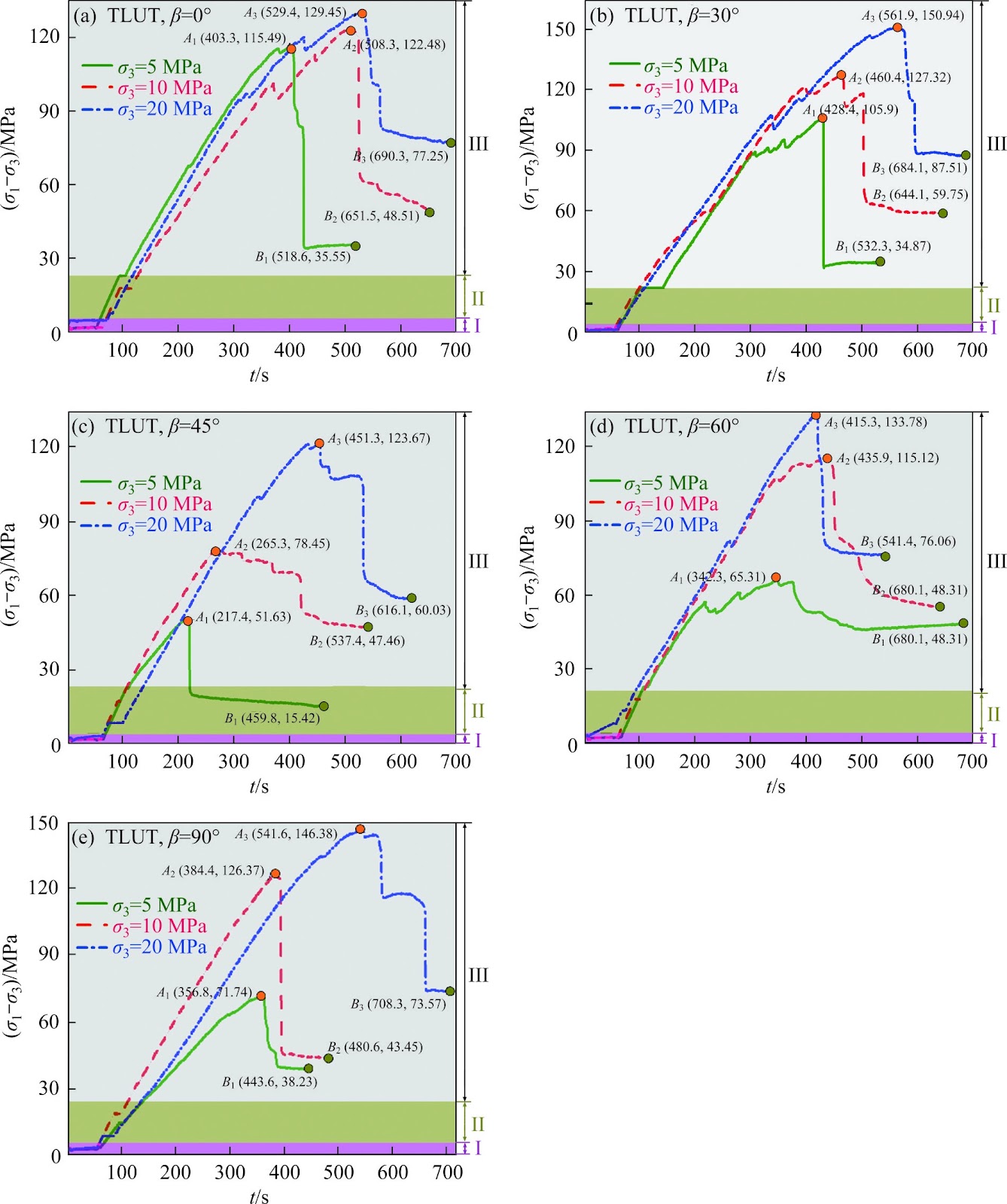
Rock residual strength, as an important input parameter, plays an indispensable role in proposing the reasonable and scientific scheme about stope design, underground tunnel excavation and stability evaluation of deep chambers. Therefore, previous residual strength models of rocks established were reviewed. And corresponding related problems were stated. Subsequently, starting from the effects of bedding and whole life-cycle evolution process, series of triaxial mechanical tests of deep bedded s
Federated model with contrastive learning and adaptive control variates for human activity recognition
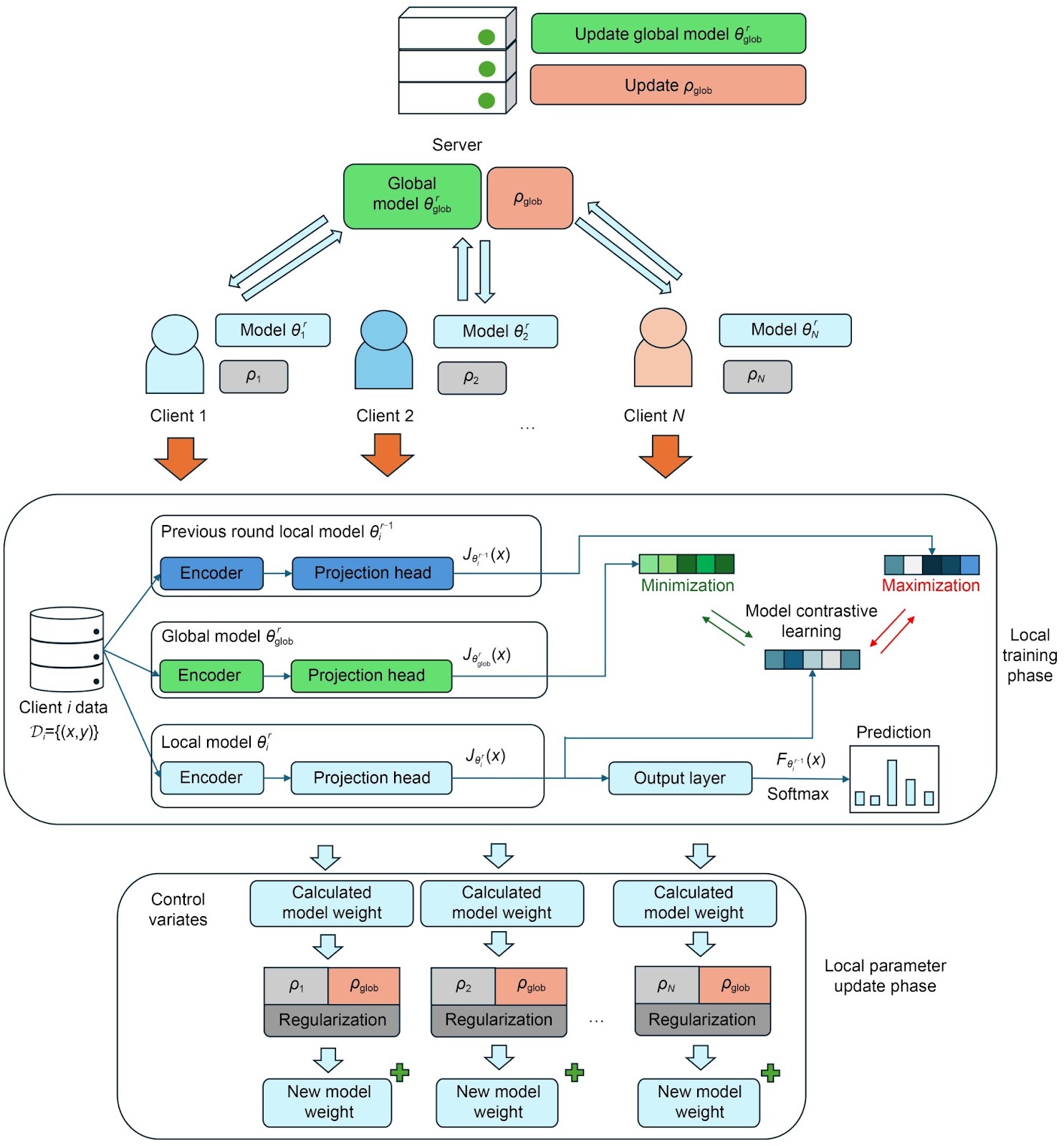
Recent attention to privacy issues demands a communication-safe method for training human activity recognition (HAR) models on client activity data. Federated learning (FL) has become a compelling technique to facilitate model training between the server and clients while preserving data privacy. However, classical FL methods often assume independent and identically distributed (IID) data among clients. This assumption does not hold true in practical scenarios. Human activity in real-world scena