Key Takeaways & Executive Findings
- •• Vina-FPGA2 introduces an inter-module pipeline design that overcomes the irregular computation bottlenecks of AutoDock Vina, achieving significant performance gains. • It exploits task-level independence and a reinforcement learning-based resource allocation solver for efficient hardware implementation on FPGA. • On Xilinx UltraScale XCKU060, Vina-FPGA2-Enhanced achieves 12.6× speedup over CPU and 3.3× improvement over Vina-FPGA. • Compared to Vina-GPU, Vina-FPGA2 improves energy efficiency by 7.2×, making it a compelling low-power accelerator for molecular docking.
Abstract
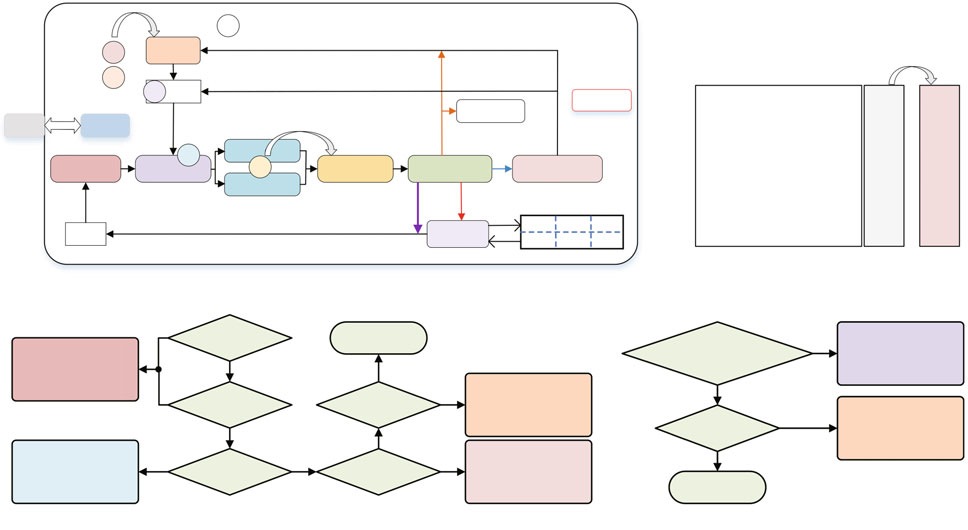
AutoDock Vina (Vina) is a widely adopted molecular docking tool, often regarded as a standard or used as a baseline in numerous studies. However, its computational process is highly time-consuming. The pioneering field-programmable gate array (FPGA)-based accelerator of Vina, known as Vina-FPGA, offers a high energy-efficiency approach to speed up the docking process. However, the computation modules in the Vina-FPGA design are not efficiently used. This is due to Vina exhibiting irregular behaviors in the form of nested loops with changing upper bounds and differing control flows. Fortunately, Vina employs the Monte Carlo iterative search method, which requires independent computations for different random initial inputs. This characteristic provides an opportunity to implement further parallel computation designs. To this end, this paper proposes Vina-FPGA2, an inter-module pipeline design for further accelerating Vina-FPGA. First, we use individual computational task (Task) independence by sequentially filling Tasks into computation modules. Then, we implement an inter-module pipeline parallel design by the Tag Checker module and architectural modifications, named Vina-FPGA2-Baseline. Next, to achieve resource-efficient hardware implementation, we describe it as an optimization problem and develop a reinforcement learning-based solver. Targeting the Xilinx UltraScale XCKU060 platform, this solver yields a more efficient implementation, named Vina-FPGA2-Enhanced. Finally, experiments show that Vina-FPGA2-Enhanced achieves an average 12.6× performance improvement over the central processing unit (CPU) and a 3.3× improvement over Vina-FPGA. Compared to Vina-GPU, Vina-FPGA2 achieves a 7.2× enhancement in energy efficiency.
1. Introduction
Molecular docking is a pivotal step in drug design, leveraging computer algorithms to quickly screen candidate drug molecules (Chen, 2015; Caballero, 2021). Molecular docking tools employ specific search algorithms to speed up the process of searching for optimal results in a huge potential solution space (Salmaso and Moro, 2018). Diverse molecular docking tools adopt distinct search algorithms, and AutoDock Vina (Vina) (Trott and Olson, 2010) stands out among numerous molecular docking tools with its excellent performance. This is attributed to the effectiveness of the multi-initial-state simulated annealing algorithm (Kirkpatrick et al., 1983) and the quasi-Newton optimization search algorithm used by Vina. The computation process across multiple initial states is independent, allowing Vina to deploy the calculations of various initial states on multi-core central processing units (CPUs) for parallel processing. Simultaneously, the quasi-Newton optimization search algorithm expedites the attainment of the optimal value.
Although Vina delivers excellent docking accuracy and speed, its CPU-based execution remains time- and energy-intensive due to irregular control flows and deeply nested loops with dynamic bounds, which hinder parallelism. To mitigate this, researchers have explored various acceleration strategies. VirtualFlow (Gorgulla et al., 2020) employs up to 160 000 CPUs for large-scale virtual screening. Vina-GPU (Tang et al., 2022) and its successor Vina-GPU 2.0 (Ding et al., 2023), integrating QuickVina 2 (Alhossary et al., 2015) and QuickVina-W (Hassan et al., 2017), exploit graphics processing unit (GPU) parallelism to achieve up to 21× speedups (Zhou et al., 2023). While these methods significantly enhance performance, they also incur high energy costs. Field-programmable gate arrays (FPGAs), with their reconfigurability, parallelism, and energy efficiency (Belletti et al., 2009; Choi et al., 2019; Shawahna et al., 2019; Mittal, 2020), offer a compelling alternative. In our previous work, we introduced Vina-FPGA (Ling et al., 2022), which leverages pipelined and partially parallel modules to deliver a 3.8× speedup over CPUs while consuming only 45% of the energy used by Vina-GPU.
However, the computation modules are under-utilized and inefficient within Vina-FPGA. It is constrained by the extensive iterative dependencies in the Vina algorithm; that is, the input of the next computation module depends on the output of the previous one, and the input f
Loading authentic research manuscript (Pages 1–5)...
Ming LING, Shidi TANG, Ruiqi CHEN, Xin LI, Yanxiang ZHU (2025). Vina-FPGA2: a high-level parallelized hardware-accelerated molecular docking tool based on the inter-module pipeline. Frontiers of Information Technology & Electronic Engineering. https://doi.org/10.1631/FITEE_2400941
Research & Educational Purpose Only:The translations, structured abstracts, analytical annotations, and data reports provided by SinoTechIntel are intended exclusively for academic research, internal corporate R&D, and educational benchmarking. They do not constitute formal engineering, chemical safety, legal, or professional advice.
Copyright & Intellectual Property Notice: Original copyright of the underlying source articles and experimental data remains with the respective authors, institutions, and original publishing journals. SinoTechIntel claims intellectual property only over its proprietary translations, analytical syntheses, and AEO structured enhancements in accordance with international fair use and academic citation principles.
Frequently Asked Questions
What is Vina-FPGA2?
Vina-FPGA2 is an advanced FPGA-based hardware accelerator for AutoDock Vina, a widely used molecular docking tool. It introduces an inter-module pipeline design to improve computational efficiency and speed over the original Vina-FPGA, achieving significant performance gains while maintaining high energy efficiency.
How does Vina-FPGA2 improve performance over Vina-FPGA?
Vina-FPGA2 improves performance by exploiting task-level independence in Vina's Monte Carlo iterative search, sequentially filling independent computational tasks into modules, and implementing an inter-module pipeline with a Tag Checker module. This design reduces idle times and increases throughput, achieving 3.3× speedup over Vina-FPGA on the Xilinx UltraScale XCKU060 platform.
What role does reinforcement learning play in Vina-FPGA2?
Reinforcement learning is used to solve the resource allocation optimization problem for the FPGA implementation. It automatically determines efficient hardware configurations, leading to a resource-efficient design named Vina-FPGA2-Enhanced, which achieves better performance per resource unit compared to the baseline.
What are the key advantages of using FPGA for molecular docking?
FPGAs offer reconfigurability, parallelism, and energy efficiency, making them suitable for accelerating molecular docking computations. Compared to CPUs and GPUs, FPGAs can achieve better performance-per-watt, reducing energy costs while providing substantial speedups, which is critical for large-scale virtual screening.
What energy efficiency improvements does Vina-FPGA2 offer compared to GPU accelerators?
Vina-FPGA2 achieves a 7.2× enhancement in energy efficiency compared to Vina-GPU, making it a more sustainable solution for high-throughput docking tasks. This advantage is largely due to the FPGA's lower power consumption and the optimized pipeline architecture that minimizes wasted operations.
Related Technical Papers & Translations

Design and optimization of a high-efficiency distillation process for cellulosic fuel ethanol integrated with thermal coupling and molecular sieve adsorption
To address the challenges of high energy consumption and prominent costs in the traditional three-columns distillation process for cellulosic fuel ethanol, a distillation—molecular sieve coupling separation process is proposed. This process integrates a three-column (crude distillation column, first distillation column, second distillation column) system with a 3A molecular sieve adsorption deep dehydration unit. A thermal coupling network is constructed via differential pressure design (steam from medium/high-pressure columns as mutual heat sources, reboiler liquid waste heat for feed preheating), and molecular sieve adsorption conditions are optimized. The study first performs a thermodynamic consistency test on the ethanol—water system, determines optimal non-random two-liquid (NRTL) model binary interaction parameters via experimental data regression for Aspen Plus simulation. Aiming at minimum total annual cost (TAC), Aspen Plus is used to optimize process parameters (theoretical tray number, feed location, reflux ratio, side-draw position, etc.). Economic analysis shows this process reduces CO2 emission costs by 27.56%, TAC by 15.58% (to 5.123 × 10⁶ USD·a-1), and increases ethanol purity to >99.6%, providing an effective solution for green, efficient separation.

A cohesion loss model for determining residual strength of deep bedded sandstone
Rock residual strength, as an important input parameter, plays an indispensable role in proposing the reasonable and scientific scheme about stope design, underground tunnel excavation and stability evaluation of deep chambers. Therefore, previous residual strength models of rocks established were reviewed. And corresponding related problems were stated. Subsequently, starting from the effects of bedding and whole life-cycle evolution process, series of triaxial mechanical tests of deep bedded s

Federated model with contrastive learning and adaptive control variates for human activity recognition
Recent attention to privacy issues demands a communication-safe method for training human activity recognition (HAR) models on client activity data. Federated learning (FL) has become a compelling technique to facilitate model training between the server and clients while preserving data privacy. However, classical FL methods often assume independent and identically distributed (IID) data among clients. This assumption does not hold true in practical scenarios. Human activity in real-world scena