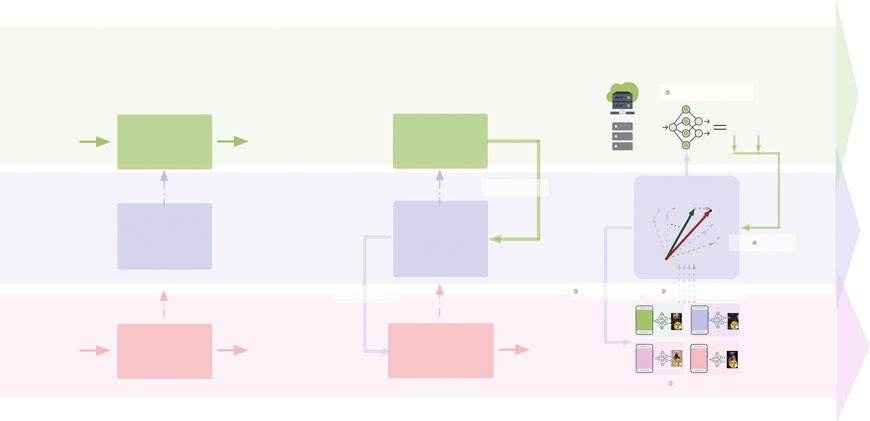
Key Takeaways & Executive Findings
- •• Proposes FedMcon, a meta-learning-based adaptive aggregation method that learns to aggregate heterogeneous local models in federated learning. • A learnable controller trained on a small proxy dataset replaces fixed aggregation rules, effectively addressing non-IID data distributions. • Achieves 19× communication speedup in a single FL setting while maintaining superior performance on extremely non-IID data. • Overcomes limitations of FedAvg's static linear combination weighting based solely on local data sizes.
Abstract
Federated learning (FL) emerged as a novel machine learning setting that enables collaboratively training deep models on decentralized clients with privacy constraints. In the vanilla federated averaging algorithm (FedAvg), the global model is generated by the weighted linear combination of local models, and the weights are proportional to the local data sizes. This methodology, however, encounters challenges when facing heterogeneous and unknown client data distributions, often leading to discrepancies from the intended global objective. The linear combination-based aggregation often fails to address the varied dynamics presented by diverse scenarios, settings, and data distributions inherent in FL, resulting in hindered convergence and compromised generalization. In this paper, we present a new aggregation method, FedMcon, within a framework of meta-learning for FL. We introduce a learnable controller trained on a small proxy dataset and served as an aggregator to learn how to adaptively aggregate heterogeneous local models into a better global model toward the desired objective. The experimental results indicate that the proposed method is effective on extremely non-independent and identically distributed data and it can simultaneously reach 19 times communication speedup in a single FL setting.
1. Introduction
In the field of machine learning, federated learning (FL) has been identified as a promising method for preserving privacy (McMahan et al., 2023). FL operates by collaboratively training a shared model among several decentralized clients, without requiring these clients to share their private data, thereby providing a basic level of privacy protection. However, as FL moves from theoretical frameworks to real-world deployments, it faces significant challenges that fundamentally impact its performance and applicability. The heterogeneous nature of client data, varying network conditions, and dynamic client behaviors create a complex optimization landscape that traditional approaches struggle to navigate effectively.
In the field of FL, a key challenge arises from the presence of heterogeneous data (McMahan et al., 2023), often referred to as the non-independent and identically distributed (non-IID) problem. This is because data are generated and retained across various clients, leading to significant variations in data distribution from one client to another. Traditional FL methods, which rely on fixed aggregation rules, often fail to adapt to these changing conditions, resulting in suboptimal convergence and reduced model quality. The complex interaction between client diversity and model optimization creates scenarios in which static aggregation strategies cannot effectively guide the learning process toward optimal solutions. Such diversity in the data landscape across clients may lead to significant convergence and performance degradation in the implementation of the federated averaging algorithm (FedAvg).
Loading authentic research manuscript (Pages 1–5)...
Tao SHEN, Zexi LI, Ziyu ZHAO, Didi ZHU, Zheqi LV, Kun KUANG, Shengyu ZHANG, Chao WU, Fei WU (2025). FedMcon: an adaptive aggregation method for federated learning via meta controller. Frontiers of Information Technology & Electronic Engineering. https://doi.org/10.1631/FITEE_2400530
Research & Educational Purpose Only:The translations, structured abstracts, analytical annotations, and data reports provided by SinoTechIntel are intended exclusively for academic research, internal corporate R&D, and educational benchmarking. They do not constitute formal engineering, chemical safety, legal, or professional advice.
Copyright & Intellectual Property Notice: Original copyright of the underlying source articles and experimental data remains with the respective authors, institutions, and original publishing journals. SinoTechIntel claims intellectual property only over its proprietary translations, analytical syntheses, and AEO structured enhancements in accordance with international fair use and academic citation principles.
Frequently Asked Questions
What is FedMcon?
FedMcon is an adaptive aggregation method for federated learning that leverages a meta-learning framework. It introduces a learnable controller trained on a small proxy dataset to aggregate heterogeneous local models into a better global model.
How does FedMcon address non-IID data in federated learning?
FedMcon overcomes the limitations of fixed linear combination aggregation by learning to adaptively combine local models based on the current data distribution and scenario. This is particularly effective in extremely non-IID settings where traditional methods like FedAvg fail.
What performance improvements does FedMcon achieve?
FedMcon simultaneously reaches a 19 times communication speedup in a single federated learning setting while maintaining effective performance on extremely non-IID data.
What is the role of meta-learning in FedMcon?
Meta-learning provides the underlying framework to train the controller so it can quickly adapt to diverse client data distributions and settings, enabling the aggregation strategy to generalize across different federated learning scenarios.
Who are the authors of the FedMcon paper?
The authors are Tao Shen, Zexi Li, Ziyu Zhao, Didi Zhu, Zheqi Lv, Kun Kuang, Shengyu Zhang, Chao Wu, and Fei Wu from Zhejiang University, China.
Related Technical Papers & Translations
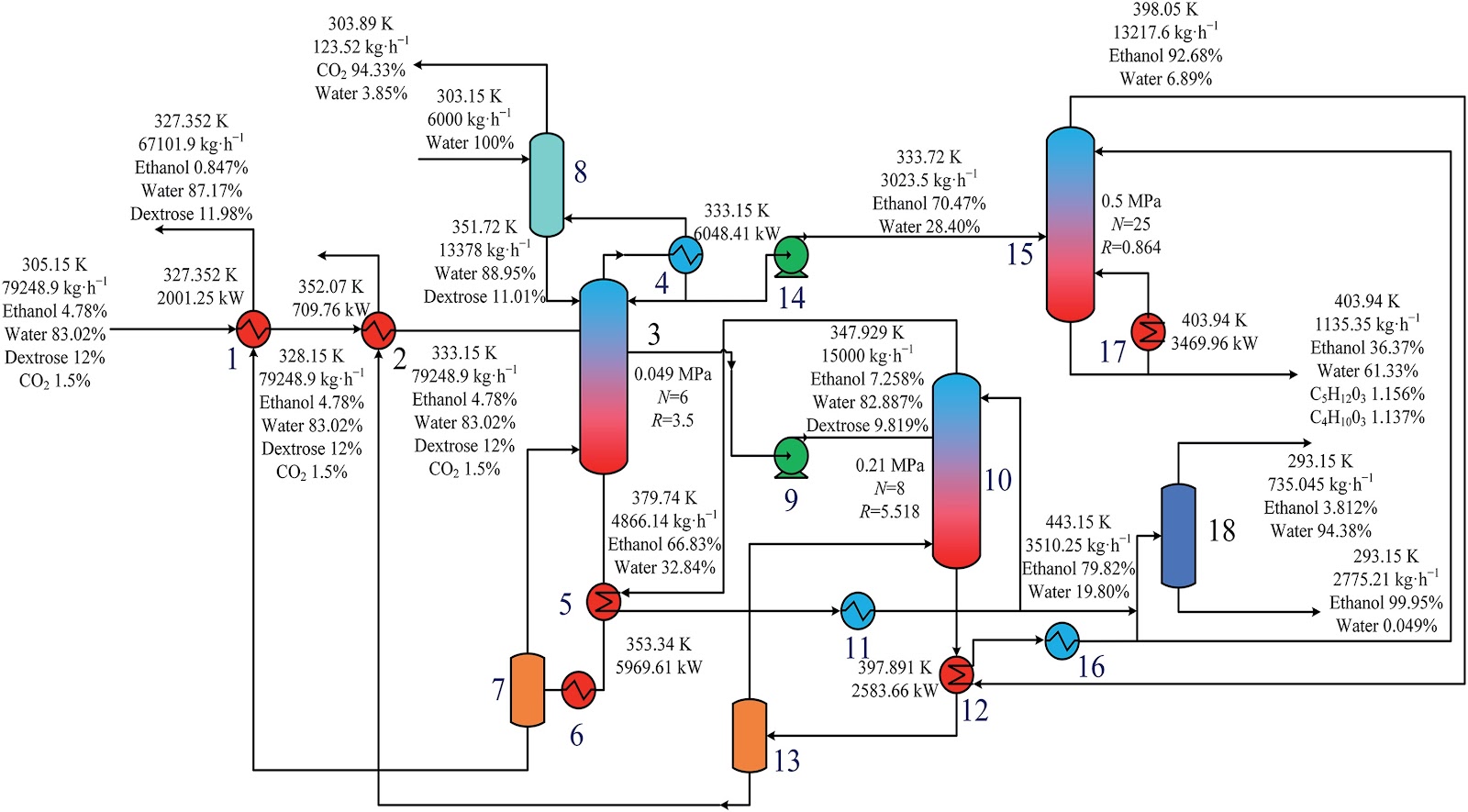
Design and optimization of a high-efficiency distillation process for cellulosic fuel ethanol integrated with thermal coupling and molecular sieve adsorption
To address the challenges of high energy consumption and prominent costs in the traditional three-columns distillation process for cellulosic fuel ethanol, a distillation—molecular sieve coupling separation process is proposed. This process integrates a three-column (crude distillation column, first distillation column, second distillation column) system with a 3A molecular sieve adsorption deep dehydration unit. A thermal coupling network is constructed via differential pressure design (steam from medium/high-pressure columns as mutual heat sources, reboiler liquid waste heat for feed preheating), and molecular sieve adsorption conditions are optimized. The study first performs a thermodynamic consistency test on the ethanol—water system, determines optimal non-random two-liquid (NRTL) model binary interaction parameters via experimental data regression for Aspen Plus simulation. Aiming at minimum total annual cost (TAC), Aspen Plus is used to optimize process parameters (theoretical tray number, feed location, reflux ratio, side-draw position, etc.). Economic analysis shows this process reduces CO2 emission costs by 27.56%, TAC by 15.58% (to 5.123 × 10⁶ USD·a-1), and increases ethanol purity to >99.6%, providing an effective solution for green, efficient separation.
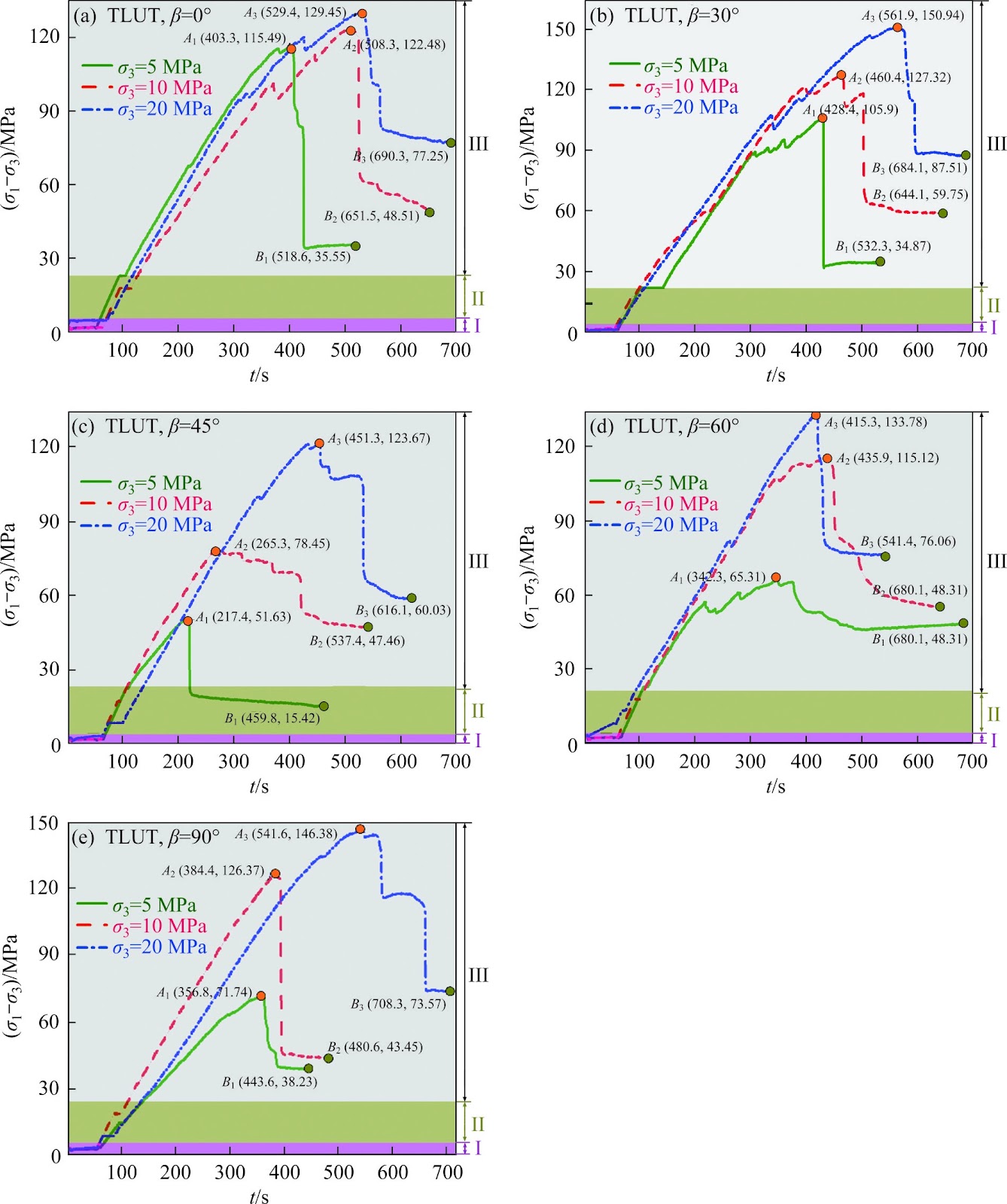
A cohesion loss model for determining residual strength of deep bedded sandstone
Rock residual strength, as an important input parameter, plays an indispensable role in proposing the reasonable and scientific scheme about stope design, underground tunnel excavation and stability evaluation of deep chambers. Therefore, previous residual strength models of rocks established were reviewed. And corresponding related problems were stated. Subsequently, starting from the effects of bedding and whole life-cycle evolution process, series of triaxial mechanical tests of deep bedded s
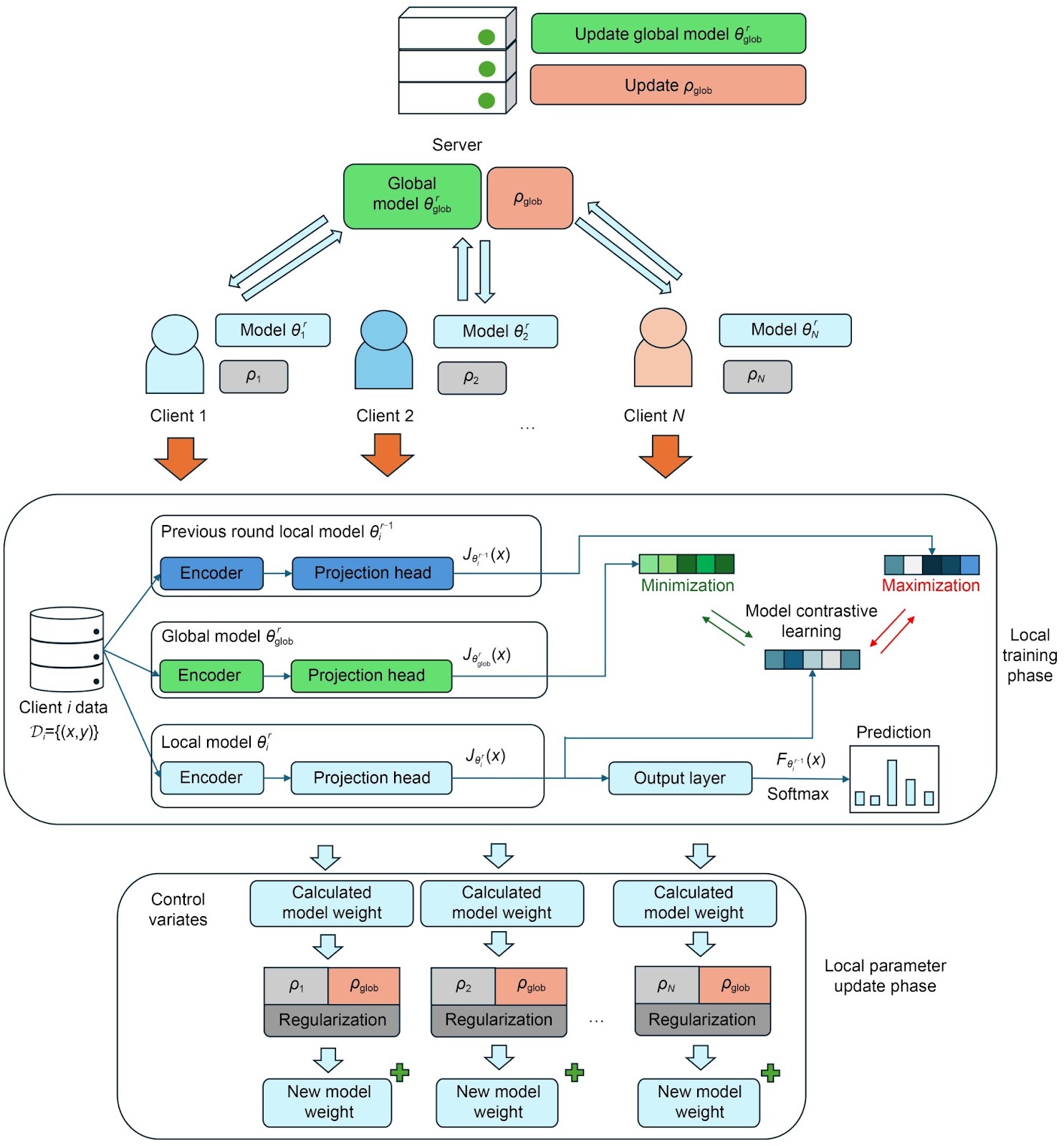
Federated model with contrastive learning and adaptive control variates for human activity recognition
Recent attention to privacy issues demands a communication-safe method for training human activity recognition (HAR) models on client activity data. Federated learning (FL) has become a compelling technique to facilitate model training between the server and clients while preserving data privacy. However, classical FL methods often assume independent and identically distributed (IID) data among clients. This assumption does not hold true in practical scenarios. Human activity in real-world scena