Key Takeaways & Executive Findings
- •• A novel data-driven method based on Bayesian inference is proposed for accurately localizing intermittent connection (IC) faults in DeviceNet networks with complex topologies. • The method integrates observation symptoms and network topology information to derive suspected IC faults and compute posterior probabilities without interrupting normal system operation. • A maximum likelihood-based fast diagnosis algorithm enables rapid identification of fault locations in multi-fault scenarios. • Experimental case studies on a laboratory testbed under various topologies demonstrate that diagnosed IC fault locations agree well with experimental setups.
Abstract
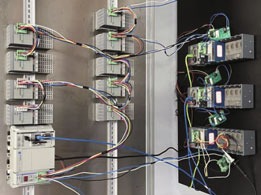
As the topology of DeviceNet in industrial automation systems grows more complex and the reliability requirement for industrial equipment and processes becomes more stringent, the importance of network troubleshooting is increasingly evident. Intermittent connection (IC) faults frequently occur in DeviceNet systems, impairing production performance and even operational safety. However, existing IC troubleshooting methods for DeviceNet, especially those with complex topologies, cannot directly handle multi-fault scenarios, which require human intervention for a full diagnosis. In this paper, a novel data-driven IC fault diagnosis method based on Bayesian inference is proposed for DeviceNet with complex topologies, which can accurately and efficiently localize all IC faults in the network without interrupting the normal system operation. First, the observation symptoms are defined by analyzing the data frames interrupted by IC faults, and the suspected IC faults are derived by integrating the observation symptoms and the network topology information. Second, a Bayesian inference-based estimation approach for the posterior probability of each suspected fault occurring in the network is proposed using the quantity of observation symptoms and their causal relationships regarding the suspected faults. Finally, a maximum likelihood-based fast diagnosis algorithm is developed to rapidly identify the IC fault locations in various complex scenarios. A laboratory testbed is constructed and case studies are conducted under various topologies and fault scenarios to demonstrate the effectiveness and advantages of the proposed method. Experimental results show that the IC fault locations diagnosed by the proposed method agree well with the experimental setup.
1. Introduction
DeviceNet, a fieldbus network using the controller area network (CAN) as the physical and data link layer protocol (Open DeviceNet Vendor Association, 2021), is widely used for transmitting important data in industrial automation systems, such as automotive manufacturing systems and distributed control systems (Gessner et al., 2014; Cheng et al., 2024a, 2024b), which require excellent real-time performance and network reliability. However, in real-world environments, unavoidable factors such as ambient interference, vibration, and loose connectors can lead to frequent intermittent connection (IC) faults in the network. Manifested as intermittent and random disconnections of network cables in short time intervals, IC fault is a common but hard-to-diagnose problem.
Such faults can cause transmission delays or even loss of critical messages due to random interruptions in network communications, which may cause system shutdowns and security-related problems. It is tremendously challenging to diagnose IC faults in complex topologies, that is, the hierarchical structures that evolve from bus structures by combining multi-port connectors, because the limited available open-style ports of DeviceNet in practice hinder the diagnosability of the subnets inside the complex topology network (Wang LK et al., 2023). Therefore, timely detection and complete diagnosis of IC faults before they cause system-level failures are of great importance for the reliability of complex topological systems. In the literature, some preliminary studies have been conducted on IC fault diagnosis methods for CAN networks. Zhao and Lei (2012) and Lei et al. (2014b) applied generalized zero inflated Poisson models to describe the IC-induced errors, and used a ranked probability control chart to monitor the error anomalies; however, the localization of IC faults was not addressed. Lei et al. (2014a, 2015) defined two error events corresponding to different IC fault scenarios in CAN networks and estimated the confidence intervals of the parameters for the error events to diagnose IC faults; however, their approach depends on analog signal analysis at the physical layer, which is not robust. Based on the data link layer information for the IC-induced errors, Zhang et al. (2017) proposed a context-free-grammar-based IC fault localization method, and Zhang et al. (2019) also proposed a tree-based IC fault diagnosis method. However, the diagnostic accuracy of these qualitative diagnosis methods is unsatisfactory in multi-fault cases, because the ability to discriminate between faulty and non-faulty cables is insufficient due to an inability to precisely quantify the possibility of an IC fault.
Loading authentic research manuscript (Pages 1–5)...
Longkai WANG, Yong LEI (2025). Data-driven intermittent connection fault diagnosis for complex topology DeviceNet based on Bayesian inference. Frontiers of Information Technology & Electronic Engineering. https://doi.org/10.1631/FITEE_2400696
Research & Educational Purpose Only:The translations, structured abstracts, analytical annotations, and data reports provided by SinoTechIntel are intended exclusively for academic research, internal corporate R&D, and educational benchmarking. They do not constitute formal engineering, chemical safety, legal, or professional advice.
Copyright & Intellectual Property Notice: Original copyright of the underlying source articles and experimental data remains with the respective authors, institutions, and original publishing journals. SinoTechIntel claims intellectual property only over its proprietary translations, analytical syntheses, and AEO structured enhancements in accordance with international fair use and academic citation principles.
Frequently Asked Questions
What is an intermittent connection (IC) fault in DeviceNet?
An intermittent connection fault in DeviceNet is a random and temporary disconnection of network cables over short time intervals, often caused by ambient interference, vibration, or loose connectors. It can lead to transmission delays, loss of critical messages, and even system shutdowns, making it a hard-to-diagnose network reliability issue.
How does the proposed Bayesian inference method diagnose IC faults without interrupting system operation?
The method analyzes data frames interrupted by IC faults to define observation symptoms, integrates these symptoms with network topology information to identify suspected faults, and estimates the posterior probability of each suspected fault using Bayesian inference. This data-driven approach works passively on existing network traffic, allowing fault localization without stopping normal system operations.
What are the limitations of existing CAN network fault diagnosis methods?
Existing methods either lack fault localization capability (e.g., Poisson model-based monitoring), rely on non-robust analog signal analysis at the physical layer, or provide qualitative diagnoses with insufficient accuracy in multi-fault scenarios. The proposed method overcomes these by precisely quantifying fault probabilities and handling complex topologies.
How does the method handle complex topologies with multi-port connectors?
The method leverages network topology information to integrate observation symptoms with the causal relationships of suspected faults. This allows it to diagnose IC faults in complex hierarchical structures that evolve from bus structures by combining multi-port connectors, where limited open-style ports hinder traditional diagnosability.
What were the experimental results validating the proposed approach?
A laboratory testbed was constructed under various topologies and fault scenarios. Experimental results showed that the IC fault locations diagnosed by the proposed method agreed well with the experimental setup, demonstrating its effectiveness and advantages in multi-fault scenarios.
Related Technical Papers & Translations

Design and optimization of a high-efficiency distillation process for cellulosic fuel ethanol integrated with thermal coupling and molecular sieve adsorption
To address the challenges of high energy consumption and prominent costs in the traditional three-columns distillation process for cellulosic fuel ethanol, a distillation—molecular sieve coupling separation process is proposed. This process integrates a three-column (crude distillation column, first distillation column, second distillation column) system with a 3A molecular sieve adsorption deep dehydration unit. A thermal coupling network is constructed via differential pressure design (steam from medium/high-pressure columns as mutual heat sources, reboiler liquid waste heat for feed preheating), and molecular sieve adsorption conditions are optimized. The study first performs a thermodynamic consistency test on the ethanol—water system, determines optimal non-random two-liquid (NRTL) model binary interaction parameters via experimental data regression for Aspen Plus simulation. Aiming at minimum total annual cost (TAC), Aspen Plus is used to optimize process parameters (theoretical tray number, feed location, reflux ratio, side-draw position, etc.). Economic analysis shows this process reduces CO2 emission costs by 27.56%, TAC by 15.58% (to 5.123 × 10⁶ USD·a-1), and increases ethanol purity to >99.6%, providing an effective solution for green, efficient separation.

A cohesion loss model for determining residual strength of deep bedded sandstone
Rock residual strength, as an important input parameter, plays an indispensable role in proposing the reasonable and scientific scheme about stope design, underground tunnel excavation and stability evaluation of deep chambers. Therefore, previous residual strength models of rocks established were reviewed. And corresponding related problems were stated. Subsequently, starting from the effects of bedding and whole life-cycle evolution process, series of triaxial mechanical tests of deep bedded s

Federated model with contrastive learning and adaptive control variates for human activity recognition
Recent attention to privacy issues demands a communication-safe method for training human activity recognition (HAR) models on client activity data. Federated learning (FL) has become a compelling technique to facilitate model training between the server and clients while preserving data privacy. However, classical FL methods often assume independent and identically distributed (IID) data among clients. This assumption does not hold true in practical scenarios. Human activity in real-world scena