Key Takeaways & Executive Findings
- •• Proposes a novel RIS-aided secret key generation framework that dynamically tunes reflection coefficients to overcome quasi-static channel limitations, enhancing channel randomness. • Combines an autoencoder with K-means clustering quantization to efficiently convert high-dimensional CSI into random bits, significantly reducing key disagreement rate (KDR). • Simulation results demonstrate superior key generation rate (KGR) and KDR performance across various SNR conditions, validated using the NIST randomness test suite. • Offers a practical solution for physical-layer security in static or slowly varying wireless environments, addressing a critical vulnerability in IoT and resource-constrained networks.
Abstract
In quasi-static wireless channel scenarios, the generation of physical layer keys faces the challenge of invariant spatial and temporal channel characteristics, resulting in a high key disagreement rate (KDR) and low key generation rate (KGR). To address these issues, we propose a novel reconfigurable intelligent surface (RIS)-aided secret key generation approach using an autoencoder and K-means quantization algorithm. The proposed method uses channel state information (CSI) for channel estimation and dynamically adjusts the reflection coefficients of the RIS to create a rapidly fluctuating channel. This strategy enables the extraction of dynamic channel parameters, thereby enhancing channel randomness. Additionally, by integrating the autoencoder with the K-means clustering quantization algorithm, the method efficiently extracts random bits from complex, ambiguous, and high-dimensional channel parameters, significantly reducing KDR. Simulations demonstrate that, under various signal-to-noise ratios (SNRs), the proposed method performs excellently in terms of KGR and KDR. Furthermore, the randomness of the generated keys is validated through the National Institute of Standards and Technology (NIST) test suite.
1. Introduction
With the rapid advancement of wireless communication technologies, ensuring secure data transmission has become an increasingly critical challenge. Unlike wired networks, wireless communication relies on electromagnetic waves, which are inherently exposed to potential eavesdropping and malicious interference. The openness of wireless transmission, coupled with the broadcast characteristics of radio frequency signals, significantly increases the risk of unauthorized interception, tampering, and data leakage. This vulnerability has spurred the demand for more robust encryption methods to safeguard communications in dynamic and hostile environments.
Traditional cryptographic approaches, while effective, often rely on computational complexity to secure information. However, they may be insufficient to counter evolving threats, particularly in resource-constrained environments. In response, physical layer key generation has emerged as a promising solution, leveraging the unique characteristics of the wireless channel to generate symmetric keys for encryption. One notable method, proposed by Mathur et al. (2008), capitalizes on the inherent properties of the wireless channel reciprocity, time-variability, and spatial decorrelation to generate highly secure and dynamic keys for data encryption. Reciprocity ensures that both communicating parties, typically referred to as Alice and Bob, experience correlated channel responses, allowing them to independently generate identical cryptographic keys without transmitting sensitive information over the air. Time-variability exploits the time-varying nature of the wireless environment to continuously update keys, enhancing their unpredictability and resilience against eavesdropping, even in the presence of fading and interference. Finally, spatial decorrelation ensures that an eavesdropper, located beyond a half-wavelength distance from the legitimate users, cannot reconstruct the shared key due to the uncorrelated nature of the channel at their positions.
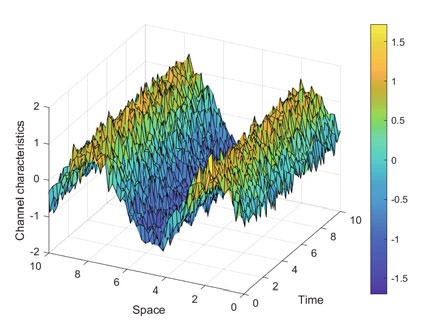
However, the variability required for robust key generation can be limited in real-world applications, particularly in time-domain quasi-static environments where the wireless channel changes gradually. These scenarios often suffer from reduced time-domain randomness and smaller key update rates, making it difficult to maintain a high level of security and efficiency in key generation. Fig. 1 illustrates the challenges presented by such quasi-static environments, where maintaining sufficient channel randomness becomes a crucial concern.
Loading authentic research manuscript (Pages 1–5)...
Zhenling Li, Panpan Xu, Qiangqiang Gao, Chunguo Li, Weijie Tan (2025). Reconfigurable intelligent surface-aided secret key generation using an autoencoder and K-means quantization. Frontiers of Information Technology & Electronic Engineering. https://doi.org/10.1631/FITEE_2400799
Research & Educational Purpose Only:The translations, structured abstracts, analytical annotations, and data reports provided by SinoTechIntel are intended exclusively for academic research, internal corporate R&D, and educational benchmarking. They do not constitute formal engineering, chemical safety, legal, or professional advice.
Copyright & Intellectual Property Notice: Original copyright of the underlying source articles and experimental data remains with the respective authors, institutions, and original publishing journals. SinoTechIntel claims intellectual property only over its proprietary translations, analytical syntheses, and AEO structured enhancements in accordance with international fair use and academic citation principles.
Frequently Asked Questions
What is the main challenge addressed by the proposed RIS-aided secret key generation method?
The method addresses high key disagreement rate (KDR) and low key generation rate (KGR) in quasi-static wireless channels where channel characteristics remain largely invariant over time, limiting physical layer key generation efficiency and security.
How does the reconfigurable intelligent surface (RIS) enhance channel randomness for key generation?
By dynamically adjusting the reflection coefficients of the RIS, the method creates rapidly fluctuating channel conditions, enabling the extraction of dynamic channel state information (CSI) that significantly increases the randomness available for cryptographic key generation.
What role does the autoencoder and K-means quantization play in the proposed framework?
The autoencoder transforms complex, high-dimensional CSI into a low-dimensional latent representation, while K-means clustering quantizes these features into discrete bits, efficiently reducing the key disagreement rate and improving the reliability of generated keys.
What performance metrics are used to evaluate the proposed method?
The method is evaluated using key generation rate (KGR), key disagreement rate (KDR), and the National Institute of Standards and Technology (NIST) randomness test suite, demonstrating excellent performance under various signal-to-noise ratios.
What are the practical applications of this RIS-aided key generation approach?
This approach is particularly valuable for secure communication in resource-constrained and quasi-static environments, such as IoT networks, smart homes, and industrial wireless systems, where conventional cryptographic methods may be computationally expensive or channel variations are insufficient.
Related Technical Papers & Translations
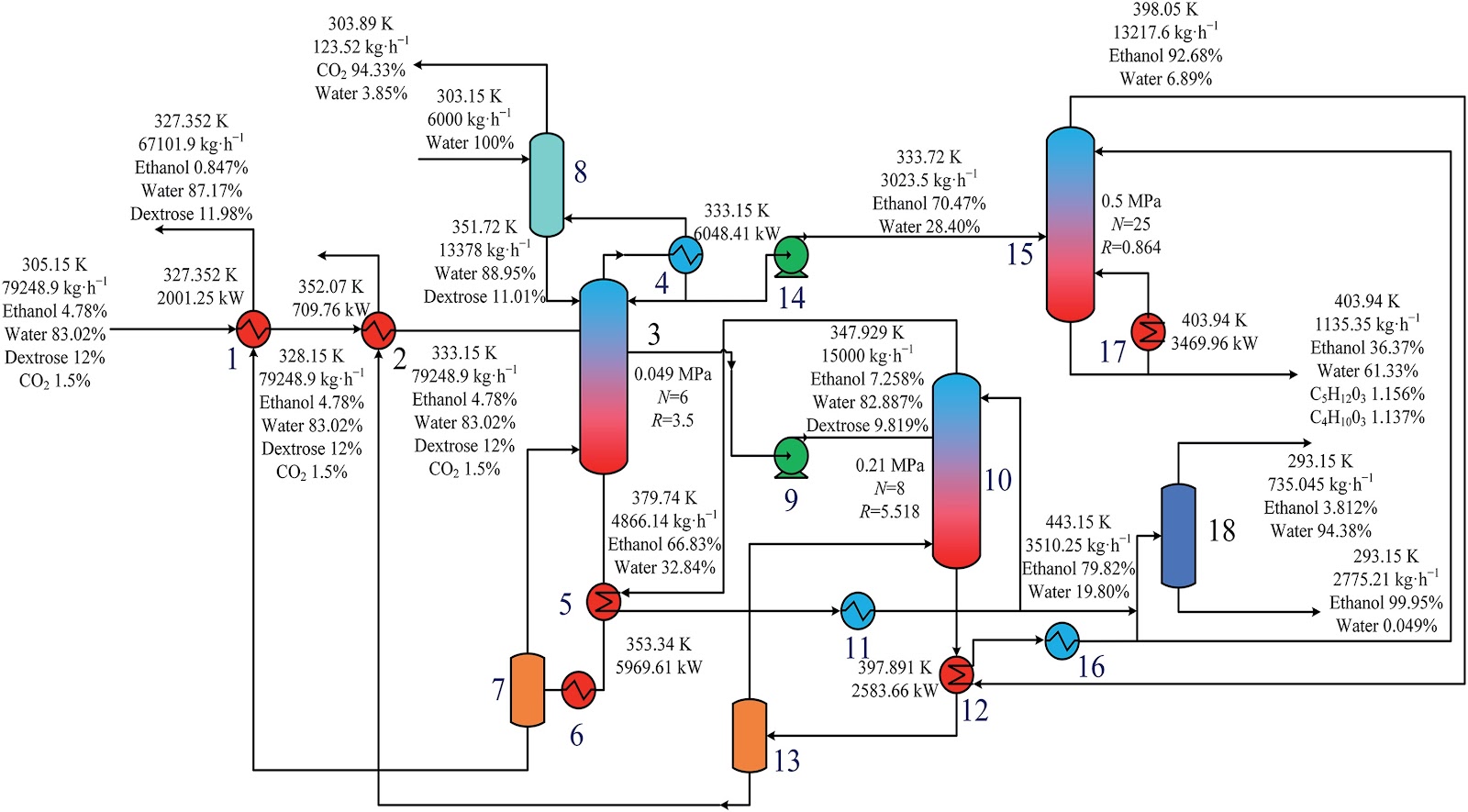
Design and optimization of a high-efficiency distillation process for cellulosic fuel ethanol integrated with thermal coupling and molecular sieve adsorption
To address the challenges of high energy consumption and prominent costs in the traditional three-columns distillation process for cellulosic fuel ethanol, a distillation—molecular sieve coupling separation process is proposed. This process integrates a three-column (crude distillation column, first distillation column, second distillation column) system with a 3A molecular sieve adsorption deep dehydration unit. A thermal coupling network is constructed via differential pressure design (steam from medium/high-pressure columns as mutual heat sources, reboiler liquid waste heat for feed preheating), and molecular sieve adsorption conditions are optimized. The study first performs a thermodynamic consistency test on the ethanol—water system, determines optimal non-random two-liquid (NRTL) model binary interaction parameters via experimental data regression for Aspen Plus simulation. Aiming at minimum total annual cost (TAC), Aspen Plus is used to optimize process parameters (theoretical tray number, feed location, reflux ratio, side-draw position, etc.). Economic analysis shows this process reduces CO2 emission costs by 27.56%, TAC by 15.58% (to 5.123 × 10⁶ USD·a-1), and increases ethanol purity to >99.6%, providing an effective solution for green, efficient separation.
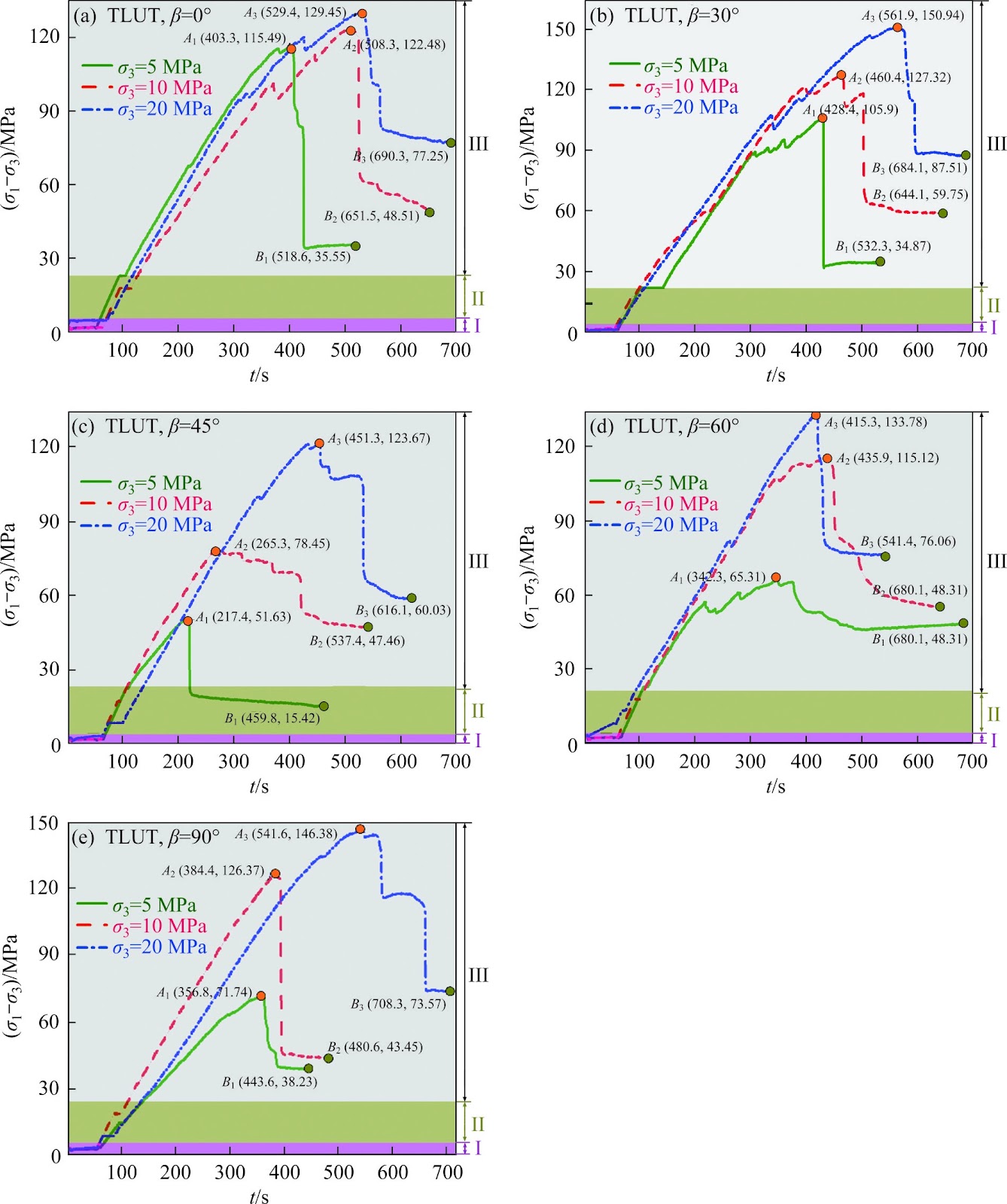
A cohesion loss model for determining residual strength of deep bedded sandstone
Rock residual strength, as an important input parameter, plays an indispensable role in proposing the reasonable and scientific scheme about stope design, underground tunnel excavation and stability evaluation of deep chambers. Therefore, previous residual strength models of rocks established were reviewed. And corresponding related problems were stated. Subsequently, starting from the effects of bedding and whole life-cycle evolution process, series of triaxial mechanical tests of deep bedded s
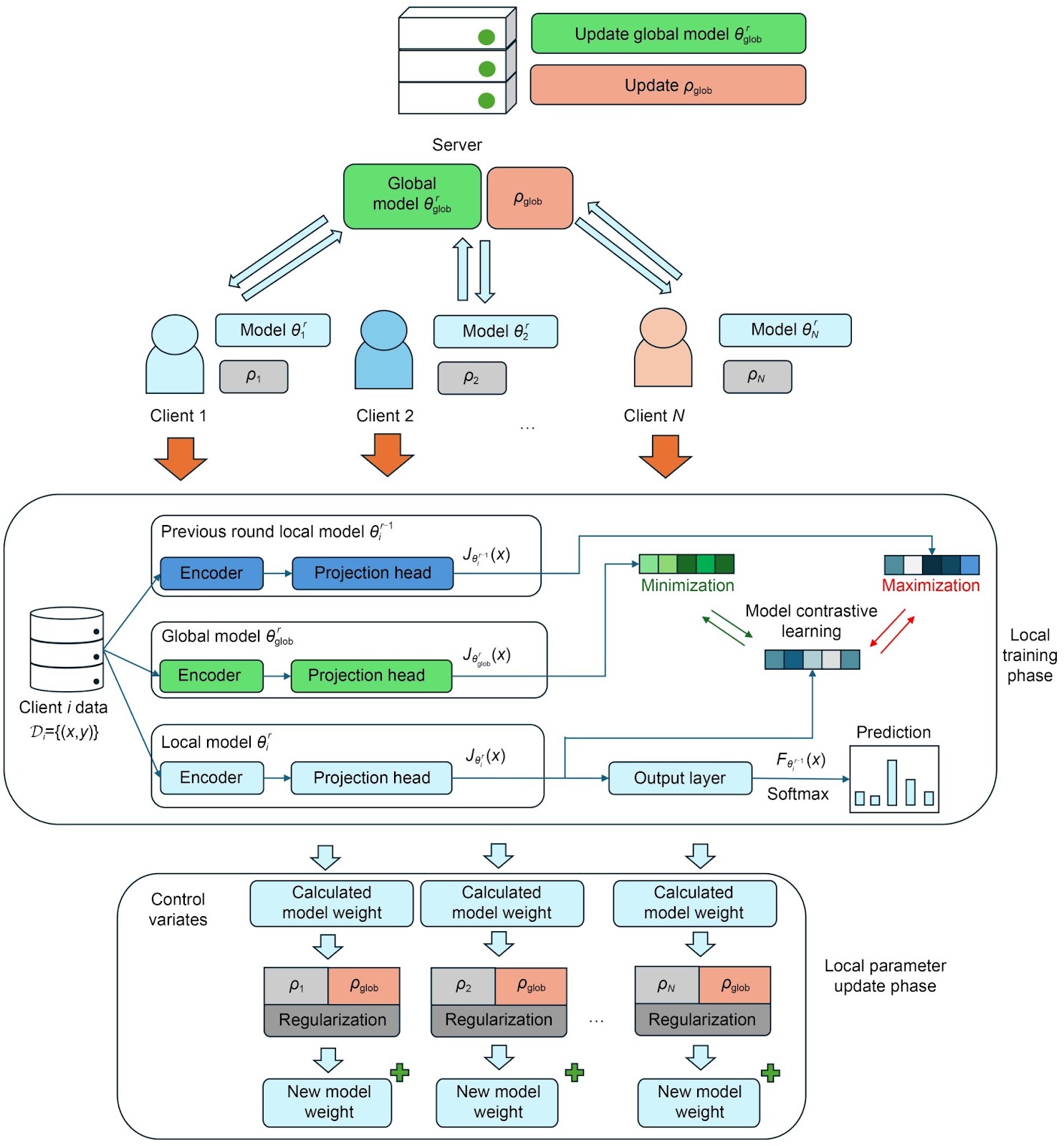
Federated model with contrastive learning and adaptive control variates for human activity recognition
Recent attention to privacy issues demands a communication-safe method for training human activity recognition (HAR) models on client activity data. Federated learning (FL) has become a compelling technique to facilitate model training between the server and clients while preserving data privacy. However, classical FL methods often assume independent and identically distributed (IID) data among clients. This assumption does not hold true in practical scenarios. Human activity in real-world scena