Key Takeaways & Executive Findings
- •• Proposes an end-to-end framework for designing, simulating, and iteratively optimizing a UAM corridor along Brasilia's Eixão, aligned with Brazil's BR-UTM ecosystem. • LLM-assisted optimization with GPT-4o Mini and Gemini 2.5 Pro enables root-cause diagnosis and rapid prototyping of GA variants, achieving a 59.62% reduction in maximum waiting time. • GA v5 approaches the robustness of round-robin scheduling, while poorly designed fitness functions in GA v2–v4 and GA v6 degrade performance. • Demonstrates that generative AI can accelerate simulation and co-create operational logic, offering a replicable blueprint for early-stage UAM planning.
Abstract
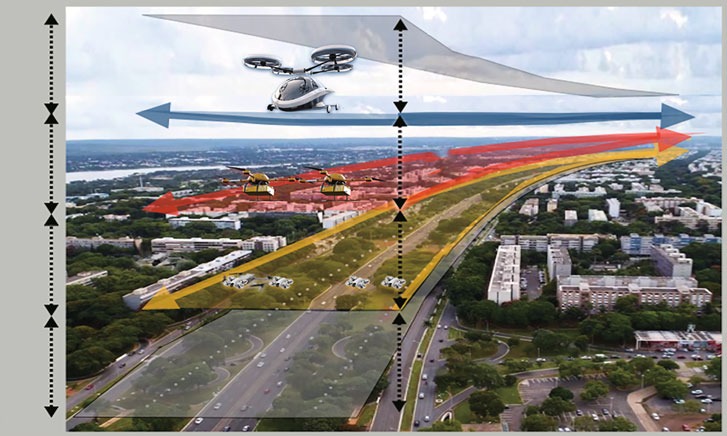
The development of urban air mobility (UAM) systems requires scalable, regulation-aware planning of low-altitude airspace and supporting infrastructure. This study proposes an end-to-end framework for the design, simulation, and iterative optimization of a structured UAM corridor over Brasilia's central road axis (Eixão-UAM), aligned with the Brazilian unmanned aircraft traffic management (BR-UTM) ecosystem. In addition, this study proposes a multilayered aerial configuration stratified by unmanned aerial vehicle class, supported by a modular ground infrastructure composed of vertihubs, vertiports, and vertistops. A takeoff-scheduling simulator is developed to evaluate platform allocation strategies under realistic traffic and weather conditions. Initial experiments compare a round-robin (RR) baseline with a genetic algorithm (GA), and results reveal that RR outperforms GA v1 in terms of the average waiting time. To address this gap, a large language model (LLM) assisted optimization loop is implemented using GPT-4o Mini and Gemini 2.5 Pro. The LLMs act as reasoning partners, supporting the root-cause diagnoses, fitness function redesign, and rapid prototyping of five GA variants. Among these, GA v5 achieves a 59.62% reduction in maximum waiting time and an approximately 10% reduction in average waiting time over GA v1, thereby approaching the robustness of RR. In contrast, GA v2–v4 and GA v6 perform less consistently, showing an importance of fitness function design. These results underscore the role of an iterative, LLM-guided development in enhancing classical optimization, demonstrating that generative artificial intelligence (AI) can contribute to simulation acceleration and the cocreation of operational logic. The proposed method provides a replicable blueprint for integrating LLMs into early-stage UAM planning, offering both theoretical insights and architectural guidance for future low-altitude airspace systems.
1. Introduction
Urban air mobility (UAM) is rapidly emerging as a transformative component of smart urban infrastructure, enabling the use of unmanned aerial vehicles (UAVs) for logistics, emergency response, inspections, and passenger transport (Cohen et al., 2021; Jiang et al., 2023; Liao et al., 2024; Liu S and Liu, 2025; Xu et al., 2025). As cities grow denser and ground infrastructure becomes increasingly saturated, low-altitude air corridors offer a promising solution to mitigate surface congestion and improve service responsiveness (Verma et al., 2022; Moon et al., 2024). However, implementing scalable and safe UAM systems poses significant challenges in terms of airspace structuring, flight intent management, and ground infrastructure deployment.
Brazil is uniquely positioned to lead UAM integration through its national unmanned aircraft traffic management (UTM) framework, known as BR-UTM (da Silva et al., 2020; Jasper and Nunes, 2022; Turchetti and Murça, 2024). This framework features key platforms such as unmanned aircraft system for UAV registration and authorization (SISANT), which is managed by the National Civil Aviation Agency of Brazil (ANAC), and the request for access for remotely piloted aircraft-next generation (SARPAS NG), which is operated by the Brazilian Department of Airspace Control (DECEA). Both the ANAC and DECEA are interoperable with the national Gov.br digital infrastructure. Leveraging this regulatory and technological foundation, Brasilia, the capital of Brazil and a city designed with geometric precision, offers an ideal testing ground for structured low-altitude airspace models.
To explore these opportunities, this study concentrates on the modeling and validation of a UAM corridor along Brasilia's iconic south–north road axis (Eixão Rodoviário, also known as Eixão, Portuguese for “big axis”). The primary objective is to design and assess the BSB Eixão-UAM corridor within Brazil's BR-UTM framework, ensuring alignment with national airspace management initiatives. While the corridor design remains the central focus, the analysis of takeoff scheduling at a vertiport is presented as the first operational demonstration. This addition grounds the corridor concept in practical feasibility.
Loading authentic research manuscript (Pages 1–5)...
Li WEIGANG, Juliano Adorno MAIA, Emilia STENZEL, Lucas Ramson SIEFERT (2025). Eixão-UAM: LLM-assisted iterative design of a low-altitude urban air mobility corridor in Brasilia. Frontiers of Information Technology & Electronic Engineering. https://doi.org/10.1631/FITEE_2500541
Research & Educational Purpose Only:The translations, structured abstracts, analytical annotations, and data reports provided by SinoTechIntel are intended exclusively for academic research, internal corporate R&D, and educational benchmarking. They do not constitute formal engineering, chemical safety, legal, or professional advice.
Copyright & Intellectual Property Notice: Original copyright of the underlying source articles and experimental data remains with the respective authors, institutions, and original publishing journals. SinoTechIntel claims intellectual property only over its proprietary translations, analytical syntheses, and AEO structured enhancements in accordance with international fair use and academic citation principles.
Frequently Asked Questions
What is the Eixão-UAM corridor?
The Eixão-UAM corridor is a structured low-altitude urban air mobility (UAM) route along Brasilia's central road axis (Eixão Rodoviário), designed within Brazil's BR-UTM ecosystem to support safe and efficient UAV operations, including logistics and passenger transport.
How does the LLM-assisted optimization improve the genetic algorithm?
Large language models such as GPT-4o Mini and Gemini 2.5 Pro act as reasoning partners to diagnose root causes, redesign fitness functions, and rapidly prototype five GA variants. The best variant (GA v5) reduced maximum waiting time by 59.62% and average waiting time by approximately 10% compared to GA v1.
What is the significance of the takeoff-scheduling simulator?
The simulator evaluates platform allocation strategies under realistic traffic and weather conditions, enabling comparison of round-robin baselines with genetic algorithm variants and validating the operational feasibility of the UAM corridor.
What are the key findings regarding round-robin vs genetic algorithm?
Initial experiments showed that round-robin (RR) outperformed the initial GA v1 in average waiting time. However, after LLM-driven optimization, GA v5 approached RR's robustness while achieving substantial reductions in maximum waiting time.
How does the framework align with Brazilian UAM regulation?
The framework integrates with BR-UTM, utilizing platforms like SISANT for UAV registration and SARPAS NG for airspace access, both interoperable with the national Gov.br infrastructure, ensuring regulation-aware planning.
Related Technical Papers & Translations
Design and optimization of a high-efficiency distillation process for cellulosic fuel ethanol integrated with thermal coupling and molecular sieve adsorption
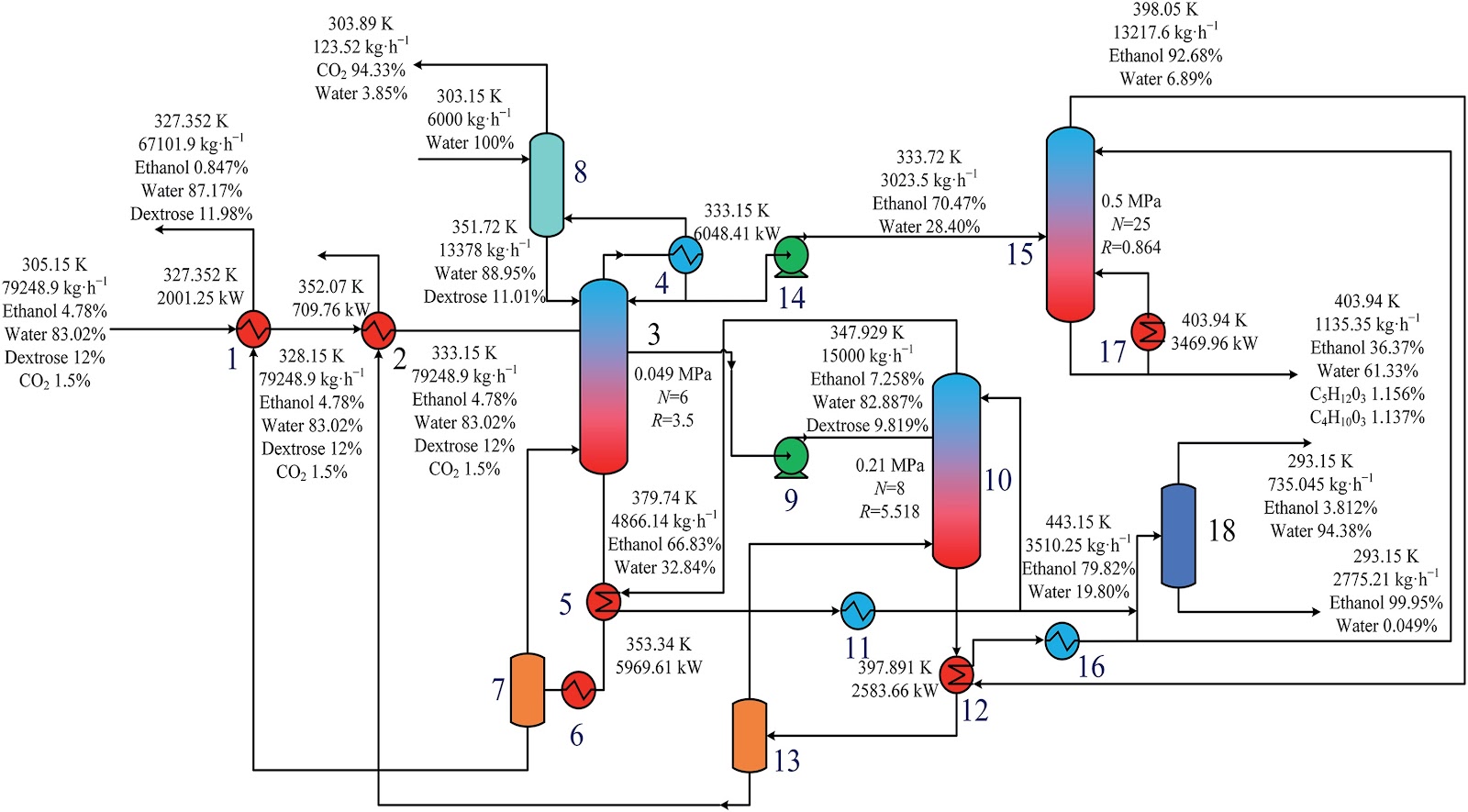
To address the challenges of high energy consumption and prominent costs in the traditional three-columns distillation process for cellulosic fuel ethanol, a distillation—molecular sieve coupling separation process is proposed. This process integrates a three-column (crude distillation column, first distillation column, second distillation column) system with a 3A molecular sieve adsorption deep dehydration unit. A thermal coupling network is constructed via differential pressure design (steam from medium/high-pressure columns as mutual heat sources, reboiler liquid waste heat for feed preheating), and molecular sieve adsorption conditions are optimized. The study first performs a thermodynamic consistency test on the ethanol—water system, determines optimal non-random two-liquid (NRTL) model binary interaction parameters via experimental data regression for Aspen Plus simulation. Aiming at minimum total annual cost (TAC), Aspen Plus is used to optimize process parameters (theoretical tray number, feed location, reflux ratio, side-draw position, etc.). Economic analysis shows this process reduces CO2 emission costs by 27.56%, TAC by 15.58% (to 5.123 × 10⁶ USD·a-1), and increases ethanol purity to >99.6%, providing an effective solution for green, efficient separation.
A cohesion loss model for determining residual strength of deep bedded sandstone
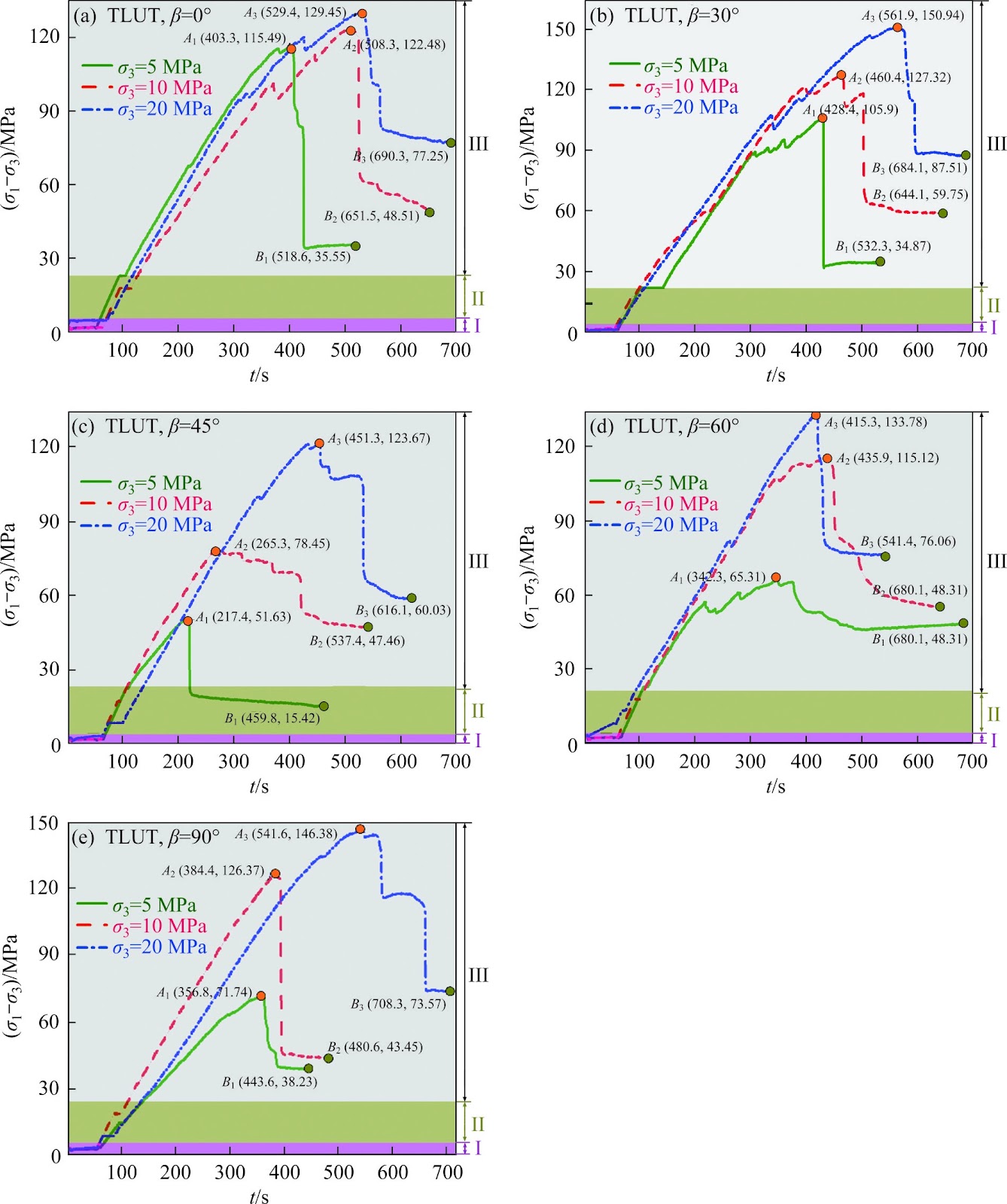
Rock residual strength, as an important input parameter, plays an indispensable role in proposing the reasonable and scientific scheme about stope design, underground tunnel excavation and stability evaluation of deep chambers. Therefore, previous residual strength models of rocks established were reviewed. And corresponding related problems were stated. Subsequently, starting from the effects of bedding and whole life-cycle evolution process, series of triaxial mechanical tests of deep bedded s
Federated model with contrastive learning and adaptive control variates for human activity recognition
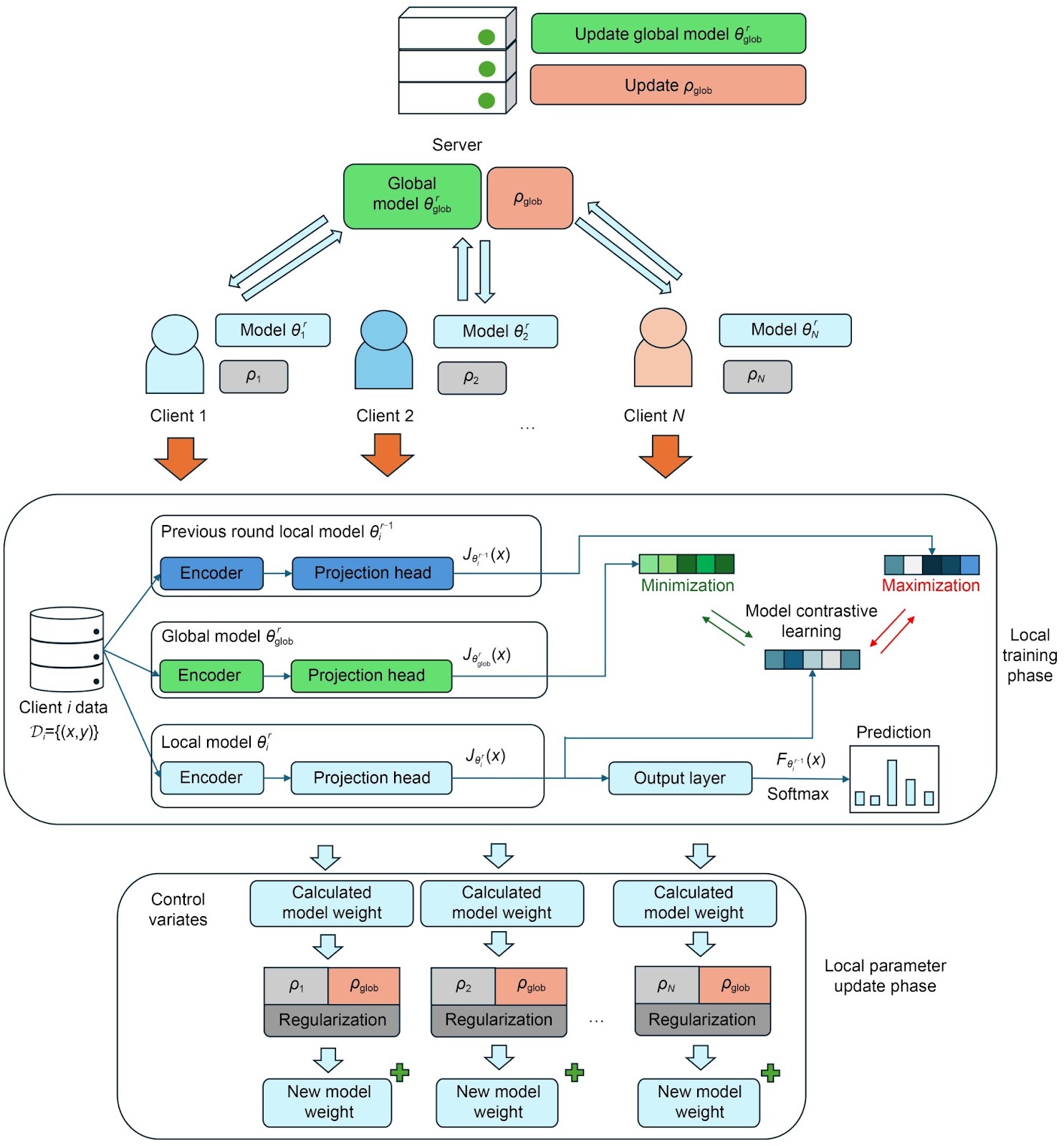
Recent attention to privacy issues demands a communication-safe method for training human activity recognition (HAR) models on client activity data. Federated learning (FL) has become a compelling technique to facilitate model training between the server and clients while preserving data privacy. However, classical FL methods often assume independent and identically distributed (IID) data among clients. This assumption does not hold true in practical scenarios. Human activity in real-world scena