Key Takeaways & Executive Findings
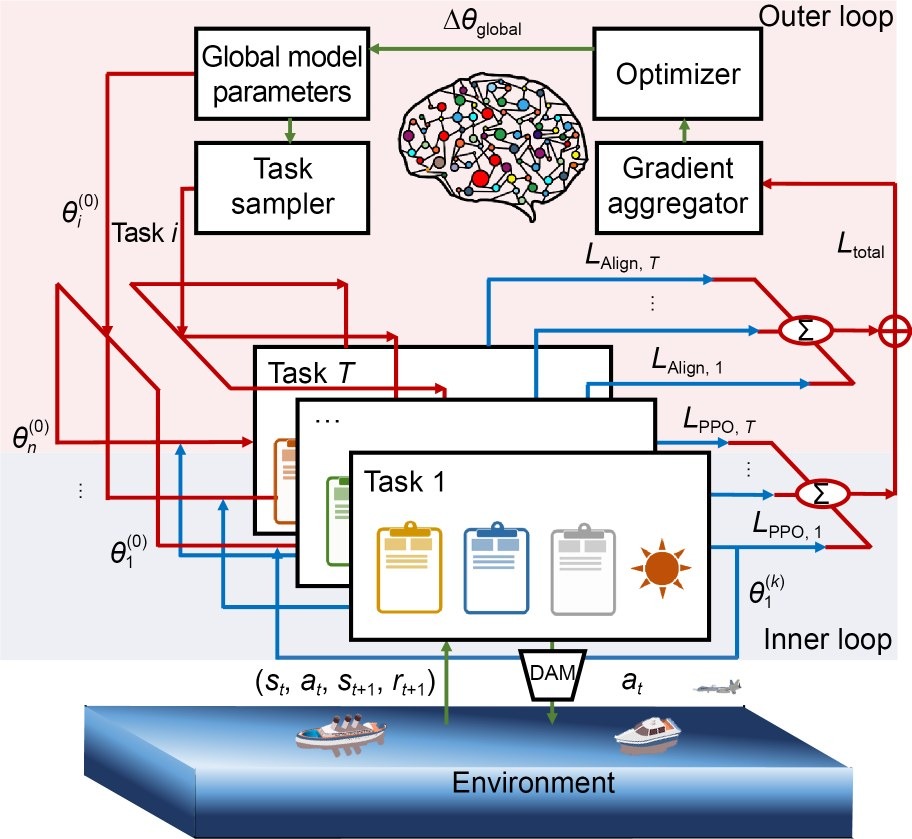
- •• The proposed knowledge-embedding-based joint resource allocation method improves average system throughput by 31.19% over MAML-PPO and 80.91% over RL2 in dynamic maritime channel environments. • An action distribution alignment module prevents unreasonable action-output combinations, significantly enhancing radio resource utilization in complex maritime networks. • Integrating knowledge embedding with meta-reinforcement learning formulates a physical guidance loss function that reduces required training samples and boosts model generalization capability. • The approach addresses limitations of traditional heuristic allocation methods, offering flexible, scalable, and real-time resource allocation essential for B5G/6G maritime communications.
Abstract
As human exploration of the ocean expands, the demand for continuous, high-quality, and ubiquitous maritime communication is steadily increasing. However, the dynamic nature of the marine environment and resource constraints present significant challenges for traditional heuristic resource allocation methods, complicating the balance between high-quality communication and limited network resources. This results in suboptimal system throughput and an over-reliance on specific problem structures. To address these issues, in this paper, we introduce a joint resource allocation method based on knowledge embedding. The proposed approach includes an action distribution alignment module designed to improve resource utilization by preventing unreasonable action-output combinations. Furthermore, by integrating knowledge embedding with meta-reinforcement learning techniques, a physical guidance loss function is formulated, which effectively reduces the sample size required for model training, thereby enhancing the algorithm’s generalization capabilities. Simulation results show that the proposed method achieves an increase in average system throughput of 31.19% compared to the model-agnostic meta-learning proximal policy optimization (MAML-PPO) algorithm and 80.91% compared to the RL2 algorithm, across various channel environments.
1. Introduction
With the increasing exploration of the ocean, the demand for high-quality wireless communication with full-time, all-encompassing coverage at sea is growing rapidly. This has become a core objective for the development of next-generation communication technologies, such as Beyond 5G (B5G) and 6G. Achieving this vision necessitates the integration of efficient transmission methods, wide-area coverage, and heterogeneous resource orchestration within maritime wireless communication networks. Such integration is crucial for delivering ubiquitous, intelligent information services that seamlessly combine communication, computing, and perception (Yin et al., 2023) to support complex tasks across space, air, sea, and specific regions.
However, the marine environment presents significant challenges in densely deploying and supporting high-power base stations. Mobile platforms such as ships, large drones, and aircraft are increasingly being used to overcome these limitations. While offering flexibility, these platforms also lead to scarce wireless network resources and limited service capabilities. Furthermore, the complex and dynamic nature of ocean channel environments, along with the constantly changing topology of network nodes, makes it difficult for any static resource allocation scheme to effectively address the communication needs of maritime networks. This highlights the urgent need for flexible wireless network resource allocation schemes capable of adapting to evolving conditions.
Human maritime activities often rely on various types of nodes, including ships, drones, aircraft, submarines, buoys, and satellites, to achieve high-quality communication over wide areas. This necessitates the unified management and allocation of heterogeneous resources. However, the vastness of the ocean, multiplicity of network nodes, and diversity of services—each with significantly varying resource demands—pose considerable challenges for efficient resource allocation. As a result, resource allocation in these settings requires high real-time performance, wide coverage, and the ability to handle complex and dynamic conditions. Existing time–frequency resource allocation technologies, which rely on fixed frequency bands and subcarriers, struggle to meet the evolving demands of maritime communication. Therefore, there is an urgent need for more flexible and scalable resource allocation technologies capable of accommodating the growing complexity and capacity requirements of maritime wireless communication networks.
Loading authentic research manuscript (Pages 1–5)...
Zhongyang MAO, Zhilin ZHANG, Faping LU, Xiguo LIU, Zhichao XU, Yaozong PAN, Jiafang KANG, Yang YOU (2025). Dynamic joint resource allocation in maritime wireless communication networks: a meta-reinforcement learning approach based on knowledge embedding. Frontiers of Information Technology & Electronic Engineering. https://doi.org/10.1631/FITEE_2500007
Research & Educational Purpose Only:The translations, structured abstracts, analytical annotations, and data reports provided by SinoTechIntel are intended exclusively for academic research, internal corporate R&D, and educational benchmarking. They do not constitute formal engineering, chemical safety, legal, or professional advice.
Copyright & Intellectual Property Notice: Original copyright of the underlying source articles and experimental data remains with the respective authors, institutions, and original publishing journals. SinoTechIntel claims intellectual property only over its proprietary translations, analytical syntheses, and AEO structured enhancements in accordance with international fair use and academic citation principles.
Frequently Asked Questions
What is the main contribution of this paper?
The paper proposes a joint resource allocation method for maritime wireless communication networks based on knowledge embedding and meta-reinforcement learning. It introduces an action distribution alignment module and a physical guidance loss function to improve resource utilization, reduce training sample requirements, and enhance generalization capability.
How does the proposed method improve system throughput?
Simulation results show that the proposed method increases average system throughput by 31.19% compared to the MAML-PPO algorithm and by 80.91% compared to the RL2 algorithm across various channel environments.
What is knowledge embedding in the context of meta-reinforcement learning?
Knowledge embedding integrates domain-specific physical knowledge into the meta-reinforcement learning framework. It formulates a physical guidance loss function that helps the model learn more efficiently with fewer samples, improving its generalization to new environments.
What is the role of the action distribution alignment module?
The action distribution alignment module prevents unreasonable action-output combinations by aligning action distributions, thereby improving resource utilization and avoiding inefficient allocation decisions in complex maritime networks.
Why is dynamic resource allocation important in maritime communication networks?
The marine environment is highly dynamic, with moving platforms and changing channel conditions. Static resource allocation schemes fail to adapt to these variations, leading to suboptimal throughput. Dynamic allocation ensures efficient use of scarce wireless resources and supports high-quality, ubiquitous maritime communication.
Related Technical Papers & Translations
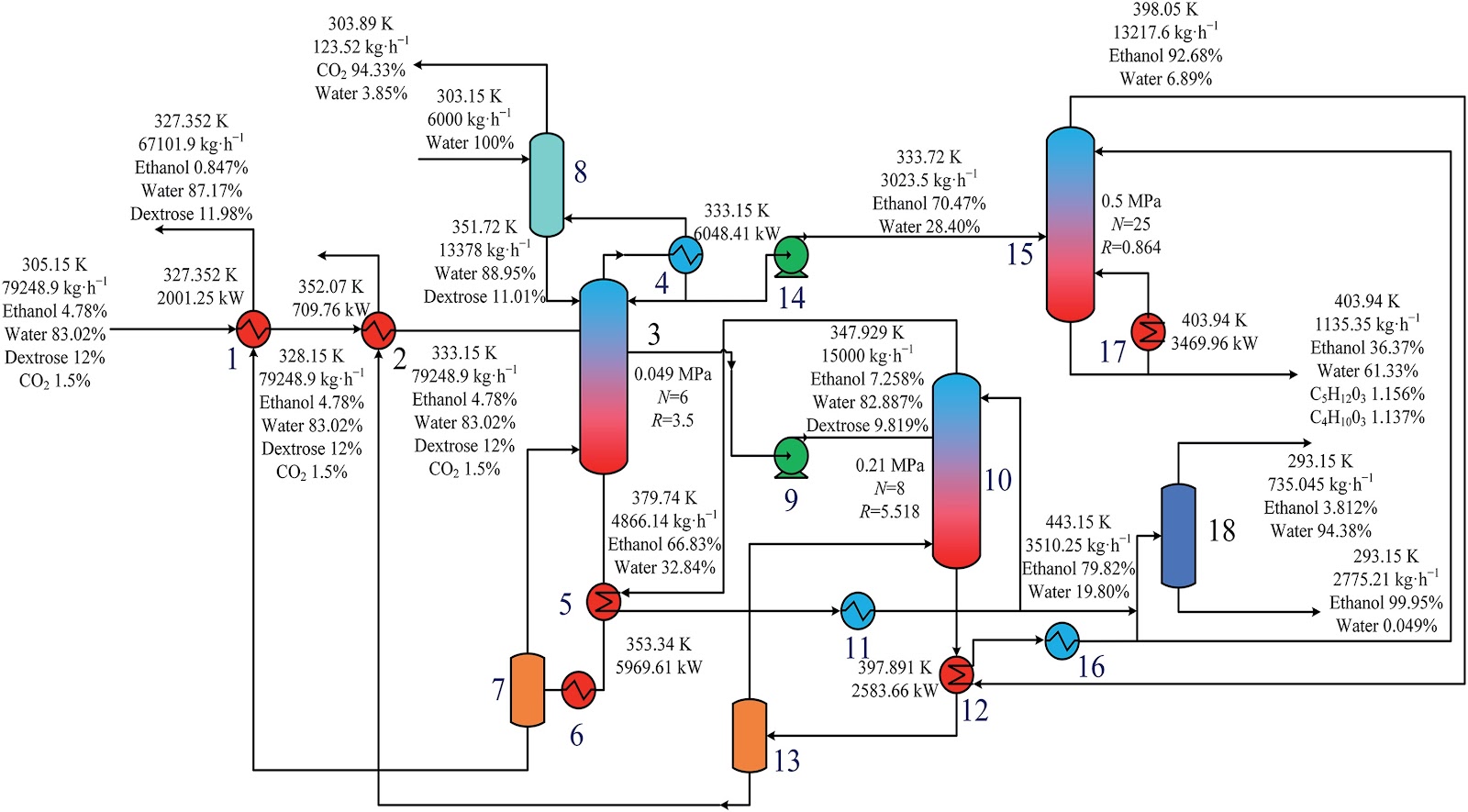
Design and optimization of a high-efficiency distillation process for cellulosic fuel ethanol integrated with thermal coupling and molecular sieve adsorption
To address the challenges of high energy consumption and prominent costs in the traditional three-columns distillation process for cellulosic fuel ethanol, a distillation—molecular sieve coupling separation process is proposed. This process integrates a three-column (crude distillation column, first distillation column, second distillation column) system with a 3A molecular sieve adsorption deep dehydration unit. A thermal coupling network is constructed via differential pressure design (steam from medium/high-pressure columns as mutual heat sources, reboiler liquid waste heat for feed preheating), and molecular sieve adsorption conditions are optimized. The study first performs a thermodynamic consistency test on the ethanol—water system, determines optimal non-random two-liquid (NRTL) model binary interaction parameters via experimental data regression for Aspen Plus simulation. Aiming at minimum total annual cost (TAC), Aspen Plus is used to optimize process parameters (theoretical tray number, feed location, reflux ratio, side-draw position, etc.). Economic analysis shows this process reduces CO2 emission costs by 27.56%, TAC by 15.58% (to 5.123 × 10⁶ USD·a-1), and increases ethanol purity to >99.6%, providing an effective solution for green, efficient separation.
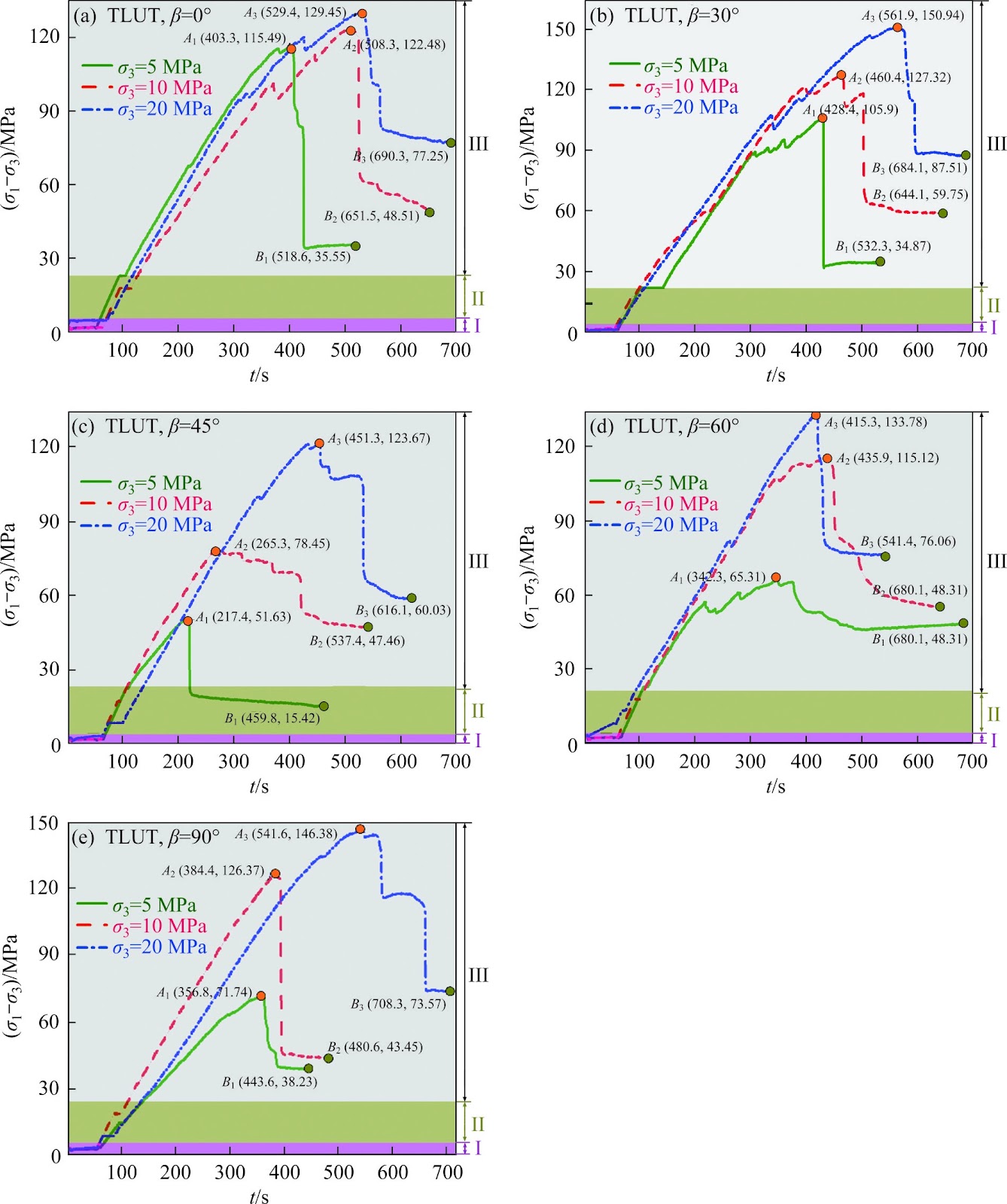
A cohesion loss model for determining residual strength of deep bedded sandstone
Rock residual strength, as an important input parameter, plays an indispensable role in proposing the reasonable and scientific scheme about stope design, underground tunnel excavation and stability evaluation of deep chambers. Therefore, previous residual strength models of rocks established were reviewed. And corresponding related problems were stated. Subsequently, starting from the effects of bedding and whole life-cycle evolution process, series of triaxial mechanical tests of deep bedded s
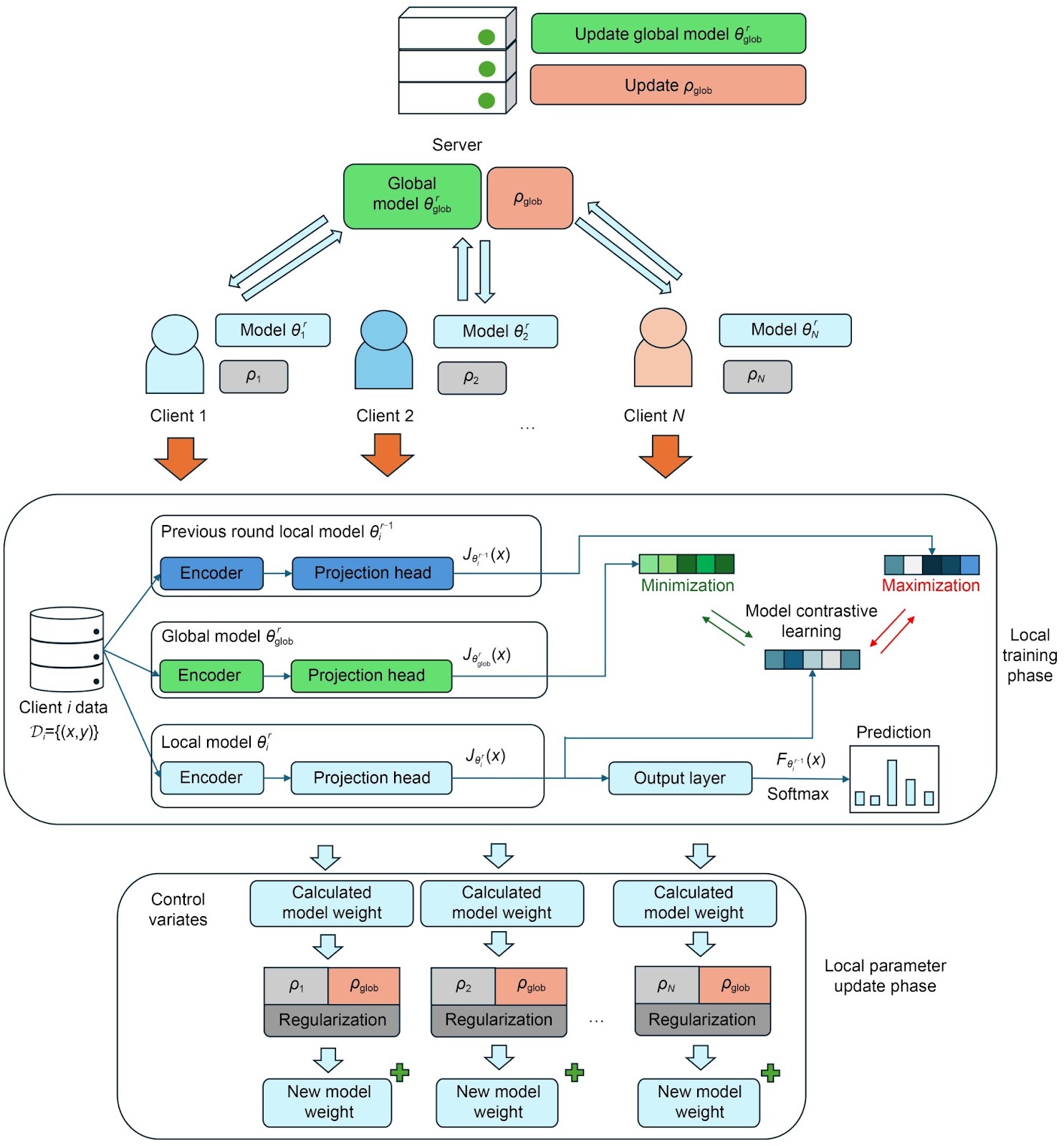
Federated model with contrastive learning and adaptive control variates for human activity recognition
Recent attention to privacy issues demands a communication-safe method for training human activity recognition (HAR) models on client activity data. Federated learning (FL) has become a compelling technique to facilitate model training between the server and clients while preserving data privacy. However, classical FL methods often assume independent and identically distributed (IID) data among clients. This assumption does not hold true in practical scenarios. Human activity in real-world scena