
Key Takeaways & Executive Findings
- •• MSFFNet integrates multi-scale feature extraction, adaptive feature screening, and multi-level feature fusion for robust spectrum sensing in low-SNR environments. • At SNR = −14 dB, the method achieves a detection probability of 0.936 with a false alarm probability of only 0.1, outperforming existing approaches. • By addressing CNN limitations in feature extraction and utilization under low SNR, MSFFNet enhances spectrum utilization in cognitive radio networks. • A multi-level mixed-SNR dataset is constructed to emulate real communication environments, improving the generalizability and robustness of spectrum sensing.
Abstract
Signal-to-noise ratio (SNR) fluctuations significantly affect spectrum sensing performance in wireless communications. Traditional convolutional neural network (CNN) exhibits limited feature extraction capabilities and inefficient feature utilization at low SNR levels, leading to suboptimal spectrum sensing performance. This paper proposes a spectrum sensing method based on a multi-scale feature fusion network (MSFFNet) to address this issue. First, the proposed method employs a multi-scale feature extraction block (MSFEB) to capture multi-scale information from the input data comprehensively. Next, an adaptive feature screening strategy (AFSS) highlights key features while suppressing redundant information. Finally, a multi-level feature fusion mechanism (MLFFM) optimizes and integrates features across scales and levels, enhancing spectrum sensing performance. Simulation results demonstrate that compared to other methods, the proposed approach achieves superior performance in low-SNR communication scenarios. At an SNR of −14 dB, the detection probability Pd reaches 0.936, while the false alarm probability Pfa is only 0.1. Furthermore, this paper constructs a multi-level mixed-SNR dataset to simulate real communication environments and enhance the robustness of spectrum sensing.
1. Introduction
The rapid advancement of wireless communication technology has intensified the demand for spectrum resources, while fixed spectrum allocation leads to low utilization and exacerbates spectrum shortage. Spectrum sensing, a core cognitive radio technology, dynamically monitors the wireless environment and detects idle frequency bands, thereby enhancing spectrum utilization and mitigating resource shortages. However, improving the accuracy and robustness of spectrum sensing in low signal-to-noise ratio (SNR) and complex wireless environments remains a critical challenge.
Current spectrum sensing research is primarily divided into model-driven traditional methods and data-driven intelligent methods. Traditional techniques—including energy detection, eigenvalue-based detection, and cyclostationary detection—are susceptible to noise, leading to significant performance decline under low-SNR conditions. Moreover, they depend on prior information and struggle to adapt to dynamic wireless environments.
Deep learning (DL) methods have emerged as a powerful alternative, autonomously extracting time–frequency features from signals through large-scale data training. This enhances adaptability to complex wireless environments and improves detection performance under low-SNR conditions. Notable contributions include deep neural network frameworks, convolutional neural networks (CNNs), residual dense networks, spectrogram-aware CNNs, and hybrid architectures combining CNNs with recurrent neural networks. Despite these advances, traditional CNNs still exhibit limited feature extraction capabilities and inefficient feature utilization at low SNR levels, motivating the proposed MSFFNet to address these limitations and achieve superior spectrum sensing performance.
Loading authentic research manuscript (Pages 1–5)...
Honghui XIANG, Kejun LEI, Kaiqing ZHOU, Wenjing TUO, Hongbin LIU (2025). Spectrum sensing method based on a multi-scale feature fusion network. Frontiers of Information Technology & Electronic Engineering. https://doi.org/10.1631/FITEE_2500297
Research & Educational Purpose Only:The translations, structured abstracts, analytical annotations, and data reports provided by SinoTechIntel are intended exclusively for academic research, internal corporate R&D, and educational benchmarking. They do not constitute formal engineering, chemical safety, legal, or professional advice.
Copyright & Intellectual Property Notice: Original copyright of the underlying source articles and experimental data remains with the respective authors, institutions, and original publishing journals. SinoTechIntel claims intellectual property only over its proprietary translations, analytical syntheses, and AEO structured enhancements in accordance with international fair use and academic citation principles.
Frequently Asked Questions
What is spectrum sensing in cognitive radio?
Spectrum sensing is a core cognitive radio technology that dynamically monitors the wireless environment to detect idle frequency bands, improving spectrum utilization and mitigating resource shortages.
Why is spectrum sensing challenging at low SNR?
At low signal-to-noise ratios, noise dominates the received signal, causing traditional detection methods like energy detection to degrade significantly. Deep learning models can help, but traditional CNNs often have limited feature extraction and utilization in these conditions.
What is MSFFNet?
MSFFNet is a multi-scale feature fusion network for spectrum sensing. It uses a multi-scale feature extraction block, an adaptive feature screening strategy, and a multi-level feature fusion mechanism to capture and integrate features, improving detection performance under low SNR.
What performance does MSFFNet achieve?
At an SNR of −14 dB, MSFFNet achieves a detection probability of 0.936 with a false alarm probability of only 0.1, outperforming comparison methods in low-SNR communication scenarios.
How does MSFFNet improve robustness?
The method constructs a multi-level mixed-SNR dataset that simulates real communication environments, enhancing the robustness and generalizability of spectrum sensing across varying SNR conditions.
Related Technical Papers & Translations
Design and optimization of a high-efficiency distillation process for cellulosic fuel ethanol integrated with thermal coupling and molecular sieve adsorption
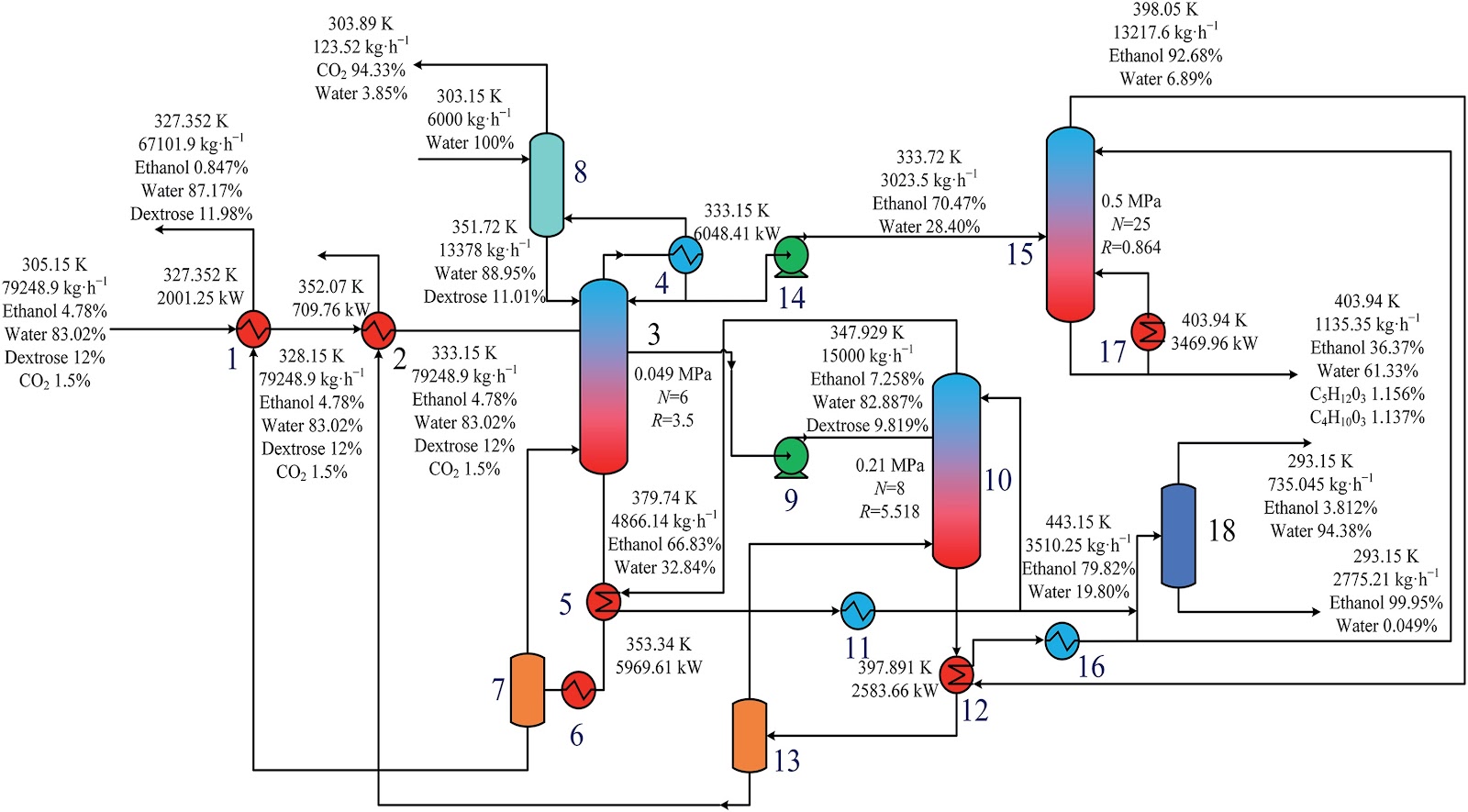
To address the challenges of high energy consumption and prominent costs in the traditional three-columns distillation process for cellulosic fuel ethanol, a distillation—molecular sieve coupling separation process is proposed. This process integrates a three-column (crude distillation column, first distillation column, second distillation column) system with a 3A molecular sieve adsorption deep dehydration unit. A thermal coupling network is constructed via differential pressure design (steam from medium/high-pressure columns as mutual heat sources, reboiler liquid waste heat for feed preheating), and molecular sieve adsorption conditions are optimized. The study first performs a thermodynamic consistency test on the ethanol—water system, determines optimal non-random two-liquid (NRTL) model binary interaction parameters via experimental data regression for Aspen Plus simulation. Aiming at minimum total annual cost (TAC), Aspen Plus is used to optimize process parameters (theoretical tray number, feed location, reflux ratio, side-draw position, etc.). Economic analysis shows this process reduces CO2 emission costs by 27.56%, TAC by 15.58% (to 5.123 × 10⁶ USD·a-1), and increases ethanol purity to >99.6%, providing an effective solution for green, efficient separation.
A cohesion loss model for determining residual strength of deep bedded sandstone
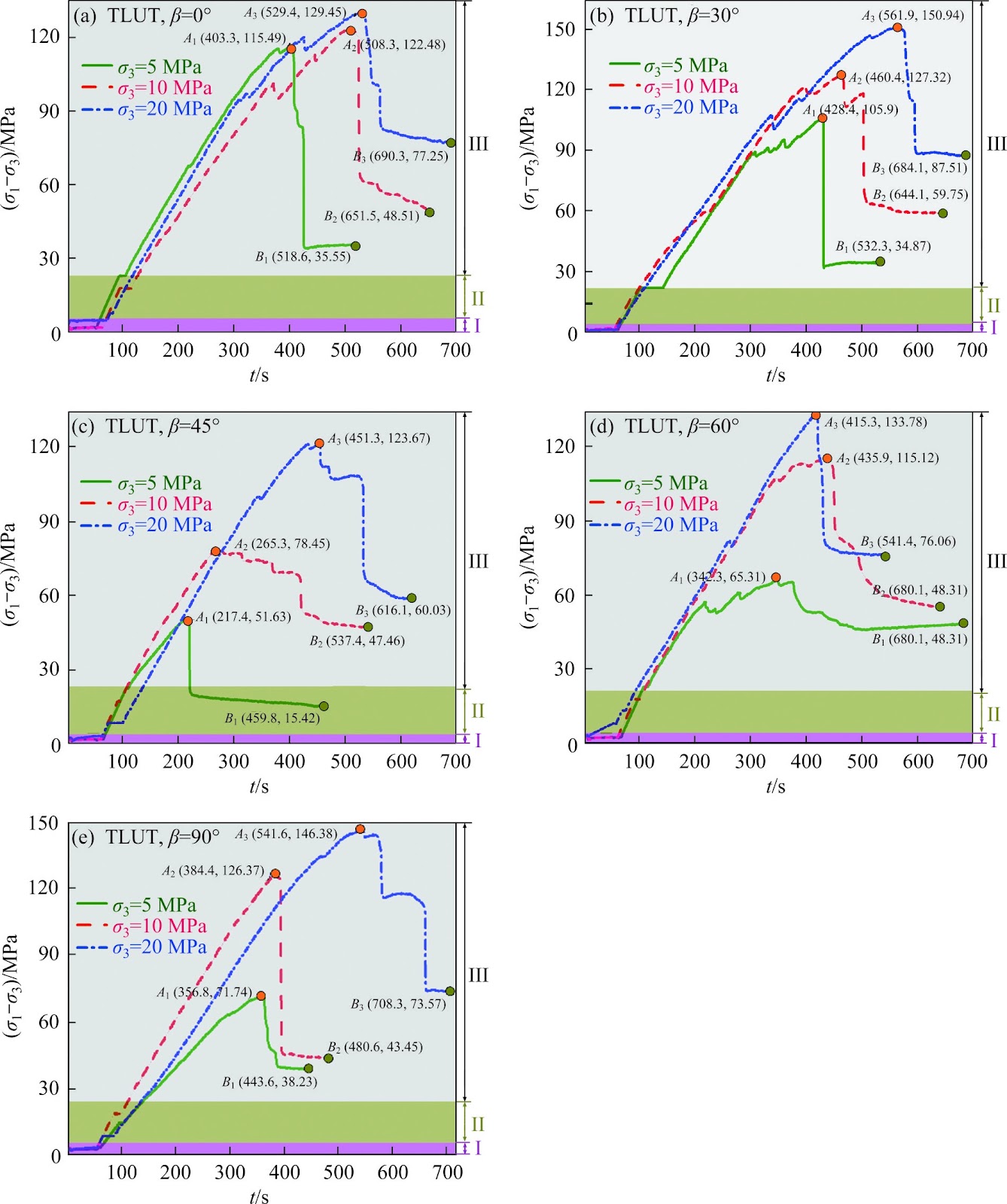
Rock residual strength, as an important input parameter, plays an indispensable role in proposing the reasonable and scientific scheme about stope design, underground tunnel excavation and stability evaluation of deep chambers. Therefore, previous residual strength models of rocks established were reviewed. And corresponding related problems were stated. Subsequently, starting from the effects of bedding and whole life-cycle evolution process, series of triaxial mechanical tests of deep bedded s
Federated model with contrastive learning and adaptive control variates for human activity recognition
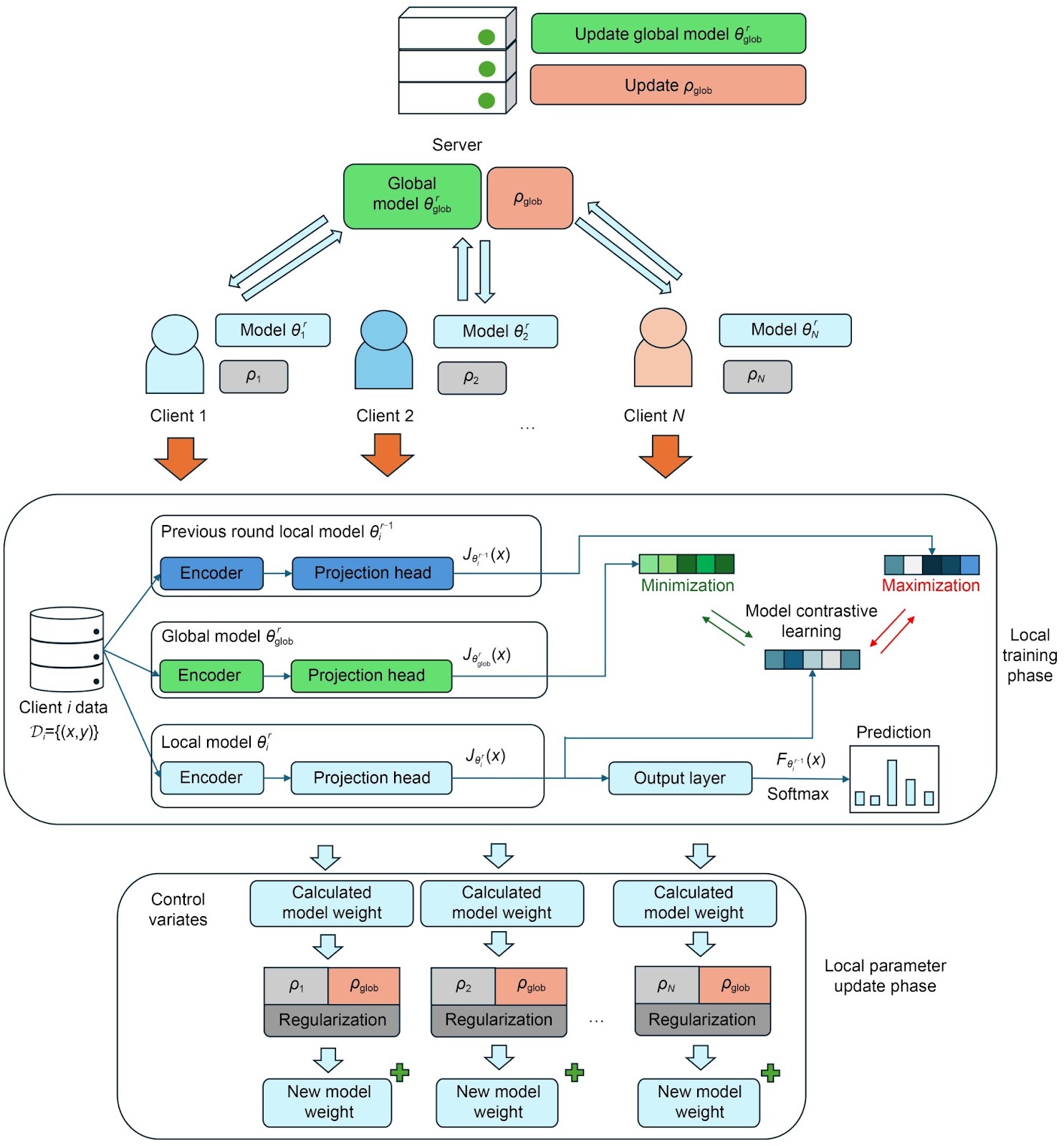
Recent attention to privacy issues demands a communication-safe method for training human activity recognition (HAR) models on client activity data. Federated learning (FL) has become a compelling technique to facilitate model training between the server and clients while preserving data privacy. However, classical FL methods often assume independent and identically distributed (IID) data among clients. This assumption does not hold true in practical scenarios. Human activity in real-world scena