Key Takeaways & Executive Findings
- •• Proposes a novel RDH-ED scheme integrating the Chinese remainder theorem (CRT) with the NTRU cryptosystem, eliminating the need for plaintext preprocessing. • Achieves a high embedding capacity of 503 bits per polynomial using CRT-based encoding, substantially outperforming existing NTRU, Paillier, and ElGamal-based methods. • Enables data extraction before decryption via pre-negotiated coprime parameters, offering enhanced operational flexibility. • Guarantees lossless recovery of original content through rigorous mathematical constraints, without compromising security or efficiency.
Abstract
Reversible data hiding in the encrypted domain (RDH-ED) based on homomorphic encryption provides a promising approach for privacy-preserving data sharing, yet existing methods based on the N th-degree truncated polynomial ring unit (NTRU) face a fundamental conflict between embedding capacity and reversibility, often requiring preprocessing of plaintext, which in turn compromises randomness of the ciphertext obtained. To address these issues, a novel RDH-ED scheme integrating the Chinese remainder theorem (CRT) with the NTRU cryptosystem is proposed in this study. The proposed scheme operates without any preprocessing of the plaintext and constructs multichannel redundancy in the ciphertext domain, thereby fully preserving the original polynomial structure of the plaintext. By employing a CRT-based encoding, multiple bits of information are enabled to be carried by a single polynomial coefficient, achieving an embedding capacity of 503 bits per polynomial with moderate-sized parameters. Moreover, the embedded data can be extracted before decryption via pre-negotiated coprime parameters, offering greater operational flexibility. Rigorous mathematical constraints ensure that the redundancy term is automatically eliminated during decryption, thereby guaranteeing lossless recovery of the original content. Experimental results demonstrate that the proposed scheme achieves a substantially higher embedding capacity compared to predominant RDH-ED methods based on NTRU, Paillier, and ElGamal cryptosystems, without compromising security or efficiency.
1. Introduction
With the increasing demand for information security and the acceleration of digital transformation, protecting sensitive data while enabling efficient information sharing has become a critical issue. In the plaintext domain, reversible data hiding (RDH) technology has achieved significant progress. For instance, Tang et al. (2020) proposed a weighted average-based complexity calculation for block selection, which improves embedding efficiency. Their subsequent work (Tang et al., 2022a, 2022b) further enhanced block selection strategies based on pixel value ordering and prediction error expansion. However, these methods typically require direct access to the original plaintext data, rendering them unsuitable for privacy-preserving applications.
Against this backdrop, RDH in the encrypted domain (RDH-ED) has been widely adopted. This technique allows additional information to be embedded into encrypted data without compromising confidentiality, while supporting lossless extraction of the hidden data and full recovery of the original content. Specifically, the redundant space in the ciphertext domain is employed to carry additional data. It is especially promising in privacy-critical applications such as medical image transmission and digital rights management. Fig. 1 illustrates different technical frameworks in RDH-ED categorized according to their respective cryptosystems.
Early schemes built on symmetric cryptography (Ma et al., 2013; Liu JF et al., 2015; Yi and Zhou, 2017) often follow a reserving room before encryption (RRBE) strategy, in which embedding space is created in the plaintext domain prior to encryption. In such schemes, RDH is performed by the content owner rather than the data hider. This requirement limits the practicality of these schemes in scenarios where the content owner lacks sufficient processing capability or when the data hiding process is expected to be imperceptible to the content owner, thereby restricting their applicability in flexible encrypted-domain settings. In contrast, public-key cryptosystems, particularly those endowed with homomorphic properties, have been shown to enhance security by enabling data embedding directly in the encrypted domain, and are therefore more closely aligned with the vacating room after encryption (VRAE) paradigm (Qi et al., 2023; Zhou ZY et al., 2024). While these approaches (Ke et al., 2016; Zhang MQ et al., 2016; Zhang XP et al., 2016; Lin et al., 2021; Malik et al., 2022; Kong et al., 2024; Wu et al., 2025) support broader applications, they exhibit low embedding rates and are vulnerable to quantum attacks. Lattice-based schemes represent a recent advancement in RDH-ED by offering quantum resistance through security mechanisms based ...
Loading authentic research manuscript (Pages 1–5)...
Xinyue Zhang, Kunyi Lai, Xin Tang (2025). Reversible data hiding in encrypted domain based on NTRU and Chinese remainder theorem. Engineering Information Technology & Electronic Engineering. https://doi.org/10.1631/ENG_ITEE_2025_0138
Research & Educational Purpose Only:The translations, structured abstracts, analytical annotations, and data reports provided by SinoTechIntel are intended exclusively for academic research, internal corporate R&D, and educational benchmarking. They do not constitute formal engineering, chemical safety, legal, or professional advice.
Copyright & Intellectual Property Notice: Original copyright of the underlying source articles and experimental data remains with the respective authors, institutions, and original publishing journals. SinoTechIntel claims intellectual property only over its proprietary translations, analytical syntheses, and AEO structured enhancements in accordance with international fair use and academic citation principles.
Frequently Asked Questions
What is the main contribution of this paper?
The paper proposes a novel reversible data hiding in encrypted domain (RDH-ED) scheme that integrates the Chinese remainder theorem with the NTRU cryptosystem, enabling high embedding capacity without plaintext preprocessing and ensuring lossless recovery.
How does the proposed scheme achieve such a high embedding capacity?
By employing CRT-based encoding, the scheme allows multiple bits of information to be carried by a single polynomial coefficient, achieving an embedding capacity of 503 bits per polynomial with moderate-sized parameters.
Can the embedded data be extracted before decryption?
Yes, the embedded data can be extracted before decryption using pre-negotiated coprime parameters, offering greater operational flexibility.
What are the advantages of the proposed scheme over existing methods?
The scheme achieves a substantially higher embedding capacity compared to predominant RDH-ED methods based on NTRU, Paillier, and ElGamal cryptosystems, without compromising security or efficiency, and it does not require preprocessing of plaintext.
Is the proposed scheme resistant to quantum attacks?
Since the scheme is based on the NTRU cryptosystem, which is a lattice-based cryptographic system, it offers quantum resistance, thus providing enhanced security against potential quantum attacks.
Related Technical Papers & Translations
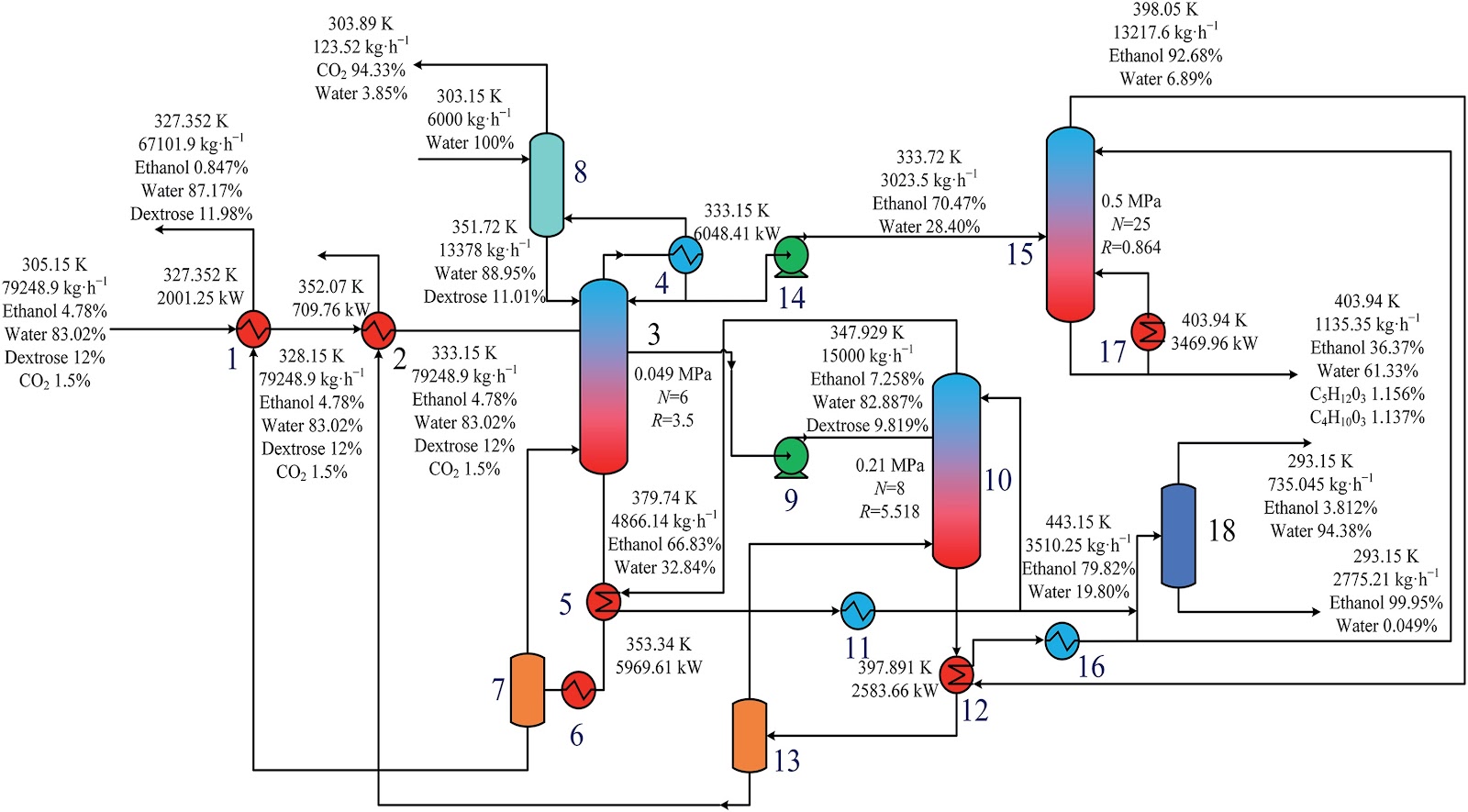
Design and optimization of a high-efficiency distillation process for cellulosic fuel ethanol integrated with thermal coupling and molecular sieve adsorption
To address the challenges of high energy consumption and prominent costs in the traditional three-columns distillation process for cellulosic fuel ethanol, a distillation—molecular sieve coupling separation process is proposed. This process integrates a three-column (crude distillation column, first distillation column, second distillation column) system with a 3A molecular sieve adsorption deep dehydration unit. A thermal coupling network is constructed via differential pressure design (steam from medium/high-pressure columns as mutual heat sources, reboiler liquid waste heat for feed preheating), and molecular sieve adsorption conditions are optimized. The study first performs a thermodynamic consistency test on the ethanol—water system, determines optimal non-random two-liquid (NRTL) model binary interaction parameters via experimental data regression for Aspen Plus simulation. Aiming at minimum total annual cost (TAC), Aspen Plus is used to optimize process parameters (theoretical tray number, feed location, reflux ratio, side-draw position, etc.). Economic analysis shows this process reduces CO2 emission costs by 27.56%, TAC by 15.58% (to 5.123 × 10⁶ USD·a-1), and increases ethanol purity to >99.6%, providing an effective solution for green, efficient separation.
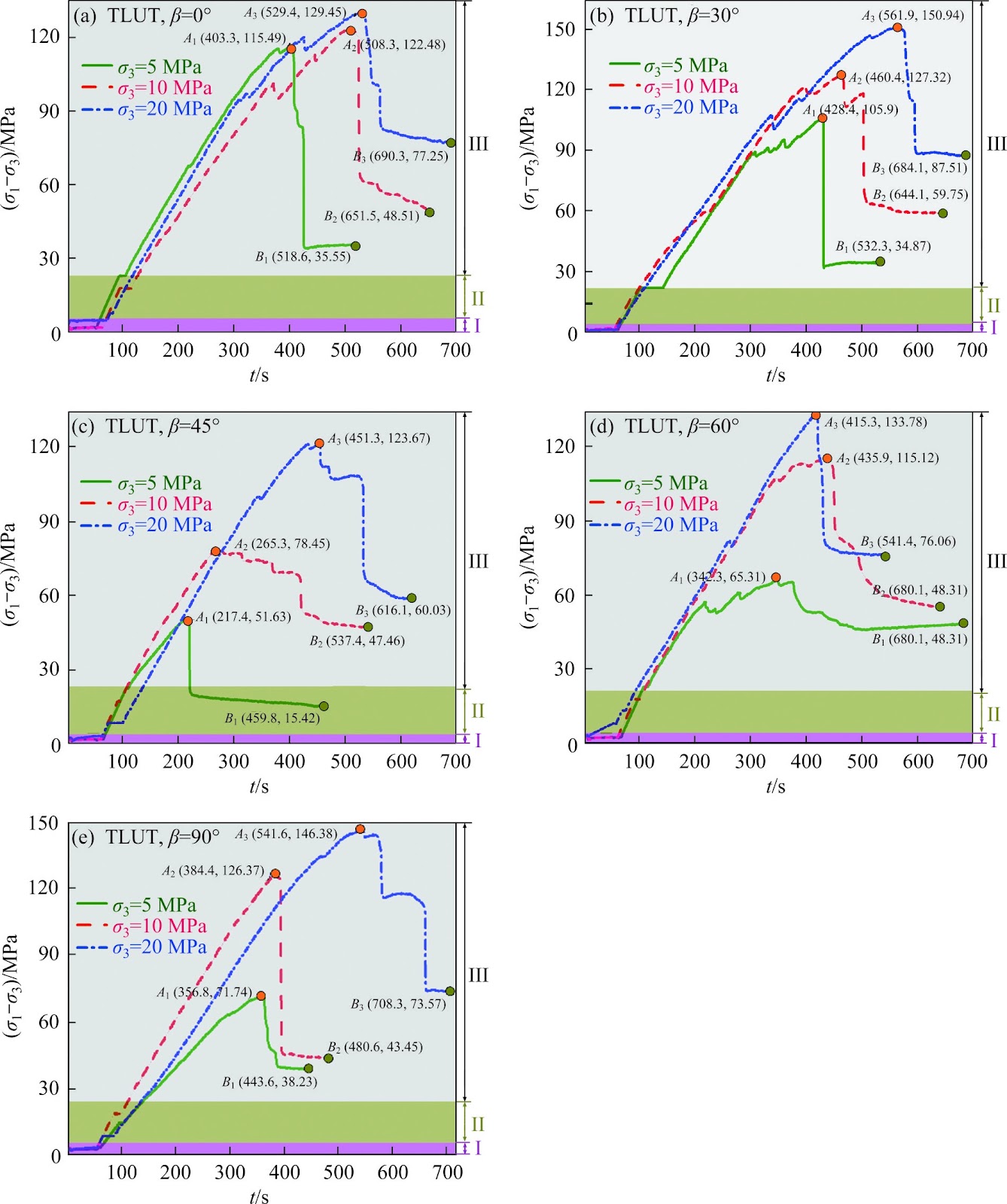
A cohesion loss model for determining residual strength of deep bedded sandstone
Rock residual strength, as an important input parameter, plays an indispensable role in proposing the reasonable and scientific scheme about stope design, underground tunnel excavation and stability evaluation of deep chambers. Therefore, previous residual strength models of rocks established were reviewed. And corresponding related problems were stated. Subsequently, starting from the effects of bedding and whole life-cycle evolution process, series of triaxial mechanical tests of deep bedded s
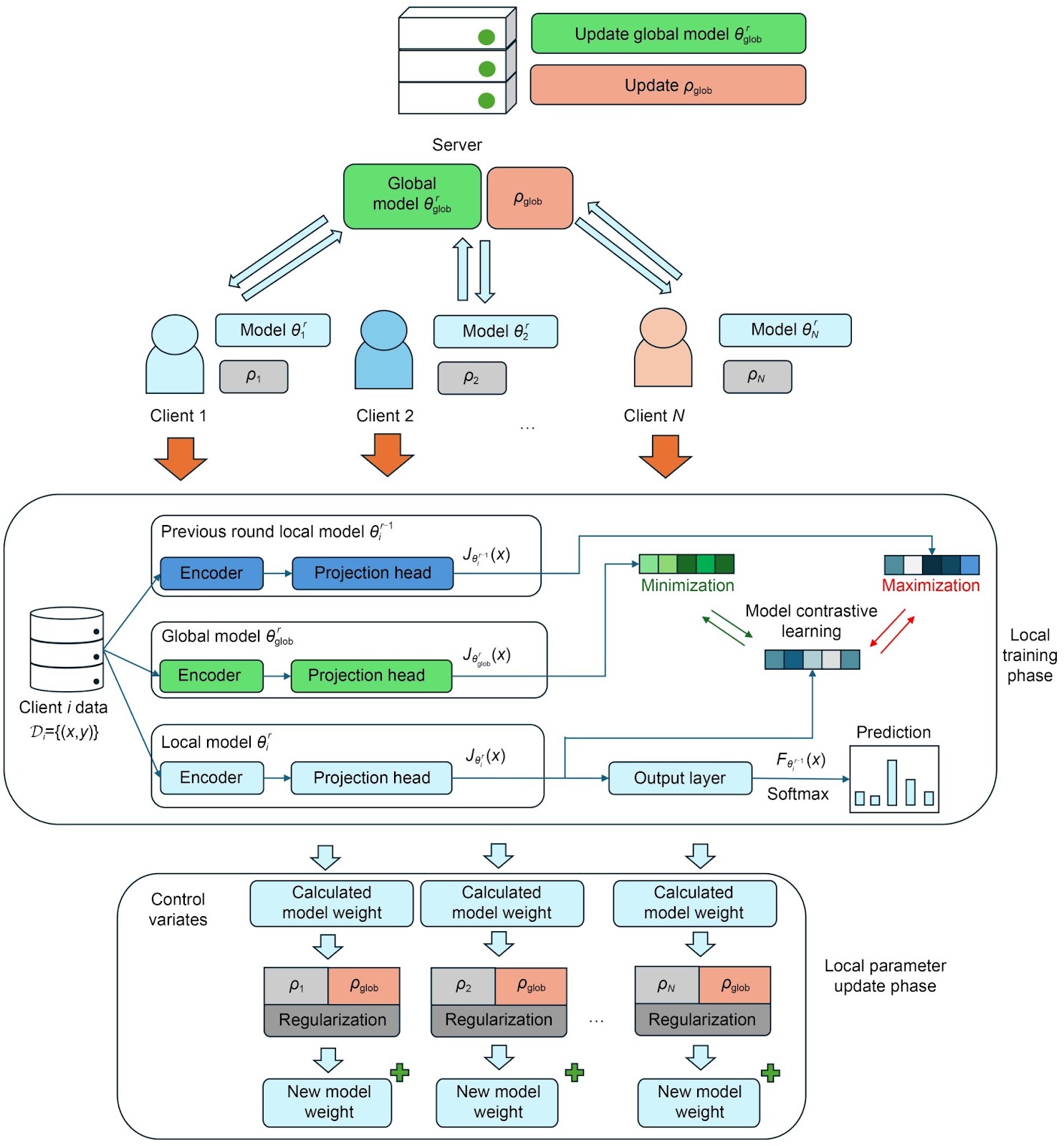
Federated model with contrastive learning and adaptive control variates for human activity recognition
Recent attention to privacy issues demands a communication-safe method for training human activity recognition (HAR) models on client activity data. Federated learning (FL) has become a compelling technique to facilitate model training between the server and clients while preserving data privacy. However, classical FL methods often assume independent and identically distributed (IID) data among clients. This assumption does not hold true in practical scenarios. Human activity in real-world scena