
Key Takeaways & Executive Findings
- •• UAV swarms are integral to 6G networks, merging sensing and communication to achieve full coverage and the Internet of Intelligence. • Key challenges from low-slow-small characteristics, high density, complex low-altitude environments, and swarm coordination are analyzed. • The paper proposes 'Ten Ones' performance metrics tailored to low-altitude UAV swarm ISAC systems. • Promising technologies include XL-MIMO, sparse time-frequency resource allocation, channel knowledge maps, and UAV swarms as airborne ISAC platforms.
Abstract
With the rapid development of the low-altitude economy, low-altitude unmanned aerial vehicle (UAV) swarms are emerging as important components of sixth-generation (6G) mobile communication networks, facilitating “full coverage” and “Internet of Intelligence.” Integrated sensing and communication (ISAC) deeply integrates sensing functionality into wireless communication networks by sharing wireless infrastructures and resources such as base stations, antennas, radio frequency chains, and signal waveforms, thereby significantly improving the performance of low-altitude UAV swarms. This paper reviews the research status of low-altitude UAV swarm ISAC systems, analyzes the new challenges arising from key features of UAV swarms, including low–slow–small characteristics, high density, large quantity, complex low-altitude environments, and high swarm coordination requirements, presents a vision for future deployment, and proposes the so-called “Ten Ones” performance metrics tailored to low-altitude UAV swarm ISAC. To realize these ambitious key performance indicators for future UAV swarm ISAC, several promising technologies are discussed, such as new array architectures, including extremely-large multiple-input multiple-output (XL-MIMO), sparse XL-MIMO, and reconfigurable antenna arrays, sparse time–frequency resource allocation, and channel knowledge maps. Furthermore, the potential of exploiting UAV swarms as airborne ISAC platforms is discussed. Finally, future research directions are outlined, offering a guideline for the design and development of low-altitude UAV swarm ISAC systems.
1. Introduction
With the low-altitude economy being identified as a major strategic emerging industry, low-altitude aircraft, particularly unmanned aerial vehicles (UAVs), have achieved remarkable progress and widespread applications (Zeng Y et al., 2019). However, with the continuous expansion of UAV applications and the increasing complexity of their operating environments, the limitations of a single UAV are becoming increasingly evident. UAV swarms are expected to become a critical component of the future low-altitude economy. A UAV swarm is a distributed group system composed of multiple UAVs that achieves task planning and collaborative cooperation via inter-UAV data transmission and sharing, thereby completing complex tasks that a single UAV cannot accomplish. UAV swarms can provide more powerful technical support in fields such as urban logistics, traffic control, emergency rescue, patrol and inspection, agricultural and forestry protection, geographical surveying and mapping, and military security (Alqudsi and Makaraci, 2025).
The 3rd Generation Partnership Project (3GPP) released the 5G New Radio (NR) technical specifications supporting UAVs in 3GPP TR 21.918, validating the feasibility of supporting UAVs through terrestrial cellular networks, and also pointing out the required enhancements to remote control and data transmission-related technical indicators. On one hand, among various available wireless technologies supporting low-altitude UAV applications, mobile communication networks are considered the most effective way to achieve large-scale UAV swarm deployment and beyond line-of-sight (LoS) UAV operations (Song et al., 2025). On the other hand, space–air–ground–sea integrated infrastructures constructed based on UAV development are expected to help sixth-generation (6G) mobile communication networks achieve the vision of “full coverage” and “Internet of Intelligence,” accelerating the deep integration of low-altitude networks and economy (Qi et al., 2024; Zhang RY et al., 2025).
Loading authentic research manuscript (Pages 1–5)...
Hongqi MIN, Dingbang YANG, Chenhao QI, Yong ZENG (2025). Low-altitude UAV swarm ISAC: new opportunities and challenges. Engineering Information Technology & Electronic Engineering. https://doi.org/10.1631/ENG_ITEE_2026_0030
Research & Educational Purpose Only:The translations, structured abstracts, analytical annotations, and data reports provided by SinoTechIntel are intended exclusively for academic research, internal corporate R&D, and educational benchmarking. They do not constitute formal engineering, chemical safety, legal, or professional advice.
Copyright & Intellectual Property Notice: Original copyright of the underlying source articles and experimental data remains with the respective authors, institutions, and original publishing journals. SinoTechIntel claims intellectual property only over its proprietary translations, analytical syntheses, and AEO structured enhancements in accordance with international fair use and academic citation principles.
Frequently Asked Questions
What is a UAV swarm?
A UAV swarm is a distributed group system composed of multiple unmanned aerial vehicles that achieve task planning and collaborative cooperation via inter-UAV data transmission and sharing, enabling them to complete complex tasks that a single UAV cannot accomplish.
What is ISAC and why is it important for UAV swarms?
Integrated sensing and communication (ISAC) deeply integrates sensing functionality into wireless communication networks by sharing wireless infrastructures and resources. It significantly improves the performance of low-altitude UAV swarms by enabling efficient use of spectrum and hardware, which is crucial for large-scale deployment and coordination.
What are the 'Ten Ones' performance metrics?
The 'Ten Ones' are a set of ambitious key performance indicators proposed in the paper, tailored specifically for low-altitude UAV swarm ISAC systems. They are intended to guide future design and development, covering aspects such as coverage, sensing accuracy, communication capacity, and coordination efficiency.
What promising technologies are discussed for future UAV swarm ISAC?
The paper discusses new array architectures, including extremely-large MIMO (XL-MIMO), sparse XL-MIMO, and reconfigurable antenna arrays; sparse time-frequency resource allocation; and channel knowledge maps (CKMs). Additionally, it explores the potential of using UAV swarms themselves as airborne ISAC platforms.
What are the main challenges in low-altitude UAV swarm ISAC?
Key challenges arise from UAV swarms' low-slow-small characteristics, high density and large quantity, complex low-altitude environments, and high swarm coordination requirements, which impact sensing, communication, and resource management.
Related Technical Papers & Translations
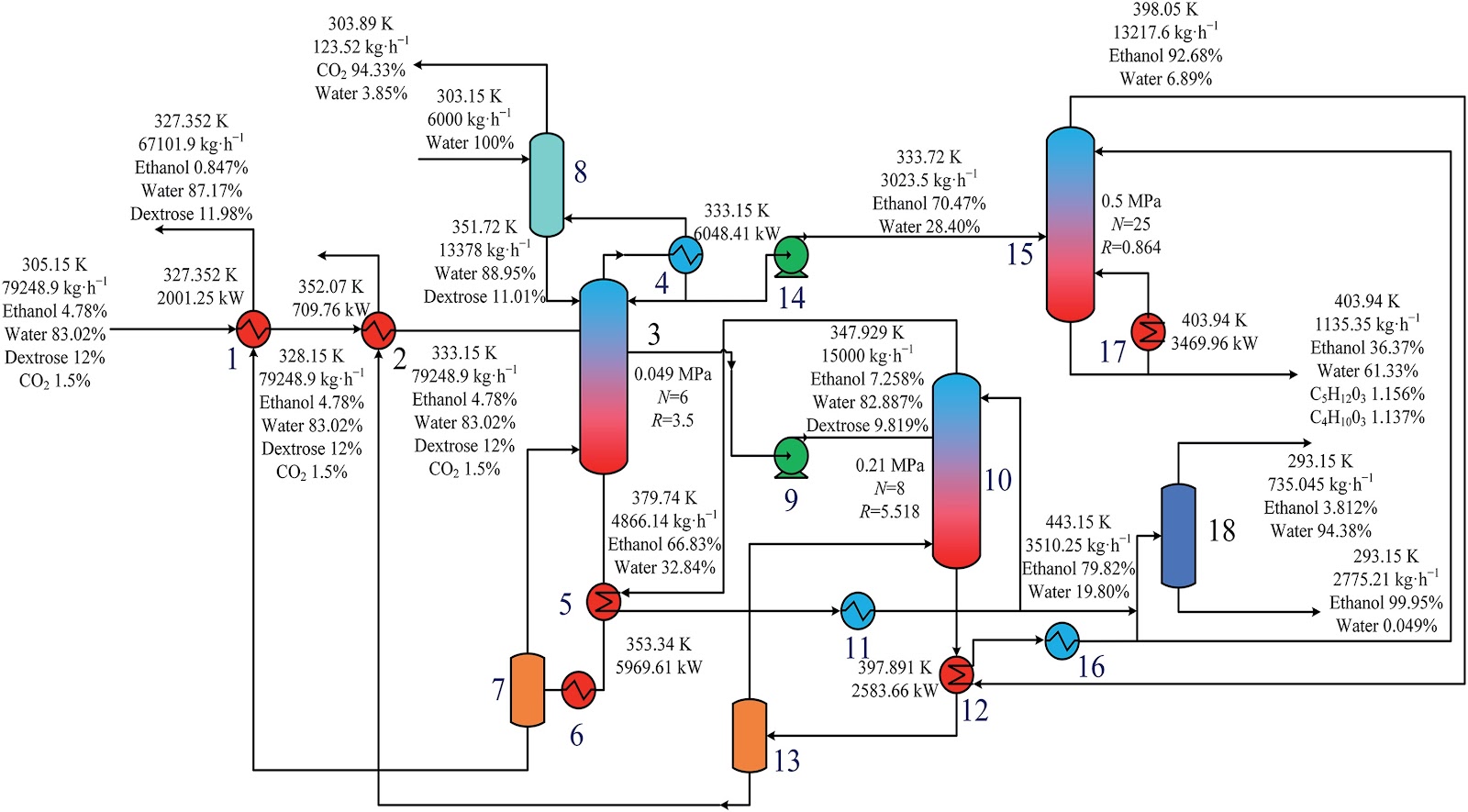
Design and optimization of a high-efficiency distillation process for cellulosic fuel ethanol integrated with thermal coupling and molecular sieve adsorption
To address the challenges of high energy consumption and prominent costs in the traditional three-columns distillation process for cellulosic fuel ethanol, a distillation—molecular sieve coupling separation process is proposed. This process integrates a three-column (crude distillation column, first distillation column, second distillation column) system with a 3A molecular sieve adsorption deep dehydration unit. A thermal coupling network is constructed via differential pressure design (steam from medium/high-pressure columns as mutual heat sources, reboiler liquid waste heat for feed preheating), and molecular sieve adsorption conditions are optimized. The study first performs a thermodynamic consistency test on the ethanol—water system, determines optimal non-random two-liquid (NRTL) model binary interaction parameters via experimental data regression for Aspen Plus simulation. Aiming at minimum total annual cost (TAC), Aspen Plus is used to optimize process parameters (theoretical tray number, feed location, reflux ratio, side-draw position, etc.). Economic analysis shows this process reduces CO2 emission costs by 27.56%, TAC by 15.58% (to 5.123 × 10⁶ USD·a-1), and increases ethanol purity to >99.6%, providing an effective solution for green, efficient separation.
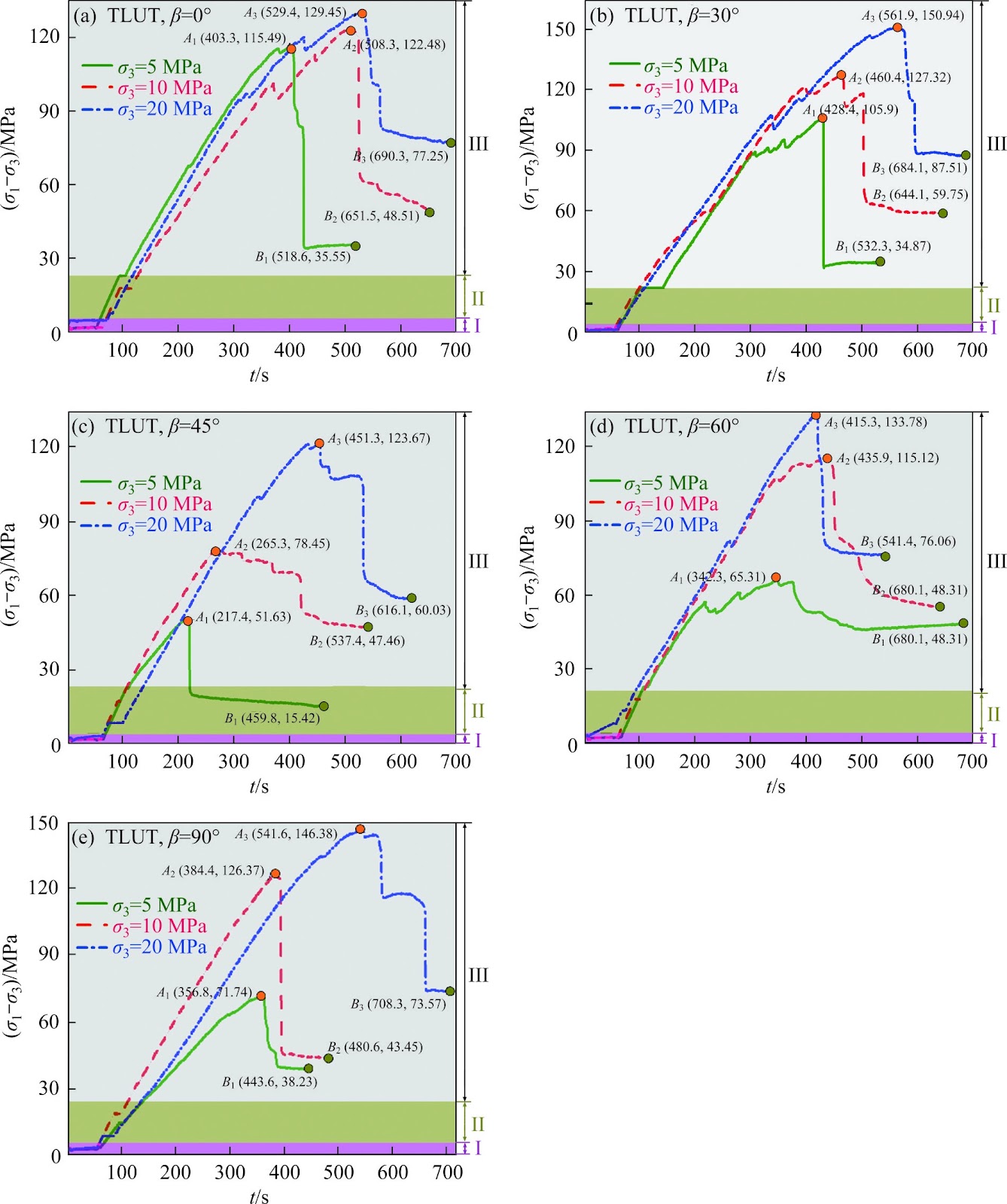
A cohesion loss model for determining residual strength of deep bedded sandstone
Rock residual strength, as an important input parameter, plays an indispensable role in proposing the reasonable and scientific scheme about stope design, underground tunnel excavation and stability evaluation of deep chambers. Therefore, previous residual strength models of rocks established were reviewed. And corresponding related problems were stated. Subsequently, starting from the effects of bedding and whole life-cycle evolution process, series of triaxial mechanical tests of deep bedded s
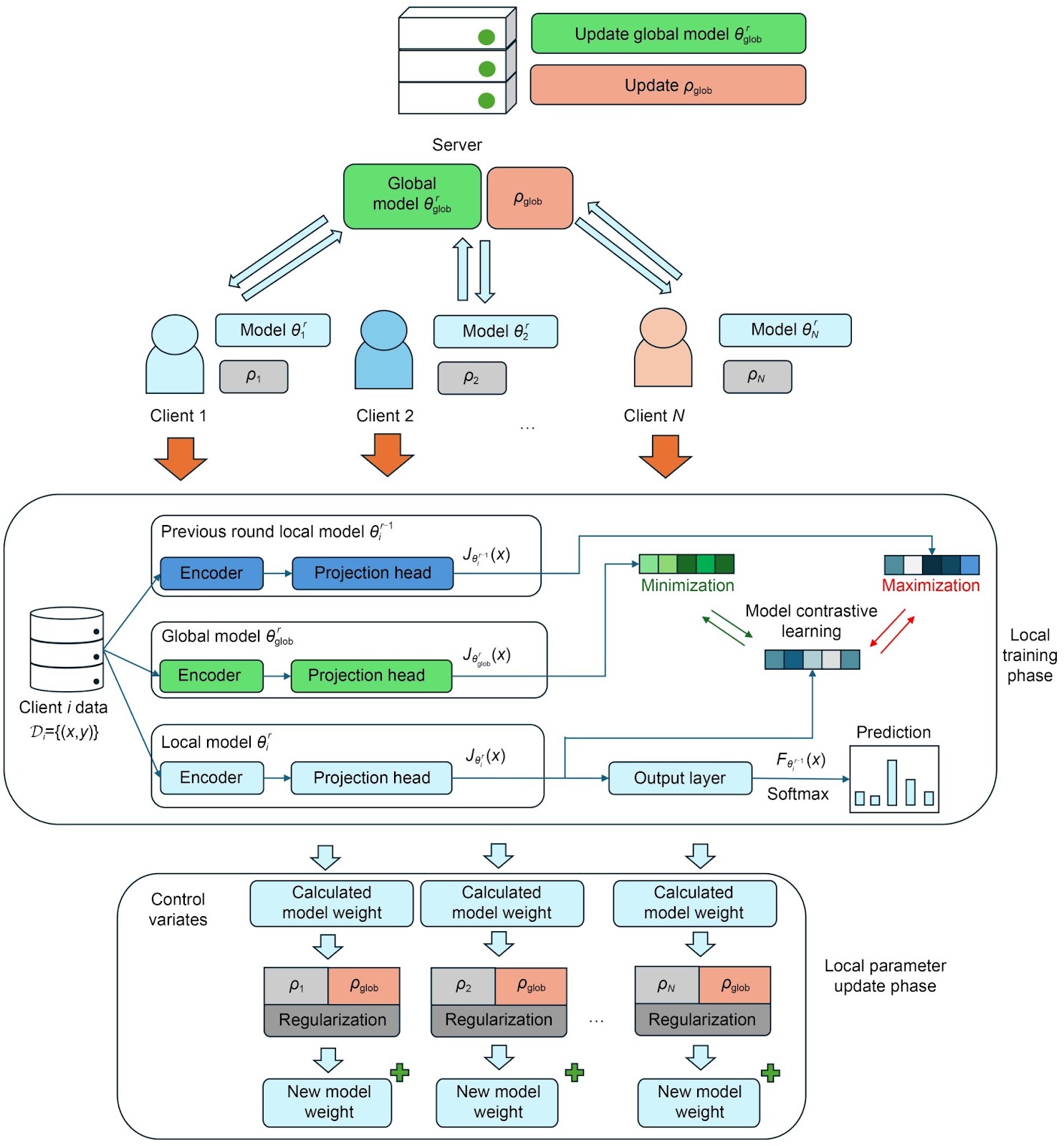
Federated model with contrastive learning and adaptive control variates for human activity recognition
Recent attention to privacy issues demands a communication-safe method for training human activity recognition (HAR) models on client activity data. Federated learning (FL) has become a compelling technique to facilitate model training between the server and clients while preserving data privacy. However, classical FL methods often assume independent and identically distributed (IID) data among clients. This assumption does not hold true in practical scenarios. Human activity in real-world scena