Key Takeaways & Executive Findings
- •• MENTOR introduces a multi-agent framework integrating teacher–student iterative reasoning for event and narrative trend prediction. • It outperforms existing baselines (StkFEP and SEP) in event prediction and industry ranking tasks on Chinese KOL and English financial news datasets. • Portfolio-level backtests demonstrate that MENTOR's improved forecasts translate into practical gains in investment performance. • The framework establishes a principled link between narrative dynamics and financial market outcomes through structured reasoning and multi-agent feedback.
Abstract
Narrative economics suggests that financial markets are strongly influenced by evolving narratives, creating opportunities for forecasting emerging events and their economic impacts. However, existing large language model (LLM)-based approaches are inadequate in terms of systematic task decomposition and alignment with financial applications. We propose MENTOR, a multi-agent framework for event and narrative trend prediction that integrates teacher–student iterative reasoning with progressive subtasks: detecting and ranking trending events, forecasting future events from current narratives, and predicting industry index performance influenced by these events. Experiments on our self-constructed Chinese key opinion leader (KOL) articles dataset and English financial news dataset show that MENTOR consistently outperforms recent baselines such as the stakeholder-enhanced future event prediction (StkFEP) and summarize–explain–predict (SEP) frameworks in both event prediction and industry ranking tasks. In addition, the backtest results at the portfolio level show that improved event and industry forecasts can bring about a practical improvement in investment performance. These results demonstrate that incorporating structured reasoning and multi-agent feedback enables more reliable event forecasting and strengthens the connection between narrative dynamics and financial market outcomes.
1. Introduction
Narrative economics emphasizes that financial markets are driven not solely by fundamentals but also by the narratives that circulate among investors and the public (Shiller, 2019). Narratives shape expectations, guide sentiment, and can amplify or mitigate economic fluctuations. In practice, analysts often anticipate emerging narratives and then map them to likely sectoral or market responses. This decomposition, predicting events first and then inferring financial impacts, offers a structured way to avoid modeling the randomness inherent in price movements. However, automating this reasoning process remains an open challenge.
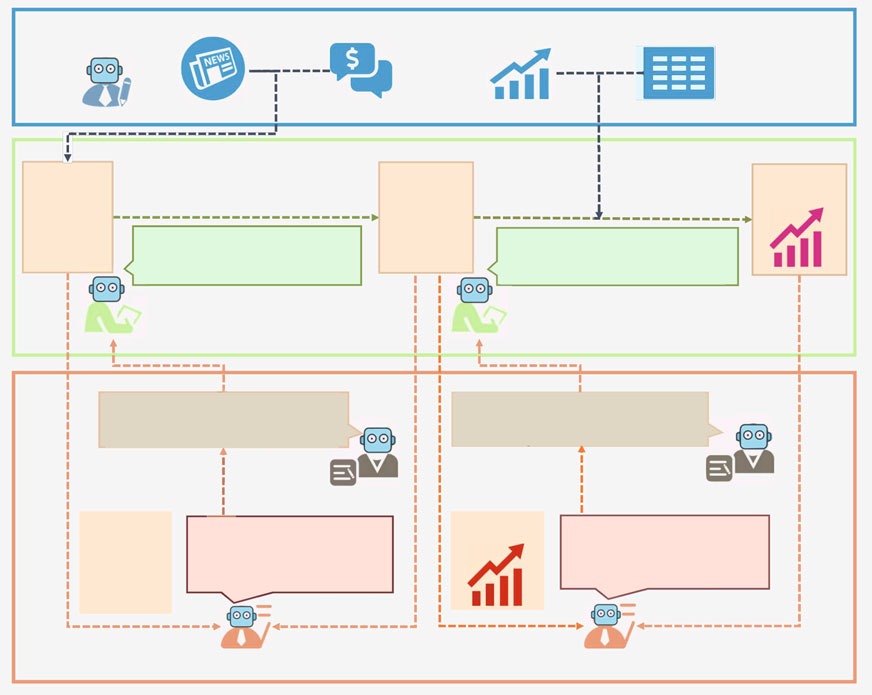
Although narratives can spread in complex and sometimes unpredictable ways, Robert Shiller's theory of narrative economics provides a foundation for structured forecasting (Shiller, 2019). Specifically, Shiller argues that (1) new narratives typically emerge from existing ones through association or amplification, (2) economically relevant narratives tend to recur across different historical episodes (e.g., inflation fears and technological disruption), and (3) despite surface-level diversity, narratives can be meaningfully clustered by theme and market impact. These properties imply a degree of bounded predictability: although we cannot foresee every narrative shock, we can identify high-potential trajectories rooted in current discourse. As illustrated in Fig. 1, our framework operationalizes this insight by analyzing the narrative constellation of today to forecast future events and their financial implications.
Loading authentic research manuscript (Pages 1–5)...
Liyuan Chen, Gaoguo Jia, Dongsheng Gu, Jiangpeng Yan, Yuhang Jiang, Xiu Li, Xiaojun Zeng (2025). MENTOR: a multi-agent framework for event and narrative trend prediction with optimized reasoning. Frontiers of Information Technology & Electronic Engineering. https://doi.org/10.1631/FITEE_2500608
Research & Educational Purpose Only:The translations, structured abstracts, analytical annotations, and data reports provided by SinoTechIntel are intended exclusively for academic research, internal corporate R&D, and educational benchmarking. They do not constitute formal engineering, chemical safety, legal, or professional advice.
Copyright & Intellectual Property Notice: Original copyright of the underlying source articles and experimental data remains with the respective authors, institutions, and original publishing journals. SinoTechIntel claims intellectual property only over its proprietary translations, analytical syntheses, and AEO structured enhancements in accordance with international fair use and academic citation principles.
Frequently Asked Questions
What is MENTOR?
MENTOR is a multi-agent framework for event and narrative trend prediction. It integrates teacher–student iterative reasoning with progressive subtasks to detect and rank trending events, forecast future events from current narratives, and predict industry index performance influenced by these events.
How does MENTOR improve event prediction?
MENTOR systematically decomposes the prediction task into structured subtasks and uses multi-agent feedback, outperforming conventional LLM-based approaches that lack such decomposition. It consistently beats baseline frameworks like StkFEP and SEP in event prediction and industry ranking tasks.
What datasets were used in the experiments?
The experiments used a self-constructed Chinese key opinion leader (KOL) articles dataset and an English financial news dataset.
What are the key findings of the study?
MENTOR consistently outperforms existing baseline frameworks in event prediction and industry ranking. Portfolio-level backtests further show that improved event and industry forecasts lead to practical improvements in investment performance.
How does MENTOR connect narratives to financial outcomes?
MENTOR operationalizes narrative economics by analyzing current narrative constellations, forecasting future events, and mapping these to industry index performance. This provides a structured bridge between narrative dynamics and financial market outcomes.
Related Technical Papers & Translations
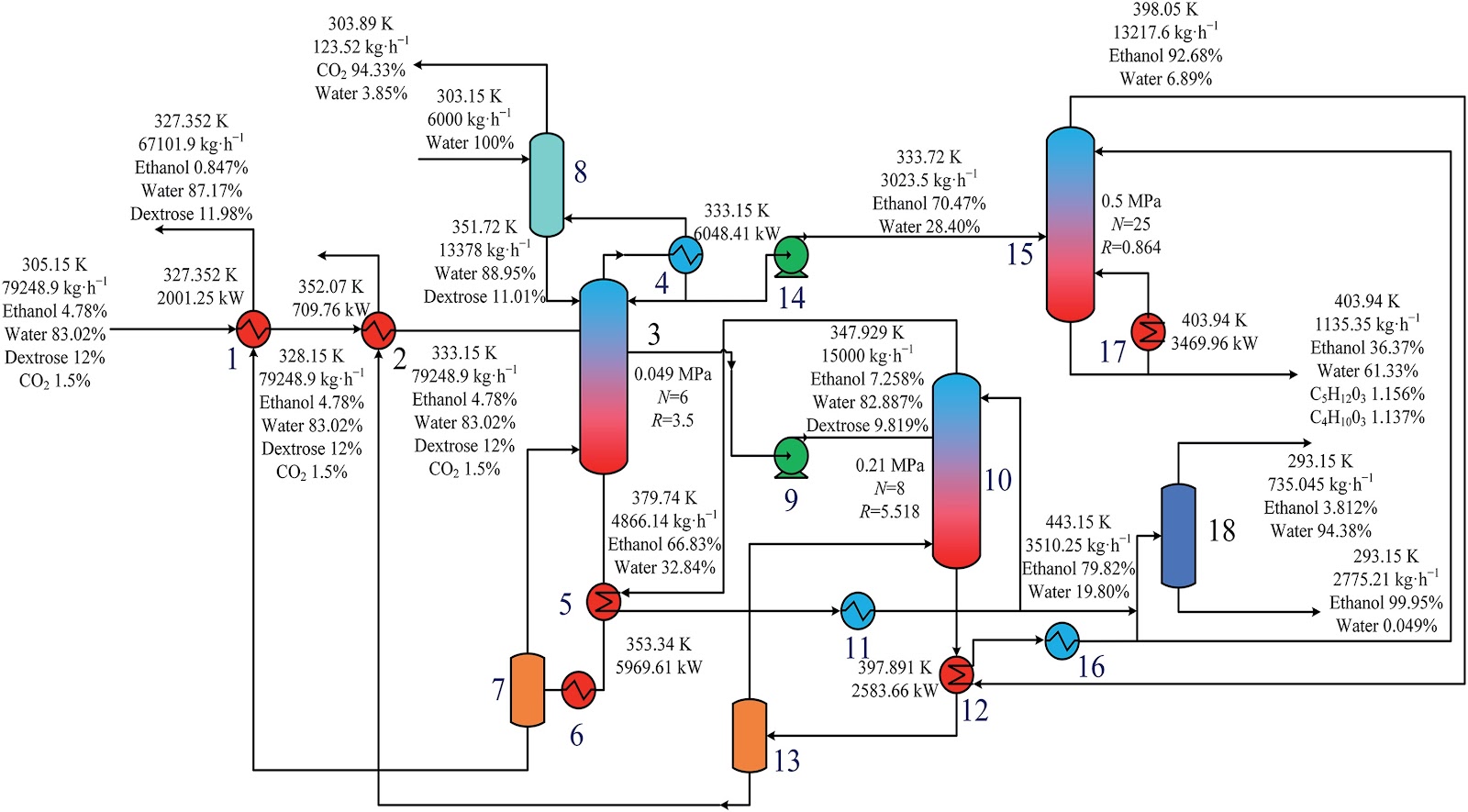
Design and optimization of a high-efficiency distillation process for cellulosic fuel ethanol integrated with thermal coupling and molecular sieve adsorption
To address the challenges of high energy consumption and prominent costs in the traditional three-columns distillation process for cellulosic fuel ethanol, a distillation—molecular sieve coupling separation process is proposed. This process integrates a three-column (crude distillation column, first distillation column, second distillation column) system with a 3A molecular sieve adsorption deep dehydration unit. A thermal coupling network is constructed via differential pressure design (steam from medium/high-pressure columns as mutual heat sources, reboiler liquid waste heat for feed preheating), and molecular sieve adsorption conditions are optimized. The study first performs a thermodynamic consistency test on the ethanol—water system, determines optimal non-random two-liquid (NRTL) model binary interaction parameters via experimental data regression for Aspen Plus simulation. Aiming at minimum total annual cost (TAC), Aspen Plus is used to optimize process parameters (theoretical tray number, feed location, reflux ratio, side-draw position, etc.). Economic analysis shows this process reduces CO2 emission costs by 27.56%, TAC by 15.58% (to 5.123 × 10⁶ USD·a-1), and increases ethanol purity to >99.6%, providing an effective solution for green, efficient separation.
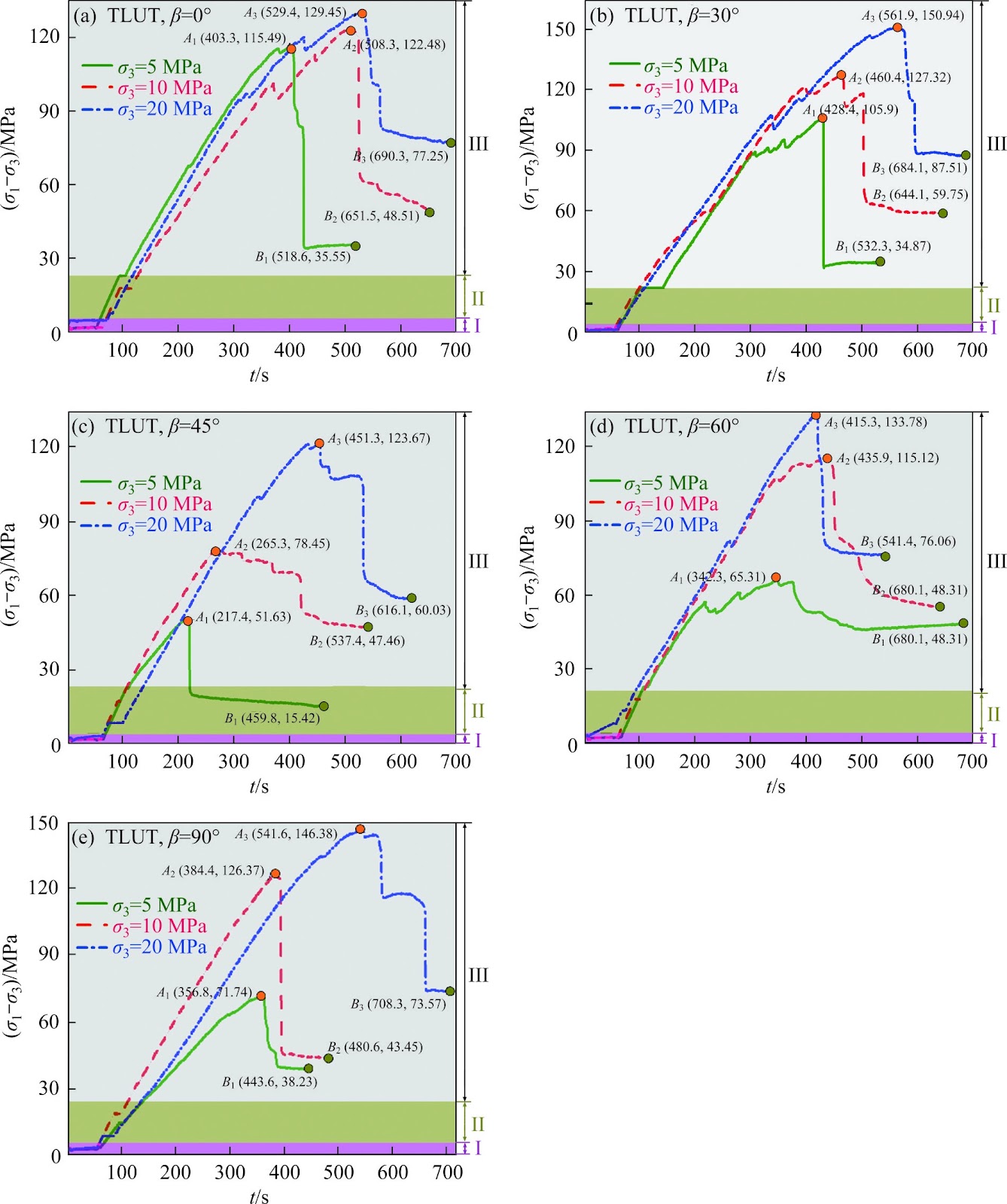
A cohesion loss model for determining residual strength of deep bedded sandstone
Rock residual strength, as an important input parameter, plays an indispensable role in proposing the reasonable and scientific scheme about stope design, underground tunnel excavation and stability evaluation of deep chambers. Therefore, previous residual strength models of rocks established were reviewed. And corresponding related problems were stated. Subsequently, starting from the effects of bedding and whole life-cycle evolution process, series of triaxial mechanical tests of deep bedded s
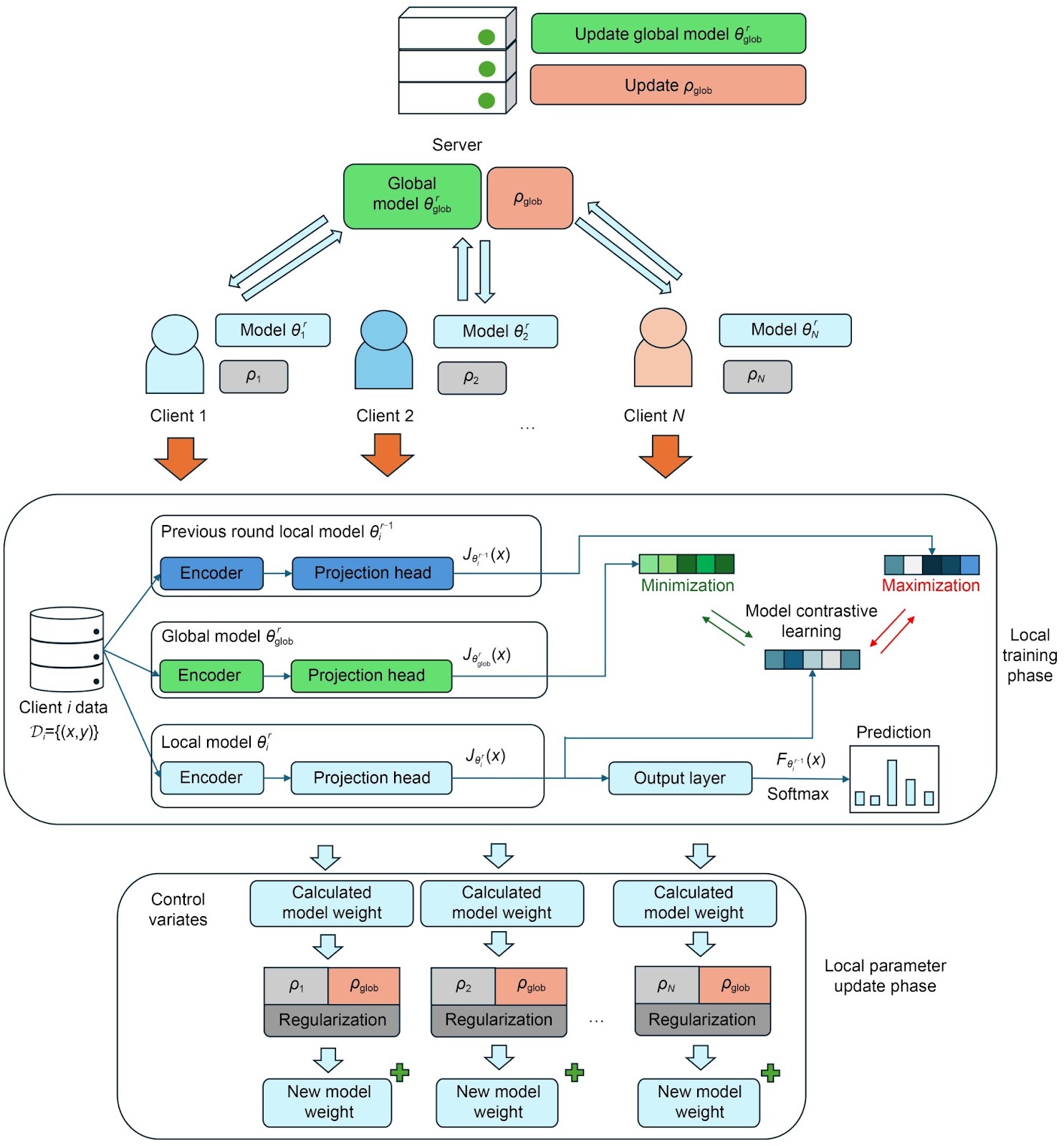
Federated model with contrastive learning and adaptive control variates for human activity recognition
Recent attention to privacy issues demands a communication-safe method for training human activity recognition (HAR) models on client activity data. Federated learning (FL) has become a compelling technique to facilitate model training between the server and clients while preserving data privacy. However, classical FL methods often assume independent and identically distributed (IID) data among clients. This assumption does not hold true in practical scenarios. Human activity in real-world scena