Key Takeaways & Executive Findings
- •• Proposes a comprehensive priority evaluation (CPE) method using web text, anchor text, and hyperlink context to reduce topic drift. • Introduces an improved Bayesian classifier with weights (BCW) that adds label weights to feature words, boosting webpage classification accuracy. • Develops a content block segmentation (CBS) technique based on backtracking to extract high-relevance hyperlinks and cross relevance tunnels. • Validates the integrated BCW_CC strategy in rainstorm disaster and sports domains, showing improved focused crawling effectiveness.
Abstract
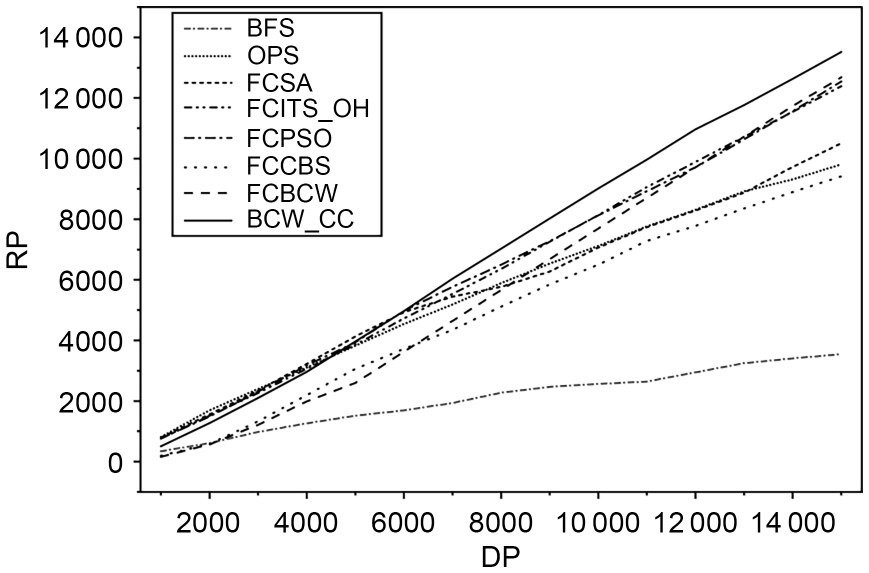
Avoidance of topic drift and enabling crossing tunnels are two main difficulties in focused crawling. To overcome the problem of topic drift, we design a comprehensive priority evaluation (CPE) method based on the web text, anchor text, and context of hyperlinks, which improves the topic-relevance evaluation of unvisited hyperlinks. Subsequently, we propose an improved Bayesian classifier with weights (BCW), which adds label weights to the feature words of the Bayesian classifier to enhance the accuracy of webpage classification. To cross tunnels through which some topic-relevant webpages can be reached from low-relevance webpages, we construct a content block segmentation (CBS) technology for webpages based on the backtracking method, which segments a webpage into multiple blocks and then judges the relevance of every content block, extracting hyperlinks with high comprehensive relevance. Finally, a BCW-based focused crawling strategy combining the CPE and CBS strategies (BCW_CC) is proposed and experimentally evaluated for focused crawling in two domains: rainstorm disasters and sports. The results demonstrate the effectiveness of the developed BCW_CC method.
1. Introduction
Owing to its diversity, timeliness, and sharing ability, the Internet has become an important information source. The 53rd survey report of the China Internet Network Information Center (2024) recorded 3.88 million websites and 382 billion webpages in China as of December 2023. The number of webpages has increased by 6.5% since December 2022. The number of webpages on the global Internet is even vaster and very difficult to estimate. Faced with such huge resources, traditional search engines such as Google and Baidu cannot always match users’ personalized needs to topic-relevant webpages. Furthermore, some existing open-source crawler tools, such as WebCollector, Crawler4j, Scrapy, and Nutch, are generally limited by low recall and accuracy (Yu J and Liu, 2015; Hosseinkhani et al., 2021). Unlike general web crawlers, the focused crawler (FC) (Deng, 2020; Xiong and Yang, 2025) can filter webpages related to specific topics.
The FC comprehensively judges the topic relevance of webpages by setting a threshold or classifier based on various evaluation indicators of the webpages, according to the needs of users. The FC, which usually crawls the webpages of specific topics more accurately than traditional crawler tools, is widely applied in information filtering, precise information retrieval, data mining and analysis, and large models (for example, data crawling of pre-trained corpora). The FC can also collect public opinions and observe the emotional tendencies on specific topics on social media and news websites, helping enterprises and governments understand the public’s views on a certain topic. This paper investigates the FC on two topics: rainstorm disasters and sports events. Early warnings, preventive measures, and emergency response information are essential for reducing and avoiding losses caused by a rainstorm disaster and ensuring the safety of human life and property. In sports, the FC can not only recommend important sports events related to the user’s interests but also provide users with relevant comments at a deeper level. However, the information in specific fields is generally sparse and scattered throughout the vast Internet, possessing big data characteristics that challenge the accuracy rate (AC) of information retrieval by FC.
Most of the current FC methods are based on heuristic strategies, semantic analysis, or machine learning.
Loading authentic research manuscript (Pages 1–5)...
Jingfa Liu, Yongchuang Wu, Zhaoxia Liu (2025). A focused crawling strategy based on comprehensive priority evaluation of hyperlinks and improved Bayesian classifier. Frontiers of Information Technology & Electronic Engineering. https://doi.org/10.1631/FITEE_2400939
Research & Educational Purpose Only:The translations, structured abstracts, analytical annotations, and data reports provided by SinoTechIntel are intended exclusively for academic research, internal corporate R&D, and educational benchmarking. They do not constitute formal engineering, chemical safety, legal, or professional advice.
Copyright & Intellectual Property Notice: Original copyright of the underlying source articles and experimental data remains with the respective authors, institutions, and original publishing journals. SinoTechIntel claims intellectual property only over its proprietary translations, analytical syntheses, and AEO structured enhancements in accordance with international fair use and academic citation principles.
Frequently Asked Questions
What is a focused crawler (FC)?
A focused crawler is a web crawler designed to filter and fetch webpages related to specific topics, improving precision and recall over traditional general crawlers.
How does the BCW_CC strategy reduce topic drift?
BCW_CC combines comprehensive priority evaluation of hyperlinks, an improved Bayesian classifier with weights, and content block segmentation to maintain topic relevance across unvisited hyperlinks.
What are the main components of the proposed method?
The main components are the comprehensive priority evaluation (CPE) method, the improved Bayesian classifier with weights (BCW), and the content block segmentation (CBS) technology based on backtracking, integrated into the BCW_CC focused crawling strategy.
In which domains was the BCW_CC strategy validated?
The strategy was experimentally evaluated in the domains of rainstorm disasters and sports, demonstrating its effectiveness in focused crawling.
Related Technical Papers & Translations

Design and optimization of a high-efficiency distillation process for cellulosic fuel ethanol integrated with thermal coupling and molecular sieve adsorption
To address the challenges of high energy consumption and prominent costs in the traditional three-columns distillation process for cellulosic fuel ethanol, a distillation—molecular sieve coupling separation process is proposed. This process integrates a three-column (crude distillation column, first distillation column, second distillation column) system with a 3A molecular sieve adsorption deep dehydration unit. A thermal coupling network is constructed via differential pressure design (steam from medium/high-pressure columns as mutual heat sources, reboiler liquid waste heat for feed preheating), and molecular sieve adsorption conditions are optimized. The study first performs a thermodynamic consistency test on the ethanol—water system, determines optimal non-random two-liquid (NRTL) model binary interaction parameters via experimental data regression for Aspen Plus simulation. Aiming at minimum total annual cost (TAC), Aspen Plus is used to optimize process parameters (theoretical tray number, feed location, reflux ratio, side-draw position, etc.). Economic analysis shows this process reduces CO2 emission costs by 27.56%, TAC by 15.58% (to 5.123 × 10⁶ USD·a-1), and increases ethanol purity to >99.6%, providing an effective solution for green, efficient separation.

A cohesion loss model for determining residual strength of deep bedded sandstone
Rock residual strength, as an important input parameter, plays an indispensable role in proposing the reasonable and scientific scheme about stope design, underground tunnel excavation and stability evaluation of deep chambers. Therefore, previous residual strength models of rocks established were reviewed. And corresponding related problems were stated. Subsequently, starting from the effects of bedding and whole life-cycle evolution process, series of triaxial mechanical tests of deep bedded s

Federated model with contrastive learning and adaptive control variates for human activity recognition
Recent attention to privacy issues demands a communication-safe method for training human activity recognition (HAR) models on client activity data. Federated learning (FL) has become a compelling technique to facilitate model training between the server and clients while preserving data privacy. However, classical FL methods often assume independent and identically distributed (IID) data among clients. This assumption does not hold true in practical scenarios. Human activity in real-world scena