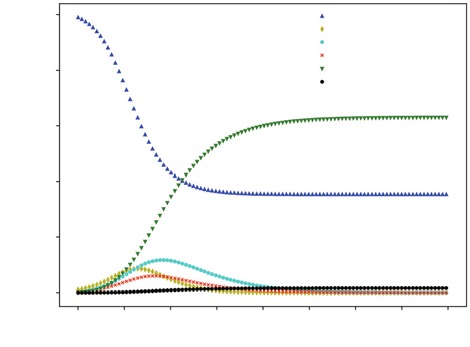
Key Takeaways & Executive Findings
- •• Proposes a novel six-compartment computer virus spreading model (susceptible, unisolated latent, isolated latent, infected, recovered, crashed) specifically tailored to campus network terminal security. • Derives the basic reproduction number and disease-free equilibrium point, providing a theoretical foundation for predicting virus outbreak dynamics. • Uses real-world university data to quantify key transition probabilities (infection rate, removal rate, security protection deployment rate) and track group variations. • Simulation results guide targeted terminal protection measures that effectively suppress virus spread and ensure stable campus network operations.
Abstract
The diversity and complexity of the user population on the campus network increase the risk of computer virus infection during terminal information interactions. Therefore, it is crucial to explore how computer viruses propagate between terminals in such a network. In this study, we establish a novel computer virus spreading model based on the characteristics of the basic network structure and a classical epidemic-spreading dynamics model, adapted to real-world university scenarios. The proposed model contains six groups: susceptible, unisolated latent, isolated latent, infection, recovery, and crash. We analyze the proposed model’s basic reproduction number and disease-free equilibrium point. Using real-world university terminal computer virus propagation data, a basic computer virus infection rate, a basic computer virus removal rate, and a security protection strategy deployment rate are proposed to define the conversion probability of each group and perceive each group’s variation tendency. Furthermore, we analyze the spreading trend of computer viruses in the campus network in terms of the proposed computer virus spreading model. We propose specific measures to suppress the spread of computer viruses in terminals, ensuring the safe and stable operation of the campus network terminals to the greatest extent.
1. Introduction
The campus network provides high-speed and efficient network connections for the school, supports a variety of network protocols and management strategies, and meets the different needs of its users. It also provides various network services to facilitate the administrative management and the use of faculty and students. Characterized by high bandwidth, wide coverage, intensive information interaction, and many users, the campus network has become an indispensable part of academic and campus life. However, due to these characteristics, computer viruses such as Trojan horses, malware, and worms spread quickly in the campus network, over a wide range, and with strong hidden and destructive characteristics (Husain and Abubakar, 2015; Husain and Suleiman, 2015; Odule and Kaka, 2018; Almiani et al., 2020; Yang LX et al., 2021a; Chen et al., 2023). When facing the lateral spread of computer viruses, universities usually suppress and block the spread by strengthening the security policy of network security equipment, updating terminal system patches, and installing terminal anti-virus software (Yang LX et al., 2016, 2021b; Zhang XL and Gan, 2017; Lanz et al., 2019; Bahashwan and Al-Tuwairqi, 2021; Epiphaniou et al., 2023). Currently, most universities rely on only the above technical means to carry out network security protection, and do not have a deeper level to explore the cross-spread characteristic of computer viruses in the campus network.
Epidemic models, spreading dynamics, and computer virus spreading are hot topics in academic circles (Tanaka et al., 2014; Zhang HF et al., 2014; Wu and Chen, 2017; Cao et al., 2020). Yang XF and Yang (2012) proposed the SLBS model based on the typical computer virus spreading process. Gan et al. (2014) developed a dynamic model with two kinds of generic nonlinear probabilities (incidence rate and vaccination probability), pointing out that the generic nonlinear vaccination helps strengthen computer security. Based on the delay-varying SIRC model, Ren et al. (2013) introduced an isolation mechanism to maintain a relatively high number of recovered nodes and a low number of infected nodes to suppress the spread of computer viruses. Zhang CM (2018) proposed a new linear computer virus spread model on multilayer networks based on the SLBS model. Fatima et al. (2018) proposed an SLBQS computer virus dynamics. Jackson and Chen-Charpentier (2017) constructed the SIR time-delay diffusion model. To further combat virus spread, Zhang XL and Li (2020) addressed a dynamic model that incorporates nonlinear countermeasure probability and infected removable storage media. Nian et al. (2022) studied the propagation relationship of Weibo users and the classical infectious disease model, and proposed the mechanism, effects (impulse effect, clock effect, and herding effect), and scale of virus propagation in online information dissemination. Liu and Wang (2016) proposed an SIQR epidemic model with a nonlinear incidence rate and two time delays. They employed this model to analyze the local stability and the existence of Hopf bifurcation ...
Loading authentic research manuscript (Pages 1–5)...
Kai Gao, Lixin Zhang, Yabing Yao, Yang Yang, Fuzhong Nian (2025). Effect of terminal boundary protection on the spread of computer viruses: modeling and simulation. Frontiers of Information Technology & Electronic Engineering. https://doi.org/10.1631/FITEE_2400236
Research & Educational Purpose Only:The translations, structured abstracts, analytical annotations, and data reports provided by SinoTechIntel are intended exclusively for academic research, internal corporate R&D, and educational benchmarking. They do not constitute formal engineering, chemical safety, legal, or professional advice.
Copyright & Intellectual Property Notice: Original copyright of the underlying source articles and experimental data remains with the respective authors, institutions, and original publishing journals. SinoTechIntel claims intellectual property only over its proprietary translations, analytical syntheses, and AEO structured enhancements in accordance with international fair use and academic citation principles.
Frequently Asked Questions
What is the main contribution of this paper?
The paper introduces a novel six-compartment computer virus spreading model specifically designed for campus network terminal security, and it uses real-world data to define key transition probabilities, offering a practical framework to analyze and suppress virus spread in university networks.
What are the six groups in the proposed computer virus spreading model?
The six groups are susceptible, unisolated latent, isolated latent, infection, recovery, and crash. These compartments represent different infection states of terminals and allow for a detailed analysis of virus propagation dynamics.
How does the terminal boundary protection affect virus spread?
The study analyzes terminal boundary protection measures such as security equipment policy enforcement, system patch updates, and anti-virus software installation. By incorporating a security protection strategy deployment rate, the model quantifies how these measures reduce the conversion probabilities and suppress virus dissemination.
What is the basic reproduction number and why is it important?
The basic reproduction number is a threshold parameter that determines whether a computer virus can spread within the campus network. If it is below 1, the infection dies out; if above 1, the virus persists and spreads. The paper derives its expression and uses it to identify conditions for disease-free equilibrium stability.
What practical measures does the paper recommend for campus network security?
Based on simulation results, the paper recommends enhancing terminal security protection measures, including strengthening security policy configurations, timely updating system patches, and deploying anti-virus software consistently across all terminals, to effectively control computer virus propagation and ensure network stability.
Related Technical Papers & Translations
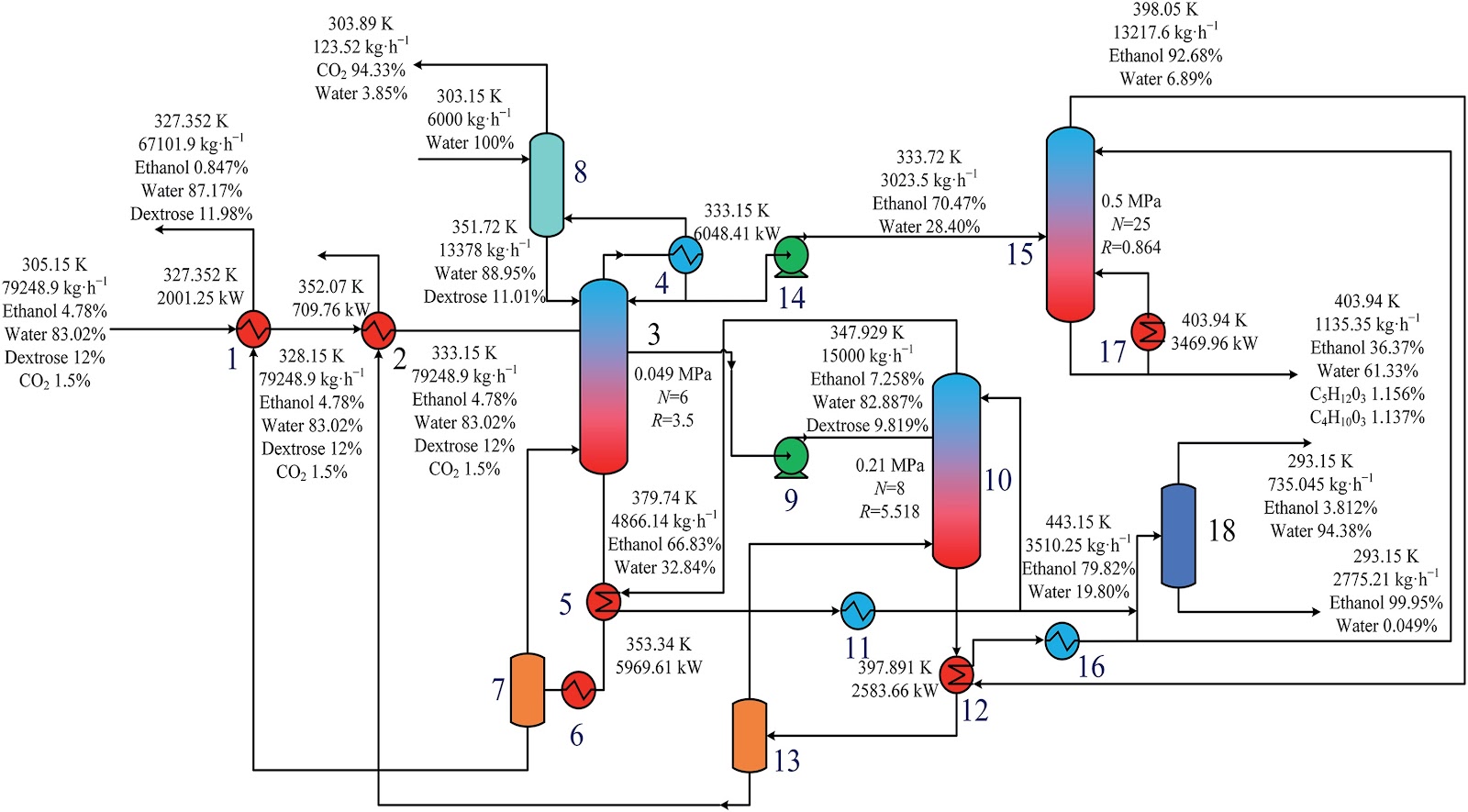
Design and optimization of a high-efficiency distillation process for cellulosic fuel ethanol integrated with thermal coupling and molecular sieve adsorption
To address the challenges of high energy consumption and prominent costs in the traditional three-columns distillation process for cellulosic fuel ethanol, a distillation—molecular sieve coupling separation process is proposed. This process integrates a three-column (crude distillation column, first distillation column, second distillation column) system with a 3A molecular sieve adsorption deep dehydration unit. A thermal coupling network is constructed via differential pressure design (steam from medium/high-pressure columns as mutual heat sources, reboiler liquid waste heat for feed preheating), and molecular sieve adsorption conditions are optimized. The study first performs a thermodynamic consistency test on the ethanol—water system, determines optimal non-random two-liquid (NRTL) model binary interaction parameters via experimental data regression for Aspen Plus simulation. Aiming at minimum total annual cost (TAC), Aspen Plus is used to optimize process parameters (theoretical tray number, feed location, reflux ratio, side-draw position, etc.). Economic analysis shows this process reduces CO2 emission costs by 27.56%, TAC by 15.58% (to 5.123 × 10⁶ USD·a-1), and increases ethanol purity to >99.6%, providing an effective solution for green, efficient separation.
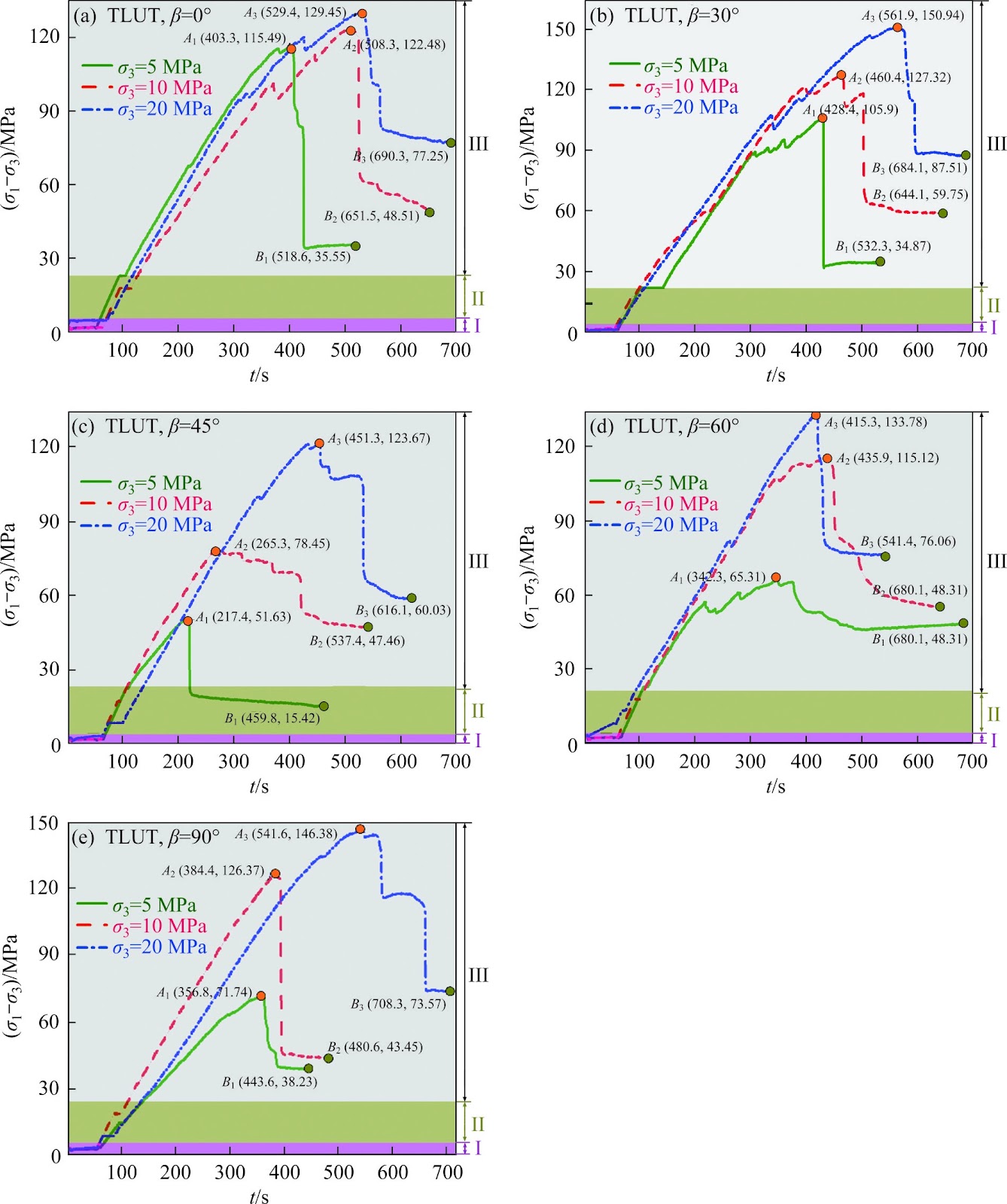
A cohesion loss model for determining residual strength of deep bedded sandstone
Rock residual strength, as an important input parameter, plays an indispensable role in proposing the reasonable and scientific scheme about stope design, underground tunnel excavation and stability evaluation of deep chambers. Therefore, previous residual strength models of rocks established were reviewed. And corresponding related problems were stated. Subsequently, starting from the effects of bedding and whole life-cycle evolution process, series of triaxial mechanical tests of deep bedded s
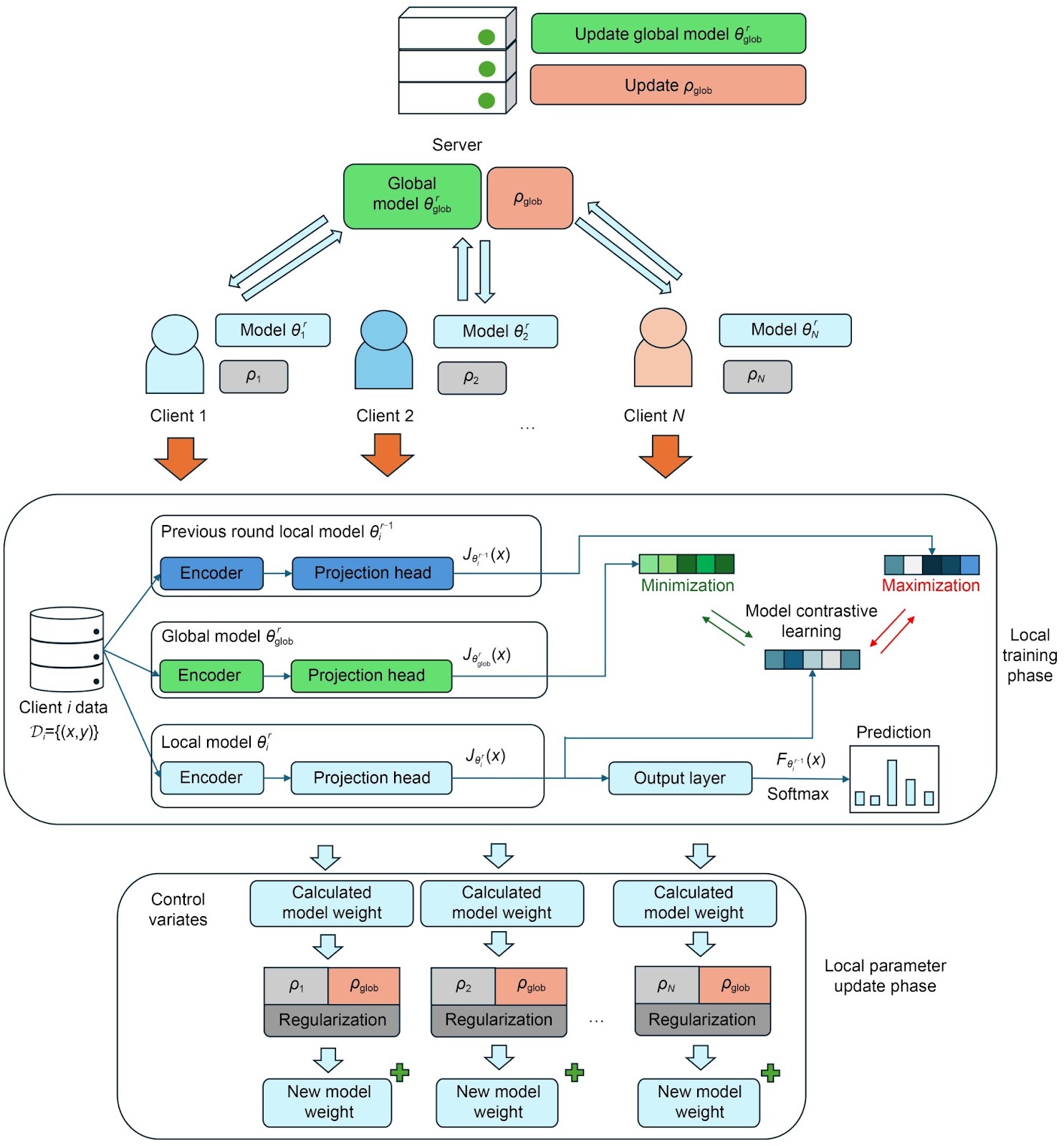
Federated model with contrastive learning and adaptive control variates for human activity recognition
Recent attention to privacy issues demands a communication-safe method for training human activity recognition (HAR) models on client activity data. Federated learning (FL) has become a compelling technique to facilitate model training between the server and clients while preserving data privacy. However, classical FL methods often assume independent and identically distributed (IID) data among clients. This assumption does not hold true in practical scenarios. Human activity in real-world scena