Key Takeaways & Executive Findings
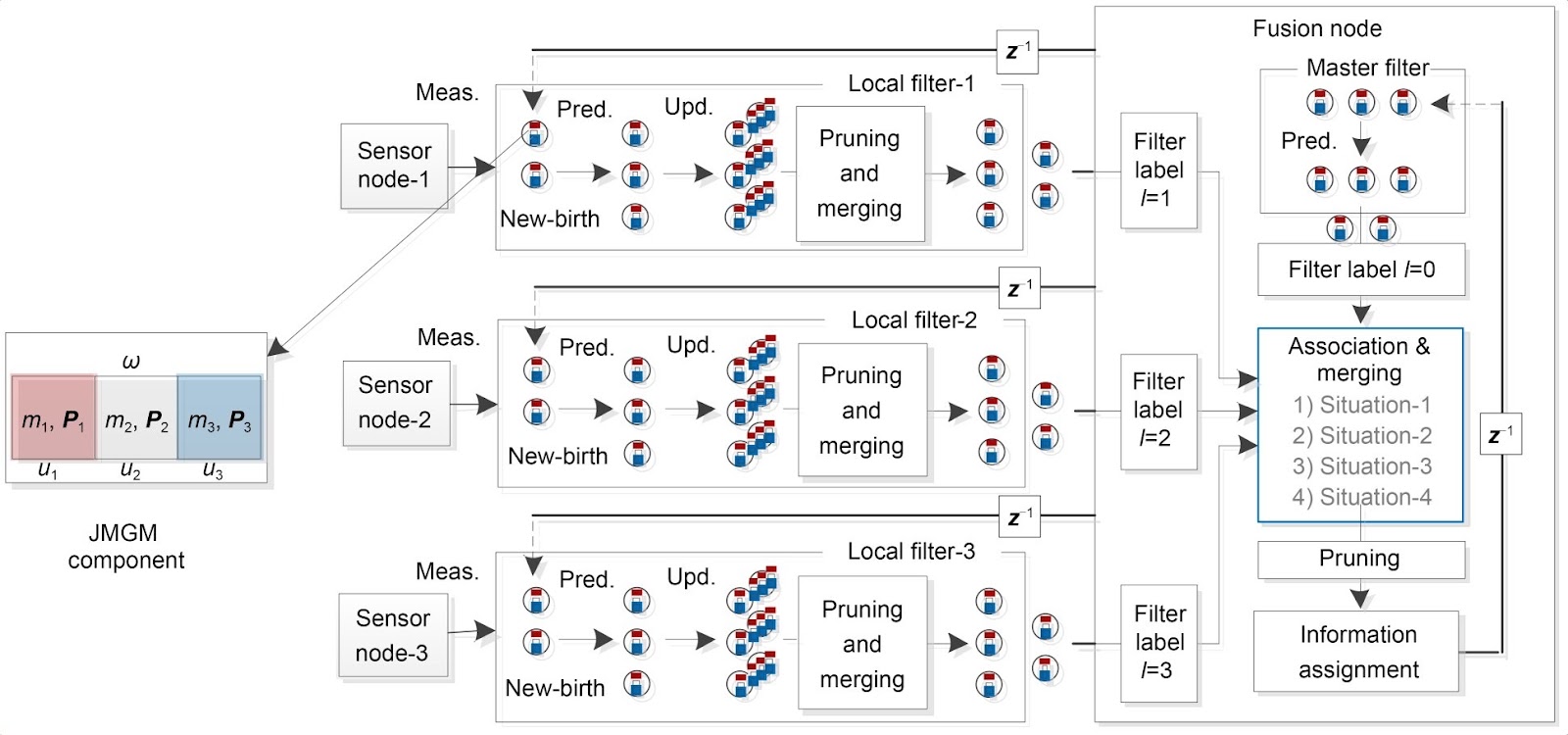
- •• The proposed federated fusion algorithm combines multiple JMGM-MB filters in a hierarchical structure, achieving optimal fusion tracking of multiple maneuvering targets. • A master filter on the fusion node identifies the origins of state estimates and supplements missed detections, improving robustness and estimation accuracy. • The optimal fusion of IMM filters is rigorously derived using a covariance upper-bounding technique that eliminates correlations among filters. • Simulation results demonstrate that the proposed algorithm outperforms existing centralized and distributed fusion algorithms in linear and heterogeneous scenarios.
Abstract
A federated fusion algorithm of joint multi-Gaussian mixture multi-Bernoulli (JMGM-MB) filters is proposed to achieve optimal fusion tracking of multiple uncertain maneuvering targets in a hierarchical structure. The JMGM-MB filter achieves a higher level of accuracy than the multi-model Gaussian mixture MB (MM-GM-MB) filter by propagating the state density of each potential target in the interactive multi-model (IMM) filtering manner. Within the hierarchical structure, each sensor node performs a local JMGM-MB filter to capture survival, newborn, and vanishing targets. A notable characteristic of our algorithm is a master filter running on the fusion node, which can help identify the origins of state estimates and supplement missed detections. The outputs of all filters are associated into multiple groups of single-target estimates. We rigorously derive the optimal fusion of IMM filters and apply it to merge associated single-target estimates. This optimality is guaranteed by the covariance upper-bounding technique, which can truly eliminate correlations among filters. Simulation results demonstrate that the proposed algorithm outperforms the existing centralized and distributed fusion algorithms in linear and heterogeneous scenarios, and the relative weights of the master and local filters can be adjusted flexibly.
1. Introduction
Decentralized fusion tracking of multiple maneuvering targets aims to estimate multi-target states by integrating the outputs of multiple local filters. The soft decision problem of maneuvering targets’ motion models is generally addressed by local filters (Zhao, 2024).
So far, the joint use of the jump Markov (JM) theory (Balenzuela et al., 2022) and the random finite set (RFS) filtering theory (Mahler, 2014) has been the most successful attempt at tracking multiple maneuvering targets. In the JM theory, multiple model-conditioned tracking filters are performed in parallel, and their filtering results are mutually interacted according to the Markovian chain to resolve the target dynamic model uncertainty. Inspired by the interactive multi-model (IMM) theory (Chang and Athans, 1978), the first genuine JM-RFS filter is the multi-model (MM) implementation of the probability hypothesis density (PHD) filter (Punithakumar et al., 2008), which propagates the first-order moment of the full multi-target density. An MM tracking system is constructed based on the cardinalized PHD (CPHD) filter that simultaneously propagates the multi-target PHD and its cardinality distribution (Georgescu and Willett, 2012). The multi-Bernoulli (MB) filter exhibits superiority over the PHD and CPHD filters in single-model scenarios (Vo et al., 2009; Yi et al., 2020; Hu XL et al., 2022) since it gets closer to the full multi-target density.
The work that is most representative of the MM-MB filter (Dunne and Kirubarajan, 2013; Xie XX et al., 2023) models the state probability density function (PDF) as a function of the state and model variables. Of course, there are some other implementations of the JM-RFS filter (Li WL and Jia, 2011; Wu WH et al., 2021a), such as the straightforward fitting of the dynamical state evolution matrix and the MM-labeled MB (MM-LMB) filter. An alternative to the MB-based MM filter (Wu SY et al., 2019) assigns a model probability vector to the estimate of each potential target. This vector will absorb the differences in measurement likelihoods under different models and favor the true model in combining model-conditioned estimates of the same target. Every MM-RFS filter can be implemented using the Gaussian mixture (GM) method (Dong et al., 2021; Sun YC et al., 2022) and the sequential Monte Carlo (SMC) method (Ouyang et al., 2012; Zhou et al., 2024). We proposed a joint multi-Gaussian mixture multi-Bernoulli (JMGM-MB) filter that outperforms the MM-GM-MB filter in both active and passive tracking scenarios (Xue and Feng, 2024). In this filter, each potential maneuvering target’s state estimate is characterized by a set of parallel model-related Gaussian functions with model probabilities, and a weight quantifies the possibility of this estimate. These model-related parameters are propagated in the full IMM filtering manner and thus can capture unknown target maneuvers adaptively. The JMGM-MB filter maintains the single-model MB filtering form, resulting in a more friendly compressed representation.
Loading authentic research manuscript (Pages 1–5)...
Yu XUE, Xi'an FENG (2025). Optimal federated fusion of multiple maneuvering targets based on multi-Bernoulli filters. Frontiers of Information Technology & Electronic Engineering. https://doi.org/10.1631/FITEE_2400598
Research & Educational Purpose Only:The translations, structured abstracts, analytical annotations, and data reports provided by SinoTechIntel are intended exclusively for academic research, internal corporate R&D, and educational benchmarking. They do not constitute formal engineering, chemical safety, legal, or professional advice.
Copyright & Intellectual Property Notice: Original copyright of the underlying source articles and experimental data remains with the respective authors, institutions, and original publishing journals. SinoTechIntel claims intellectual property only over its proprietary translations, analytical syntheses, and AEO structured enhancements in accordance with international fair use and academic citation principles.
Frequently Asked Questions
What is the JMGM-MB filter?
The JMGM-MB (Joint Multi-Gaussian Mixture Multi-Bernoulli) filter is a multi-Bernoulli-based tracking filter that propagates the state density of each potential maneuvering target using a set of parallel model-related Gaussian mixtures. It integrates interactive multi-model (IMM) techniques to handle target dynamics uncertainty.
What are the advantages of the proposed federated fusion algorithm?
The algorithm achieves optimal fusion in a hierarchical structure by combining a master filter with local JMGM-MB filters. It identifies estimate origins, supplements missed detections, and uses covariance upper-bounding to eliminate correlations, outperforming centralized and distributed fusion methods.
How does the master filter improve tracking performance?
The master filter on the fusion node helps identify the origins of state estimates and supplements missed detections, which enhances association accuracy and ensures that all targets are accounted for, particularly in scenarios with heterogeneous sensors.
What is the role of covariance upper-bounding in the fusion process?
The covariance upper-bounding technique rigorously guarantees the optimality of the IMM filter fusion by providing an upper bound on the cross-covariance between filters, thereby truly eliminating correlations and ensuring consistent fusion.
How does the algorithm handle maneuvering targets?
It uses the interactive multi-model (IMM) approach within each JMGM-MB filter, propagating model probabilities and model-conditioned Gaussian components to adaptively capture unknown target maneuvers.
Related Technical Papers & Translations
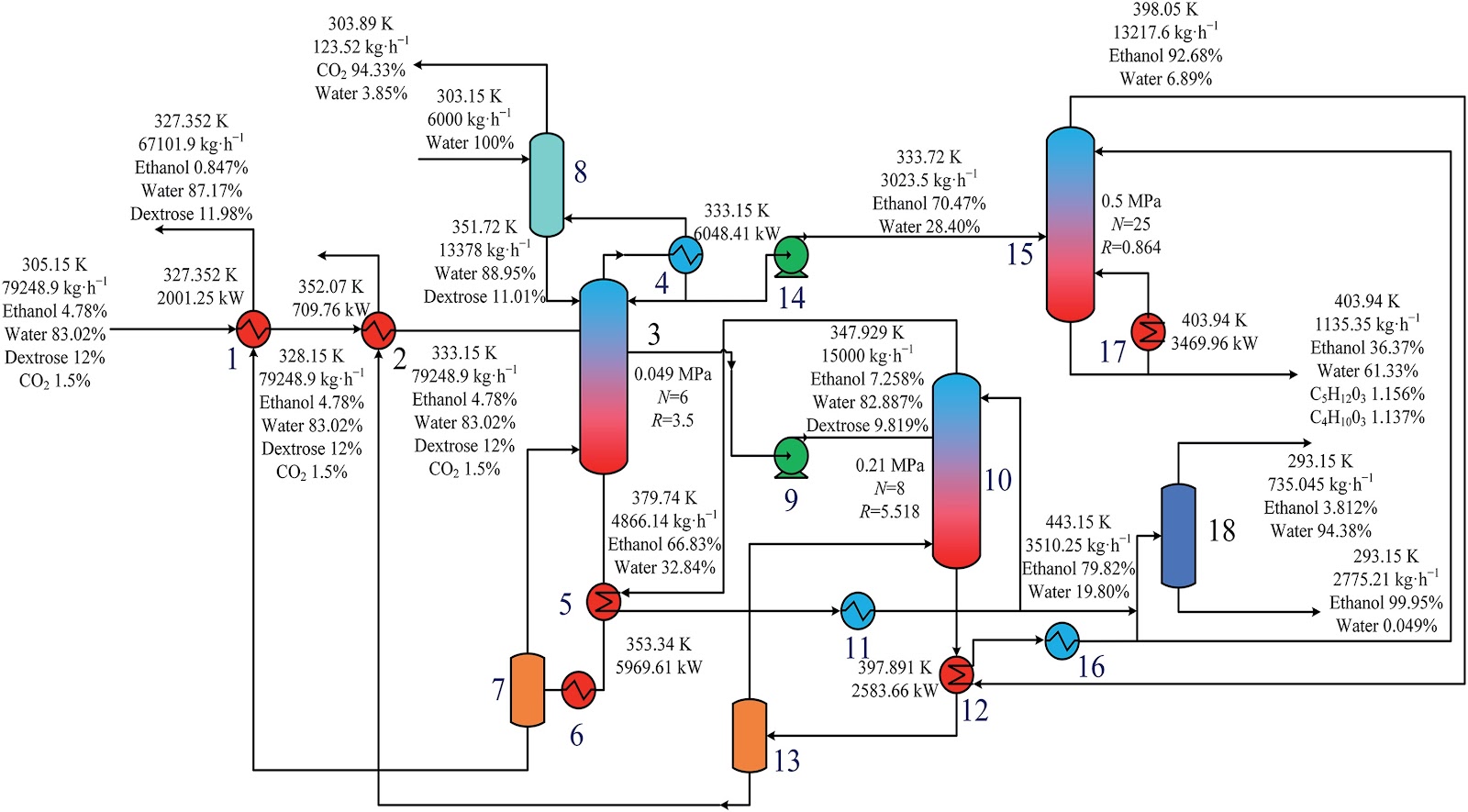
Design and optimization of a high-efficiency distillation process for cellulosic fuel ethanol integrated with thermal coupling and molecular sieve adsorption
To address the challenges of high energy consumption and prominent costs in the traditional three-columns distillation process for cellulosic fuel ethanol, a distillation—molecular sieve coupling separation process is proposed. This process integrates a three-column (crude distillation column, first distillation column, second distillation column) system with a 3A molecular sieve adsorption deep dehydration unit. A thermal coupling network is constructed via differential pressure design (steam from medium/high-pressure columns as mutual heat sources, reboiler liquid waste heat for feed preheating), and molecular sieve adsorption conditions are optimized. The study first performs a thermodynamic consistency test on the ethanol—water system, determines optimal non-random two-liquid (NRTL) model binary interaction parameters via experimental data regression for Aspen Plus simulation. Aiming at minimum total annual cost (TAC), Aspen Plus is used to optimize process parameters (theoretical tray number, feed location, reflux ratio, side-draw position, etc.). Economic analysis shows this process reduces CO2 emission costs by 27.56%, TAC by 15.58% (to 5.123 × 10⁶ USD·a-1), and increases ethanol purity to >99.6%, providing an effective solution for green, efficient separation.
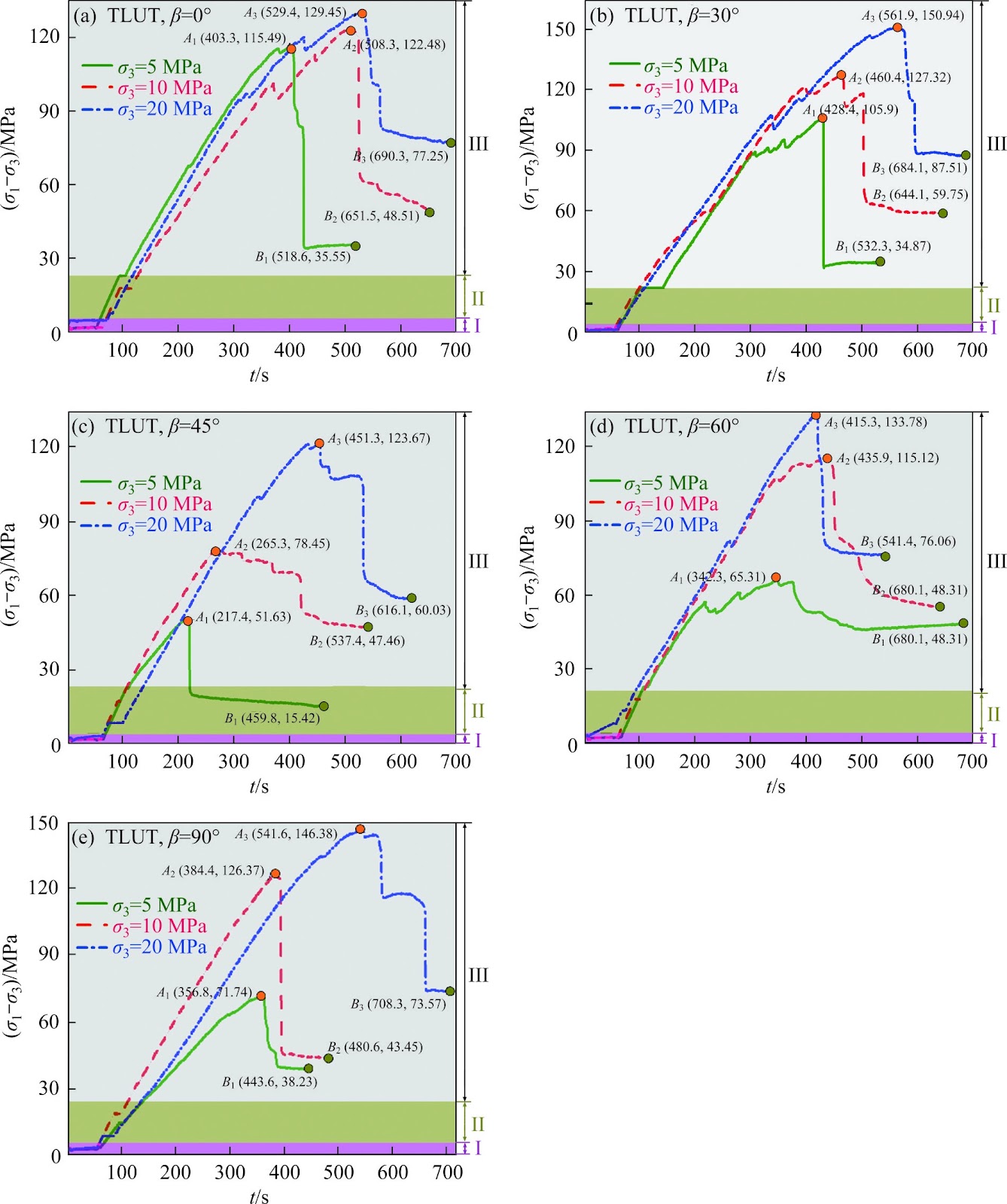
A cohesion loss model for determining residual strength of deep bedded sandstone
Rock residual strength, as an important input parameter, plays an indispensable role in proposing the reasonable and scientific scheme about stope design, underground tunnel excavation and stability evaluation of deep chambers. Therefore, previous residual strength models of rocks established were reviewed. And corresponding related problems were stated. Subsequently, starting from the effects of bedding and whole life-cycle evolution process, series of triaxial mechanical tests of deep bedded s
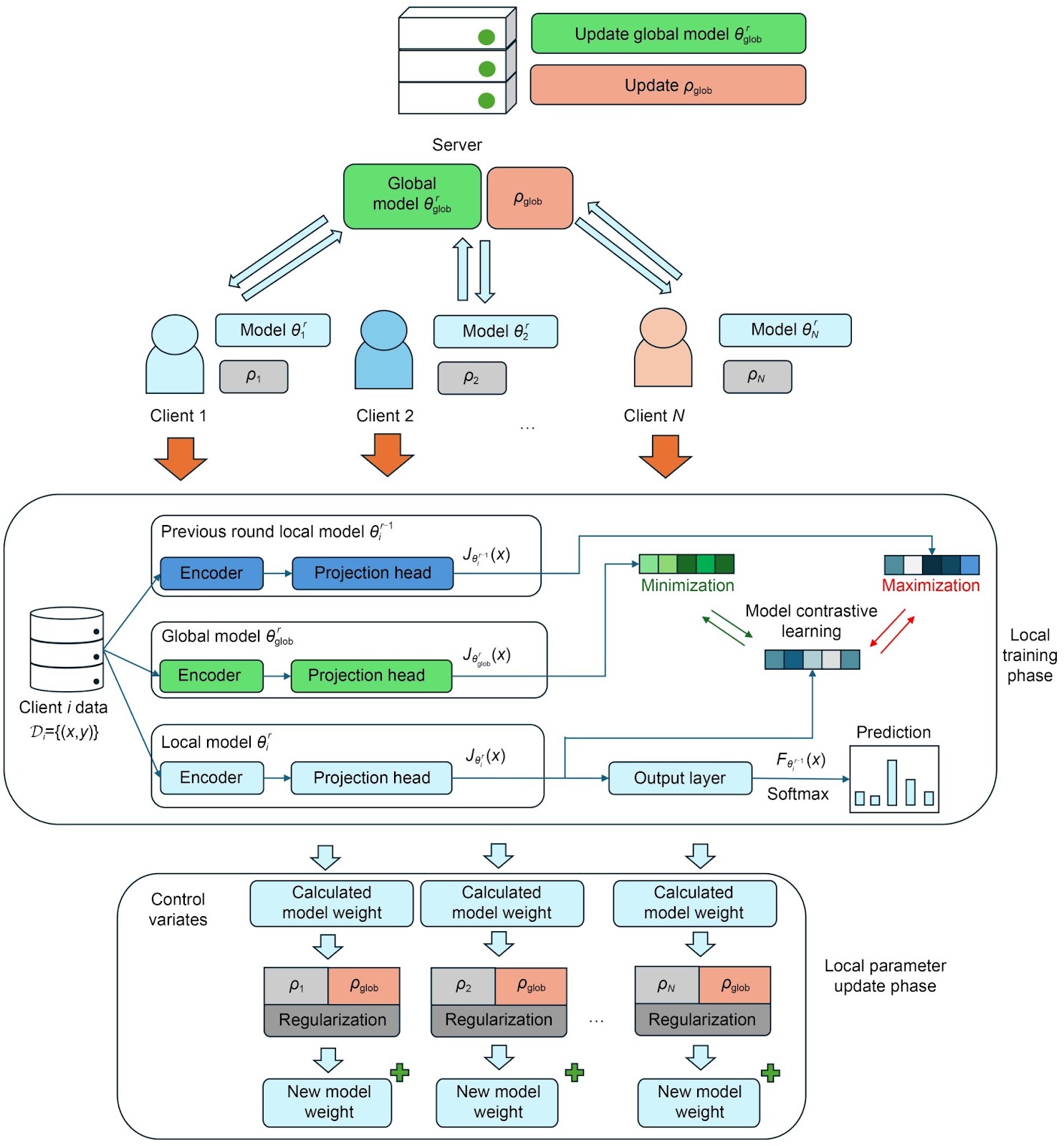
Federated model with contrastive learning and adaptive control variates for human activity recognition
Recent attention to privacy issues demands a communication-safe method for training human activity recognition (HAR) models on client activity data. Federated learning (FL) has become a compelling technique to facilitate model training between the server and clients while preserving data privacy. However, classical FL methods often assume independent and identically distributed (IID) data among clients. This assumption does not hold true in practical scenarios. Human activity in real-world scena