Key Takeaways & Executive Findings
- •• SPID is a deep reinforcement learning framework that models vertiport siting as a Markov decision process, using multi-head attention and gated recurrent units for spatiotemporal pattern capture and sequential decision-making. • It outperforms traditional clustering and graph neural network (GNN)-based methods by up to approximately 29% in social performance metrics, while keeping the distance-based cost increase within 10%. • The framework significantly enhances solution efficiency and robustness under flight range and service capacity constraints, enabling end-to-end optimization of the capacitated facility location problem. • SPID provides a scalable and efficient approach for rapid decision-making in large-scale urban air mobility (UAM) scenarios, balancing construction costs, service levels, and social considerations.
Abstract
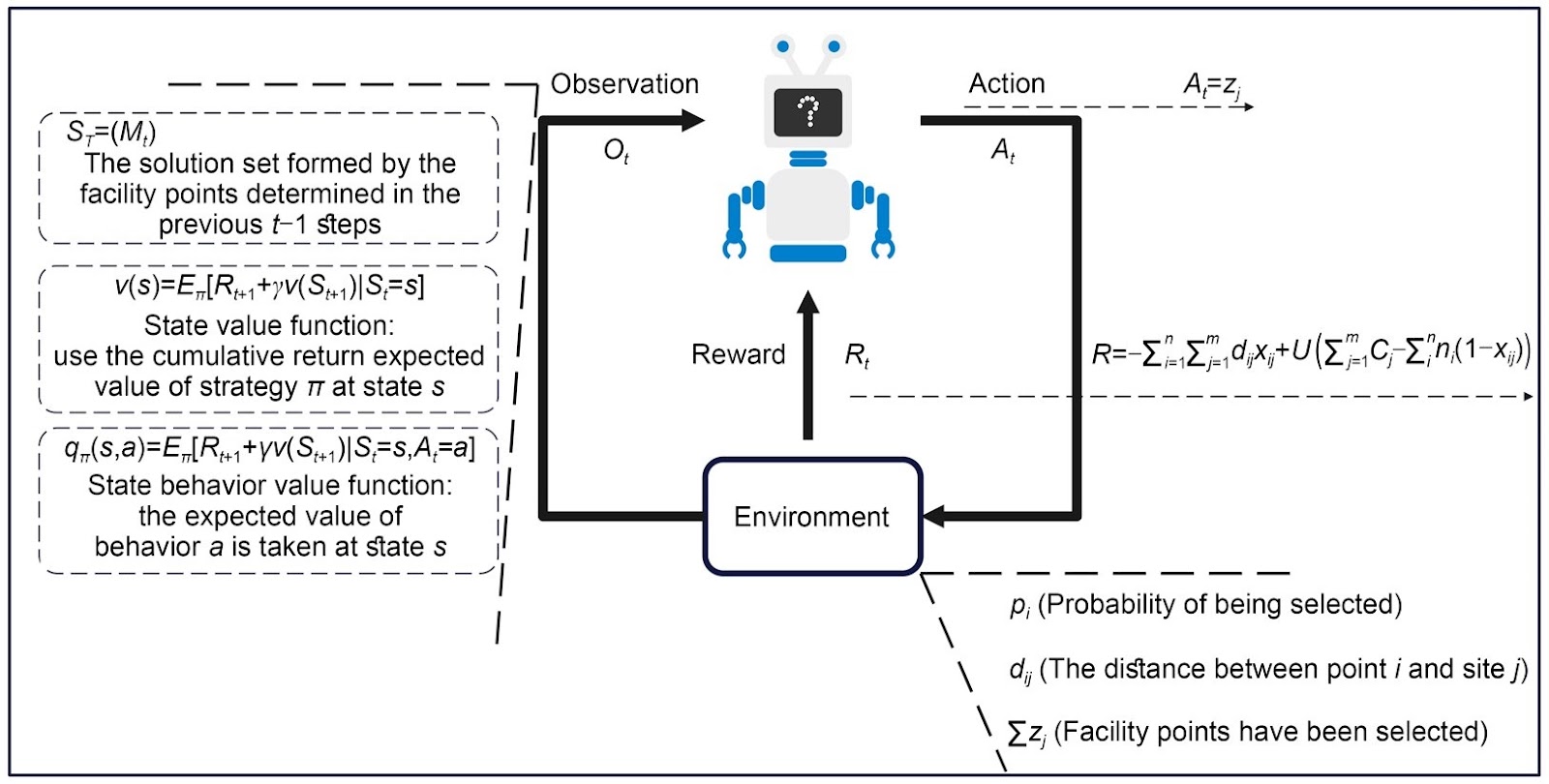
Siting low-altitude takeoff and landing platforms (vertiports) is a fundamental challenge for developing urban air mobility (UAM). This study formulates this issue as a variant of the capacitated facility location problem, incorporating flight range and service capacity constraints, and proposes SPID, a deep reinforcement learning (DRL)-based solution framework that models the problem as a Markov decision process. To handle dynamic coverage, the designed DRL framework-based SPID uses a multi-head attention mechanism to capture spatiotemporal patterns, followed by integrating dynamic and static information into a unified input state vector. Afterward, a gated recurrent unit (GRU) is used to generate the query vector, thereby enhancing sequential decision-making. The action network within the DRL network is regulated by a loss function that integrates service distance costs with unmet demand penalties, enabling end-to-end optimization. Subsequent experimental results demonstrate that SPID significantly enhances solution efficiency and robustness compared with traditional methods under flight and capacity constraints. Especially, across the social performance metrics emphasized in this study, SPID outperforms the suboptimal solutions produced by traditional clustering and graph neural network (GNN)-based methods by up to approximately 29%. This improvement comes with an increase in distance-based cost that is kept within 10%. Overall, we demonstrate an efficient, scalable approach for vertiport siting, supporting rapid decision-making in large-scale UAM scenarios.
1. Introduction
Urban air mobility (UAM) is the low-altitude transportation of passengers and cargo within urban areas. It typically involves electric vertical takeoff and landing (eVTOL) aircraft, drones, and other low-altitude flying vehicles (Federal Aviation Administration, 2023). UAM represents a key direction for transforming urban transportation. To underscore its growth trajectory, the National Aeronautics and Space Administration (NASA) predicted that 500 million drone flights would have occurred in urban space by 2030 (National Aeronautics and Space Administration, 2020). Governments and industry stakeholders are actively promoting UAM to support this development, with low-altitude logistics being considered one of its most promising applications. For instance, Amazon launched drone delivery pilots in California and Texas at the end of 2022. Additionally, vertiports represent critical UAM infrastructure, supporting various related operations. Thus, the selection of vertiport sites is crucial to ensure efficient UAM development, making the scientific and rational planning of their layout a core issue (Deloitte, 2023).
Site selection for UAM vertiports transcends a static planning task; it comprises a multi-stage decision-making process. The initial stage requires evaluating site selection costs and service levels under various project configurations (e.g., the number of facilities, capacity, and budget) to determine the optimal project configuration. Additionally, as UAM vertiports serve as the essential social infrastructure, their siting must encompass a broad management perspective, considering multiple social indicators (Berger, 2023). Moreover, as the UAM vertiport siting represents a strategic planning issue, the resulting plan must be forward-looking, requiring the current decisions to assess future service levels. Thus, this issue necessitates the integration of UAM operational constraints and site planning requirements, thereby balancing construction costs and service levels with other social considerations. To solve this complex issue, which requires multiple rounds of scheme comparison, any selected methodology must be efficient and highly generalizable.
Loading authentic research manuscript (Pages 1–5)...
Xiaocheng LIU, Meilong LE, Yupu LIU, Minghua HU (2025). SPID: a deep reinforcement learning-based solution framework for siting low-altitude takeoff and landing facilities. Frontiers of Information Technology & Electronic Engineering. https://doi.org/10.1631/FITEE_2500534
Research & Educational Purpose Only:The translations, structured abstracts, analytical annotations, and data reports provided by SinoTechIntel are intended exclusively for academic research, internal corporate R&D, and educational benchmarking. They do not constitute formal engineering, chemical safety, legal, or professional advice.
Copyright & Intellectual Property Notice: Original copyright of the underlying source articles and experimental data remains with the respective authors, institutions, and original publishing journals. SinoTechIntel claims intellectual property only over its proprietary translations, analytical syntheses, and AEO structured enhancements in accordance with international fair use and academic citation principles.
Frequently Asked Questions
What is SPID?
SPID is a deep reinforcement learning-based solution framework for siting low-altitude takeoff and landing facilities (vertiports). It models the problem as a Markov decision process and uses a multi-head attention mechanism and a gated recurrent unit to capture spatiotemporal patterns and enhance sequential decision-making.
How does SPID handle dynamic coverage?
SPID uses a multi-head attention mechanism to capture spatiotemporal patterns and integrates dynamic and static information into a unified input state vector. A gated recurrent unit then generates the query vector, improving sequential decisions.
What are the main advantages of SPID compared to traditional methods?
SPID significantly enhances solution efficiency and robustness under flight range and capacity constraints. It outperforms traditional clustering and graph neural network (GNN)-based methods by up to approximately 29% in social performance metrics, while the increase in distance-based cost is kept within 10%.
What are the constraints considered in the vertiport siting problem?
The problem is formulated as a capacitated facility location problem with flight range and service capacity constraints.
What is the significance of the loss function in SPID?
The action network is regulated by a loss function that integrates service distance costs with unmet demand penalties, enabling end-to-end optimization.
Related Technical Papers & Translations
Design and optimization of a high-efficiency distillation process for cellulosic fuel ethanol integrated with thermal coupling and molecular sieve adsorption
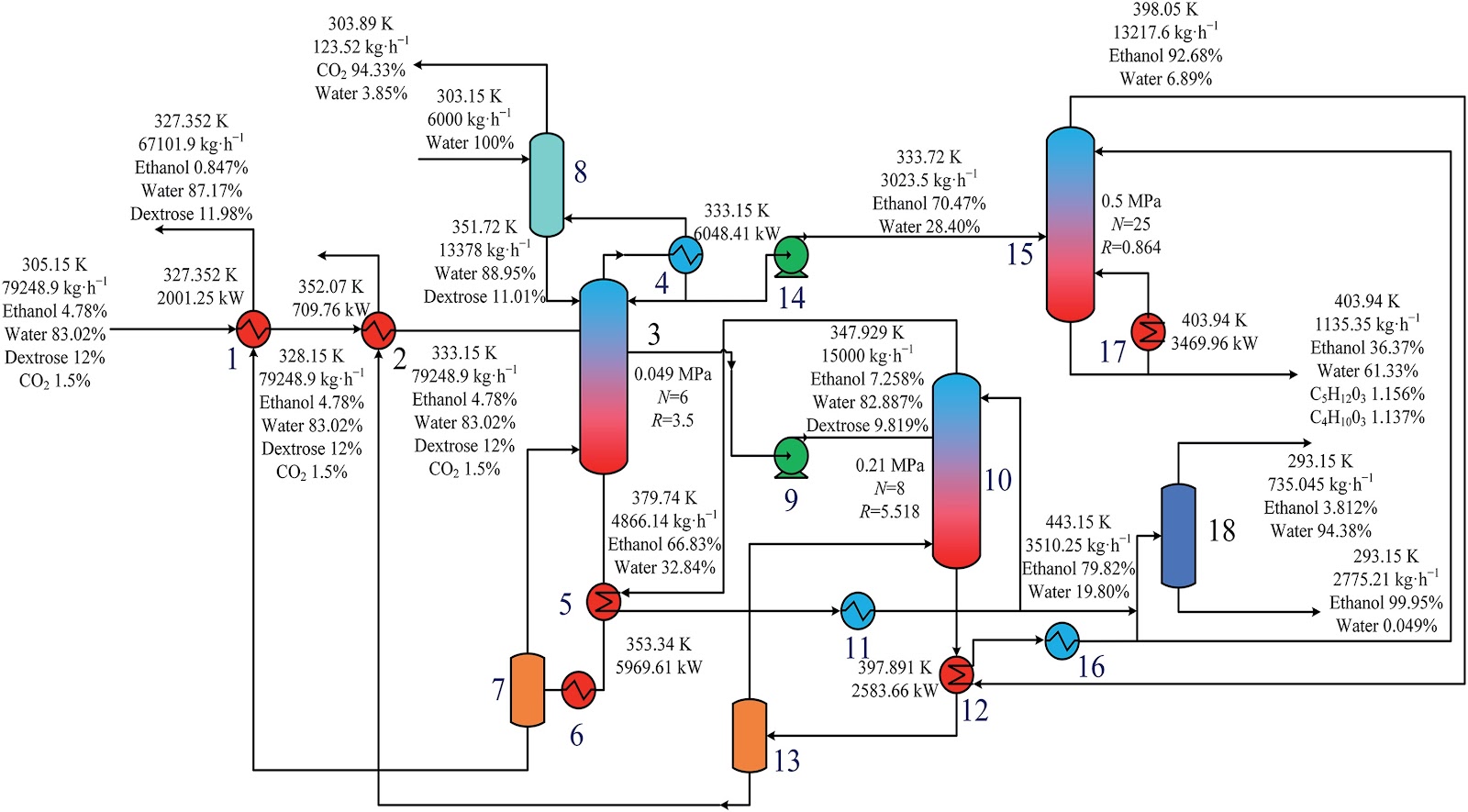
To address the challenges of high energy consumption and prominent costs in the traditional three-columns distillation process for cellulosic fuel ethanol, a distillation—molecular sieve coupling separation process is proposed. This process integrates a three-column (crude distillation column, first distillation column, second distillation column) system with a 3A molecular sieve adsorption deep dehydration unit. A thermal coupling network is constructed via differential pressure design (steam from medium/high-pressure columns as mutual heat sources, reboiler liquid waste heat for feed preheating), and molecular sieve adsorption conditions are optimized. The study first performs a thermodynamic consistency test on the ethanol—water system, determines optimal non-random two-liquid (NRTL) model binary interaction parameters via experimental data regression for Aspen Plus simulation. Aiming at minimum total annual cost (TAC), Aspen Plus is used to optimize process parameters (theoretical tray number, feed location, reflux ratio, side-draw position, etc.). Economic analysis shows this process reduces CO2 emission costs by 27.56%, TAC by 15.58% (to 5.123 × 10⁶ USD·a-1), and increases ethanol purity to >99.6%, providing an effective solution for green, efficient separation.
A cohesion loss model for determining residual strength of deep bedded sandstone
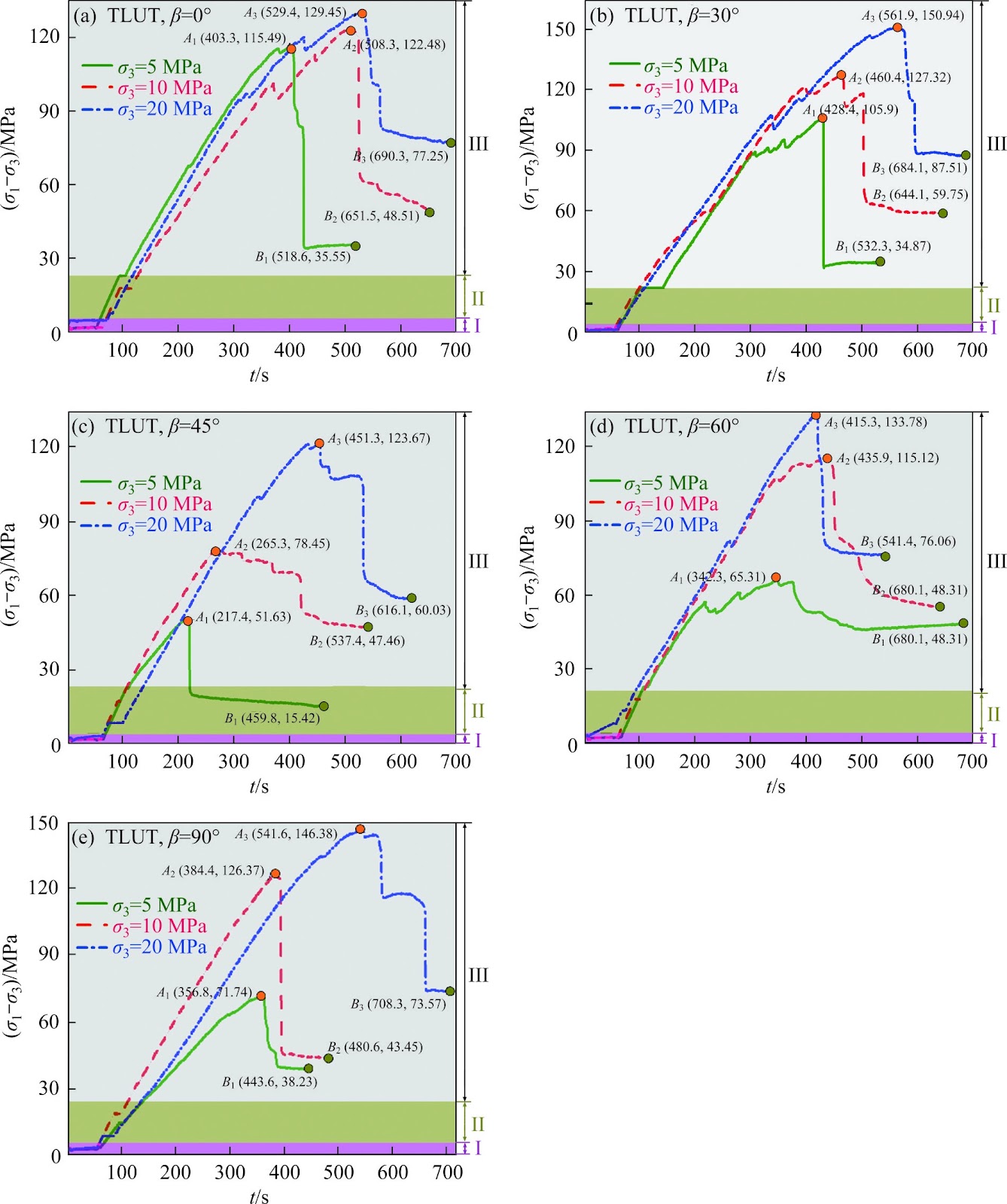
Rock residual strength, as an important input parameter, plays an indispensable role in proposing the reasonable and scientific scheme about stope design, underground tunnel excavation and stability evaluation of deep chambers. Therefore, previous residual strength models of rocks established were reviewed. And corresponding related problems were stated. Subsequently, starting from the effects of bedding and whole life-cycle evolution process, series of triaxial mechanical tests of deep bedded s
Federated model with contrastive learning and adaptive control variates for human activity recognition
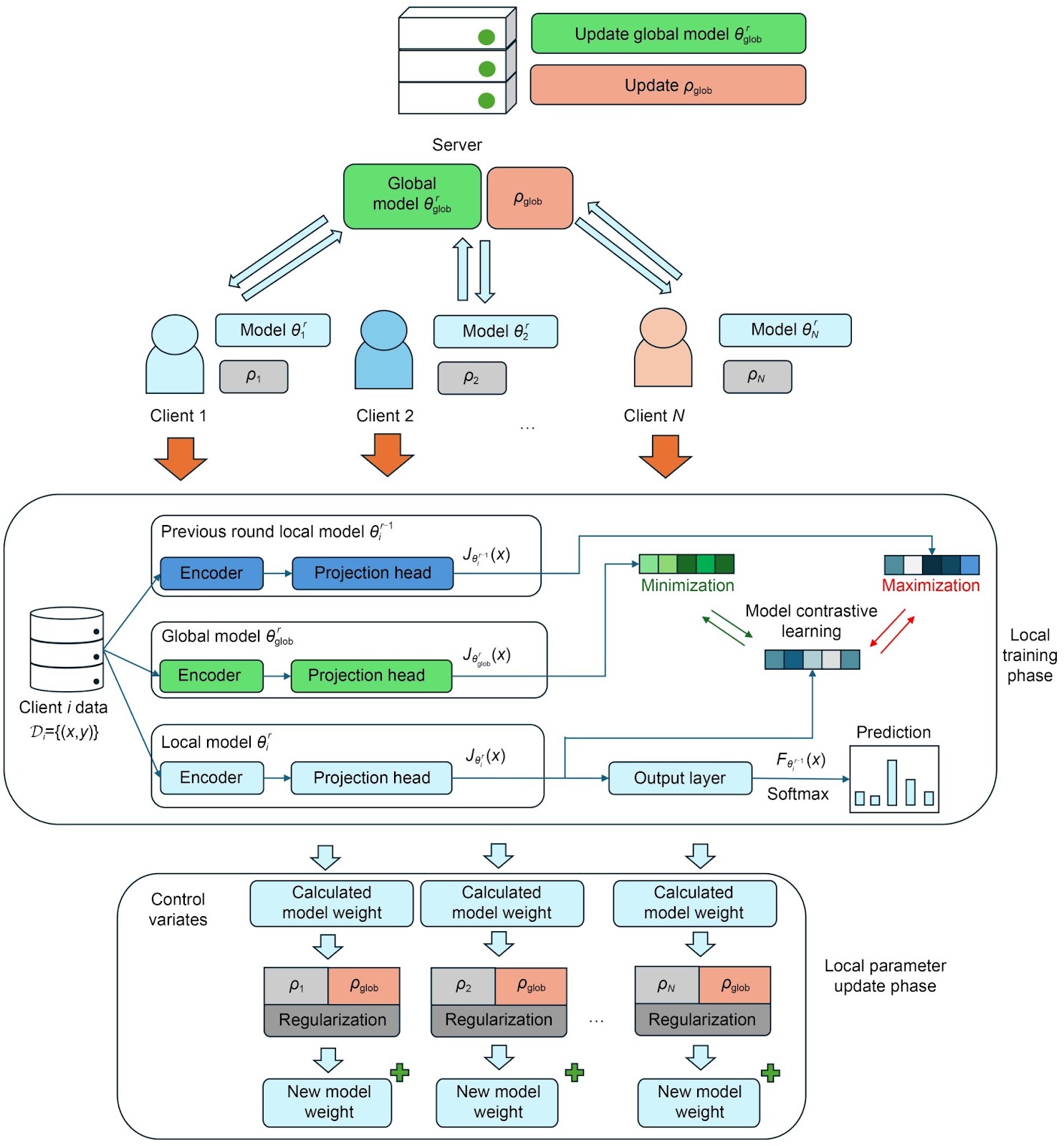
Recent attention to privacy issues demands a communication-safe method for training human activity recognition (HAR) models on client activity data. Federated learning (FL) has become a compelling technique to facilitate model training between the server and clients while preserving data privacy. However, classical FL methods often assume independent and identically distributed (IID) data among clients. This assumption does not hold true in practical scenarios. Human activity in real-world scena