Key Takeaways & Executive Findings
- •• A novel end-to-end AVSR framework is proposed for realistic multi-talker scenarios, addressing both unknown speaker counts and modality misalignment. • The speaker-number-aware mixture-of-experts (SA-MoE) mechanism adaptively fuses audio and visual information based on the number of overlapping speakers, using speaker counting as an auxiliary task. • A cross-modal realignment (CMR) module robustly handles asynchronous audio-video inputs, overcoming temporal misalignment in real-world recordings. • The challenge-based curriculum learning (CBCL) strategy prioritizes difficult samples, improving training efficiency and overall performance on complex multi-talker speech.
Abstract
Recently, audio–visual speech recognition (AVSR) has attracted increasing attention. However, most existing works simplify the complex challenges in real-world applications and only focus on scenarios with two speakers and perfectly aligned audio-video clips. In this work, we study the effect of speaker number and modal misalignment in the AVSR task, and propose an end-to-end AVSR framework under a more realistic condition. Specifically, we propose a speaker-number-aware mixture-of-experts (SA-MoE) mechanism to explicitly model the characteristic difference in scenarios with different speaker numbers, and a cross-modal realignment (CMR) module for robust handling of asynchronous inputs. We also use the underlying difficulty difference and introduce a new training strategy named challenge-based curriculum learning (CBCL), which forces the model to focus on difficult, challenging data instead of simple data to improve efficiency.
1. Introduction
Speech recognition in multi-talker scenarios remains one of the most challenging tasks in the speech processing community. Although modern systems have achieved human-level performance on clean speech benchmarks and demonstrated remarkable robustness against background noise (Xiong et al., 2016; Nguyen et al., 2021), their performance degrades significantly in the presence of overlapping speech. This limitation poses substantial barriers to practical applications such as meeting transcription systems, where spontaneous multi-speaker interactions are common. In response, recent research has increasingly focused on multi-talker speech separation (Hershey et al., 2016) and recognition (Gulati et al., 2020; Guo et al., 2021), aiming to extend the applicability of speech technologies to broader real-world settings.
One promising research direction leverages the visual modality through audio–visual speech recognition (AVSR) (Gao and Grauman, 2021; Cheng XZ et al., 2023; Yang XD et al., 2024). Fueled by the availability of large-scale audio–visual datasets (Nagrani et al., 2017; Afouras et al., 2018a, 2018b), AVSR extends traditional automatic speech recognition (ASR) into a multi-modal framework by leveraging visual cues from lip movements. This approach offers two key advantages: It enables artificial intelligence (AI) systems to perceive speech more similarly to humans, and it naturally resolves the permutation ambiguity inherent to multi-talker ASR (Yu et al., 2017) by visually specifying the target speaker.
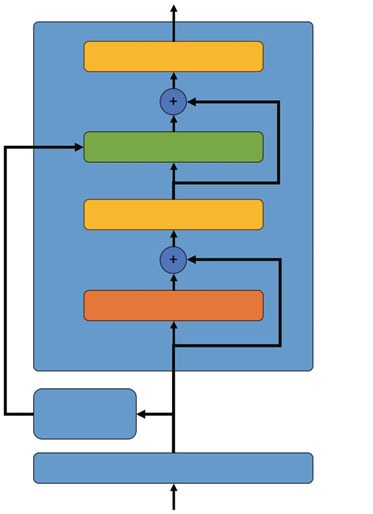
Although many existing AVSR studies focus on improving performance in clean audio scenarios (Ma et al., 2021; Haliassos et al., 2023), recent works have begun addressing speech noise challenges, primarily focusing on single intervening speaker cases (Shi et al., 2022b; Ma et al., 2023). However, real-world applications present more complex challenges that current research has yet to fully address. First, the number of overlapping speakers involved in a recording is often unknown. Although some audio–visual speech separation systems train on data with varying speaker counts (Cheng HY et al., 2023), they typically treat this as simple data augmentation without explicitly studying how different speaker numbers affect recognition performance. We argue that the impact of speaker counts should be systematically considered, as optimal modality utilization varies with scenario. In simpler scenarios with no intervening speakers, audio alone may suffice, whereas visual information becomes increasingly crucial as speaker overlap grows. To address this dynamic requirement, we propose a speaker-number-aware mixture-of-experts (SA-MoE) mechanism. This architecture explicitly assigns different scenarios to different experts while using speaker counting as an auxiliary task for automatic expert assignment. By incorporating low-rank decomposition (Hu EJ et al., 2022), SA-MoE achieves this adaptive capability with minimal additional parameters.
Loading authentic research manuscript (Pages 1–5)...
Yuxiao LIN, Tao JIN, Xize CHENG, Zhou ZHAO, Fei WU (2025). Multi-talker audio–visual speech recognition towards diverse scenarios. Frontiers of Information Technology & Electronic Engineering. https://doi.org/10.1631/FITEE_2500411
Research & Educational Purpose Only:The translations, structured abstracts, analytical annotations, and data reports provided by SinoTechIntel are intended exclusively for academic research, internal corporate R&D, and educational benchmarking. They do not constitute formal engineering, chemical safety, legal, or professional advice.
Copyright & Intellectual Property Notice: Original copyright of the underlying source articles and experimental data remains with the respective authors, institutions, and original publishing journals. SinoTechIntel claims intellectual property only over its proprietary translations, analytical syntheses, and AEO structured enhancements in accordance with international fair use and academic citation principles.
Frequently Asked Questions
What is the main contribution of this paper?
The paper proposes a new end-to-end audio-visual speech recognition (AVSR) framework that handles realistic multi-talker scenarios with varying speaker counts and temporal misalignment. It introduces a speaker-number-aware mixture-of-experts (SA-MoE) mechanism and a cross-modal realignment (CMR) module, along with a challenge-based curriculum learning (CBCL) training strategy.
How does the SA-MoE mechanism work?
SA-MoE explicitly assigns different scenarios to different experts based on the number of overlapping speakers. Speaker counting is used as an auxiliary task to automatically route inputs to appropriate experts, enabling adaptive multimodal utilization with minimal extra parameters via low-rank decomposition.
What is the challenge-based curriculum learning (CBCL) strategy?
CBCL is a training strategy that prioritizes difficult and challenging samples over simple ones, allowing the model to focus on complex multi-talker scenarios and improve learning efficiency.
Why is audio-visual speech recognition important for multi-talker scenarios?
Visual cues, such as lip movements, help separate and identify speakers in overlapping speech, resolving permutation ambiguity and improving recognition performance compared to audio-only systems, especially as speaker overlap increases.
What real-world challenges does the paper address?
The paper addresses two key real-world challenges: unknown and varying numbers of overlapping speakers, and temporal misalignment between audio and video streams caused by asynchronous recording setups.
Related Technical Papers & Translations
Design and optimization of a high-efficiency distillation process for cellulosic fuel ethanol integrated with thermal coupling and molecular sieve adsorption
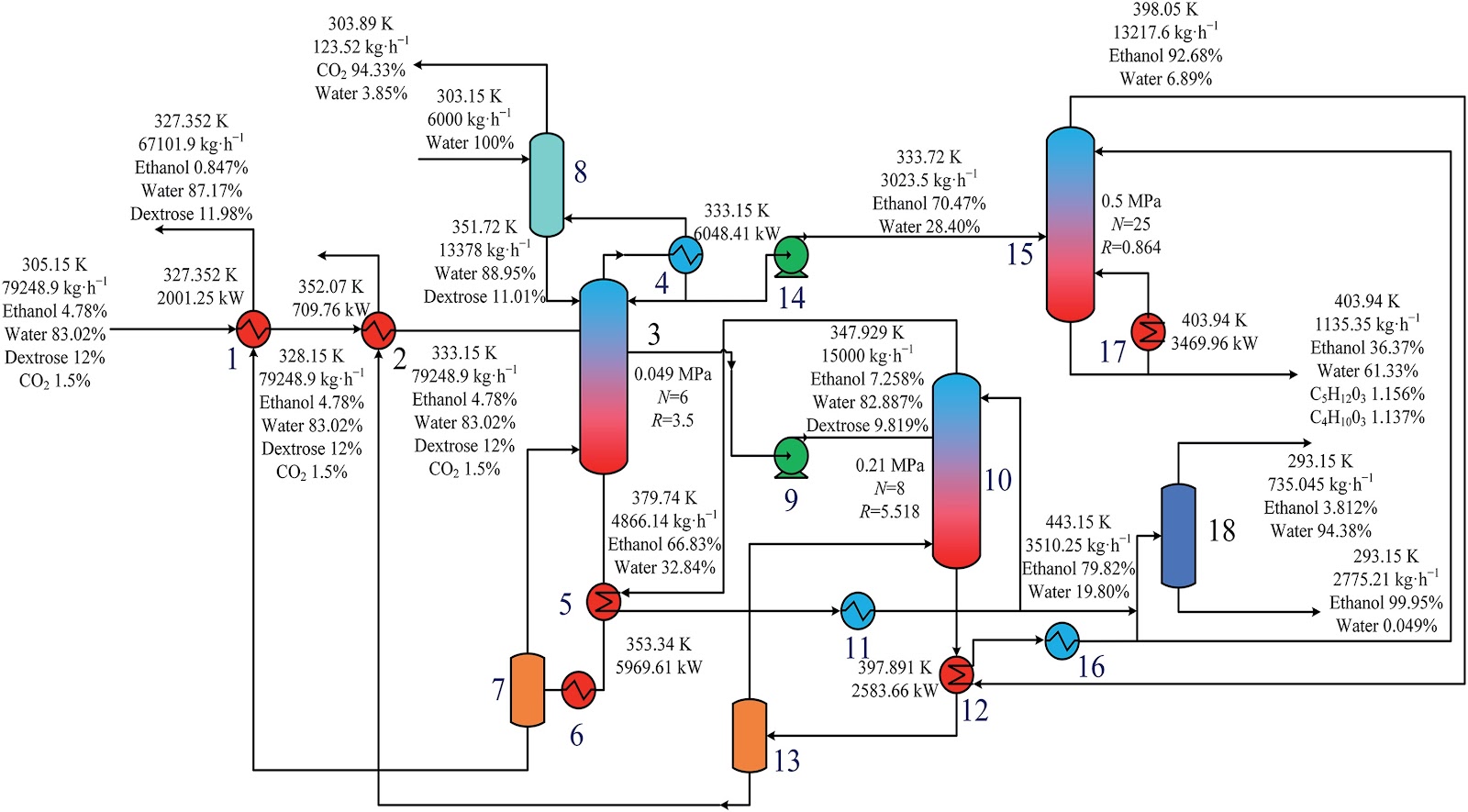
To address the challenges of high energy consumption and prominent costs in the traditional three-columns distillation process for cellulosic fuel ethanol, a distillation—molecular sieve coupling separation process is proposed. This process integrates a three-column (crude distillation column, first distillation column, second distillation column) system with a 3A molecular sieve adsorption deep dehydration unit. A thermal coupling network is constructed via differential pressure design (steam from medium/high-pressure columns as mutual heat sources, reboiler liquid waste heat for feed preheating), and molecular sieve adsorption conditions are optimized. The study first performs a thermodynamic consistency test on the ethanol—water system, determines optimal non-random two-liquid (NRTL) model binary interaction parameters via experimental data regression for Aspen Plus simulation. Aiming at minimum total annual cost (TAC), Aspen Plus is used to optimize process parameters (theoretical tray number, feed location, reflux ratio, side-draw position, etc.). Economic analysis shows this process reduces CO2 emission costs by 27.56%, TAC by 15.58% (to 5.123 × 10⁶ USD·a-1), and increases ethanol purity to >99.6%, providing an effective solution for green, efficient separation.
A cohesion loss model for determining residual strength of deep bedded sandstone
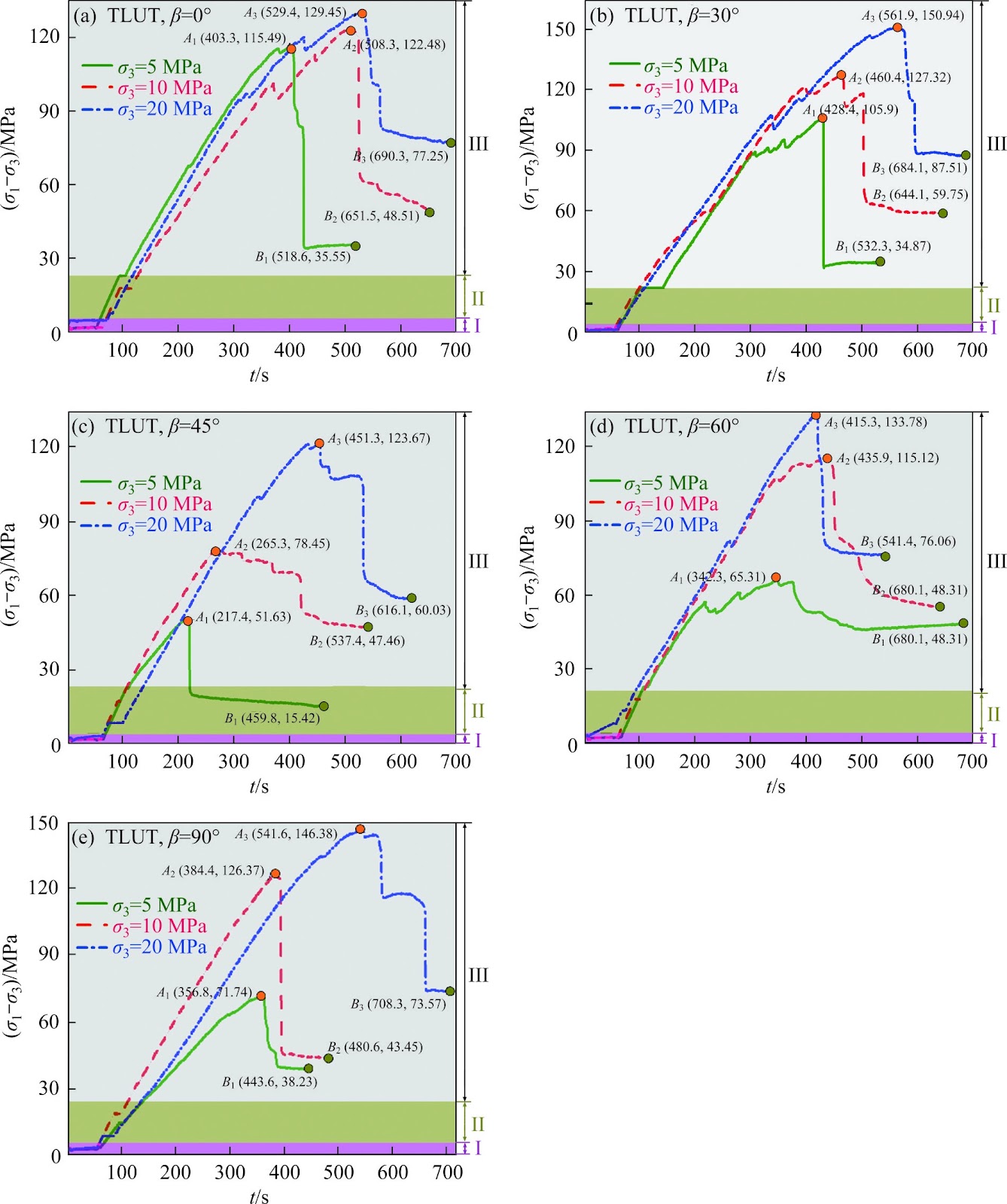
Rock residual strength, as an important input parameter, plays an indispensable role in proposing the reasonable and scientific scheme about stope design, underground tunnel excavation and stability evaluation of deep chambers. Therefore, previous residual strength models of rocks established were reviewed. And corresponding related problems were stated. Subsequently, starting from the effects of bedding and whole life-cycle evolution process, series of triaxial mechanical tests of deep bedded s
Federated model with contrastive learning and adaptive control variates for human activity recognition
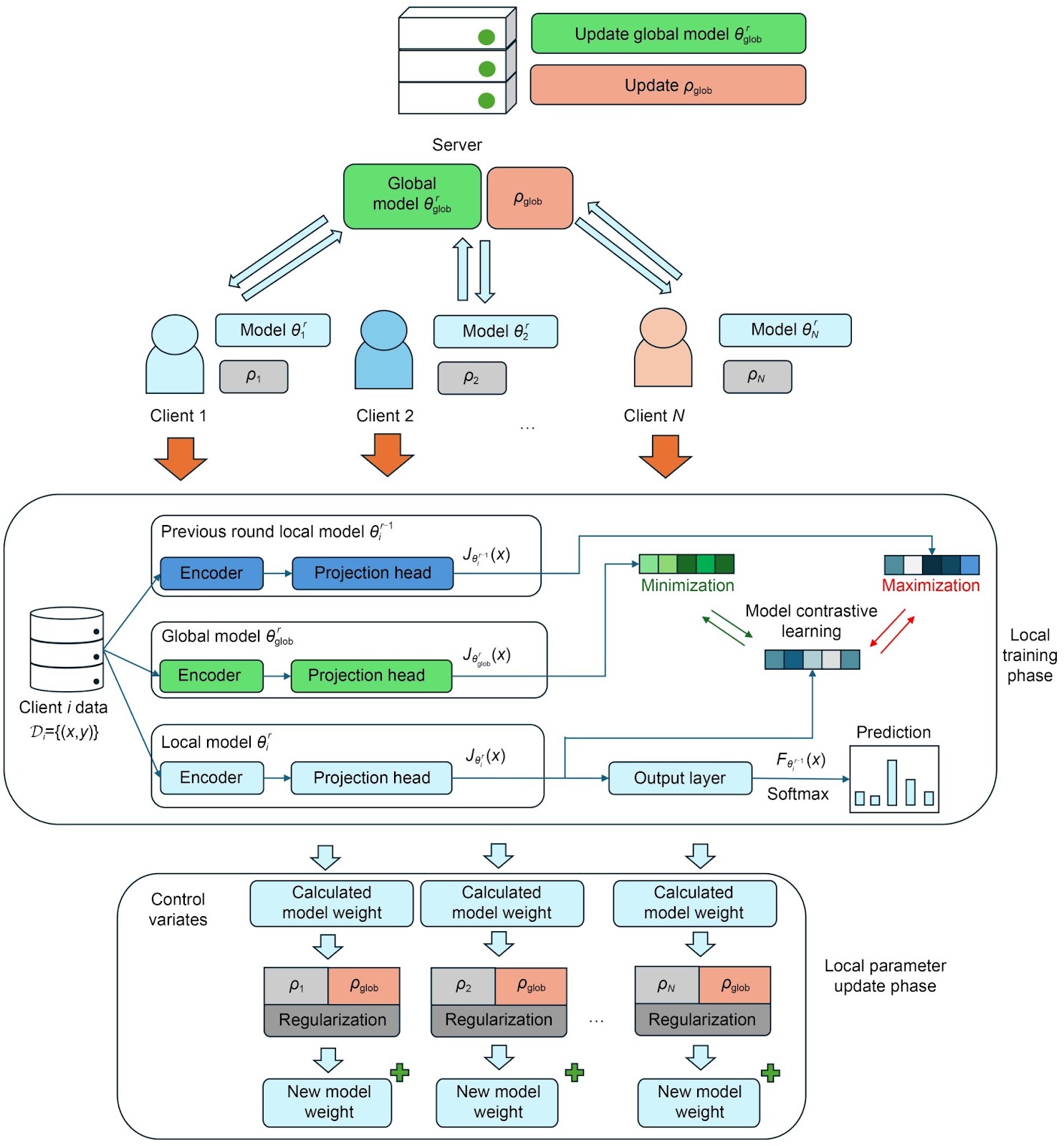
Recent attention to privacy issues demands a communication-safe method for training human activity recognition (HAR) models on client activity data. Federated learning (FL) has become a compelling technique to facilitate model training between the server and clients while preserving data privacy. However, classical FL methods often assume independent and identically distributed (IID) data among clients. This assumption does not hold true in practical scenarios. Human activity in real-world scena