Key Takeaways & Executive Findings
- •• MH-Raft introduces a hierarchical node management and election framework that leverages MOEA/D to minimize election latency by evaluating multi-dimensional node attributes. • A rigorous tightness definition enables optimal mediator node selection through a hybrid clustering algorithm, adaptively partitioning the network and optimizing mediator–follower mappings. • Comprehensive experiments show that MH-Raft reduces consensus latency by 14.87%–34.45% and boosts average throughput by 30.43% compared to conventional Raft. • The proposed algorithm offers a scalable and low-latency consensus solution for large-scale distributed systems and blockchain applications.
Abstract
Raft is a foundational consensus protocol for distributed systems, architected to ensure state machine replication and data consistency across machine clusters. However, traditional Raft faces significant performance bottlenecks, particularly regarding suboptimal election efficiency and substantial consensus latency in large-scale deployments. To address these challenges, this study presents MH-Raft, an enhanced consensus variant designed for high efficiency and minimal latency. We propose a hierarchical node management and election framework to optimize network coordination. Specifically, a leader election methodology leveraging the multi-objective evolutionary algorithm based on decomposition (MOEA/D) is formulated to minimize election latency by evaluating multi-dimensional node attributes. To further refine the proposed hierarchical architecture, a rigorous tightness definition is devised for optimal mediator node selection, which is integrated into a hybrid clustering algorithm that adaptively partitions the network and optimizes the mapping between mediator nodes and follower nodes. Quantitative evaluations via comprehensive experiments demonstrate that MH-Raft significantly reduces overall election latency and lowers consensus latency by 14.87%–34.45%, while enhancing average throughput by 30.43% compared to the conventional Raft implementation.
1. Introduction
In 2008, Satoshi Nakamoto introduced Bitcoin, which subsequently generated significant scholarly interest in blockchain technology among researchers. The foundational technology underlying Bitcoin is distributed ledger technology, with blockchain serving as one of its principal implementations. Employing cryptographic algorithms, consensus mechanisms, and smart contracts, blockchain ensures immutability, traceability, and decentralized storage of data (Ji et al., 2023; Laatikainen et al., 2023; Shi CC et al., 2023; Cheng et al., 2024; Zhao JJ et al., 2024; Eichelberger et al., 2025; Hu and Li, 2025). Blockchain exhibits substantial potential for application across diverse sectors, including privacy protection (Jia et al., 2018), copyright management (Jing et al., 2021), finance (Treleaven et al., 2017), and healthcare (Attaran, 2022), thereby fundamentally transforming conventional information technology frameworks and business models.
There are a variety of blockchain consensus algorithms, which can be divided into two categories according to the type of storage: blockchain consensus algorithms based on the chain structure (Jakobsson and Juels, 1999; Ongaro and Ousterhout, 2014; Gilad et al., 2017) and blockchain consensus algorithms based on the block structure (Bagaria et al., 2019; Kovalchuk et al., 2022; Gadiraju et al., 2023; Chen YF et al., 2024). The blockchain consensus algorithm based on the chain structure is a general form of blockchain, where each block stores the hash value of the previous block header to create a link, forming a traceable and immutable chain. In a blockchain consensus algorithm based on the block structure, a transaction can refer to multiple predecessor transactions and can be referenced by multiple subsequent transactions. Blockchain consensus algorithms based on the chain structure can be further divided into five categories, namely, proof class (Escobar et al., 2022; Lasla et al., 2022; Chatterjee et al., 2023; Zhao WB, 2023), election class (Ongaro and Ousterhout, 2014; Liu YR and Shi, 2023; Yang SJ et al., 2024), rotation class (Ben Othmen et al., 2023; Zhai et al., 2023), random class (Gilad et al., 2017; Abbasihafshejani et al., 2023), and mixed class (Bentov et al., 2014; Coelho et al., 2020). In a blockchain framework, the consensus mechanism (Castro and Liskov, 1999; Eyal et al., 2016; Chen L et al., 2017; Yang F et al., 2019; Yin et al., 2019; Keidar et al., 2021) serves as a fundamental element that facilitates agreement among all nodes regarding the authenticity of transactions, the validity of blocks, and the coherence of the ledger state. This mechanism allows numerous nodes globally to collaboratively uphold a unified, trustworthy, and continuously-updated distributed ledger without reliance on centralized authorities for validation.
Loading authentic research manuscript (Pages 1–5)...
Fei ZHAO, Guilong PENG, Tianyi ZANG (2025). MH-Raft: an efficient and low-latency consensus algorithm for distributed systems via MOEA/D and hybrid hierarchical clustering. Engineering Information Technology & Electronic Engineering. https://doi.org/10.1631/ENG_ITEE_2025_0043
Research & Educational Purpose Only:The translations, structured abstracts, analytical annotations, and data reports provided by SinoTechIntel are intended exclusively for academic research, internal corporate R&D, and educational benchmarking. They do not constitute formal engineering, chemical safety, legal, or professional advice.
Copyright & Intellectual Property Notice: Original copyright of the underlying source articles and experimental data remains with the respective authors, institutions, and original publishing journals. SinoTechIntel claims intellectual property only over its proprietary translations, analytical syntheses, and AEO structured enhancements in accordance with international fair use and academic citation principles.
Frequently Asked Questions
What is MH-Raft?
MH-Raft is an enhanced consensus algorithm for distributed systems that improves upon traditional Raft by using multi-objective evolutionary algorithm based on decomposition (MOEA/D) and hybrid hierarchical clustering to reduce election and consensus latency.
How does MH-Raft reduce consensus latency?
MH-Raft reduces consensus latency by 14.87%–34.45% and increases throughput by 30.43% compared to conventional Raft, as demonstrated in comprehensive experiments.
What are the key techniques in MH-Raft?
The key techniques include a MOEA/D-based leader election method and a hybrid clustering algorithm for optimal mediator node selection, integrated into a hierarchical node management framework.
Why is MH-Raft important for blockchain systems?
MH-Raft enhances the performance of the Raft consensus protocol, which is widely used in blockchain and distributed systems, making it more efficient for large-scale deployments.
What is the hierarchical architecture in MH-Raft?
MH-Raft introduces a hierarchical node management and election framework that partitions the network via hybrid clustering, optimizing the mapping between mediator nodes and follower nodes for low-latency coordination.
Related Technical Papers & Translations
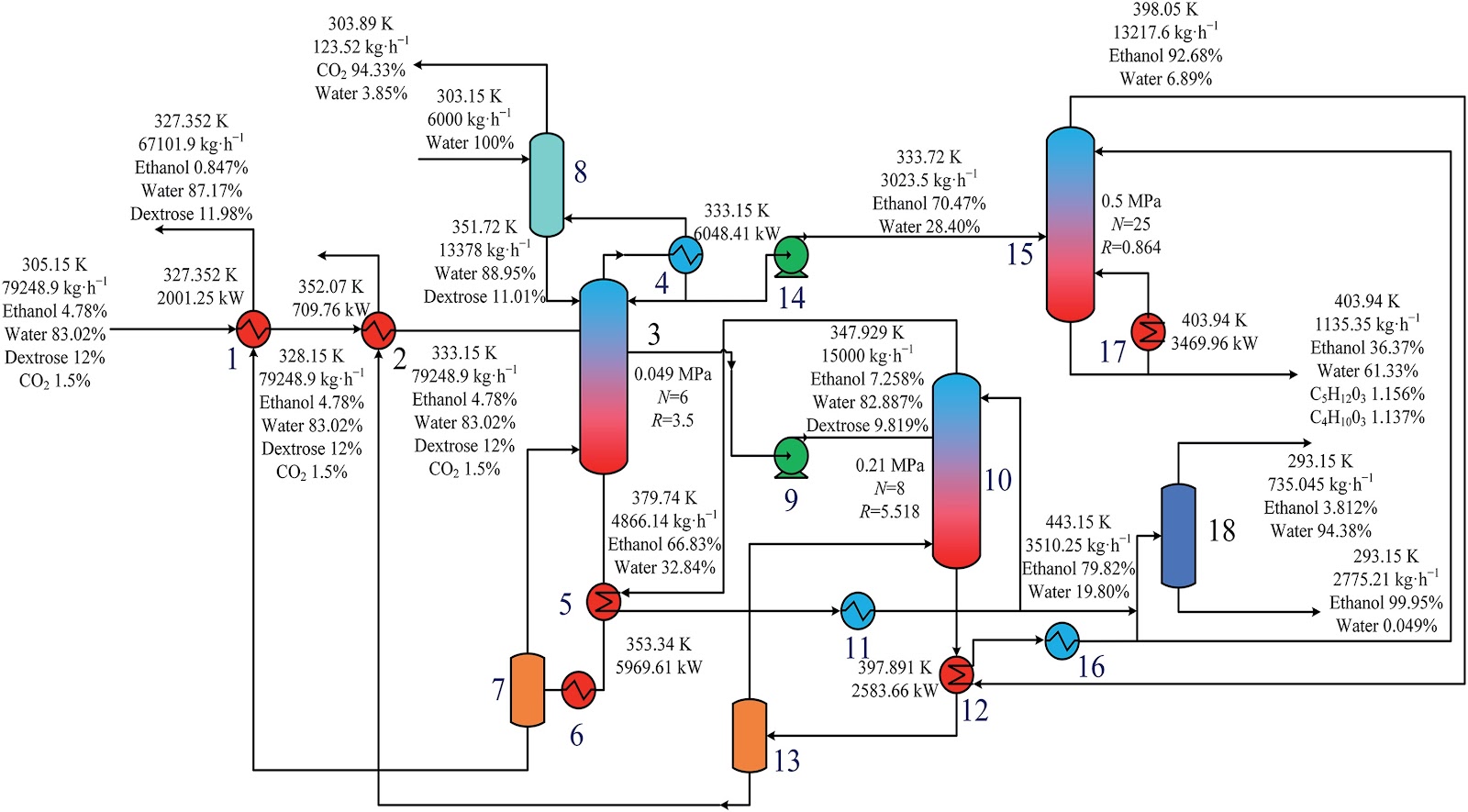
Design and optimization of a high-efficiency distillation process for cellulosic fuel ethanol integrated with thermal coupling and molecular sieve adsorption
To address the challenges of high energy consumption and prominent costs in the traditional three-columns distillation process for cellulosic fuel ethanol, a distillation—molecular sieve coupling separation process is proposed. This process integrates a three-column (crude distillation column, first distillation column, second distillation column) system with a 3A molecular sieve adsorption deep dehydration unit. A thermal coupling network is constructed via differential pressure design (steam from medium/high-pressure columns as mutual heat sources, reboiler liquid waste heat for feed preheating), and molecular sieve adsorption conditions are optimized. The study first performs a thermodynamic consistency test on the ethanol—water system, determines optimal non-random two-liquid (NRTL) model binary interaction parameters via experimental data regression for Aspen Plus simulation. Aiming at minimum total annual cost (TAC), Aspen Plus is used to optimize process parameters (theoretical tray number, feed location, reflux ratio, side-draw position, etc.). Economic analysis shows this process reduces CO2 emission costs by 27.56%, TAC by 15.58% (to 5.123 × 10⁶ USD·a-1), and increases ethanol purity to >99.6%, providing an effective solution for green, efficient separation.
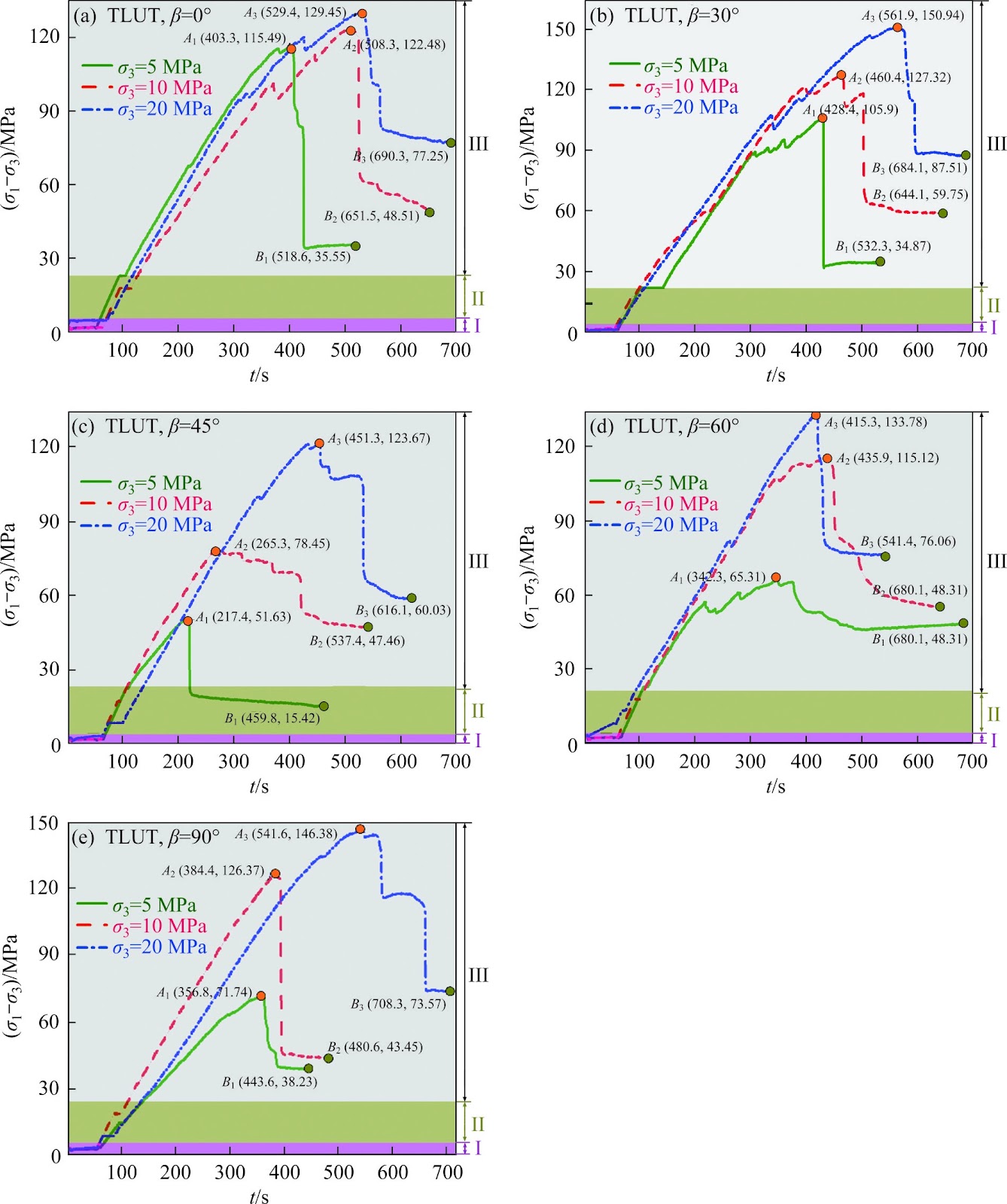
A cohesion loss model for determining residual strength of deep bedded sandstone
Rock residual strength, as an important input parameter, plays an indispensable role in proposing the reasonable and scientific scheme about stope design, underground tunnel excavation and stability evaluation of deep chambers. Therefore, previous residual strength models of rocks established were reviewed. And corresponding related problems were stated. Subsequently, starting from the effects of bedding and whole life-cycle evolution process, series of triaxial mechanical tests of deep bedded s
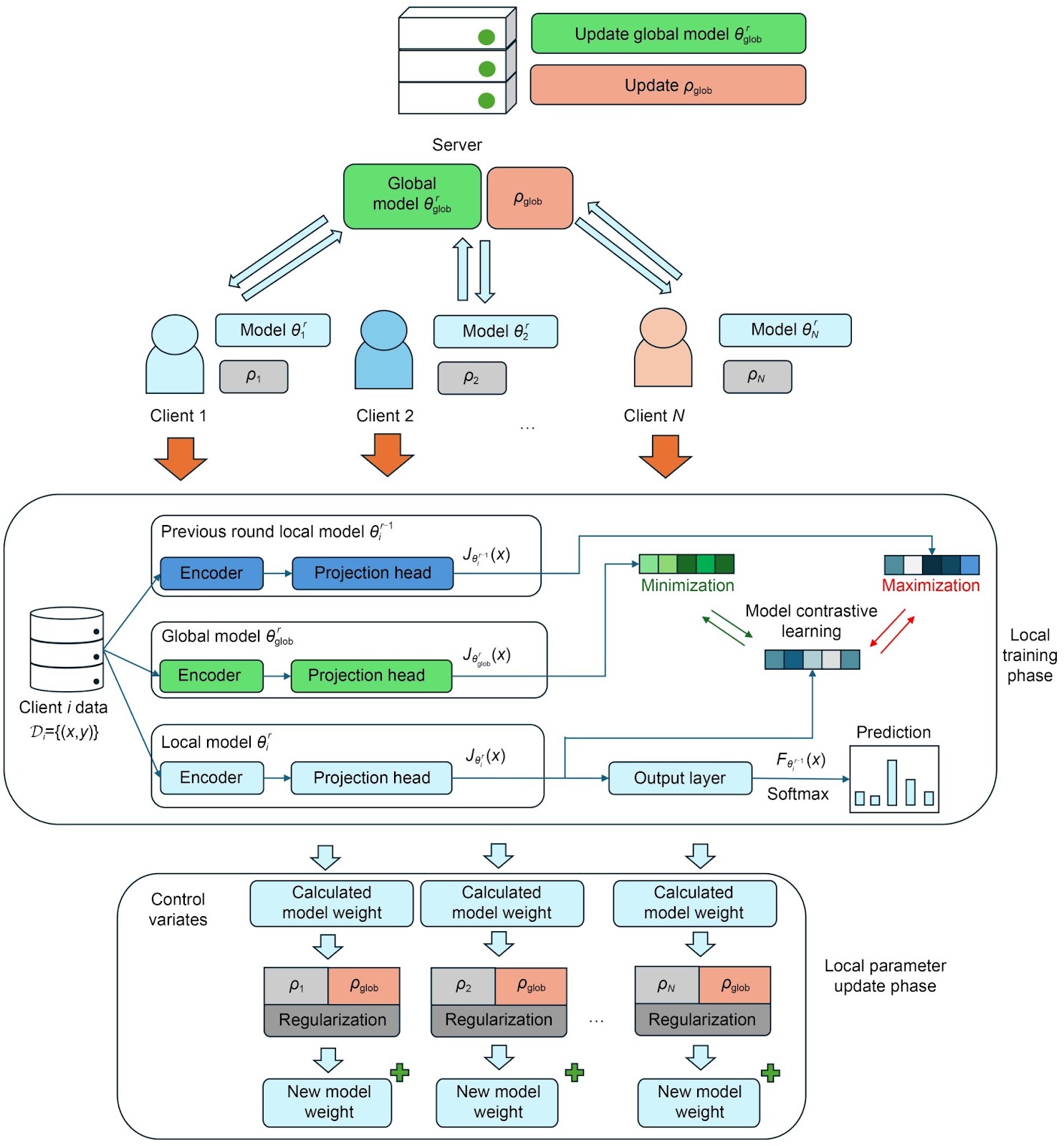
Federated model with contrastive learning and adaptive control variates for human activity recognition
Recent attention to privacy issues demands a communication-safe method for training human activity recognition (HAR) models on client activity data. Federated learning (FL) has become a compelling technique to facilitate model training between the server and clients while preserving data privacy. However, classical FL methods often assume independent and identically distributed (IID) data among clients. This assumption does not hold true in practical scenarios. Human activity in real-world scena