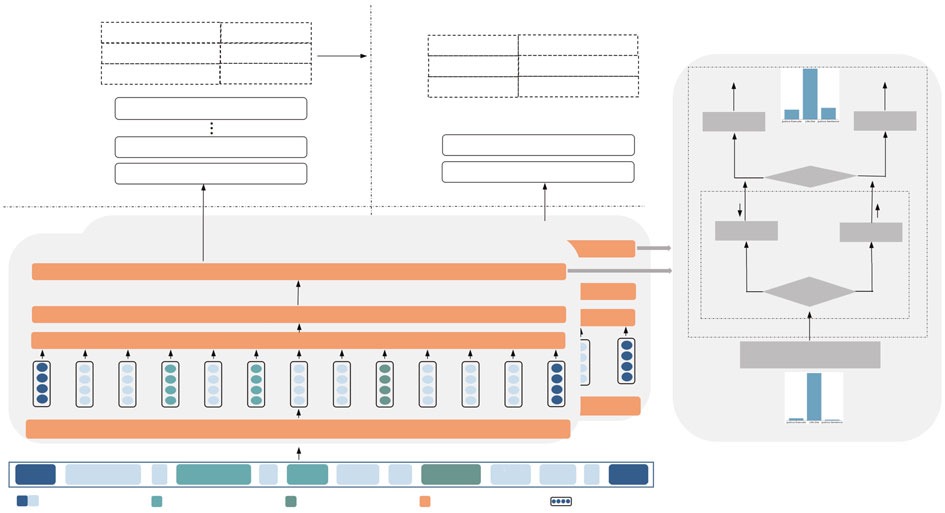
Key Takeaways & Executive Findings
- •• Addresses the critical challenge of polysemy and semantic imbalance in event extraction triggers and arguments. • Introduces a reward–penalty mechanism that balances semantic distribution by rewarding correct classifications and penalizing incorrect ones. • Adds a sentence-level event situation awareness mechanism to enhance target event semantics. • Demonstrates state-of-the-art performance on ACE2005 and ERE datasets, outperforming single-task and multi-task baselines.
Abstract
Event extraction (EE) is a complex natural language processing (NLP) task that aims at identifying and classifying triggers and arguments in raw text. The polysemy of triggers and arguments stands out as one of the key challenges affecting the precise extraction of events. Existing approaches commonly consider the semantic distribution of triggers and arguments to be balanced. However, the sample quantities of different semantics in the same trigger or argument vary in real-world scenarios, leading to a biased semantic distribution. The bias introduces two challenges: (1) low-frequency semantics is difficult to identify; (2) high-frequency semantics is often mistakenly identified. To tackle these challenges, we propose an adaptive learning method with the reward–penalty mechanism for balancing the semantic distribution in polysemous triggers and arguments. The reward–penalty mechanism balances the semantic distribution by enlarging the gap between the target and nontarget semantics by rewarding correct classifications and penalizing incorrect classifications. Additionally, we propose a sentence-level event situation awareness (SA) mechanism to guide the encoder to accurately learn the knowledge of events mentioned in the sentence, thereby enhancing target event semantics in the distribution of polysemous triggers and arguments. Finally, for various semantics in different tasks, we propose task-specific semantic decoders to precisely identify the boundaries of the predicted triggers and arguments for the semantics. Our experimental results on ACE2005 and its variants, along with the rich Entities, Relations, and Events (ERE), demonstrate the superiority of our approach over single-task and multi-task EE baselines.
1. Introduction
Events, serving as carriers of information, possess significant research value due to their elevated information content and rich semantic details. The accelerated evolution of the Internet and the emergence of numerous Internet applications have brought a large number of unstructured and fragmented text resources. How to quickly and accurately obtain structured target event information from these resources has always been a key and challenging problem for scholars engaged in the field of event extraction (EE). EE (Ahn, 2006; Chen et al., 2015; Lu D et al., 2023) is the task of identifying and classifying triggers and arguments from unstructured text based on the predefined event schema, as shown in Fig. 1. EE enables users to obtain information in a timely and intuitive manner on who (doer), when (time), where (place), how (artifact), whom (recipient), and what (event) occurred.
The extracted event can be widely used in downstream applications, such as event graph construction (Shu et al., 2021; Xu TY et al., 2022), recommendation systems (Cui ZJ et al., 2023; Xia et al., 2023), and decision aids (Anelli et al., 2022; You MS et al., 2023).
Many efforts have been devoted to EE. Earlier EE methodologies relied mainly on manually crafted multi-granularity features (Ji and Grishman, 2008; Hong et al., 2011; McClosky et al., 2011), which were labor-intensive. The emergence of deep learning techniques (Chen et al., 2015; Nguyen et al., 2016; Sha et al., 2018), capable of automatically learning features of tasks from extensive annotated data, has overcome the limitations of manual feature design. Recently, pre-trained language models (PLMs) (Yang S et al., 2019; Lin et al., 2020; Lu YJ et al., 2021; Liu X et al., 2022) with rich general language representations, such as BERT and RoBERTa, have become the backbone of EE systems, reducing the need for extensive annotated data.
Loading authentic research manuscript (Pages 1–5)...
Haili LI, Zhiliang TIAN, Xiaodong WANG, Yunyan ZHOU, Shilong PAN, Jie ZHOU, Qiubo XU, Dongsheng LI (2025). Handling polysemous triggers and arguments in event extraction: an adaptive semantics learning strategy with reward–penalty mechanism. Frontiers of Information Technology & Electronic Engineering. https://doi.org/10.1631/FITEE_2400220
Research & Educational Purpose Only:The translations, structured abstracts, analytical annotations, and data reports provided by SinoTechIntel are intended exclusively for academic research, internal corporate R&D, and educational benchmarking. They do not constitute formal engineering, chemical safety, legal, or professional advice.
Copyright & Intellectual Property Notice: Original copyright of the underlying source articles and experimental data remains with the respective authors, institutions, and original publishing journals. SinoTechIntel claims intellectual property only over its proprietary translations, analytical syntheses, and AEO structured enhancements in accordance with international fair use and academic citation principles.
Frequently Asked Questions
What is the main challenge addressed by this paper?
The paper addresses the challenge of polysemy in triggers and arguments, and the biased semantic distribution in real-world event extraction, leading to low-frequency semantics being difficult to identify and high-frequency semantics being often mistakenly identified.
How does the reward–penalty mechanism work?
The reward–penalty mechanism balances the semantic distribution by enlarging the gap between target and nontarget semantics—rewarding correct classifications and penalizing incorrect ones.
What datasets were used for evaluation?
The proposed approach was evaluated on ACE2005 and its variants, along with the rich Entities, Relations, and Events (ERE) datasets.
What is the sentence-level event situation awareness (SA) mechanism?
It is a mechanism that guides the encoder to accurately learn the knowledge of events mentioned in the sentence, thereby enhancing target event semantics in the distribution of polysemous triggers and arguments.
What are the key contributions of this work?
The paper proposes an adaptive learning method with a reward–penalty mechanism, a sentence-level event situation awareness mechanism, and task-specific semantic decoders, demonstrating superiority over single-task and multi-task EE baselines.
Related Technical Papers & Translations
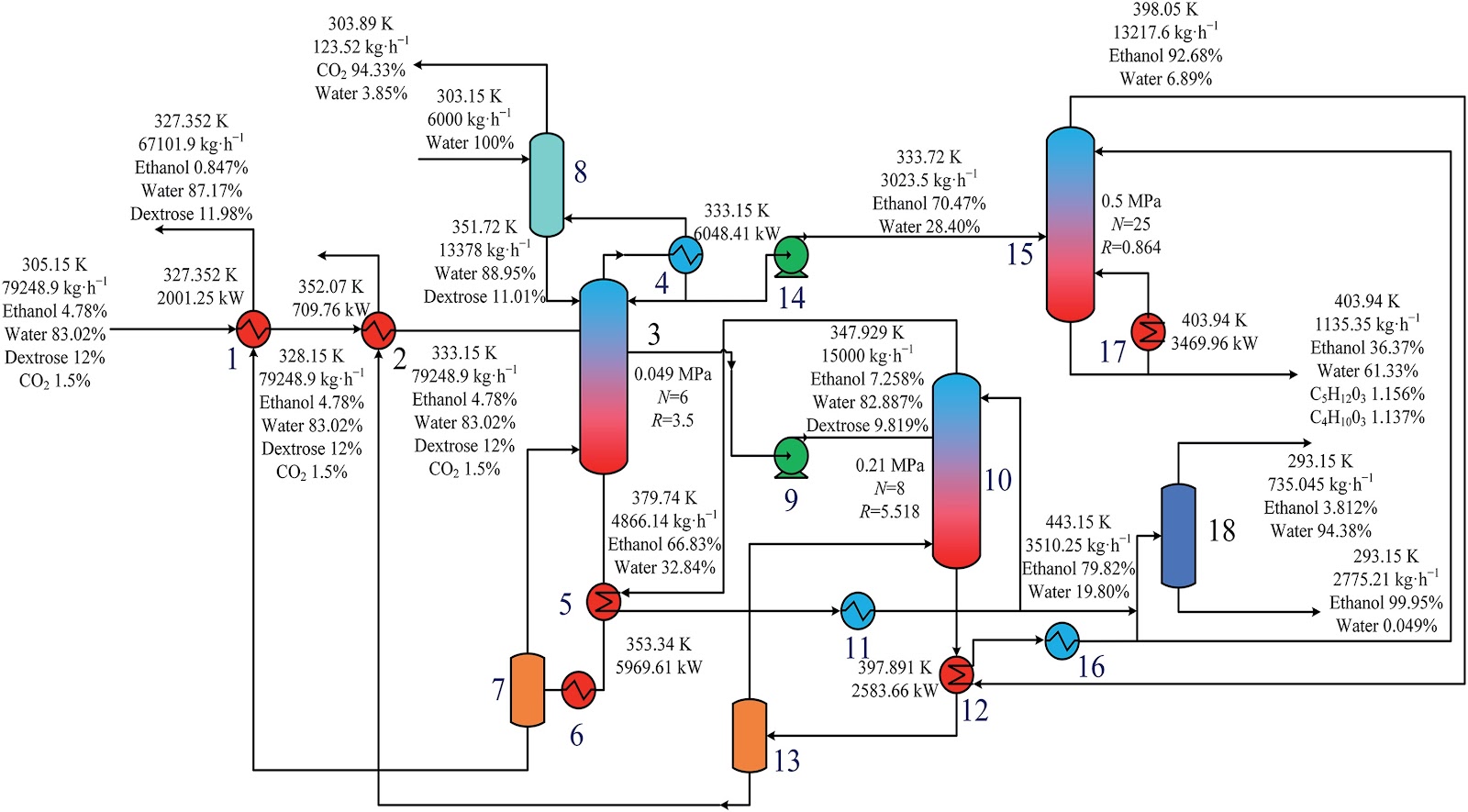
Design and optimization of a high-efficiency distillation process for cellulosic fuel ethanol integrated with thermal coupling and molecular sieve adsorption
To address the challenges of high energy consumption and prominent costs in the traditional three-columns distillation process for cellulosic fuel ethanol, a distillation—molecular sieve coupling separation process is proposed. This process integrates a three-column (crude distillation column, first distillation column, second distillation column) system with a 3A molecular sieve adsorption deep dehydration unit. A thermal coupling network is constructed via differential pressure design (steam from medium/high-pressure columns as mutual heat sources, reboiler liquid waste heat for feed preheating), and molecular sieve adsorption conditions are optimized. The study first performs a thermodynamic consistency test on the ethanol—water system, determines optimal non-random two-liquid (NRTL) model binary interaction parameters via experimental data regression for Aspen Plus simulation. Aiming at minimum total annual cost (TAC), Aspen Plus is used to optimize process parameters (theoretical tray number, feed location, reflux ratio, side-draw position, etc.). Economic analysis shows this process reduces CO2 emission costs by 27.56%, TAC by 15.58% (to 5.123 × 10⁶ USD·a-1), and increases ethanol purity to >99.6%, providing an effective solution for green, efficient separation.
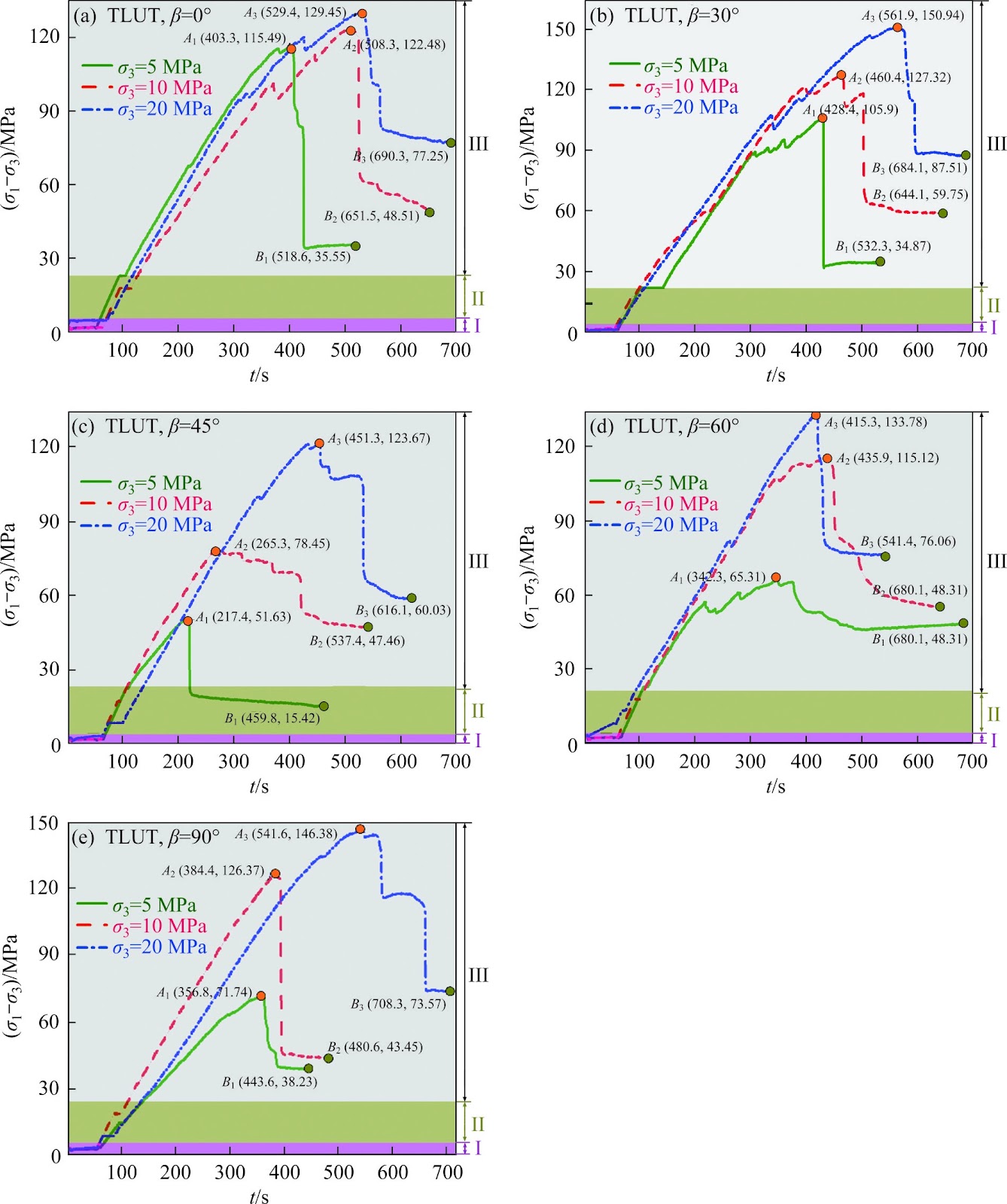
A cohesion loss model for determining residual strength of deep bedded sandstone
Rock residual strength, as an important input parameter, plays an indispensable role in proposing the reasonable and scientific scheme about stope design, underground tunnel excavation and stability evaluation of deep chambers. Therefore, previous residual strength models of rocks established were reviewed. And corresponding related problems were stated. Subsequently, starting from the effects of bedding and whole life-cycle evolution process, series of triaxial mechanical tests of deep bedded s
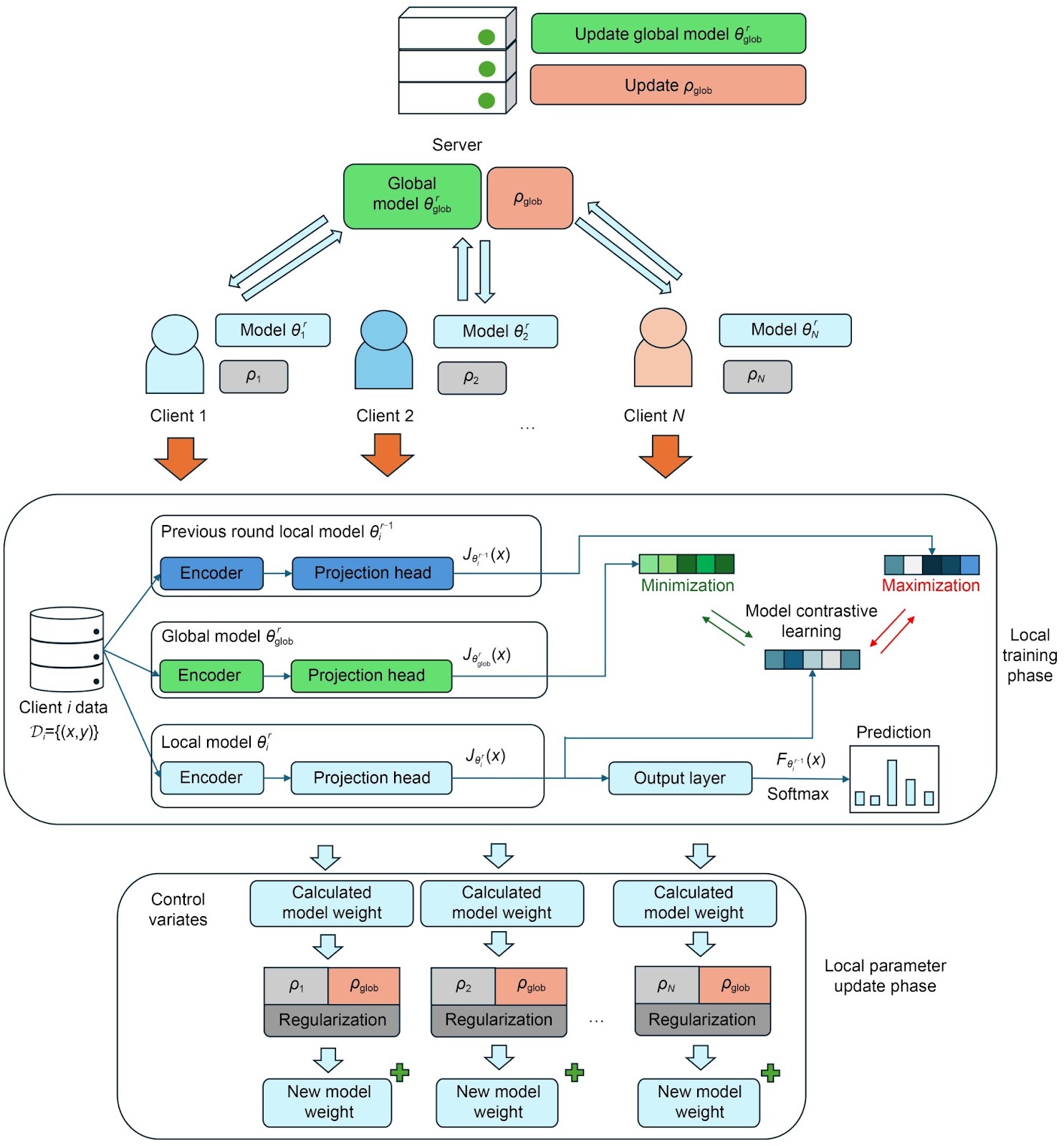
Federated model with contrastive learning and adaptive control variates for human activity recognition
Recent attention to privacy issues demands a communication-safe method for training human activity recognition (HAR) models on client activity data. Federated learning (FL) has become a compelling technique to facilitate model training between the server and clients while preserving data privacy. However, classical FL methods often assume independent and identically distributed (IID) data among clients. This assumption does not hold true in practical scenarios. Human activity in real-world scena