Key Takeaways & Executive Findings
- •• The proposed robust wideband waveform design explicitly addresses the worst-case combined power spectrum (CPS) for both opponent and friendly devices, ensuring effective jamming while protecting adjacent friendly electronics. • A large-scale minimax multi-objective optimization problem is efficiently transformed into a single-objective Lp-norm/Pareto framework, simplifying tractability. • The RCG-CMDPC algorithm leverages Riemannian conjugate gradient on complex circle manifolds to enforce constant modulus and discrete phase constraints, achieving low computational complexity. • Numerical experiments demonstrate superior robust DPJ effectiveness and computational efficiency compared to existing waveform design approaches.
Abstract
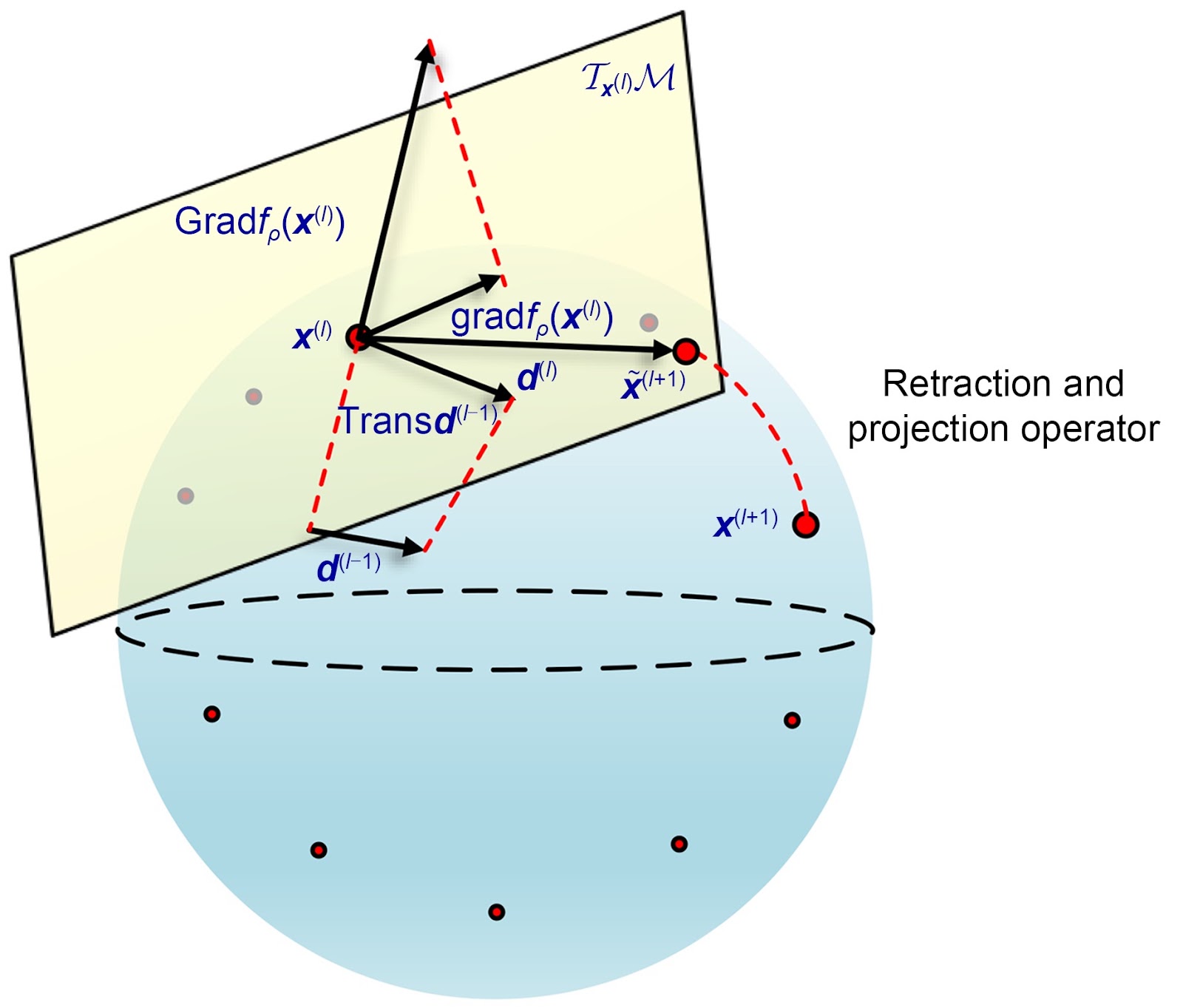
Distributed precision jamming (DPJ) is a novel blanket jamming concept in electronic warfare, which delivers the jamming resource to the opponent equipment precisely and ensures that friendly devices are not affected. Robust jamming performance and low hardware burden on the jammers are crucial for practical DPJ implementation. To achieve these goals, we study the robust design of wideband constant modulus (CM) discrete phase waveform for DPJ, where the worst-case combined power spectrum (CPS) of both the opponent and friendly devices is considered in the objective function, and the CM discrete phase constraints are used to design the wideband waveform. Specifically, the resultant mathematical model is a large-scale minimax multi-objective optimization problem (MOP) with CM and discrete phase constraints. To tackle the challenging MOP, we transform it into a single-objective minimization problem using the Lp-norm and Pareto framework. For the approximation problem, we propose the Riemannian conjugate gradient for CM discrete phase constraints (RCG-CMDPC) algorithm with low computational complexity, which leverages the complex circle manifold and a projection method to satisfy the CM discrete phase constraints within the RCG framework. Numerical examples demonstrate the superior robust DPJ effectiveness and computational efficiency compared to other competing algorithms.
1. Introduction
For most electronic devices, the quality of service (QoS) highly depends on the signal-to-interference-plus-noise ratio (SINR) in practice (Wang et al., 2018; Gao et al., 2020; Geng et al., 2023). Therefore, blanket jamming is usually used in electronic warfare to degrade the QoS of these devices (Pärlin et al., 2021; Kelsey, 2023; Wu et al., 2023). Conventional blanket jamming is typically implemented by a single jammer, where a high power is required for jamming effectiveness but results in low utilization efficiency (Tai et al., 2016). Meanwhile, the beamforming technique is also usually used to enhance the transmit gain by directing the jamming energy toward two-dimensional (2D) directions. However, due to the insufficient dimensionality in the spatial domain, it may cause unexpected injuries to adjacent friendly devices in the three-dimensional (3D) area of interest (Li and Stoica, 2008; Blunt and Mokole, 2016). To overcome these problems, a novel blanket jamming concept, namely, distributed precision jamming (DPJ), was proposed by the US Defense Advanced Research Project Agency (https://www.fbo.gov/spg/ODA/DARPA/CMO/DARPA-BAA-09-65/listing.html). This method requires that the opponent equipment is jammed precisely in the 3D spatial domain, and the adjacent friendly devices are not affected by the jammers. Compared to the transmit beamforming technique, in this technique, a group of distributed aerial platforms is adopted to improve the coherent synthesis efficiency. More importantly, DPJ exhibits excellent jamming energy performance within the desired 3D area rather than along specific 2D directions (Song D et al., 2016).
The existing research on DPJ falls into two distinct categories from the perspective of the transmitted signal model. One category adopts the narrowband signal model and regards the combined energy control performance as the main design metric. Chen et al. (2020) proposed an efficient method to design the single snapshot constant modulus (CM) transmit signals, and the grating lobes in the area of interest are mitigated to some extent. Yang ZP et al. (2022) jointly optimized the CM signals and the location of distributed platforms to improve the spatial energy control performance. Zhang KD et al. (2022b) proposed a method to endow the narrowband waveform with jamming characteristics by fitting the combined waveform with white noise, and Yang ZP et al. (2023) further improved the algorithm’s performance in terms of both jamming and computational efficiency. Other research works, including those by Yang ZP et al. (2021), Xu et al. (2022), and Zhang KD et al. (2022a), designed the narrowband transmitted waveform to improve the DPJ performance based on previous works, and interested readers may refer to them.
The other category uses the wideband transmitted waveform for the jamming tasks, where the combined power spectrum (CPS) is considered as the design metric.
Loading authentic research manuscript (Pages 1–5)...
Qingsong Zhou, Jialong Qian, Zhongping Yang, Chao Huang, Qinxian Chen, Yibo Xu, Zhengkai Wei (2025). Robust wideband waveform design with constant modulus and discrete phase constraints for distributed precision jamming. Frontiers of Information Technology & Electronic Engineering. https://doi.org/10.1631/FITEE_2400285
Research & Educational Purpose Only:The translations, structured abstracts, analytical annotations, and data reports provided by SinoTechIntel are intended exclusively for academic research, internal corporate R&D, and educational benchmarking. They do not constitute formal engineering, chemical safety, legal, or professional advice.
Copyright & Intellectual Property Notice: Original copyright of the underlying source articles and experimental data remains with the respective authors, institutions, and original publishing journals. SinoTechIntel claims intellectual property only over its proprietary translations, analytical syntheses, and AEO structured enhancements in accordance with international fair use and academic citation principles.
Frequently Asked Questions
What is distributed precision jamming (DPJ)?
Distributed precision jamming (DPJ) is a blanket jamming concept that precisely delivers jamming resources to opponent equipment in a 3D spatial domain while ensuring friendly devices remain unaffected. It uses distributed aerial platforms to improve coherent synthesis efficiency.
What are the key constraints in the proposed wideband waveform design?
The proposed design imposes constant modulus (CM) and discrete phase constraints on the transmitted waveform, which are practical for real-world hardware and help maintain low implementation burden on jammers.
How is the optimization problem formulated in this paper?
The problem is modeled as a large-scale minimax multi-objective optimization problem (MOP) considering the worst-case combined power spectrum (CPS). It is transformed into a single-objective minimization using the Lp-norm and Pareto framework.
What is the RCG-CMDPC algorithm?
The Riemannian conjugate gradient for CM discrete phase constraints (RCG-CMDPC) algorithm is a low-complexity optimization algorithm that operates on a complex circle manifold and uses projection methods to satisfy the constant modulus and discrete phase constraints within the Riemannian conjugate gradient framework.
What are the main advantages of the proposed method?
The method provides robust jamming effectiveness, low hardware burden, and high computational efficiency, as demonstrated by numerical examples comparing it with other competing algorithms.
Related Technical Papers & Translations
Design and optimization of a high-efficiency distillation process for cellulosic fuel ethanol integrated with thermal coupling and molecular sieve adsorption
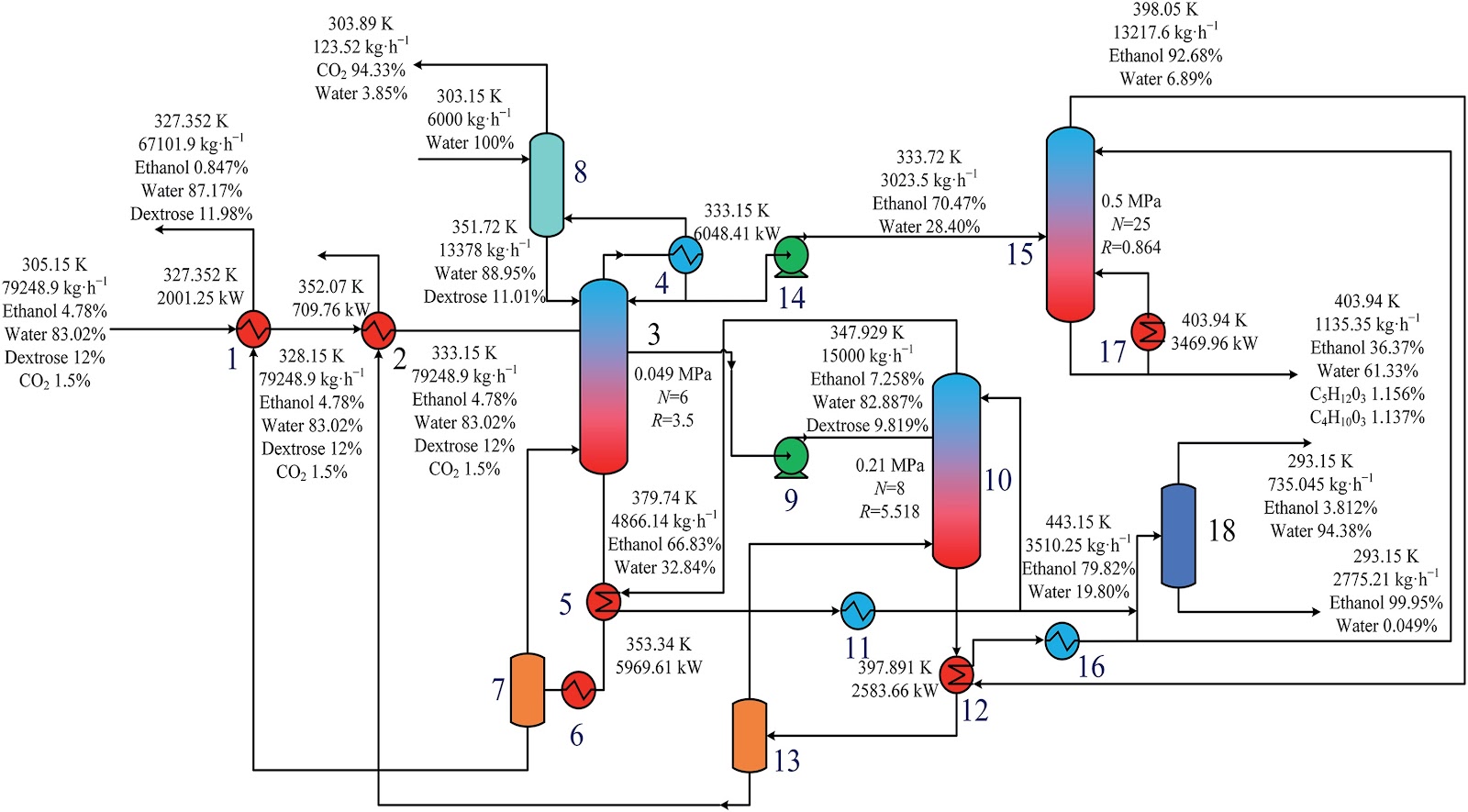
To address the challenges of high energy consumption and prominent costs in the traditional three-columns distillation process for cellulosic fuel ethanol, a distillation—molecular sieve coupling separation process is proposed. This process integrates a three-column (crude distillation column, first distillation column, second distillation column) system with a 3A molecular sieve adsorption deep dehydration unit. A thermal coupling network is constructed via differential pressure design (steam from medium/high-pressure columns as mutual heat sources, reboiler liquid waste heat for feed preheating), and molecular sieve adsorption conditions are optimized. The study first performs a thermodynamic consistency test on the ethanol—water system, determines optimal non-random two-liquid (NRTL) model binary interaction parameters via experimental data regression for Aspen Plus simulation. Aiming at minimum total annual cost (TAC), Aspen Plus is used to optimize process parameters (theoretical tray number, feed location, reflux ratio, side-draw position, etc.). Economic analysis shows this process reduces CO2 emission costs by 27.56%, TAC by 15.58% (to 5.123 × 10⁶ USD·a-1), and increases ethanol purity to >99.6%, providing an effective solution for green, efficient separation.
A cohesion loss model for determining residual strength of deep bedded sandstone
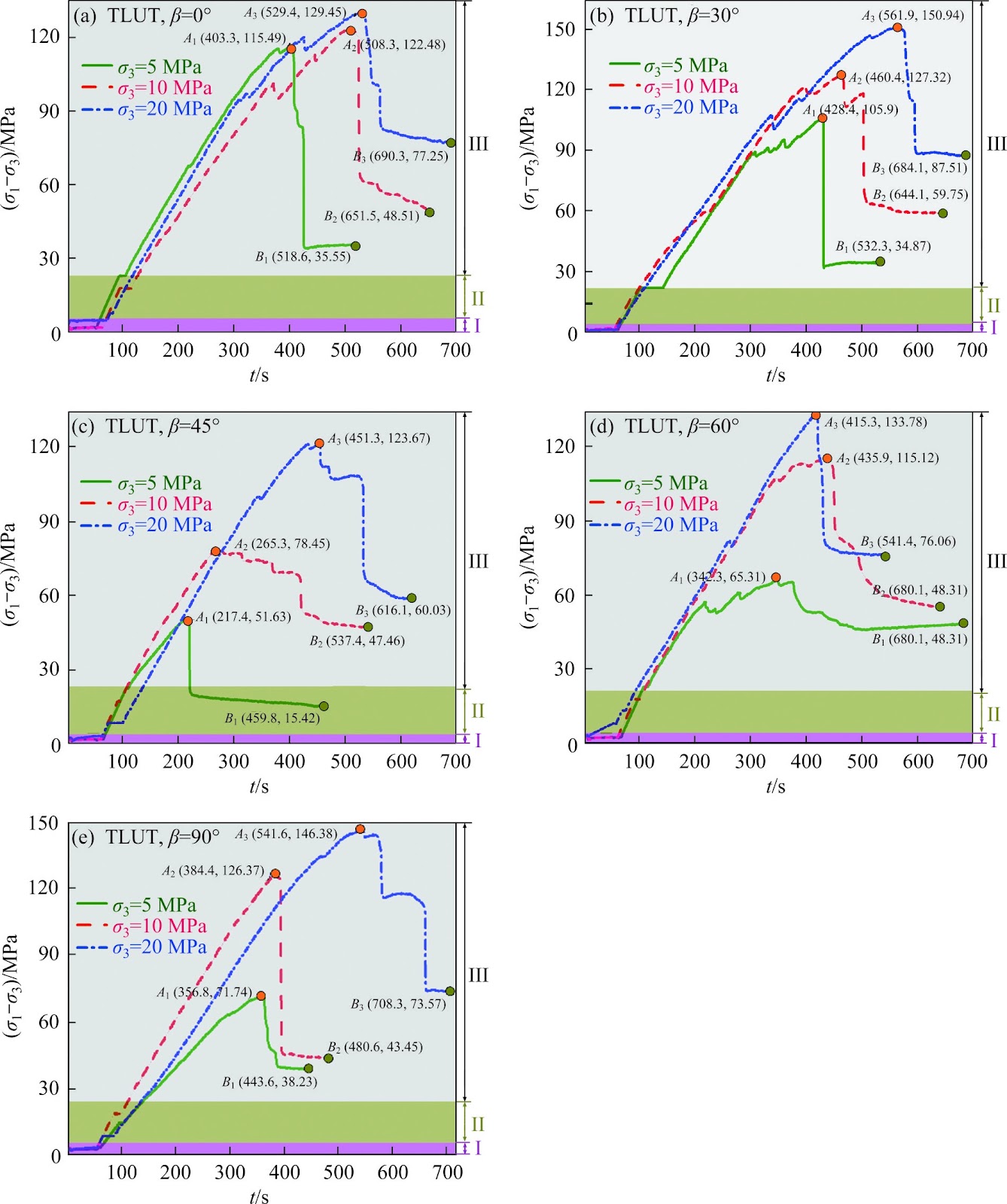
Rock residual strength, as an important input parameter, plays an indispensable role in proposing the reasonable and scientific scheme about stope design, underground tunnel excavation and stability evaluation of deep chambers. Therefore, previous residual strength models of rocks established were reviewed. And corresponding related problems were stated. Subsequently, starting from the effects of bedding and whole life-cycle evolution process, series of triaxial mechanical tests of deep bedded s
Federated model with contrastive learning and adaptive control variates for human activity recognition
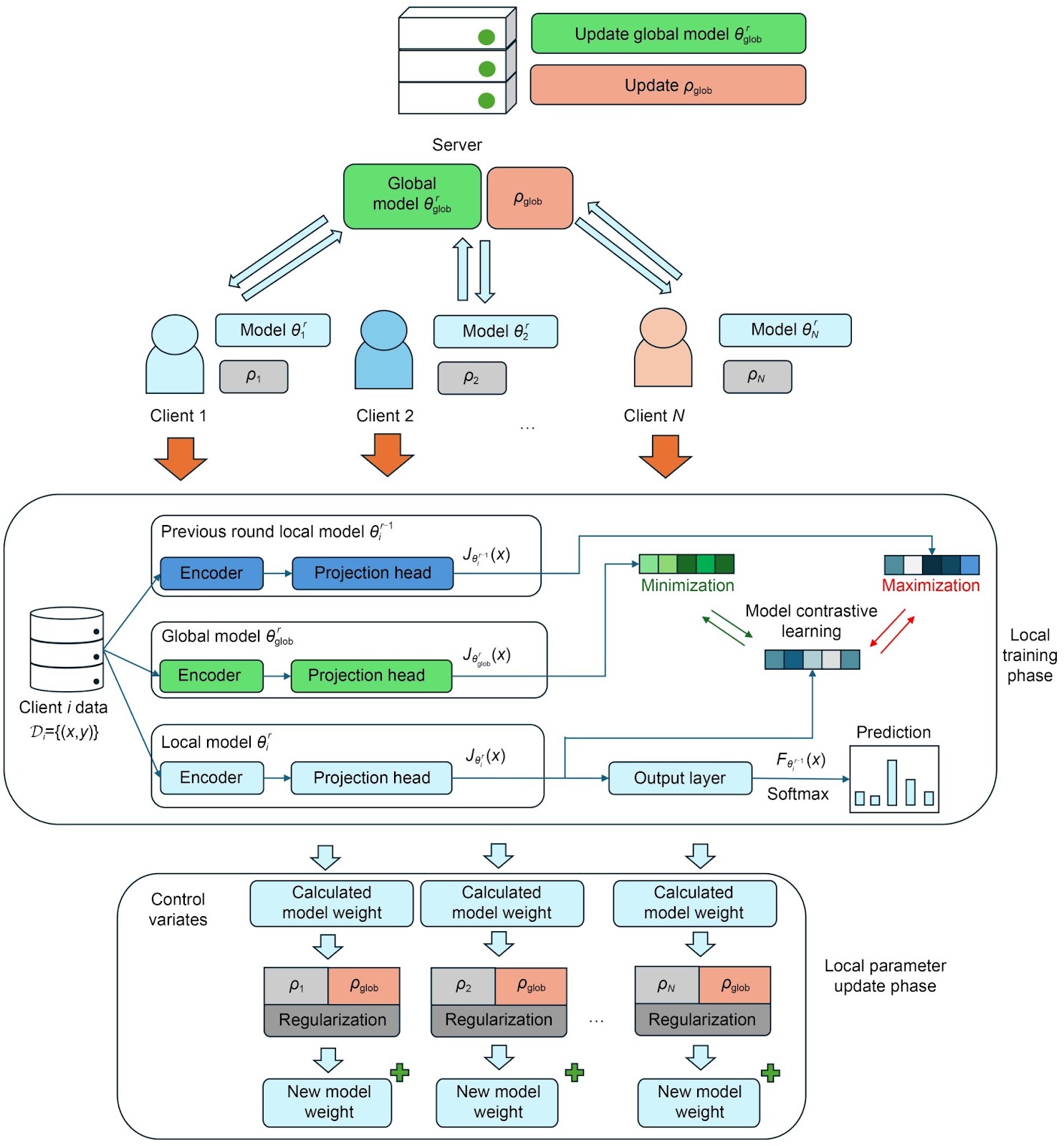
Recent attention to privacy issues demands a communication-safe method for training human activity recognition (HAR) models on client activity data. Federated learning (FL) has become a compelling technique to facilitate model training between the server and clients while preserving data privacy. However, classical FL methods often assume independent and identically distributed (IID) data among clients. This assumption does not hold true in practical scenarios. Human activity in real-world scena