Key Takeaways & Executive Findings
- •• A Kalman filter expanded fusion (KFEF) method integrates GRNN and Kriging interpolation for high-accuracy spatiotemporal temperature prediction. • KFEF achieves 61.54% RMSE reduction compared to RBF, and 34.21% and 32.43% reductions relative to STK and GP, respectively. • The method enables dynamic temperature field reconstruction along ranging paths with limited sensors, critical for atmospheric refraction correction. • The framework is validated through simulation, indoor, and kilometer-scale outdoor experiments, showing strong potential for long-distance high-precision ranging and other applications.
Abstract
In absolute distance measurement and positioning applications, atmospheric refraction error is a critical factor limiting measurement accuracy. Temperature plays a dominant role in computing the atmospheric refractive index. However, accurately acquiring the temperature field along the ranging path in complex and dynamic outdoor environments remains challenging due to limited sensor deployment and environmental nonstationarity. We propose a spatiotemporal temperature data fusion method for atmospheric refraction correction, which integrates the strengths of the generalized regression neural network (GRNN) and Kriging interpolation within a Kalman filter. This method achieves dynamic prediction and high-accuracy reconstruction of temperature parameters. The proposed method is systematically validated through simulation analysis as well as indoor and kilometer-scale outdoor experimental measurements. The simulation results demonstrate that Kalman filter expanded fusion (KFEF) outperforms the traditional interpolation method radial basis function (RBF) and the state-of-the-art spatiotemporal interpolation and prediction methods spatiotemporal Kriging (STK) and Gaussian process (GP), in terms of both reconstruction accuracy and stability of the temperature field. Specifically, KFEF achieves a 61.54% reduction in root mean square error (RMSE) compared with RBF and reductions of 34.21% and 32.43% relative to STK and GP, respectively. This indicates its practical value for long-distance high-precision ranging engineering applications. Furthermore, the proposed spatiotemporal data fusion framework is highly general and scalable. It can also be applied to other temperature field prediction and reconstruction problems.
1. Introduction
The absolute distance measurement accuracy and positioning accuracy are largely affected by the atmospheric refraction error (Meiners-Hagen et al., 2017; Ding et al., 2020; Bi et al., 2024). When electromagnetic waves such as lasers and microwaves propagate in the atmosphere, their refractive indices are dynamic and change with temperature, air pressure, humidity, etc. This leads to deviations in distance measurement results. The core of atmospheric refraction error correction is the acquisition of precise atmospheric refractivity along the electromagnetic wave propagation path. Existing studies indicate that within commonly used atmospheric refractivity models, such as the Edlén formula (Rüeger, 2002) and the Ciddor formula (Ciddor, 1996), meteorological parameters involved in refractive index computation exert markedly different levels of influence. Among these parameters, temperature plays a decisive role in determining the refractivity accuracy (Pisani et al., 2018).
In recent years, researchers have proposed various methods for acquiring or eliminating temperature parameters with high precision. The main temperature parameter elimination methods are the dual-wavelength method and the acoustic method. The former is not applicable to the microwave band (Tomberg et al., 2017; Guillory et al., 2024), whereas the latter is susceptible to industrial noise and is characterized by high system complexity and cost (Underwood et al., 2015; Pisani et al., 2018). In terms of high-precision temperature parameter acquisition, multiple sensors are typically deployed along the baseline to reconstruct the temperature meteorological field. The Physikalisch-Technische Bundesanstalt (PTB) in Germany and the National Institute of Metrology in China installed 60 temperature sensors outdoors, effectively correcting the refractive error (Pollinger et al., 2012; Liu XD et al., 2020). However, this approach is difficult to apply in mobile outdoor environments due to the large number of sensors.
In outdoor absolute distance measurements, a limited number of sensors are usually used to collect temperature data. Interpolation methods are then employed to estimate the temperature distribution along the propagation path. Previous studies have suggested various methods, including the equivalent area method (Chen Y et al., 2018) and linear interpolation combined with the radial basis function (RBF) (Gu et al., 2019).
Loading authentic research manuscript (Pages 1–5)...
Ziru LI, Zhaobin XU, Tao ZHANG, Xinbo YUAN, Zhonghe JIN (2025). High-precision temperature prediction for atmospheric refractivity correction using Kalman spatiotemporal data fusion. Engineering Information Technology & Electronic Engineering. https://doi.org/10.1631/ENG_ITEE_2026_0005
Research & Educational Purpose Only:The translations, structured abstracts, analytical annotations, and data reports provided by SinoTechIntel are intended exclusively for academic research, internal corporate R&D, and educational benchmarking. They do not constitute formal engineering, chemical safety, legal, or professional advice.
Copyright & Intellectual Property Notice: Original copyright of the underlying source articles and experimental data remains with the respective authors, institutions, and original publishing journals. SinoTechIntel claims intellectual property only over its proprietary translations, analytical syntheses, and AEO structured enhancements in accordance with international fair use and academic citation principles.
Frequently Asked Questions
What is the proposed method for temperature prediction?
The proposed method, Kalman filter expanded fusion (KFEF), integrates generalized regression neural network (GRNN) and Kriging interpolation within a Kalman filter to achieve dynamic and high-accuracy spatiotemporal temperature reconstruction.
How does KFEF compare to traditional interpolation methods?
Simulation results show that KFEF outperforms radial basis function (RBF) by 61.54% in root mean square error (RMSE), and also reduces RMSE by 34.21% and 32.43% compared to spatiotemporal Kriging (STK) and Gaussian process (GP), respectively.
Why is temperature crucial in atmospheric refraction correction?
Temperature is a decisive parameter in computing the atmospheric refractive index. A small error in temperature can lead to significant deviations in absolute distance measurement, so precise temperature field acquisition is essential for correcting atmospheric refraction errors.
Is the method validated for outdoor environments?
Yes, the method is systematically validated through simulation analysis as well as indoor and kilometer-scale outdoor experimental measurements, demonstrating its practical value for long-distance high-precision ranging applications.
Can the spatiotemporal data fusion framework be applied to other problems?
Yes, the framework is highly general and scalable, making it applicable to other temperature field prediction and reconstruction problems beyond atmospheric refraction correction.
Related Technical Papers & Translations
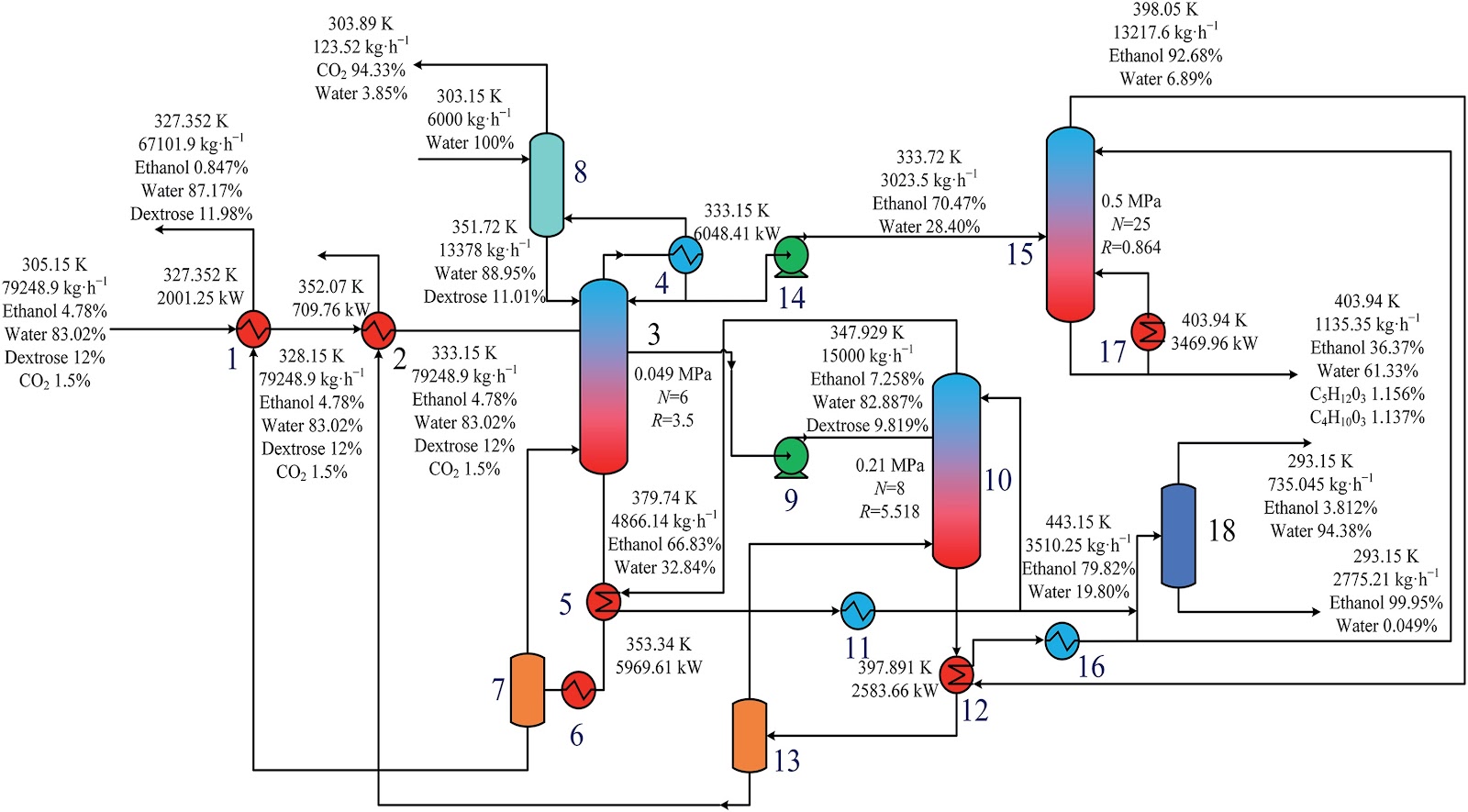
Design and optimization of a high-efficiency distillation process for cellulosic fuel ethanol integrated with thermal coupling and molecular sieve adsorption
To address the challenges of high energy consumption and prominent costs in the traditional three-columns distillation process for cellulosic fuel ethanol, a distillation—molecular sieve coupling separation process is proposed. This process integrates a three-column (crude distillation column, first distillation column, second distillation column) system with a 3A molecular sieve adsorption deep dehydration unit. A thermal coupling network is constructed via differential pressure design (steam from medium/high-pressure columns as mutual heat sources, reboiler liquid waste heat for feed preheating), and molecular sieve adsorption conditions are optimized. The study first performs a thermodynamic consistency test on the ethanol—water system, determines optimal non-random two-liquid (NRTL) model binary interaction parameters via experimental data regression for Aspen Plus simulation. Aiming at minimum total annual cost (TAC), Aspen Plus is used to optimize process parameters (theoretical tray number, feed location, reflux ratio, side-draw position, etc.). Economic analysis shows this process reduces CO2 emission costs by 27.56%, TAC by 15.58% (to 5.123 × 10⁶ USD·a-1), and increases ethanol purity to >99.6%, providing an effective solution for green, efficient separation.
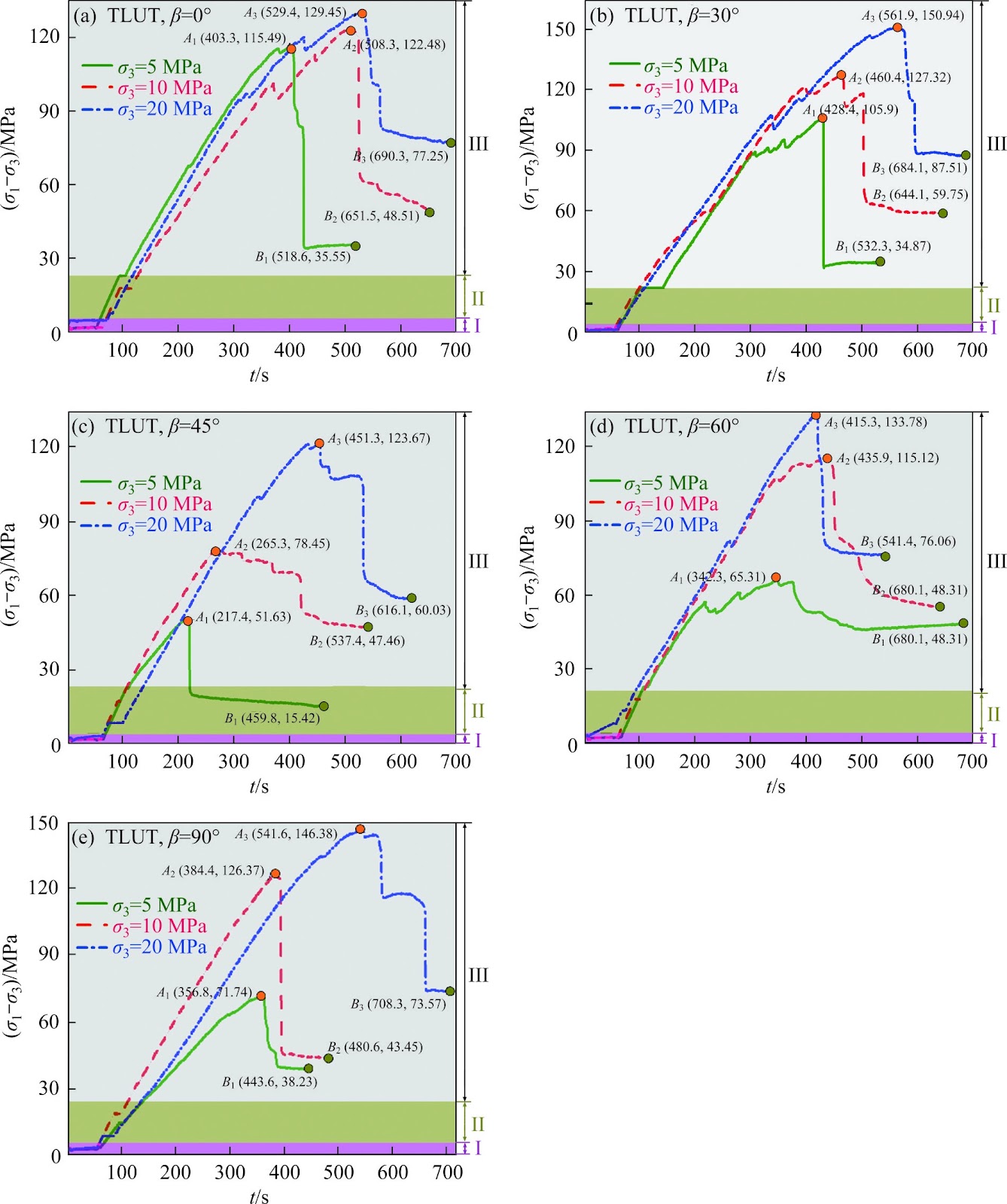
A cohesion loss model for determining residual strength of deep bedded sandstone
Rock residual strength, as an important input parameter, plays an indispensable role in proposing the reasonable and scientific scheme about stope design, underground tunnel excavation and stability evaluation of deep chambers. Therefore, previous residual strength models of rocks established were reviewed. And corresponding related problems were stated. Subsequently, starting from the effects of bedding and whole life-cycle evolution process, series of triaxial mechanical tests of deep bedded s
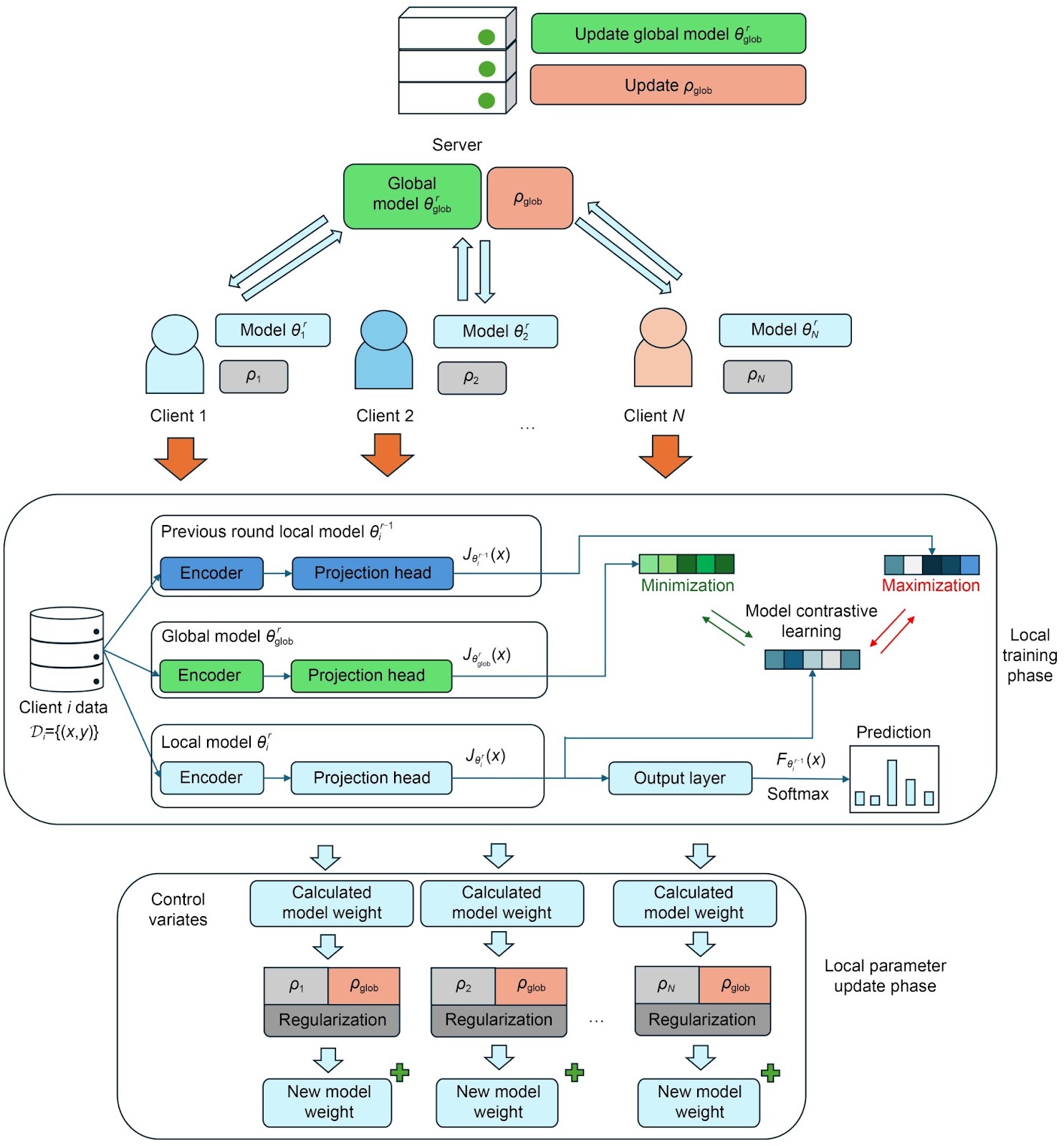
Federated model with contrastive learning and adaptive control variates for human activity recognition
Recent attention to privacy issues demands a communication-safe method for training human activity recognition (HAR) models on client activity data. Federated learning (FL) has become a compelling technique to facilitate model training between the server and clients while preserving data privacy. However, classical FL methods often assume independent and identically distributed (IID) data among clients. This assumption does not hold true in practical scenarios. Human activity in real-world scena