Key Takeaways & Executive Findings
- •• Proposes a Chaos-LSTM model that integrates chaotic systems with LSTM neural networks to generate chaotic sequences with high spectral entropy (SE) complexity, effectively addressing periodicity issues in traditional chaos-based encryption. • Introduces the chaos sequence proliferation (CSP) algorithm to overcome computational accuracy limitations, enabling the generation of long chaotic sequences suitable for encrypting large-scale geographic data. • Implements a complete geographic information encryption system on the ZYNQ hardware platform, combining chaotic proliferation sequences with scrambling and diffusion algorithms for enhanced confidentiality. • Demonstrates excellent confidentiality performance and scalability through both software testing and hardware experiments, confirming its practical value for securing diverse encryption objects.
Abstract
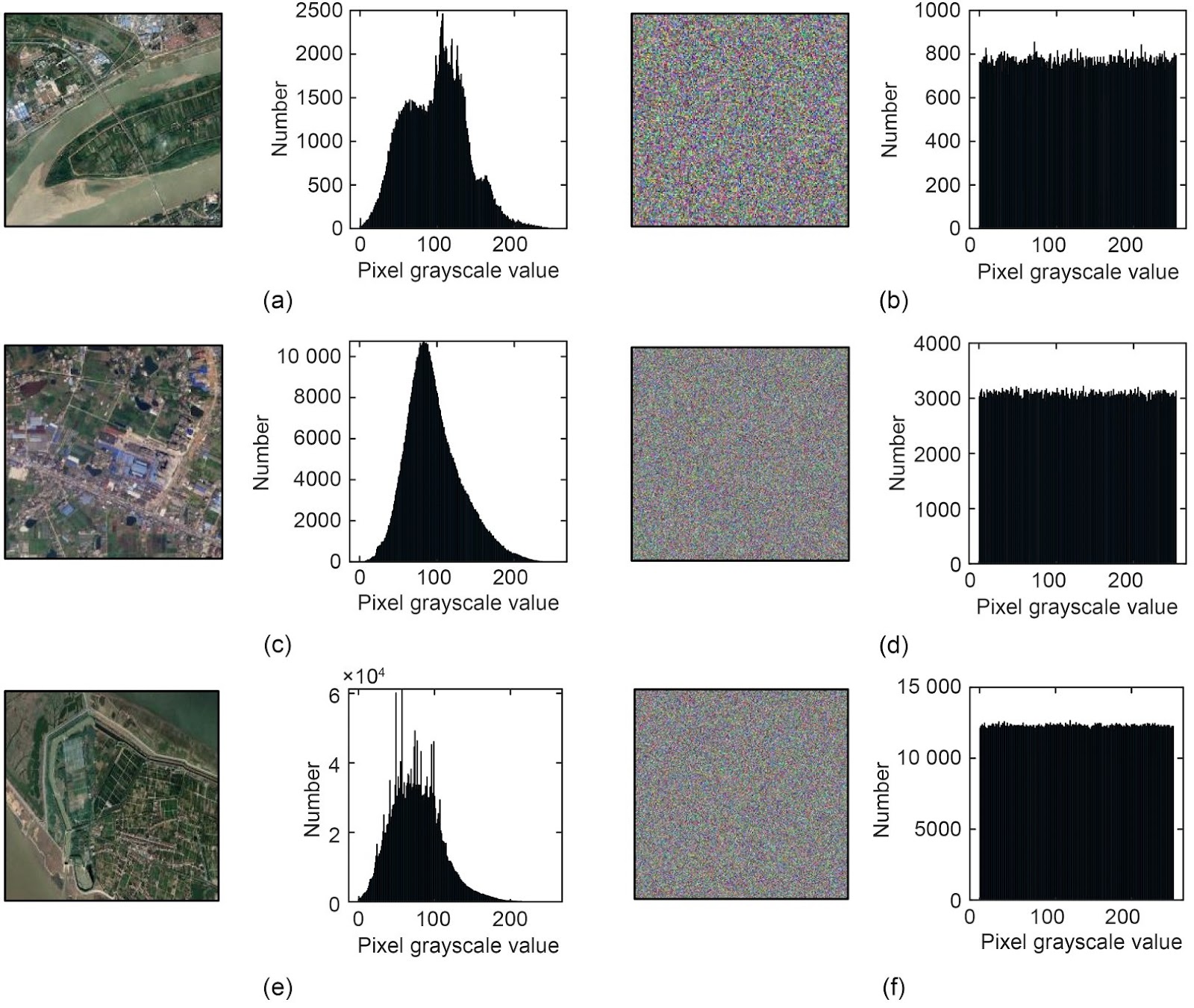
In response to the strong correlation between the chaotic system state and initial state and parameters in traditional chaotic encryption algorithms, which may lead to periodicity in chaotic sequences, the chaos long short-term memory (Chaos-LSTM) model is constructed by combining chaotic systems with LSTM neural networks. The chaos sequence proliferation (CSP) algorithm is constructed to address the problem that the limited computational accuracy of computers can lead to periodicity in long chaotic sequences, making them unsuitable for encrypting objects with large amounts of data. By combining the Chaos-LSTM model and CSP algorithm, a geographic information encryption system is proposed. First, the Chaos-LSTM model is used to output chaotic sequences with high spectral entropy (SE) complexity. Then, a shorter chaotic sequence is selected and proliferated using the CSP algorithm to generate chaotic proliferation sequences that match the encrypted object; a randomness analysis is conducted and testing is performed on it. Finally, using geographic images as encryption objects, the chaotic proliferation sequence, along with the scrambling and diffusion algorithms, are combined to form the encryption system, which is implemented on the ZYNQ platform. The system’s excellent confidentiality performance and scalability are proved by software testing and hardware experiments, making it suitable for the confidentiality peers of various encryption objects with outstanding application value.
1. Introduction
With the deepening application of geographic information, various types of data are widely shared. The confidential information involved in geographic information data is extensive, and if leaked, it will lead to serious losses and harm. Therefore, it is crucial to provide a secure and inclusive communication system for different geographic information data. Encryption algorithms are the core of secure communication systems, and researchers have also proposed various encryption algorithms, such as the triple data encryption standard (Tezcan, 2022), elliptic curve cryptography (Ullah et al., 2023), the international data encryption algorithm (Sahu et al., 2016), fully homomorphic encryption (Martins et al., 2017), and quantum key distribution (Cao et al., 2022).
In addition, chaotic systems, neural networks, and their combinations are all used for secure communication. Alexan et al. (2023) proposed a secure communication algorithm combining multiple maps. Gabr et al. (2023) proposed an image encryption algorithm that combines chaotic systems with unique image transformation techniques, promoting the application of chaotic encryption algorithms. Murillo-Escobar et al. (2022) provided a data confidentiality scheme based on chaotic cryptography and sequence spread spectrum technology. Lin et al. (2022) proposed using a memristor ring neural network to encrypt medical images. Based on the Takagi–Sugeno fuzzy neural network, Yan et al. (2023) designed a synchronization controller for image encryption. Xu et al. (2022) proposed a method for constructing multiple hash index chains based on a fractional order chaotic Hopfield neural network (HNN). Based on convolutional neural networks and chaos, Man et al. (2021) studied a dynamic adaptive diffusion encryption algorithm. De la Fraga et al. (2023) and Gonzalez-Zapata et al. (2023) studied the implementation method and topology of the echo state neural network (ESNN), using an improved ESNN to predict chaotic time series and enhancing the hardware of ESNN using the field programmable gate array (FPGA).
Neural networks with learning capabilities can generate new sequences with chaotic characteristics by learning from existing chaotic time series. The different initial states of chaotic systems correspond to different periods, and their period lengths may be very short, which, to some extent, reduces the confidentiality of chaos encryption systems. In response to this issue, this paper combines chaotic systems and long short-term memory (LSTM) neural networks to construct a Chaos-LSTM model.
Loading authentic research manuscript (Pages 1–5)...
Jia DUAN, Luanyun HU, Qiumei XIAO, Meiting LIU, Wenxin YU (2025). A geographic information encryption system based on Chaos-LSTM and chaos sequence proliferation. Frontiers of Information Technology & Electronic Engineering. https://doi.org/10.1631/FITEE_2300755
Research & Educational Purpose Only:The translations, structured abstracts, analytical annotations, and data reports provided by SinoTechIntel are intended exclusively for academic research, internal corporate R&D, and educational benchmarking. They do not constitute formal engineering, chemical safety, legal, or professional advice.
Copyright & Intellectual Property Notice: Original copyright of the underlying source articles and experimental data remains with the respective authors, institutions, and original publishing journals. SinoTechIntel claims intellectual property only over its proprietary translations, analytical syntheses, and AEO structured enhancements in accordance with international fair use and academic citation principles.
Frequently Asked Questions
What is the Chaos-LSTM model?
The Chaos-LSTM model is a hybrid approach that combines chaotic systems with Long Short-Term Memory (LSTM) neural networks. It learns the characteristics of chaotic time series and generates new chaotic sequences with high spectral entropy (SE) complexity, addressing periodicity issues in traditional chaotic encryption.
How does the chaos sequence proliferation (CSP) algorithm improve encryption?
The CSP algorithm overcomes the limited computational accuracy of computers that often leads to periodicity in long chaotic sequences. It selectively proliferates shorter chaotic sequences to generate longer, high-quality sequences suitable for encrypting large amounts of data, such as geographic images.
Why is the ZYNQ platform used in the proposed encryption system?
The ZYNQ platform is a flexible System-on-Chip (SoC) that integrates an FPGA with an ARM processor. It is used to implement the encryption system efficiently, enabling hardware acceleration and real-time processing, which demonstrates the system's scalability and practical applicability.
What are the advantages of the proposed geographic information encryption system?
The system offers excellent confidentiality performance, scalability, and suitability for various encryption objects. By combining Chaos-LSTM and CSP with scrambling and diffusion algorithms, it effectively protects geographic information against leakage, as verified by software testing and hardware experiments.
How does LSTM help in chaotic encryption?
LSTM neural networks can learn the underlying dynamics of chaotic systems and generate new chaotic sequences that retain chaotic characteristics. This helps produce sequences with high spectral entropy, reducing the risk of periodicity and enhancing the security of the encryption system.
Related Technical Papers & Translations
Design and optimization of a high-efficiency distillation process for cellulosic fuel ethanol integrated with thermal coupling and molecular sieve adsorption
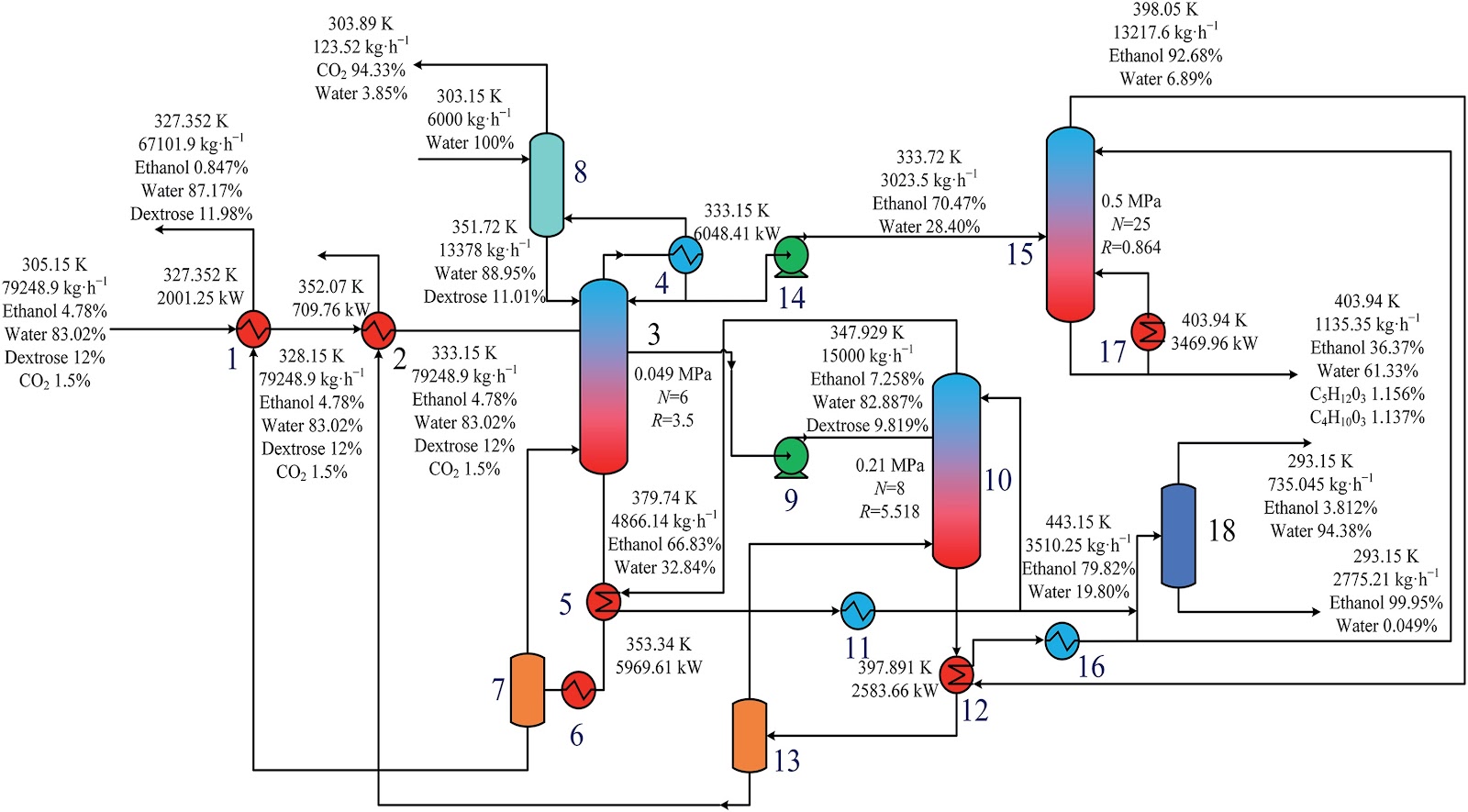
To address the challenges of high energy consumption and prominent costs in the traditional three-columns distillation process for cellulosic fuel ethanol, a distillation—molecular sieve coupling separation process is proposed. This process integrates a three-column (crude distillation column, first distillation column, second distillation column) system with a 3A molecular sieve adsorption deep dehydration unit. A thermal coupling network is constructed via differential pressure design (steam from medium/high-pressure columns as mutual heat sources, reboiler liquid waste heat for feed preheating), and molecular sieve adsorption conditions are optimized. The study first performs a thermodynamic consistency test on the ethanol—water system, determines optimal non-random two-liquid (NRTL) model binary interaction parameters via experimental data regression for Aspen Plus simulation. Aiming at minimum total annual cost (TAC), Aspen Plus is used to optimize process parameters (theoretical tray number, feed location, reflux ratio, side-draw position, etc.). Economic analysis shows this process reduces CO2 emission costs by 27.56%, TAC by 15.58% (to 5.123 × 10⁶ USD·a-1), and increases ethanol purity to >99.6%, providing an effective solution for green, efficient separation.
A cohesion loss model for determining residual strength of deep bedded sandstone
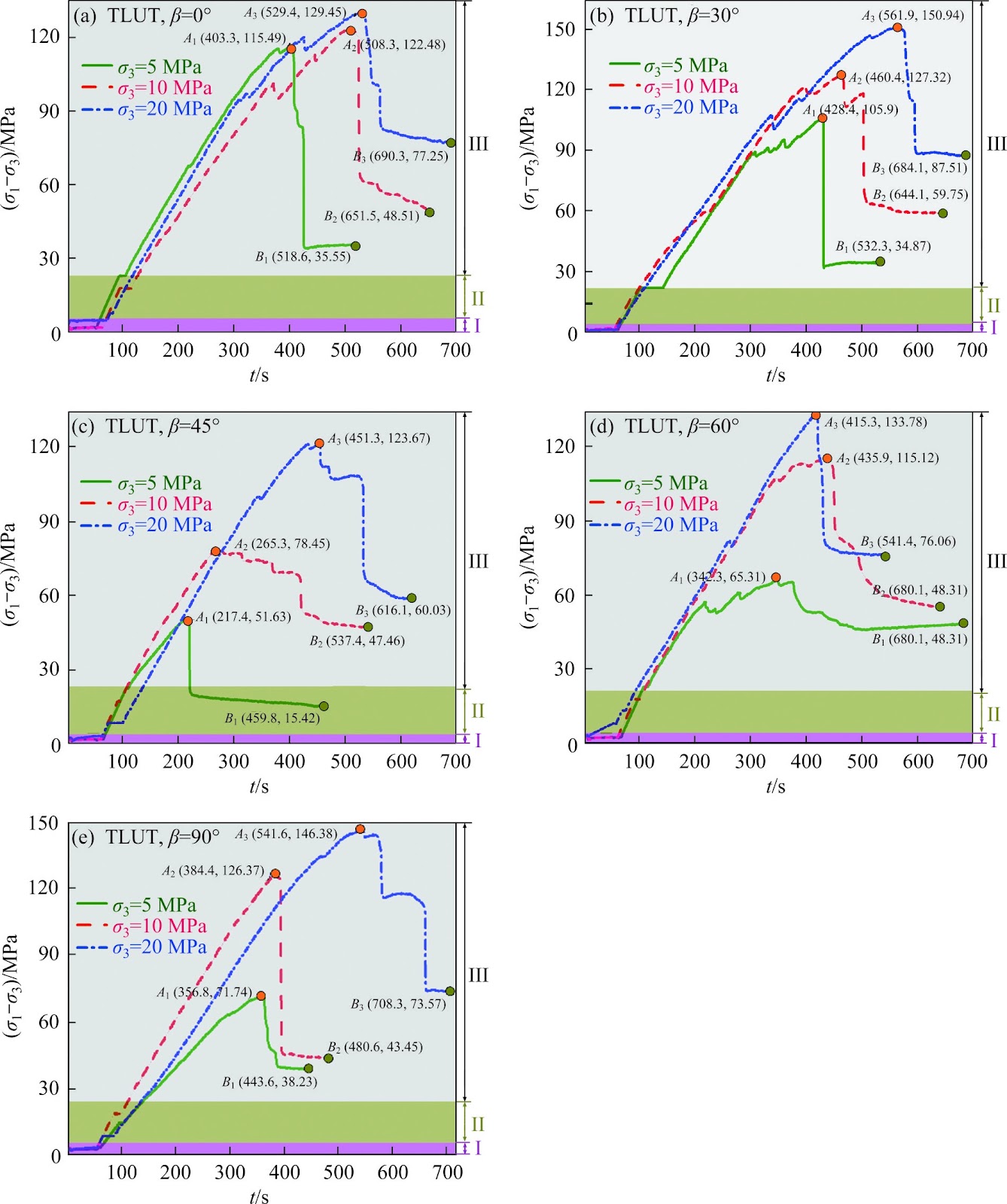
Rock residual strength, as an important input parameter, plays an indispensable role in proposing the reasonable and scientific scheme about stope design, underground tunnel excavation and stability evaluation of deep chambers. Therefore, previous residual strength models of rocks established were reviewed. And corresponding related problems were stated. Subsequently, starting from the effects of bedding and whole life-cycle evolution process, series of triaxial mechanical tests of deep bedded s
Federated model with contrastive learning and adaptive control variates for human activity recognition
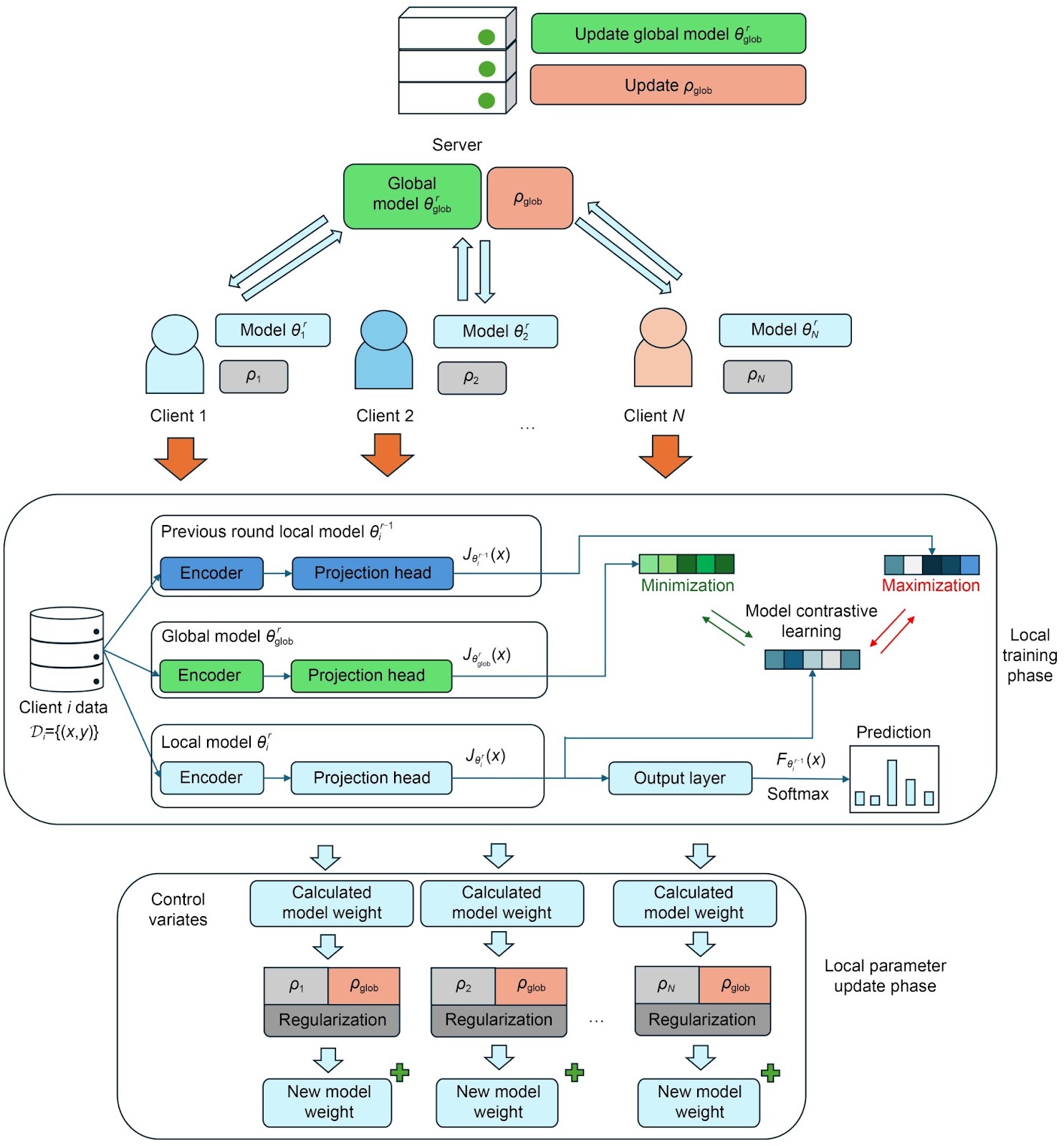
Recent attention to privacy issues demands a communication-safe method for training human activity recognition (HAR) models on client activity data. Federated learning (FL) has become a compelling technique to facilitate model training between the server and clients while preserving data privacy. However, classical FL methods often assume independent and identically distributed (IID) data among clients. This assumption does not hold true in practical scenarios. Human activity in real-world scena