
Key Takeaways & Executive Findings
- •• CdualTAL is a novel Transformer-based encoder–attention–decoder algorithm that separately processes strong and weak multi-domain features to avoid noise dilution. • A correlation-adaptive feature selection algorithm identifies highly predictive strong features, while a dual-channel encoder handles them distinctly. • A custom cross-attention mechanism fuses representations from both channels, and an LSTM decoder captures deep temporal dependencies for accurate wear prediction. • CdualTAL outperforms 11 state-of-the-art methods, achieving an average R2 of 0.983 and an RMSE of 4.373 on tool wear datasets, demonstrating superior stability and accuracy.
Abstract
Accurate tool wear prediction is crucial for manufacturing efficiency, yet effectively using multi-domain sensor features is difficult due to redundant noise. There is a critical need to strategically leverage highly predictive strong features and potentially informative weak features. To address this issue, we propose CdualTAL, an improved Transformer-based encoder–attention–decoder algorithm. Its name represents the model’s key components: a correlation-adaptive feature selection algorithm module, a dual-channel Transformer encoder, an attention mechanism, and a long short-term memory (LSTM) decoder. CdualTAL employs a dual-channel encoder to independently process the full set of multi-domain features, along with a subset of strong features selected using a designed correlation-adaptive feature selection algorithm. A custom cross-attention mechanism is then used to fuse these representations, sharpening focus on strong features while judiciously integrating information from weak ones. Finally, a hierarchical LSTM decoder captures deep temporal dependencies. Validated on tool wear datasets, CdualTAL outperforms 11 state-of-the-art methods, achieving superior prediction stability and accuracy with an average R2 of 0.983 and a root mean square error (RMSE) of 4.373.
1. Introduction
As information technology advances rapidly, traditional manufacturing industries are undergoing digital transformation toward greater intelligence. A critical component of intelligent manufacturing is tool wear monitoring, which can significantly enhance production efficiency and automation (Chehrehzad et al., 2024). During the operation of computer numerical control (CNC) machines, cutting tools inevitably experience friction with workpieces during machining. Tool wear worsens continuously with processing time until tool failure (Hou et al., 2025); therefore, real-time monitoring of tool status and accurate wear prediction are crucial. Such measures reduce cutting downtime, enable the more efficient allocation of resources and lower production costs, and improve product quality.
Tool prediction and replacement have traditionally relied heavily on operator experience. Premature replacement often leads to unused tool life, while delayed replacement results in tool failure and workpiece damage (Kumar et al., 2025). Subsequent to the widespread adoption of machine learning, researchers have made significant progress in tool wear assessment by integrating multi-source signals, such as cutting force, vibration, and acoustic emission, using various machine learning methodologies (Shi et al., 2020; Marani et al., 2021; Ou et al., 2021; Duan et al., 2022). Analyses conducted across time, frequency, and time-frequency domains have proven effective in characterizing tool wear status (Huang et al., 2020, 2024; Yan et al., 2021; Guo et al., 2022; He et al., 2022), enriching datasets and enhancing recognition accuracy and reliability. However, while multi-domain features offer comprehensive insights into the complex dynamics of tool wear, they inevitably introduce numerous irrelevant or noisy components. These so-called redundant features pose a significant challenge, as they dilute the model’s focus on the most predictive attributes (Gao et al., 2022; He et al., 2022).
Loading authentic research manuscript (Pages 1–5)...
Na Li, Zhendong Liu, Xiao Wang, Jiamin Jiang, Yanjie Wei (2025). CdualTAL: multi-domain tool wear prediction using a dual-channel Transformer and cross-attention network. ENGINEERING Information Technology & Electronic Engineering. https://doi.org/10.1631/ENG_ITEE_2025_0111
Research & Educational Purpose Only:The translations, structured abstracts, analytical annotations, and data reports provided by SinoTechIntel are intended exclusively for academic research, internal corporate R&D, and educational benchmarking. They do not constitute formal engineering, chemical safety, legal, or professional advice.
Copyright & Intellectual Property Notice: Original copyright of the underlying source articles and experimental data remains with the respective authors, institutions, and original publishing journals. SinoTechIntel claims intellectual property only over its proprietary translations, analytical syntheses, and AEO structured enhancements in accordance with international fair use and academic citation principles.
Frequently Asked Questions
What is the CdualTAL method for tool wear prediction?
CdualTAL is an improved Transformer-based encoder–attention–decoder algorithm that includes a correlation-adaptive feature selection module, a dual-channel Transformer encoder, an attention mechanism, and an LSTM decoder. It is designed to predict tool wear by effectively fusing multi-domain sensor features while mitigating redundancy.
How does CdualTAL handle multi-domain sensor data?
CdualTAL uses a correlation-adaptive feature selection algorithm to identify a subset of strong predictive features from the full multi-domain feature set. A dual-channel encoder processes the complete feature set and the selected strong features independently, and a cross-attention mechanism fuses the two representations, focusing on strong features while integrating relevant information from weak ones.
What metrics were used to evaluate CdualTAL's performance?
The performance of CdualTAL was evaluated using the coefficient of determination (R²) and root mean square error (RMSE). It achieved an average R² of 0.983 and an RMSE of 4.373 on tool wear datasets.
How does CdualTAL compare to existing deep learning methods?
CdualTAL outperforms 11 state-of-the-art methods in terms of prediction stability and accuracy. Its superior performance is attributed to the dual-channel architecture and cross-attention mechanism that effectively leverage both strong and weak features.
What are the key components of the CdualTAL architecture?
The key components are: (1) a correlation-adaptive feature selection algorithm module, (2) a dual-channel Transformer encoder, (3) an attention mechanism (specifically cross-attention), and (4) a hierarchical LSTM decoder that captures deep temporal dependencies.
Related Technical Papers & Translations
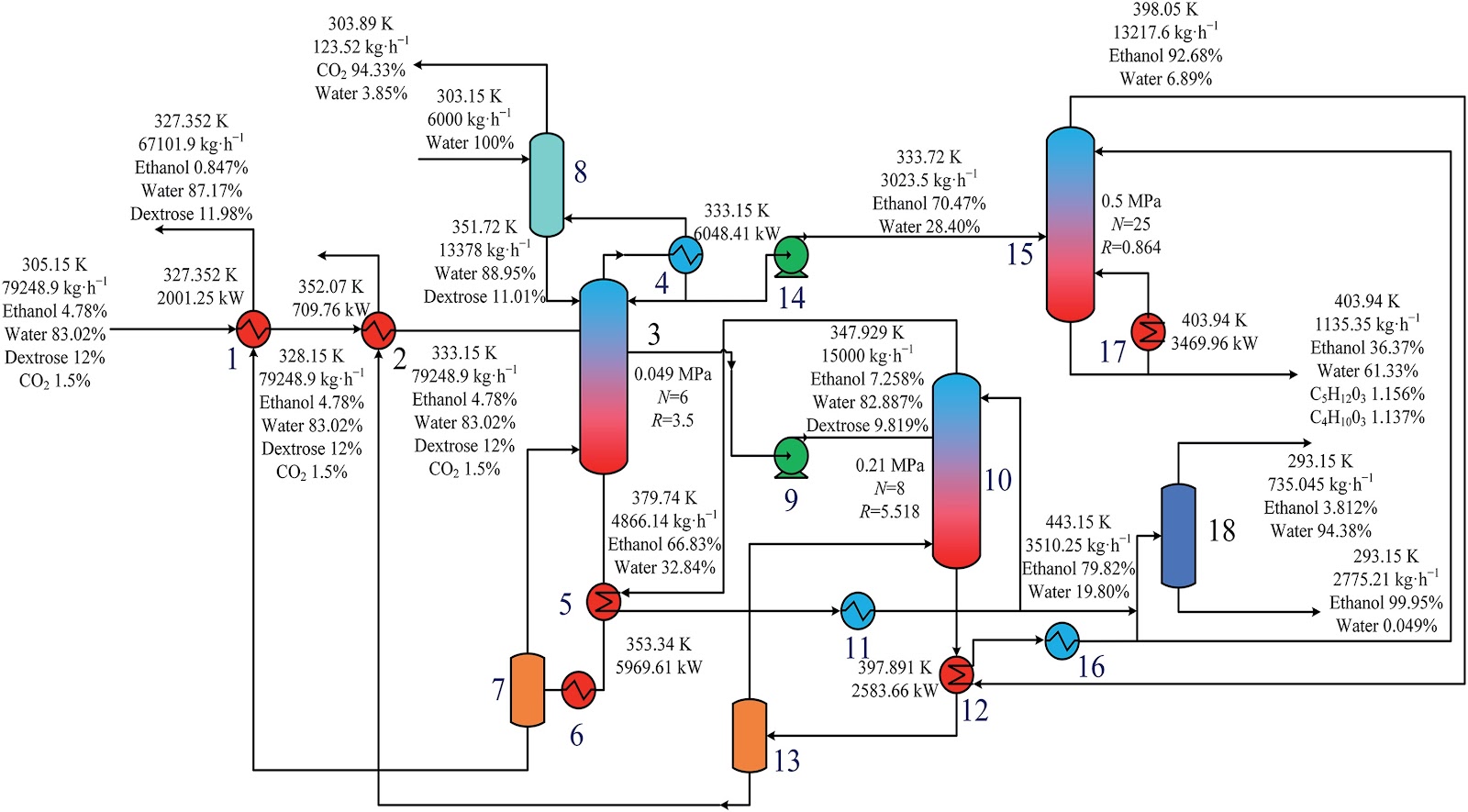
Design and optimization of a high-efficiency distillation process for cellulosic fuel ethanol integrated with thermal coupling and molecular sieve adsorption
To address the challenges of high energy consumption and prominent costs in the traditional three-columns distillation process for cellulosic fuel ethanol, a distillation—molecular sieve coupling separation process is proposed. This process integrates a three-column (crude distillation column, first distillation column, second distillation column) system with a 3A molecular sieve adsorption deep dehydration unit. A thermal coupling network is constructed via differential pressure design (steam from medium/high-pressure columns as mutual heat sources, reboiler liquid waste heat for feed preheating), and molecular sieve adsorption conditions are optimized. The study first performs a thermodynamic consistency test on the ethanol—water system, determines optimal non-random two-liquid (NRTL) model binary interaction parameters via experimental data regression for Aspen Plus simulation. Aiming at minimum total annual cost (TAC), Aspen Plus is used to optimize process parameters (theoretical tray number, feed location, reflux ratio, side-draw position, etc.). Economic analysis shows this process reduces CO2 emission costs by 27.56%, TAC by 15.58% (to 5.123 × 10⁶ USD·a-1), and increases ethanol purity to >99.6%, providing an effective solution for green, efficient separation.
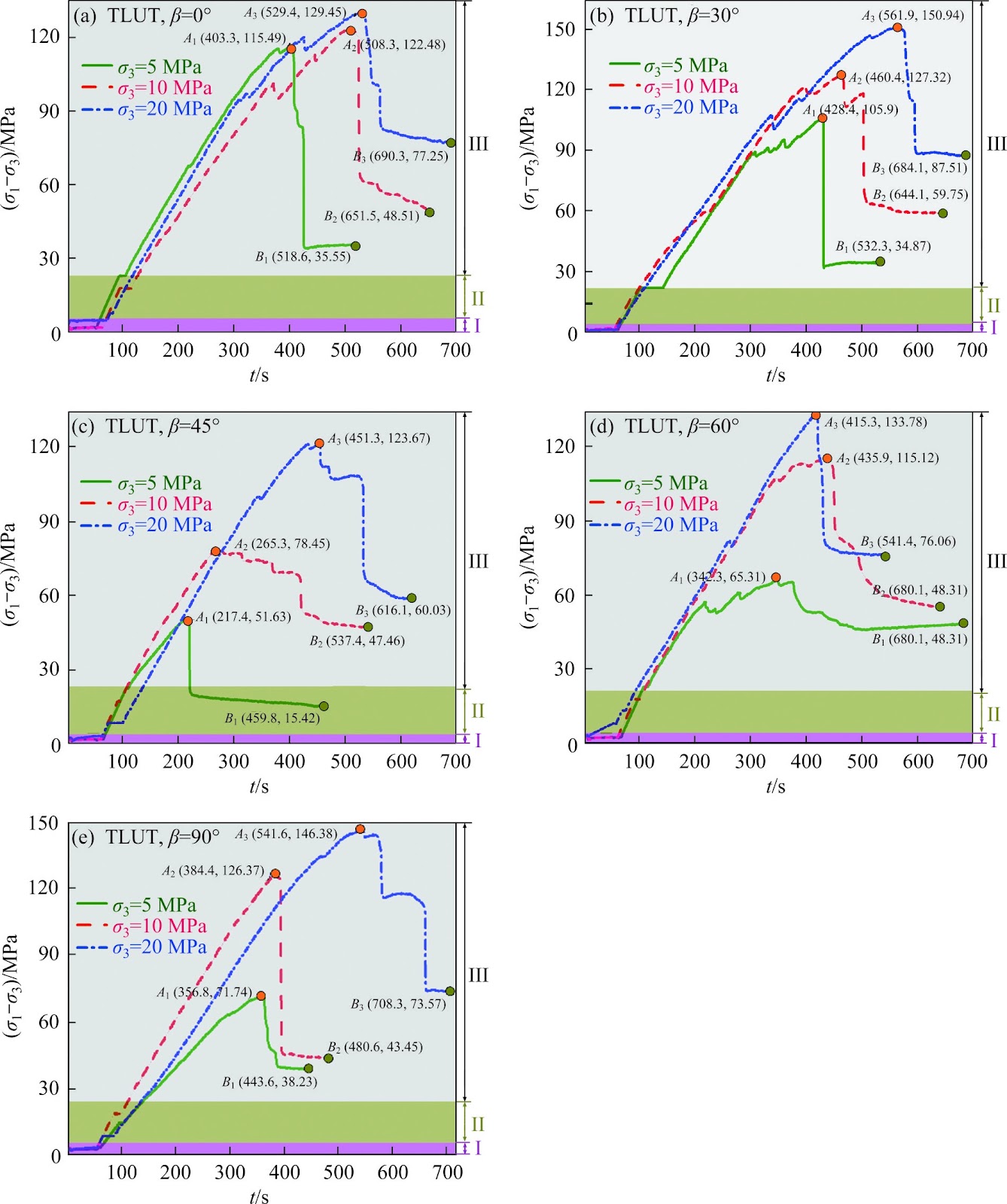
A cohesion loss model for determining residual strength of deep bedded sandstone
Rock residual strength, as an important input parameter, plays an indispensable role in proposing the reasonable and scientific scheme about stope design, underground tunnel excavation and stability evaluation of deep chambers. Therefore, previous residual strength models of rocks established were reviewed. And corresponding related problems were stated. Subsequently, starting from the effects of bedding and whole life-cycle evolution process, series of triaxial mechanical tests of deep bedded s
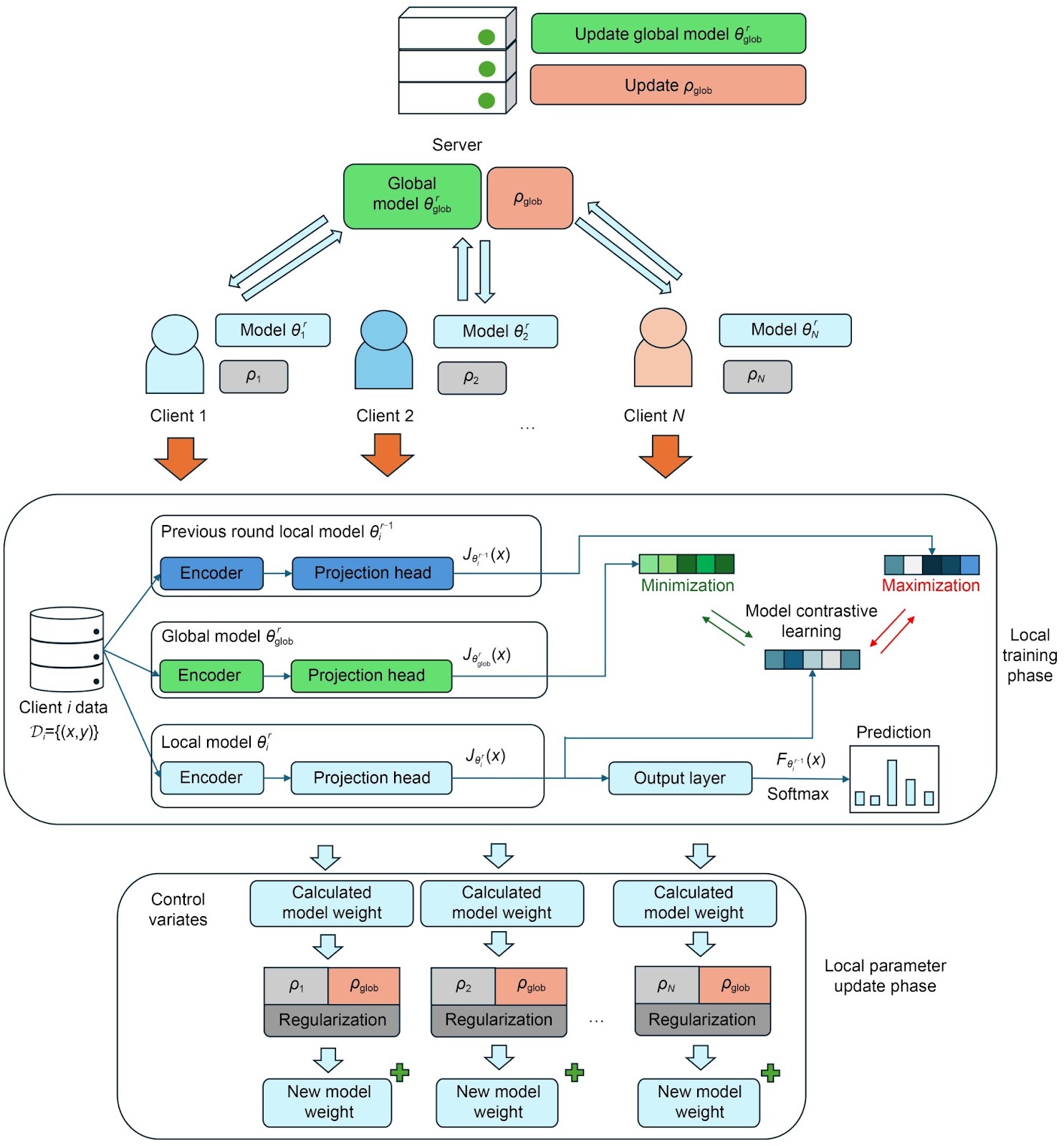
Federated model with contrastive learning and adaptive control variates for human activity recognition
Recent attention to privacy issues demands a communication-safe method for training human activity recognition (HAR) models on client activity data. Federated learning (FL) has become a compelling technique to facilitate model training between the server and clients while preserving data privacy. However, classical FL methods often assume independent and identically distributed (IID) data among clients. This assumption does not hold true in practical scenarios. Human activity in real-world scena