Key Takeaways & Executive Findings
- •• Introduces the AI-agent communication network (ACN) as a novel 6G paradigm enabling global interaction and on-demand capability provisioning for AI agents. • Proposes an architectural framework that integrates autonomous decision-making, multimodality information exchange, and multi-agent coordination. • Identifies key technologies and future research directions to address challenges such as uncontrollable actions, privacy, and computing/sensing requirements. • Demonstrates use cases where ACN expands 6G service capabilities, including intelligent robots, personal assistants, and multi-agent collaborative tasks.
Abstract
The booming of artificial intelligence (AI) agents has brought about promising business scenarios for sixth-generation (6G) mobile networks, while simultaneously posing significant challenges to network functionalities and infrastructure. These AI agents can be deployed on end devices (e.g., intelligent robots and intelligent cars) or as digital entities (e.g., personal AI assistants). As novel service entities with autonomous decision-making and task execution capabilities, AI agents introduce potential risks of uncontrollable actions and privacy disclosures. AI agents also require new 6G capabilities beyond traditional communication, including multimodality information interaction (e.g., AI models and tokens) and support for service requirements (e.g., computing and sensing of data). In this article, we introduce the concept of AI-agent communication network (ACN), a new paradigm to enable global information interaction and on-demand capability provisioning for single or multiple AI agents. We first introduce the vision and architectural framework of ACN. Then, key technologies and future research directions related to ACN are discussed. Furthermore, we provide potential use cases to elaborate on how ACN can expand the service capabilities of 6G networks.
1. Introduction
In recent years, artificial intelligence (AI)-based large models have developed rapidly, evolving from single-modal large language models (LLMs) such as ChatGPT to multimodal vision language models (VLMs) such as GPT-4o, as well as vision–language–action (VLA) large models. AI agents built on large models, which are autonomous systems capable of executing certain tasks by interpreting intents, sensing the environment, planning, making decisions, and using tools, constitute an emerging technology (Wang L et al., 2024). There are various AI agents with different capabilities, including embodied AI agents (such as intelligent service robots and robotic dogs) and digital AI agents (such as virtual intelligent assistants). Multi-agent systems are widely applied in various industries and fields. Currently, these AI agents of diverse types and capabilities have been widely applied across various industries, effectively enhancing work efficiency (Huang et al., 2025; Jiang XY et al., 2025).
The integration of AI with communication is one of the six most promising business scenarios for sixth-generation (6G) mobile networks, as presented in the International Telecommunication Union (ITU) 6G report (ITU, 2023). Numerous studies have been conducted on the application of AI and large models in telecommunication networks (Mahmoud et al., 2024; Shahid et al., 2025). Zhou et al. (2025) reviewed key techniques and opportunities in the context of LLMs for telecommunications, including LLM-enabled generative applications with telecommunication domain knowledge, LLM-based classification applications involving network security and traffic classification, LLM-enabled optimization techniques, and LLM-aided prediction for telecommunications. Chen ZR et al. (2024) proposed an architecture design and system evaluation for large AI models in 6G wireless networks. Similarly, the fundamental principles, diverse applications, key challenges, and future research directions of wireless large-scale AI models were elaborated in detail by Zhu et al. (2025).
Specifically, large-scale AI has shown tremendous potential in network management and optimization (Shahid et al., 2025). Some research works focus on integrating large-scale AI with network management. Xu YF et al. (2023) developed an LLM-aided network configuration benchmark called CloudEval-YAML, providing a realistic and scalable assessment framework for YAML configurations in cloud-native applications. Dzeparoska et al. (2023) proposed an advanced method to automatically translate high-level user intent into executable policies via LLM’s learning capabilities, eliminating pre-configuration. Besides, how to use large-scale AI for network optimization has been widely studied. Du et al. (2024) proposed an innovative LLM-enabled mixture of experts (MoE) approach for network optimization, which uses the powerful reasoning capabilities to analyze the objectives and constraints of users, select specialized deep reinforcement learning (DRL) experts, and determine their decision weights.
Loading authentic research manuscript (Pages 1–5)...
Xiaodong Duan, Zhenglei Huang, Shiyu Liang, Shaowen Zheng, Lu Lu, Tao Sun (2025). AI-agent communication network for 6G: vision, architecture, and key technologies. Frontiers of Information Technology & Electronic Engineering. https://doi.org/10.1631/FITEE_2500582
Research & Educational Purpose Only:The translations, structured abstracts, analytical annotations, and data reports provided by SinoTechIntel are intended exclusively for academic research, internal corporate R&D, and educational benchmarking. They do not constitute formal engineering, chemical safety, legal, or professional advice.
Copyright & Intellectual Property Notice: Original copyright of the underlying source articles and experimental data remains with the respective authors, institutions, and original publishing journals. SinoTechIntel claims intellectual property only over its proprietary translations, analytical syntheses, and AEO structured enhancements in accordance with international fair use and academic citation principles.
Frequently Asked Questions
What is the AI-agent communication network (ACN)?
ACN is a new 6G network paradigm introduced in this paper to enable global information interaction and on-demand capability provisioning for single or multiple AI agents, addressing the unique requirements of autonomous agents.
Why are AI agents challenging for existing 6G networks?
AI agents introduce risks of uncontrollable actions and privacy disclosures, and require new capabilities beyond traditional communication, such as multimodality information interaction and support for computing and sensing services.
What are the key technologies for ACN?
The paper discusses key technologies related to architectural framework, multimodality interaction, multi-agent coordination, and on-demand capability provisioning, along with future research directions.
How can ACN benefit 6G networks?
ACN expands the service capabilities of 6G networks by facilitating intelligent robot operation, personal AI assistance, and multi-agent collaborative applications, improving efficiency and enabling new business scenarios.
What are some use cases of ACN in 6G?
Potential use cases include intelligent robots, autonomous vehicles, personal AI assistants, and multi-agent systems across industries, demonstrating how ACN supports diverse service requirements.
Related Technical Papers & Translations
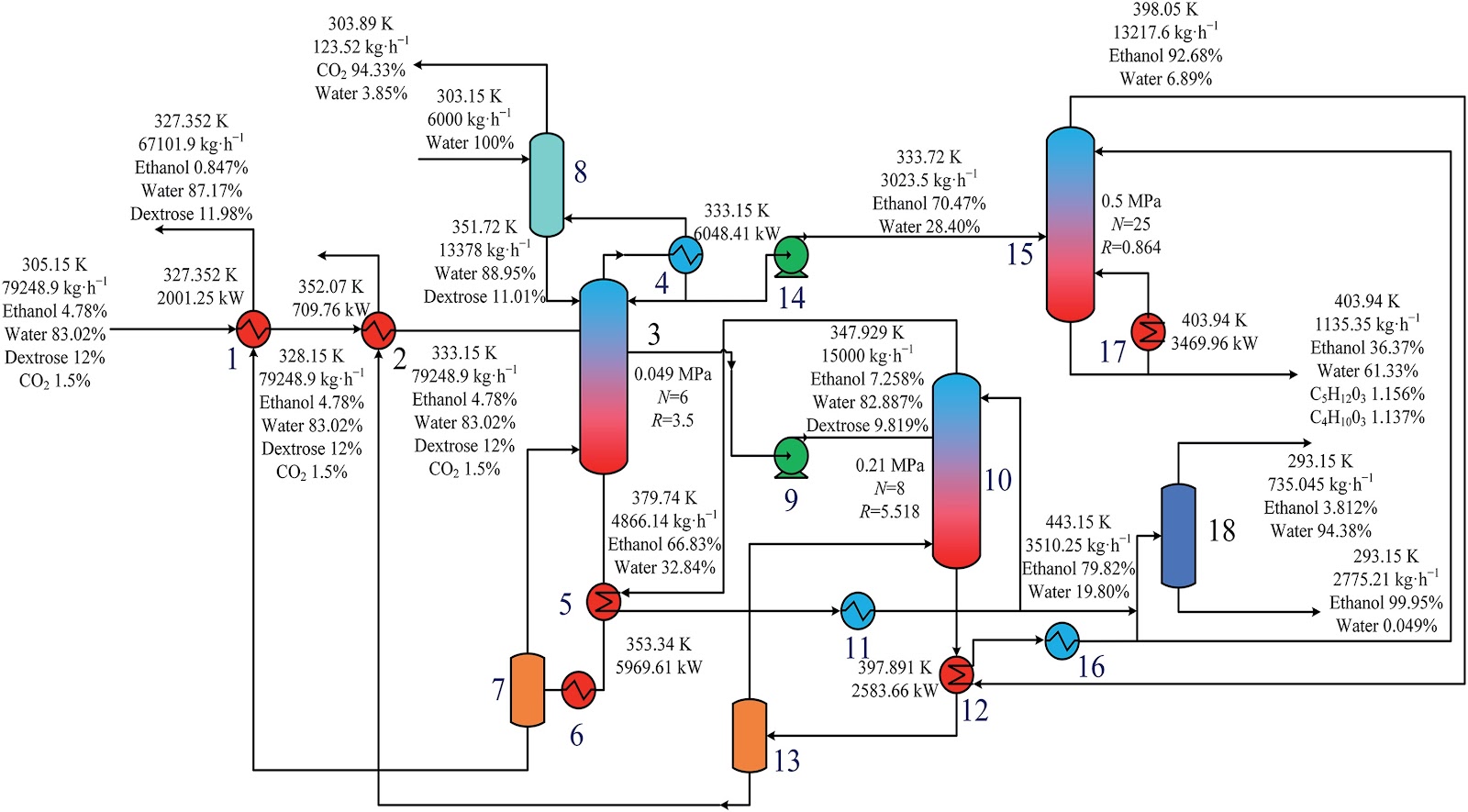
Design and optimization of a high-efficiency distillation process for cellulosic fuel ethanol integrated with thermal coupling and molecular sieve adsorption
To address the challenges of high energy consumption and prominent costs in the traditional three-columns distillation process for cellulosic fuel ethanol, a distillation—molecular sieve coupling separation process is proposed. This process integrates a three-column (crude distillation column, first distillation column, second distillation column) system with a 3A molecular sieve adsorption deep dehydration unit. A thermal coupling network is constructed via differential pressure design (steam from medium/high-pressure columns as mutual heat sources, reboiler liquid waste heat for feed preheating), and molecular sieve adsorption conditions are optimized. The study first performs a thermodynamic consistency test on the ethanol—water system, determines optimal non-random two-liquid (NRTL) model binary interaction parameters via experimental data regression for Aspen Plus simulation. Aiming at minimum total annual cost (TAC), Aspen Plus is used to optimize process parameters (theoretical tray number, feed location, reflux ratio, side-draw position, etc.). Economic analysis shows this process reduces CO2 emission costs by 27.56%, TAC by 15.58% (to 5.123 × 10⁶ USD·a-1), and increases ethanol purity to >99.6%, providing an effective solution for green, efficient separation.
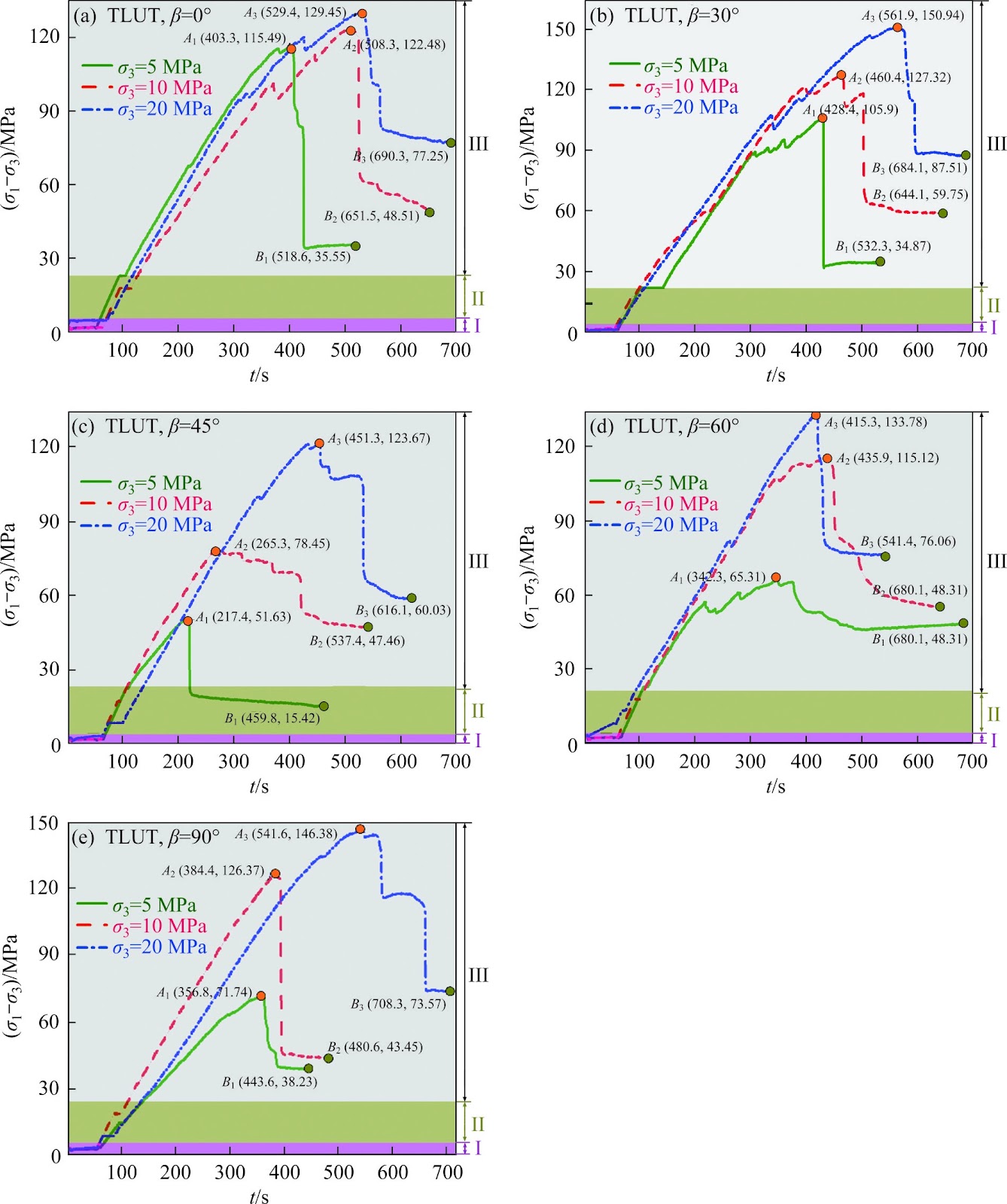
A cohesion loss model for determining residual strength of deep bedded sandstone
Rock residual strength, as an important input parameter, plays an indispensable role in proposing the reasonable and scientific scheme about stope design, underground tunnel excavation and stability evaluation of deep chambers. Therefore, previous residual strength models of rocks established were reviewed. And corresponding related problems were stated. Subsequently, starting from the effects of bedding and whole life-cycle evolution process, series of triaxial mechanical tests of deep bedded s
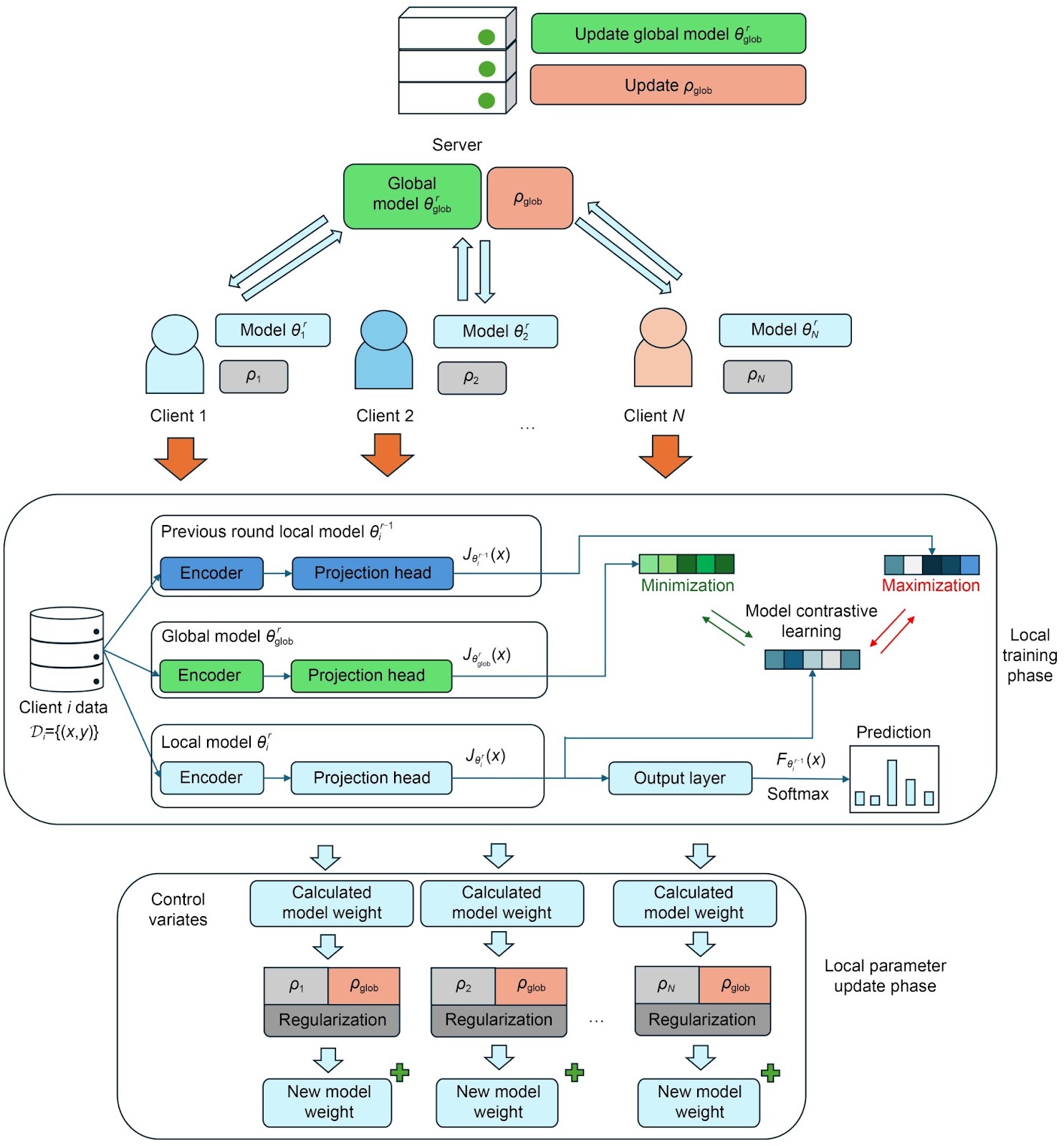
Federated model with contrastive learning and adaptive control variates for human activity recognition
Recent attention to privacy issues demands a communication-safe method for training human activity recognition (HAR) models on client activity data. Federated learning (FL) has become a compelling technique to facilitate model training between the server and clients while preserving data privacy. However, classical FL methods often assume independent and identically distributed (IID) data among clients. This assumption does not hold true in practical scenarios. Human activity in real-world scena